21-23 August 2026
California Coast Jazz Festival:
MILESTONES, a Miles Davis Centennial Celebration
I have been a jazz fan most of my life. I remember falling in love with the big band sounds my father would play, especially the 3-LP set of Benny Goodman’s big band live at Carnegie Hall in 1939. And most memorable from that album was the very energetic rendition of “Sing, Sing, Sing.” Still a favorite of mine.
One of a handful of remaining jazz radio stations is based in San Diego, KSDS also known as Jazz 88 (www.jazz88.org). The program director of Jazz 88 is Ken Poston, also the founder and director of the Los Angeles Jazz Institute, LAJI (www.lajazzinstitute.org). From the LAJI’s web site:
The Los Angeles Jazz Institute houses and maintains one of the largest jazz archives in the world. All styles and eras are represented with a special emphasis on the preservation and documentation of jazz in Southern California. The overall mission of the Jazz Institute is to preserve, promote and perpetuate the heritage of this important American art form.
The Los Angeles Jazz Institute archive is housed on the campus of California State University, Long Beach in the Department of Music. In collaboration with the California Institute for the Preservation of Jazz, the LA Jazz Institute is used by scholars, musicians, independent researchers, and the industry.
Over the years, Ken Poston and the LAJI has presented annual or semiannual 3 or 4 day events in the Los Angeles area. Los Angeles provides a wealth of skilled musicians because of the ongoing needs of the recording, film, and the television industries. I have attended several of these events, the last of which was in 2023. The events are a series of history discussion sessions by Ken Poston, panel discussions of significant musicians, and many concerts of various large and small bands or groups. Ken Poston’s history sessions are almost like attending a college course in jazz history.
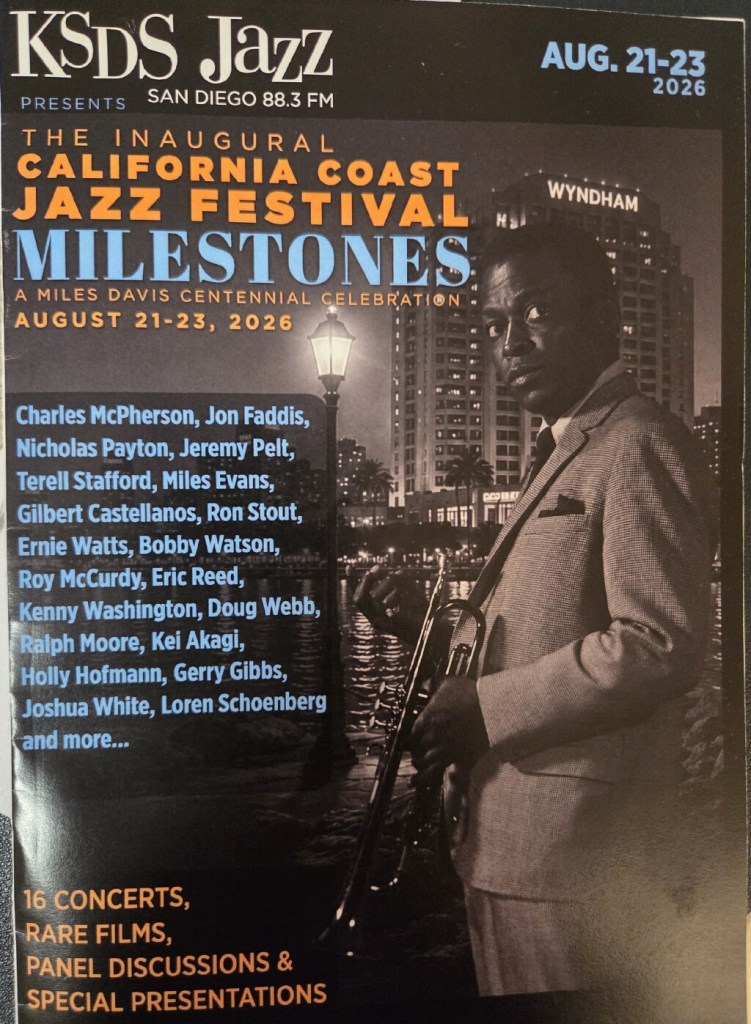
In June, I received an e-mail announcing a planned 3-day event celebrating the centennial of Mile Davis, and I called my long-time friend (since 1st grade) Gary to coordinate. This event is less about the LA Jazz Institute, and more about promoting KSDS Jazz 88. It is really another Ken Poston production regardless of the “official” promoter. This event was at the Wyndham Hotel near downtown San Diego, making it very convenient for me since I live in northern San Diego. Here is the cover of the program for the event:
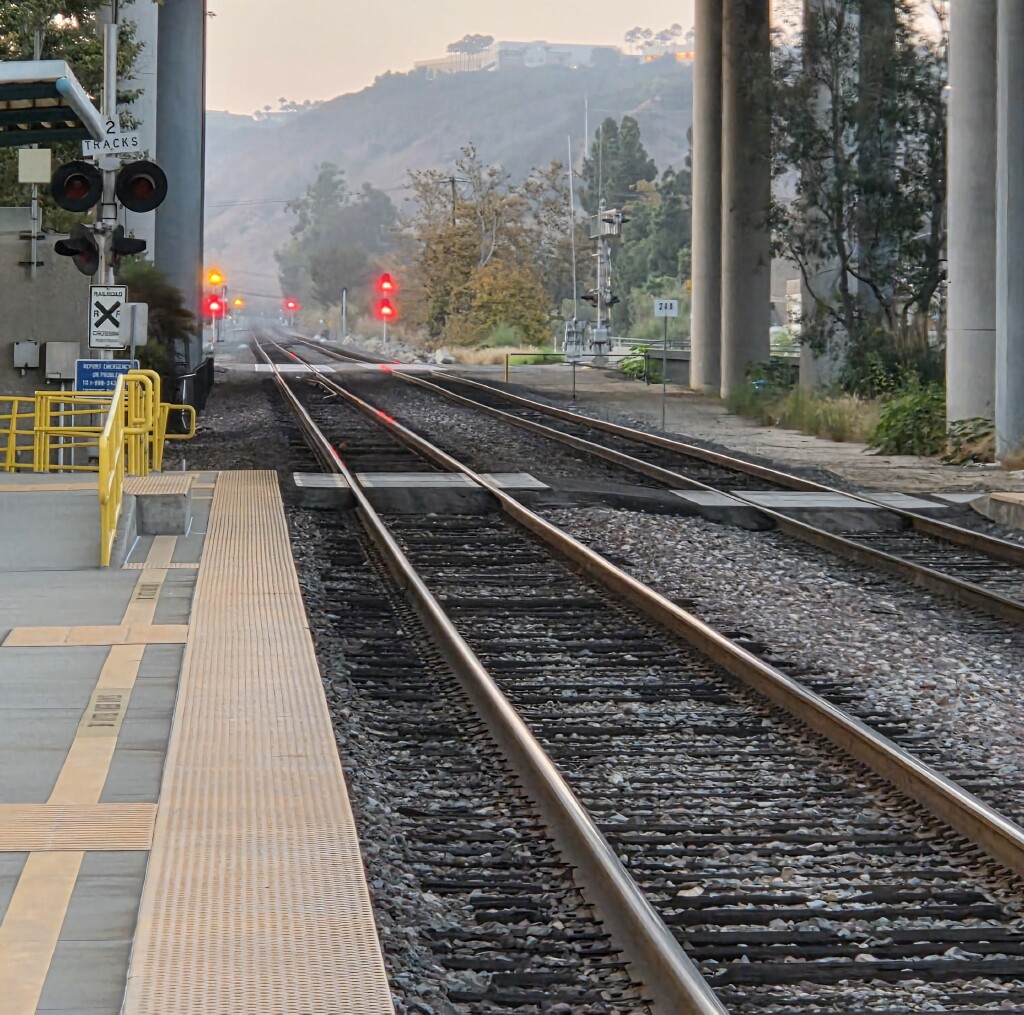
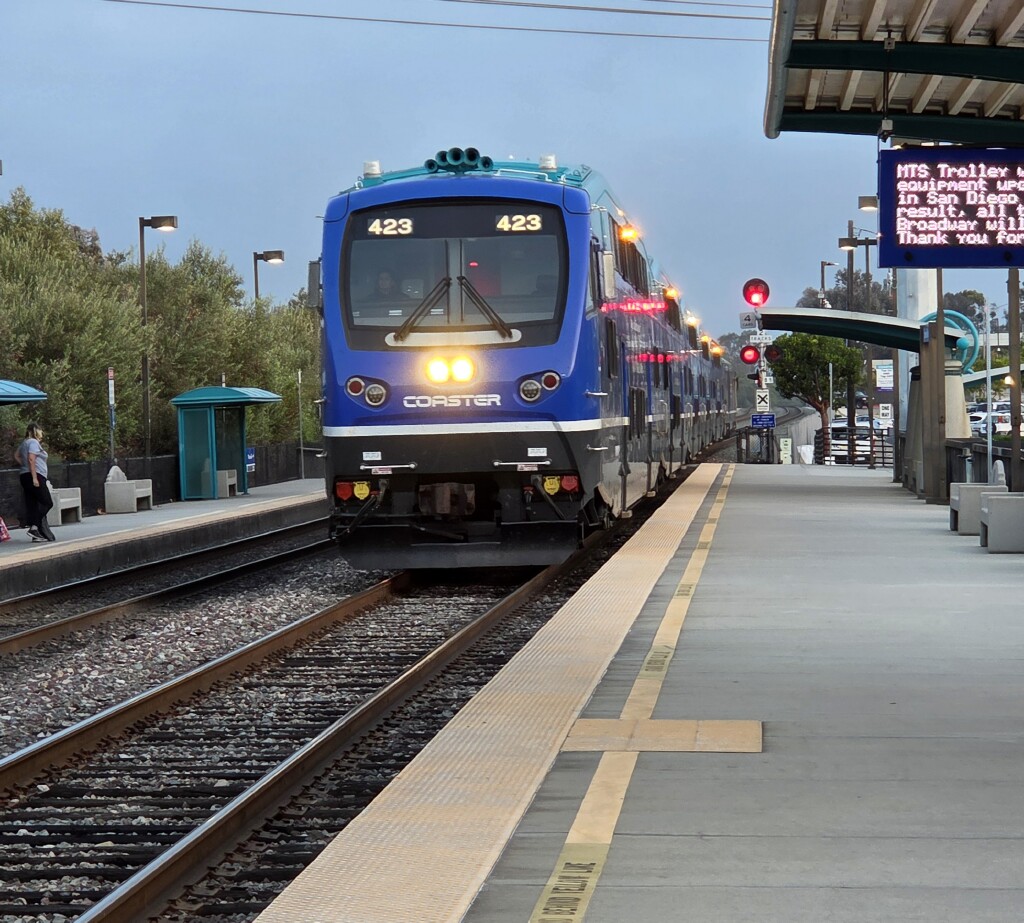
I live in northern San Diego, and the Wyndham Hotel is just over a block from the downtown San Diego train station. I could drive down to the Wyndham each day, but parking anywhere close to downtown is expensive ($40 or more for a full day). So I opted to stay at home, park for free at the Sorrento Valley train station (a mile from my house), and for $5.50 round trip, take the commuter train into town each of the three days. That would mean missing the last concert of the night to catch the last train north, but I’ll still have 12 hours of things to see and hear. Here is the train at the Sorrento Valley commuter station. First, looking south where we will be going and seeing one yellow and red signals. Second, the train arriving.
Kind of Blue
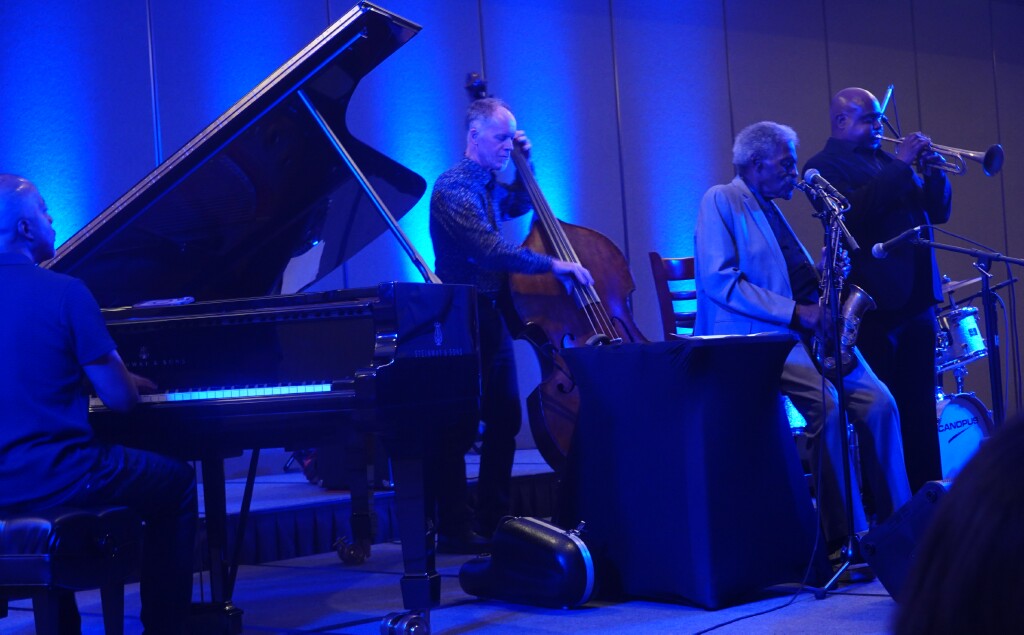
All of the photos of the concerts are very dark and, very blue. I think because the most well-known album by Miles Davis is “Kind of Blue” the idea was to make the bands always in blue. “Kind of Blue” is regarded as the best-selling jazz album of all-time. It was recorded in 1959 in New York City by a sextet of Miles Davis on trumpet, John Coltrane on tenor saxophone, Cannonball Adderley on alto saxophone, Bill Evans on piano, Paul Chambers on bass, and Jimmy Cobb on drums.
I’ll present a few photos from some of the concerts. Over the three days there were 14 concerts, each about 60–90 minutes. The general plan was to present music of Miles Davis as he evolved. The various groups or bands would recreate his music from 1945 through 1975. Miles Davis was born in 1926 in St. Louis and broke into the jazz scene at 18 in 1945. There are many biographies written about him, including an autobiography written in 1989 with Quincy Troupe called Miles: The Autobiography.
Miles Davis did not have a big band. Most of his recordings are of small groups, quintets, sextets, and a few slightly larger. I do not have photos of all the concerts. I selected a few I particularly liked. Some are a bit blurry – sorry!
Concert 1: Music of Charlie Parker with Miles Davis 1945–1949
Concert 1 featured the Charles McPherson Quintet playing selected pieces from Charlie Parker playing with Miles Davis in the last half of the 1940s. The Charles McPherson Quintet was made up of:
Charles McPherson on alto saxophone
Terell Stafford on trumpet
Eric Reed on piano
Rob Thorsen on bass
Roy McCurdy on drums
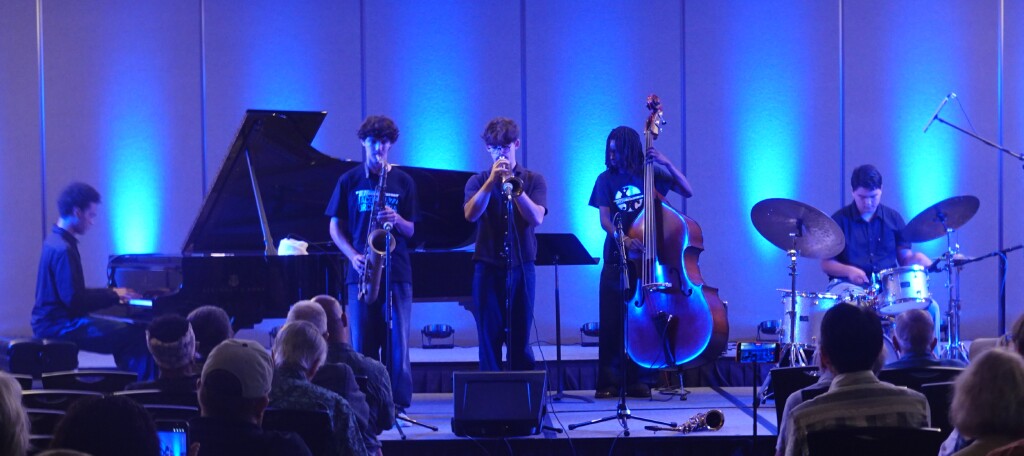
Concert 6: The Young Lions Play Sonny Rollins
The Young Lions Jazz Conservatory is a nonprofit organization in San Diego dedicated to mentoring young musicians ages 11–18. These teenagers played Sonny Rollins’ music for over an hour with no music in front of them. They knew the music, the chord changes, everything. An impressive performance! The Young Lions performing were:
Luca Posillico on trumpet
Niko Gutierrez on alto and tenor saxophone
Jordan Yaeger on tenor saxophone
Malik Minert on piano
Collier Keifany on bass
Teo Lhote on drums
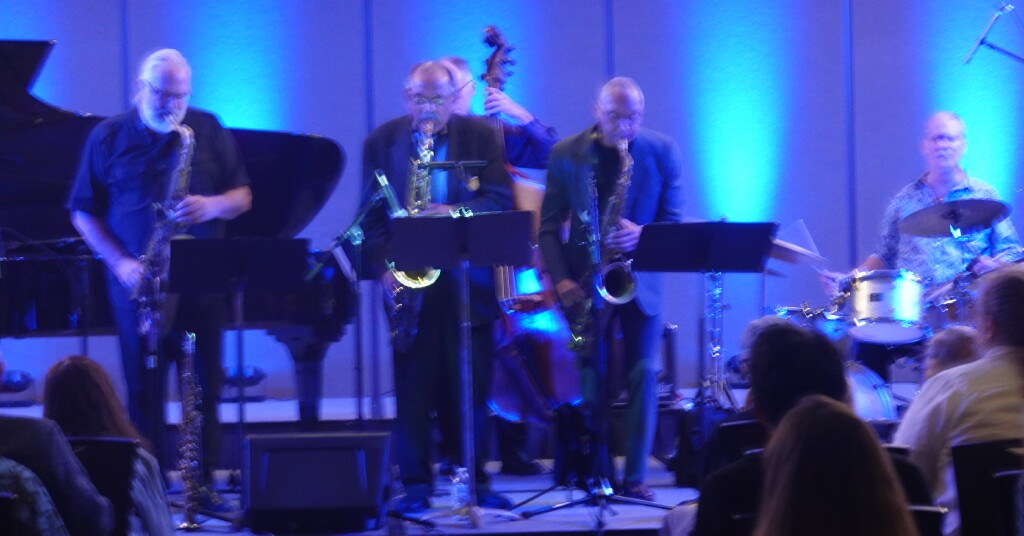
Convert 8: Tenor Conclave
This concert celebrated Miles Davis’ ongoing collaboration with John Coltrane, and featured three outstanding tenor saxophones with a rhythm section:
Ernie Watts on tenor and soprano saxophone
Doug Webb on tenor and soprano saxophone
Ralph Moore on tenor and soprano saxophone
John Opferkuch on piano
Rob Thorsen on bass
Gerry Gibbs on drums
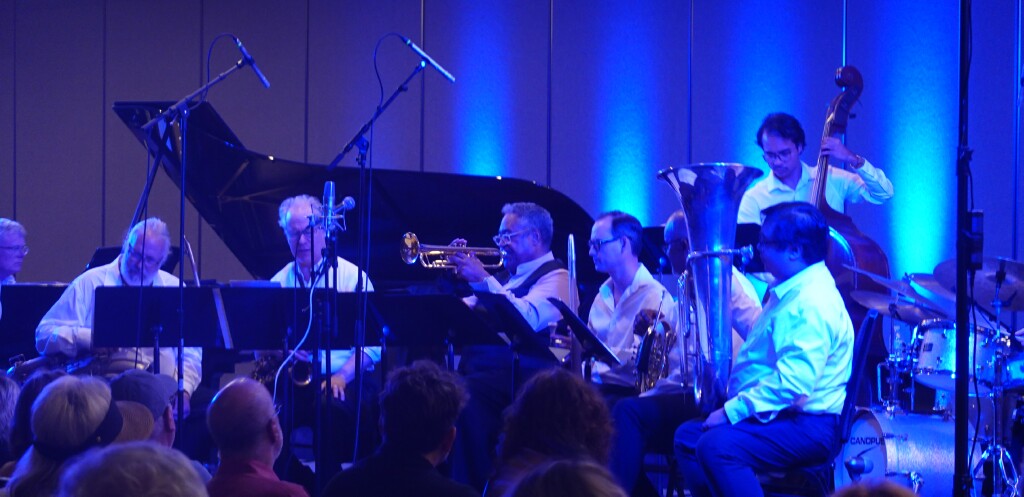
Concert 9: Miles Ahead, The Miles Davis-Gil Evans Collaboration
Over the years, Miles Davis and Gil Evans collaborated with Gill Evans writing much of what Miles Davis played. A key to Miles Davis lengthy career was that he and Gil Evans kept innovating and changing. In this concert, Miles Davis assembled a larger band to play some Gil Evans innovations and included French Horns, Trombones, and a Tuba. The other notable aspect of this concert was that there was no amplification. (I thought more of the concerts should have been done with far less or no amplification.) The KSDS Jazz Orchestra consisted of:
Conductor: Loren Schoenberg
Reeds: Phil Feather, Alex Budman, Brandon Wilkins, Neil Cole
Trombones: Matt Hall, Scott Kyle, Jeanne Geiger, Ryan Kupsh
Tuba: Wayne Rice
French Horns: Eric Burke, Cynthis McGregor, Kennan Langsford
Trumpets: Paul Seaforth, Bill Edwal, Derek Cannon, Doug Meeuwsen
Bass: Julian Esparza
Drums: Kevin Van Den Elzen
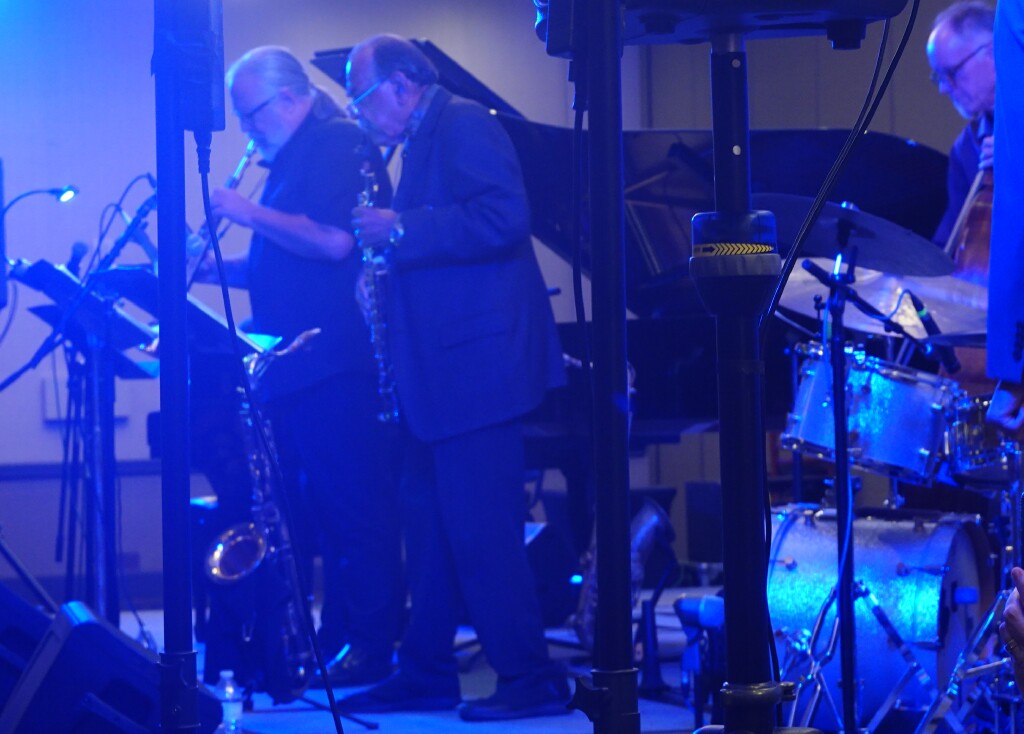
Concert 11: Milestones, Music of the 1958 Miles Davis Sextet
For concert 11, the sextet to play Miles Davis music from 1958 was an assembly of musicians from Los Angeles. All seasoned pros who play in various venues and groups. The sextet was:
Ron Stout on trumpet
Bobby Watson on alto saxophone
Doug Webb on tenor and soprano saxophone
Eric Reed on piano
Edwin Livingston on bass
Kenny Washington on drums
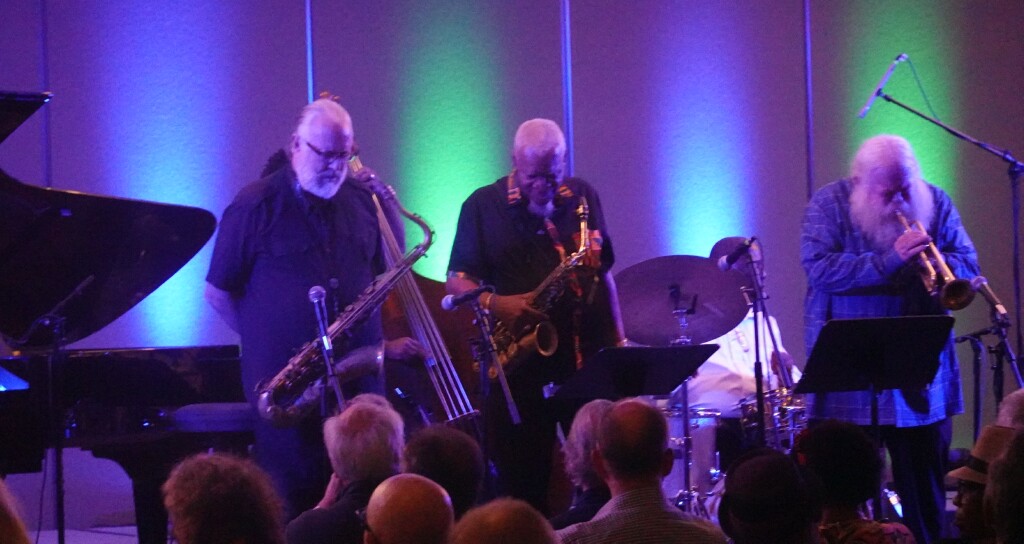
Concert 12: Kind of Blue, Music from the Legendary 1959 Album
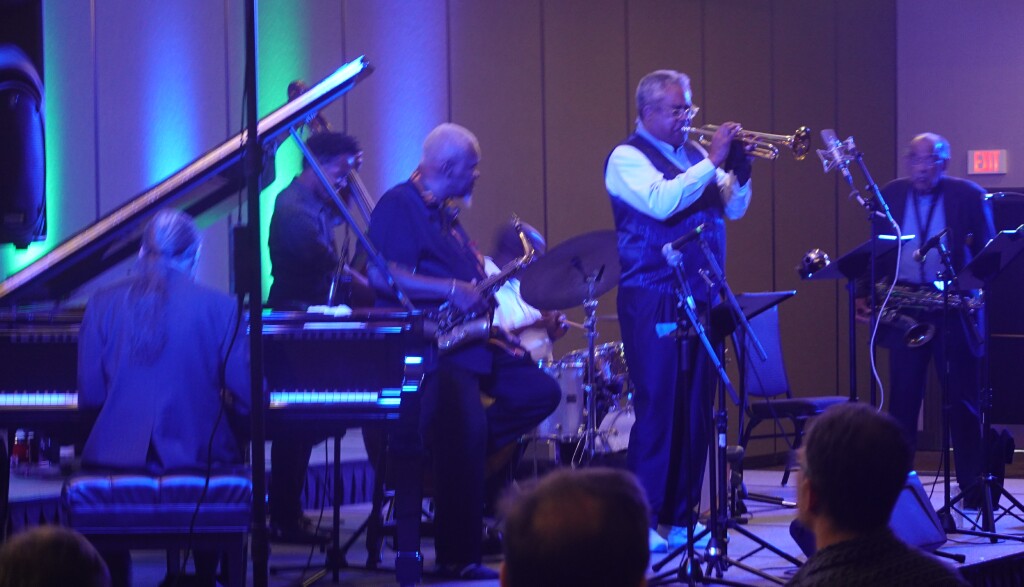
Another group of musicians got together to play music from the legendary 1959 album, Kind of Blue. The assembled musicians were:
Jon Faddis on trumpet
Bobby Watson on alto saxophone
Ernie Watts of tenor saxophone
Kei Akagi on piano
Edwin Livingston on bass
Kenny Washington on drums
Three long days of Miles Davis history, Miles Davis jazz, and hanging out with friends. As is often said, a good time was had by all.
Next: Preparations for my 14th winter in Chiang Mai, Thailand.


Jim- Great summary of a memorable three day festival…definitely looking forward to the next one!
LikeLike