Summer 2026
Part 1: Sunset over the Ocean Across the Rails
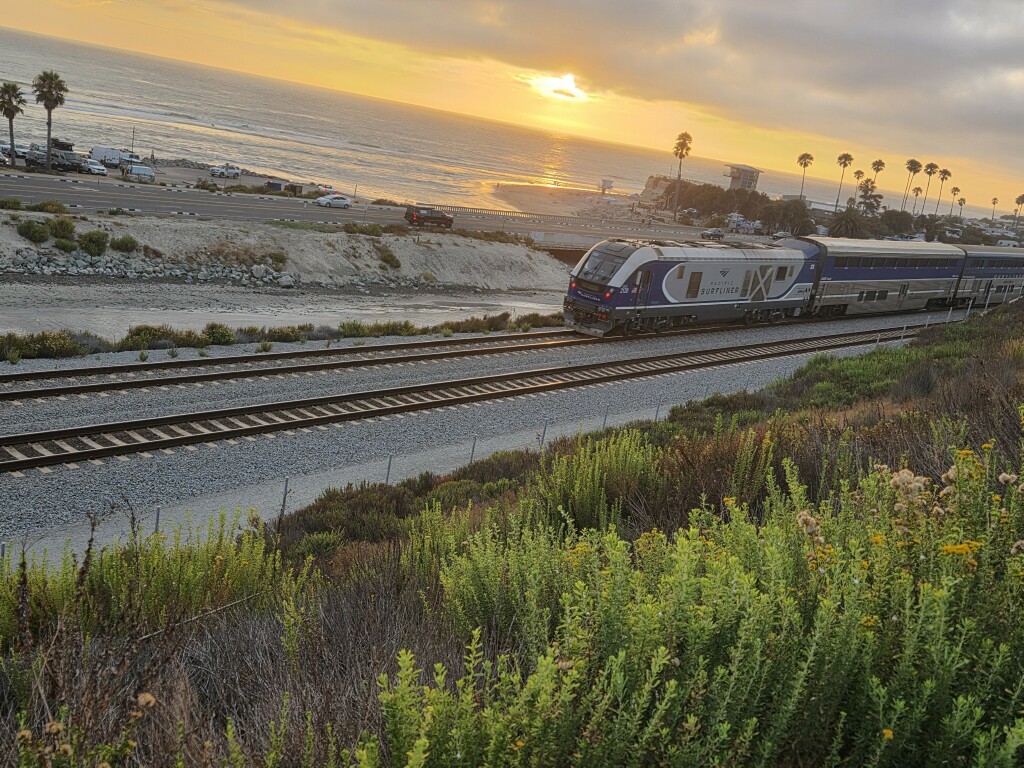
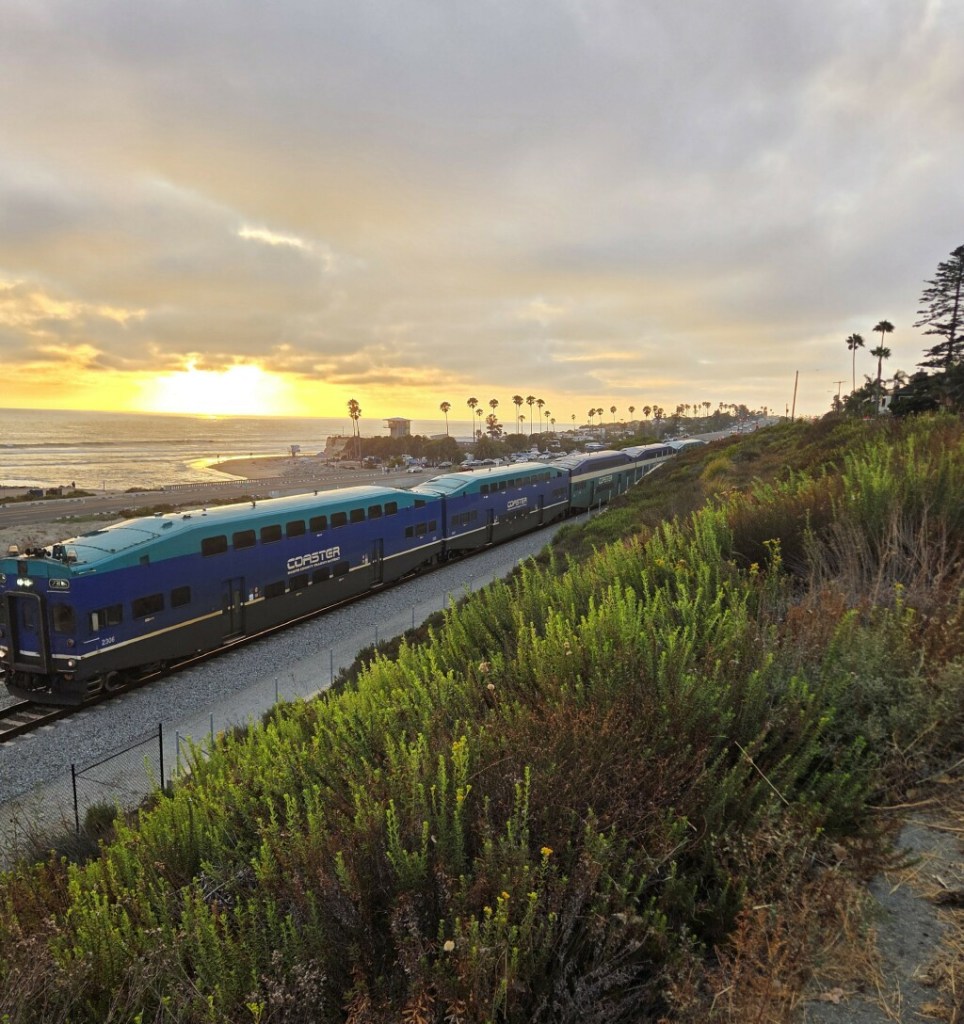
It is the peak of summer and sometimes a walk on the beach at sunset to see a dramatic sunset is a nice end to a day. After a walk on the beach at Cardiff State Beach, I parked on San Elijo Avenue in the south part of Cardiff by the Sea (part of the City of Encinitas). From this higher vantage point, I can see over the tracks, past Old Highway 101, and past Tower 16 to the pending sunset. Then, to my surprise, I saw a northbound train and then a southbound train. It should not be a surprise, because the rail corridor from San Diego to Oceanside is very busy with about 25 or more trains each direction every day.
On the left, a southbound Amtrak train coming from Los Angeles (or maybe Santa Barbara or San Luis Obispo). On the right, a San Diego North County Transit District “Coaster” going to Oceanside. The trains zoom by – the speed limit is 70 mph here.
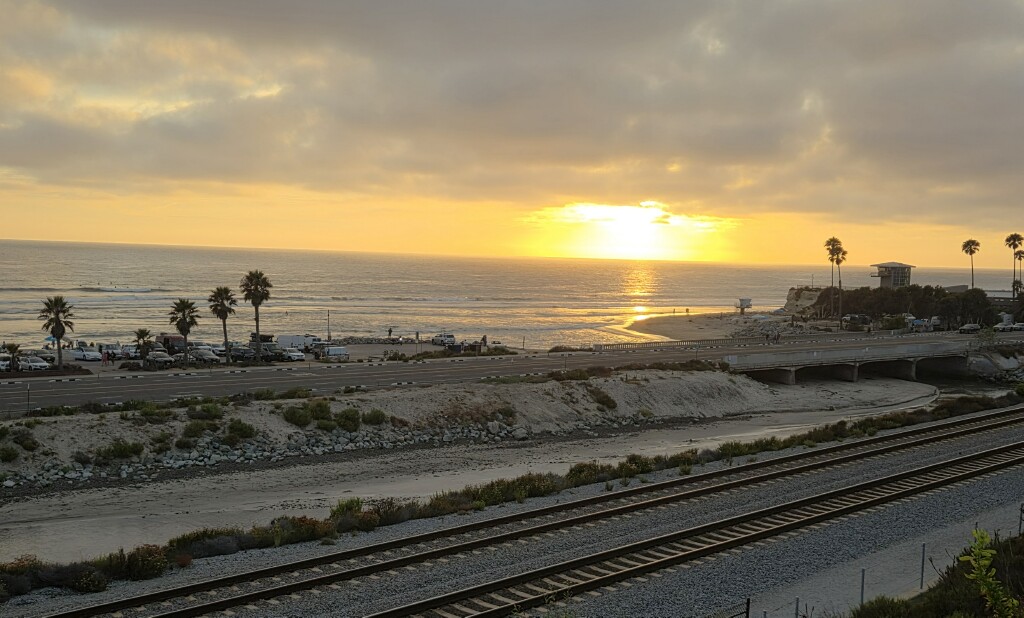
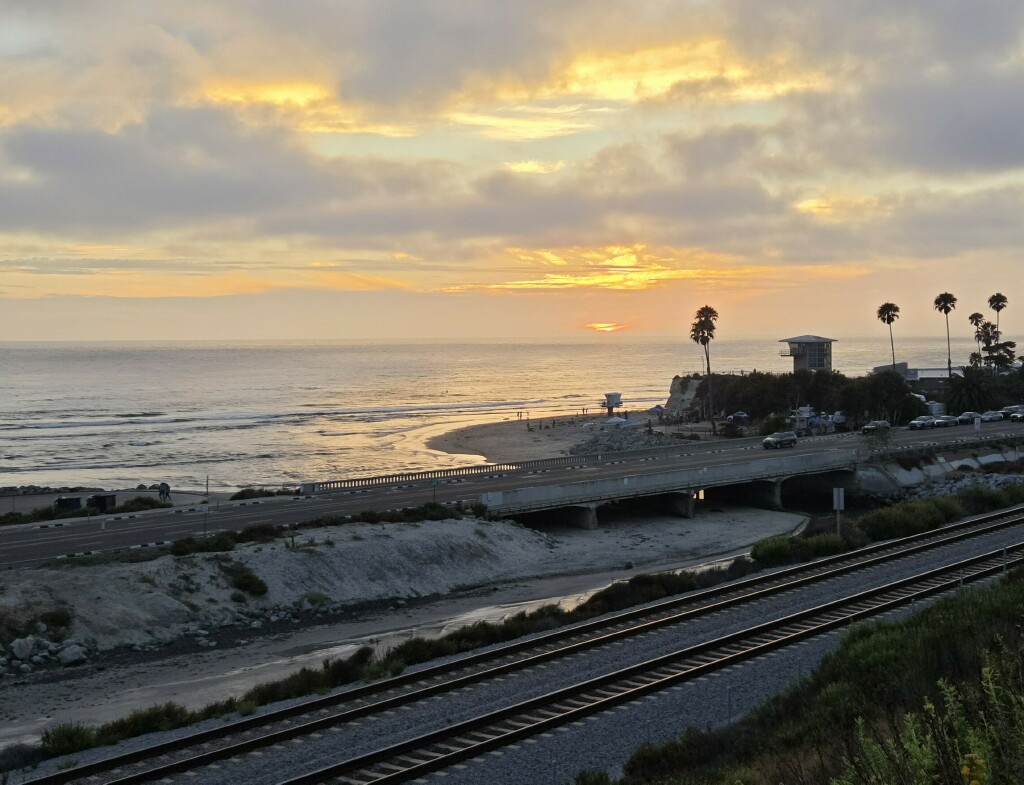
Then sunset was coming. Here are a couple of photos of the sun setting behind the evening clouds. Lifeguard Tower 16 is in the upper right of the two photos.
Part 2: Cycling by the San Diego Salt Works
Occasionally, my neighbor and I drive down to the South Bay area of San Diego and meet with a friend for a relatively flat bike ride of about 30 miles. The “South Bay” is an area of the cities of National City, Chula Vista, and Imperial Beach around the south part of San Diego Bay. We ride from Pepper Park south around the southern most part of the bay, then up the narrow isthmus called the Silver Strand to Coronado. Almost all of the ride is on a separated bike path, so there are almost no traffic concerns. Then all the way back, stopping for coffee 5 or 6 miles from Pepper Park. Here is a map from my Garmin bike computer showing the route we took recently.
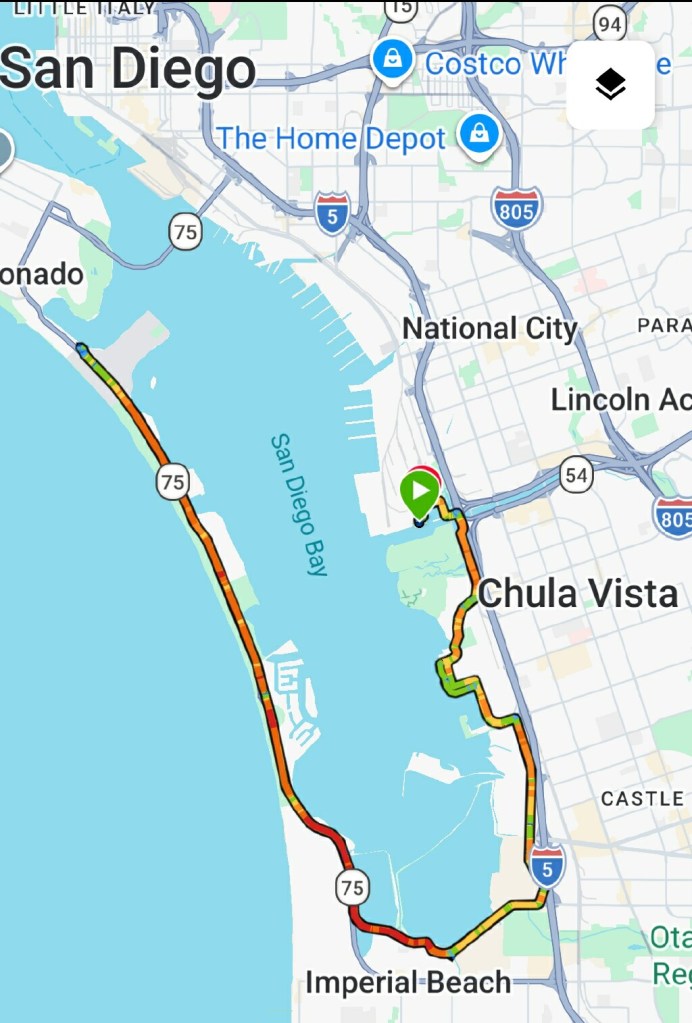
Every time we ride the south bay, we pass an interesting place and I almost always think I should stop, take a few photos, and share this place. Today I did just that. On the map above, this is about where the I-5 marker is shown.
South Bay Salt Works
The South Bay Salt Works started operation in 1872 as La Punta Salt Works and was the sole supplier of salt in Southern California. In 1902, new owners changed the name to Western Salt Works. It is one of only two places (the other being San Francisco) on the west coast of the United States where the natural conditions allow salt extraction from sea water to be feasible. In 1999 with some complicated moves, the salt ponds were sold to the San Diego County Regional Airport Authority and then the salt ponds were transferred to the U.S. Fish and Wildlife Service. The ponds continue to be leased out to a company formed by former employees of the Western Salt Company, who changed the name to the South Bay Salt Works.
Several large, shallow ponds, covering over a thousand acres, are flooded by water from the Pacific Ocean (not San Diego Bay) and left to evaporate. About 75,000 tons of salt are processed every year at the salt works.
First, we pass by the processing part of the plant. It is unclear what processing takes place. Perhaps some filtering or cleaning?
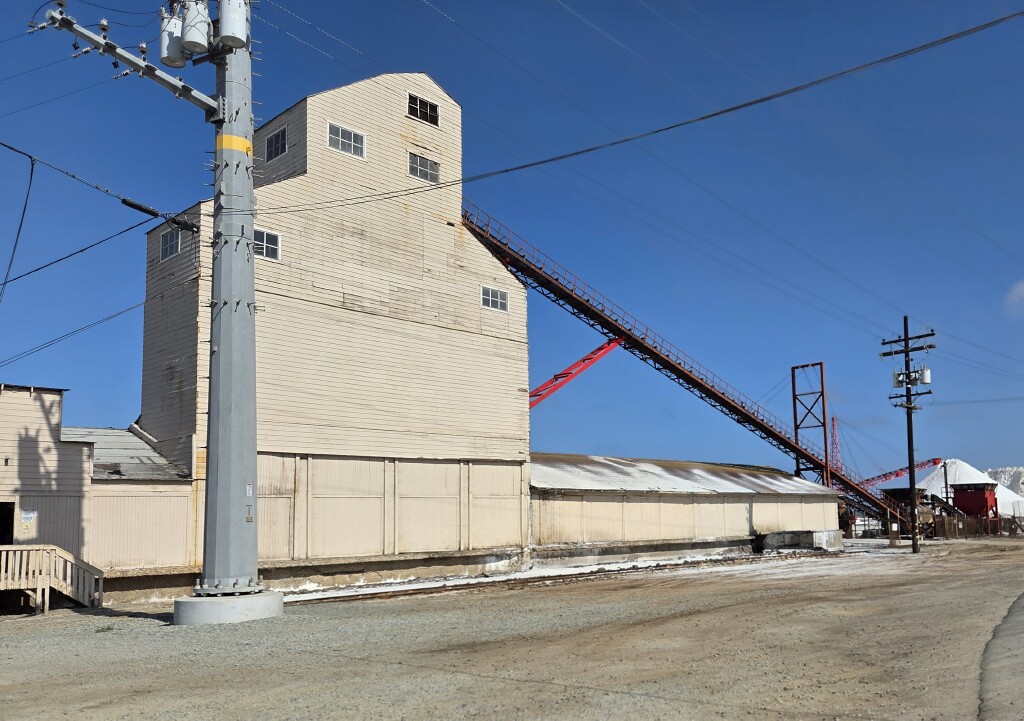
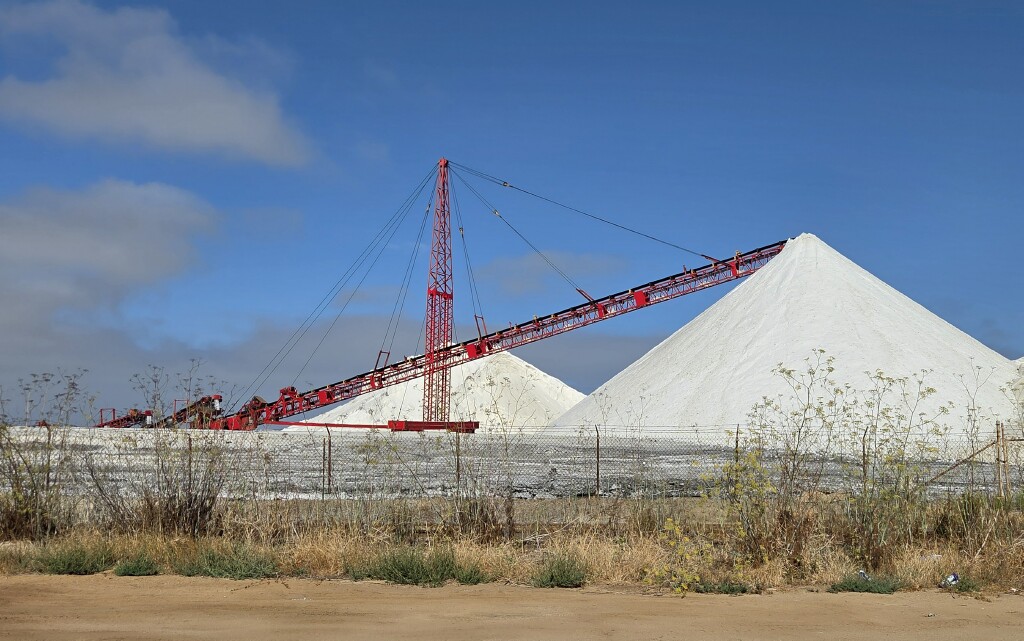
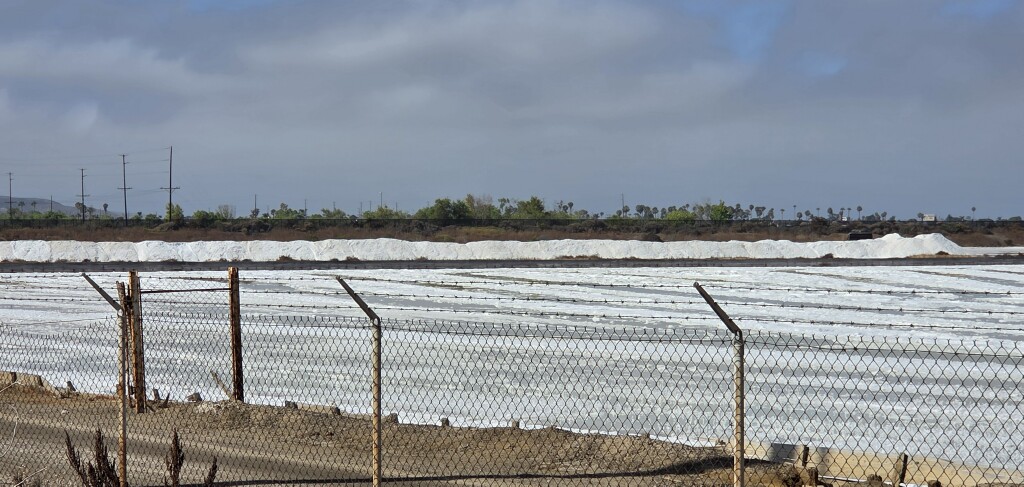
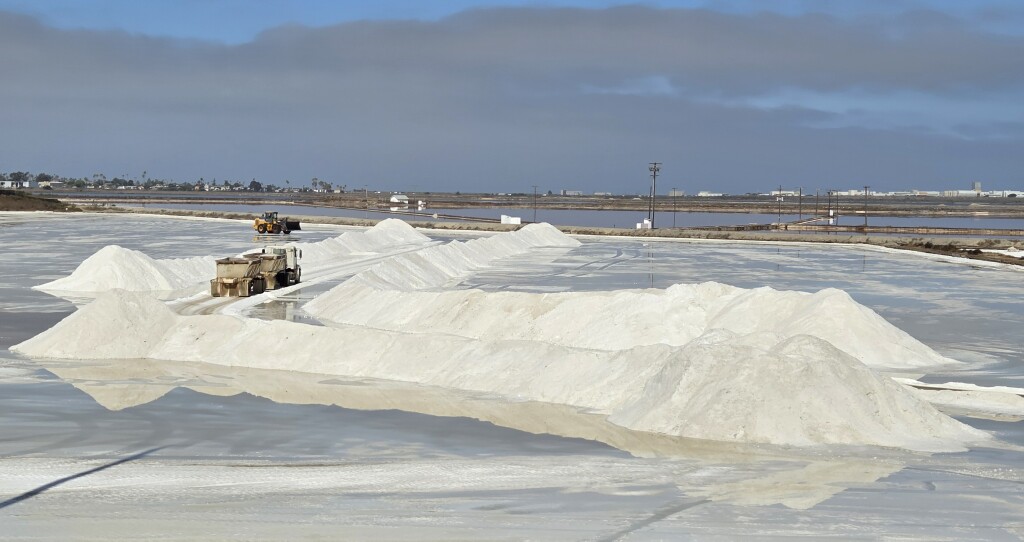
Then we pass the evaporating ponds themselves. It appears that after the evaporation takes place, the salt is 3 or 4 or maybe even 5 feet deep. On the left is a pond close to being fully evaporated but still wet in places. On the right is the process of loading the salt into trucks to be moved to the processing plant.
Next: More summer events and preparations for my 14th winter in Chiang Mai, Thailand.

 James the Intrepid Pilgrim