Friday 6 December 20204
Three temples in Chiang Mai Old City
Wat Chiang Man
Leaving Wat Saen Muang Ma, I went east through a soi (Ratchapakhina Soi 1) connecting Prapokklao Road and Ratchapakhina Road, two of the major north-south roads in the old city. I was happy that I had missed another connecting soi, because that one (Prapokklao Soi 13) is home to several “soi dogs,” dogs that live in the sois and are fed by the locals. And on that soi, they hang out in a group, are very territorial, and can be more than a little intimidating. Wat Chiang Man is just to my right on Ratchapakhina Road, and hard to miss.
Wat Chiang Mai is the oldest temple in the Chiang Mai old city. King Mengrai built the temple in 1296 as a place to live and worship while supervising the building of Chiang Mai. So historically, Wat Chiang Man is a very important temple.
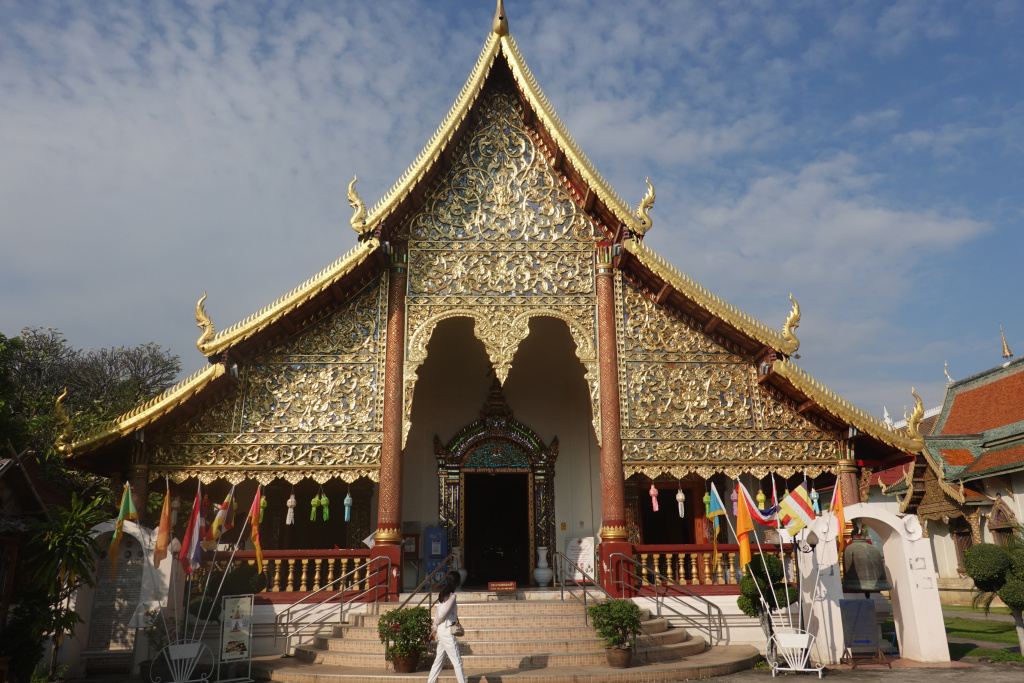
There are two viharns (assembly or worship halls), larger and smaller. It seemed that there was an event taking place in both today, so I stayed outside. [I have been inside both many times.] On entering the temple grounds, the larger viharn is prominent. Notably missing are the Naga serpents along the stairway, guarding the entrance. The Naga are almost ubiquitous at temples in northern Thailand.
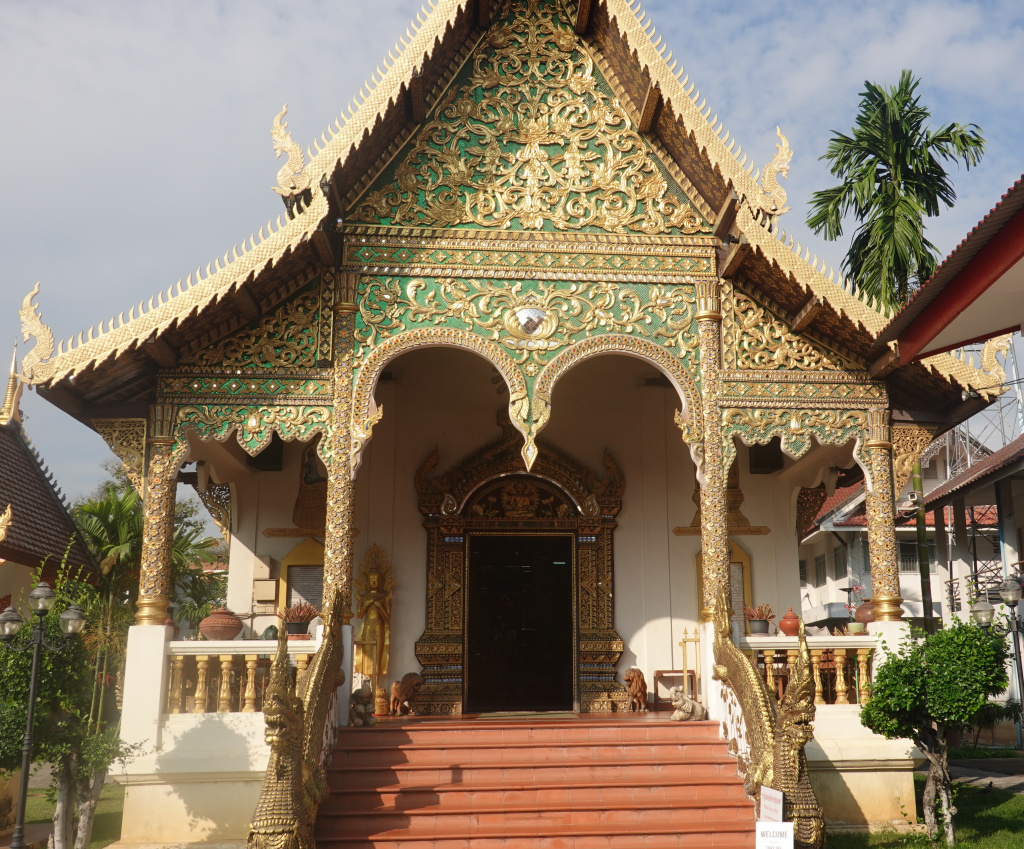
The smaller one is just to the right of the larger viharn, with Naga serpents guarding the entrance. Two of Thailand’s most important Buddha statues are housed in the smaller viharn: the Crystal Buddha or Phra Kaew Khao Buddha, and the Phra Sila Buddha. When the viharn is open and not busy, both are difficult to see as they are behind locked steel bars and thick glass.
The Crystal Buddha, or Phra Kaew Khao as it’s known locally, was made around 1300 and seized by King Mengrai in his conquest over Lamphun and Queen Chamathewi. The image is widely revered and thought to have the power to protect against disasters and misfortune.
The Phra Sila Buddha is said to date from the 8th century and to have come from Sri Lanka. It depicts the Buddha overpowering the elephant Nalagiri and represents the Buddhist legend where the Buddha tamed a rampaging elephant with his love. The Buddha image is believed to have the power to bring rain and therefore features prominently during the Chiang Mai’s Songkran festival each April.
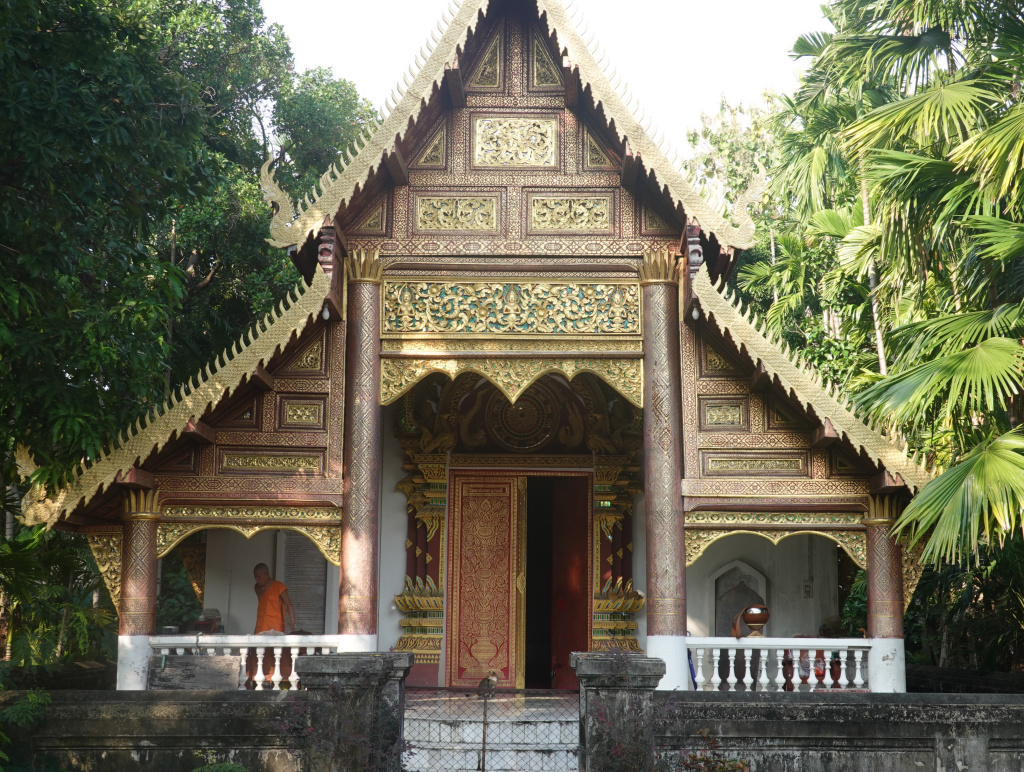
Wat Chiang Man is a nice, peaceful, albeit small campus. To the left and back from the entrance is the ubosot, a structure a little more modern, re-constructed in the 19th century. Inside the portico, to the right of the door, is a historic stone stele which I read contains the oldest reference to the date of the founding of the city of Chiang Mai, said to be on 12th April, 1296. The gates were closed, so I did not try to get a close-up.
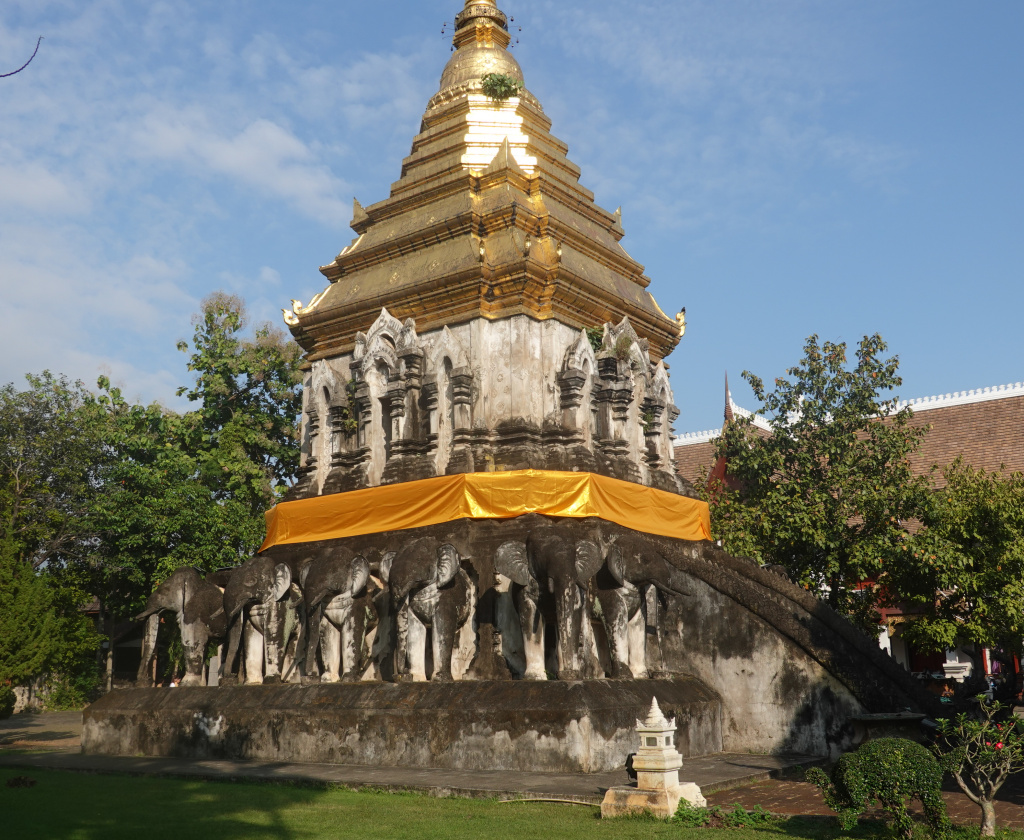
Wat Chiang Mai Chedi
To the left of the ubosot is the very unusual chedi. Known as Chedi Chang Lom or the Elephant Chedi, it is the oldest structure in the temple and dates from the 15th century. It has 15 elephants of brick and stucco appearing to support the gold bell-shaped chedi on their backs. Above the elephant base the chedi is in the Lanna style with its square mid-section with niches but without Buddha images (might they have been there in the past?). The top section of the chedi rises to an octagonal base for the bell.
King Mengrai Statue
Behind the chedi is a towering statue of King Mengrai himself, a fitting tribute to the founder of this temple and Chiang Mai itself. I love this statue, he projects a confident, almost fierce attitude.

Wat Chiang Man is a favorite, partly because of its historic significance, and also because of its peaceful ambiance. I always feel a little uplifted after visiting this temple.
Next: Three Old City Temples – 3 Wat Lam Chang

 James the Intrepid Pilgrim