Friday 6 December 20204
Three temples in Chiang Mai Old City
Walk in the north of the old city
I had no yoga class or strength training scheduled today, so something of a rest day. I decided to revisit three temples to which I have been many times in the north half of the Chiang Mai Old City. There are at least 50 temples in the approximately mile-square Old City so there are probably many I have not yet explored. Today, I wanted to revisit one very important and two other interesting and familiar temples.
Monument to the Three Kings
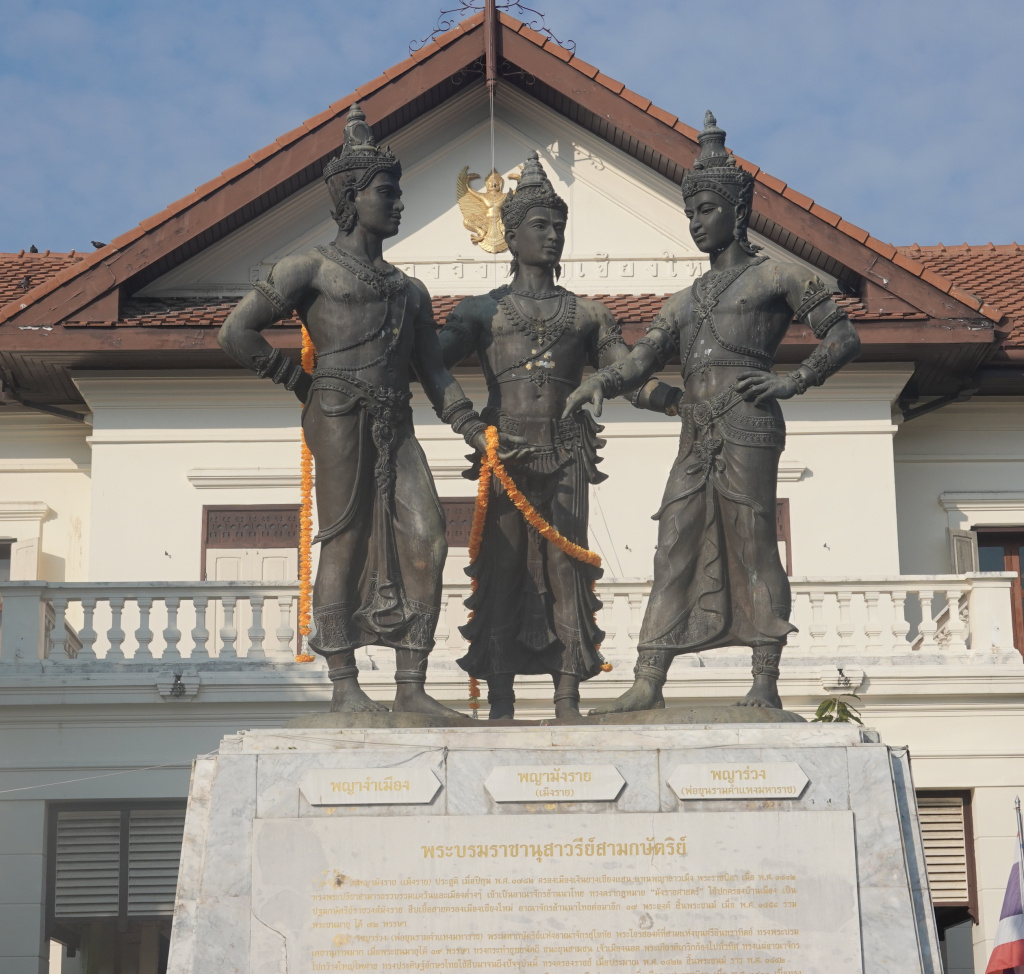
On my way north on Prapokklao Road, past Wat Chedi Luang and Wat Pan Tao, I passed the Monument to the Three Kings. When King Mengrai, founder of Chiang Rai, sought a new location for his kingdom, he first started building a city along the Mae Ping River, about 7 kilometers south of where Chiang Mai is now. This area is now called Wiang Kum Kam. After being flooded twice, he found a new location on higher ground farther from the river. He sought the advice of two neighboring kings, King Ram Khamhaeng the Great of Sukhothai (south and west of Chiang Mai), and King Ngam Muang of Phayao (north and east of Chiang Mai). Together they agreed this was an auspicious site and thus in 1296, King Mengrai started building what today is Chiang Mai.
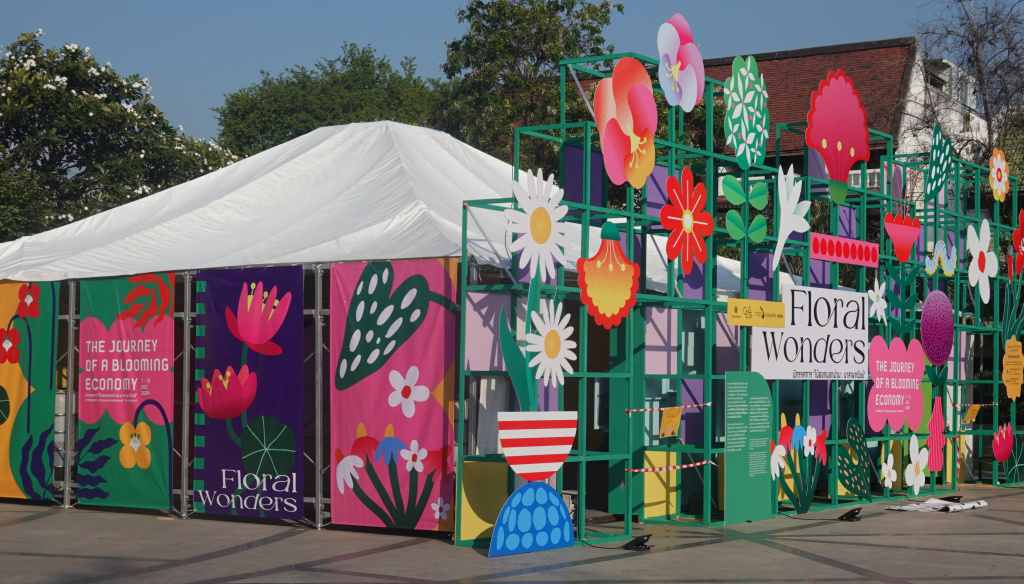
I love this monument and pass by it frequently. Today there is a display advertising a flower festival, Floral Wonders, the journey of a blooming economy. The structure is colorful, so I got a photo:
Then I stepped over to photograph (again) the Monument to the Three Kings:
I continued north from the Three Kings to Wat Saen Muang Ma, also known as Wat Hua Khuang (although I have never seen a reference to that name, other than some documents saying the temple is also know as Wat Hua Khuang). In the 14th century, King Saen Muang Ma started construction of the very large chedi at Wat Chedi Luang as a place in which to inter the ashes of his father. King Saen Muang Ma was an important figure in Chiang Mai history and it is no surprise that a temple bears his name. What is surprising is that after a good bit of searching, all indications are that this temple was not built until the 19th century and the current buildings date back to the early 20th century. When I first discovered this temple 5 or 6 years ago, it appeared to have been very recently renovated. Other than the chedi, the buildings still all appear new. Every time I have been here, I have seen no worshippers, no monks, and all of the structure doors have been closed and locked. One wonders from where the funding came for the extensive renovations.
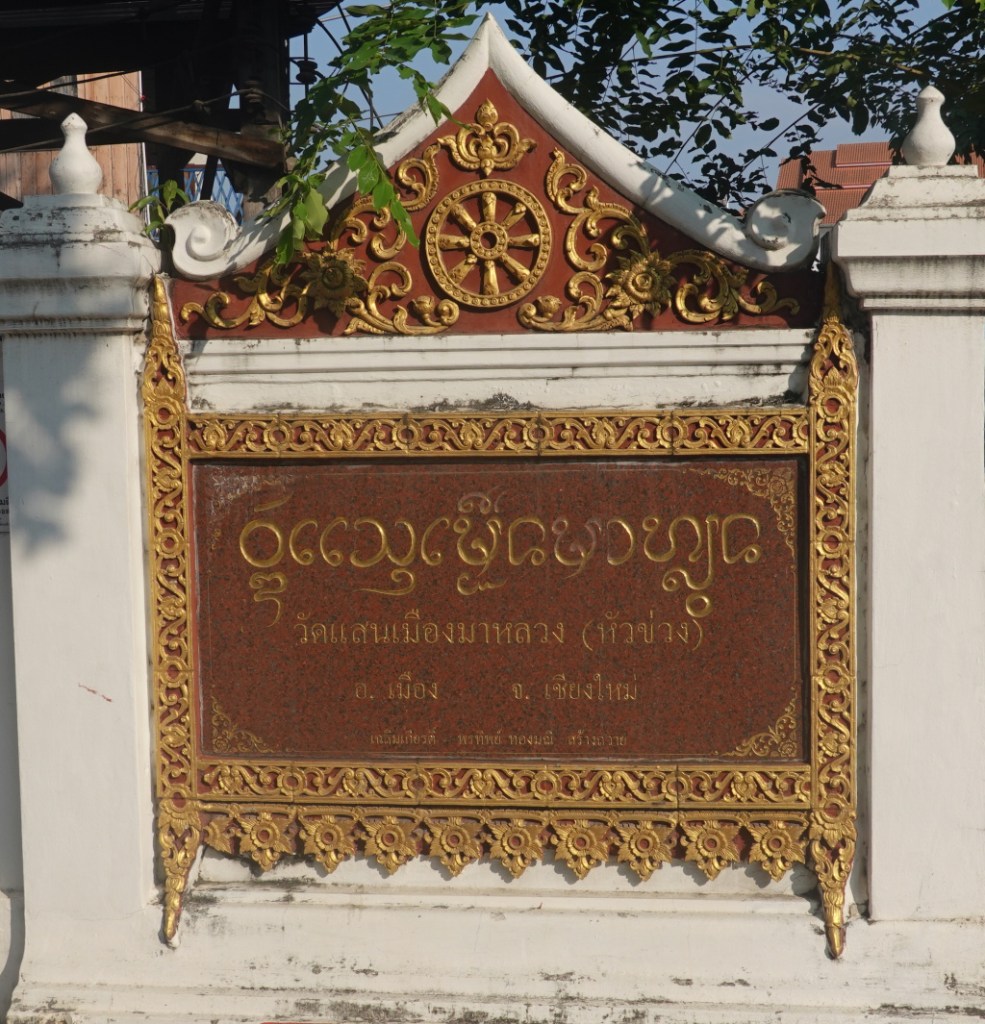
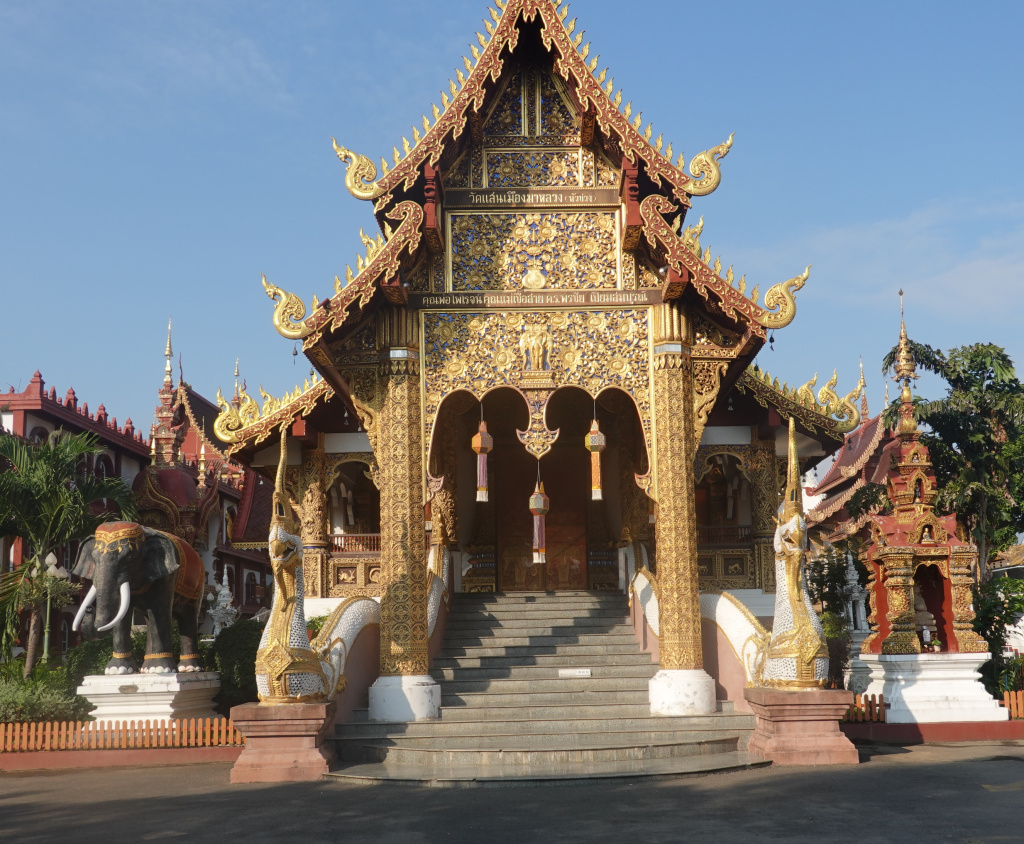
From the sign, the relatively small temple grounds are almost hidden about 40 meters down a very narrow soi (lane). The first building noticed is the main viharn (assembly or worship hall), still appearing newly restored or refurbished. As is common in northern Thailand, the stairs are guarded by the large Naga serpents, and a full-size elephant statue to the left.
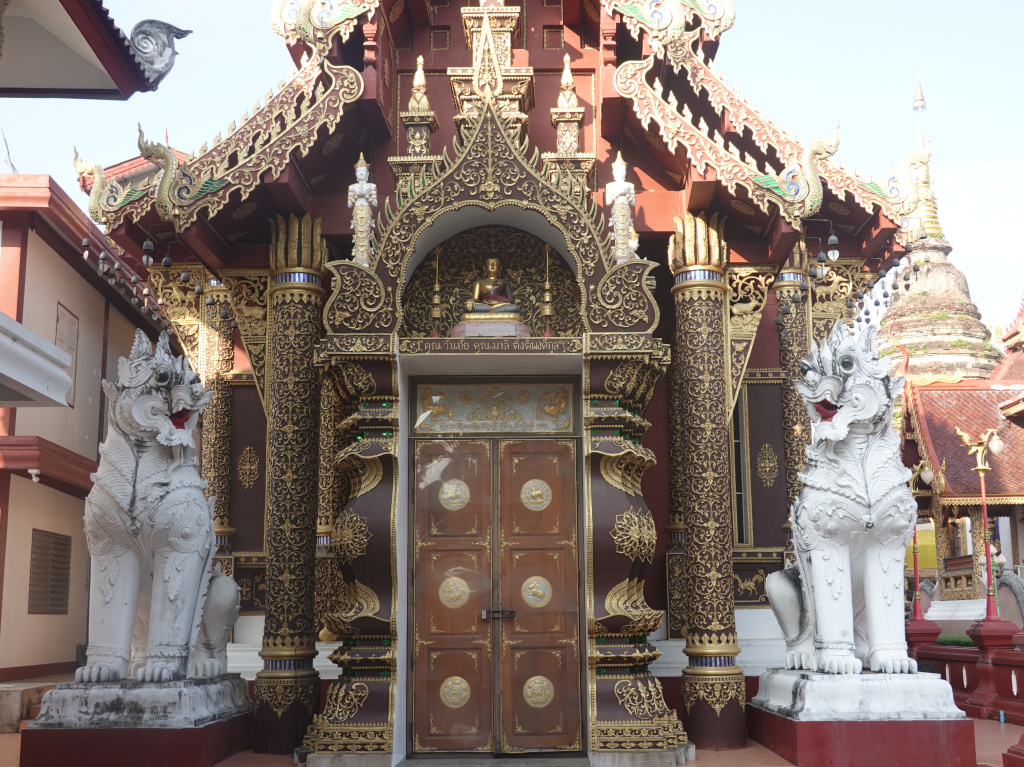
Just to the left of the main viharn is a smaller viharn, quite striking in the intricate detail of the decoration. Not as typical in northern Thailand, but not rare either, are the giant Singha (lion-like) creatures guarding the entrance.
At the back and to the rights of the main viharn is the ubosot (ordination hall). The architecture is Lanna style with a multi-tiered roofline.
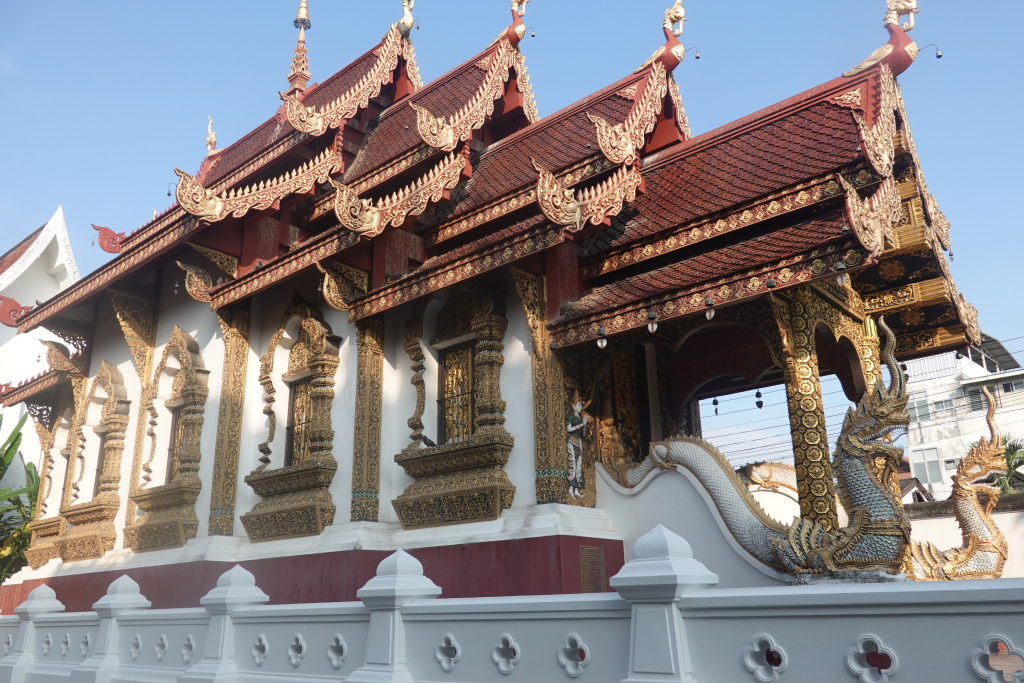
The ubosot is almost a smaller version of a viharn, but built with a more specific purpose.
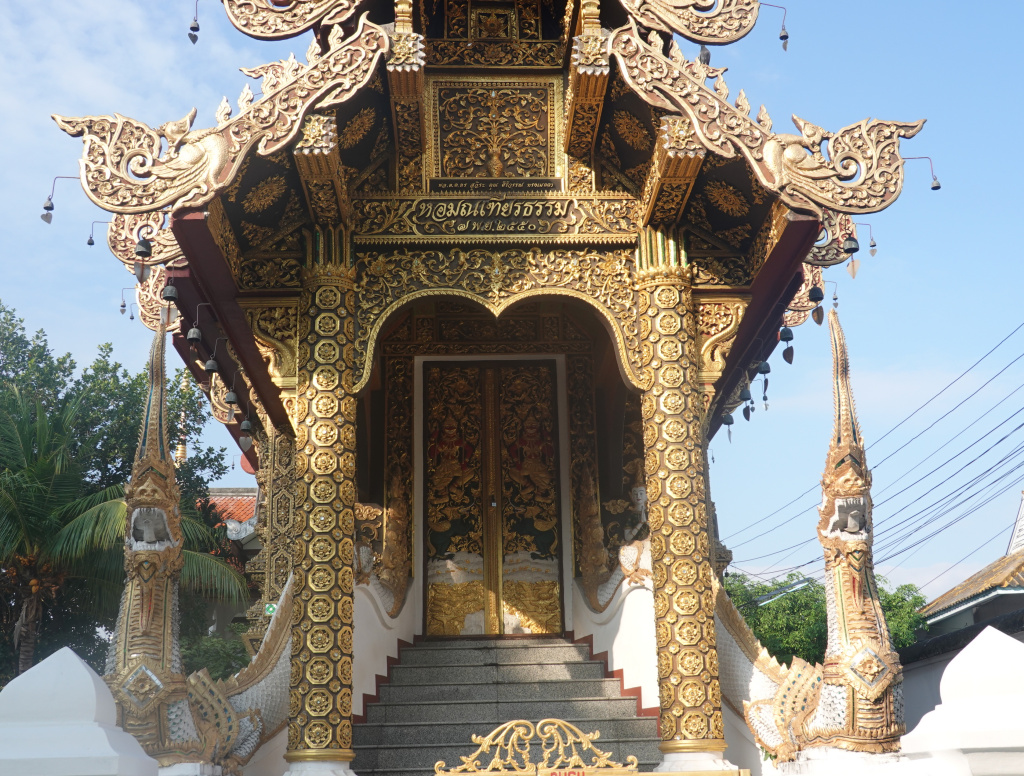
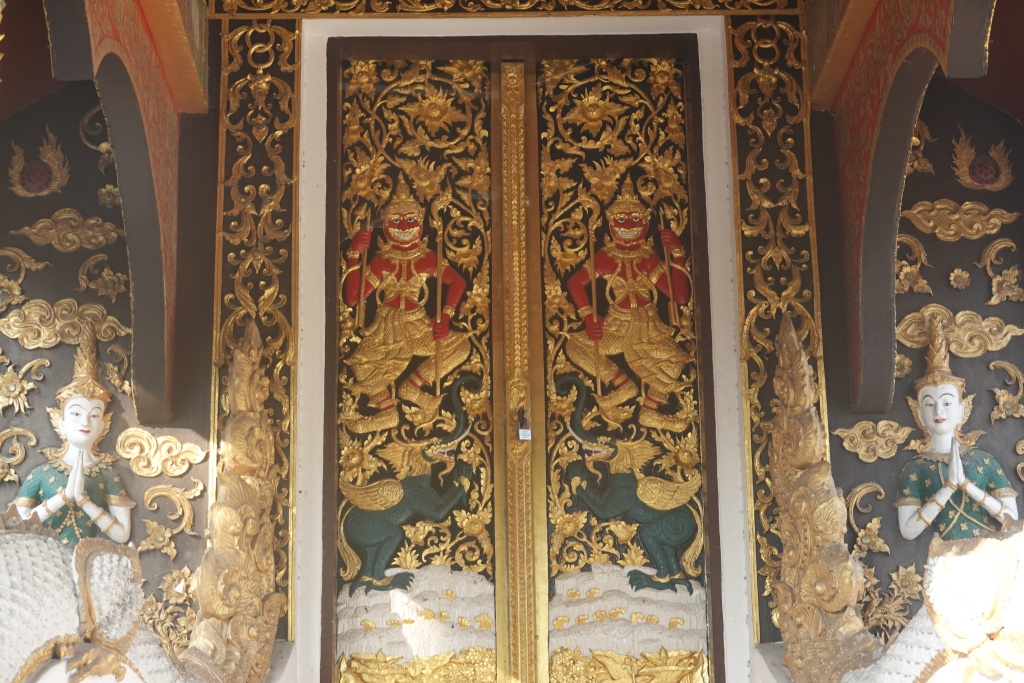
On the doors of the ubosot are these colorful, dancing thewada (angelic beings that live in the heavenly realms). The thewada have no gender, but can appear male of female depending on the artist and possibly the setting.
Behind the ubosot is the ho trai, a repository for temple and other Buddhist documents. This is of new and very recent construction. The old ho trai was in what is now the ubosot.
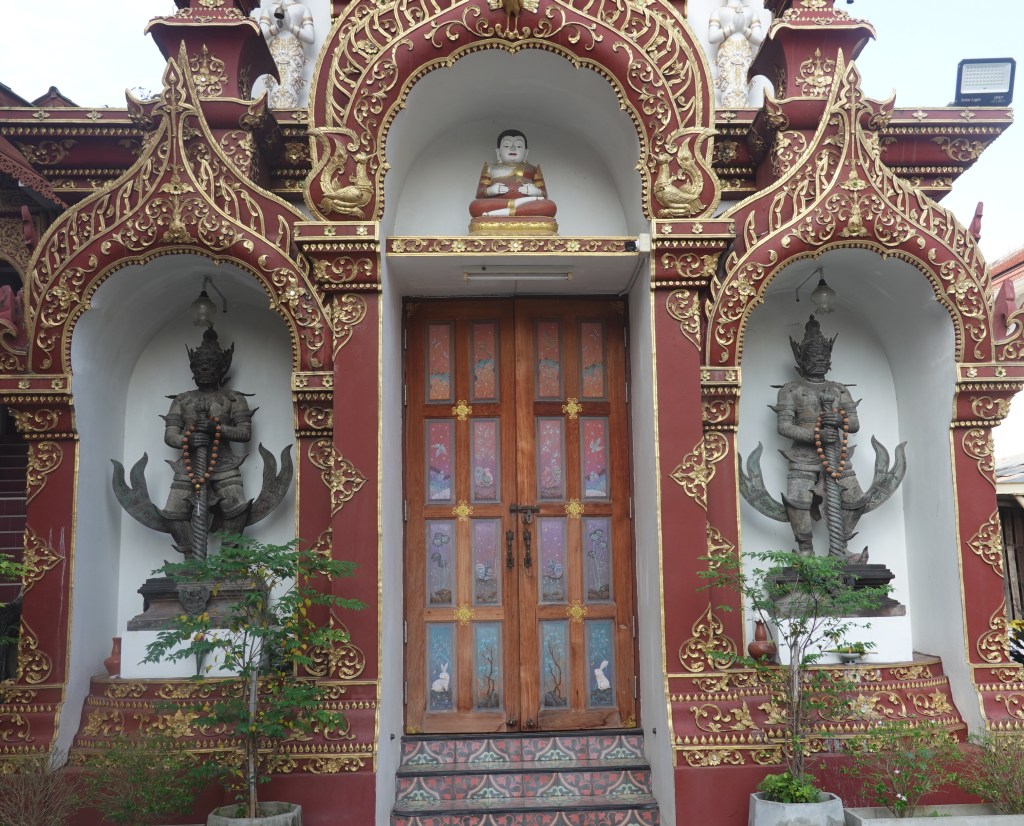
At the back of the main viharn is the chedi, completely unrestored and in its natural, very rustic state. The chedi’s condition is in complete contrast to the rest of the temple. It is obviously very old and crumbling with vegetation growing from its brickwork in places. Oddly, the stark contrast of the stately and new-looking structures and the old chedi is not unpleasing.
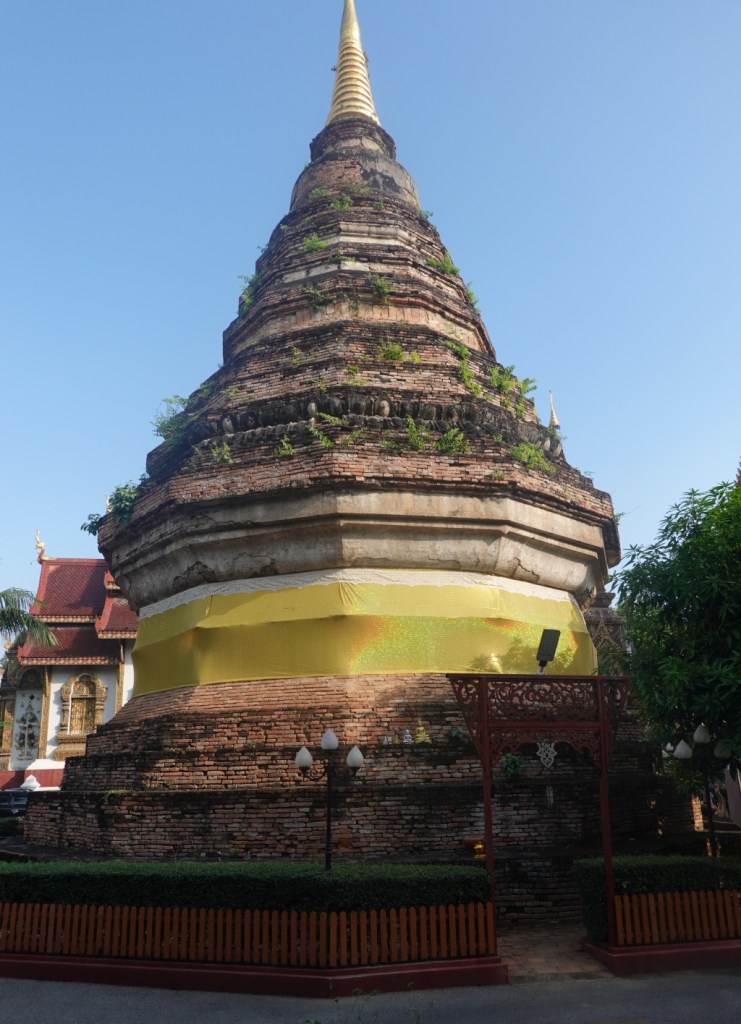
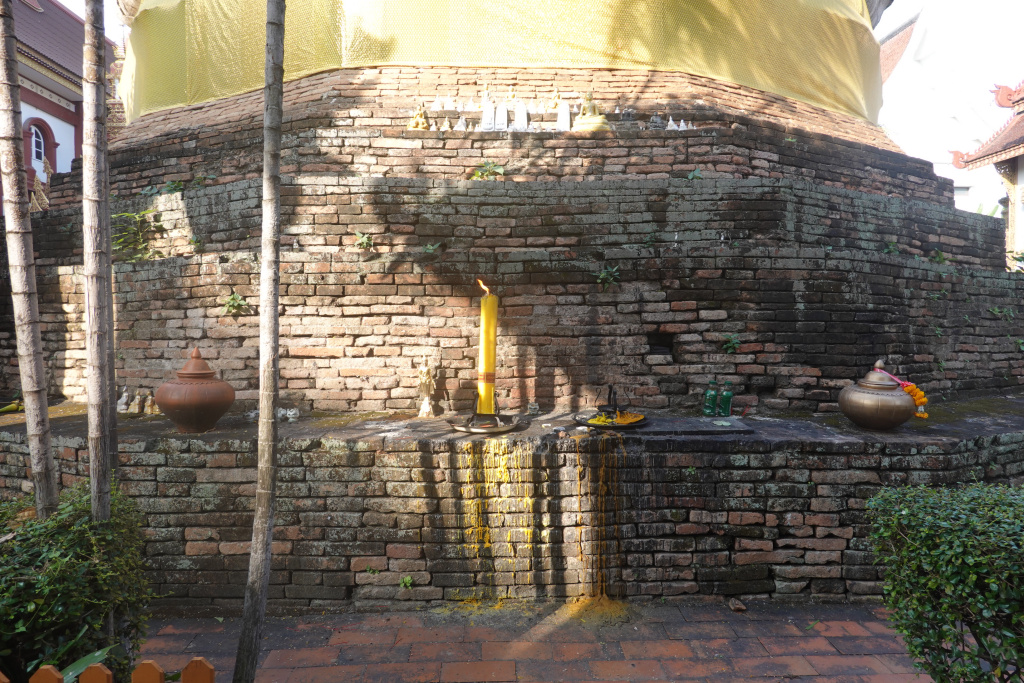
Wat Saen Muang Ma is an interesting, almost fascinating temple in its newly restored look and lack of people. I’m always glad I stopped by, because the workmanship is beautifully done. But I’m always struck at how this beautiful temple can exist with no monks or patronage.
Next: Three Old City Temples – 2 Wat Chiang Man

 James the Intrepid Pilgrim