Thursday 29 January 2026
Revisiting an old favorite temple in Hang Dong District
During my first or possibly my second winter in Chiang Mai, I got to visit a unique temple. A Thai lady who is long-time friend-of-a-friend had retired and moved back to Mae Rim where she grew up. She and I connected during my visit and she showed me what she considered some special sights. Back then, I knew very little about Chiang Mai, its history, the logistics, and even less about Buddhist temples. I forgot the name of the temple, where it was located, and its significance. I do remember, though, that it was an example of an all-wooden temple, preserved in its original state. When we visited, it was almost desolate-there were no other people there at all except one caretaker. Over the past 13 years, as I learned more about the history of northern Thailand and about Buddhist temples, I have wanted to return to that temple to see it again. But I did not remember the name or the general location.
A few days ago, knowing that I have a fascination with Thai temples and their histories, my personal trainer, Khun Ning, sent me a link to a temple she thought I would like, named Wat Ton Kwen. As soon as I saw the photo I knew this was the temple I had visited 12 or 13 years ago to which I wanted to return. So I hired a driver to take me there and back.
Part 1 – Wat Ton Kwen – The Temple
The temple is Wat Ton Kwen, sometimes spelled Wat Ton Khwen and also known as Wat Intharawat. It is a quiet Buddhist temple located in Nong Kwai, Hang Dong District, about 14 kilometers south of Chiang Mai city. Wat Ton Kwen is known for being one of the very few remaining traditional Lanna-style wooden temples in its original state in Chiang Mai Province. Wat Ton Kwen is a key example of Lanna architectural artistry. The temple was designated a historic site in 1983 and recognized as an Outstanding Conservation Building by the Association of Siamese Architects in 1989. The temple is now under the care of the Thai Fine Arts Department. Renovations have been carried out aiming to leave the original structures intact as much as possible.
Wat Ton Kwen was first constructed about 1852 during the reign of King Kawilorot Suriyawong, the 6th ruler of Chiang Mai. The temple’s name originates from the Ton Ba Kwen tree (Muntingia calabura).
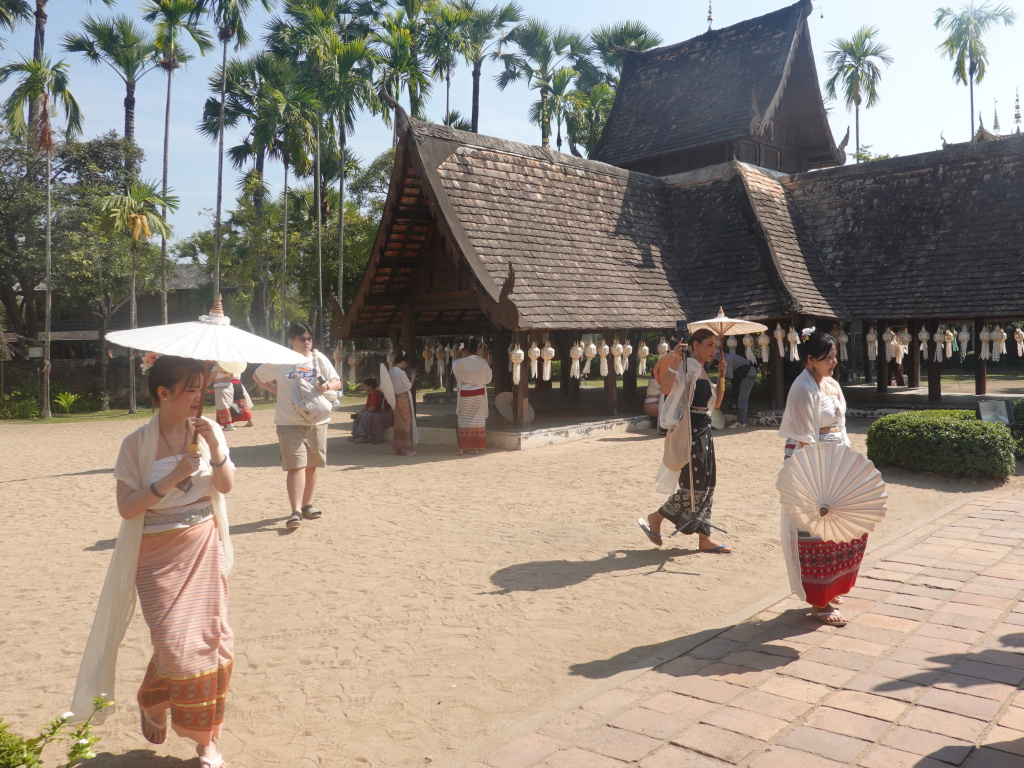
When the driver entered the parking area, it became immediately clear that this was no longer a hidden, almost secret temple. The parking lot was full. Across from the parlking area are a couple of shops where ladies (and men, too) can dress in traditional Lanna-style dress, then go to the temple to have photos taken (probably for Tik-Tok). And we saw many ladies dressed this way at the temple. I think I was the only non-Asian I saw during my time there.
The temple grounds are not large, less than 100-meters approximately square with a wall. I took a photo of entrance area and the entrance to the actual temple grounds.
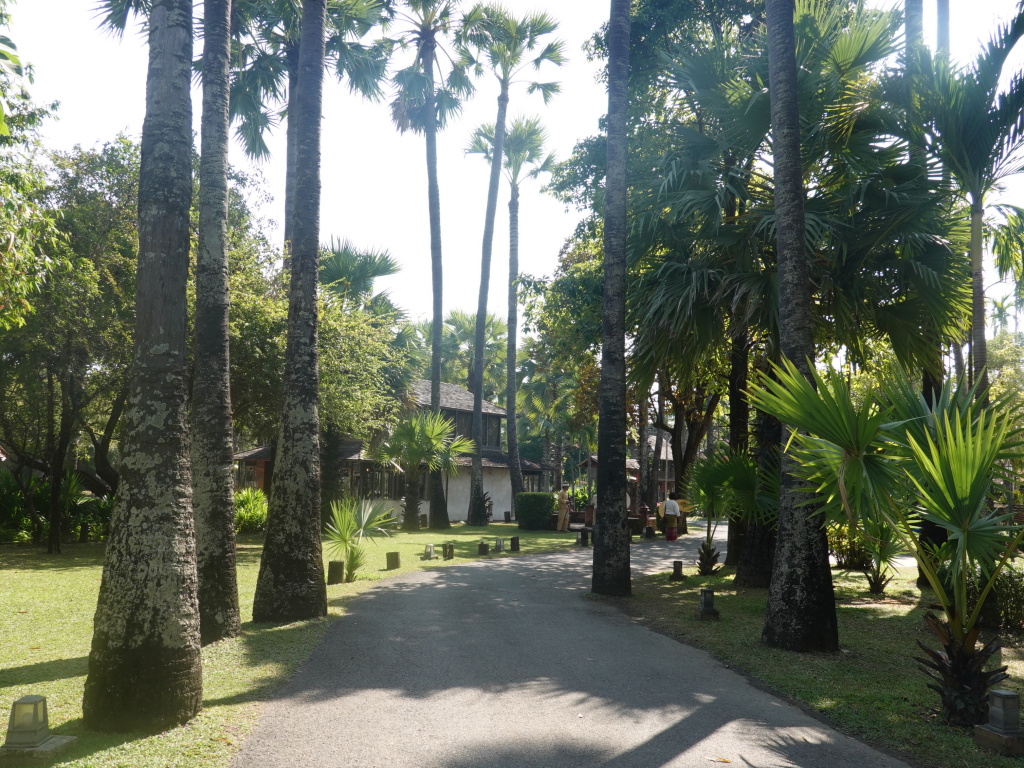
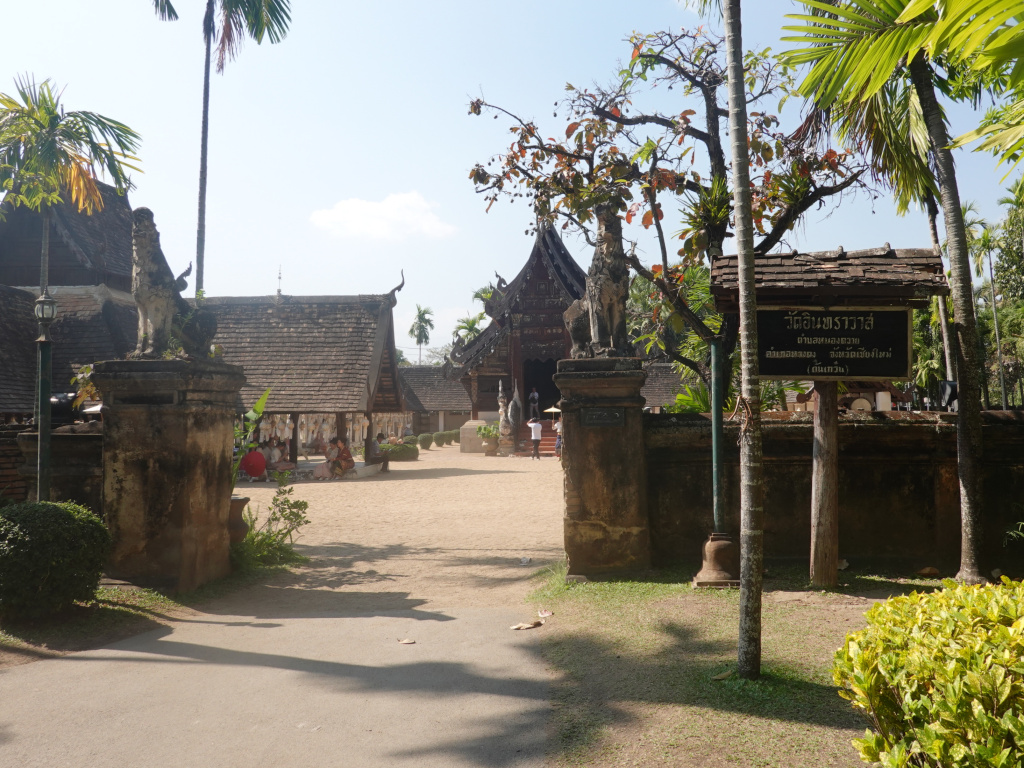
There was a larger group of ladies getting their photos taken just inside the entrance, so I wandered over to the left to have a look at the bell tower. Not all temples have these, and some are interesting. I got two views, one from inside the temple grounds looking out to the bell tower, and another from outside looking inward.
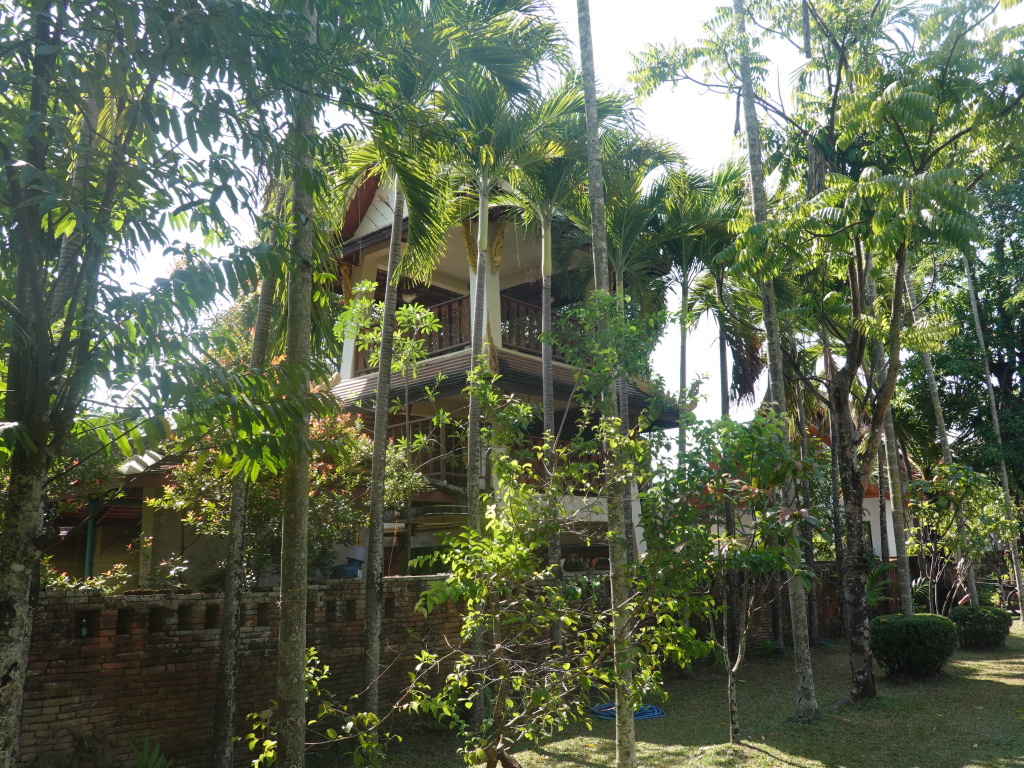
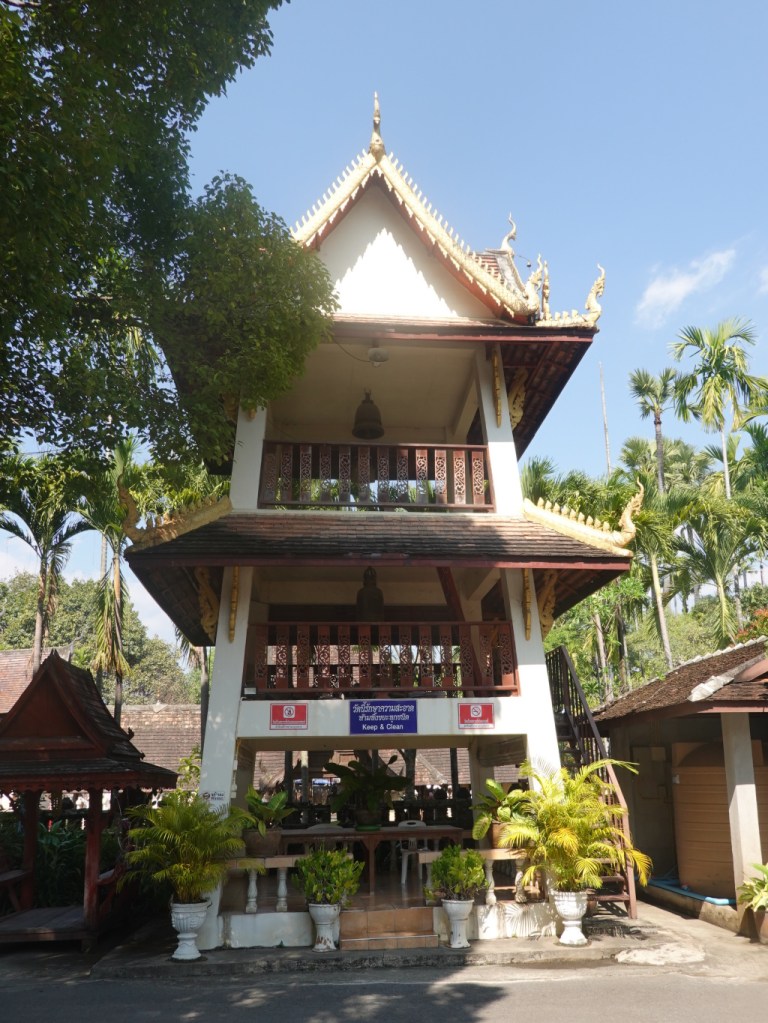
Sala Chatummukh
The temple features a unique Sala Chatummukh (four-portico pavilion, similar to a cloister in some Christian churches or monasteries)—the only one of its kind in Northern Thailand was constructed around 1856–1869. I have seen a few of these at temples in Bangkok, and there is a new one at Wat Phalad, but did not know the name of this feature until I was researching Wat Ton Kwen. I went up the stairs of the bell tower to the second floor (it was clear that I should not be there), and took a photo of the south side of the sala chatummukh.
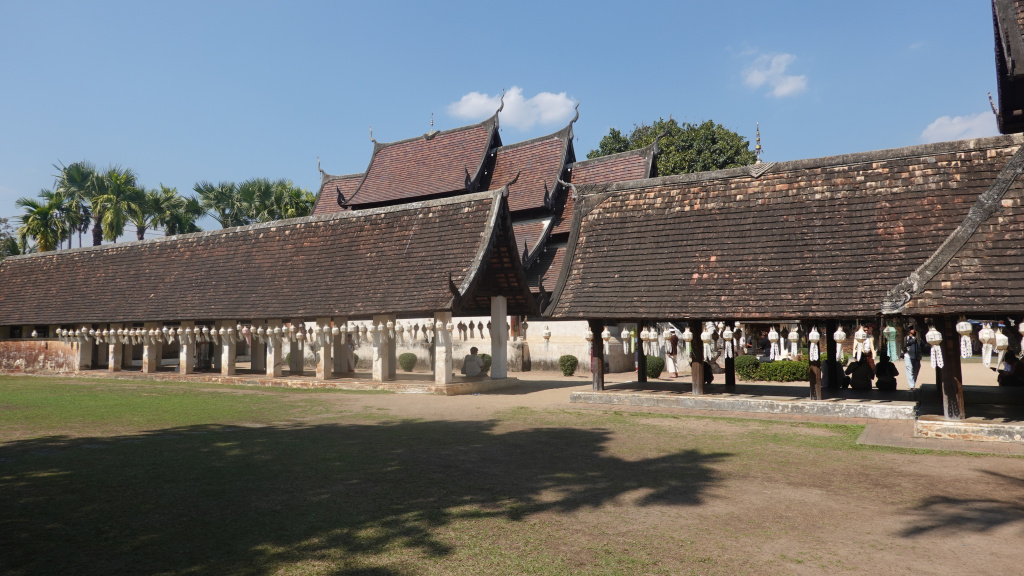
After climbing back down from the bell tower and re-entering the temple grounds, I took another photo of the sala chatummakh.
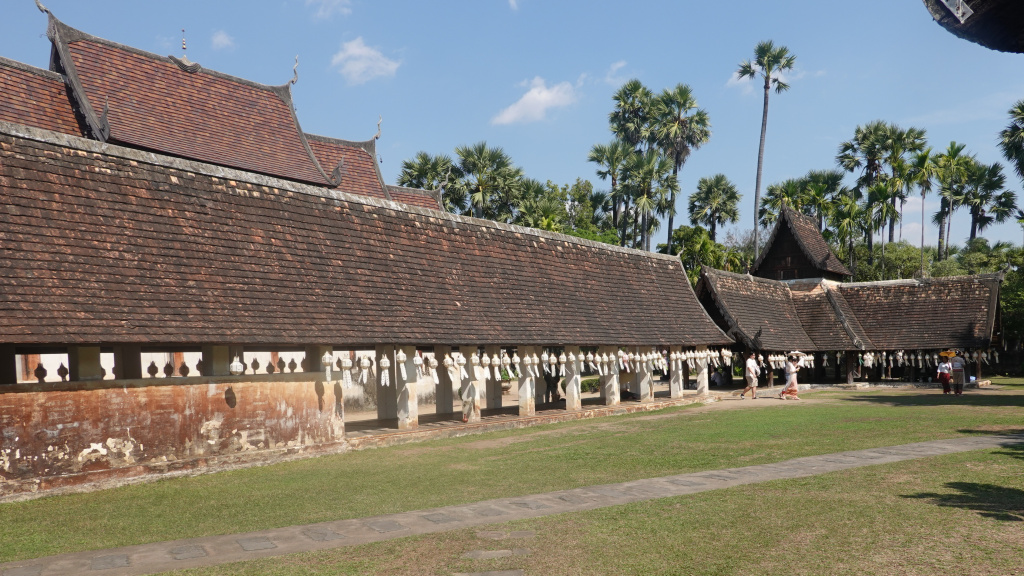
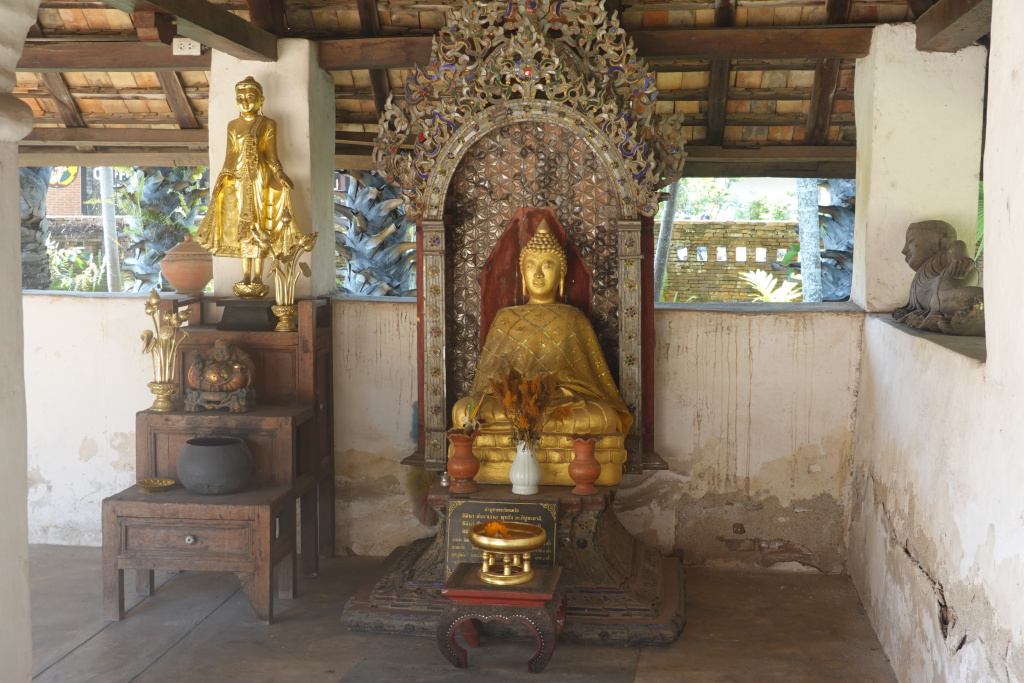
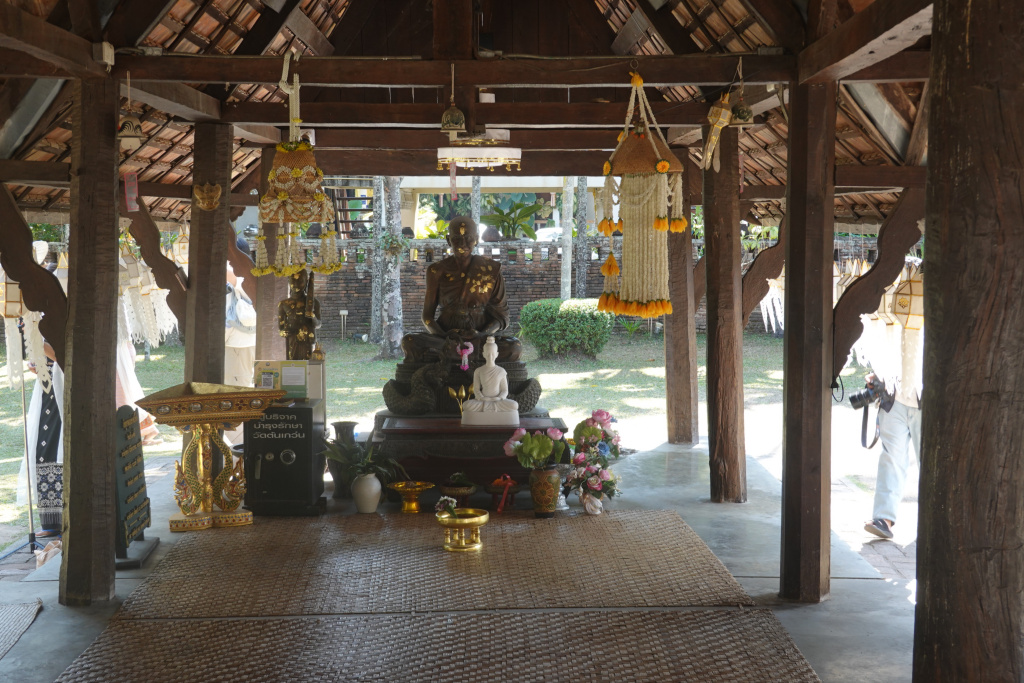
I walked along the sala chatummakh. At one corner is a Buddha image.
Turning to the right, here is a view down the sala chatummakh to the end near the viharn entrance.
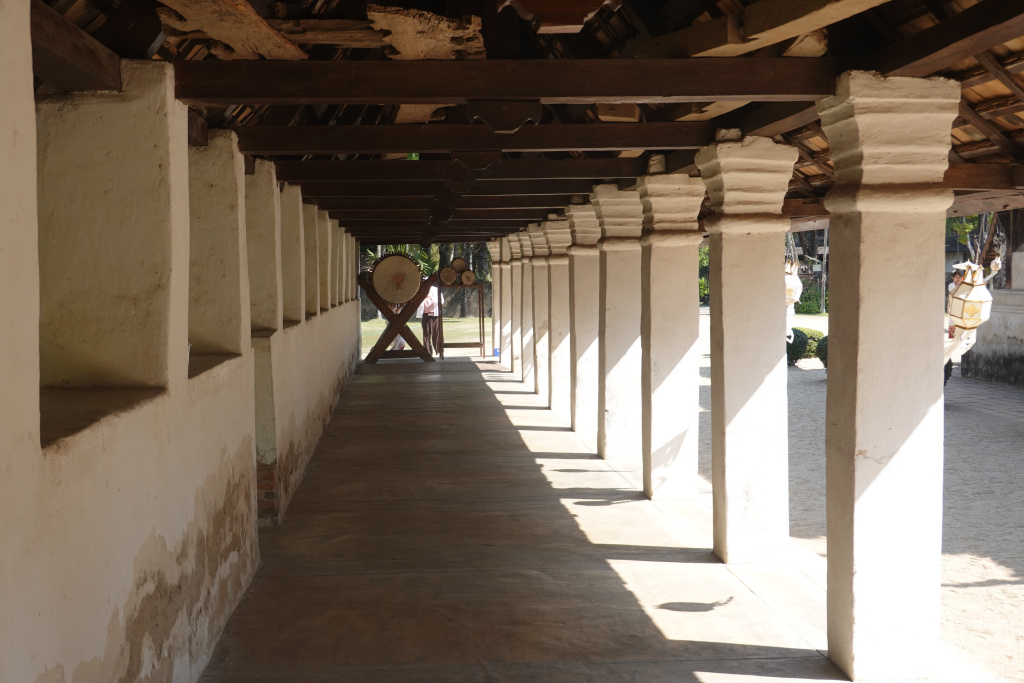
Here is another Buddha image at the end of another part of the sala chatummakh, closer to the back wall of the temple grounds.
Wat Ton Kwen Viharn
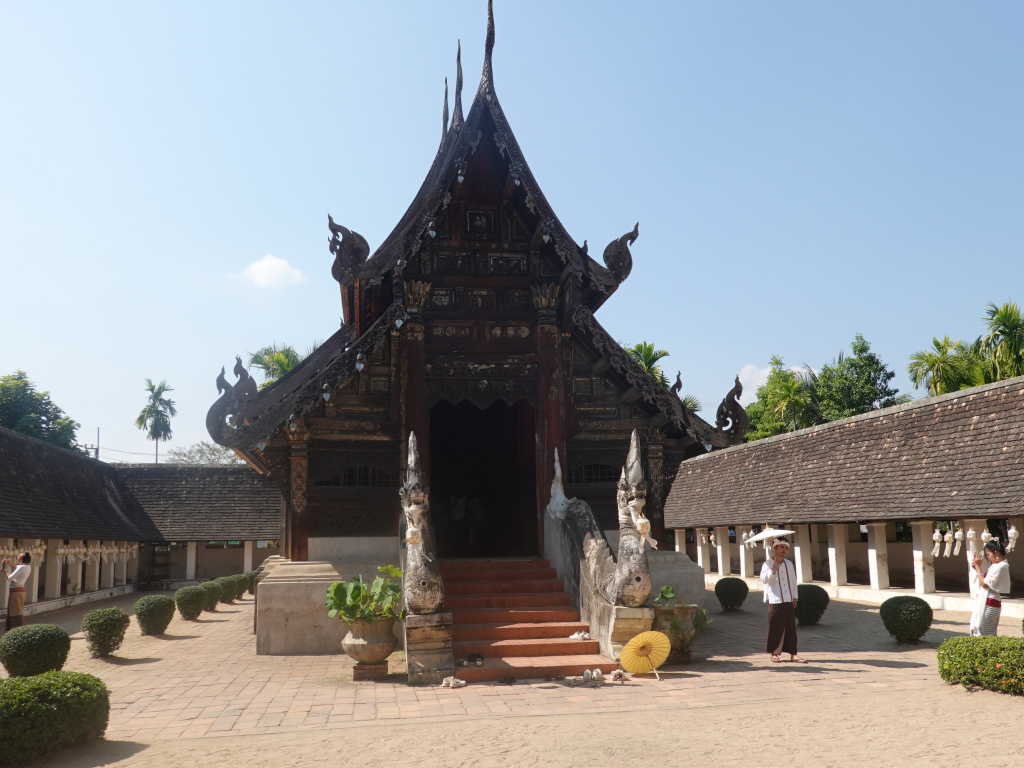
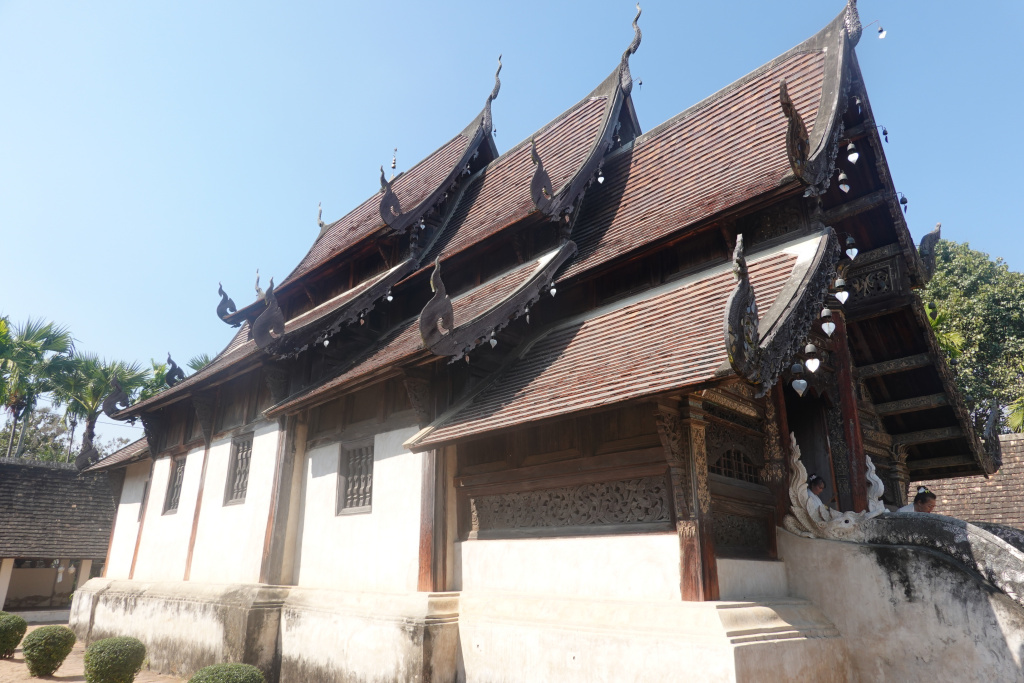
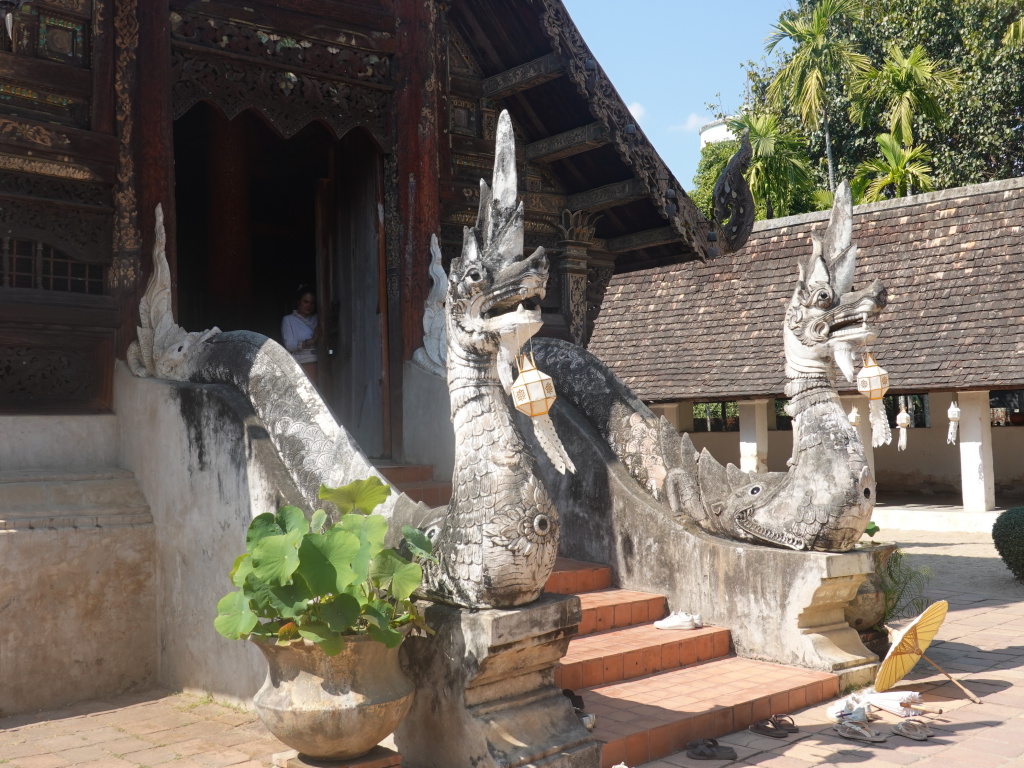
The viharn built in 1858 has distinct Lanna styling: a triple-tiered roof, intricate wood carvings, and mythological Naga serpents guarding the entrance stairs. It houses a stucco Buddha image in the seated Maravijaya posture, and the wall behind the principal Buddha image features an arched niche adorned with metal votive tablets.
First, the front of the wooden viharn, with the sala chatummakh seen on both sides of the viharn.
And a view of the side of the viharn, where the Lanna-styling of the roof can be seen.
A closer view of the wooden, carved Naga serpents guarding the entrance to the viharn.
And here is a photo of the area in front of the viharn. The photo shows a small number of the many ladies in the traditional Lanna costumes for their personal photo shoots. Lots of laughing and giggling…they are having fun and getting photos for Tik-Tok (or whatever).
Part 2 – Lanna Open Museum – Park Next Door
Directly adjacent to the Wat Ton Kwen temple grounds is a new development called the Lanna Open Museum. In contract to the very busy temple grounds, there are only a handful of people in the Lanna Open Museum. And apparently this is because the temple grounds are free while the Lanna Open Museum charges 159 baht to enter. The 159 baht ticket also allows a 50 baht discount for a coffee in the coffee shop.
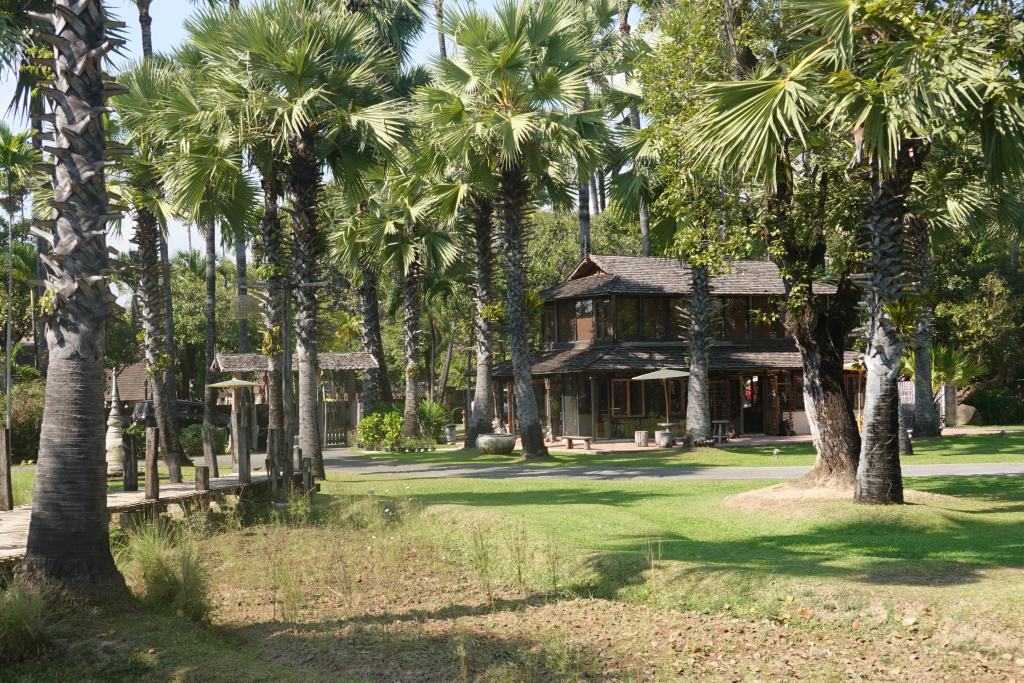
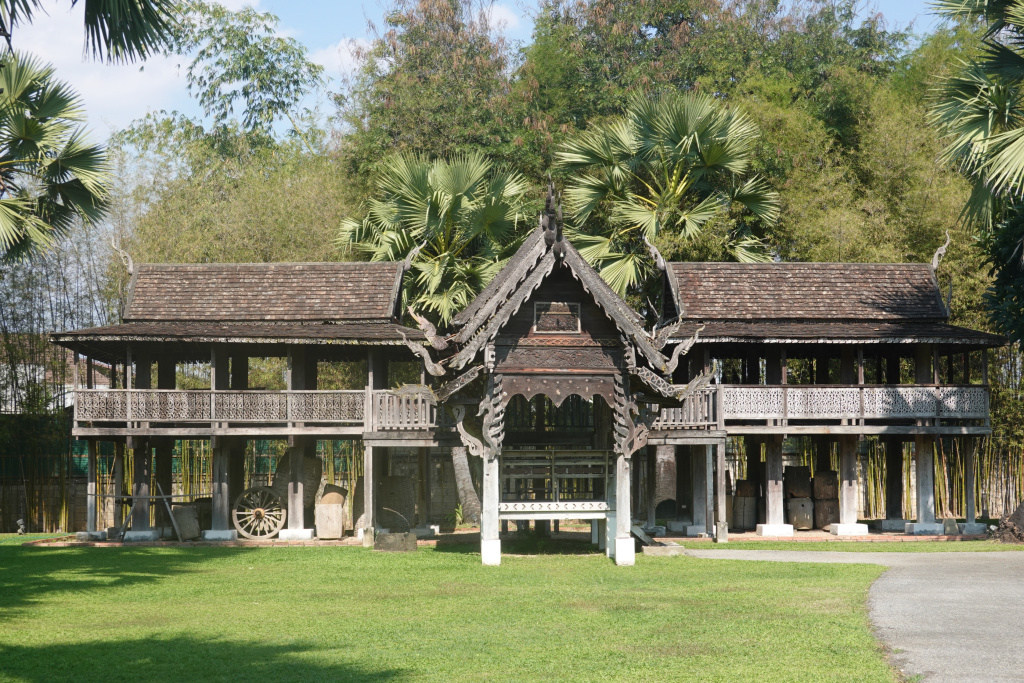
The grounds are still under development. All the buildings are carefully constructed using traditional techniques and look as if they are very old. There are walkways, a lake, and many good places and views for photos. So I took photos – not of myself, but of the park itself.
First, the bamboo walkway to the other side of the lake.
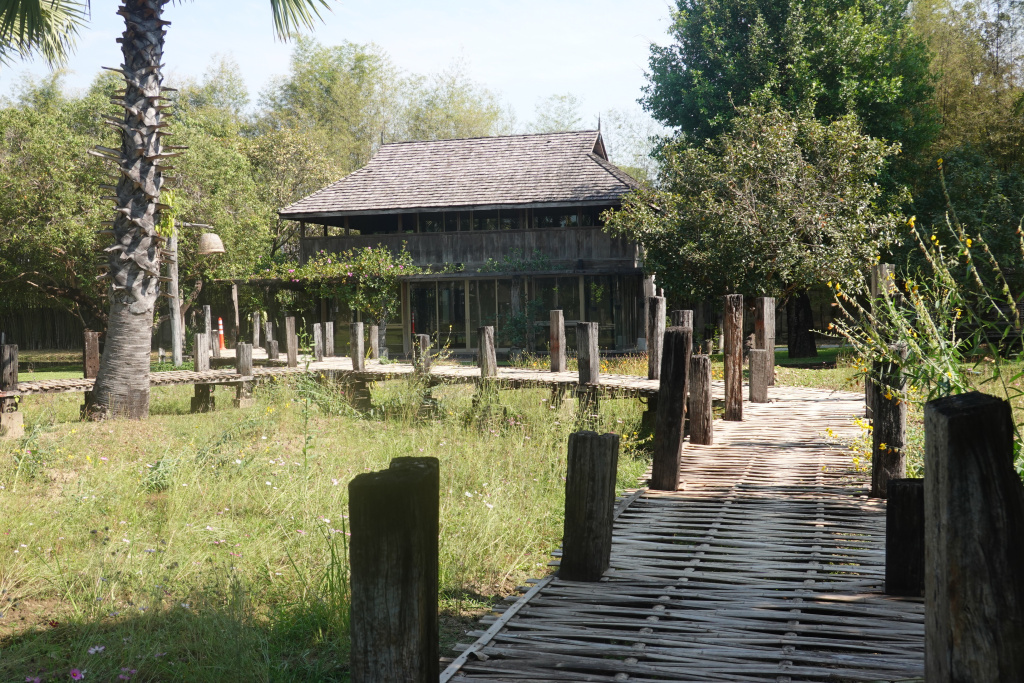
Then, still on the bamboo walkway, a couple of photos of the lake.
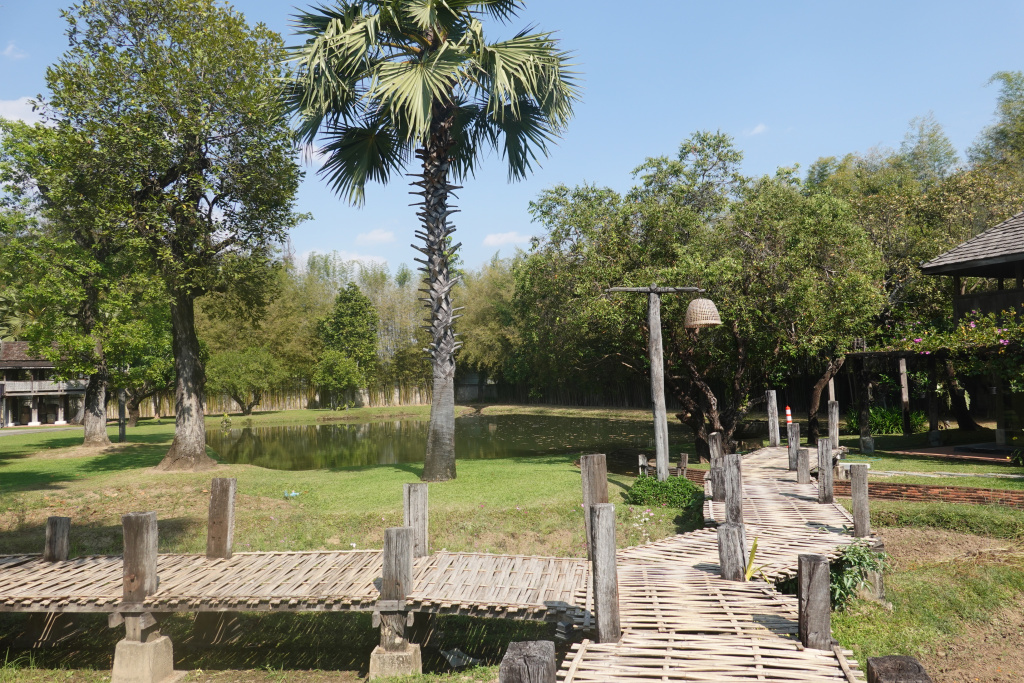
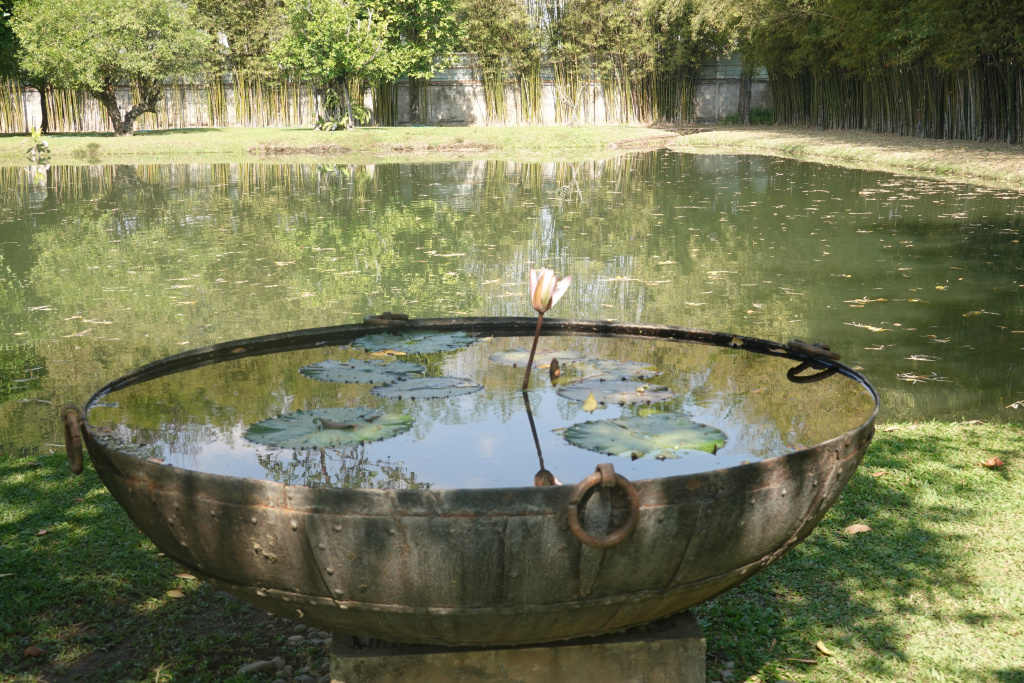
Finally, two views of the general area. One of the lake area and another of one of the old-looking new buildings.
This was a very nice visit to see a temple I first saw years ago during one of my first winters in Chiang Mai. While the temple area has become more known and popular, it is a unique temple in a quiet, serene place, good for contemplation and a few photos.
Next: Another day in the life and moving day.

 James the Intrepid Pilgrim