Wednesday 14 January 2026
Visiting an important but very quiet temple
Walking back to The 3-Sis through the sois (a soi is a small road, smaller than a road, larger than an alley, perhaps a “lane”) after getting a haircut at Samlaan Barber (my favorite barber), I found myself on Ratchamanka Soi 6. And I came upon a temple that is something of an “old friend.” I have visited Wat Phra Chao Mengrai many times over the years.
Wat Phra Chao Mengrai, or simple Wat Mengrai, is almost hidden away on a soi off a main road, not in the heart of the main tourist area of the Chiang Mai old city. It is a pity more tourists do not visit this temple because it is a peaceful place where you can forget you’re in the middle of a busy city and just relax and enjoy the quiet.
Here are two signs at the entrance to the temple grounds.
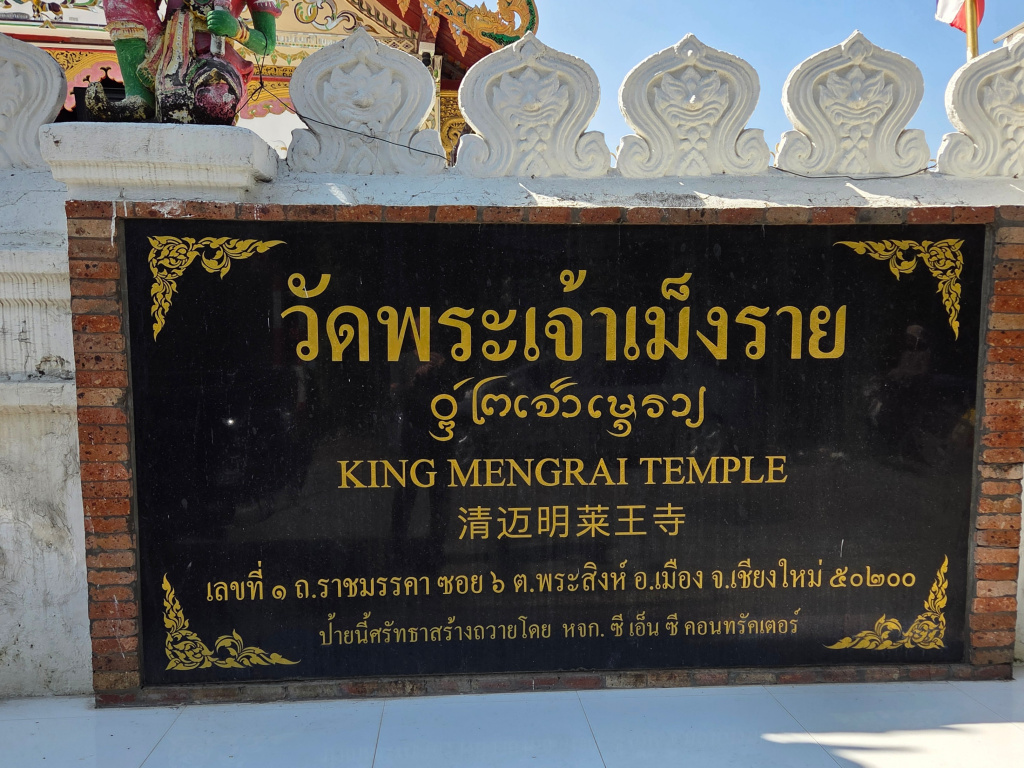
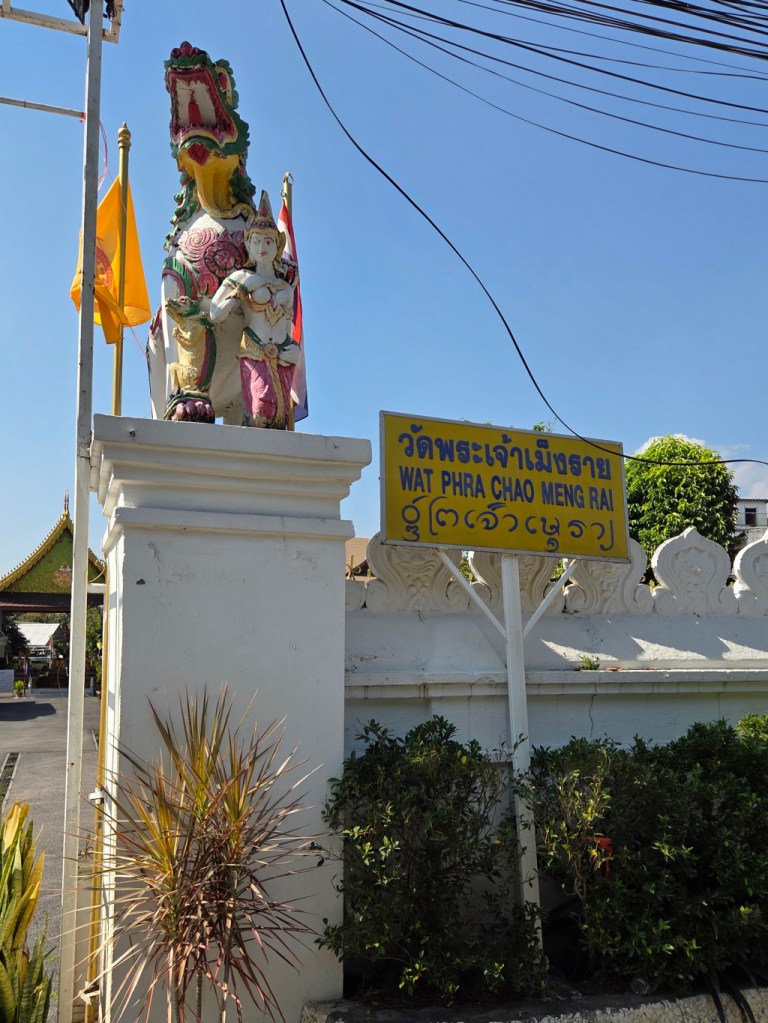
There is a plaque in the temple that tells us that the temple was built by King Mengrai, the first King of Lanna (1292 to 1311), around the same time as Wat Chiang Man in 1296. Wat Chiang Man was the first temple built by King Mengrai as a place to live and worship as he managed the contruction of Chiang Mai. The story continues that the King had a new Buddha image cast called King Ka King and was travelling to install it at Wat Chiang Man when the cart carrying it broke a wheel. Instead of repairing the cart and proceeding on, King Mengrai took the breakdown as an omen, decided to leave the Buddha image where the cart broke, and had a new temple constructed at the site, called the “King Mengrai Temple”.
The Viharn
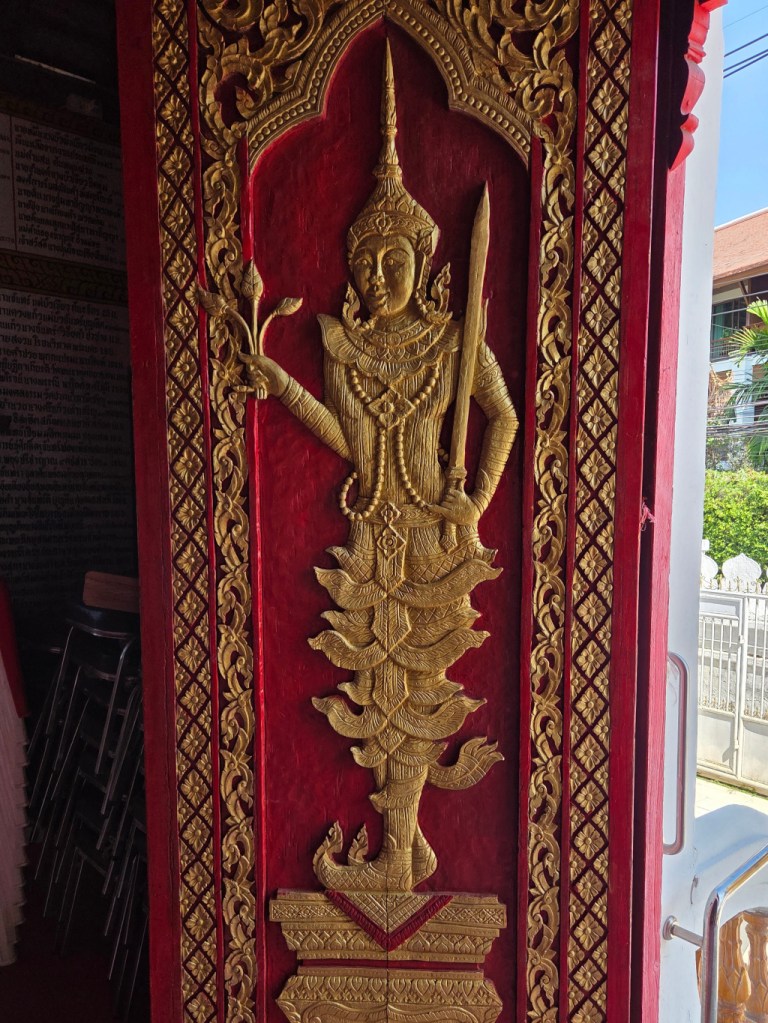
The front of the viharn (assembly hall) is simple with understated artistic thewadas depicted (a thewada is a angelic being that lives in the heavenly realms). There are my favorite – artistic, playful, and fun.
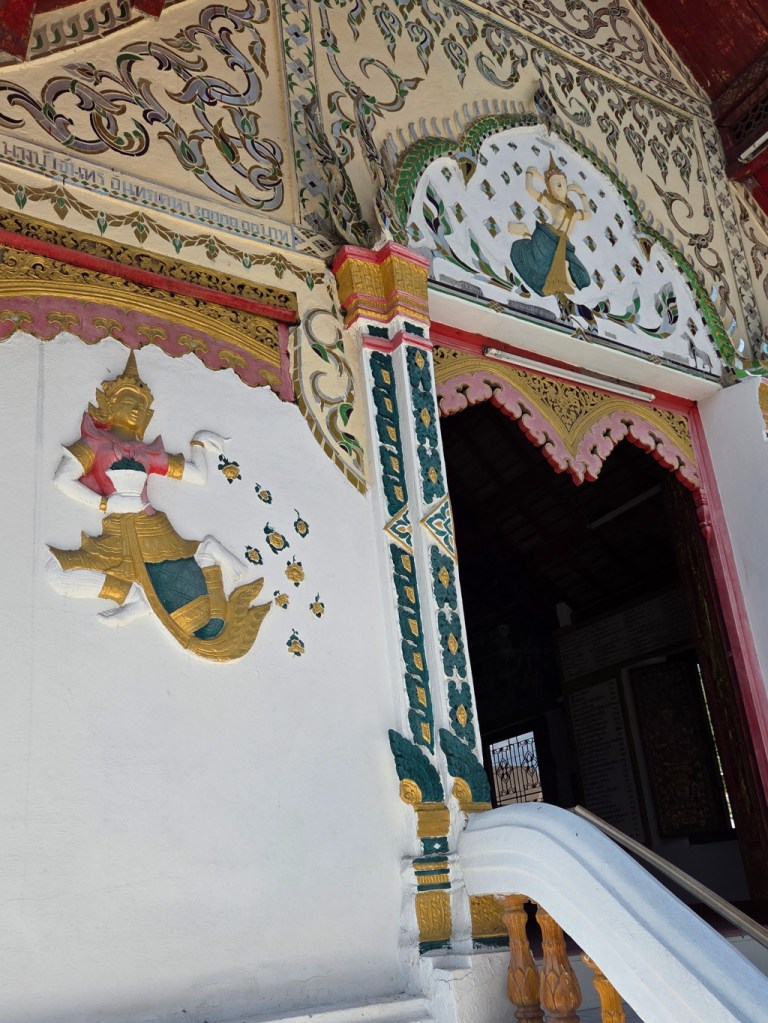
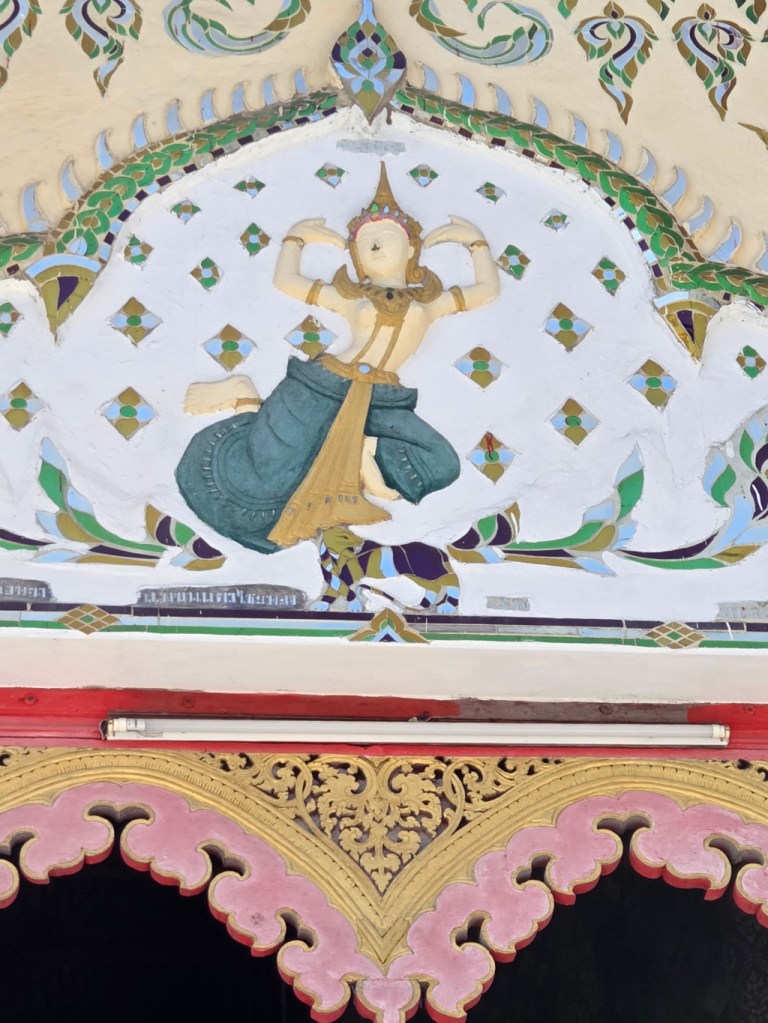
The inside of the viharn has a more somber, serious feeling, with the darker mood enhanced by the dark colored Buddha images on the altar.
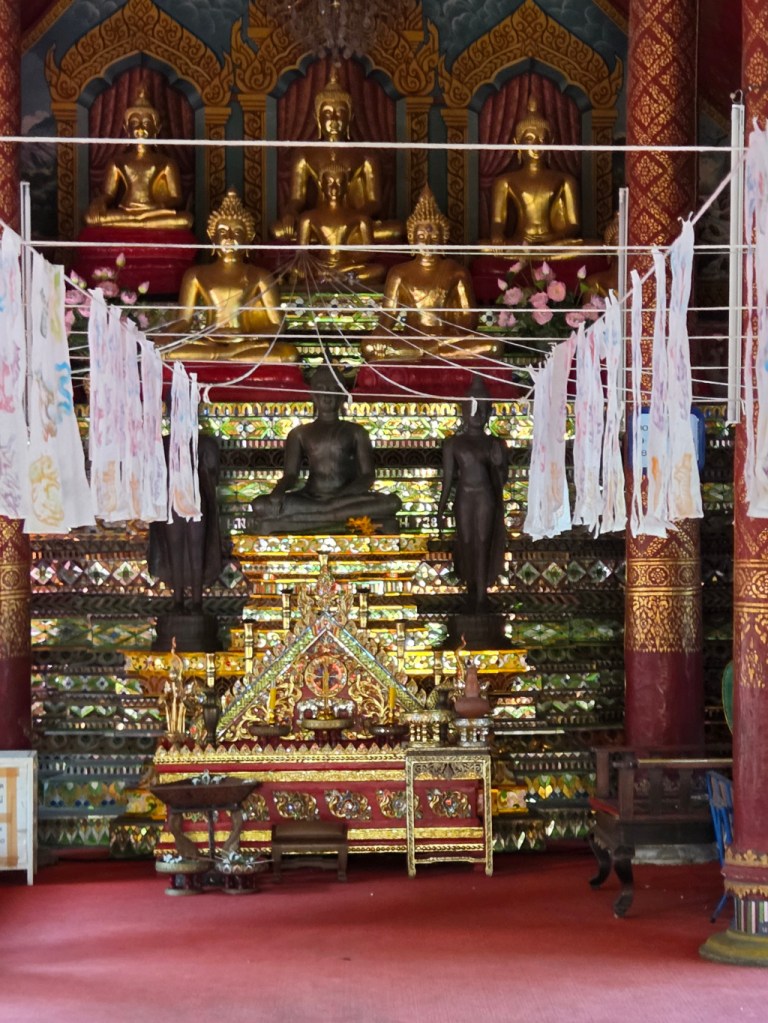
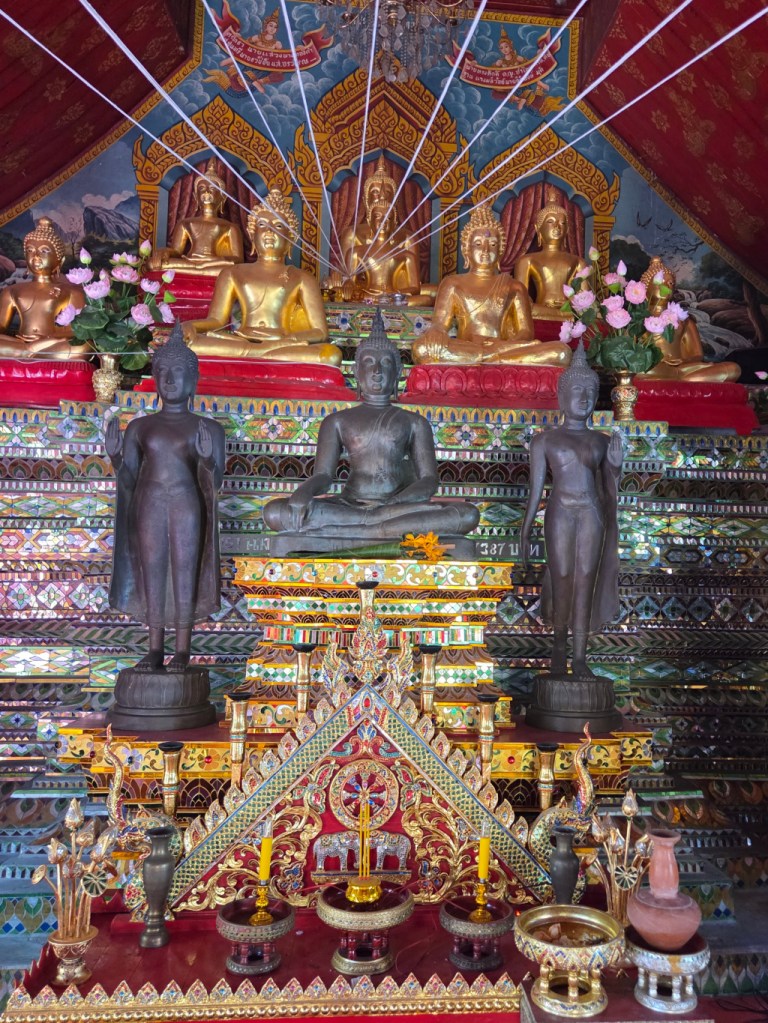
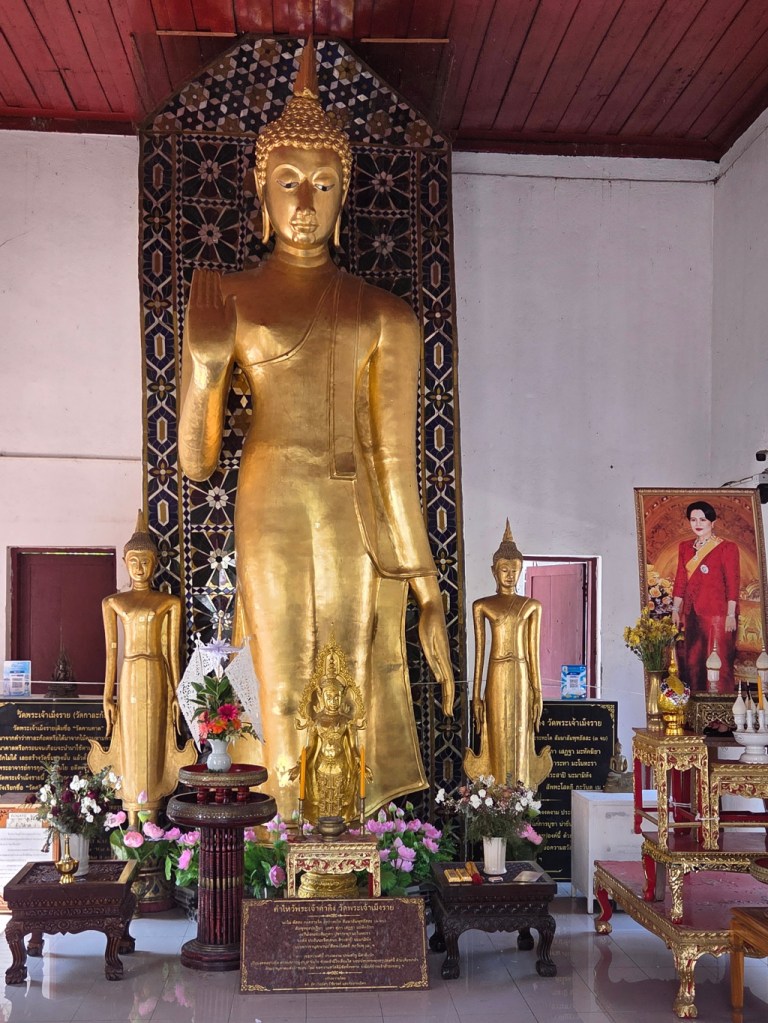
The seated images at the back are all in the Subduing Mara mudra. The standing images are in various positions with the largest image in the Abhaya mudra of dispelling fear and of reassurance.
Paintings / Murals
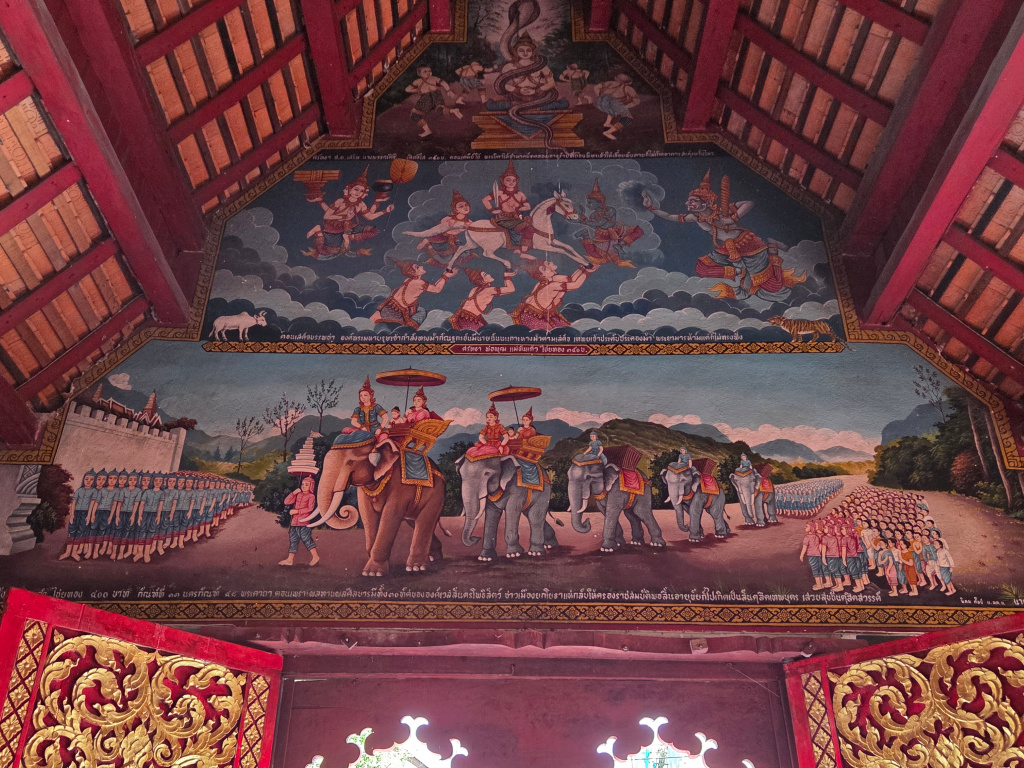
High up on the walls above the windows are large paintings or murals, much like inside the viharns at most temples. If I knew how to interpret the murals, they tell a story about the Buddha and/or the history of the temple. First, two of the paintings on one side of the viharn.
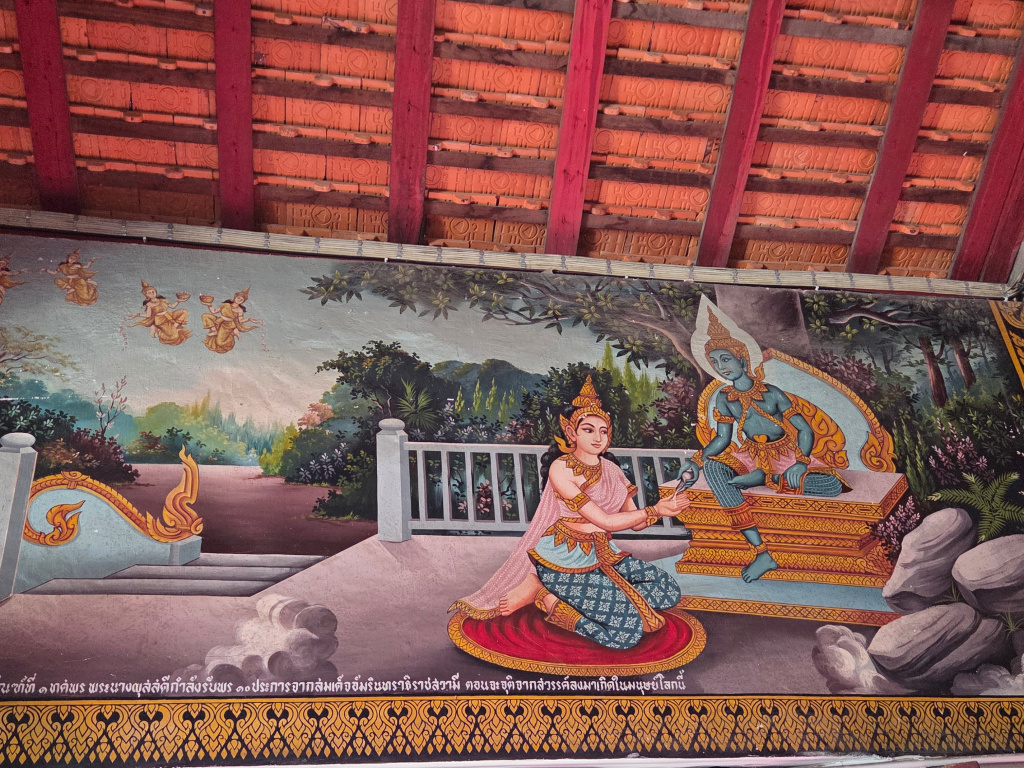
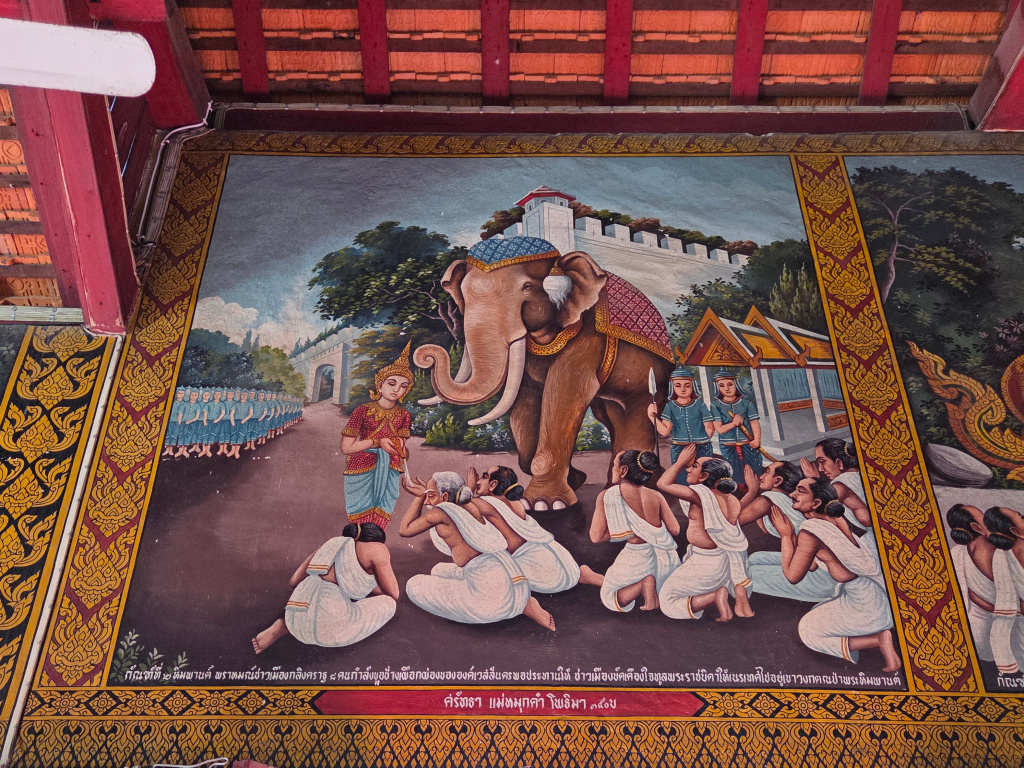
And there is a larger, triple layer painting about the entrance, seen as you exit the viharn.
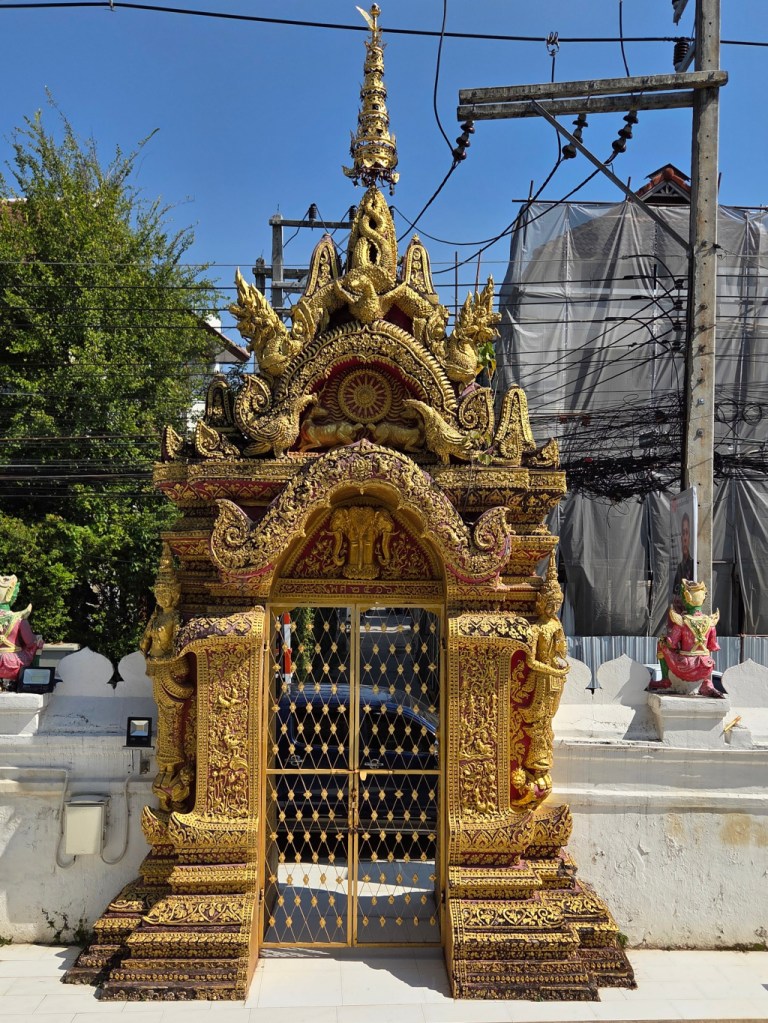
Leaving the viharn, I took a photo of the old, very ornate pedestrian entrance, now always closed. In modern times, everyone enters and leaves through the newer entrance that accommodates both pedestrians and autos.
And before I leave the viharn completely, I took a photo on the door. Very detailed, yet understated and quite beautiful.
Standing Buddha Pavilion
Behind the viharn is a pavilion. I suspect this is the Buddha statue that was on the cart when it broke, but all of the research I have done does not confirm that suspicion. After a recent refurbish of the temple, the pavilion with the standing Buddha is more plain, less cluttered, almost stark. The standing Buddha one is putting its palm forward in the Abhaya mudra, the posture of dispelling fear and bringing reassurance.
The Chedi
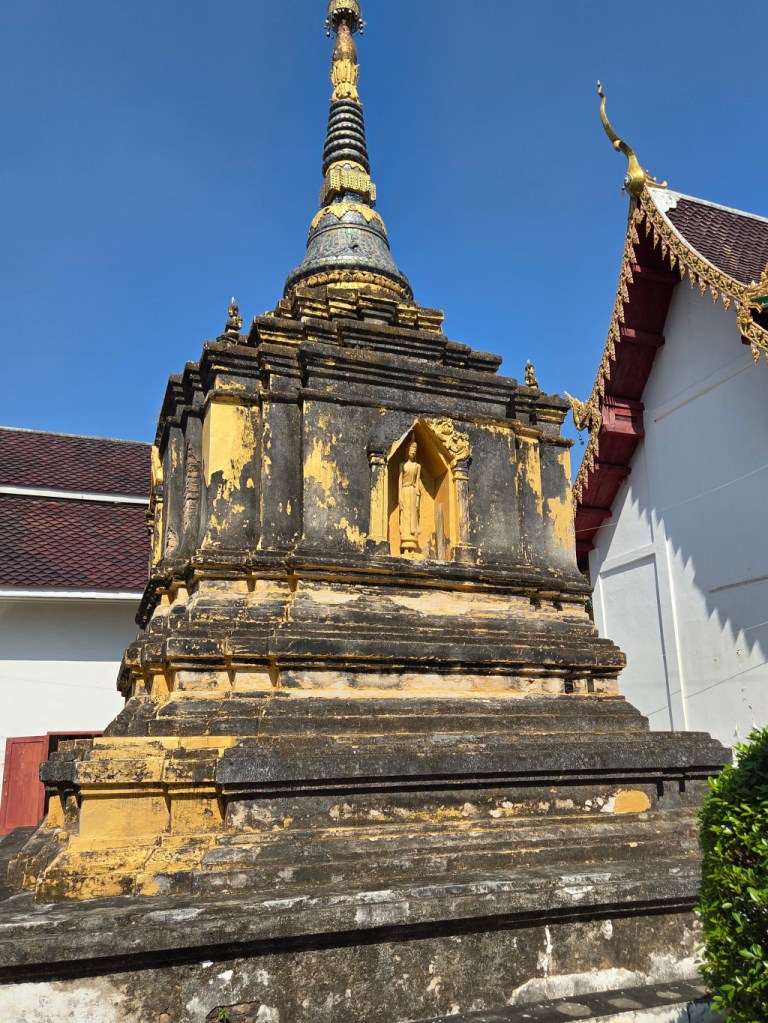
Behind the viharn and beside the standing Buddha pavilion is the chedi. While the temple grounds and structures were refurbished a few years ago, it seems that the chedi was overlooked. The chedi appears that it is in need of being refurbished.
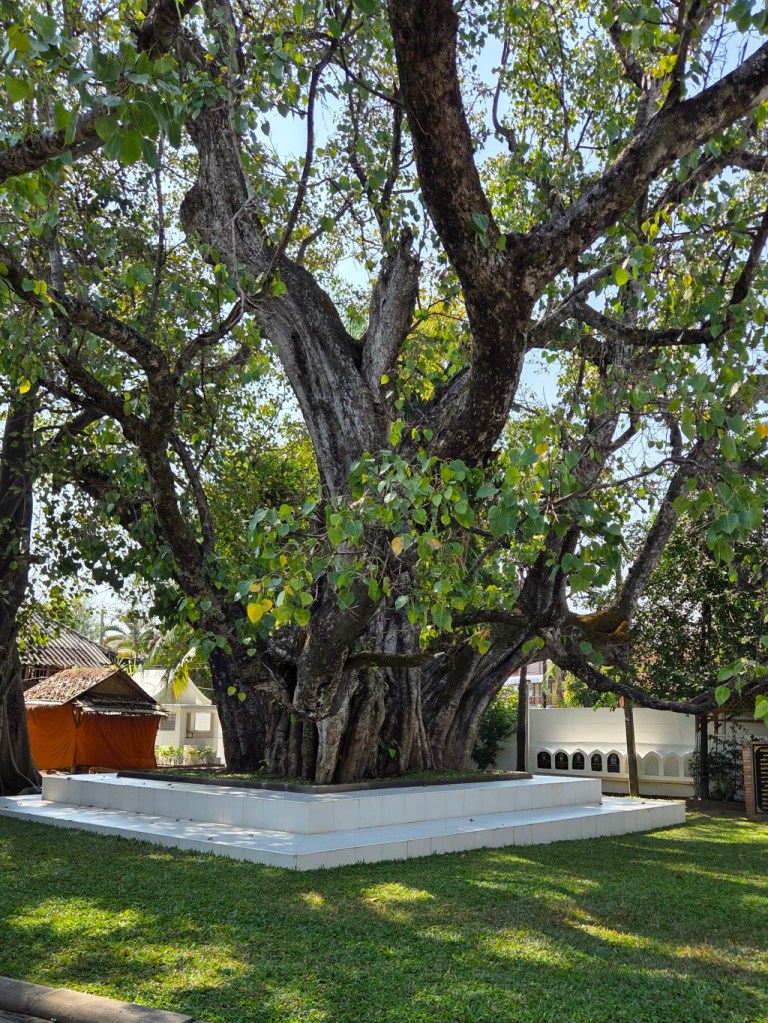
On the other side of the chedi and standing Buddha pavilion is this old and beautiful tree. It has what appears to be a seating area around its base.
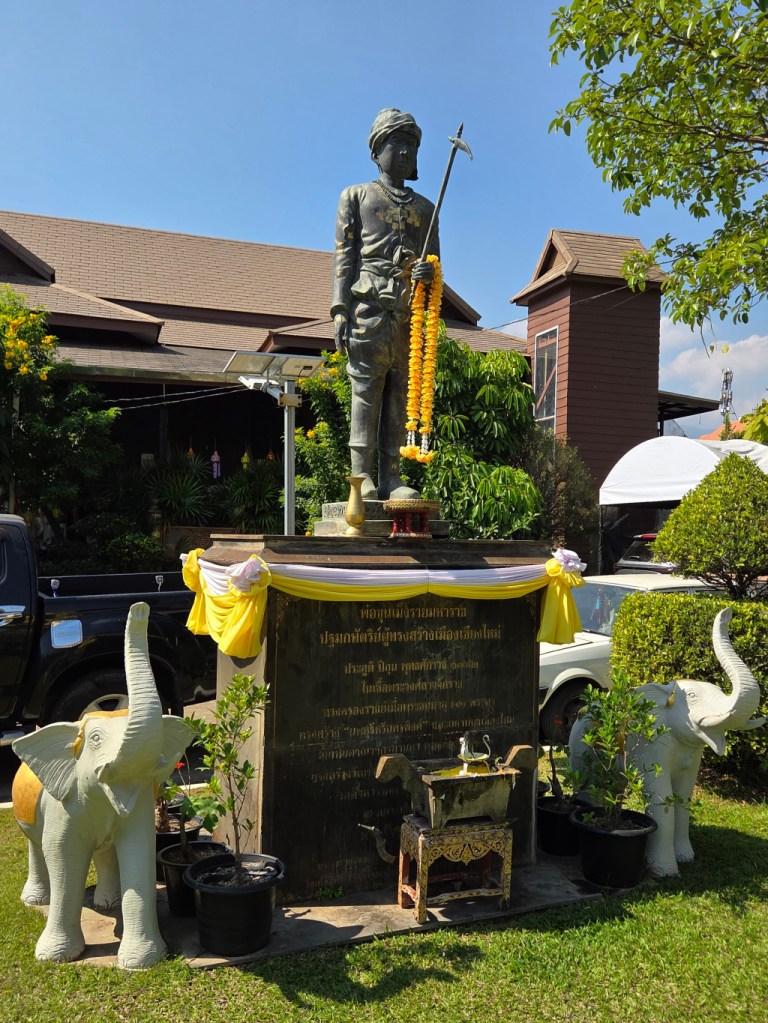
And just to the north of the old tree is the statue of King Mengrai.
A nice visit to a temple I seldom see. I always enjoy my time at this temple when I do come here.
Next: Other local temples or another Day in the Life

 James the Intrepid Pilgrim