Sunday 4 January 2026
Back to the main part of Chiang Mai after seeing the Railway Station
After walking from central Chiang Mai to the Railway Station, then along the railway yards, and finally crossing the railway, I am now headed back towards central Chiang Mai. I am walking west along a local road, Rat Uthit Road, towards an access road to get to Chiang Mai-Lamphun Road, the main highway between (you guessed it) Chiang Mai and Lamphun.
Wat Muang Kai
Along the way, on Rat Uthit Road is Wat Muang Kai, a temple that I think of as a “local” temple – one that is used by the people in the area, and not of general interest to tourists. In past years on this walk, Wat Muang Kai has been quite busy with many people there and an event taking place. Today, the temple grounds were deserted – while I saw a few cars, I saw no people as I walked through the temple grounds.
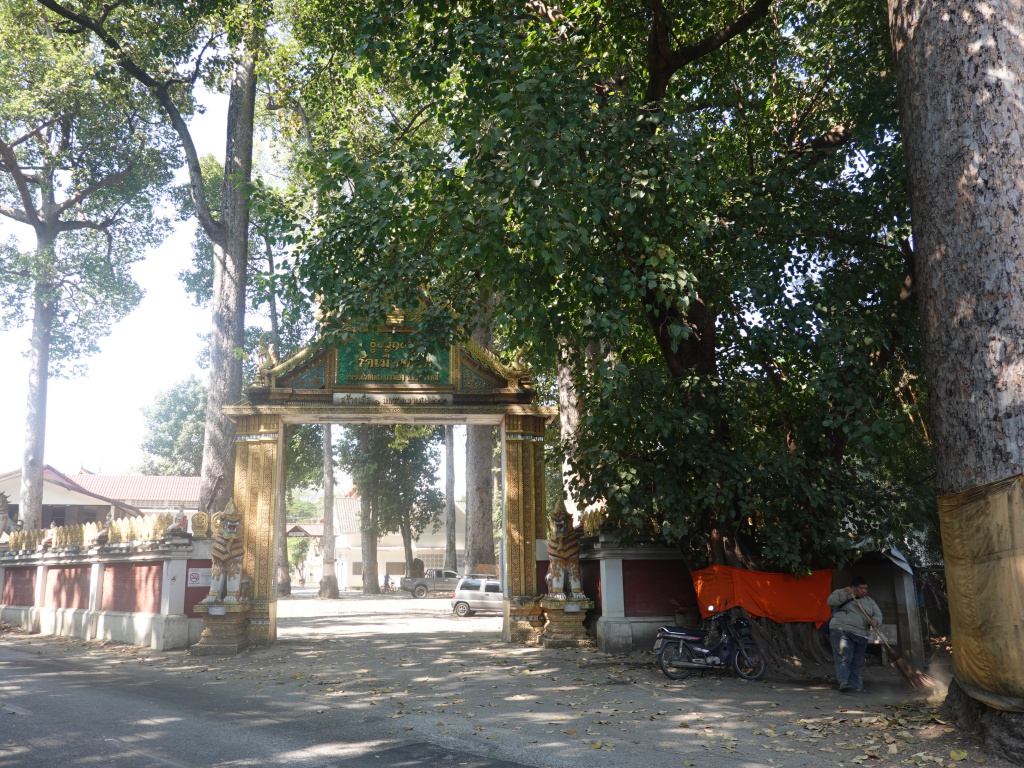
The eastern entrance to Wat Muang Kai by the large tree was interesting to me in past years, oddly now that the temple is so deserted, it seems too quiet, almost lonely.
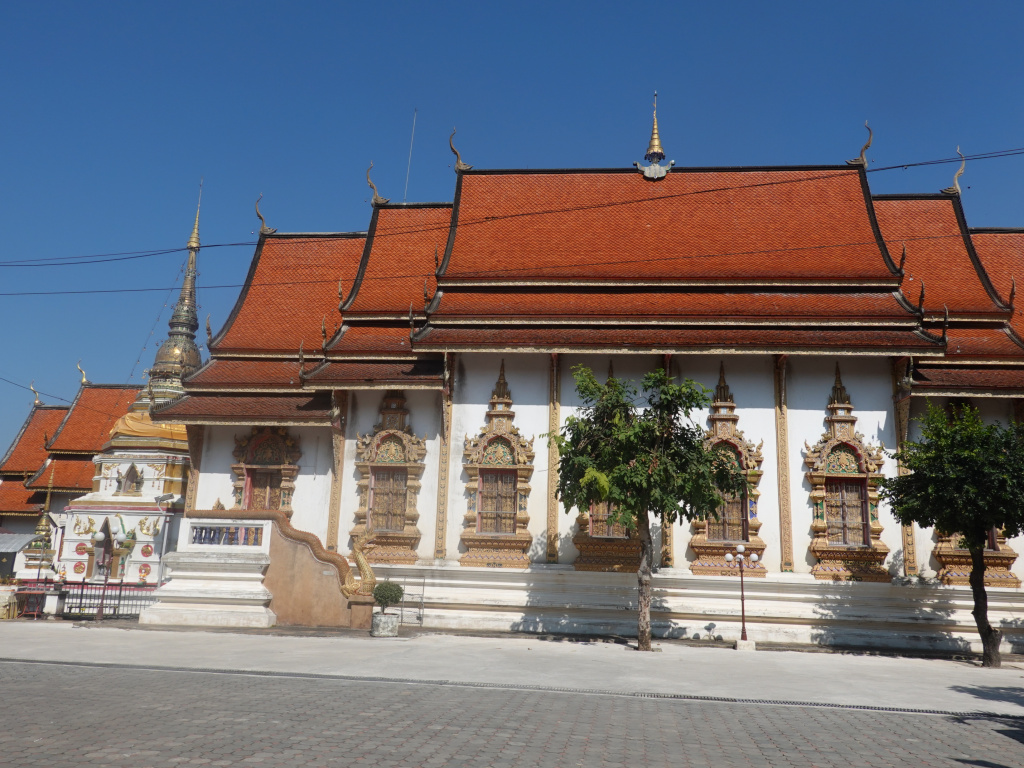
I took a photograph of the side of the viharn (assembly hall or worship hall) with the chedi behind it. This is a large viharn and I have been interested in seeing inside. But the doors (would be on the right of the photograph) have been closed each time I have been here, so I have never seen inside.
Chiang Mai Gymkhana Club
After leaving the grounds of Wat Muang Kai, I crossed over the continuation of Rat Uthit Road as it turned to the northwest, and I am passing by the Chiang Mai Gymkhana Club. This is a very old and relatively famous sports club. The Gymkhana Club was conceived in 1898 by a handful of British expatriate gentlemen with the object of using the club as a means of encouraging sport in Northern Siam. From their web site, is the operating intent or what might be close to a charter written in 1898:
“The object of the Club shall be the encouragement of sport in Northern Siam. For the Club to achieve this goal it should be managed so as to meet the needs of the members and their guests from time to time, and be run as a profitable enterprise where all profits are circulated back into the Club for continual improvement.”
Also from their web site is the following:
The British playwright and novelist, Somerset Maungham wrote,when he visited the Gymkhana club while touring through the Chiang Mai district in the 1920s,”although horse racing is no more, there are excellent facilities for golf, tennis, squash and cricket. The Gymkhana club is well worth a visit and provides a chance to take a step back into a different kind of Thai history.”
Two years ago, Chiang Mai suffered two major floods near the end of the rainy season. These were both 100-year floods, leaving low areas near the Ping River flooded, deeply in places. The whole golf course was flooded, and after it drained and was inspected, it was decided to completely reconstruct the course. Last year when I walked by, I saw large bulldozers and road graders at work completely resculpting the golf course. A note is that there is a fence between the road (close to the road) and the golf course. The fence is just above my eye-level, so to get a photo, I have to raise my camera over my head, point, and hope I got a good photo. This year, the course is open and busy as ever.
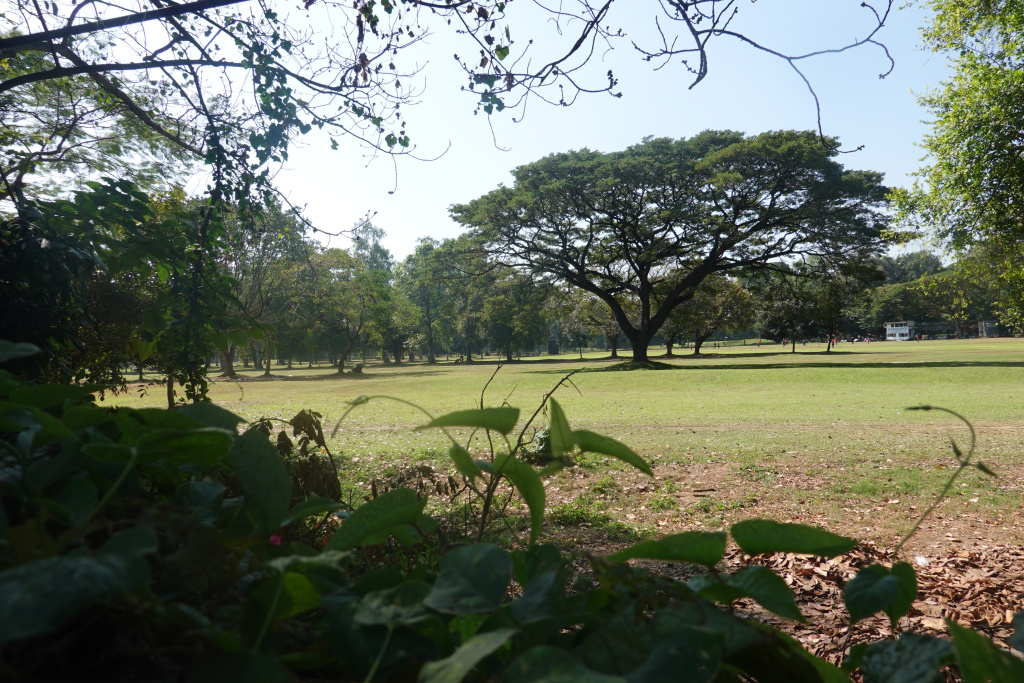
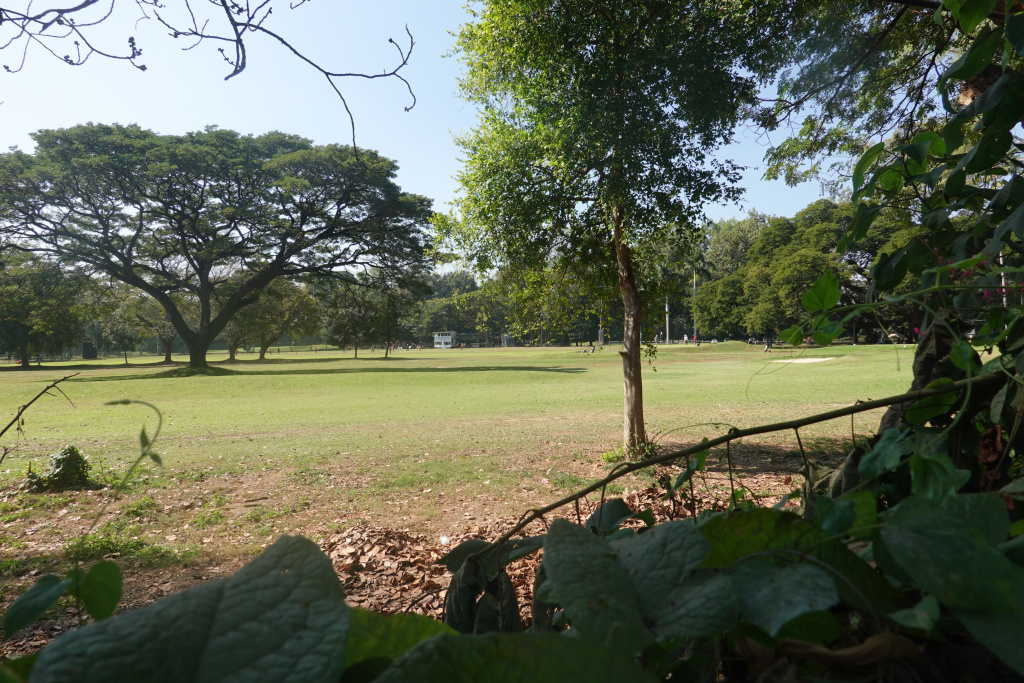
This road is a busy road, so I was focusing on staying as close to the edge as possible. I finally got to the intersection of Rat Uthit Road and the Chiang Mai-Lamphun Road. The Chiang Mai-Lamphun Road is also busy (being the main route between Chiang Mai and Lamphun), and it feels safer because there is a little more of a shoulder or walkway by the road. And continued northward with my sights on crossing the Ping River over the Iron Bridge.
King Kawila Monument
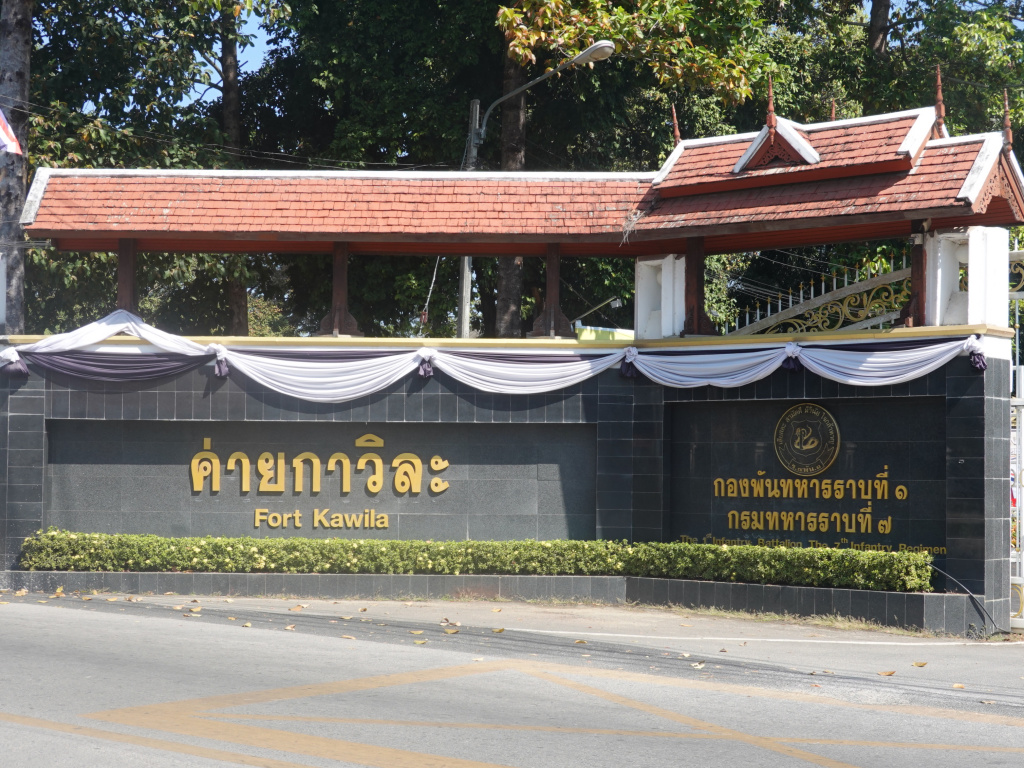
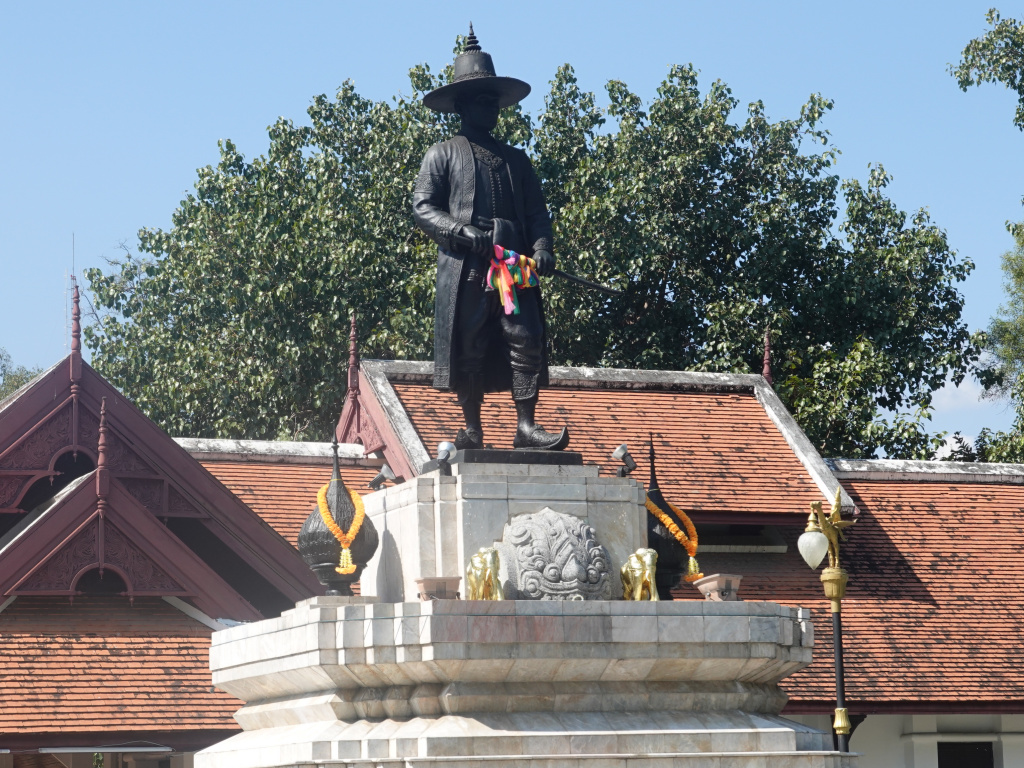
After a while, I came to Fort Kawila on the east side of the road. On the left side of the road is a monument to King Kawila. King Kawila, also known as Phra Boromrachathibodi, was the ruler of the Chiang Mai Kingdom when what is now northern Thailand, then called Lanna, was still separate from Siam. King Kawila was from Lampang. He rose in stature and was appointed to become the ruler of Chiang Mai by King Rama I (of Siam) as a tributary ruler. King Kawila was instrumental in the reclamation of Chiang Mai from the Burmese after the 200-year occupation ended in 1774. Under King Kawila many restoration projects were started, and the city started the recovery to its former glory. Many parts of Chiang Mai were restored or rebuilt, including many temples that had become abandoned during the Burmese occupation. King Kawila was important to Chiang Mai’s history, and it is fitting that he has a monument.
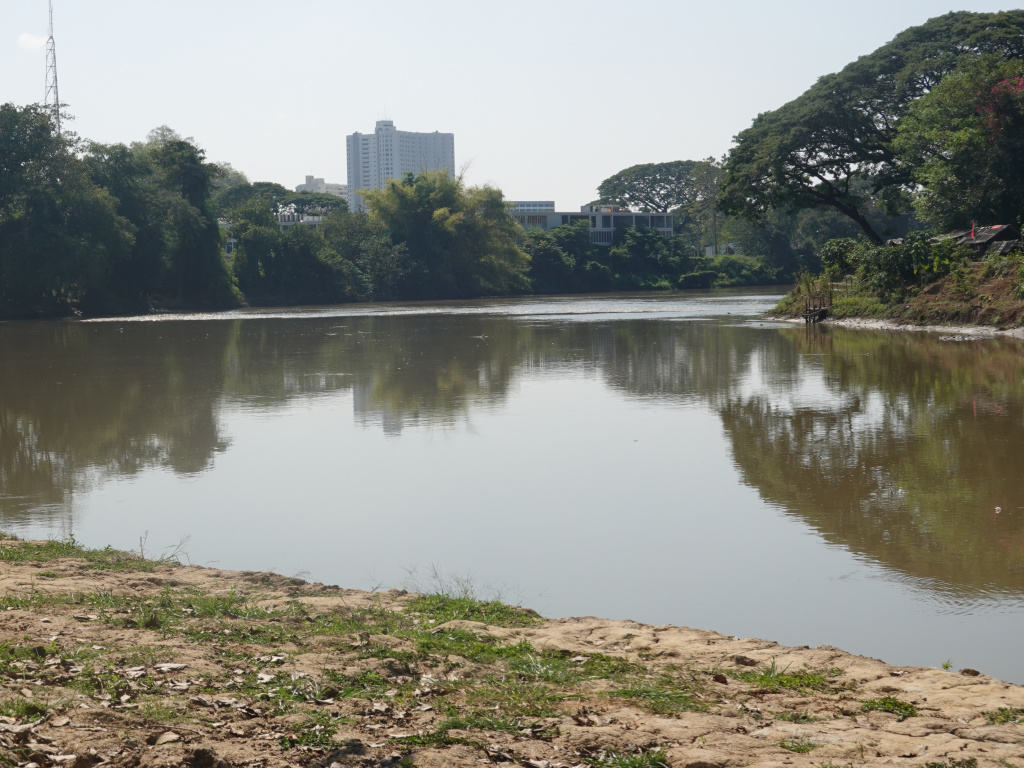
I walked behind the building at the King Kawila Monument to have a look at the river. I found a beautiful view of the river sweeping around a gradual bend as it flowed south, so I just had to take a photo.
Iron Bridge
I continued north along the main road, and soon came to the Iron Bridge, or Khua Lek in [phonetic] Thai. I have always loved this bridge, and crossing the Ping River over the Iron Bridge means I have only 2 kilometers left to get back to The 3-Sis.
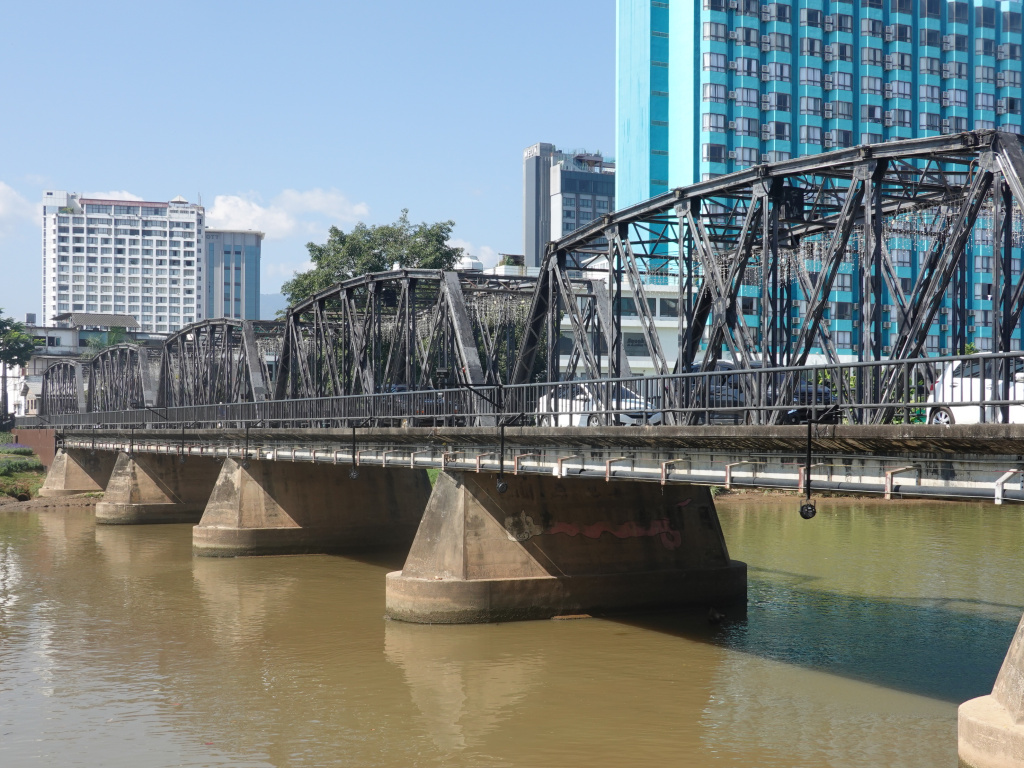
I crossed the river, and made my way into the old city and back to The 3-Sis for a rest.
Next: More adventures or more temples or another day in the life.

 James the Intrepid Pilgrim