Sunday 4 January 2026
Walking by the Chiang Mai Railway Station approach yards
I left the Chiang Mai Railway Station and east a short distance on Charoen Muang Road to the next intersection. This road is called “Road Along the Railway” on Google Maps, and is indeed a road along the railway. I highly suspect there is a more official name documented somewhere. While I am walking along this road, I can look in through the fence (or walk into gaps in the fence) and see the rail yards approaching and adjacent to the station.
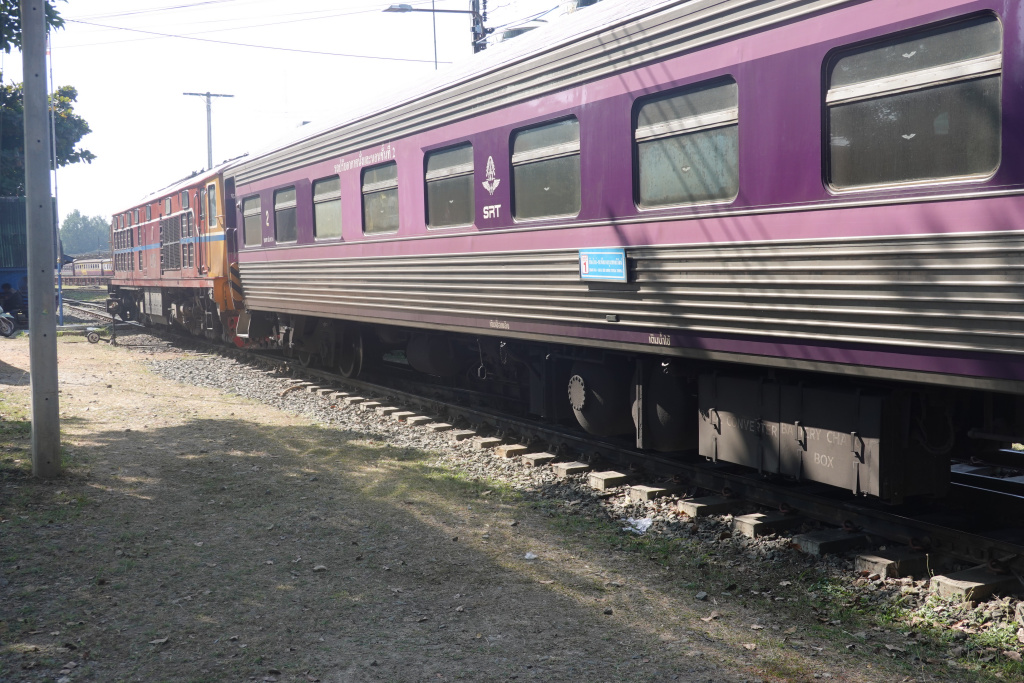
The first thing I took note of was what looks like a small locomotive servicing facility. I saw a locomotive and part of a passenger train at the service facility. Here are two views.

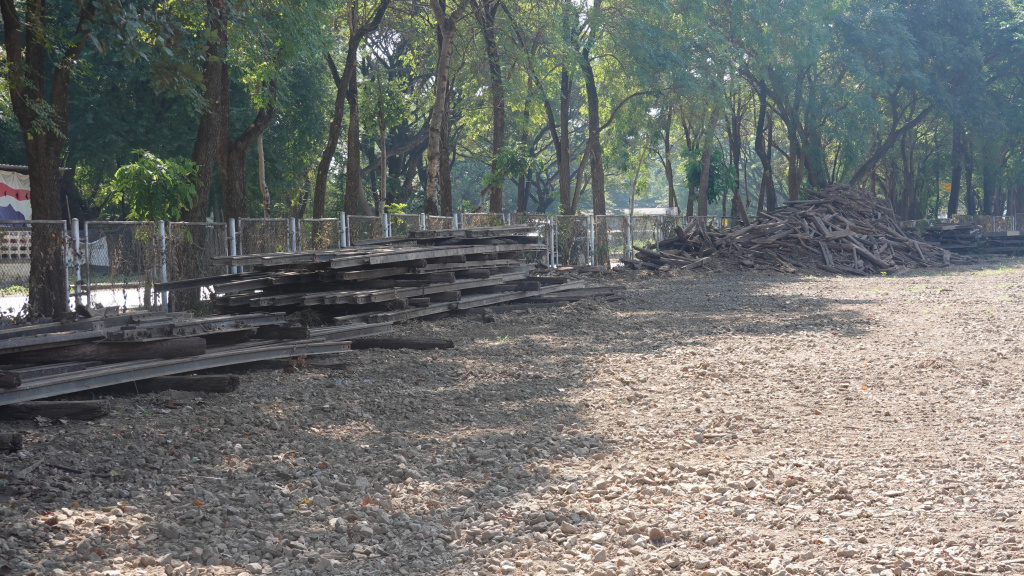
Two years ago, Chiang Mai experienced massive flooding twice at the end of the rainy season. Much of the approach tracks to the railway station was under more than a foot of water. This water causes many problems including the deterioration of wooden railroad ties (called “sleepers” in many countries). A project that had started before the flooding was to replace the old wooden ties with concrete ties. The flooding elevated the urgency and priority of that project. I saw last year some large piles of old wooden railroad ties. This year there are fewer, smaller piles. Here is a photo of a pile of old ties near a stack of rail.
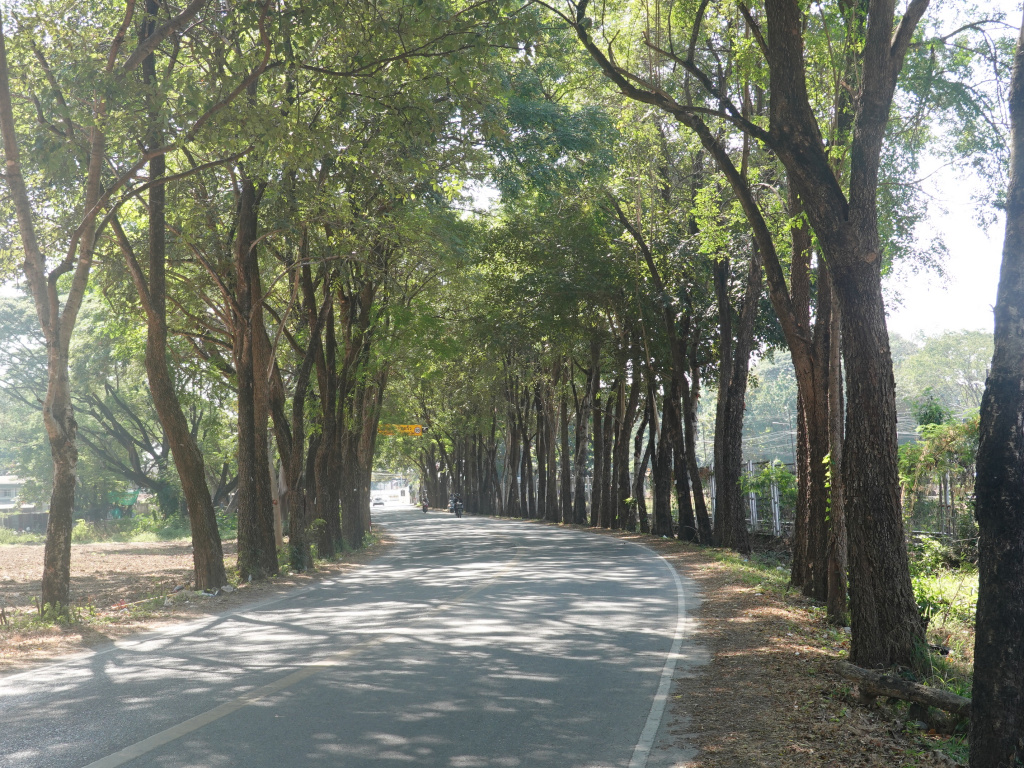
I continued down the “Road Along the Railroad.” It seems almost like a tunnel in the trees.
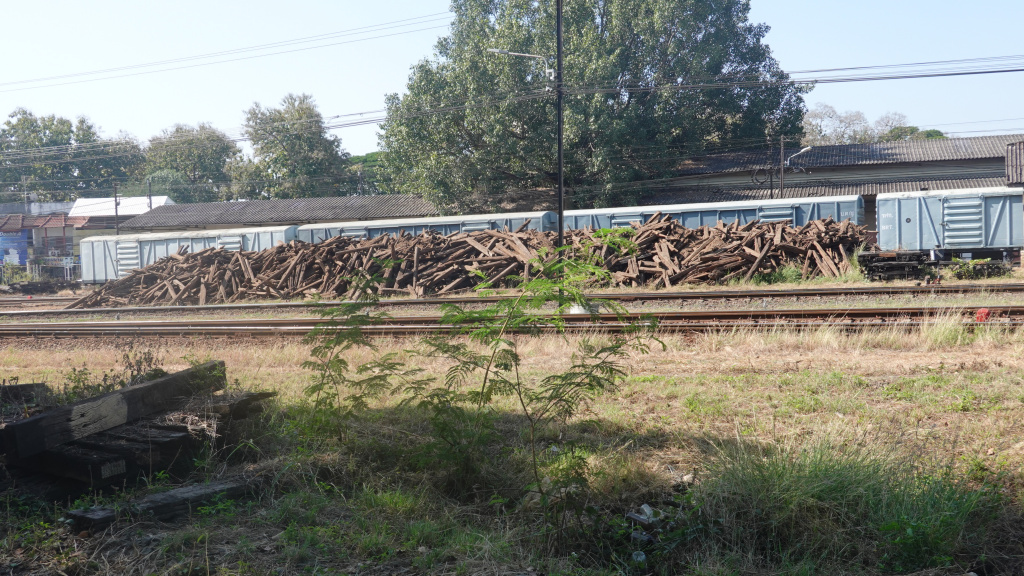
I found a break in the fence, walked into the yard, and saw another larger piles of old wooden ties across the yard, and a pile of new concrete ties.
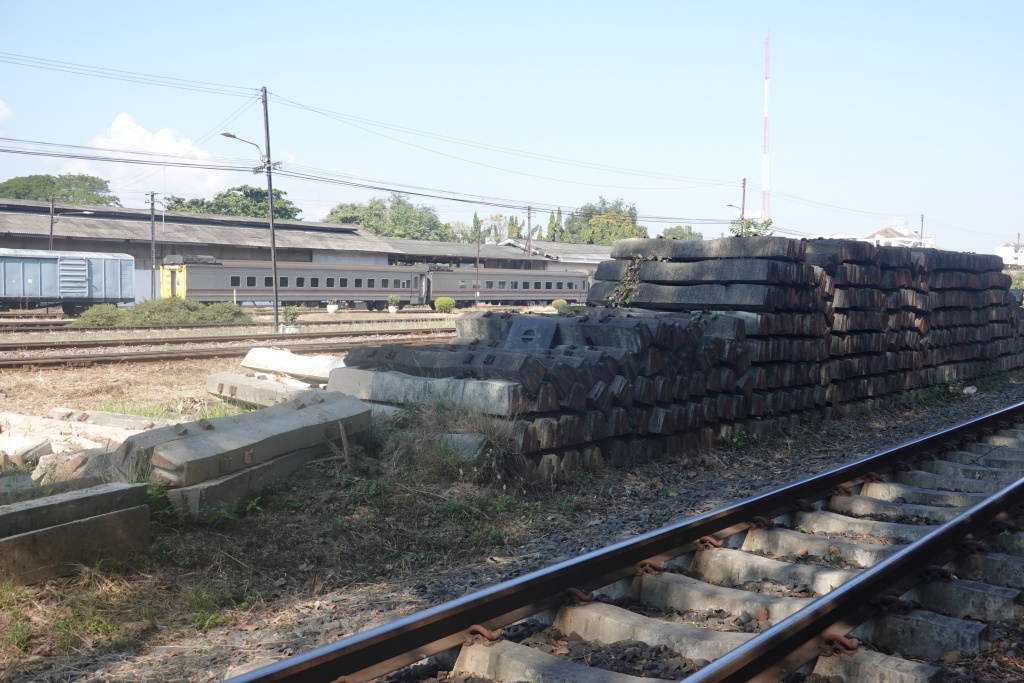
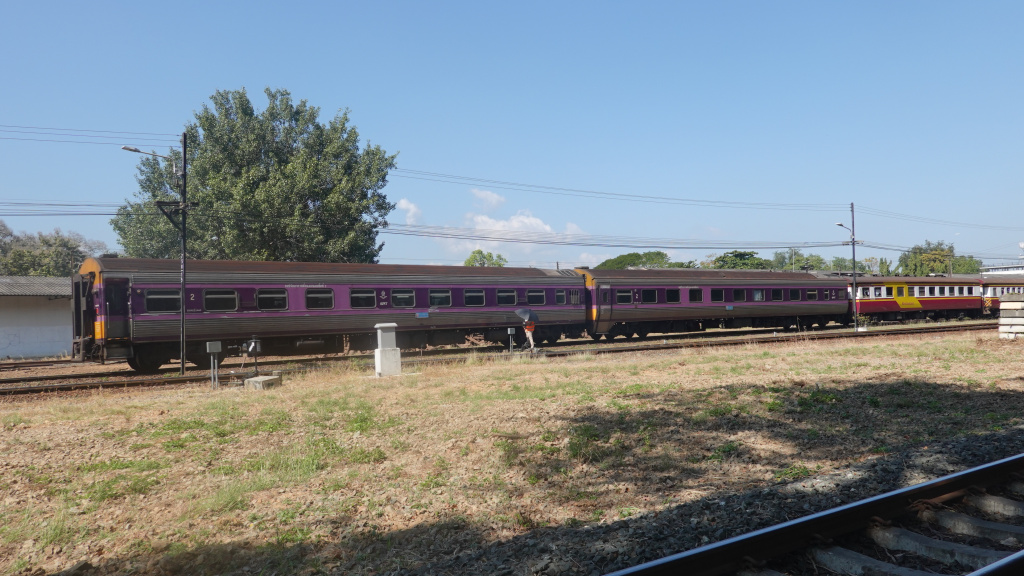
I was walking away, and a train was coming into the station. I did not get my camera out in time to get a photo of the whole train, only the last part of it.
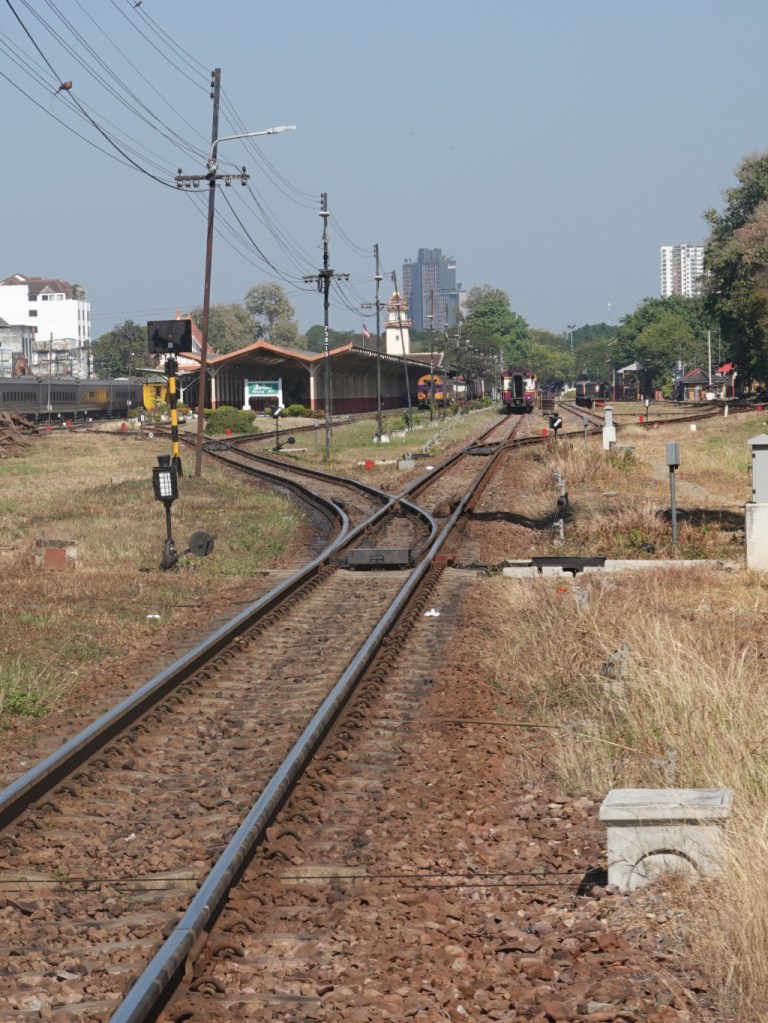
The first street crossing over the rails south of the station is Sanna Lung Road. I walked over and took a photo looking directly north to the station. If the rails look a little narrow, the intercity railroads in Thailand are meter gauge, that is, the distance between the rails is 1 meter (39.4 inches). What is generally called “standard gauge” or “Stevenson Gauge” was standardized through the work of George Stephenson, who introduced it for the Liverpool and Manchester Railway in 1830. It became dominant in Britain after the 1845 Royal Commission on Railway Gauges and was later adopted across Europe, North America, Africa, and China. The mass transit systems in Bangkok, the BTS Skytrain, the Airport Rail Link, and the MRT subway are all standard gauge. And, the new high speed rail projects in Thailand are also using standard gauge.
A photo looking north to the railway station.
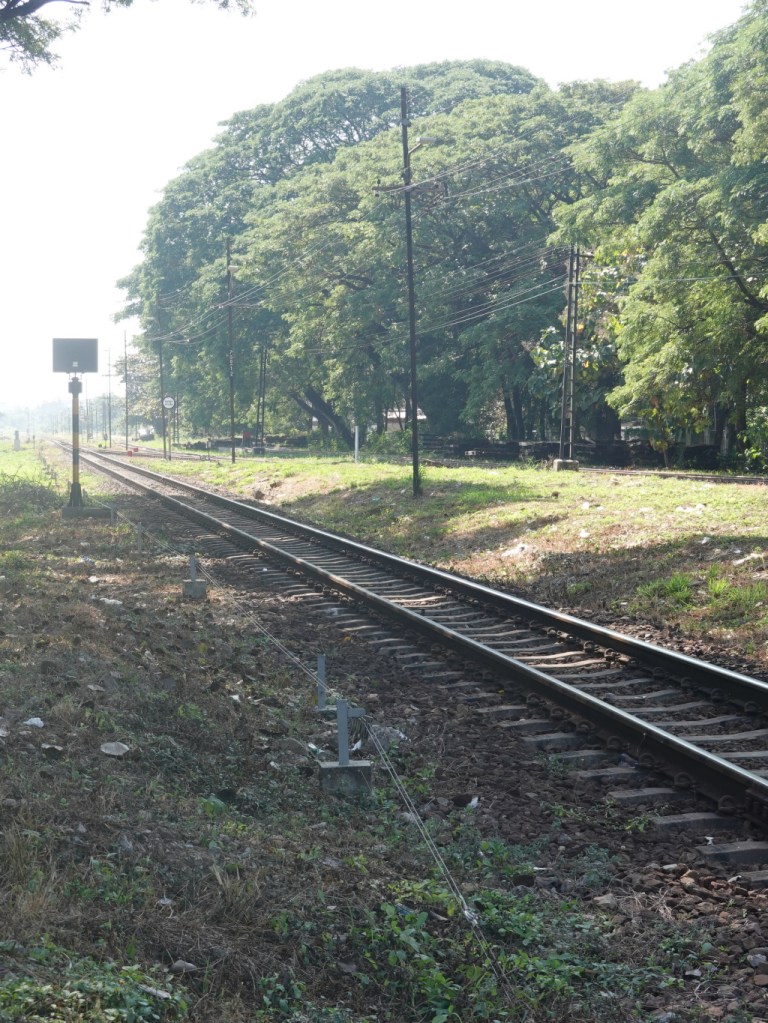
And a photo looking at the rails south toward Lamphun.
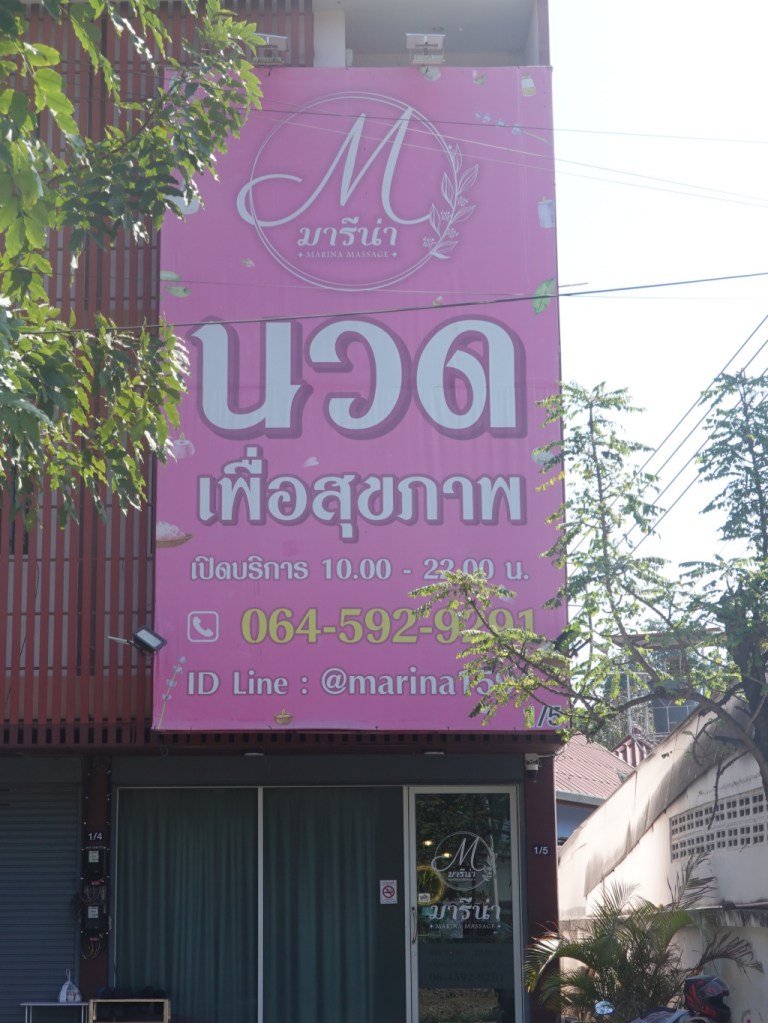
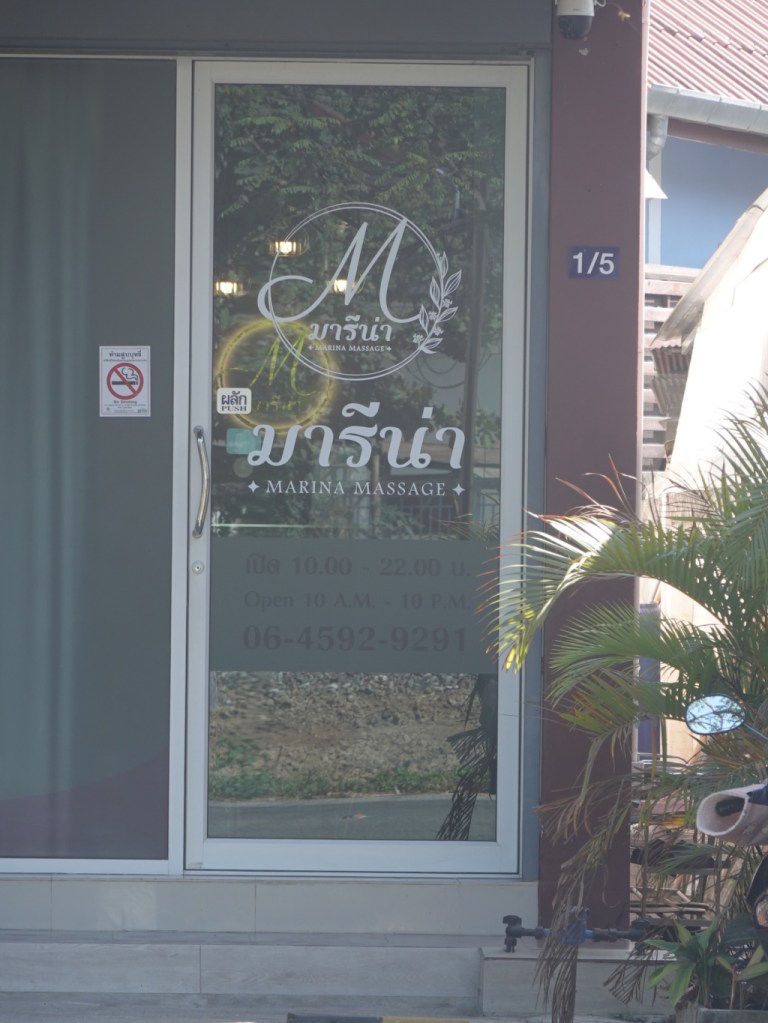
I continued south along “The Road Along the Railroad” and passed something I noted two years ago. Here, practically in the “middle of nowhere,” is what is clearly (to me anyway) an erotic massage parlor (also known as “massage for men”). Since (1) this is far from any tourist area, and (2) the signs are all in Thai, this place caters to Thai men. The sign says, “Marina” then “Massage for Health” and “Open 10:00 AM to 22:00 PM.”
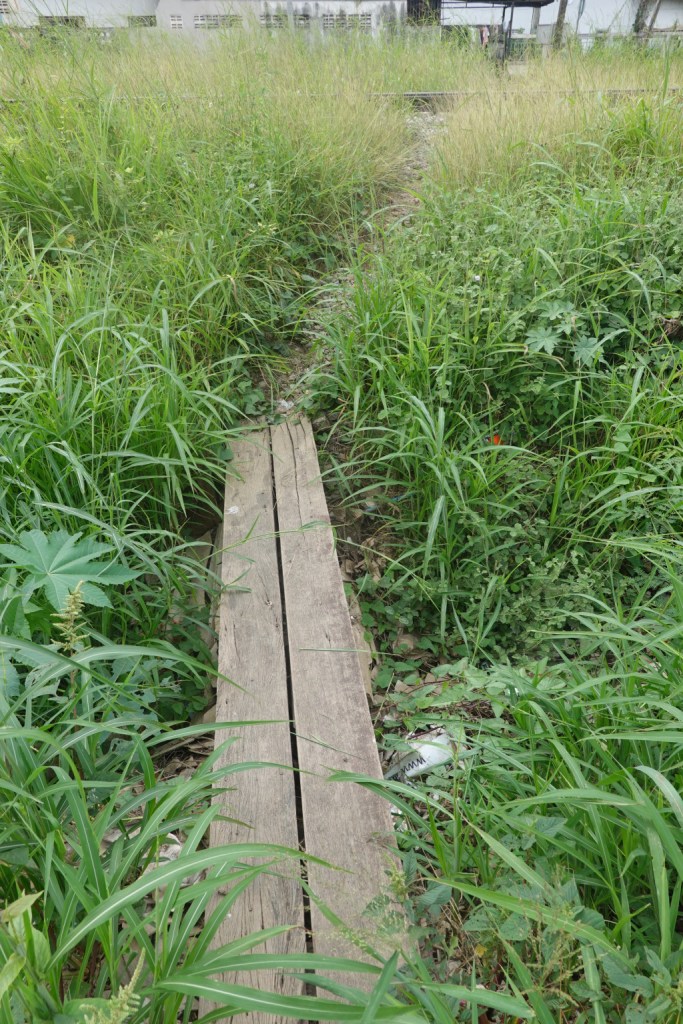
Slightly south of Marina Massage in the last two years, I found what looked like two 4×12 boards across a drainage ditch by the railroad. I crossed over the drainage ditch becasue the next road crossing is more than a kilometer south. This year, the drainage ditch has been filled in, but the boards remain. Here is a photo from last year of the boards over the drainage ditch, and a photo from this year of the boards over just dirt.

Now I have a long walk back into the main part of Chiang Mai, towards Chiang Mai-Lamphun Road, north along the highway, then over the Iron Bridge and back into the old city. So far, a very good walk in a familiar area around the railway station.
Next: Railway Station Walk 4 – Back to Chiang Mai

 James the Intrepid Pilgrim