Monday 15 December 2025
Return to an important Chiang Mai temple, Wat Phra Singh
A note: I am much delayed in this blog post. While my life in Chiang Mai seem simple, I have gotten very busy lately. I practice yoga at Wild Rose Yoga at least three times weekly, there is strength training at the gym with Ning twice per week, coffee and meals with friends, and exploring. But all of that is may just be excuse for another, subconscience reason for the delay which is that I really do not connect well with Wat Phra Singh. There might be a bit of a mental block at work here. Who knows? And maybe it is not worth the time I am taking to think about it.
On my return from Wat Suan Dok, I pass by Wat Phra Singh. This is one of the three most important temples in Chiang Mai. The other two are Wat Chedi Luang and Wat Phra That Doi Suthep. Wat Phra Singh is listed as a Royal Temple of the First Class, an honor given to only 19 of the more than 30,000 active temples in Thailand. Bus loads of tourists, both foreign and Thai come to Wat Phra Singh every day, similar to the bus loads of tourists at Wat Chedi Luang.
Wat Phra Singh is old, having been built in 1345 by King Phayu, the fifth king of the Mengrai Dynasty, and ruler of the Lanna kingdom from 1336 to 1355, to enshrine the remains of his father King Kamfu, the previous ruler. The temple is said to be the first temple to house the famous “Emerald Buddha” when it was moved from Lampang in 1468 and before it was moved to the large chedi at Wat Chedi Luang. The name of the temple Phra Singh is an abbreviated form of the name of one of the principal Buddha images in the main viharn (assembly or worship hall), the Phra-Put-Tha-Shi-Hing or the Phra Sining Buddha.
I skipped the main viharn, because there is a charge of 50 baht for foreigners to enter. While this is a very popular temple, the overall look seems to be for the appeal of tourists. Maybe it is not, but it seems that way to me. And becasue I do not feel much of a connection with Wat Phra Singh, I will not spend much time here.
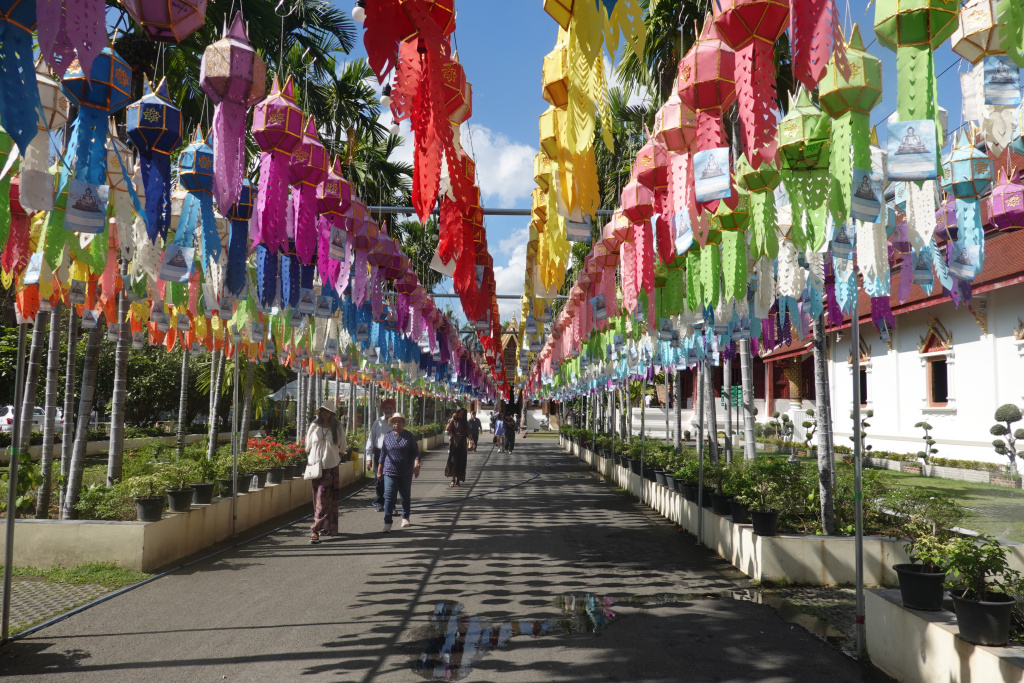
Walking past the main viharn, I passed through this decorative area, probably designed for photos, like that I saw earlier in the day at Wat Inthakhin by the Monument to the Three Kings.
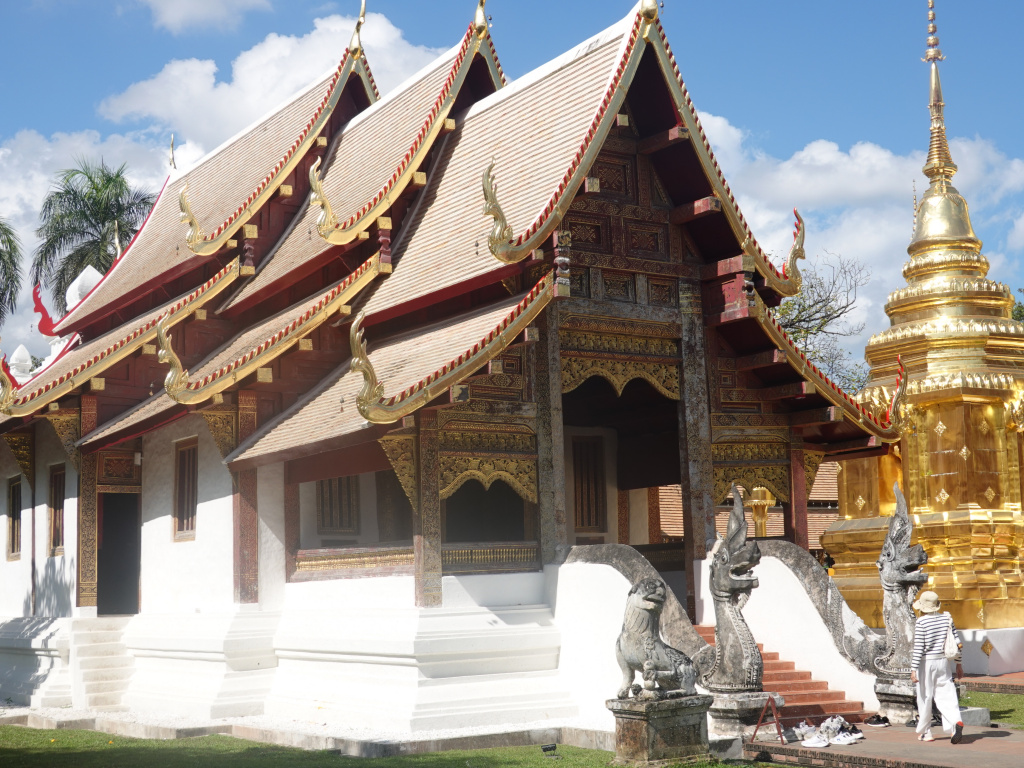
Past the decorative walkway and past the large main viharn is this ubosot (ordination hall), built in 1806 in the Lanna style and mostly of teak. I do like this ubosot for its rustic, authentic look.
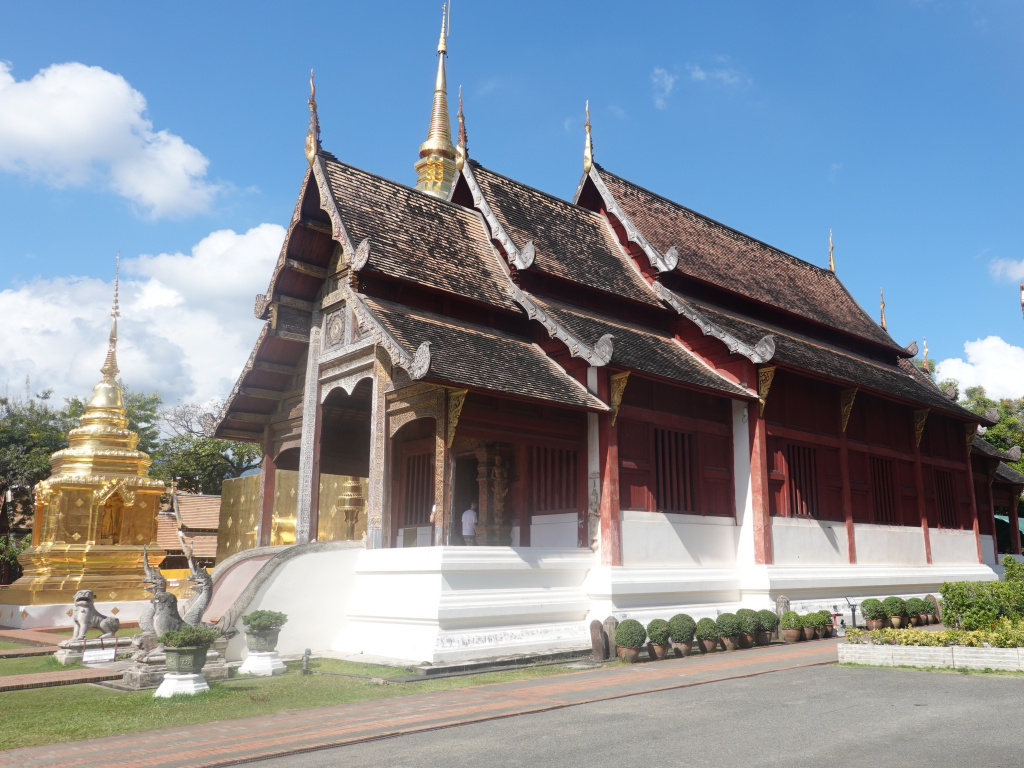
Here are two more photos of the ubosot:
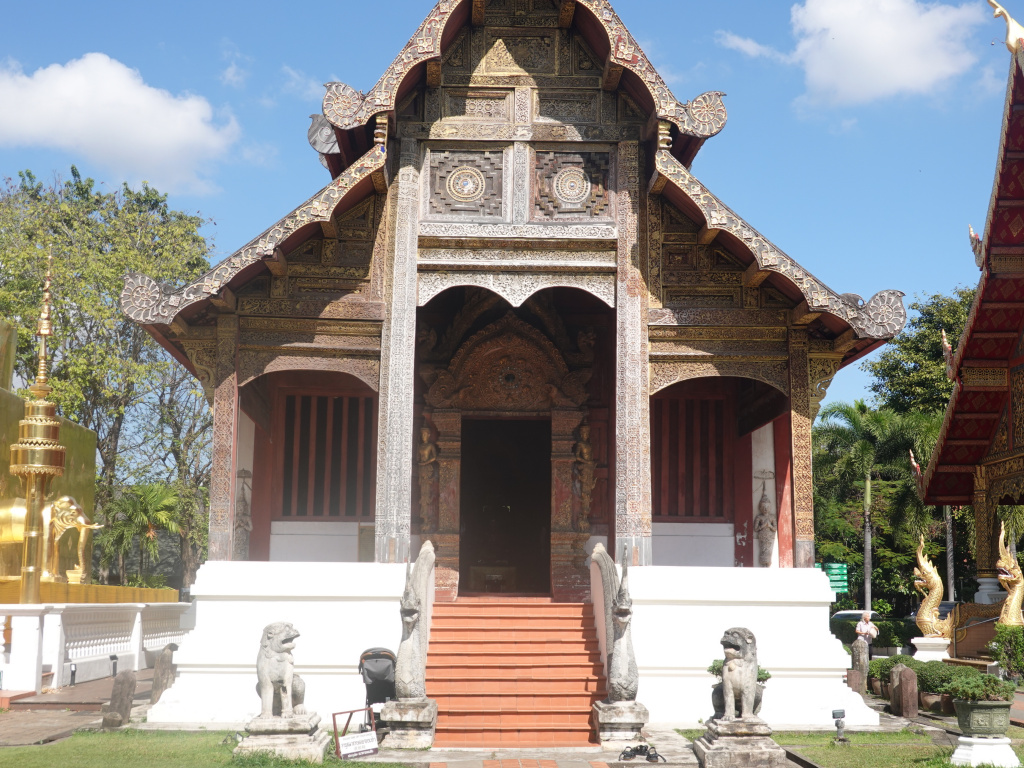
I wanted to photograph the secondary viharn, called the Viharn Lai Kham, but there was a large group at the front and inside, so not wanting to interrupt them, I did not photograph the viharn this time. I have often read that it is considered one of the most interesting buildings in Chiang Mai. It was originally built in 1345 and was restored in 1772, as one of the many temple restoration projects in Chiang Mai by King Kawila after he forced the Burmese out of the Chiang Mai and Lanphum regions.
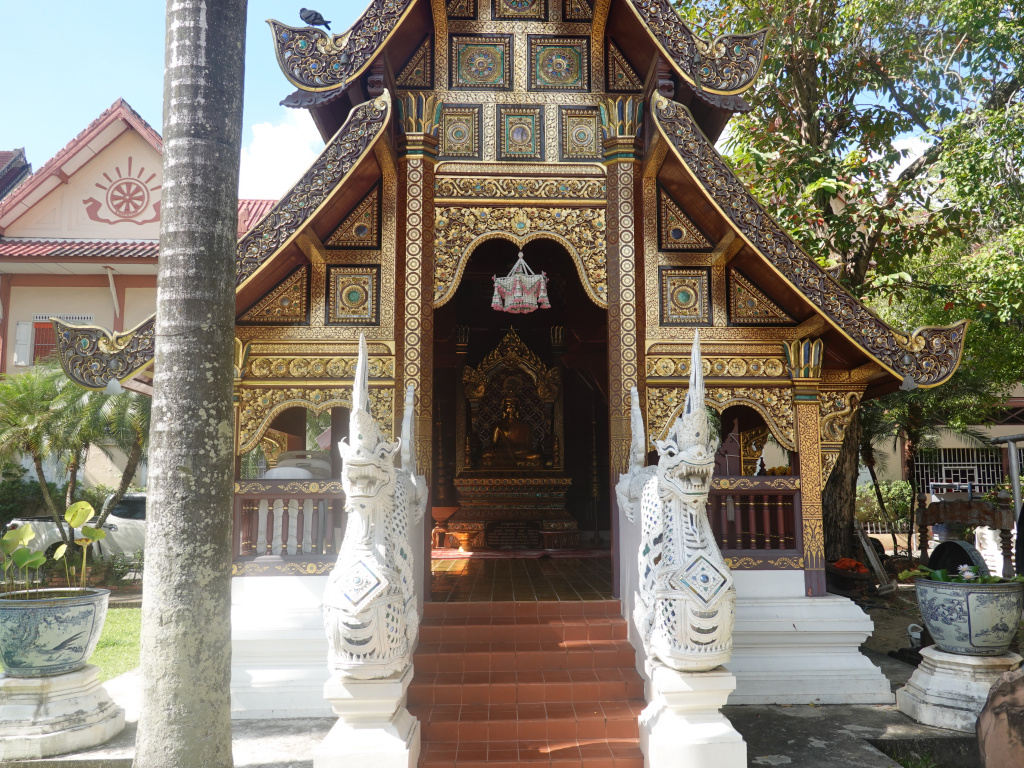
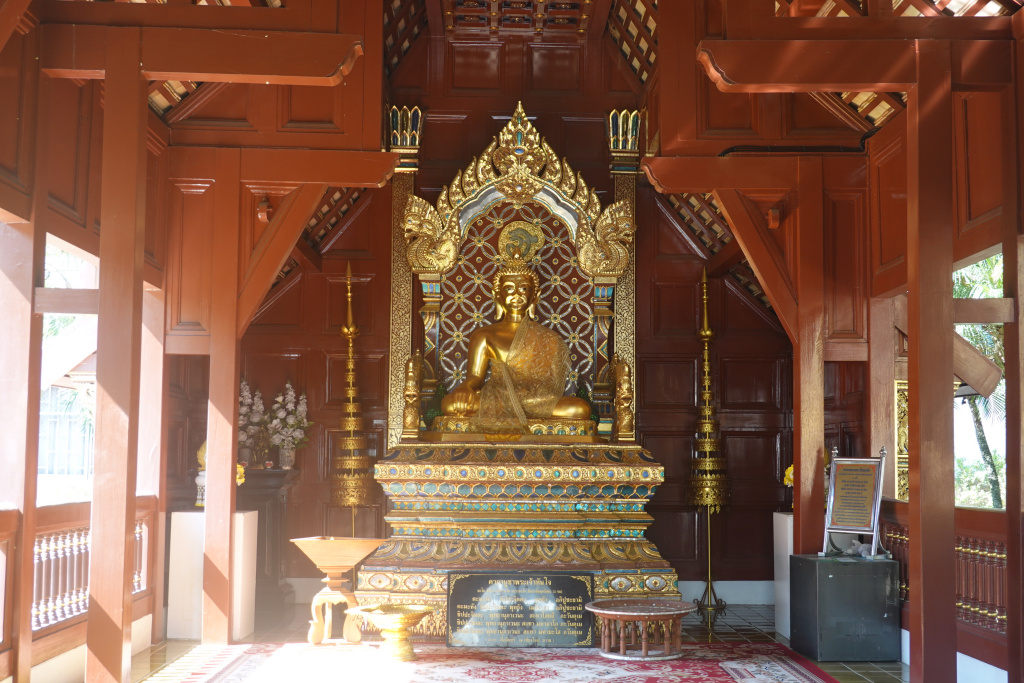
Behind the Viharn Lai Kham is another, smaller viharn the name of which I could not find. It does have a nice look. Photos of the front and of the nice Buddha image inside.
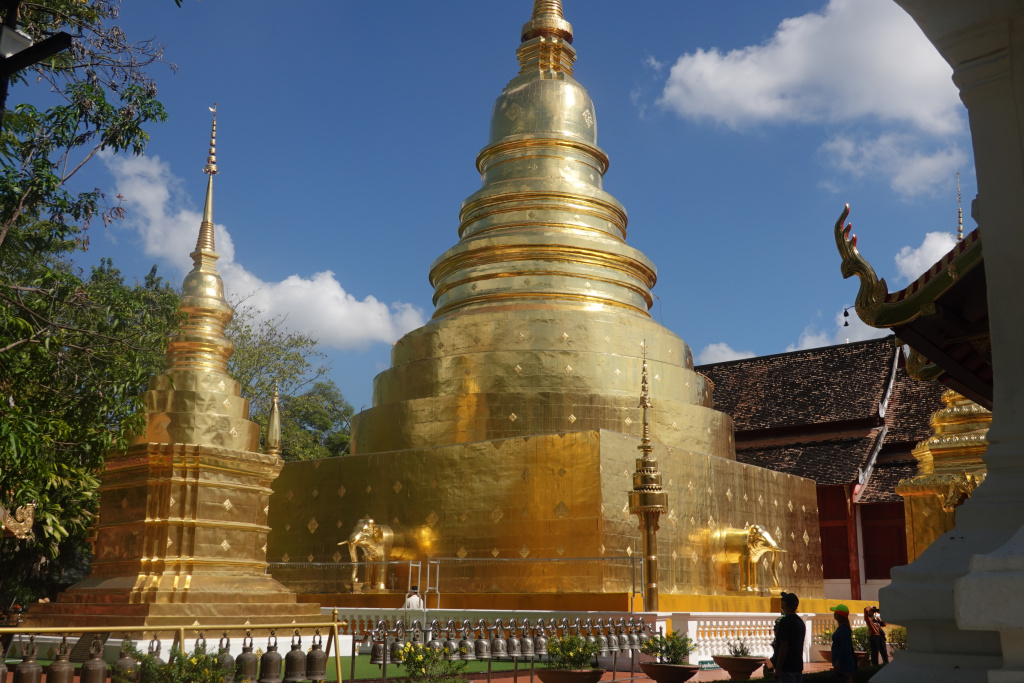
The Phrathatluang Chedi, now covered in gold metal (and looking very tacky). This is a famous chedi, dating to the establishment of the temple in 1345. I much prefer its more rustic look before it was covered in the gold metal about 12 years ago.
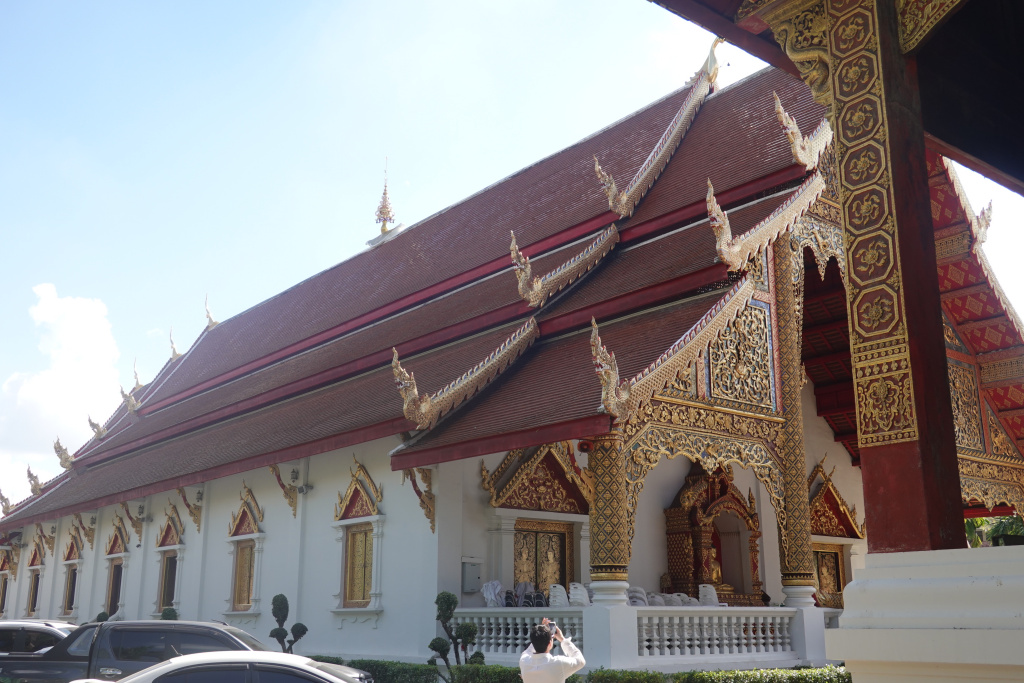
Walking around the chedi and through a garden area, I walked past the large viharn and took this photo, giving a perspective of the size of the main viharn. The main viharn is a large building – not a large as the viharn at Wat Suan Dok, but large nonetheless.
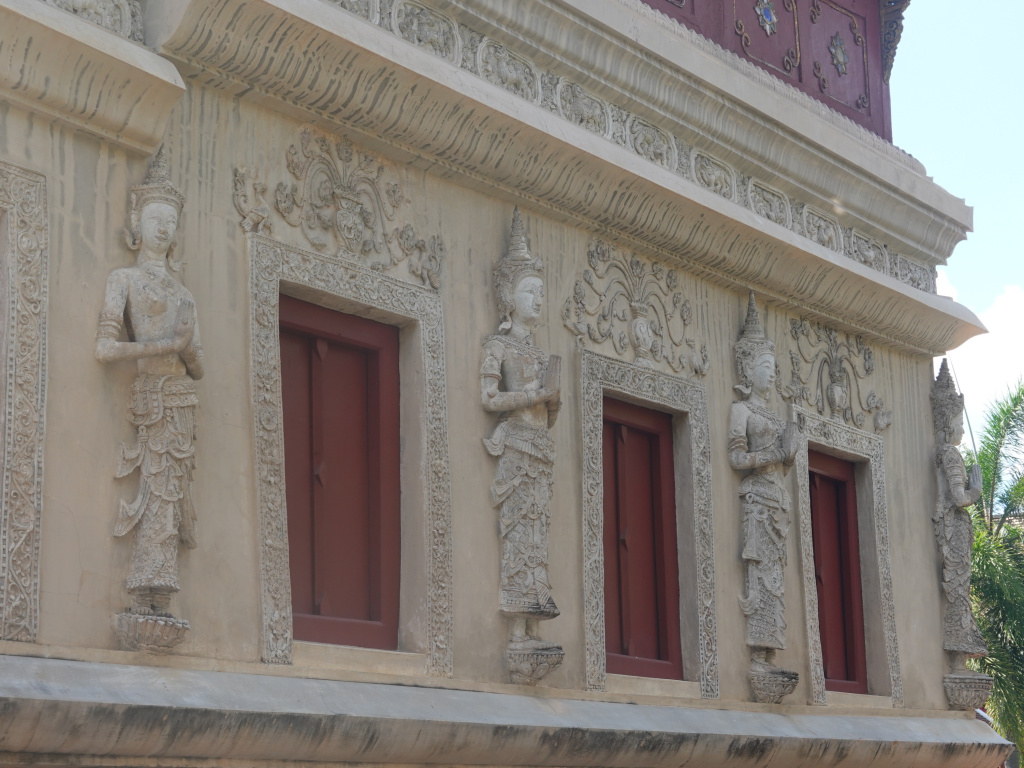
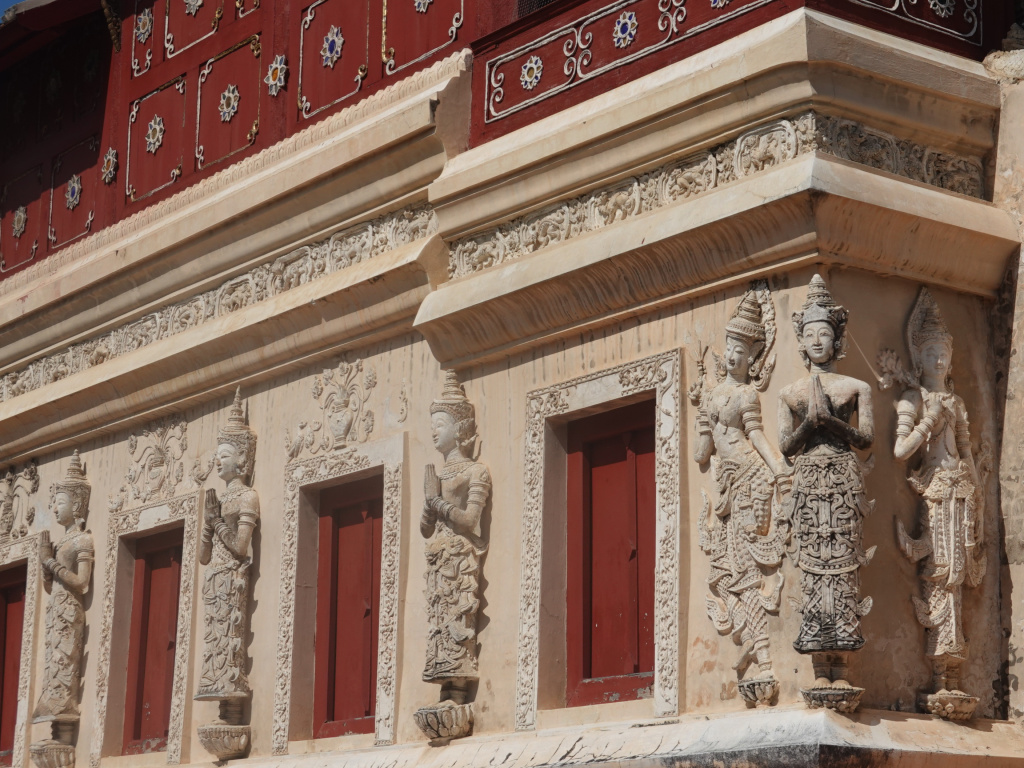
Closer to the entrance to Wat Phra Singh is the Ho Trai, the library of sacred Buddha texts and documents relating to the temple itself. I love the carved thewada statues on the sides (my favorite thing at Wat Phra Singh).
Akha Ama Coffee
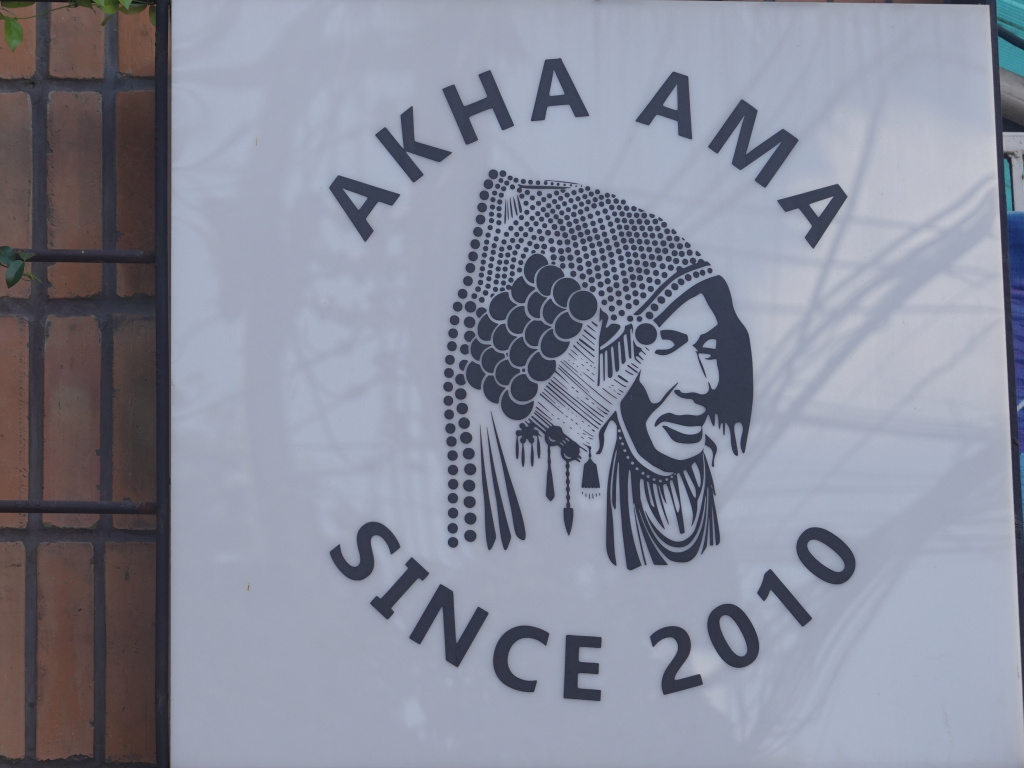
Leaving Wat Phra Singh, I walked a very short distance to Akha Ama Coffee, and relaxed with a coffee, always excellent. Akha Ama is a socially responsible coffee enterprise based in Chiang Mai, and founded in 2010 by Lee Ayu Chuepa, an Akha hill tribe member. Their mission is to support indigenous communities through sustainable farming and fair trade practices. They get their coffee from one of many hill tribes growing coffee in northern Thailand.
Thus ended my long walk to Wat Suan Dok and back to The 3-Sis. As always, a very good day in Chiang Mai seeing familiar and favorite sights.
Next:
– Klong Mae Kha north of Tha Phae Road
– A Day in the Life…

 James the Intrepid Pilgrim