Monday 15 December 2025
Sights along the way walking to an historic temple, Wat Suan Dok
Feeling the need for a little adventure before diving back into frequent yoga practice and strength training, I decided to take a walk out to see Wat Suan Dok again. Along the way there are also a couple of things I always check out.
Monument to the Three Kings
In the very center on the old city of Chiang Mai is a large square. Overlooking that square is the Monument to the Three Kings. King Mengrai founded Chiang Rai in 1262 as the seat of his kingdom, what became the Mengrai Dynasty. After experiencing frequent battles with the neighboring Burmese, he sought a better location for the seat of his kingdom. He first started building a city at what is now called Wiang Kum Kam along the Ping River and about 8 kilometers (5 miles) southeast of the center of Chiang Mai today. After repeated flooding, the last flood of which buried much of the city in 3-5 meters of mud as the Ping River changed its course, he abandoned the location and sought a more aspicious site for the seat of the Mengrai Dynasty. He found a location, sought the advice of two friends, neighboring kings with whom he had a strong bond, King Ramkhamhaeng of Phayao, and King Ngam Mueang of Sukhothai. They agreed that the new site was good and thus, in 1296 the construction of Chiang Mai commenced. Those three kings are considered the founding fathers of Chiang Mai which later became the seat of all of the Lanna Kingdom.
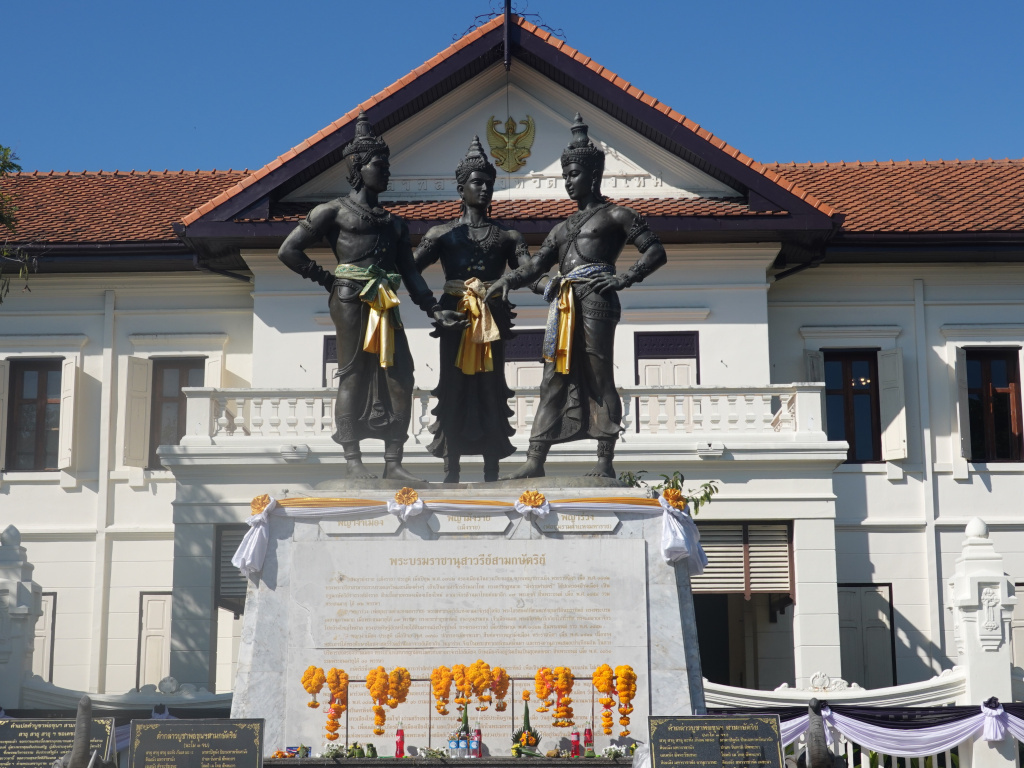
To honor the three kings’ legacy, the people of Chiang Mai comissioned Kaimook Chuto to design and cast the monument commemorate the founding of the Chiang Mai. The monument was completed in 1983, stands 2.7 meters high (8 feet 10 inches), and was officially opened January 30, 1984 in a ceremony presided over by King Bhumibol Adulyadej (King Rama IX), together with Queen Sirikit, and Princess Sirindhorn.
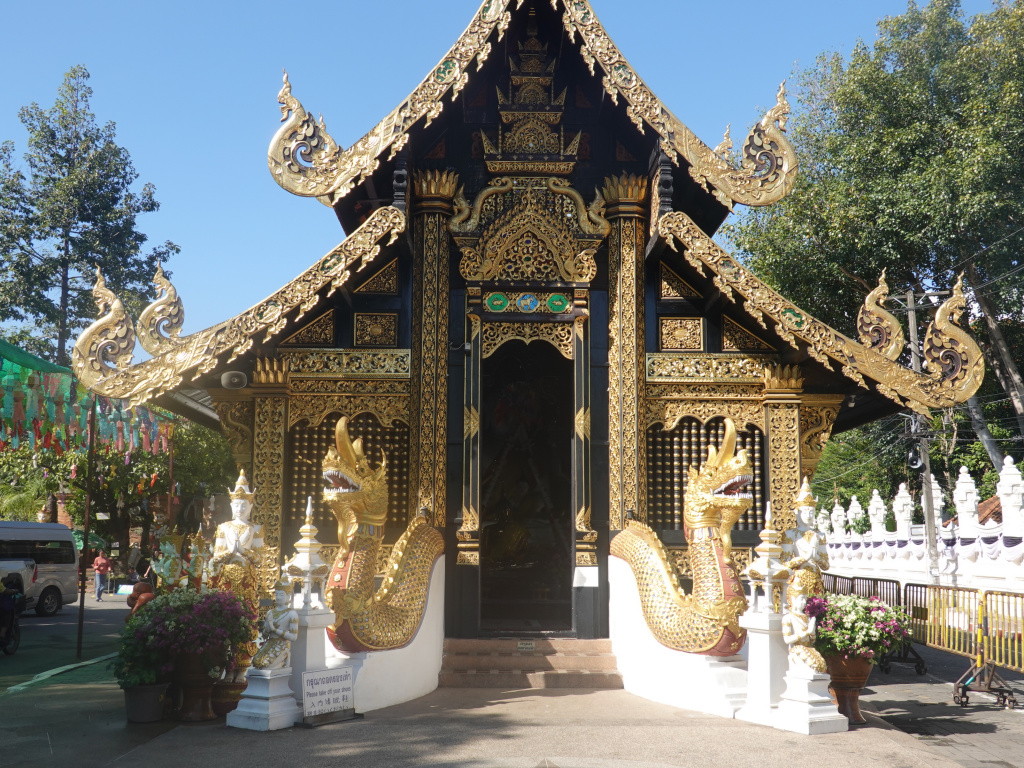
Wat Inthakhin
Wat Inthakhin Sadeu Muang is said to have been where King Mengrai erected the city pillar, “Inthakhin” when the construction of Chiang Mai commenced. The concept of a “city pillar” is old, dating back more than a millennium when ancient Lawa people erected one as a protective talisman against misfortune. The name “Wat Sadeu Muang” translates to “Temple of the City’s Pillar,” a nod to its central role in the historic Old Town. In 1800, King Kawila transferred the Inthakhin pillar from this temple to the nearby Wat Chedi Luang, where it remains a focal point of reverence. Each May, locals gather for the Inthakin Festival to honor the sacred column.
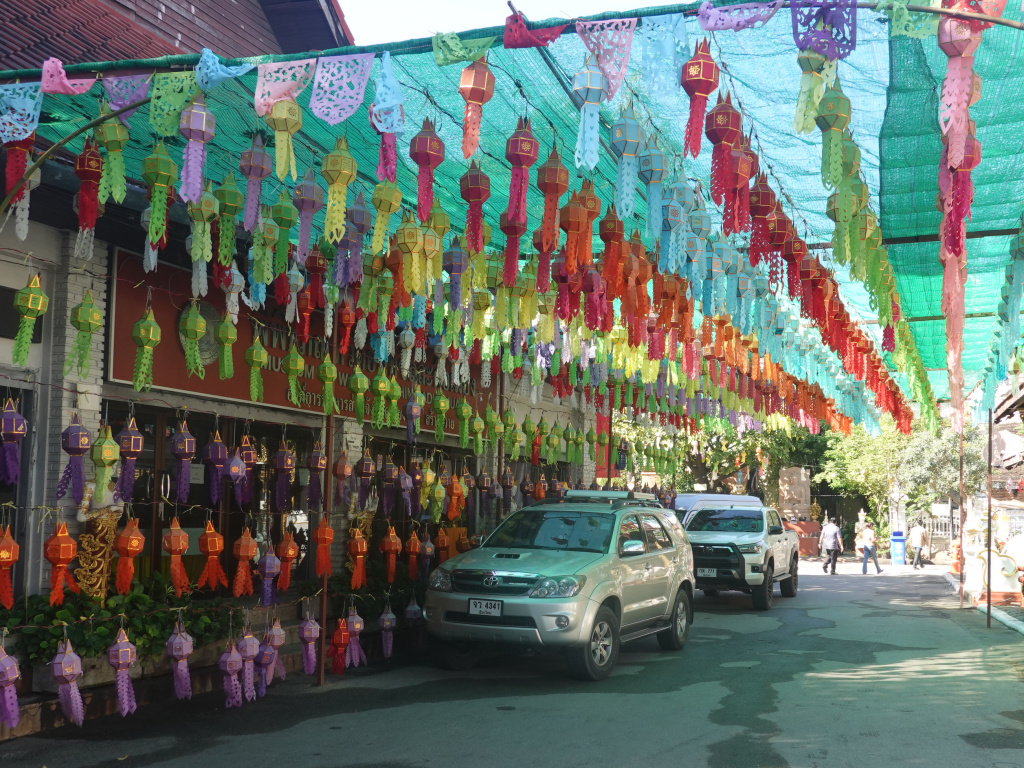
To the left of the photo is a covered area decorated every year for people to take photos. I always love these very festive decorated places. There are cars here now, but closer to the holidays, as more tourists come, they won’t allow parking so people can get good photos.
Wat Pra Kru
Continuing my walk westward, I passed Wat Phra Singh (I’ll stop there on my return from Wat Suan Dok), and down a less-traveled road where I have watched the construction of a new temple over the past 3 winters. There is now a sign at the front with the name Wat Pra Kru, a fairly large and bright sign behind the fence.
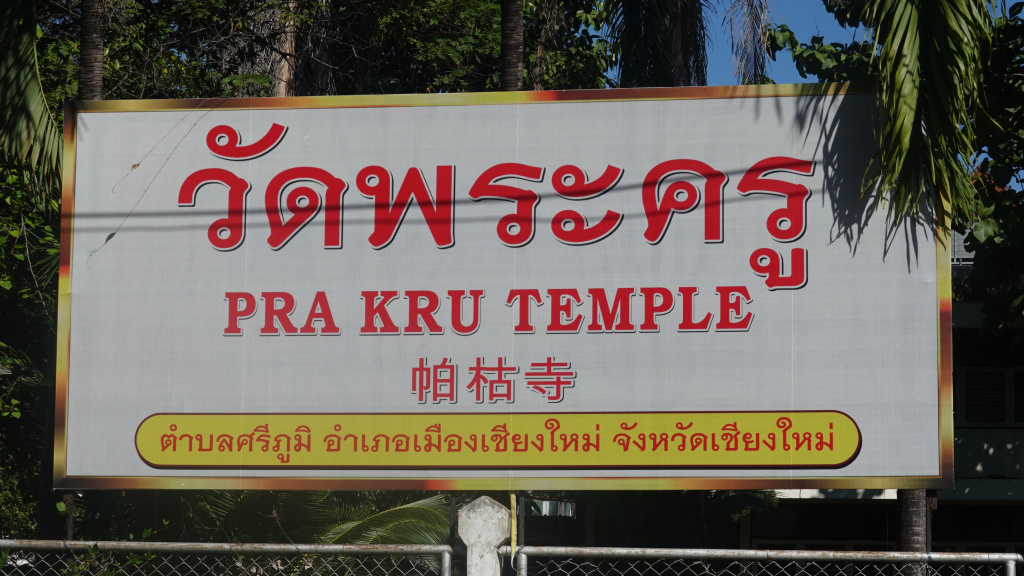
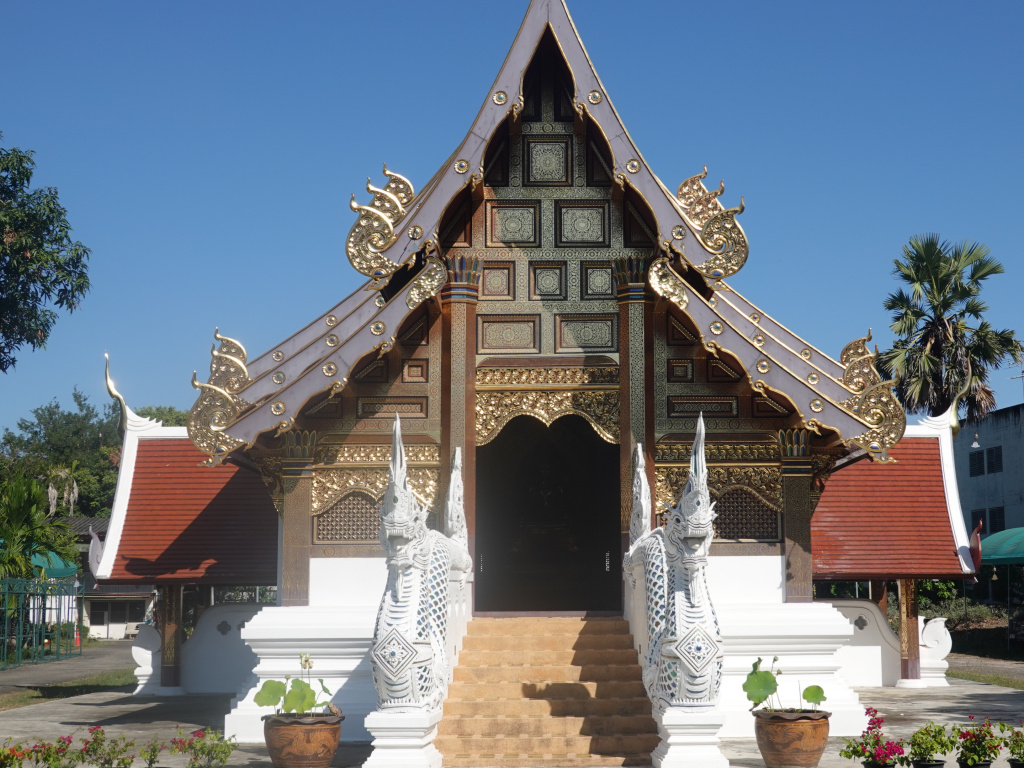
The sign is new, the temple is new, and I cannot find any information about this temple on the internet. With over 50 temples in the old walled city of Chiang Mai (50 temples in one square mile), there must be a reason another had to be built. Wat Pra Kru is now finished, still bright white in its new paint, and for the first time, the viharn (assembly or worship hall) is open. First, a view of the viharn as I approached.
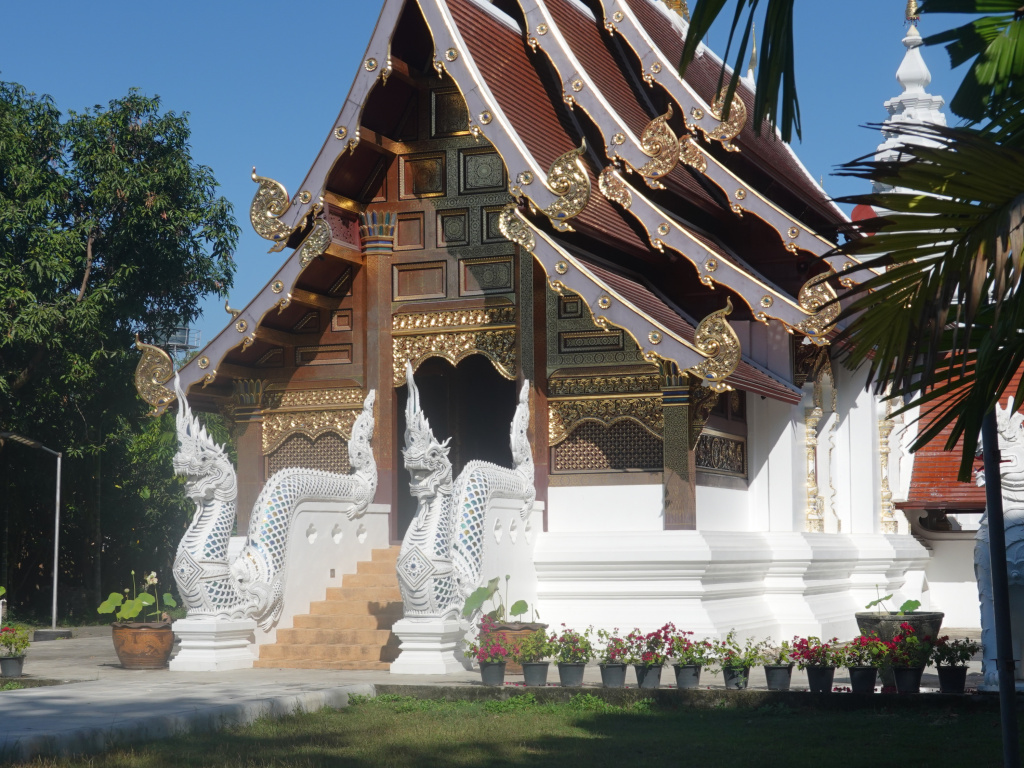
Another photo of the viharn directly from the front. It does indeed look very new.
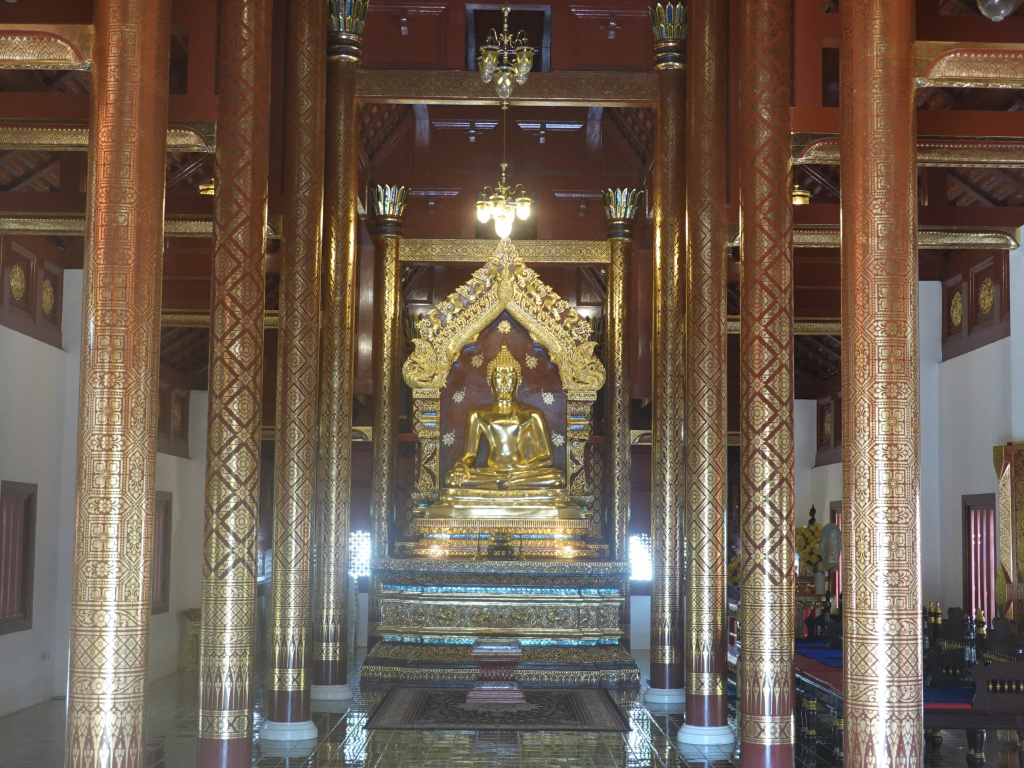
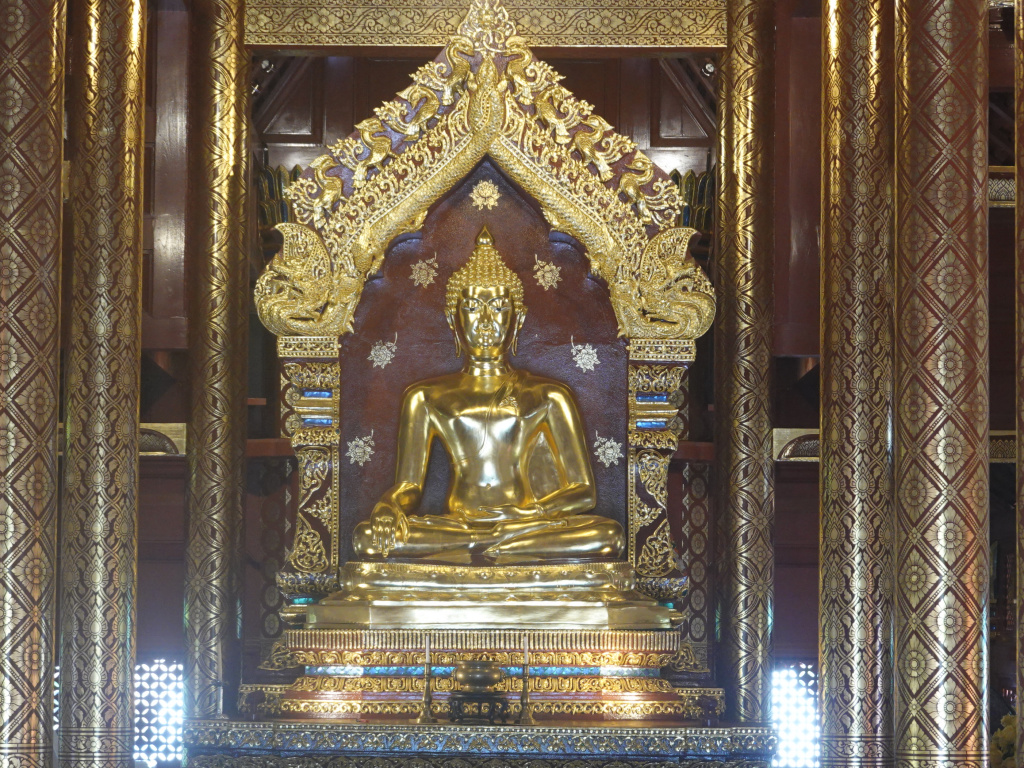
Finally, the inside is open. Clean and crisp, spacious and uncluttered. Here is a view from the doorway and a closer view of the Buddha image at the head of the viharn.
At the back of the viharn, as is customary, is a chedi (pagoda). This one is bright white with large standing Buddha images on each side.
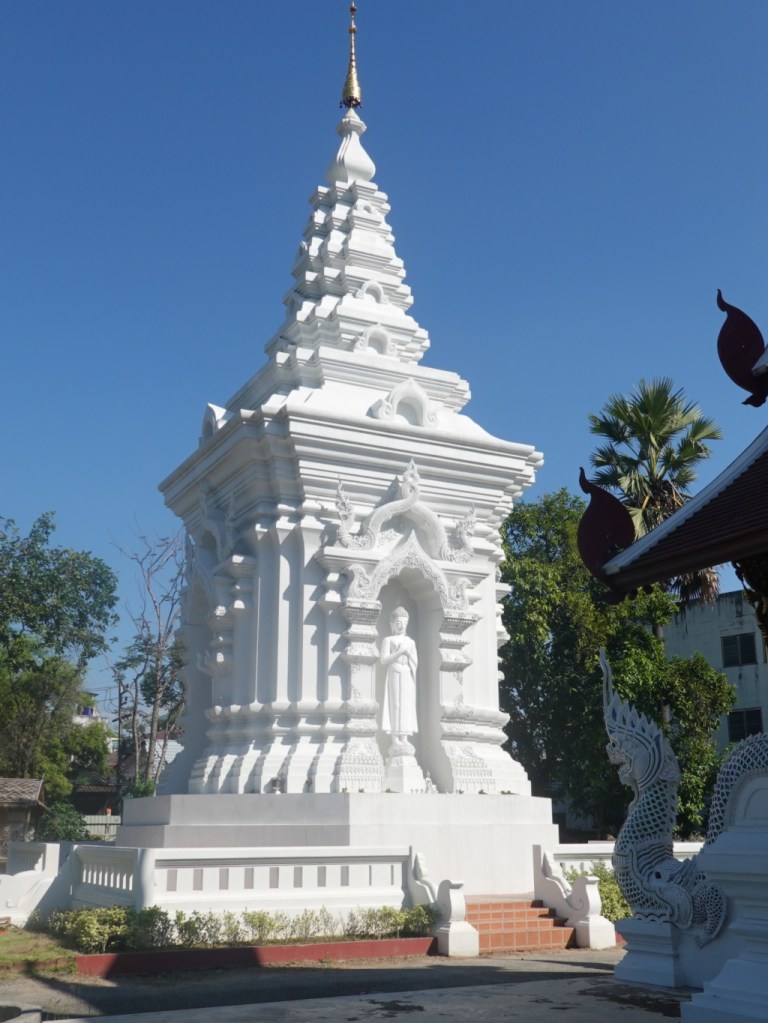
What is not customary about this new temple is that the doors to the viharn open to the south, not the east. In more than 99% of all Buddhist temples in Thailand, the doors to the viharn open to the east to greet the rising sun. Being such a new temple, perhaps I can find someone who knows why this temple’s orientation is contrary to the norm. Or maybe not. In the three years observing the evolution of this temple, I have never seen another person on the grounds. I’ll try to walk by a few more times to see if anyone is there.
Wat San Ta Hoi
Crossed the inner moat road, through Suan Dok Gate, and across the outer moat road and onto Suthep Road. This road will lead me to Wat Suan Dok after walking past 4 hospitals, all affiliated with Chiang Mai University.
Immediately on the left is the National Archives, Chiang Mai branch building. The sign indicates the archives are in commenoration of Her Majesty Queen Sirikit’s 60th birthday.
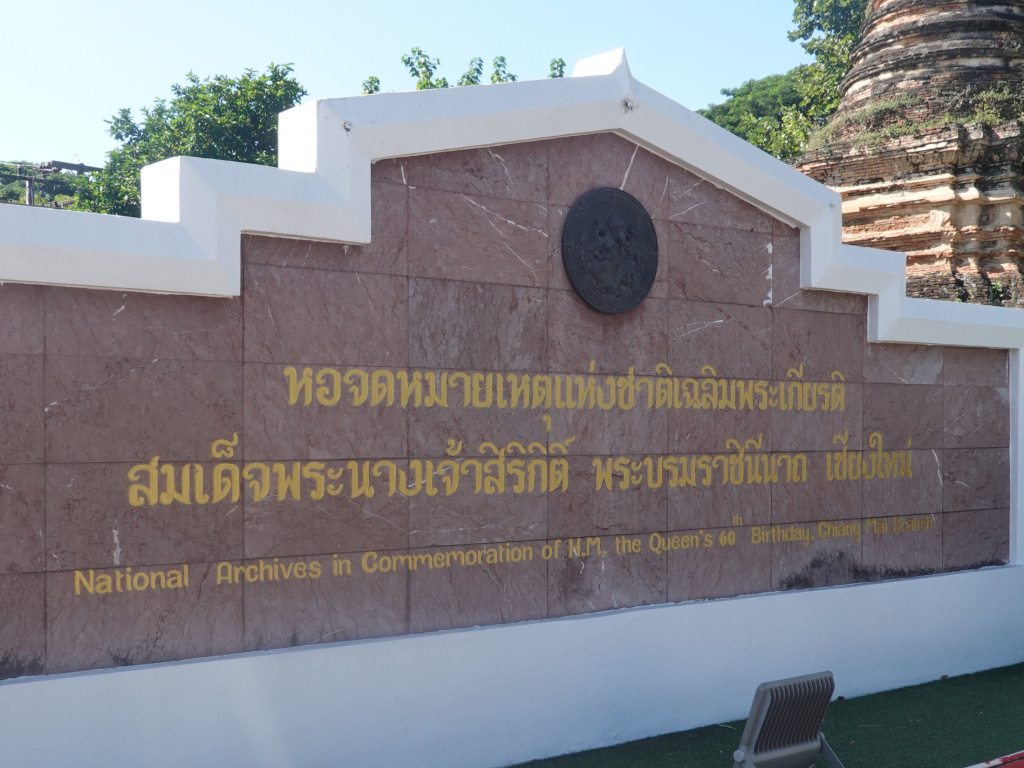
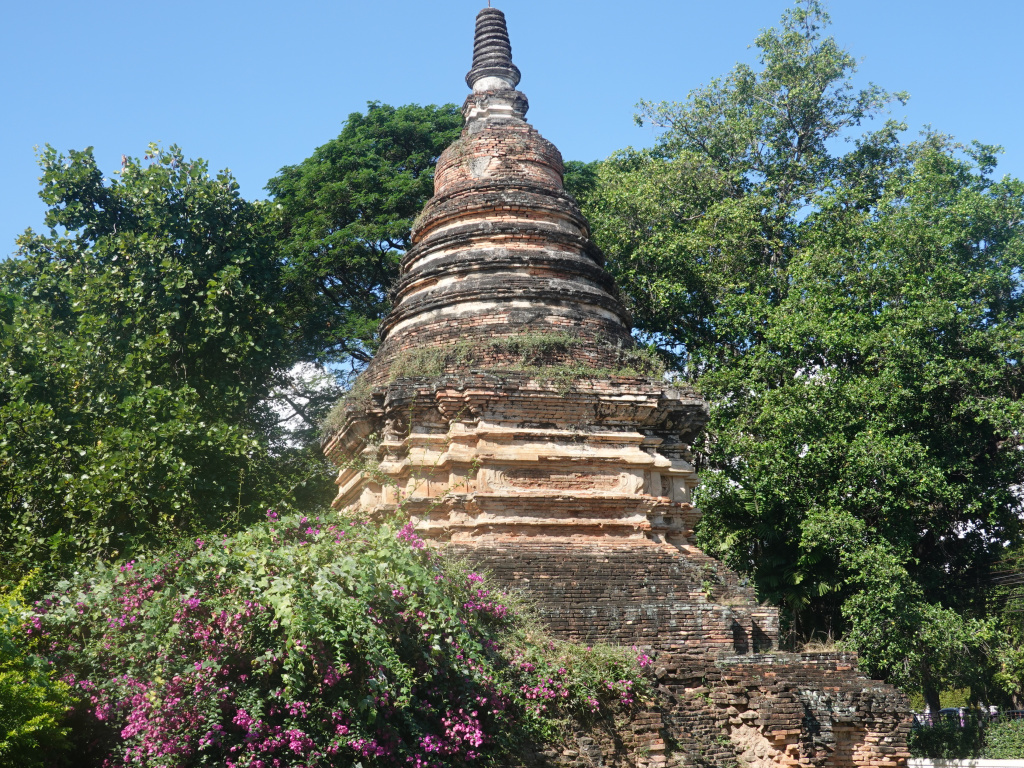
The interesting thing here is not the National Archives, but an old, standalone chedi. A sign at the site says this is Wat San Ta Hoi and there is no literary record of the history or story of the temple. The sign also indicates that Wat San Ta Hoi is not the original name. From the style and construction of the chedi, it is Lanna-style with some evidence of influence from Sukhothai art. From the style, the structure, and the shape, this was likely built in the 15th or 16th centuries. I have always loved this chedi, standing alone and proud with the large bougainvilla in the foreground and the trees in the background.
I continued down Suthep Road towards Wat Suan Dok.
Next: Wat Suan Dok

 James the Intrepid Pilgrim