Monday, November 17, 2025
Around the Moat 3: North and East
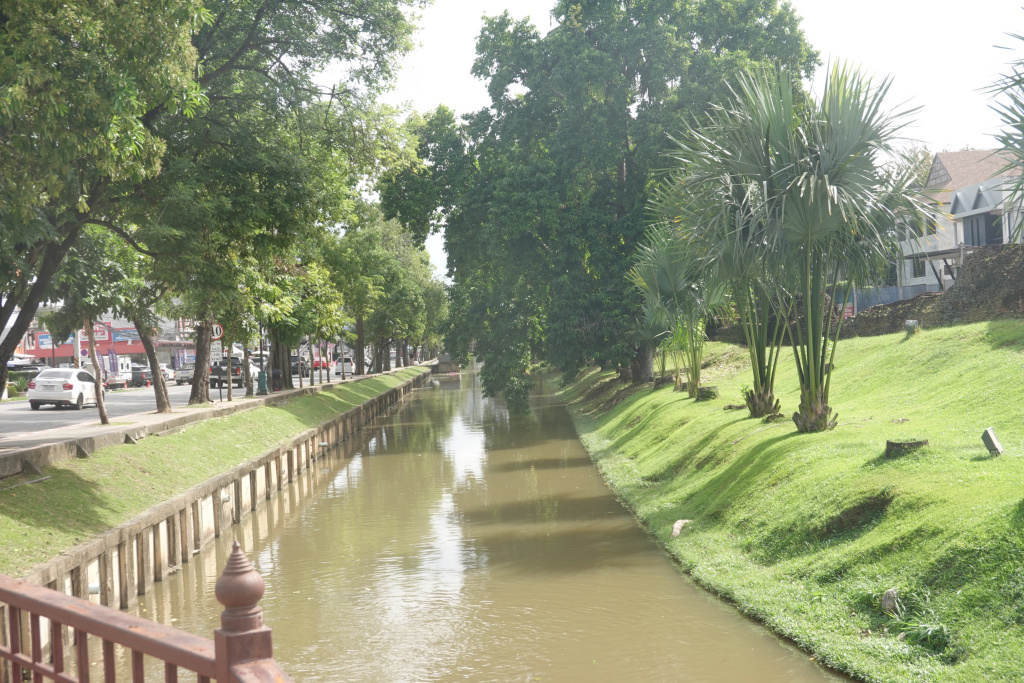
I am starting to walk east along the north side of the moat. And, like at the southwest corner, a little of the wall is still intact, seen at the far right of the photo.
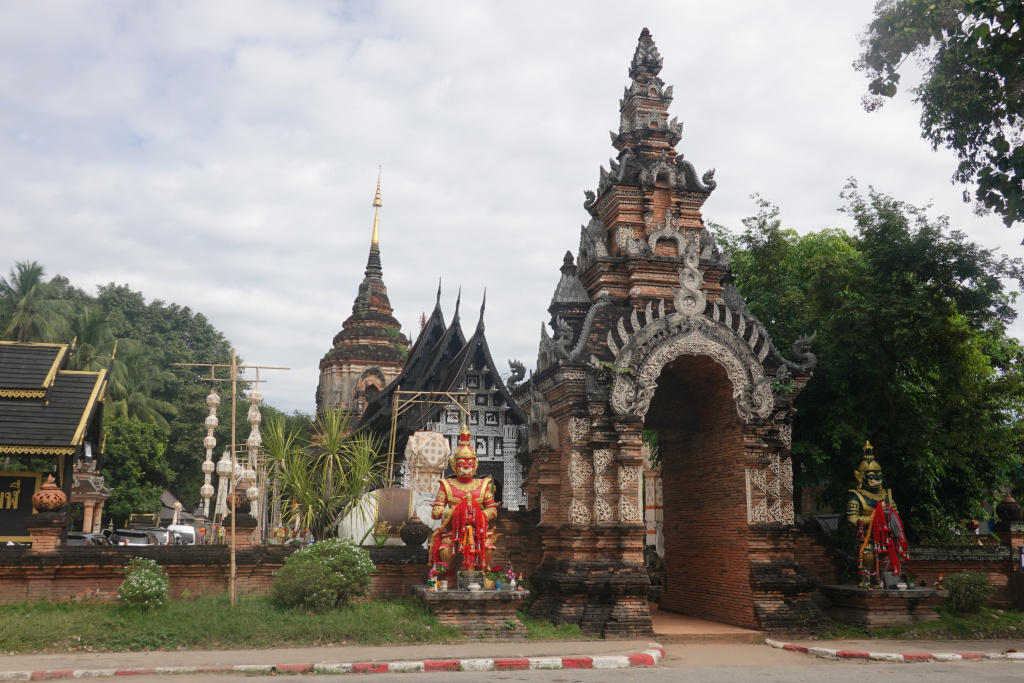
Wat Lok Molee
It looks to be a long walk, but each side of the moat is only about 1.5 kilometers (just under a mile). Less than half way I see one of my favorite temples, Wat Lok Molee (also spelled Lok Moli). This temple was mentioned in documents from 1367, so it is older. The large chedi was built by King Ket in 1527, and in 1545, he also had the viharn (assembly hall) built.
The Mengrai Dynasty was founded by King Mengrai in 1292. He built Chiang Mai in 1296 and moved the seat of his kingdom there. The ashes of several members of the Mengrai dynasty were placed in this temple. Until the demise of their dynasty in about 1560, the Mengrai royal family took the responsibility for maintaining the temple.
The current ruling dynasty in Thailand is the Chakri Dynasty, which has governed Thailand since 1782, following the establishment of the kingdom in Bangkok by King Rama I after the fall of Ayutthaya in 1767. The Chakri dynasty remains the official royal family, with the current monarch, King Maha Vajiralongkorn (Rama X), ascending the throne in 2016 after the death of his father, King Bhumibol Adulyadej (Rama IX).
Buddhist temples are built to traditional and religious standards. One of these traditions, followed by almost all temples, is that the viharn (assembly or worship hall) is oriented east-west. The doors of the viharn open to the east to greet the rising sun, which symbolized birth or the beginning. The back of the viharn faces the west, and is where the chedi is built, as the setting sun represents death or the end. In the chedi are the ashes of important people. Wat Lok Molee breaks this “rule,” with the viharn oriented north-south, and the entrance pointing south. The chedi is on the northern side of the viharn.
I wonder why this very prominent temple was built not adhearing to traditional and religious guidelines. After 12 winters in Chiang Mai, asking many people, I still have no answer. It is still a mystery.
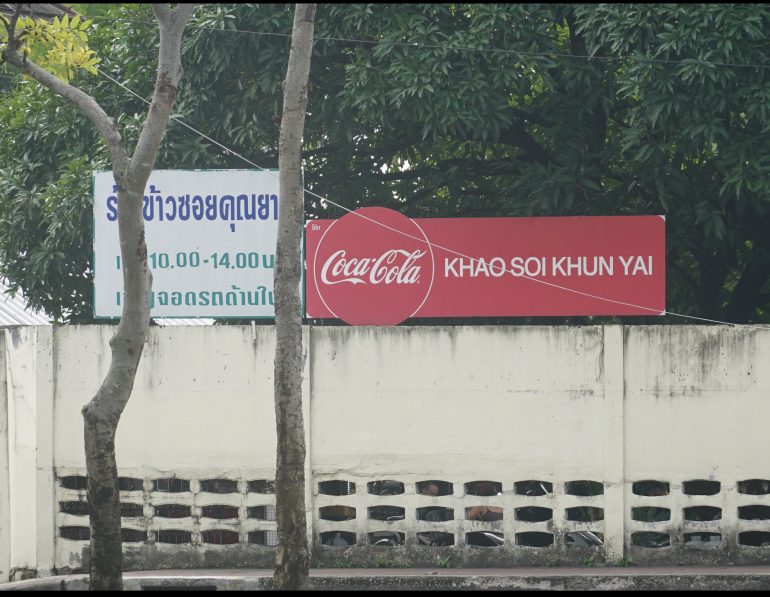
Khao Soi Khun Yai
A popular northern-Thai dish is Khao Soi. Khao Soi is a soup-like dish made with a mix of deep-fried and boiled egg noodles, pickled mustard greens, shallots, lime, ground chillies fried in oil, and meat in a curry-like sauce containing coconut milk. Khao Soi is popular among Thai people in northern Thailand, though it is not often served in Thai restaurants abroad.
A food critic, Mark Weins, made a YouTube video of the five best Khao Soi places in Chiang Mai.
He and two friends ate Khao Soi at all five in one day. That is a LOT of Khao Soi. I have been to four of the five; the fifth is in Mae Rim, about 20 kilometers north of Chiang Mai, a bit far for me. My favorite of the four is Khao Soi Khun Yai (translates to Grandma’s Khao Soi). And it is practically right across the moat from Wat Lok Molee.
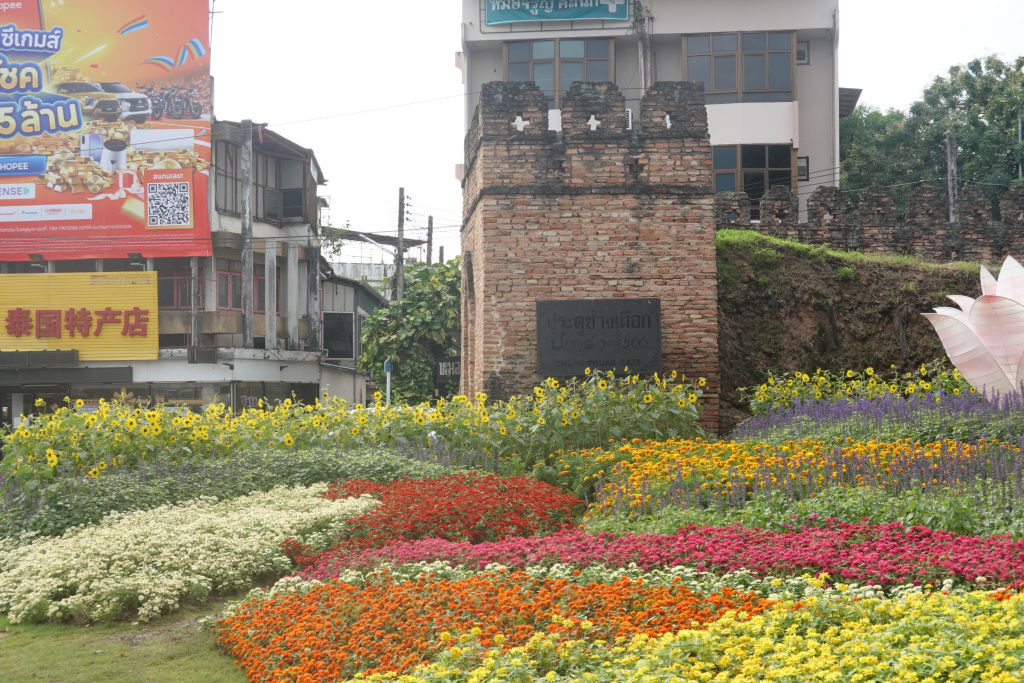
Chang Phuak Gate
Chang Phuak Gate is the sole gate on the northern face of the old city wall. Traditionally, it was used by royalty entering the city, and often on the back of their elephants. “Chang” (sounds like “chong”) is elephant, and in the context of a large animal, “phuak” means “not the normal color.” The royal elephants were gray, but a reddish-brownish gray, distinctly different than the normal gray elephants.
After heavy rains three years ago, Chang Phuak Gate partially collapsed. While digging down to assess the foundation, old ruins were found. The road in and out of the gate was closed, and the whole area was excavated. I took photos of the excavation and posted them in my blog two years ago at: https://james-intrepid-pilgrim.blog/2023/12/17/walk-back-from-chiang-mai-ram-3/
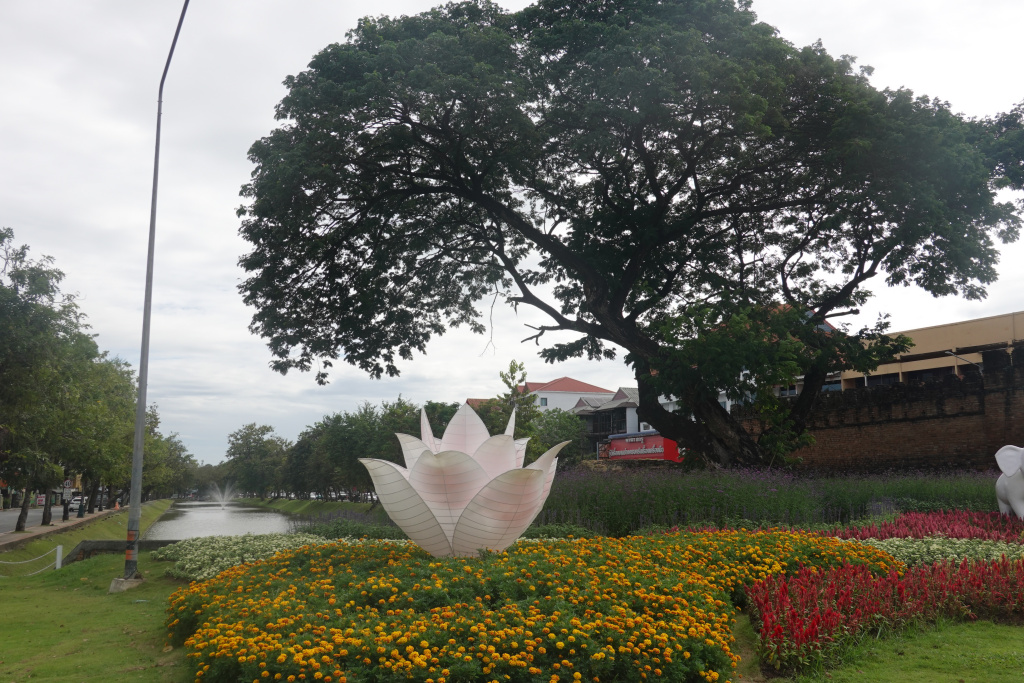
The road itself has not been reopened, but the whole archeological excavation has been buried and planted with flowers and a pedestrian path (which some motorbikes use).
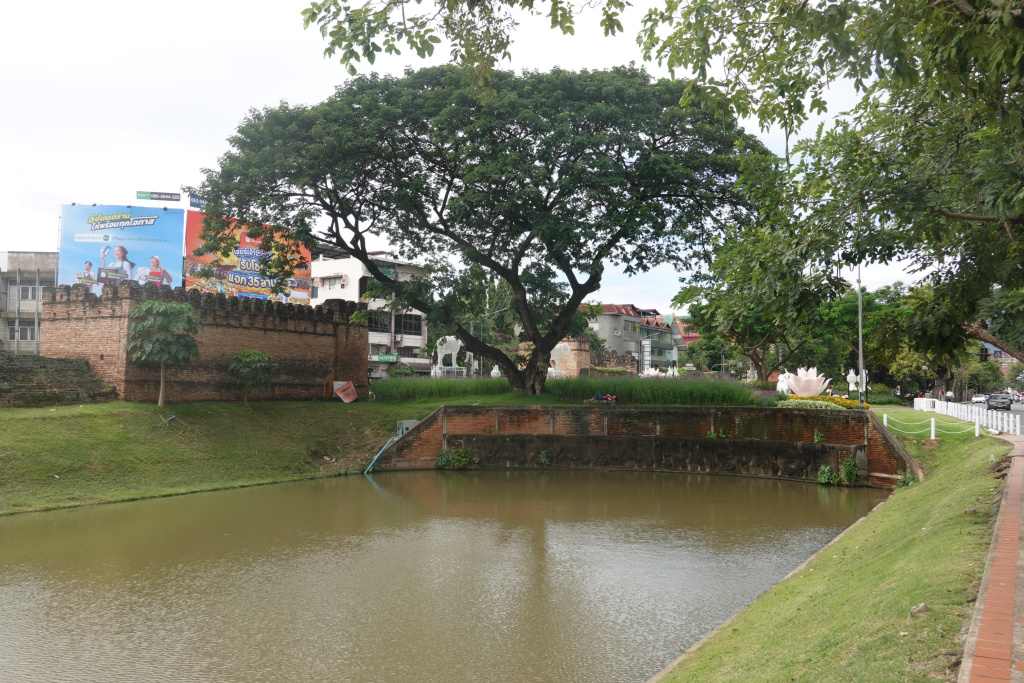
Looking east, there is this large, striking tree. Here are two views, the first facing east, and the second facing west, looking back at the tree and Chang Phuak Gate.
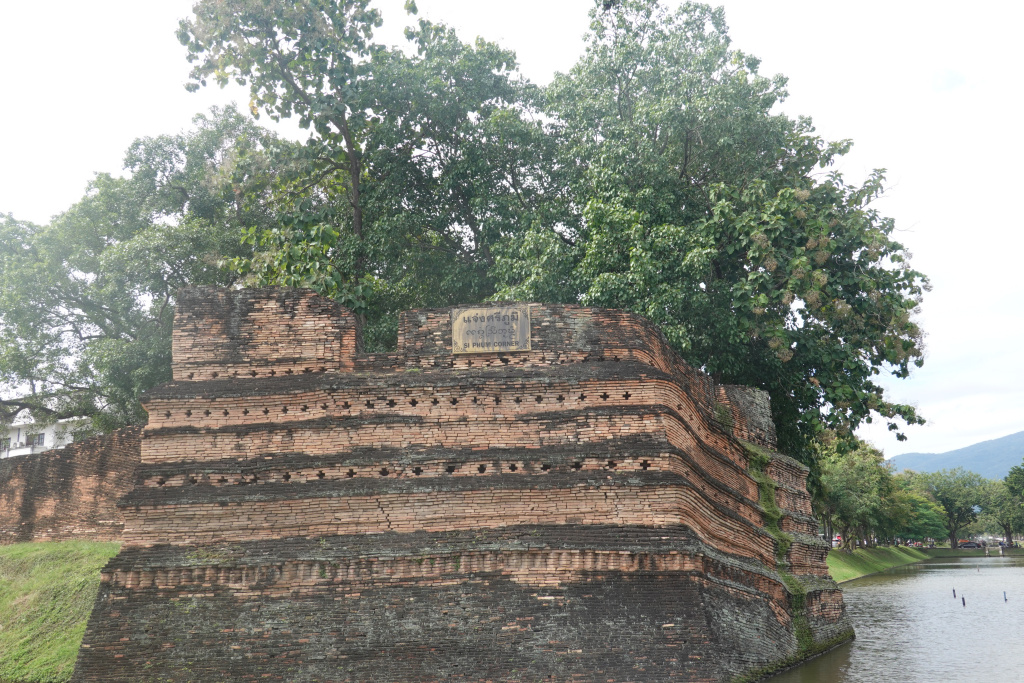
I continued eastward and soon arrived at Si Phum Corner, the northeast corner of the wall. This is also a fairly large structure.
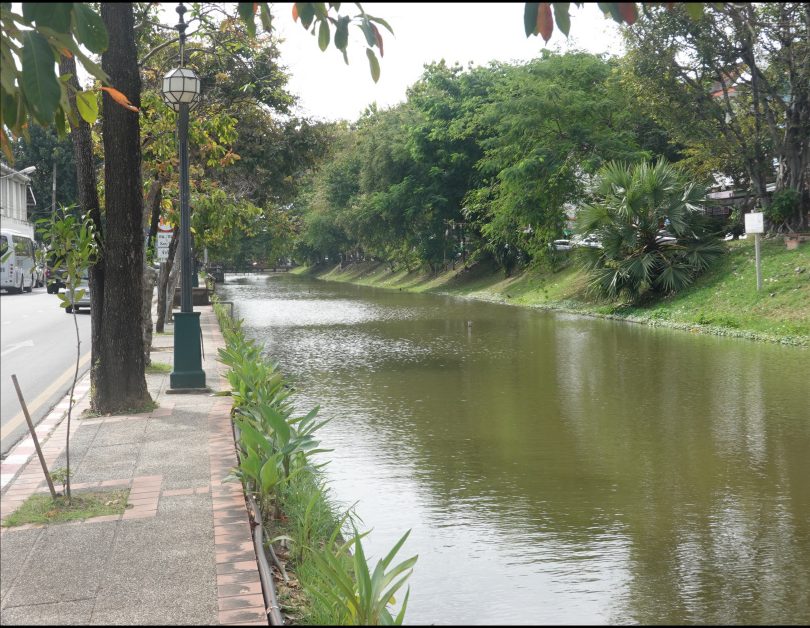
From Si Phum Corner, I have this view of the moat looking south. Less than a kilometer to go.
Om Sala
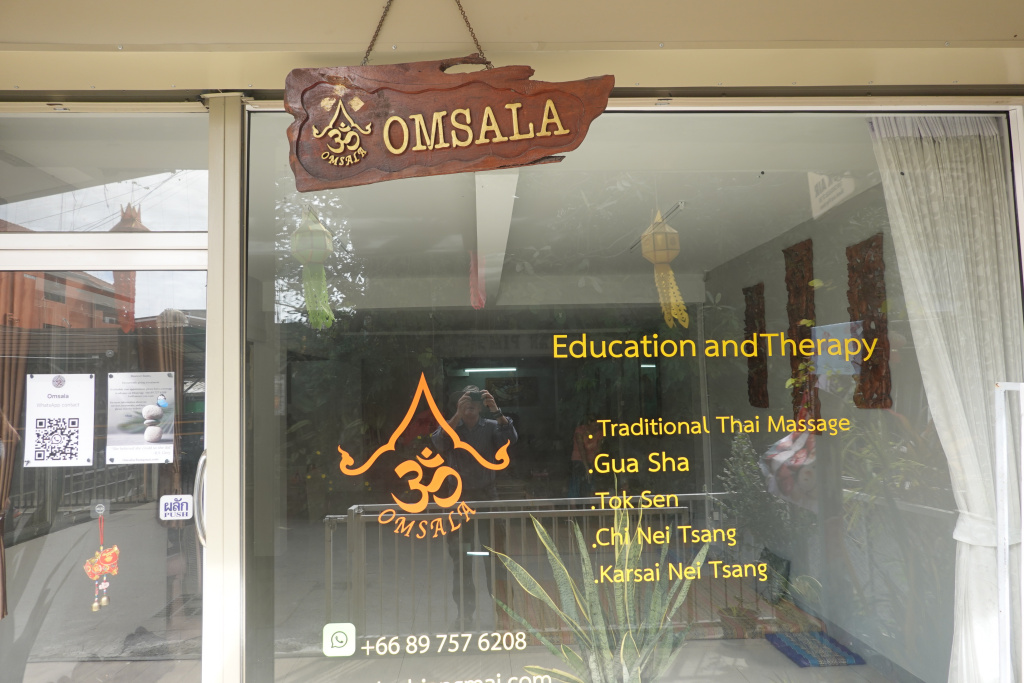
Khun Om is a teacher of various forms of traditional Thai therapies, including chi nei tsang, karsai nei tsang, gua sha, tok sen, and more. I first saw Khun Om at least 10 years ago for chi nei tsang (an abdominal massage designed to facilitate the flow of chi energy to the internal organs). That first session was not comfortable. But as I left, I had a very clear feeling that my body liked the therapy.
Since her “sala” or office is close to Si Phum Corner, I made a little diversion to walk past. I could see her inside teaching, so I took a photo and went on my way, not wanting to interrupt her. I’ll book a chi nei tsang session with her soon.
The rest of the walk was uneventful. I negotiated through the tourists getting their photos taken at Tha Phae Gate, and continued on my way.
Next: Because I have had a cold and it has been raining, I have not been out for any walks or photography sessions. I’m finally writing this on Thursday, and the rain has stopped. All of the next week looks dry – yay! The dry season is finally here!

 James the Intrepid Pilgrim