Wednesday 29 January 2025
Temples I see often and seldom visit
Writing my blog was easier when I was walking the pilgrimage routes in Spain to Santiago de Compostela. Every day while walking to the next town, I took many photographs. At the end of the day, while resting and waiting for laundry to finish, I would select a representative few, process them (crop and resize), upload them to my blog host site, and then write text for the story the photos tell. A goal was to get the pictures to tell as much of the story for that day’s walk as possible. It was easier because daily life did not get in the way.
In Chiang Mai, I do not walk to a new town every day. After I go out for exploratory walks or hikes in the forest, I research the temples or places I saw and fill in the photos with that information. My daily life here takes time also – yoga practice 3 or 4 days per week, strength training at the gym twice per week, dinner with friends, etc. Sometimes, I spend time not doing much, just “chilling,” sitting with Nong and Nat at the crepe cart or sitting with Bowan at the Tibetan Singing Bowl Center and watching the people walk by on Loi Kroh Road. The result is I get behind on my blog entries. Sometimes I find it almost amazing that I was able to post every day while on the Camino de Santiago pilgrimage walks.
Recently, however, I got completely caught up with blog entries. So what am I doing today? First thing after yoga practice was to drop my laundry off at Bear Wash on Moon Muang Road. It is a typical laundromat, and a lady there will do everything for you for a very small fee. I pay her 100 baht (about $3) when I drop off my clothes, then tip her another 20 baht (65 cents) when I pick up my clean clothes. After dropping off my laundry, I went to a branch of SCB (Siam Commercial Bank) I pass every day, withdrew cash from the ATM, and went into the bank to get smaller bills. The ATM dispenses 1000 baht bills, so I ask for 500s, 100s, 50s, and 20s.


I decided to photograph the temples I walk by almost every day and seldom, if ever, visit. The first on the list was Wat Jed Lin.
Wat Jed lin
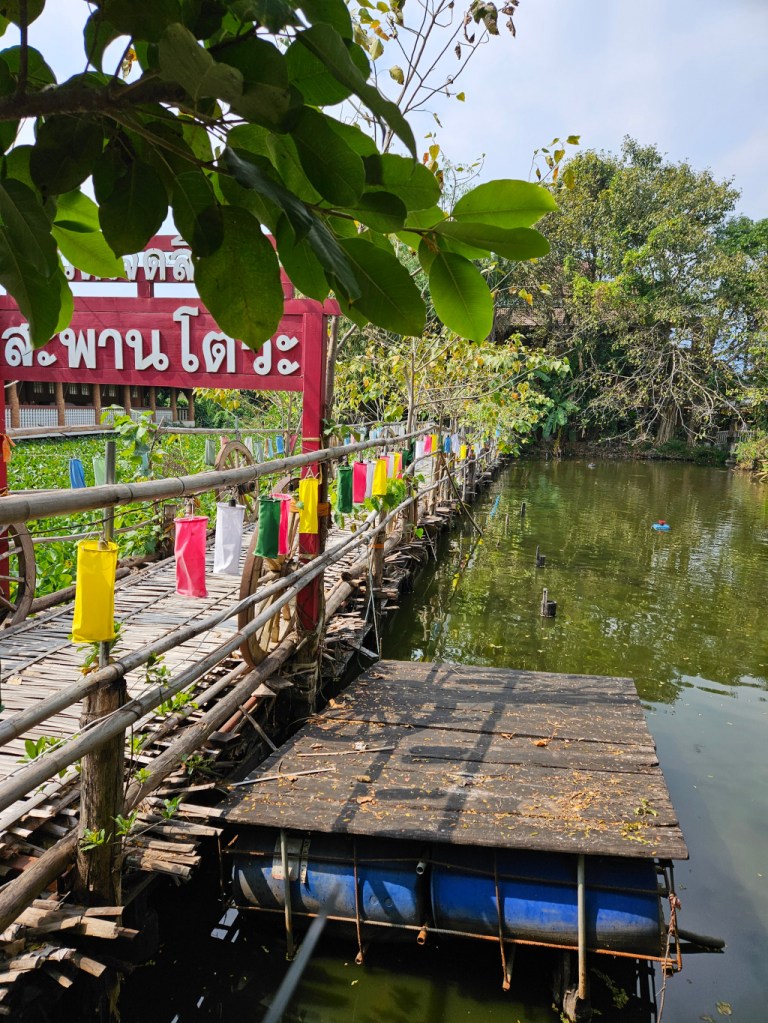
Wat Jed Lin (or Wat Chet Lin or Wat Nong Chalin) is a peaceful temple with a large pond with lily pads. Every holiday season, they set up a labyrinth in the parking lot, different every year. Walking by and relaxing beside the pond, it’s hard to imagine you’re in the middle of a city. There is a long bamboo walkway decorated with colorful banners along the side of the pond leading to the monks’ quarters.
Wat Jet Lin was first built in the early 16th Century. The major event that took place at Wat Jet Lin was the coronation of the Lanna King Mekut Sutthiwong in 1551. The name Wat Jet Lin means the ‘Temple of the Seven Channels’ and refers to 7 water channels under which members of the Lanna Royal Family used to come to the temple to bathe.
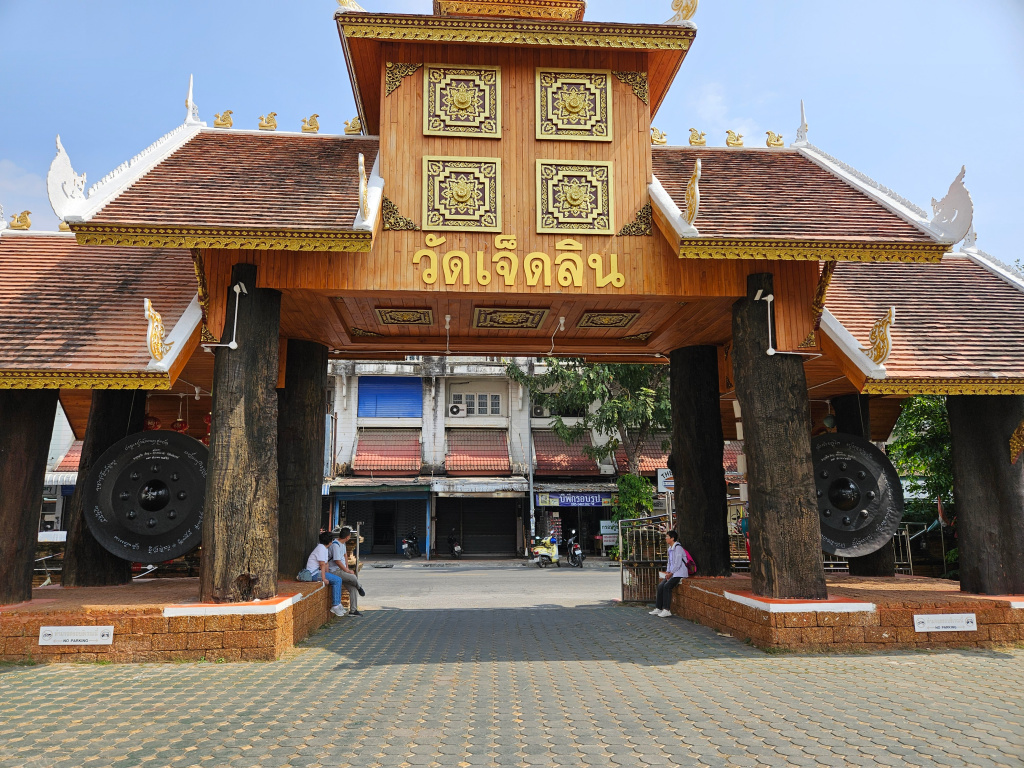
The large and dramatic entrance structure is new since 2022. This is a view looking out from the parking lot area.
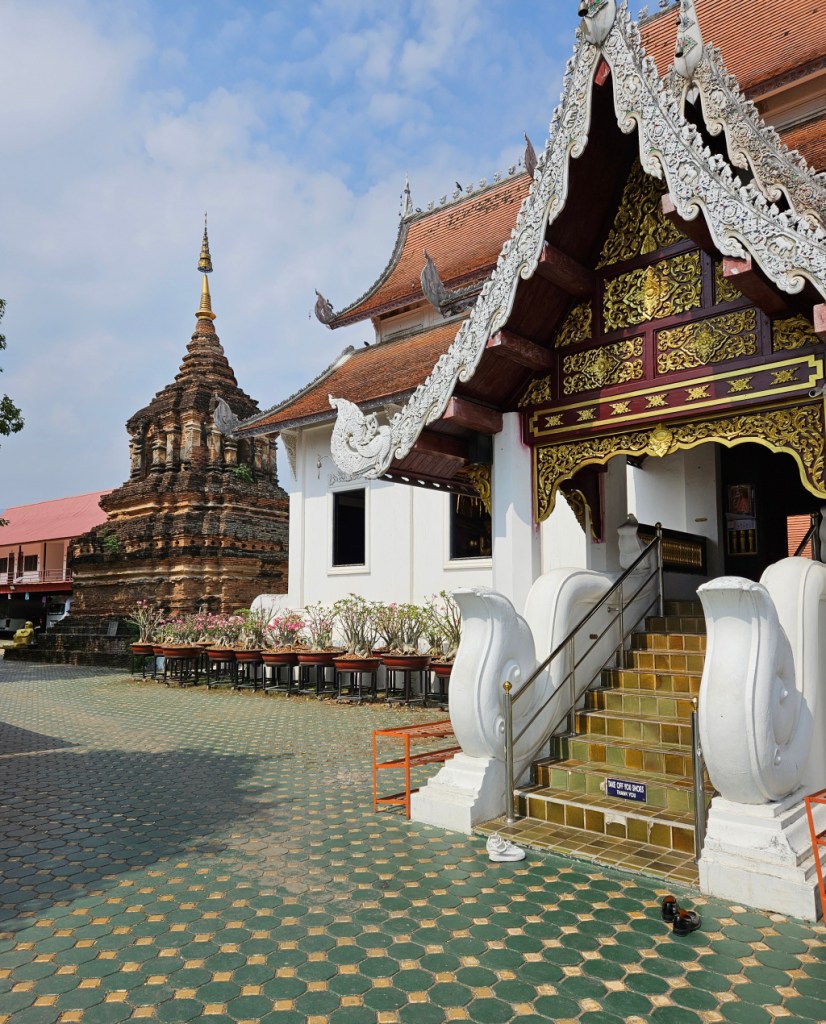
To the right is a viharn (assembly or worship hall) and behind that an old, rustic brick chedi. The style of the chedi is very similar to the chedis in other old temples in Chiang Mai, particularly the one at Wat Lok Molee, suggesting that the chedi was built at the time of the temple’s founding, making it the oldest part of Wat Jed Lin.
Walking to the back of the temple grounds, past the chedi is the pond. While typically many large lily pads are floating on the water, today there are none. Here is a view of the pond from the bamboo walkway to the monks’ quarters.
Wat Jed Lin is peaceful and I like to two large gongs under the new entrance structure. I walk by almost every day when walking to Wild Rose Yoga, but seldom go in.
Continuing up Prapokklao Road towards See You Soon, the next temple is Wat Chang Taem, the next-door neighbor to See You Soon.
Wat Chang Team
Wat Chang Team is a small temple compared to most temples in and around Chiang Mai. The entrance sign at Wat Chang Team
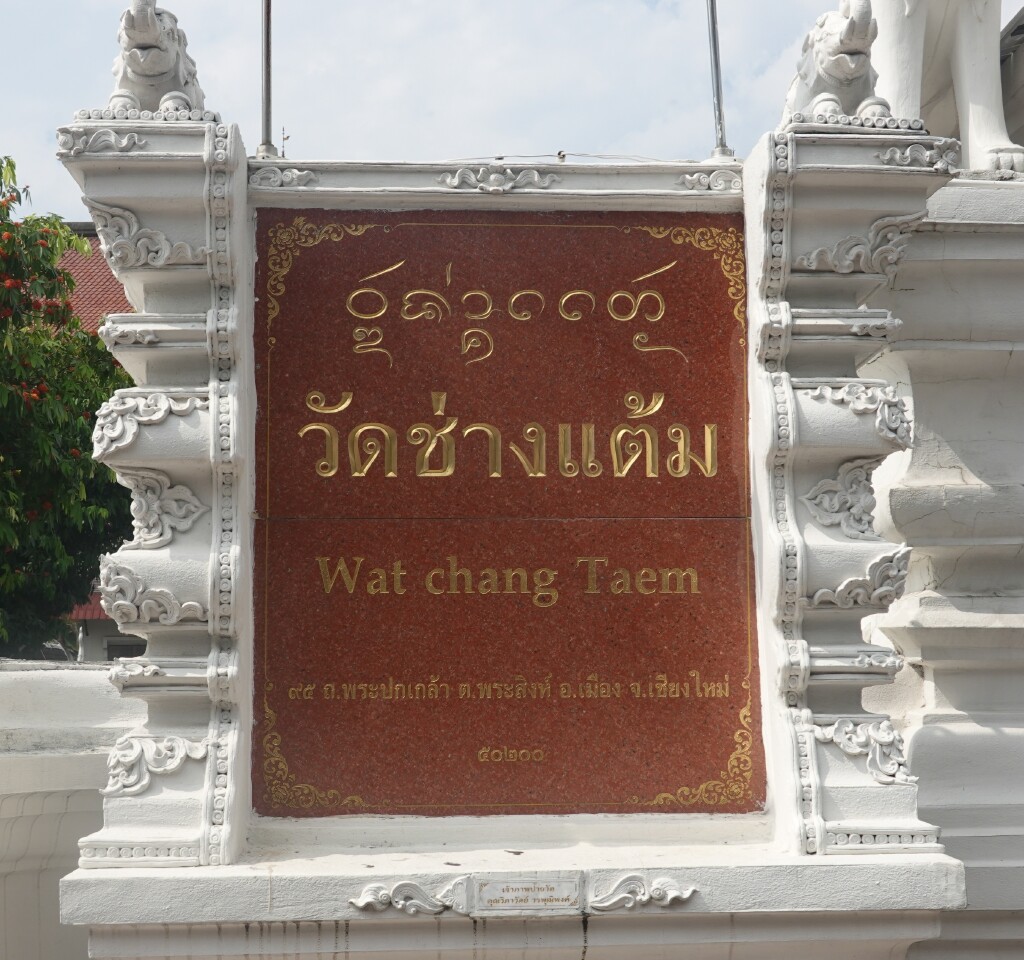
Wat Chang Taem’s name means “10,000 drops of rain.” I have not discovered where it got that name. The temple plays an important role in the annual Inthakhin Festival when the Chiang Mai city pillar, now at Wat Chedi Luang, is venerated. A side building holds the Fon Saen Ha Buddha which is over 1000 years old. This Buddha statue dates from the tenth century and was originally in a temple in Lamphun. King Tilokorat of the Mengrai Dynasty (1441 to 1487) overthrew Lamphun and destroyed most buildings except the temple housing the Fon Saen Ha Buddha. This statue along with the Buddha image called “Pra Kaew Khao” were taken to Chiang Mai. The Pra Kaew Khao Buddha was moved to Wat Chiang Man and the Fon Saen Ha Buddha moved to Wat Chang Taem.
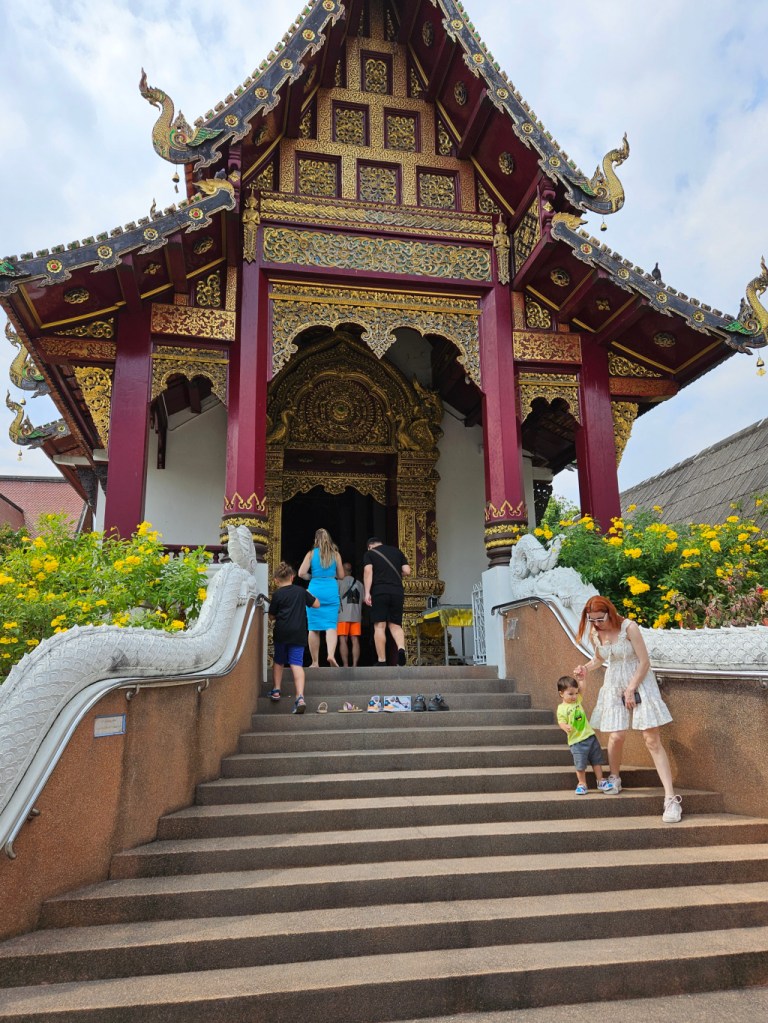
The pedestrian entrance to the temple is so close to the viharn that I could not get a photo of the entire stairway once inside without interfering with other tourists.

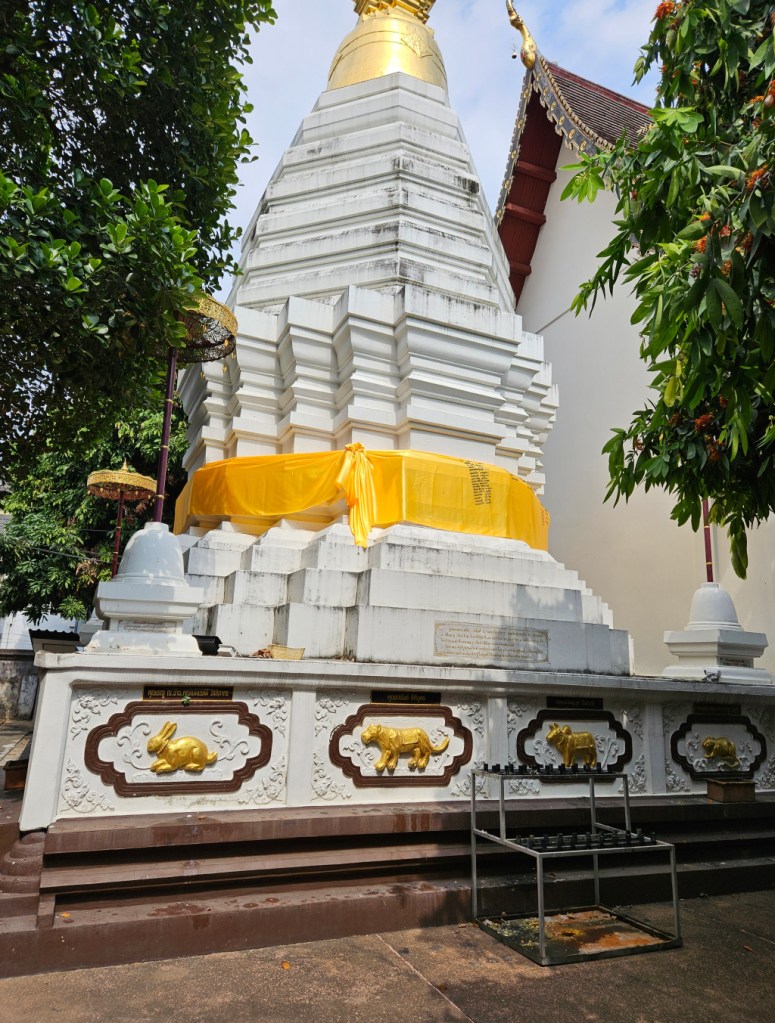
Behind the viharn, as is typical of most Buddhist temples, is the chedi. This one is very modern looking, and not my favorite.
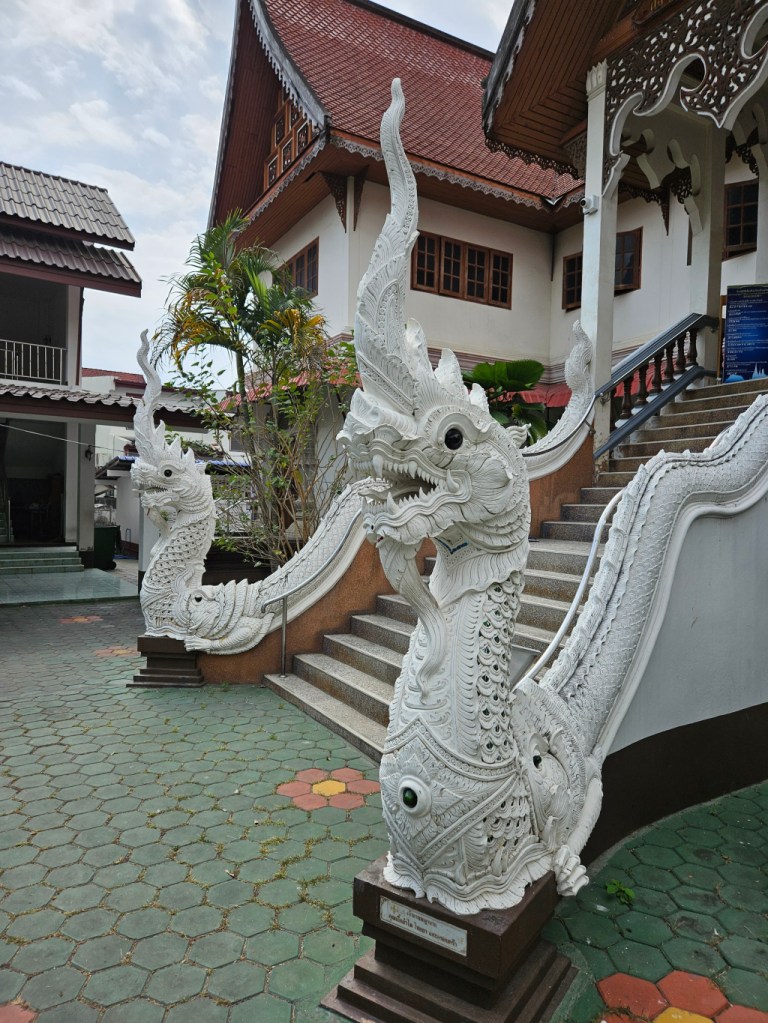
South of the chedi and across a parking area is the entrance to the building in which the Fon Saen Ha Buddha is kept in a room upstairs. The stairs are guarded by white Naga dragon-like creatures. (I always love a Naga stairway.)
Sidewalk Challenges
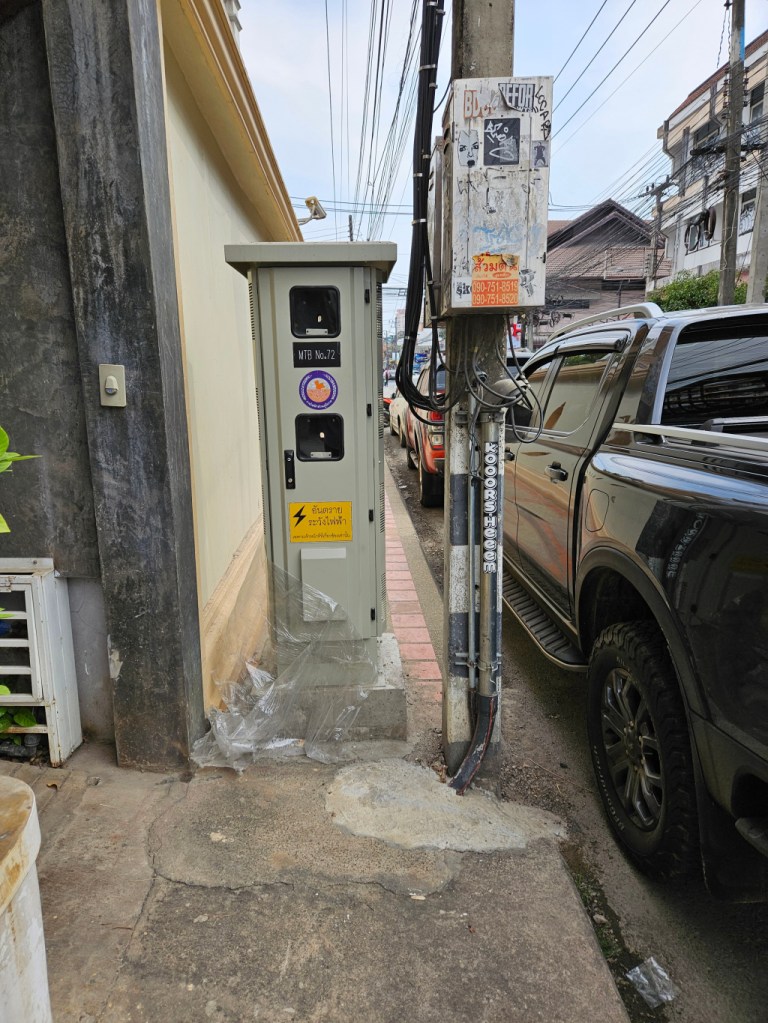
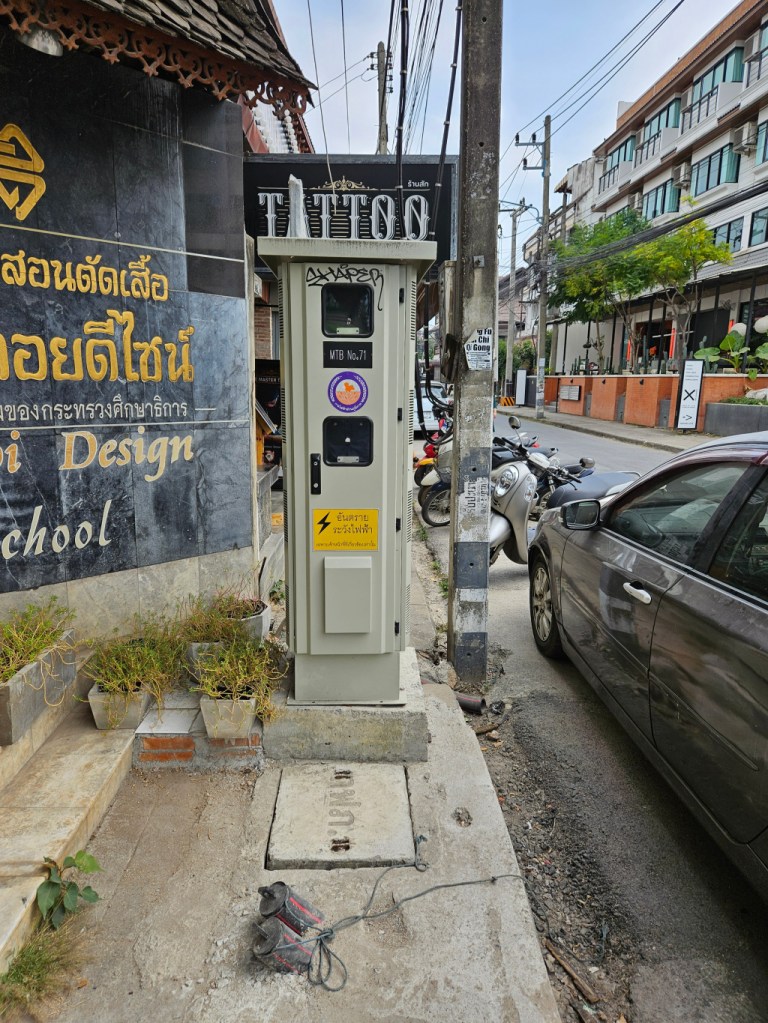
Sidewalks all over Chiang Mai are ambiguous at best. On roads where they exist, they are inconsistent, often have trees or other obstacles, and the curbs differ dramatically in size. There is currently a multi-year project to move the power and communication cables underground in the old city. Unfortunately, what has appeared are these boxes, mostly right in the middle of sidewalks, making negotiating the sidewalks even more difficult. Walking from Wat Chang Taem along Ratchamanka Road to Wat Pha Khao, I encountered these “boxes” along just 50 meters of “sidewalk.”

Next: Temples I Walk Past and Seldom Visit 2

 James the Intrepid Pilgrim