Friday 17 January 2025
Exploring Wiang Kum Kam Again
Wat Pu Pia
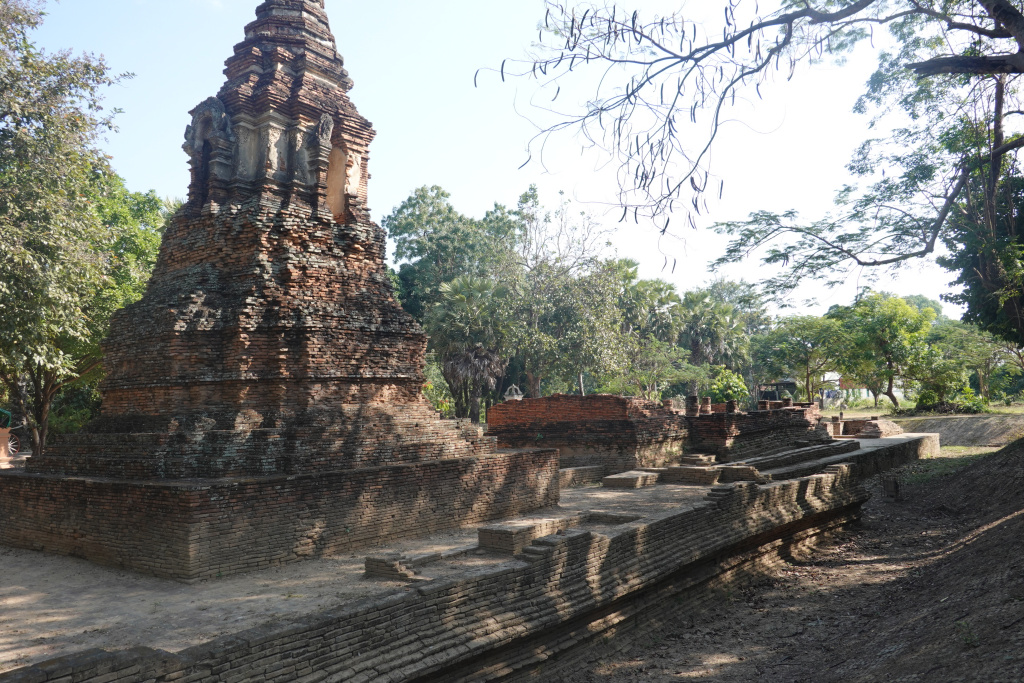
The next excavation site we visited was the remains of Wat Pu Pia, like Wat E Khang, a very complete temple with a viharn, a ubosot, and a fairly complete chedi. The chedi has 4 niches to house Buddha images (likely standing Buddhas by the tall shape).
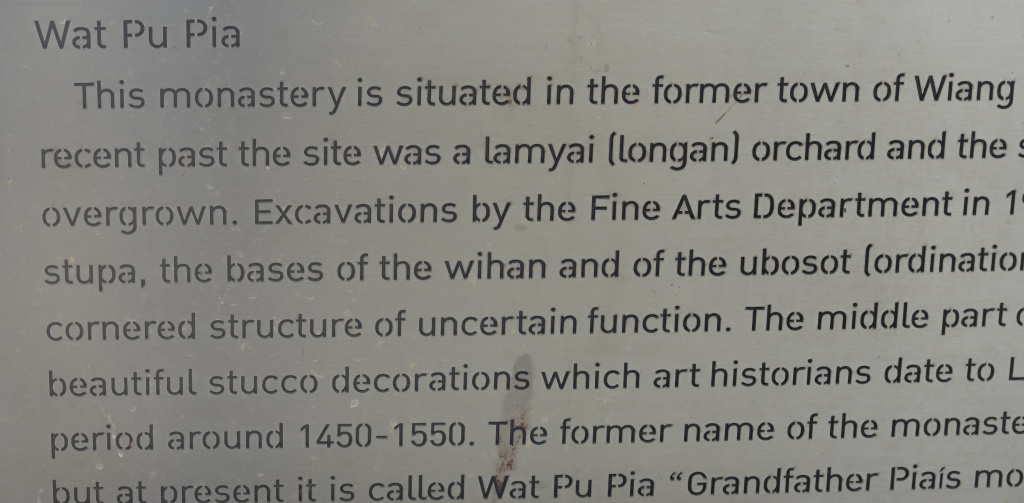
Wat Pu Pia (or Wat Pupia) is a 16th-17th Century temple and is written that it is the most photographed ruin within the ancient city of Wiang Kum Kam. Like many of the temples at Wiang Kum Kam, Wat Pupia was almost entirely buried by sediment from the Ping River flooding. Prior to its excavation in 1985, the viharn and ubosot were entirely covered and overgrown with plants and only the top of the chedi was visible above ground.
There is no historical mention of Wat Pupia in writings and the present name is attributed by locals rather than any writings. Excavations by the Fine Arts Department discovered evidence of two phases of construction, the first phase having been built over at a later date.
Archeologists believe that there was also a boundary wall to the temple. Its foundations would have likewise been buried with the rest of the temple, but were not found during excavations. Further exploratory digs have not taken place due to concerns over private property in the surrounding residential area.
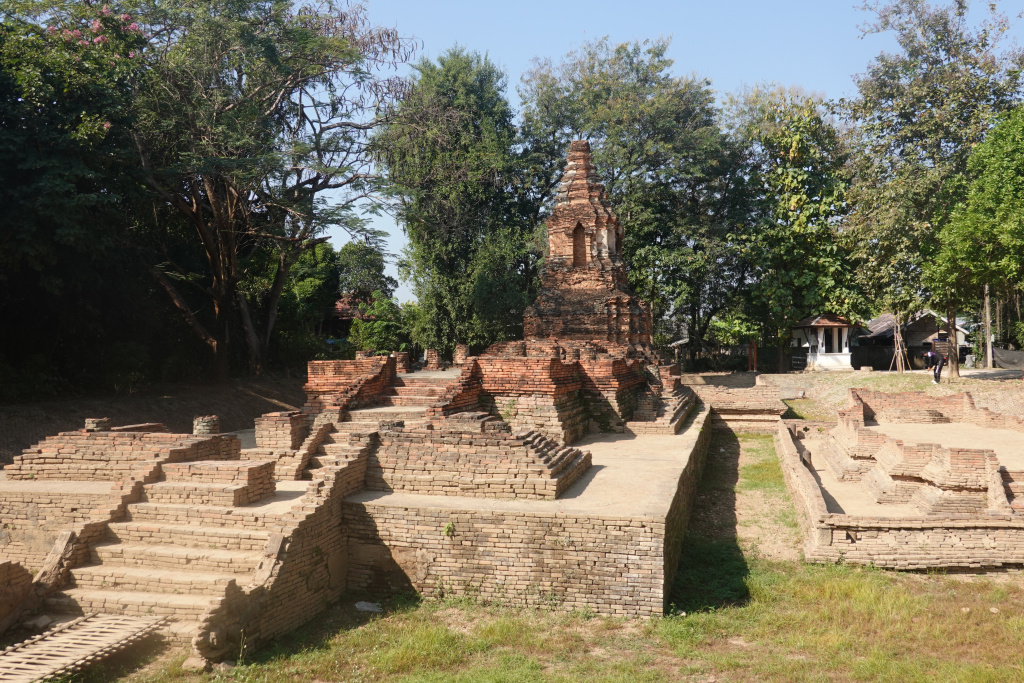
Another view of the Wat Pu Pia ruins showing the chedi closer:

Another view shows the chedi and what might be a wall, but an internal wall and not the boundary wall the archeologists say they have not yet discovered.

 James the Intrepid Pilgrim