Friday 17 January 2025
Exploring Wiang Kum Kam Again
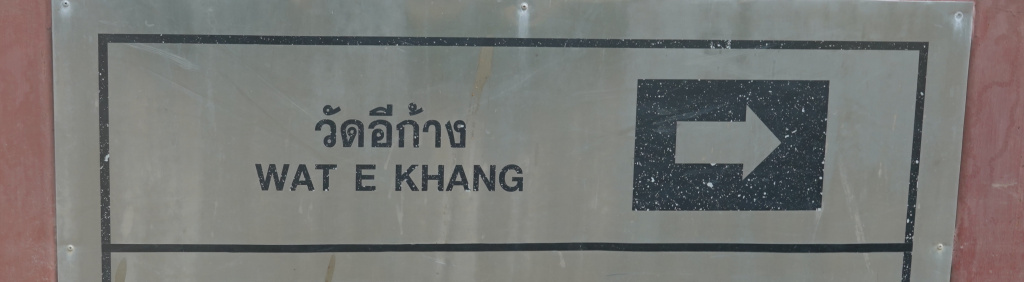
Wat E Khang
Just across the soi from Wat Nan Chang is Wat E Khang.
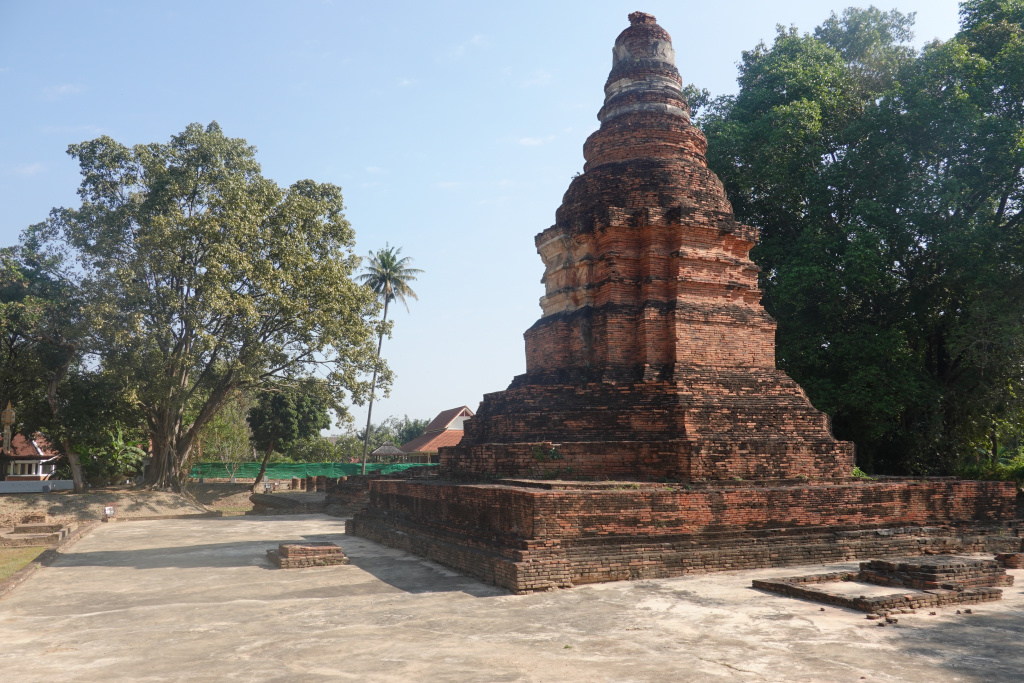
Wat E Khang is one of the most impressive ruins in all of Wiang Kum Kam. There is the foundation of a large viharn and, most surprisingly, a nearly intact chedi connected by a brick pathway. At the rear of the viharn are stairways on each side leading up to the platform surrounding the chedi. The area around the stupa is meant for use as a circumambulation path. In this practice, worshippers walk circles around the chedi in a clockwise direction in order to pay tribute to the sacred object (in this case the relic within the chedi) and gain merit (a credit toward reincarnation).
The viharn has the remnants of 16 pillar bases running through its length and a very large pedestal that would have once housed the seated Buddha image. No trace of the original statue was found during excavations.
There is a foundation for a very small ubosot alongside the viharn. It is small for the viharn and chedi this big. Also, both the viharn and ubosot entrances are to the north, whereas almost all Buddhist temples, including those at Wiang Kum Kam face east.
Wat E Khang temple is named after the state in which it was rediscovered. The entire area was covered in plant life and inhabited by monkeys (“khang” translates to “monkey” in northern Thai). No monkeys live here any longer, nor anywhere in Chiang Mai today.
Here are a few photos of the more extensive ruins at Wat E Khang. Again notice that the ground level of the ruins is about 2 meters below the ground level of the surrounding area.
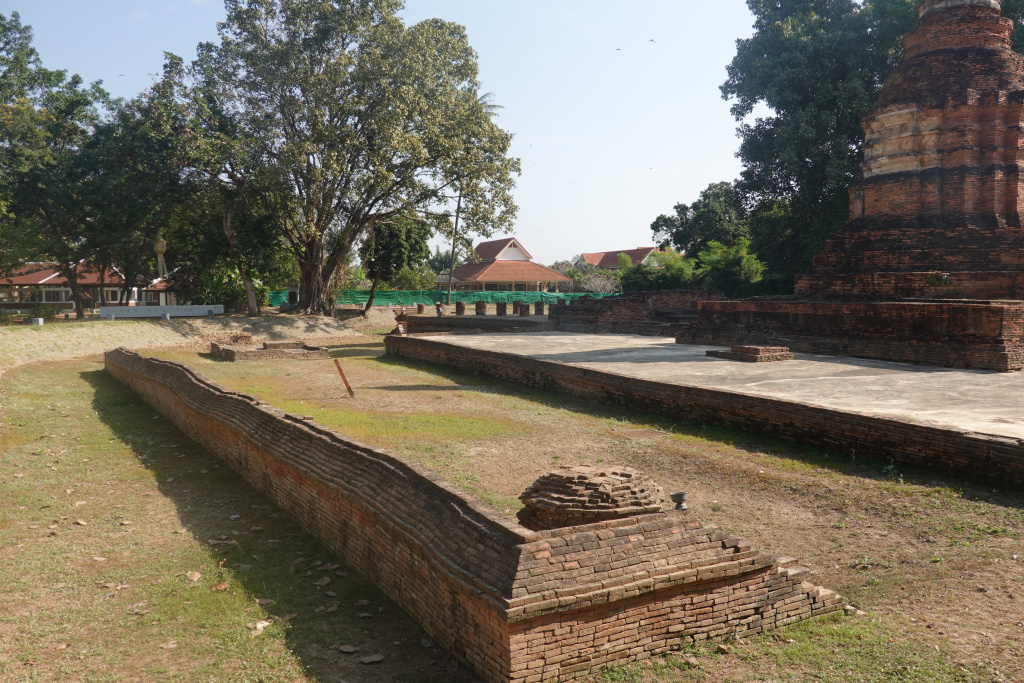
A photo of the viharn showing the base of the 16 pillars that would have supported the roof.
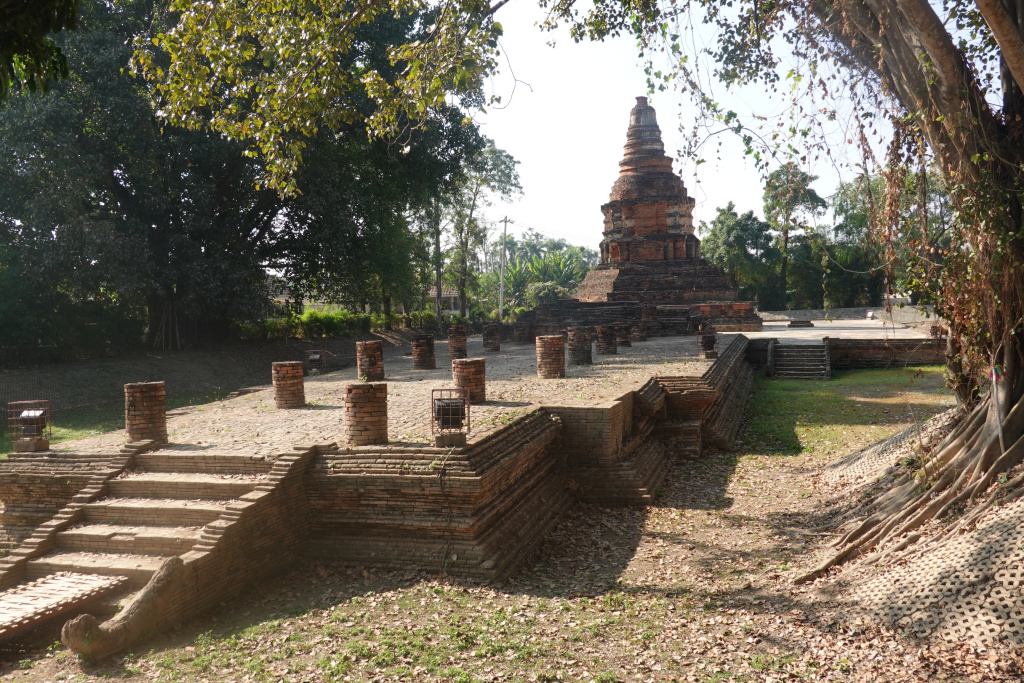
A photo from what would have been the entrance of the viharn looking to the structure of the altar where a Buddha statue would have been. Now, because there are no walls, looking directly to the chedi.
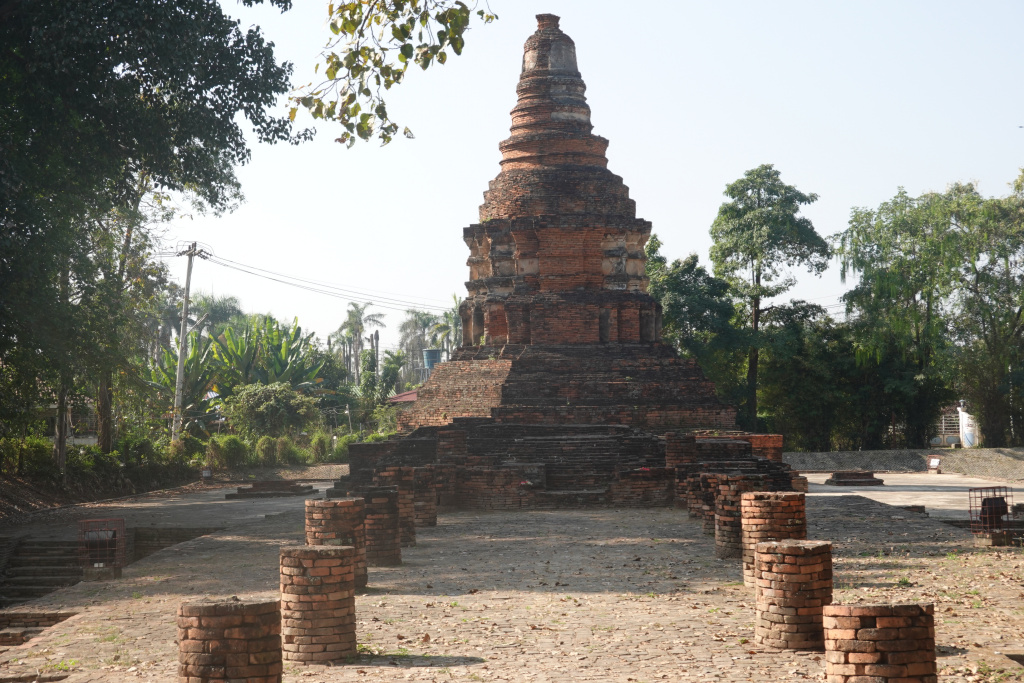
And finally, a closer view of this old and impressive chedi.

 James the Intrepid Pilgrim