Sunday 15 December 2024
Excursion to Mae Rim to Wat Pa Darapirom and Darapirom Palace Museum
This is a long post with many pictures, so it will be in two parts. First some background history followed by many pictures.
Also note that the Princess’ name is commonly written in English four different ways: Dararasmi, Dararasmee, Dara Rasmi, Dara Rasmee. I will use the first, Dararasmi.
Princess Dararasmi History
Princess Dararasmi was the daughter of Prince Intavichayanon and Queen Thip Keson of the Chakri Dynasty of Chiang Mai. She was born in 1873 and raised in the palace of her parents in Chiang Mai.
In the 1860s and ’70s, as the British encroached further and further into Burma, Chulalongkorn, King of Siam became concerned that England wanted to annex the Lanna (now northern Thailand). In 1883 a rumor spread that Queen Victoria wanted to adopt Princess Dararasmi of Chiang Mai, which the Siamese saw as a British attempt to take over Lanna. King Chulalongkorn (King Rama V) then sent his brother Prince Phicit Prichakorn to Chiang Mai to propose an engagement to Dararasmi to become one of the King’s consorts. In 1886, she left Chiang Mai to enter the Grand Palace in Bangkok.
When her father passed away, Princess Dararasmi requested Chulalongkorn’s permission to travel to Chiang Mai, her first visit in 22 years. Her request was granted, and he also elevated her rank to Her Highness Princess Dararasmi, The Princess consort, one of his official wives, in the only such promotion ever. Only ten months after her return to Bangkok, the Princess experienced more sadness as Chulalongkorn passed away in 1910. She continued to reside at the Suan Farang Kang Sai Palace in Bangkok during the early years of the reign of King Vachiravudh (King Rama VI). In 1914, she sought the King’s permission to return to her birthplace in northern Thailand. Her request was granted, and the King had a house built for her where she lived until she died in 1933 at the age of 60.
Not only was Princess Dararasmi one of Chulalongkorn’s favorite consorts, but because of her alliance with the Chakri monarch in Chiang Mai, relations between Lanna and Siam improved, leading to their merger (some say annexation of Lanna by Siam) forming the Kingdom of Thailand as we know it today.
Wat Pa Darapirom
The temple Wat Pa Darapirom in Mae Rim, about 30 kilometers north of Chiang Mai, was difficult to research. I found that it was built 100 years ago, about the same time Princess Dararasmi returned to the Chiang Mai region and the house built for her about 1 kilometer away from the temple. In trying to understand the difference between Darapirom and Dararasmi, I think Dararasmi was the Princess’ name, and Darapirom was the name of her Palace home. The temple Wat Pa Darapirom was built to honor Princess Dararasmi, and includes a pavilion with her statue.
I have often said and written that the temples in northern Thailand, formerly Lanna, were more exuberant in their artistry than those in central Thailand, Bangkok. This temple is an extreme example of exuberant artistry.
I saw this temple twelve years ago on my first winter visit to Chiang Mai, and I have always remembered it as very artistic, even elaborate. Having no other plans on a Sunday, I hired a driver to take me to Mae Rim to see the temple again, and also go to the Darapirom Palace Museum.
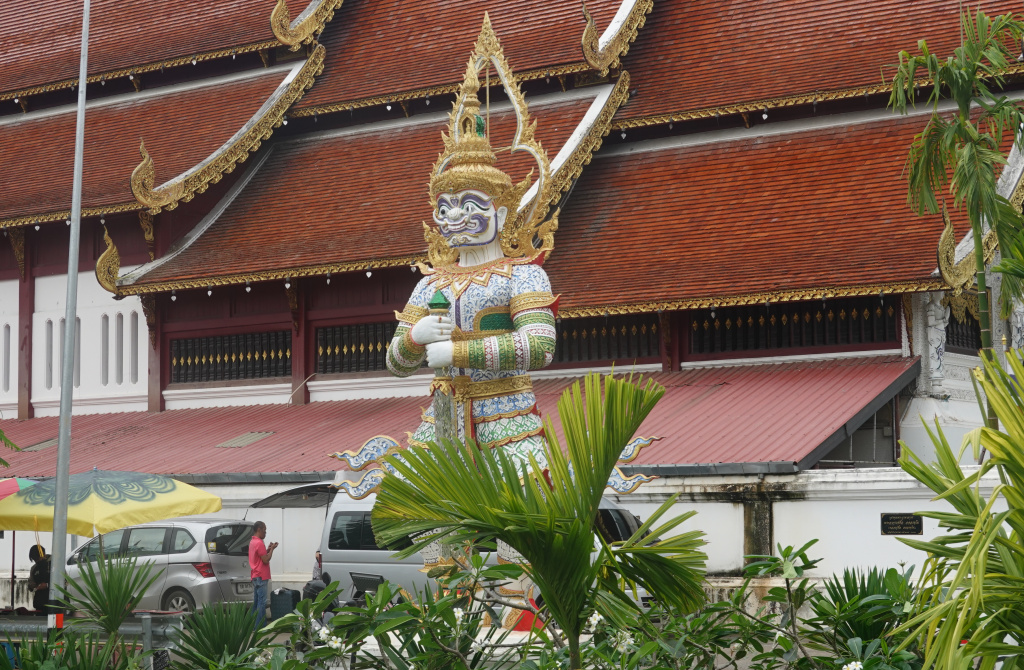
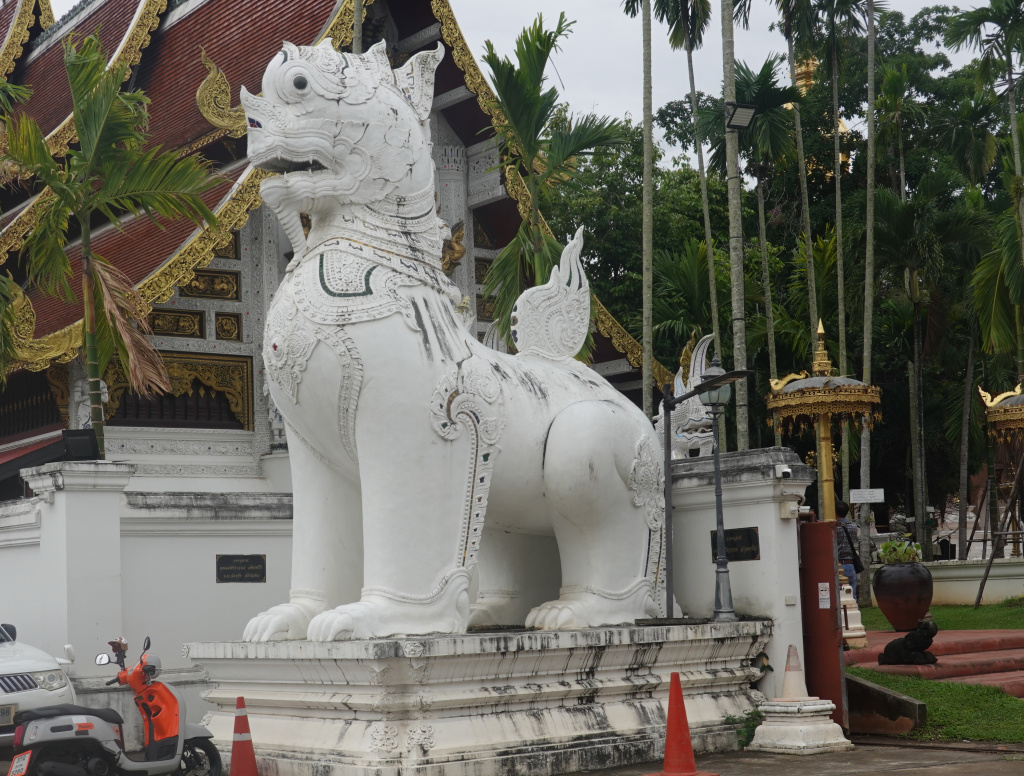
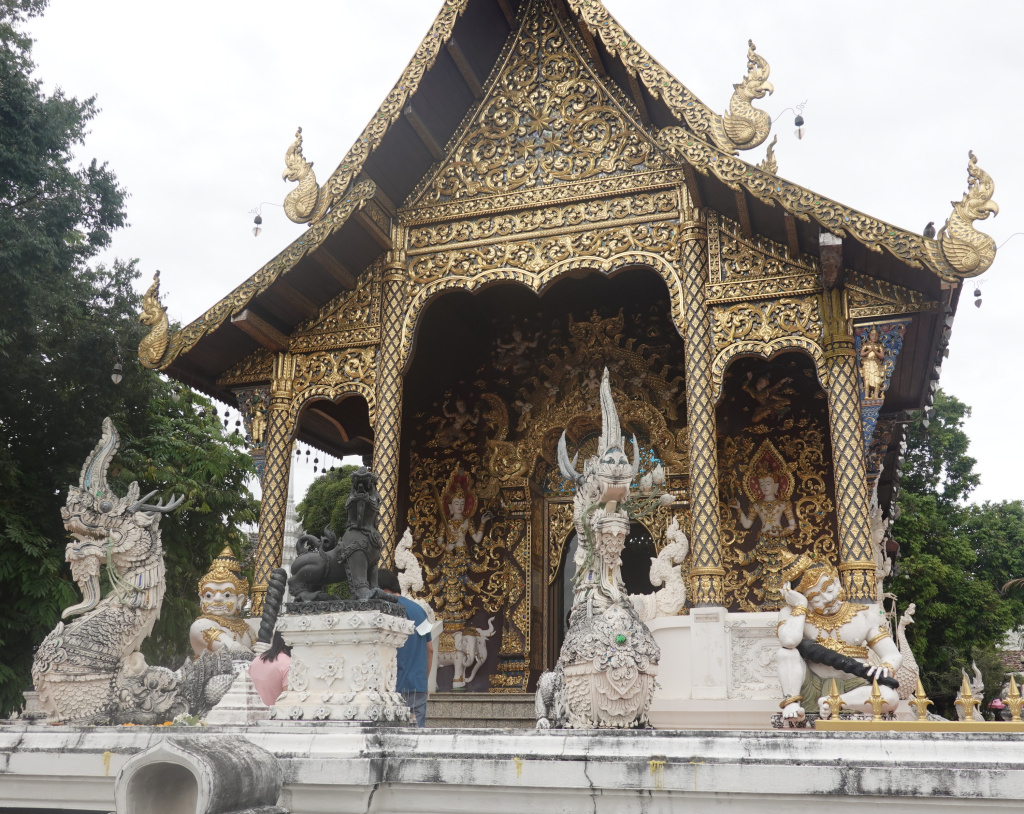
When first seeing the temple, the grand size of the main viharn (worship or assembly hall) is immediately noticed. As well as the large Yaks and Singha (lion-like) creatures guarding the entrance.
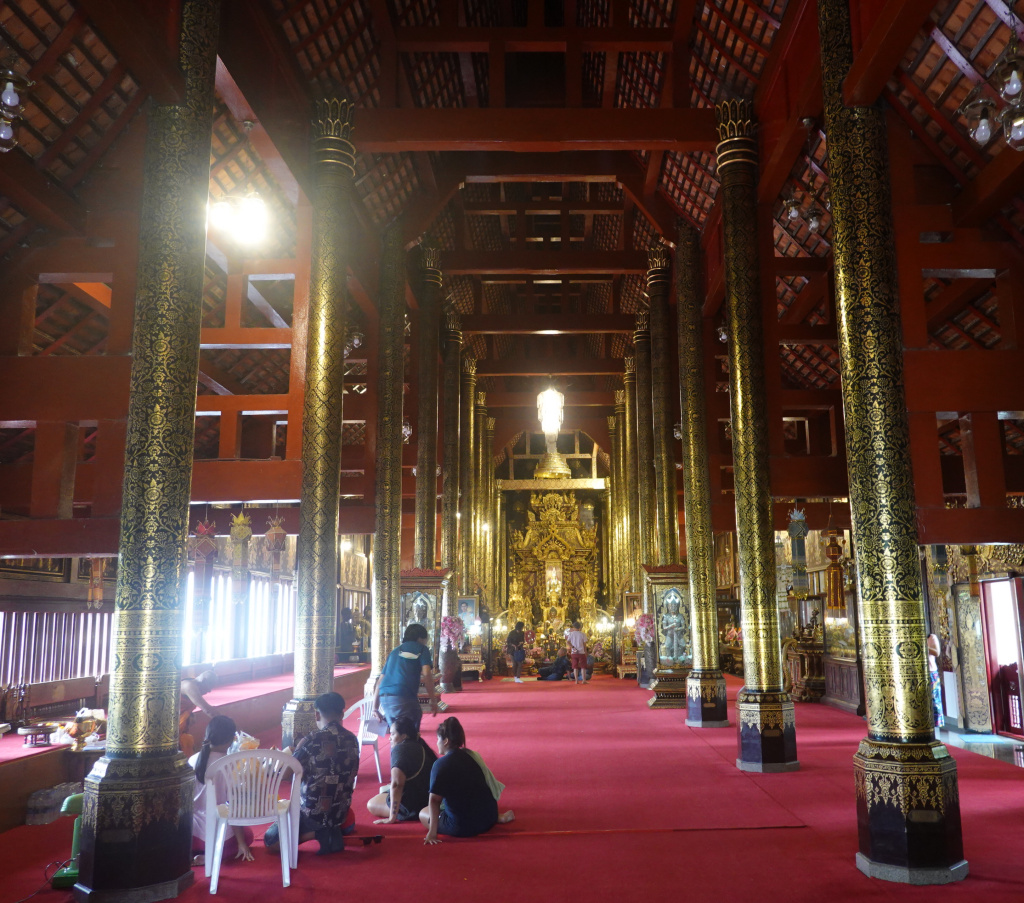
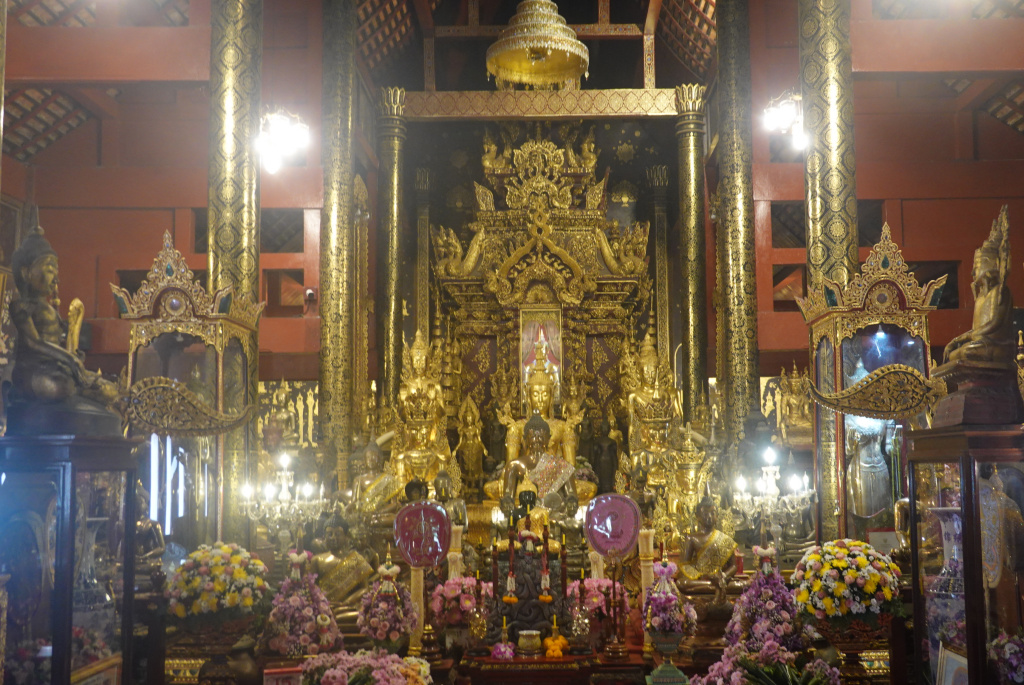
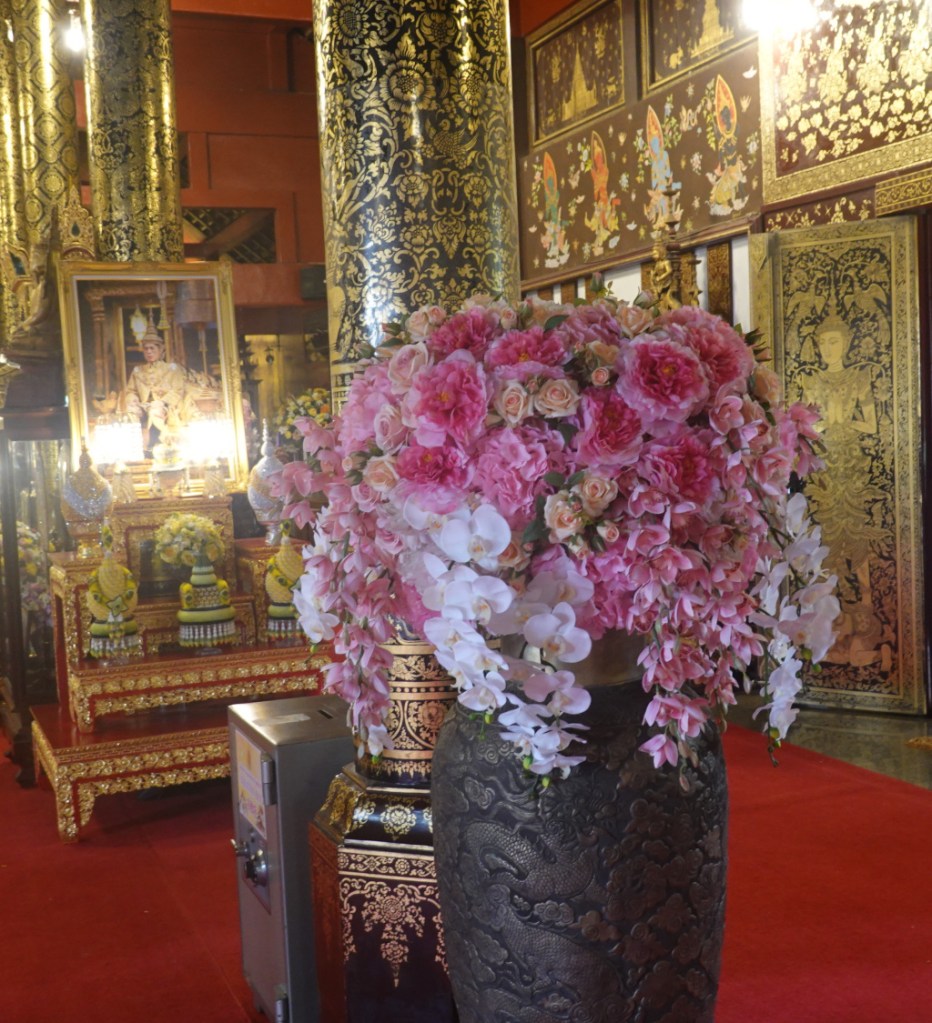
Inside the viharn, photos do not convey well its size. Everything inside is ornate and stunningly beautiful.
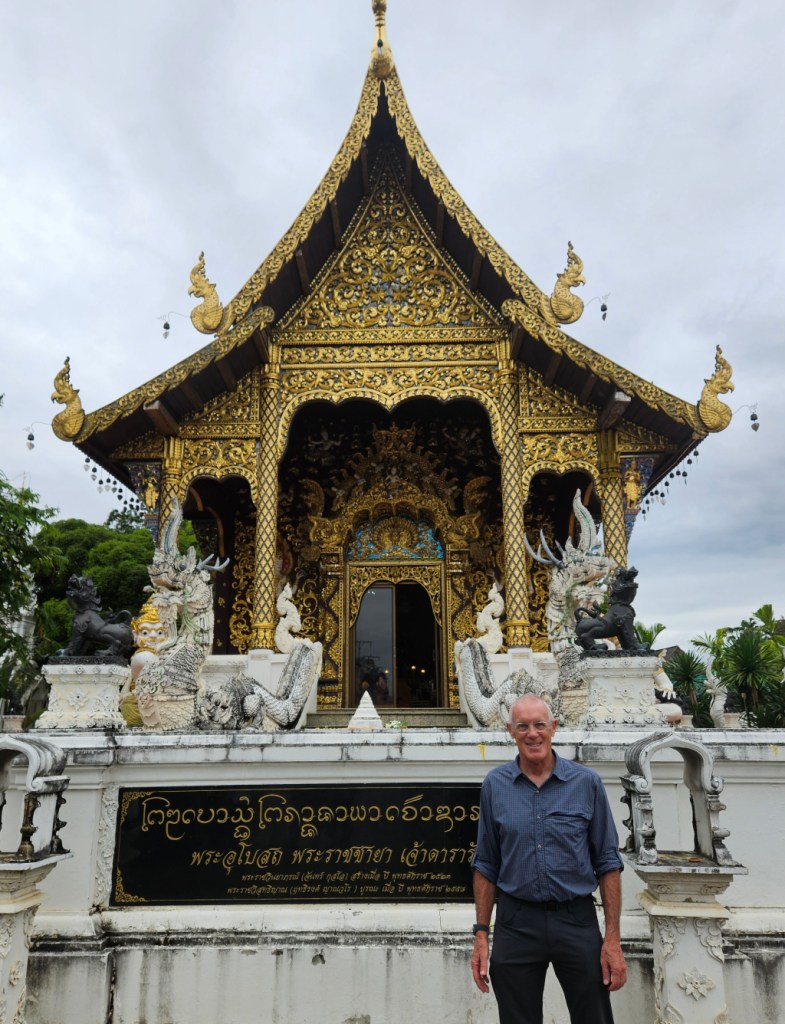
Nearby the viharn is an elaborate Ubosot (ordination hall)
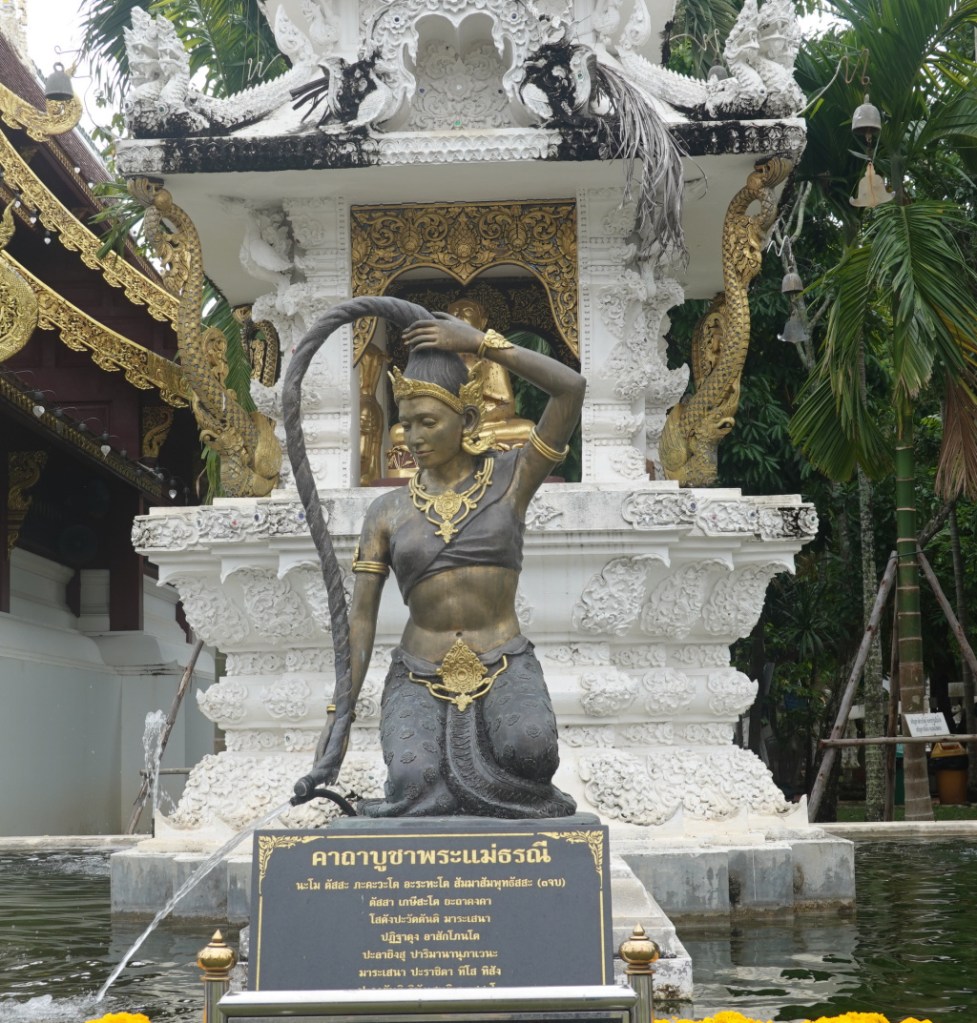
Between the viharn and the Ubosot is a very beautiful tribute to mother earth, Phra Mae Thorani
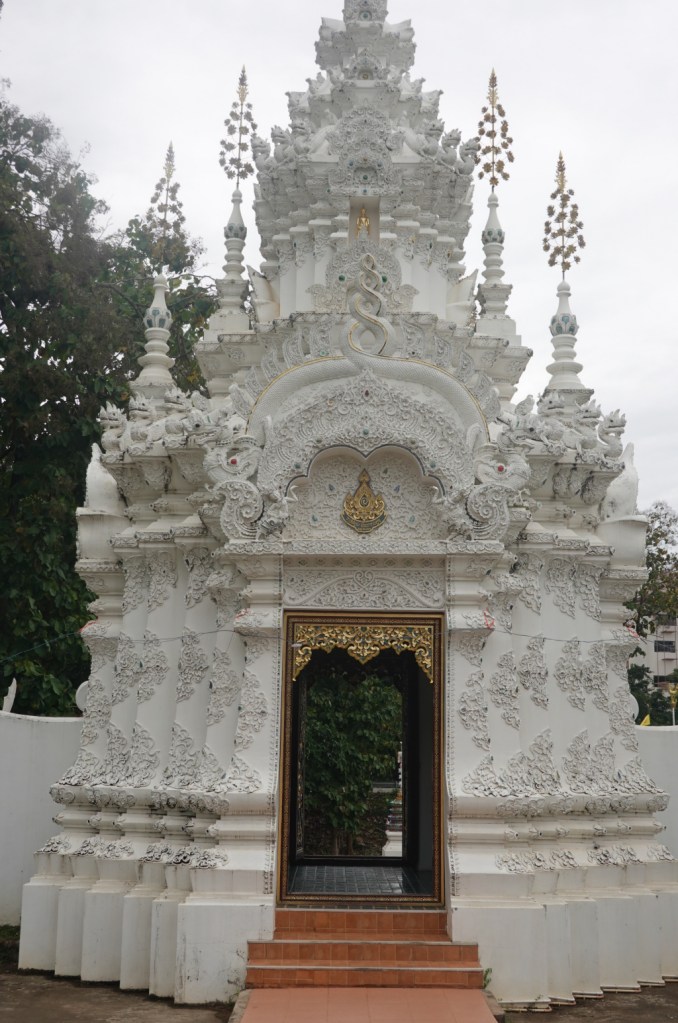
There are many of what I would call “pavilions” at this temple. Here is an arched gateway to the pavilion in which the statue of Princess Dararasmi is on display. Like everything else at this temple, even the simplest structures are elaborate:
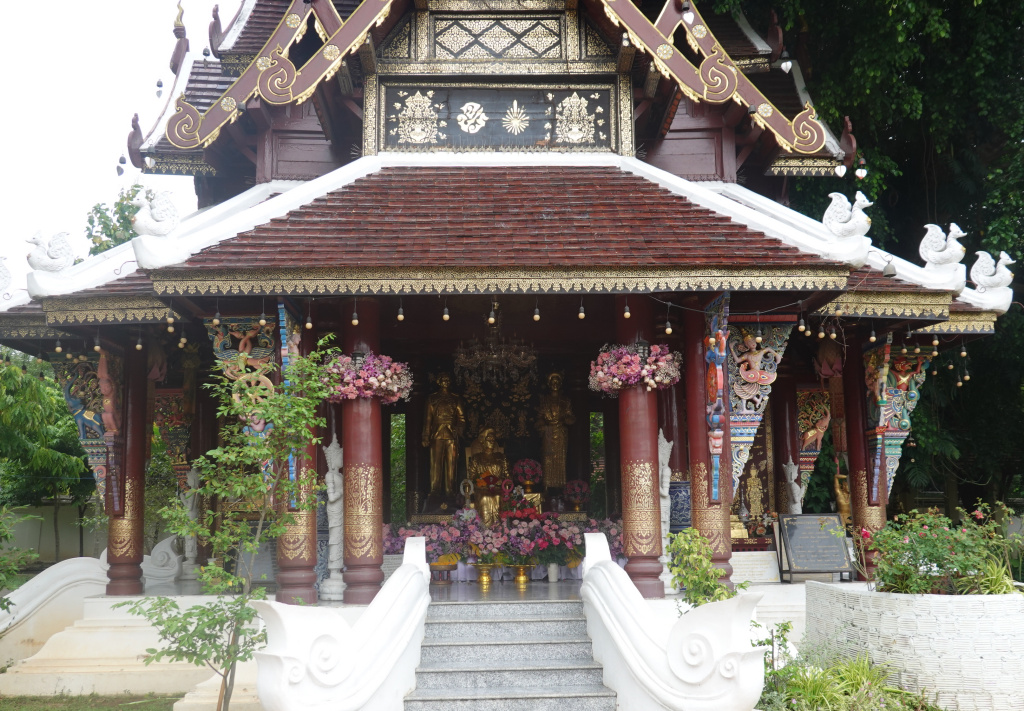
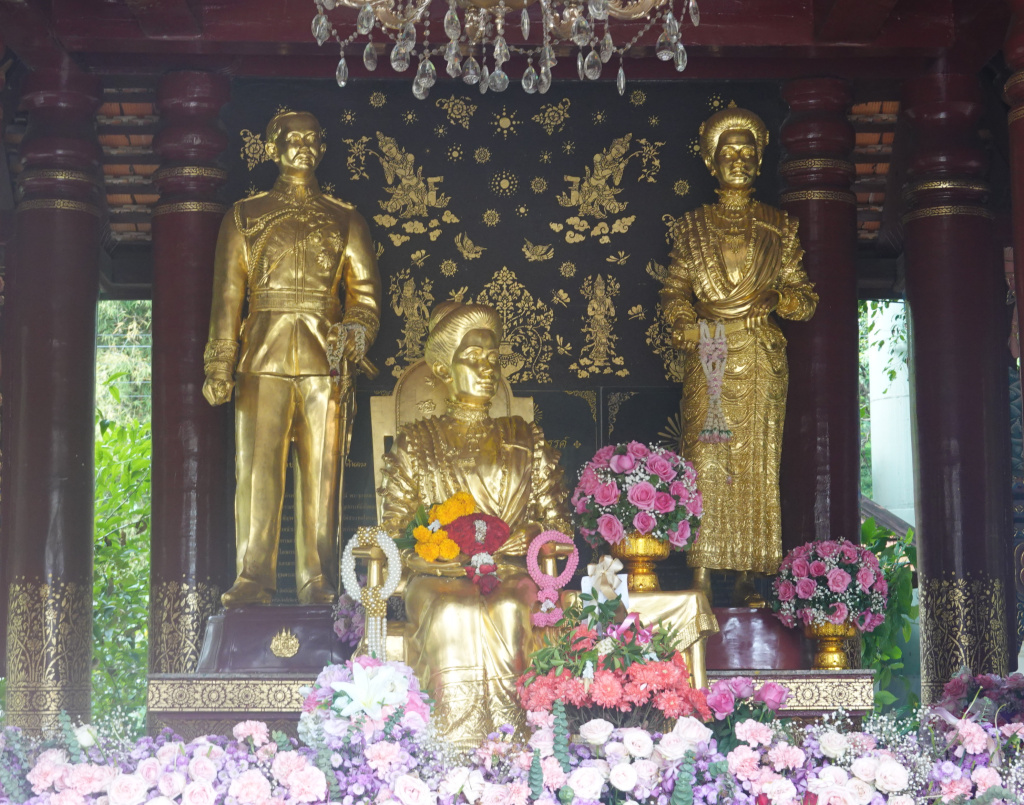
Through the gateway is another elaborately decorated pavilion, this one housing a statue of Princess Dararasmi and her parents, Prince Intavichayanon and Queen Thip Keson of Chiang Mai.
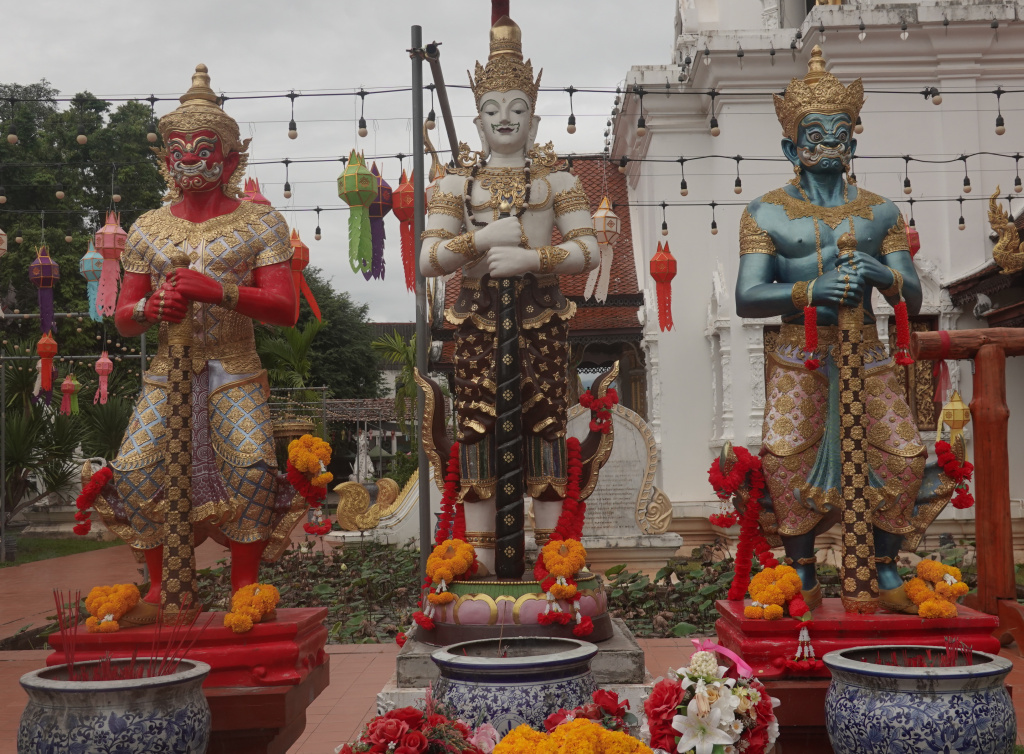
Nearby, there are three Yaksha statues. Yakshas, quoting Wikipedia, are “a broad class of nature spirits, usually benevolent, but sometimes mischievous or capricious, connected with water, fertility, trees, the forest, treasure and wilderness.” They are often seen standing guard at the entrance to temples. Here, is is unclear what they are guarding, but they were interesting enough to deserve a photo.
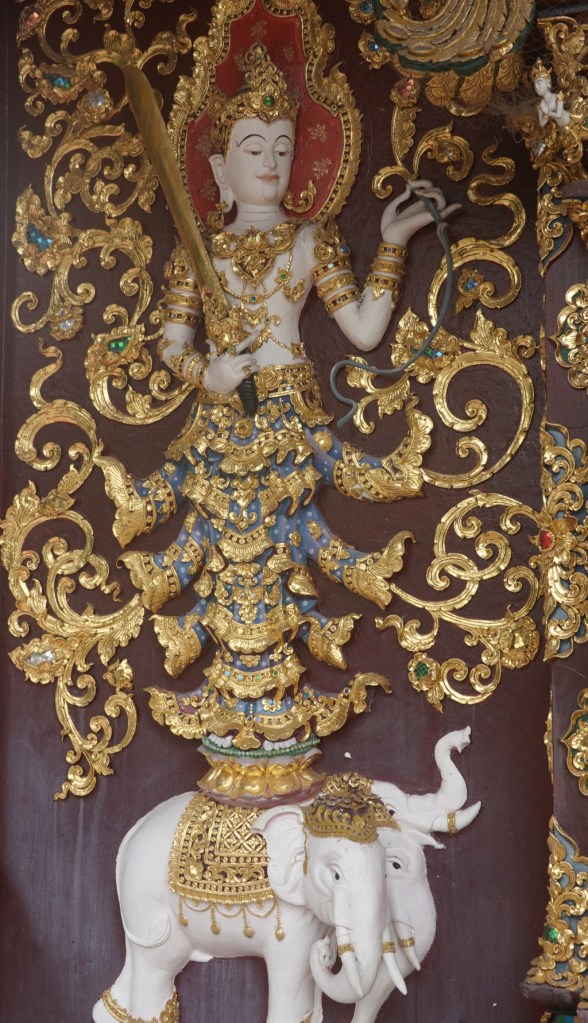
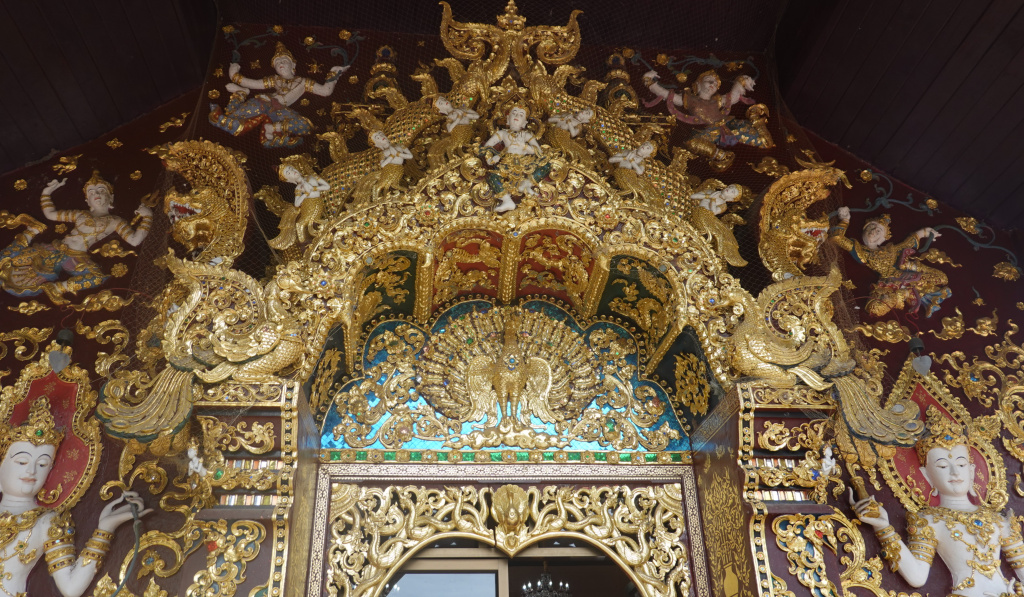
And I took photos of this thewada (angel) on an elephant on a door and the ornate detail above the entrance to another pavilion.
There are mythical creatures here I have not seen at other temples. For example, one frequently sees the serpent, Naga, emerging from the mouth of another serpent (the Makara). Here I also see a Singha-like creature emerging from the mouth of the Makara. And then there are a couple statues in which a lady is in the mouth of a Singha. I learned that this was to carry the lady to safety, away from some imminent danger. I don’t remember any other details.
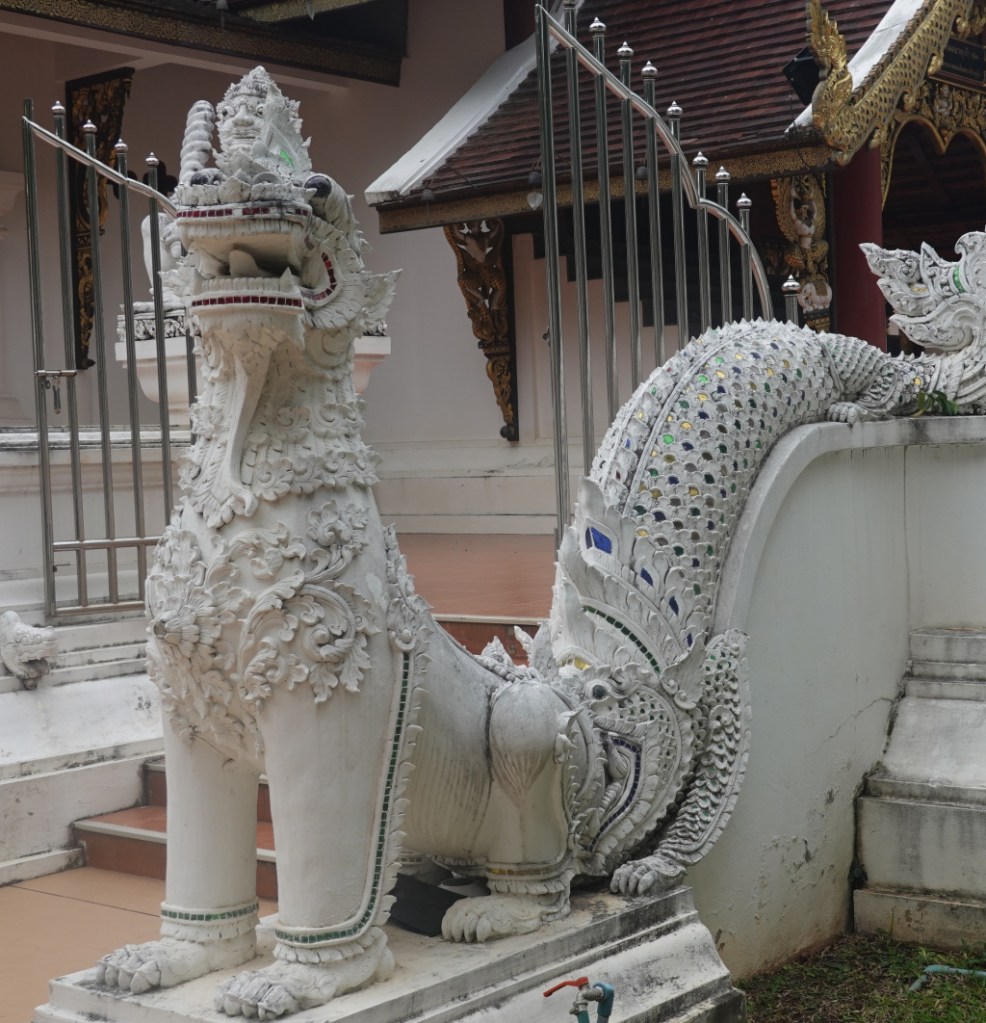
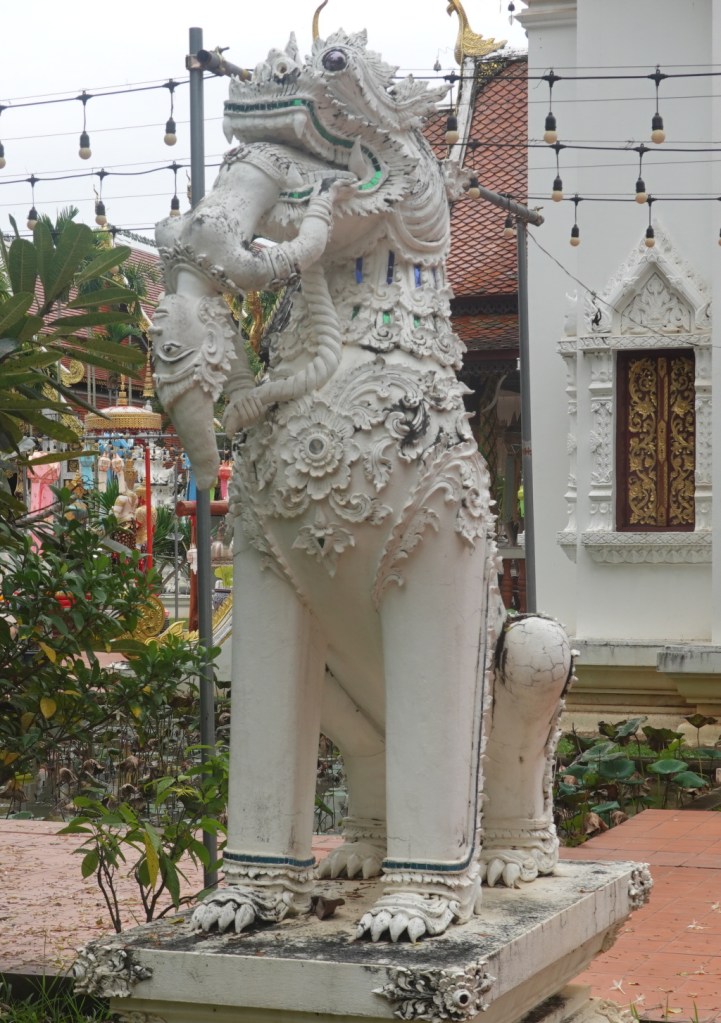
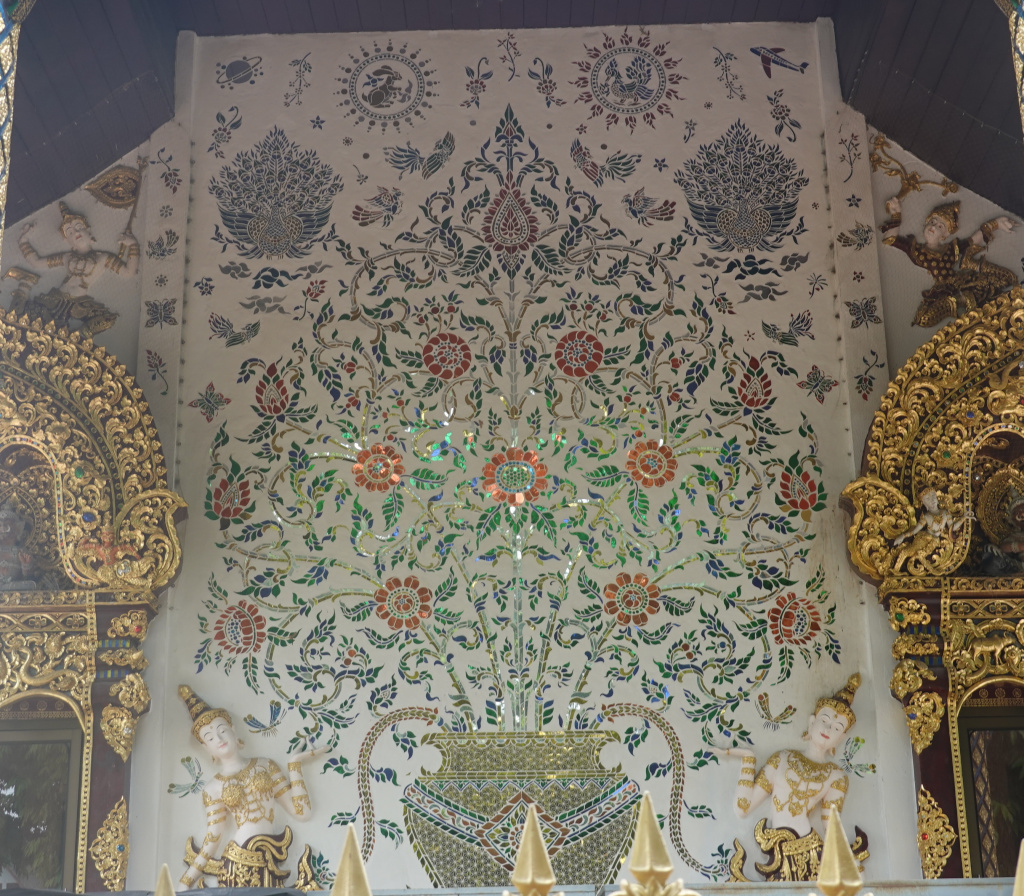
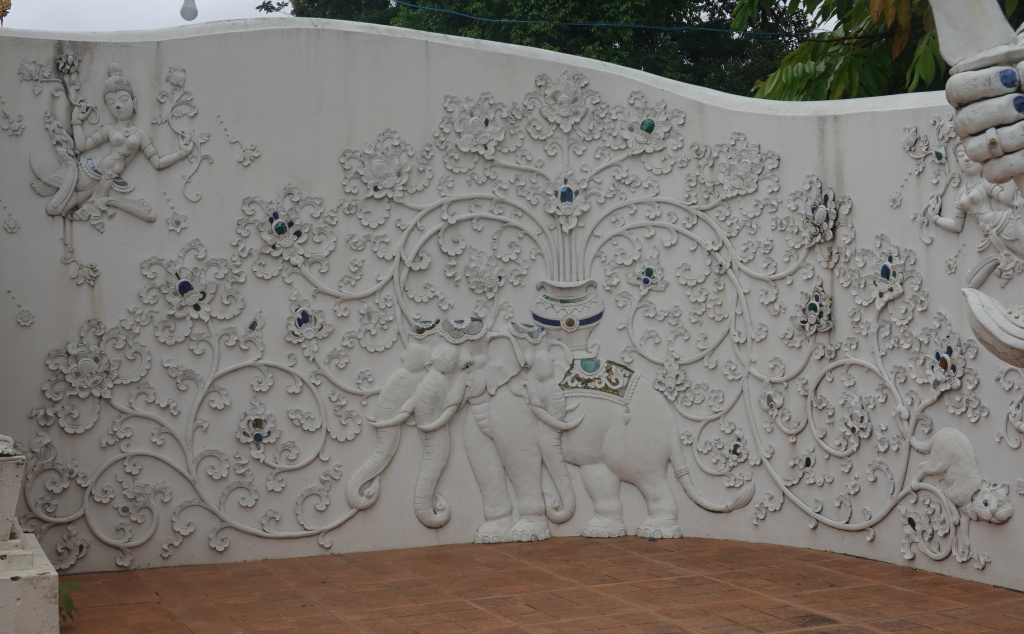
Two examples of intricate detail, the first at the back of the Ubosot, and the second, on a wall.
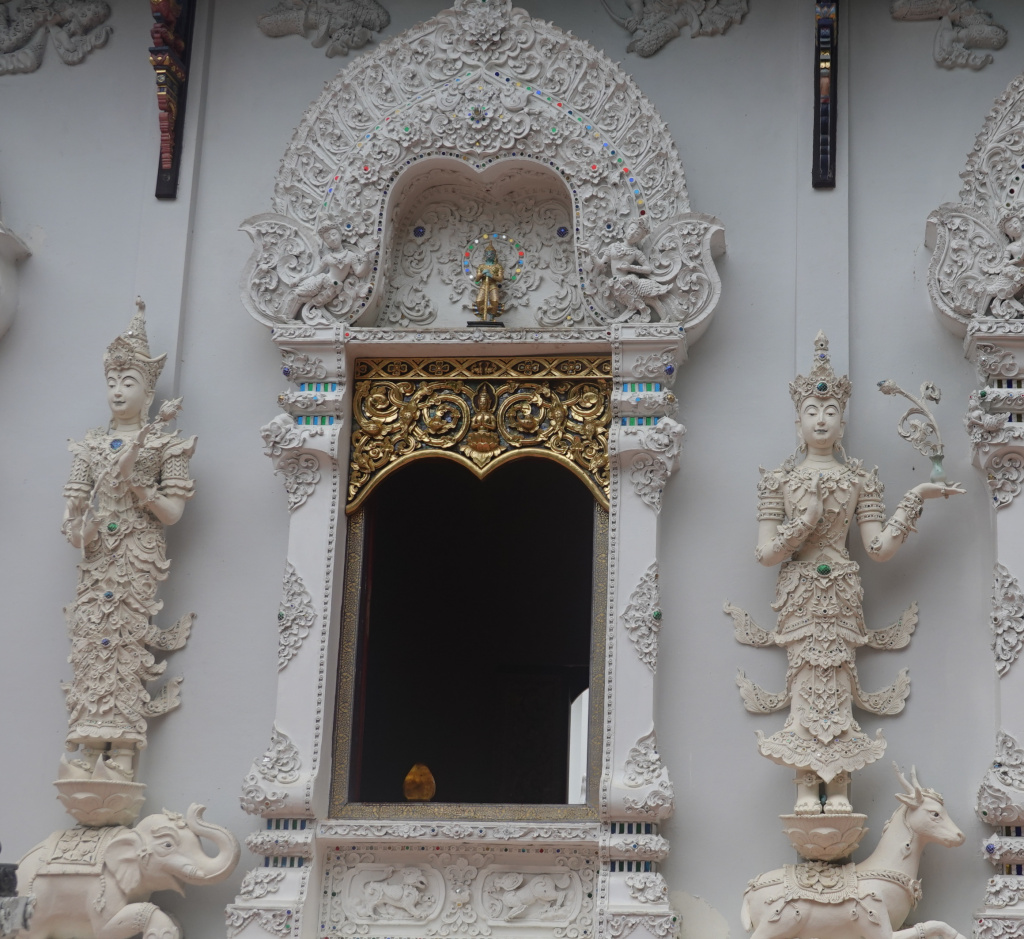
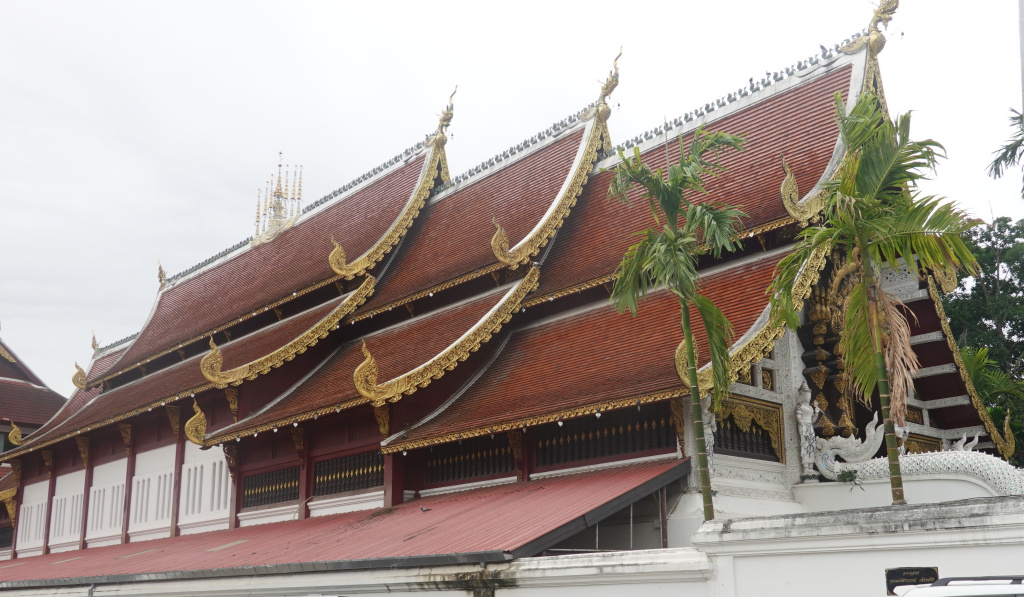
I walked back to the entrance. All along the side of the viharn, the large windows are flanked by intricately-detailed thewada. Also, another view of the roof of the very large viharn in the Lanna style with overlapping tiers sweeping low on the sides.
I walked back out to the main highway to get a photo of the Yaks sitting at guard at the turnoff from the main road to the temple grounds.
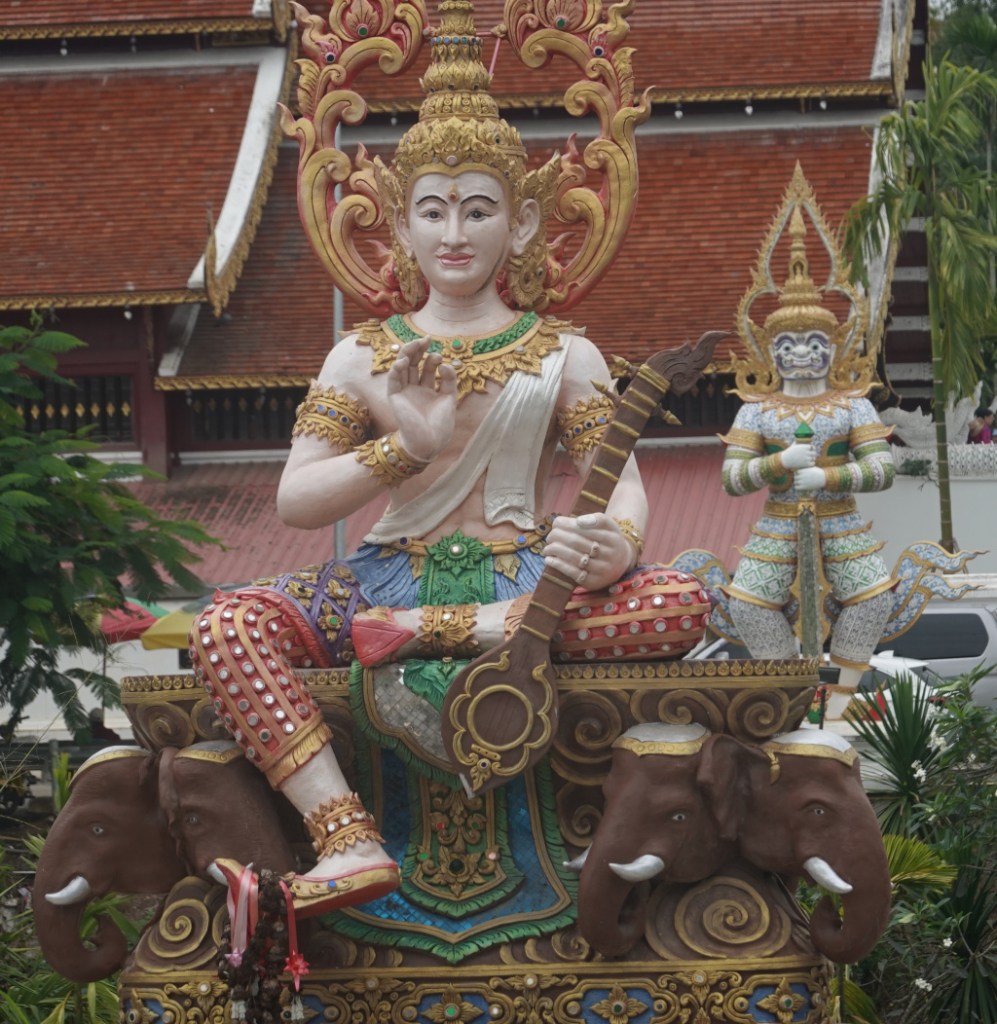
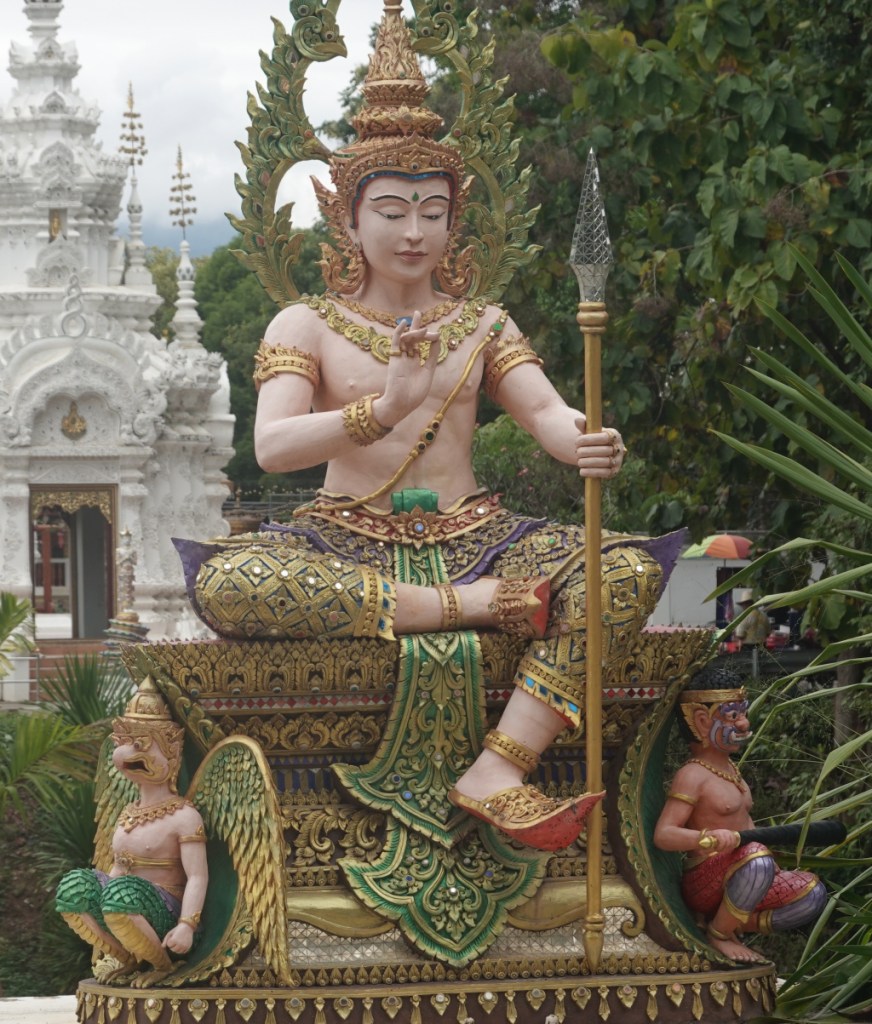
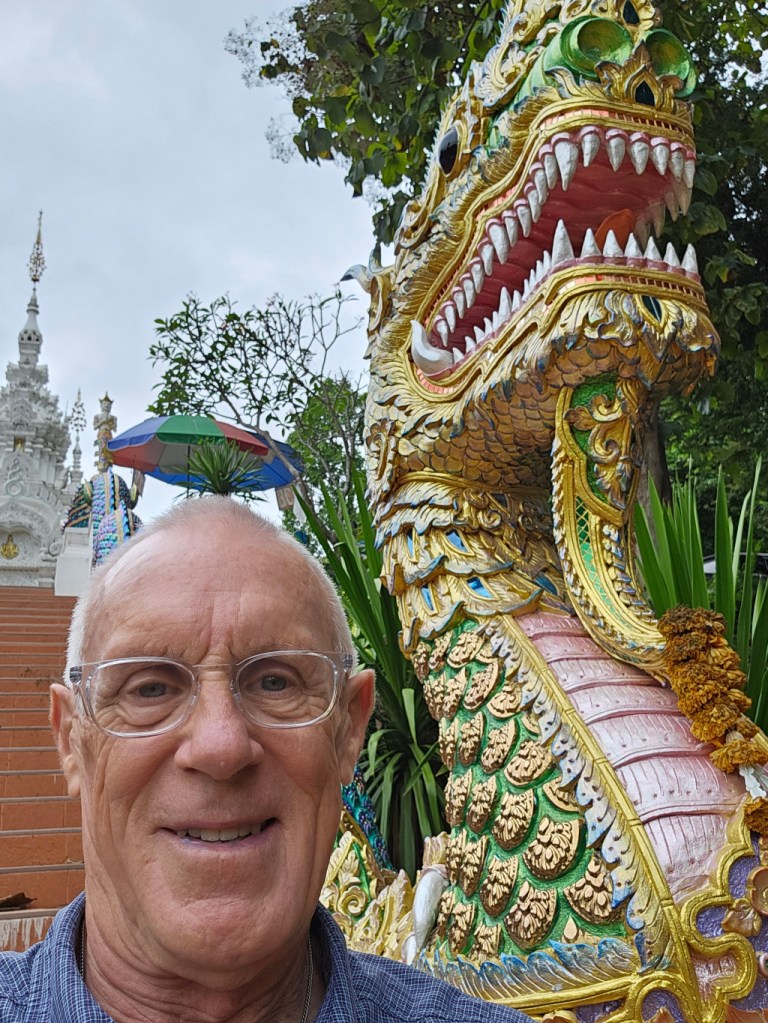
From the main road, looking to the temple grounds, I saw a Naga stairway from the temple to a creek below.
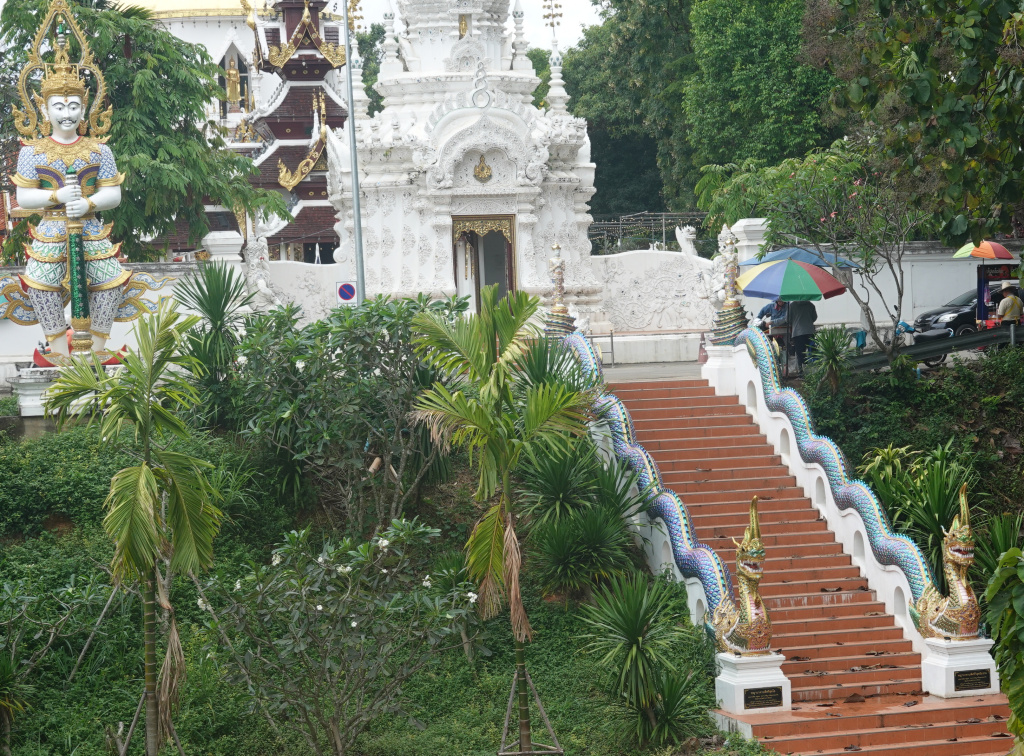
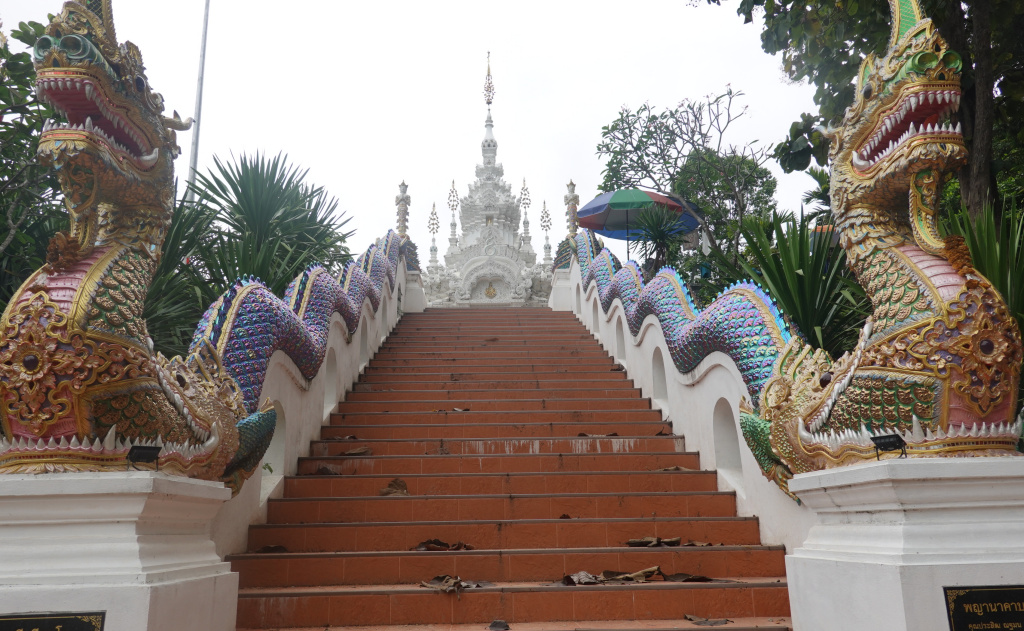
So I walked down and took a selfie, proving that I was actually at this very elaborate and artistic temple honoring Princess Dararasmi.
Next: Honoring Princess Dararasmi 2 – The Darapirom Palace Museum

 James the Intrepid Pilgrim