Monday 16 December 2024
Walking east to see flood damage
Being a little cooler than recent days, I decided to go for a longer walk east of the old city to the area around the Chiang Mai Railway Station. This is a longer walk of over 11 kilometers (7 miles) during which I passed places I visited a year ago and wanted to revisit, so this post will be in five parts. Here is the Samsung Health map and summary of the walk today.

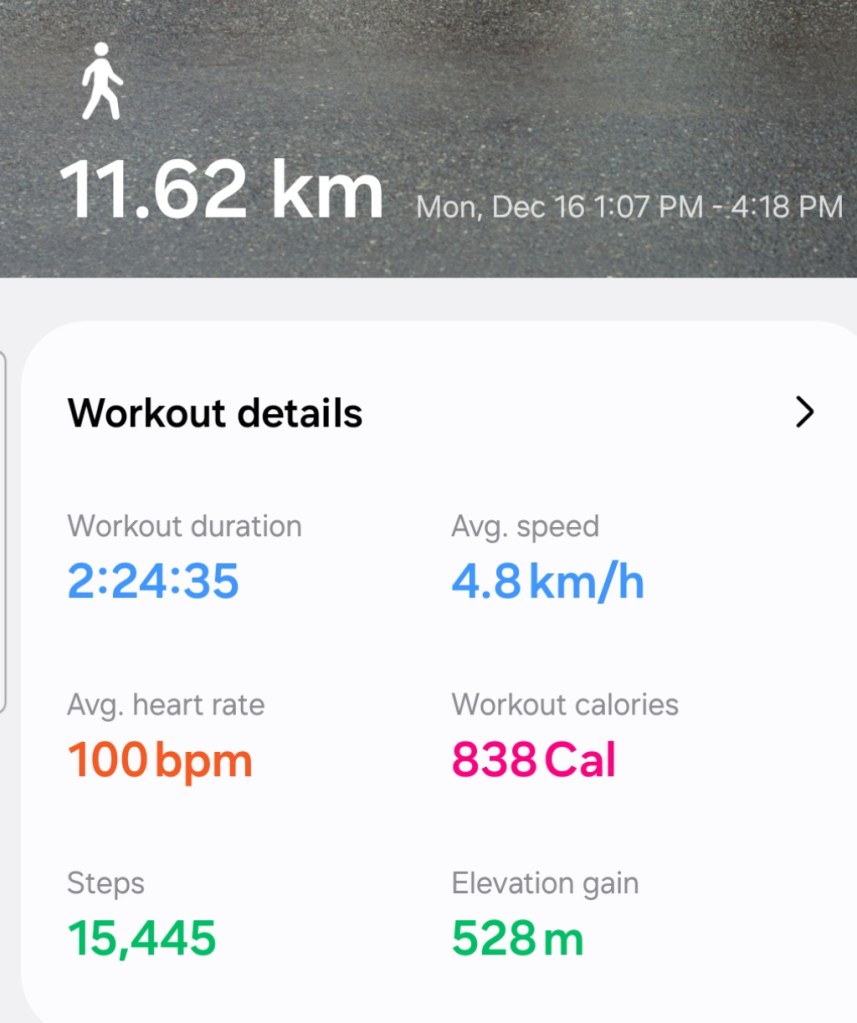
(You may have to click on the map to see it fully.)
The area east of the Mae Ping River to the Railway Station and a little beyond was affected badly by the two late rainy season floods in September and October. During each of the floods, the railway station was closed until flood waters receded, cleanup could take place, and the rail lines inspected. I have a photo of the flooded tracks and from close to the same spot today I’ll share in part three of this post.
Wat Upakut
Heading east along Tha Phae Road, and just before the Nawarat Bridge over the Mae Ping River, I passed Wat Upakut (sometimes spelled Wat Upakhut). This is often called the “temple with 1000 Buddhas.” The small Buddha images are in a building that always seems to be closed when I visit, so I have yet to see the 1000 Buddhas. Wat Upkut is always very busy. It is said to have been larger but lost some of its grounds and buildings when the Puttasatharn Buddhist complex was built next door. The grounds and buildings are always in good shape and over all the years I have visited (albeit infrequently), it has never seemed to be in need of cleaning or renovation. It is difficult to get a good photo of the entrance without being in the middle of a very busy four or five-lane road (“lanes” are an ambiguous concept, just as sidewalks are in Thailand). Here is a photo angled to the Naga-guarded entrance and then of the entrance sign itself.
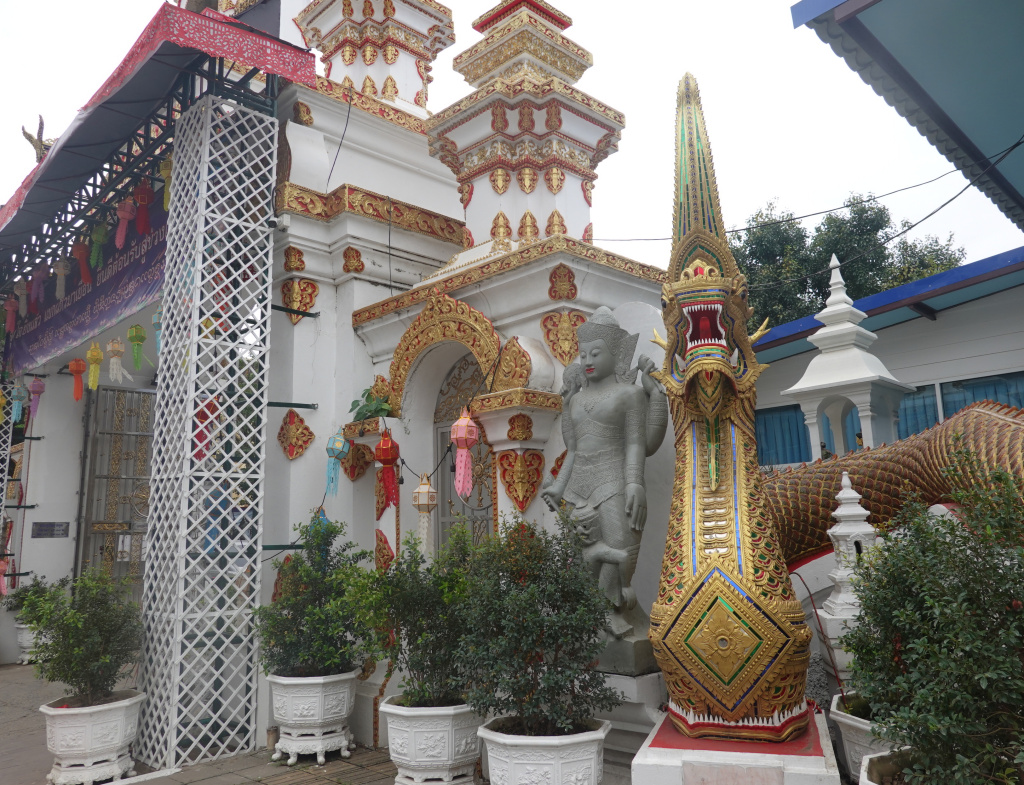
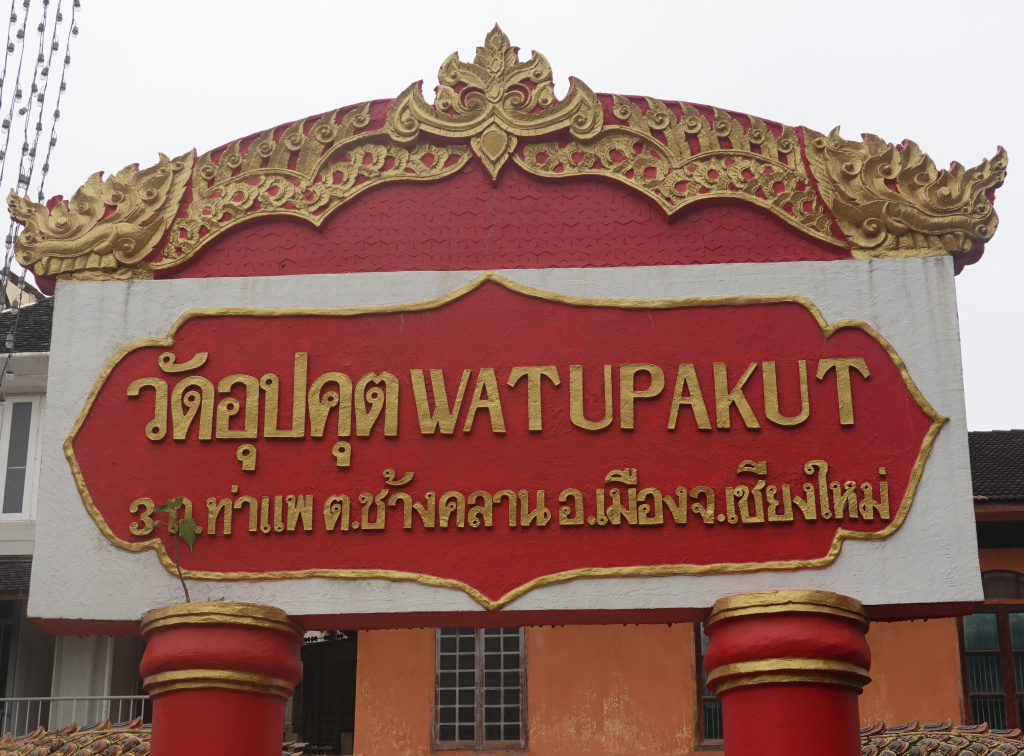
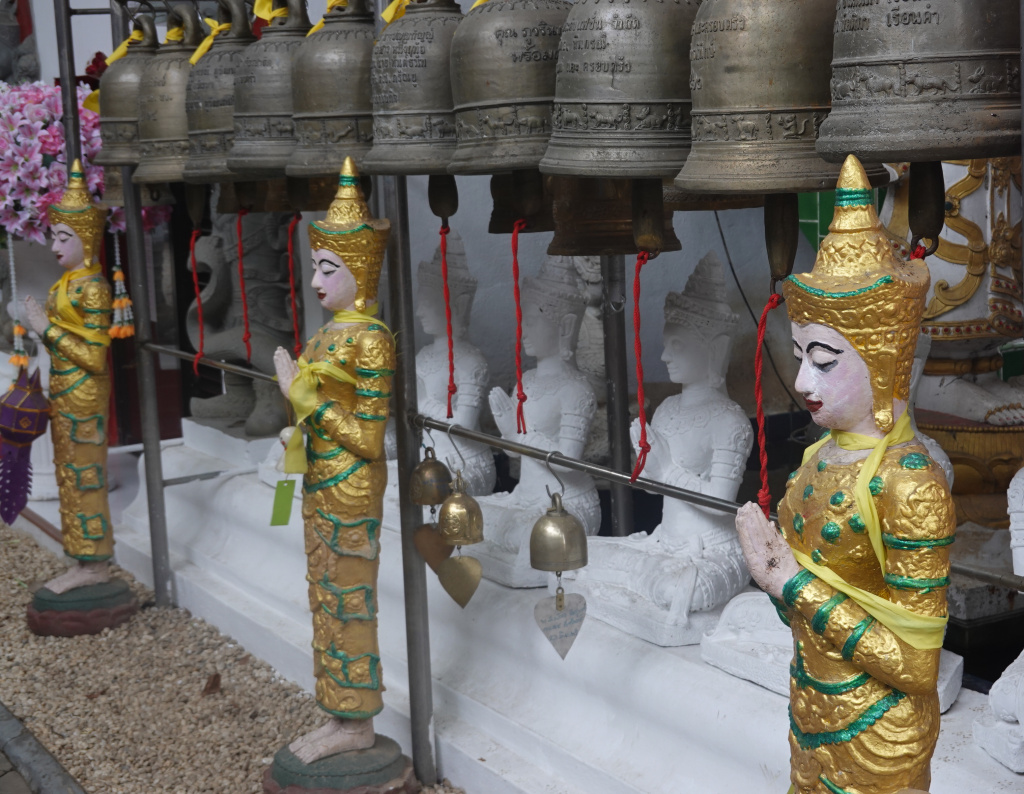
I always like and probably have shared a photo of the thewada (angelic beings that live in the heavenly realms – angels) at the line of bells at the side of the viharn (worship or assembly hall).
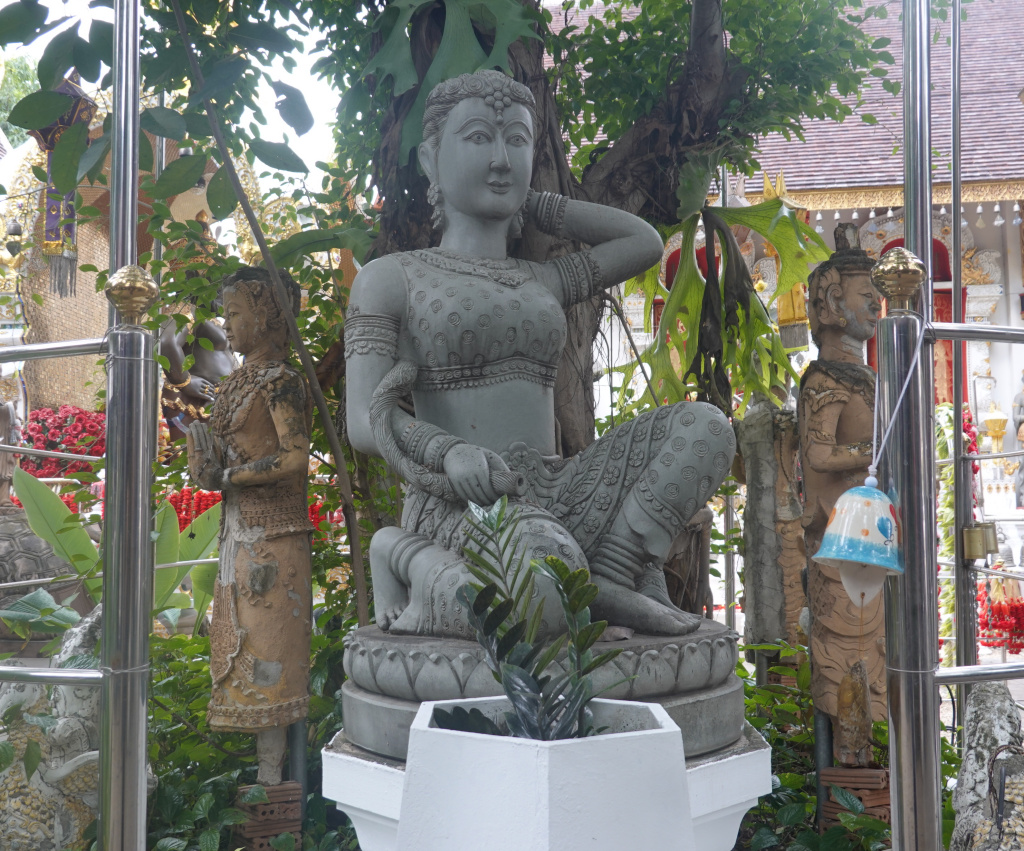
Towards the ubosot there is a very nice all-gray depiction of Phra Mae Thorani, or what is often called “mother earth.” Phra Mae Thorani is personified as a young woman wringing the cool waters of detachment out of her hair to drown Mara, the demon sent to tempt Gautama Buddha as he meditated under the Bodhi Tree.
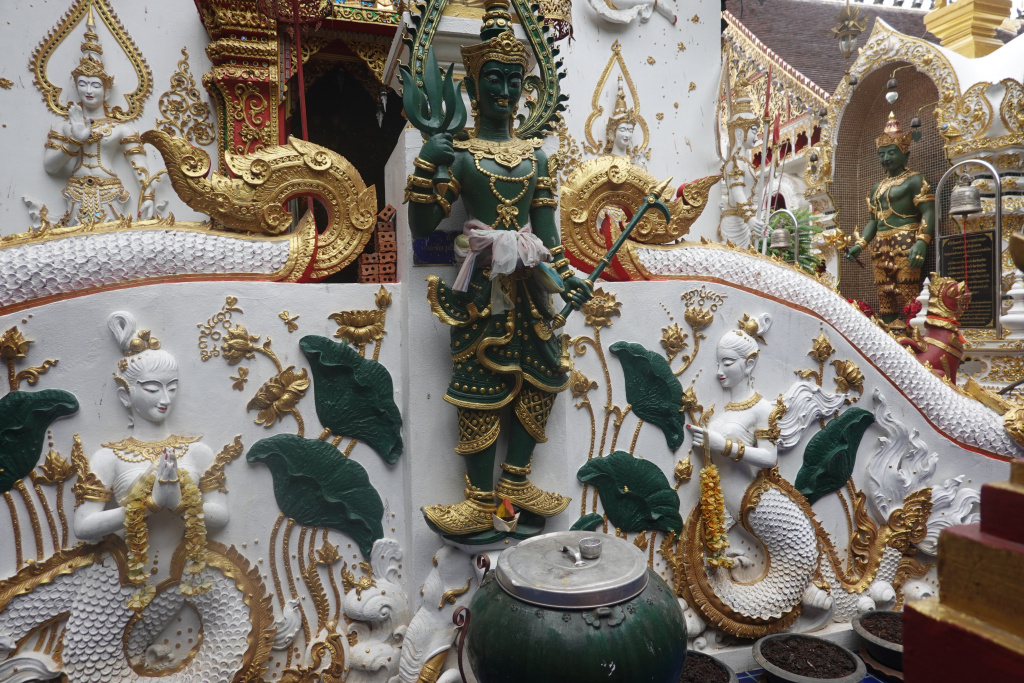
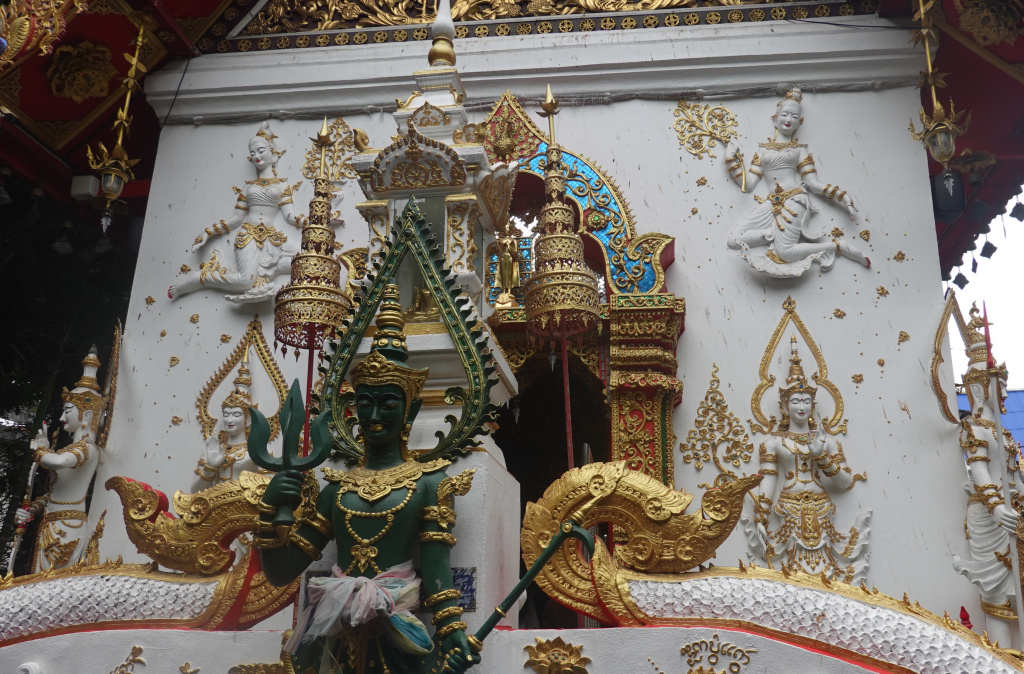
In back of the viharn and the all-white chedi is the ubosot (ordination hall) with a very colorful front. I have never seen the ubosot open, but inside are the 1000 Buddha images. I have often said that the northern-Thai temples are more exuberant in their artistry than the central-Thai temples (Bangkok); this is an example.
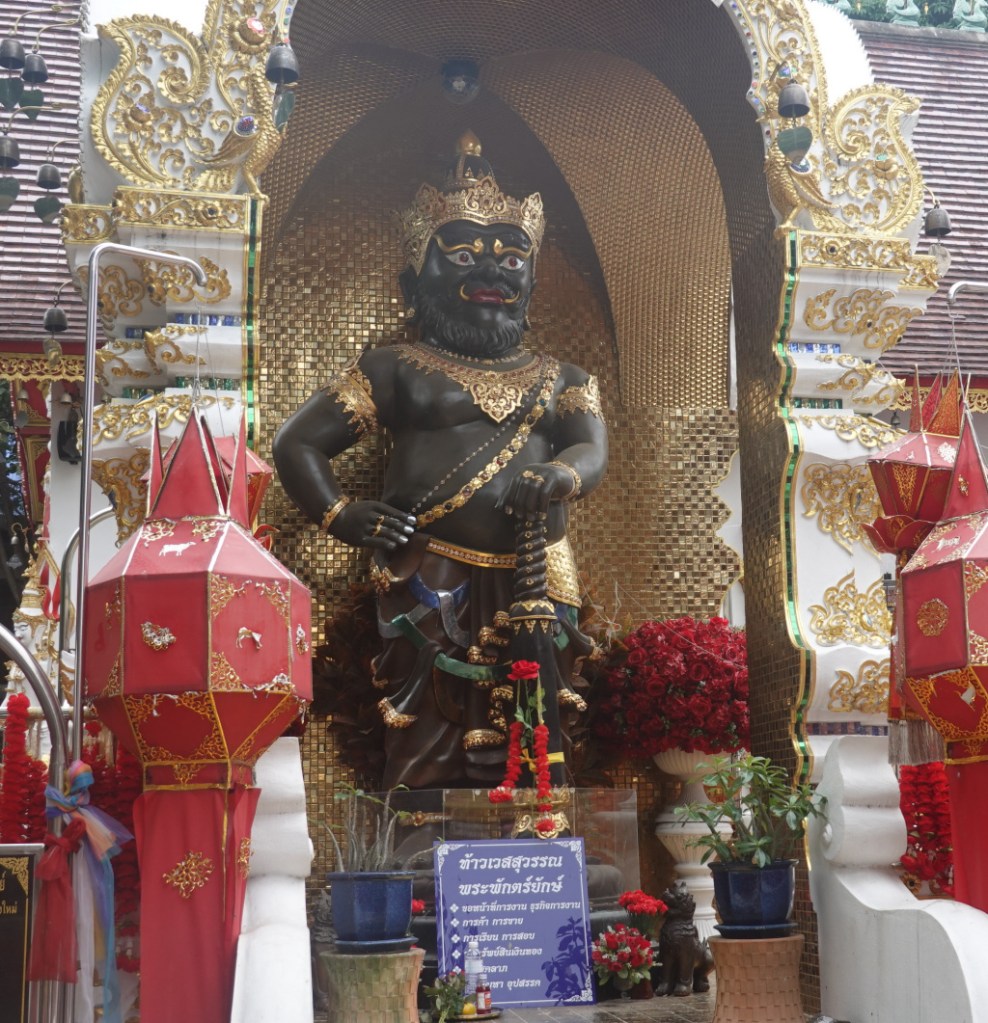
On my way back to the entrance to continue my long walk, I stopped and pondered the very dark Yaksha (or Yak). Yaksha, according to Wikipedia are “a broad class of nature spirits, usually benevolent, but sometimes mischievous or capricious, connected with water, fertility, trees, the forest, treasure and wilderness.” They are considered guardians, and often they flank a temple entrance, guarding the temple from invading spirits. Almost always their skin is green, blue, white, dark yellow or red. I do not recall seeing another Yaksha as dark as this.
A short visit to a very busy temple with many things in a small space. Left Wat Upakut, and continued east to the Nawarat Bridge.
Next: Railway Station Walk 2: The Nawarat Bridge

 James the Intrepid Pilgrim