Thursday 12 December 2024
Wat Sriping Mueng in the Hai Ya district
After seeing the Klong Mae Kha renovation project, I headed west along See Ping Muang Road Soi 4, the only east-west road outside the Klong Mae Kha near me. This is larger than most sois (like Suriyawong Alley is a road, not an alley) and a little busier than I had expected. This will connect with See Ping Muang Road, then I can easily get to Thipanet Road and then Wua Lai Road back to Chiang Mai Gate. It sounds a little circuitous, but it is not – I have been here before and know where I’m going (most of the time).
There is not much to photograph along See Ping Muang Road Soi 4 other than a series of karaoke bars that cater to Thais only. These are also known to be more than just karaoke, with the men enjoying the company of ladies. All signs are in Thai and translating a few indicates that they are Karaoke and bars. All are closed during the day. It would be interesting to see this area at night, but a foreigner would be very out of place. Best to leave it alone and just be curious.
Turing onto See Ping Muang Road, I stopped to visit Wat Sriping Mueng, right on this busy road.
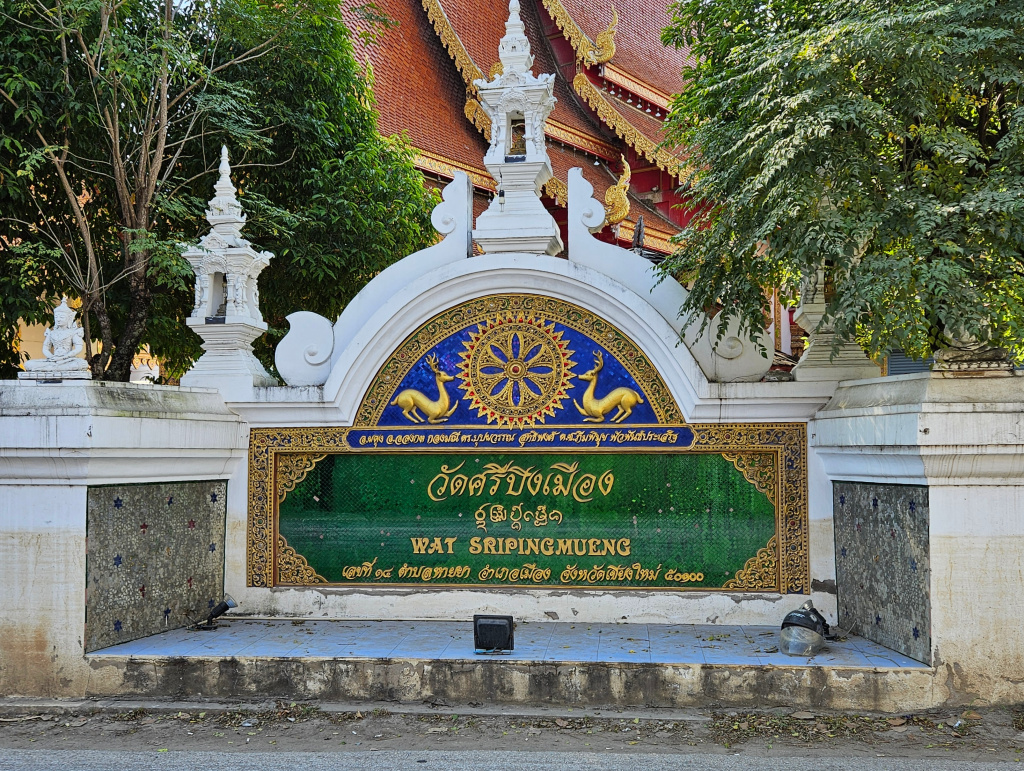
I got the name See Ping Muang Road from Google Maps. The temple is named “Sriping Mueng” so these spelling differences are likely a challenge in translating sounds from Thai to English; English just does not have the enough or the right sounds. It may be closer to correct for the name of the road to be Sri Ping Mueng Road instead of See Ping Muang Road. Really unimportant details.
Nevertheless, Wat Sriping Mueng is a very nice local temple, far from almost all tourists. No English is spoken here, and only the main sign has an English translation. A simple, uncomplicated temple with a viharn (assembly or worship hall), a chedi (pagoda), a ubosot (ordination hall), and what appears to be monks’ quarters. There are a few people around and being a foreigner, I get a few glances, but when they see I have a camera, I’m left alone.
I could find no documentation about this temple or its history on the internet. I suspect it has been here a long, long time. The viharn was built in the typical Lanna style, with overlapping roof sections sweeping relatively low along the sides. Everything at this temple appears clean and possibly recently renovated. Here is a photo of the viharn and a close-up of the entry guarded by yaks (yakshas) instead of the more common Naga serpents.


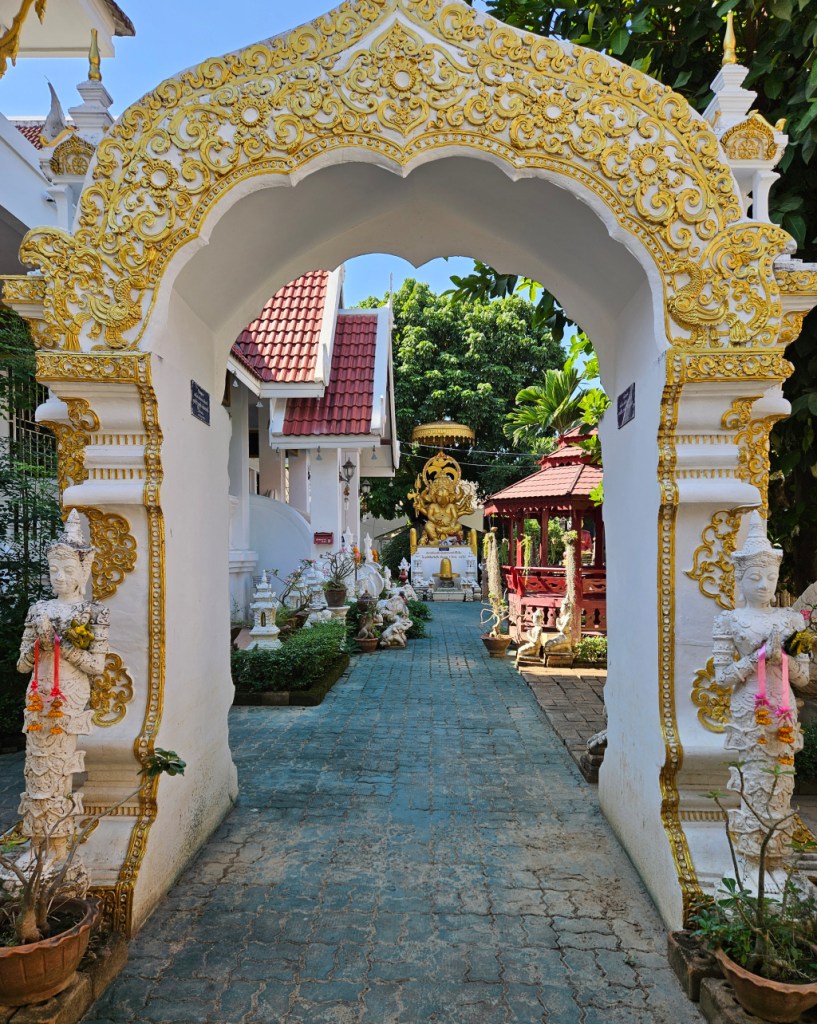
To the left side is an arched entry to the side and back of the viharn, a nice touch. In the back is a seated Buddha statue as well as other icons.
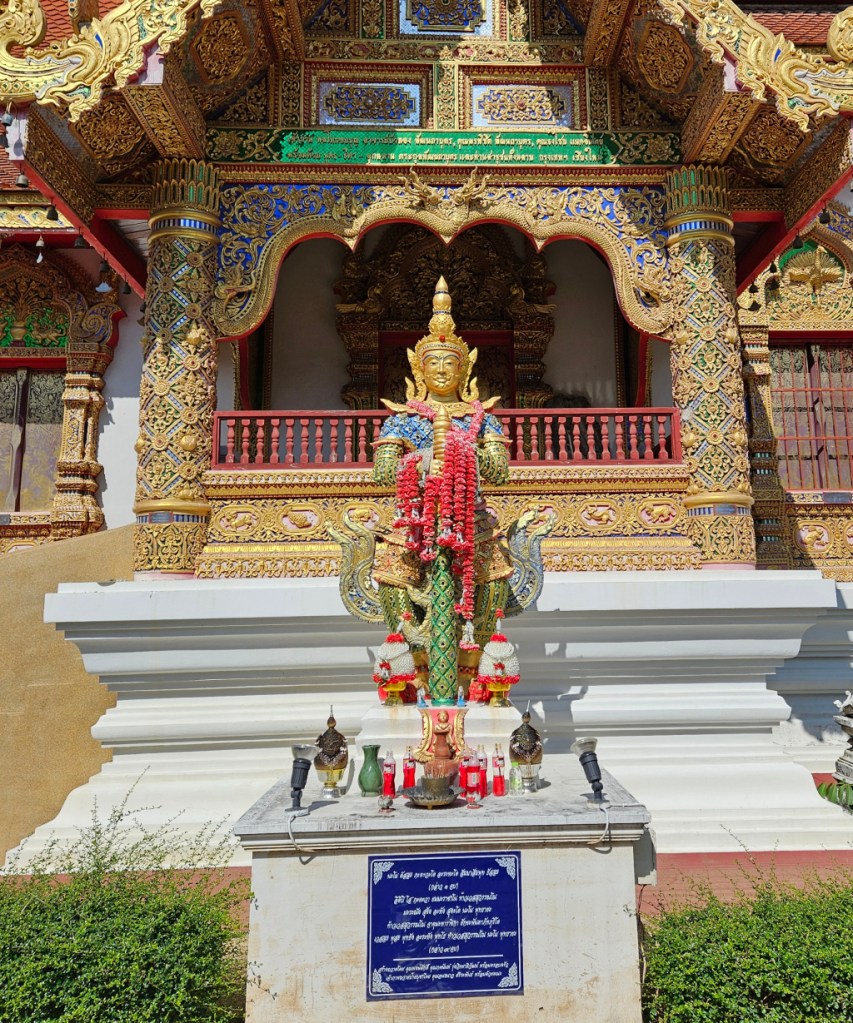
I particularly liked this large yak at the side of the viharn, very detailed and elaborately decorated.
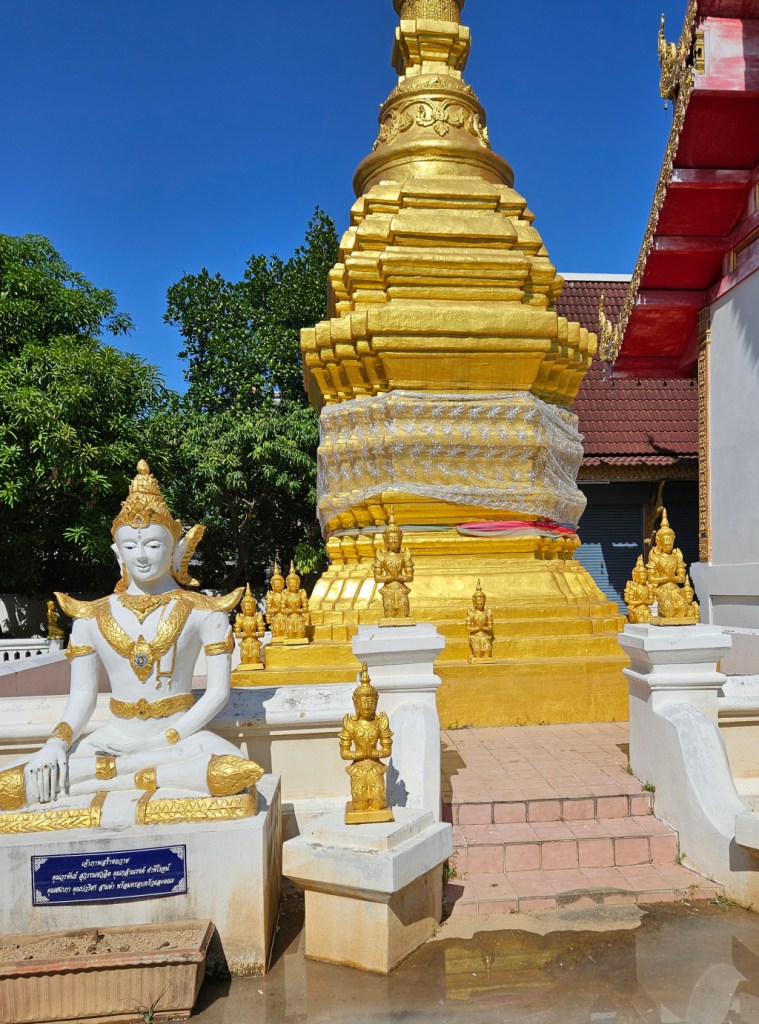
The viharn is aligned east-west, as are more than 95% of Buddhist temples. The doors of the viharn open to the east to great the rising sun, as the rising sun represents birth or the beginning. On the west, setting sun end is where the chedi (pagoda) is built into which the ashes of someone important are interred. Like all temples, Wat Sriping Mueng has a chedi. This chedi is more clean, polished, and “nice” for my taste. I prefer the rustic brick look.
After leaving Wat Sriping Mueng, I made my way to Thipanet road, and then to Wua Lai Road, back into the old city of Chiang Mai, and to The 3-Sis, my home away from home. Here is a map and summary of my long walk today, a very enjoyable walk with a few surprises.
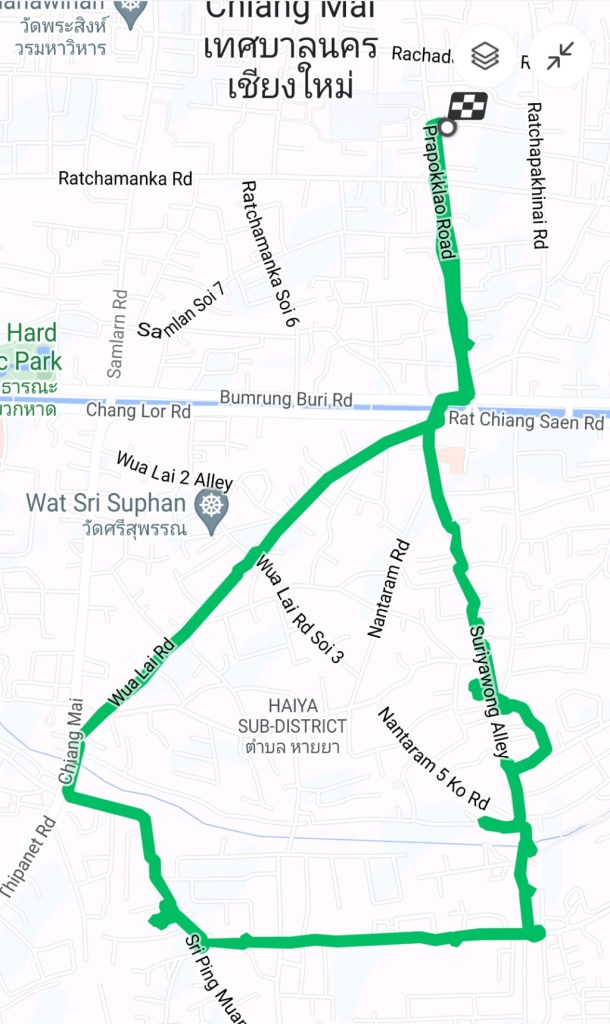
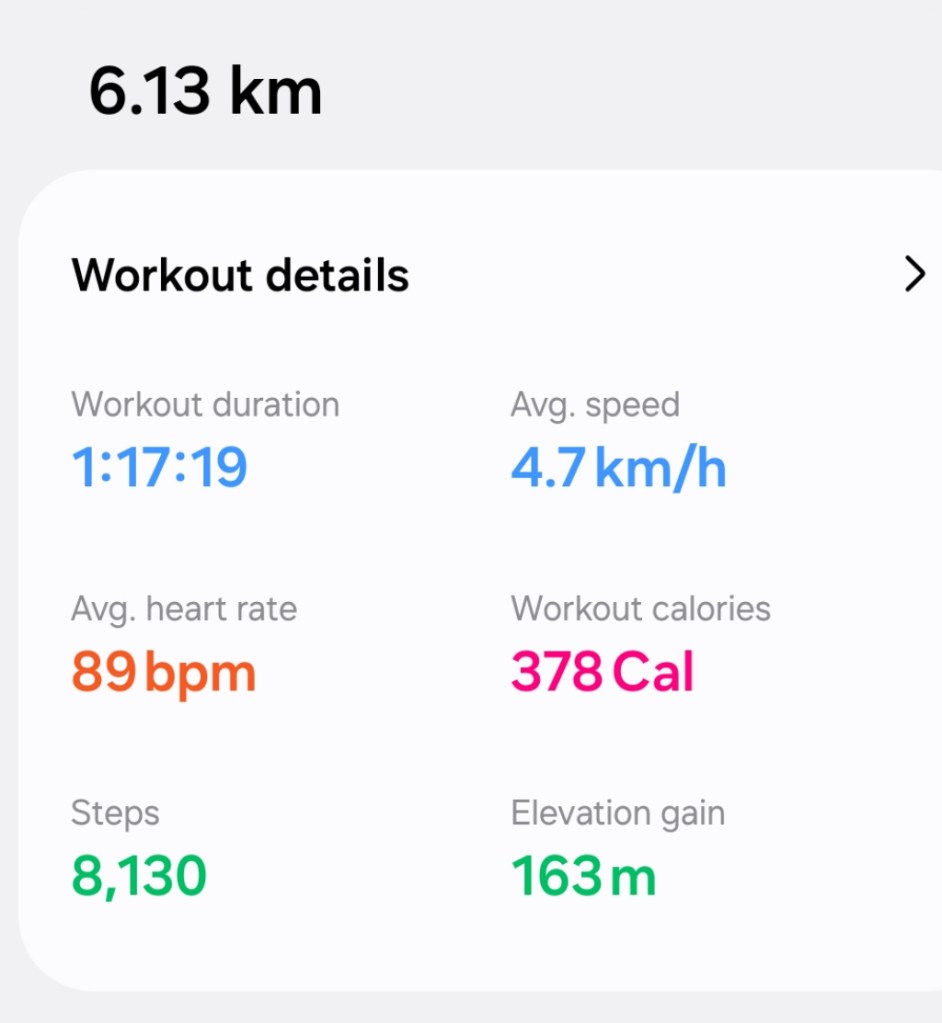
Note that the “workout duration” is the time I was moving, it does not include the time I was standing photographing or contemplating.
Next: Mae Rim, Wat Pa Daraphirom, and the Dara Phirom Museum

 James the Intrepid Pilgrim