Thursday 12 December 2024
South of Chiang Mai Old City and Wat Yang Kuang
Revisiting Wat Yang Kuang in the Hai Ya sub-district of Chiang Mai.
I was walking south down Suriyawong Alley. After passing the two old standalone chedis (see my previous blog post), I came to the entrance of Wat Yang Kuang, sometimes written as Wat Yang Guang. There are two entrances, an old pedestrian entrance, and an entrance into which cars can enter, the latter guarded by large Singha lion-like creatures.
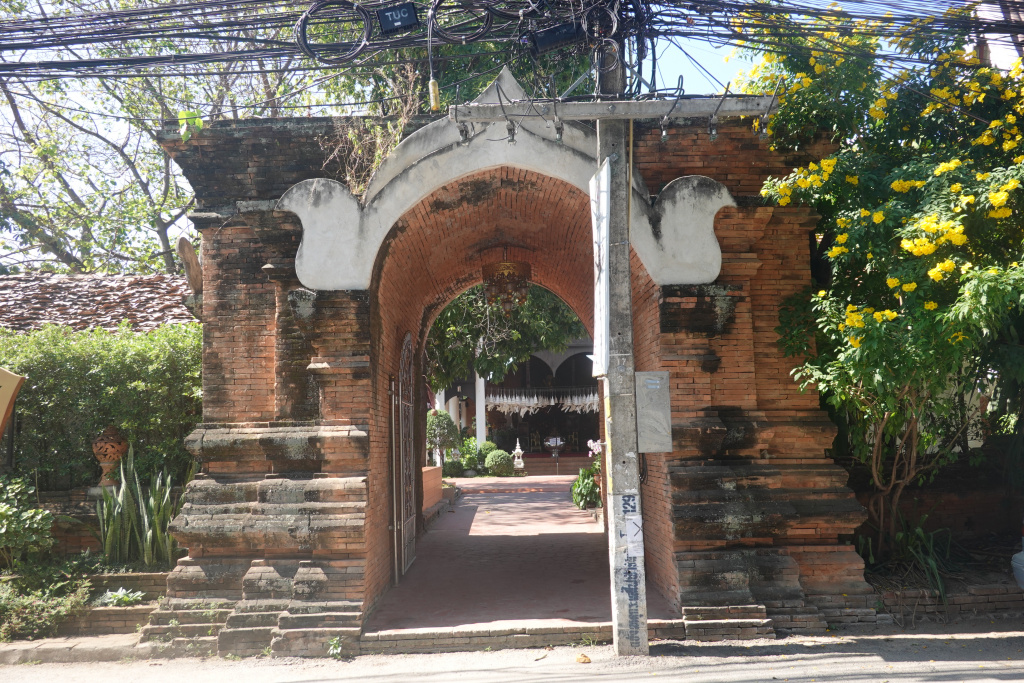
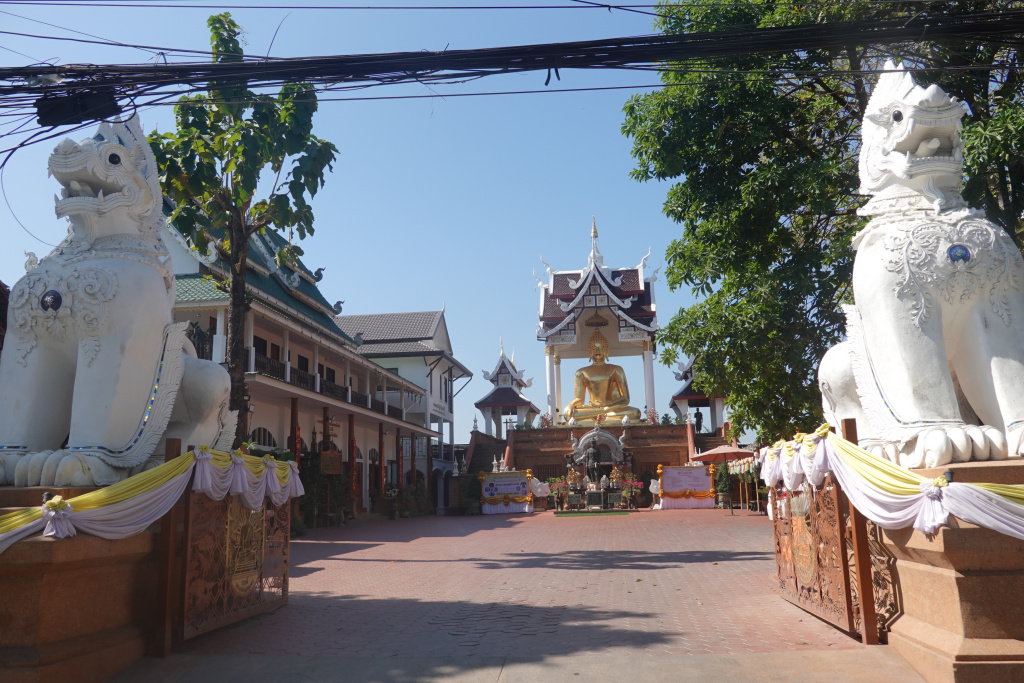
Wat Yang Kuang was found to be a much older temple that was first believed in modern times. While the temple was being renovated in 2017, remains of the original temple were discovered and carefully unearthed by the Thai National Department of Fine Arts. The original temple was probably built during the King Mengrai era and records show the presence of a temple here in 1517. King Mengrai was the founder of Chiang Mai and was the first king of the Lanna Kingdom ruling from 1292 to 1311. The Lanna Kingdom covered most of what is now northern Thailand and Laos.
Later the temple was abandoned during the Burmese occupation of Chiang Mai in the 17th and 18th centuries. An article from the Chiang Mai City News reports, “In 1796 when King Kawila liberated Lanna kingdom, Tai Khun who immigrated from Kengtung and settled in around that area, rebuilt the temple and named it Yang Guang in remembrance of their hometown Ban Na Yang Guang of Kengtung.”
Walking into the grounds, the most striking feature of the temple is a very large standing Buddha statue towering over a statue of King Mengrai. The statue of King Mengrai is approximately life-size
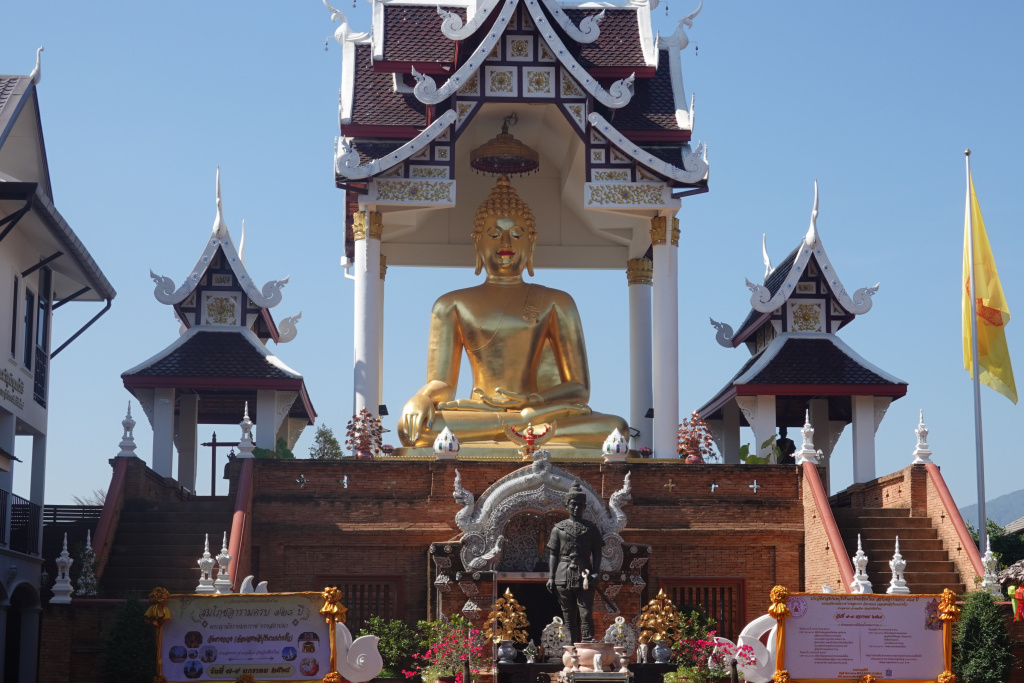
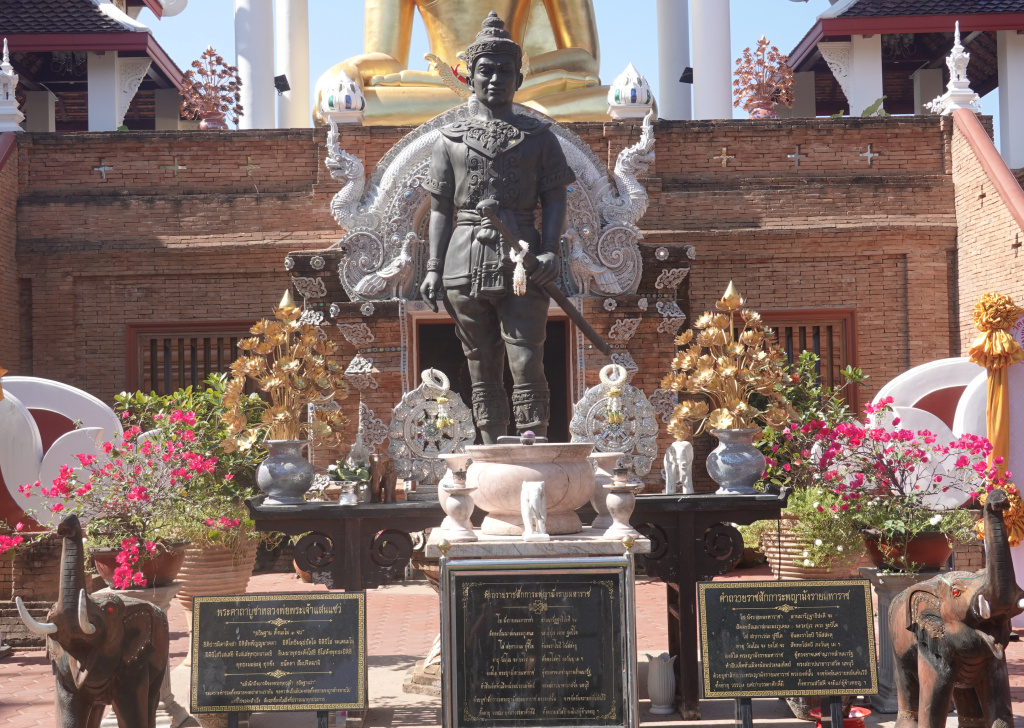
To the right of the large Buddha is an open-air pavilion, typically called a “sala.” It appears much like a typical viharn (assembly or worship hall), but with the sides open, a roof and no walls. It was under this recently rebuilt structure that the archeological remains were found. Once the excavation was completed, the sala was rebuilt.

The temple’s chedi is on a raised area to the left of the sala. The stairs to that area are protected by the Naga serpents, and the chedi itself protected by Singha creatures. I got photos from the stairs.
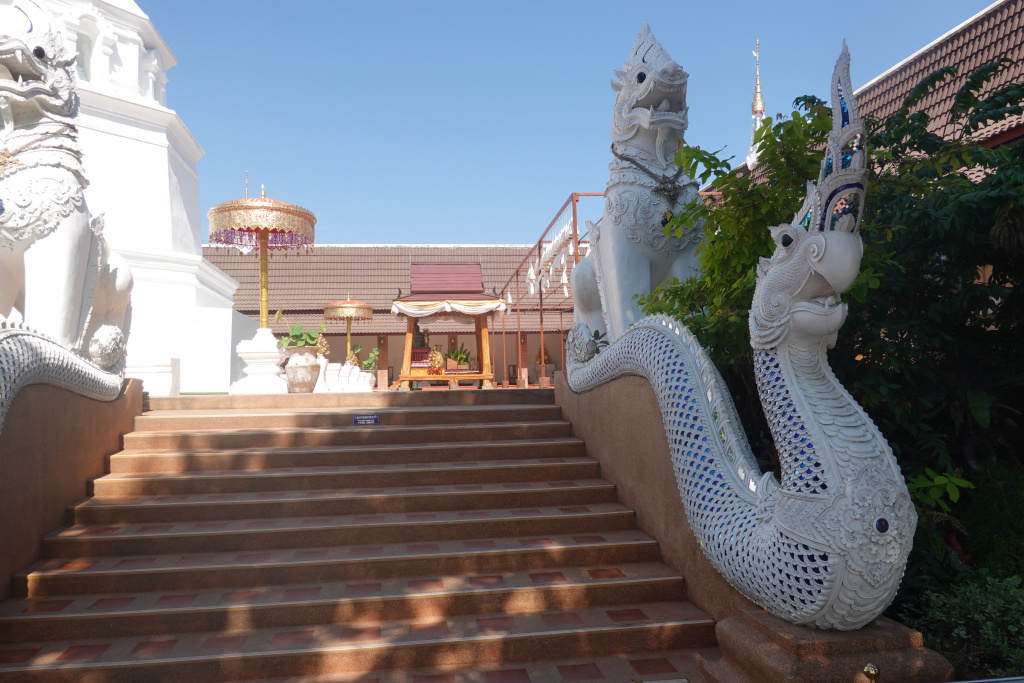
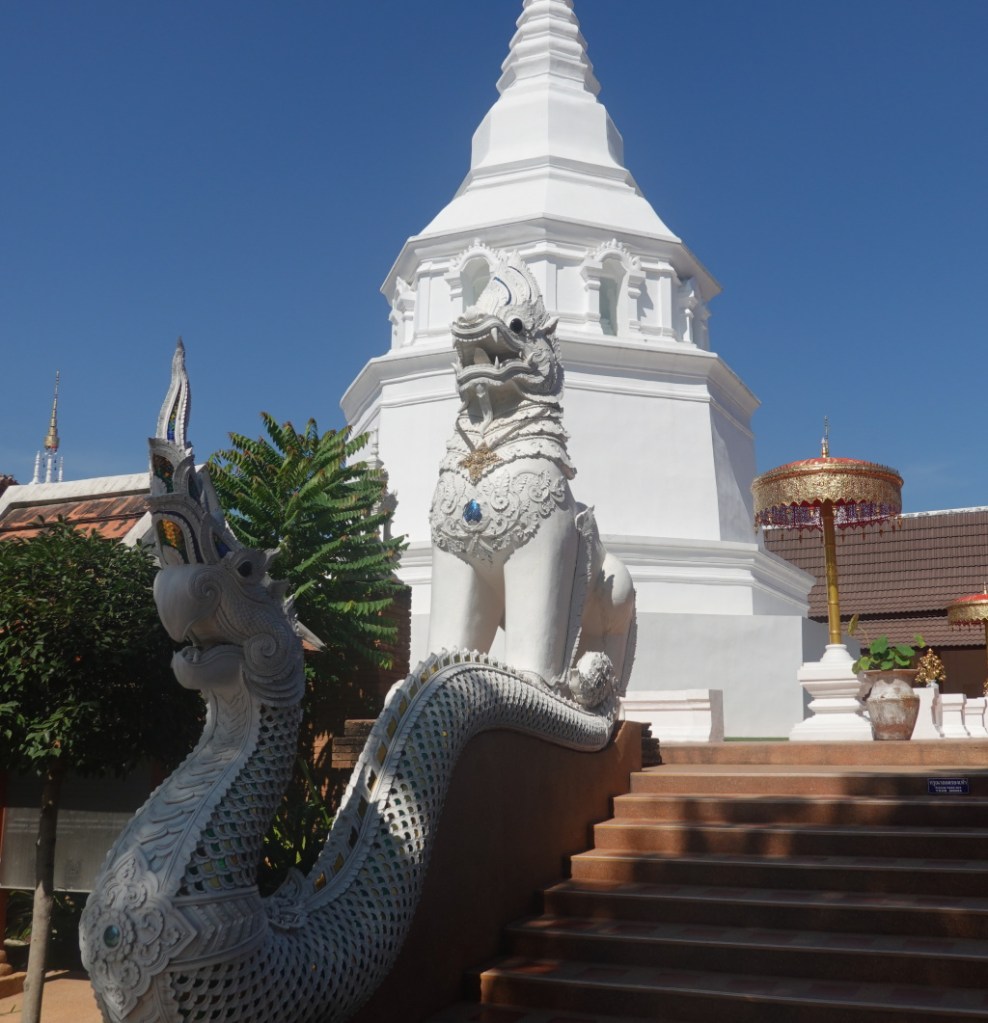
When I first visited this temple at least 10 years ago before the renovations, the chedi, the Singha, and the Naga were quite rustic-looking, and very appealing to me. Since being renovated, the start white, almost perfect-looking modern versions are not as appealing.
I have along way to go in my walk today through the Hai Ya district, so I left Wat Yang Kuang through the pedestrian entrance/exit (after all, I am a pedestrian).
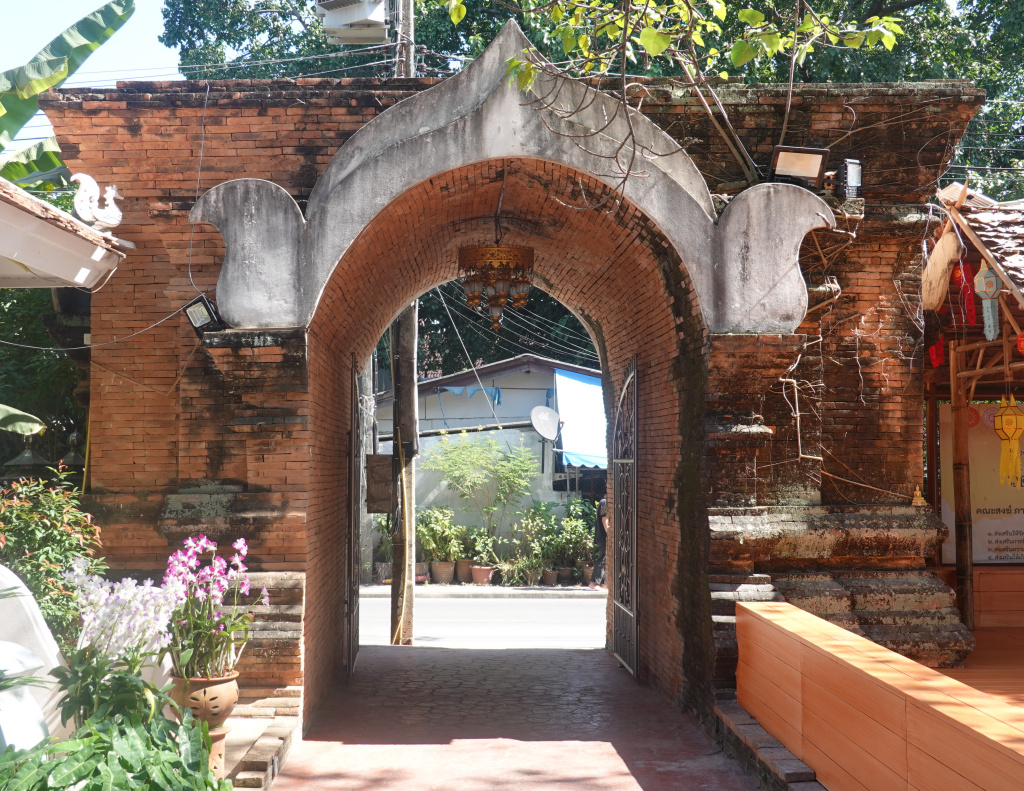
Leaving Wat Yang Kuang, I turned right and continued down Suriyawong Alley towards the Klong Mae Kha, always in search of more of the old Kamphaengdin, or just to see what is different since last year. The Kamphaengdin was an earth, clay, and brick second wall, built in the 16th century just inside the Klong Mae Kha to protect the expanded city outside the fortified area from floods. Much of the Kamphaengdin is gone now, and I have a fascination with it and look for more evidence wherever I can find it.
Next: Hai Ya sub-district of Chiang Mai – 3
More construction on the Klong Mae Kha

 James the Intrepid Pilgrim