Thursday 12 December 2024
A walk south of Chiang Mai Old City
Returning to the Hai Ya sub-district of Chiang Mai, south of the old city.
Started the day with a strength training session with personal trainer Ning. Ning is very experienced, having been a personal trainer for more than 12 years. She posts short videos on Instagram of her and clients in the gym, including a few of me (Ning’s Instagram is pt.ning). After the training session, I decided to take a walk to the Hai Ya sub-district south of the Chiang Mai old city. The Hai Ya area is a relatively quiet, mostly residential area generally not frequented by tourists except the relatively famous “Silver Temple,” Wat Sri Suphan. Even though there are few tourists, I find plenty to see, and a walk there is always interesting. To keep the posts relatively short, this will be in four parts.
Part 1 – Getting into the Hai Ya area.
I walk directly south from The 3-Sis to Chiang Mai Gate, the first of two gates on the south side of the old wall. From there, I cross the outer moat road and turn left onto Suriyawong Alley. This is normal sized road, not an alley at all, and one of only three north-south roads in this area. I have no clue where that “alley” moniker came from; maybe it started as an alley and gradually expanded.
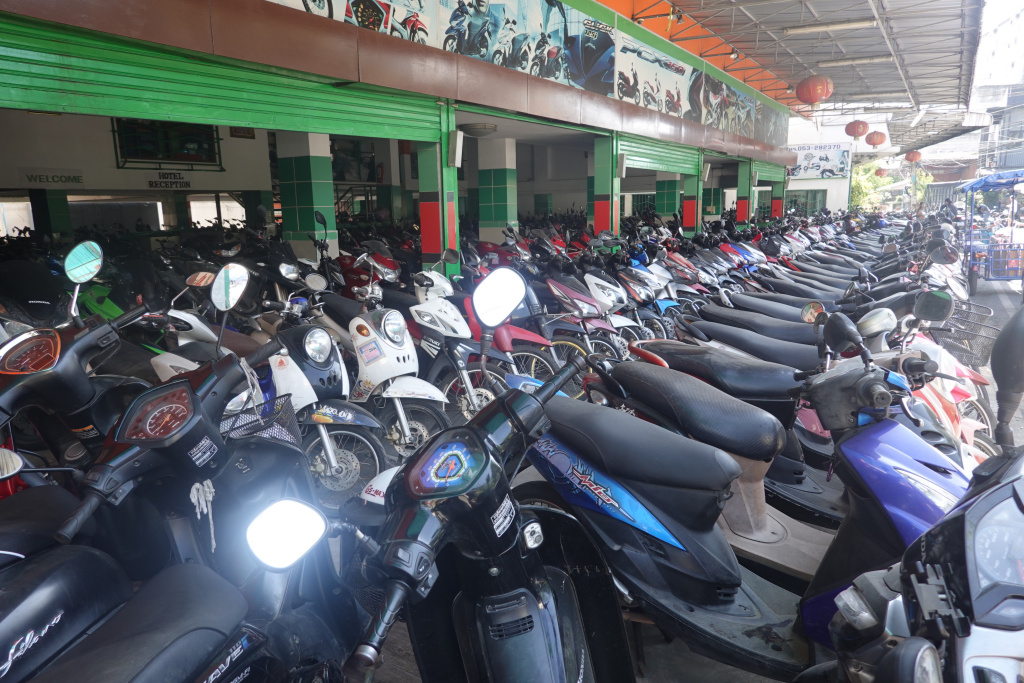
The first thing of interest is a fairly large motorcycle dealer on the left. I am always a little surprised at how many motorcycles are here for sale. However, this is a fairly large city, and motorcycles are the primary means of transport for most people, so there are plenty of dealers and plenty of motorbikes.
Unnamed Chedi
There are many chedis around Chiang Mai all by themselves, mostly unnamed. These were once part of temples that were abandoned, dismantled, and long ago forgotten. The chedis are deemed too sacred to dismantle. The first one I see today is unnamed, despite my attempts to research a name, including asking locals. I find it striking and in a sense beautiful and reverent.

Continuing south, I pass Wat That Kam, a temple I like, now closed and under renovation. I have seen this every winter at least once, and it always appeared to have been recent renovated. Apparently, more renovation or uplifting was needed.

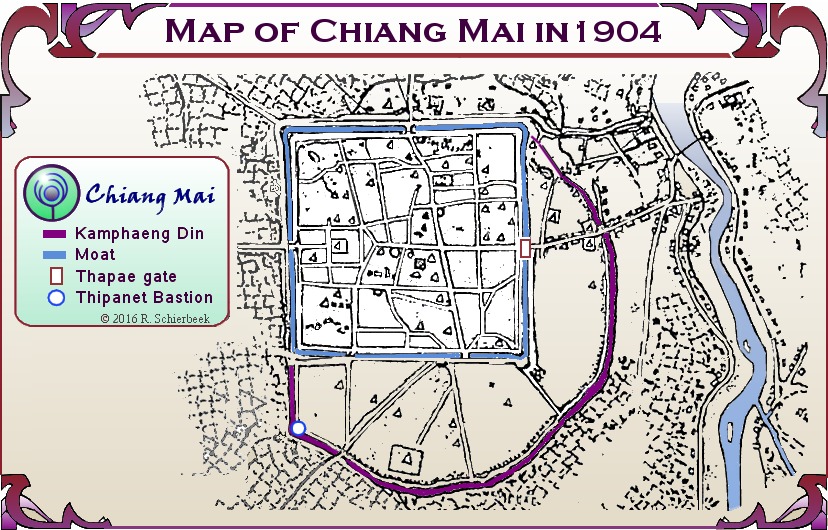
Continuing south I came to the second stand-alone chedi. This is the remains of a temple named Wat That Klang. This chedi is in the Sukhothai style and dates back to the 16th century. Wat That Klang was a temple mid-way between Chiang Mai Gate on the main brick wall around Chiang Mai and a gate in south part of the Kamphaengdin. “That” is a type of chedi, and “Klang” means “in the middle.” The Kamphaengdin was a high wall made of earth, clay, and some bricks around the eastern and southern parts of the city that had expanded outside the original square fortified city. The Kamphaengdin was built in the late 16th century to protect the expanded city from floods. The map below from 1904 shows the square brick wall fortified city and the Kamphaengdin as the curved purple arc around the east and south.
The chedi left from Wat That Klang is larger than the other stand-alone chedi on this road, also beautiful and reverent:

Now I am deep into the Hai Ya sub-district of Chiang Mai, south of the old city. Just a few meters south of the chedi from Wat That Klang is another important temple in the region, Wat Yang Kuang.
Next: Hai Ya sub-district of Chiang Mai – 2
Wat Yang Kuang

 James the Intrepid Pilgrim