Tuesday 19 November 2024
One Full Day in Bangkok Part 3 – Wat Suthep
Wat Suthep
When looking at the list of Thai royal temples of the first class in Bangkok (a short list of ten), I noticed Wat Suthat and realized (1) I had never been there, and (2) it was not terribly far from Wat Pho. Being a Royal Temple of the First Class, my interest was peaked. I learned that the construction of Wat Suthat Thepwararam was begun by King Rama I in 1807. In the beginning, it was called “Wat Maha Sutthawat.” Further construction and decorations were carried out by King Rama II, but the temple was not completed until the reign of King Rama III in 1848. So headed out on a 1.5-kilometer walk to find this important temple.
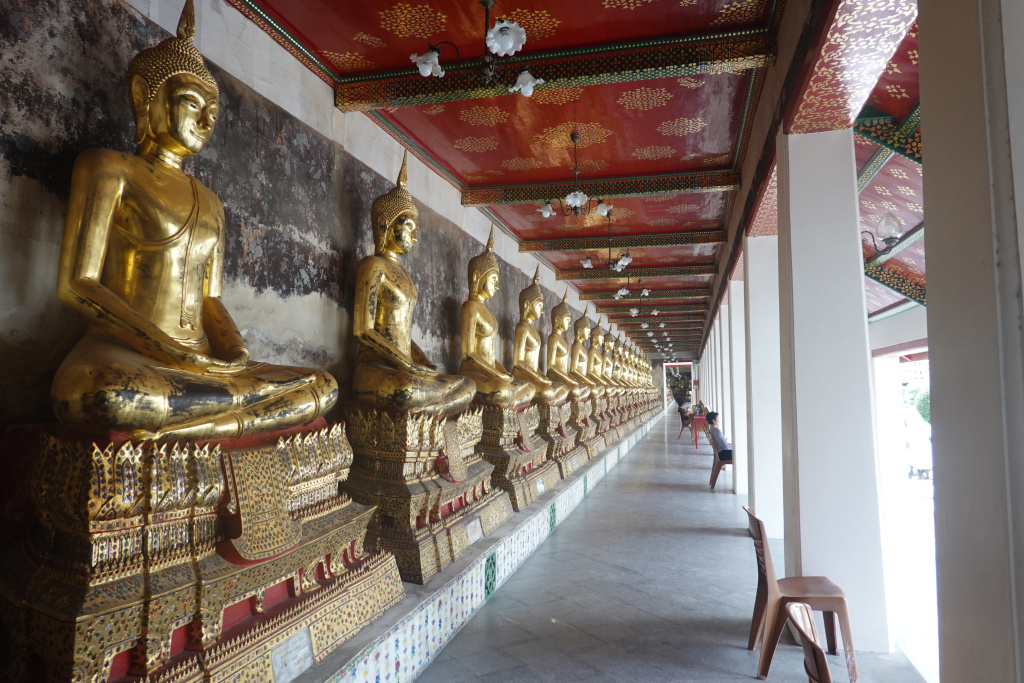
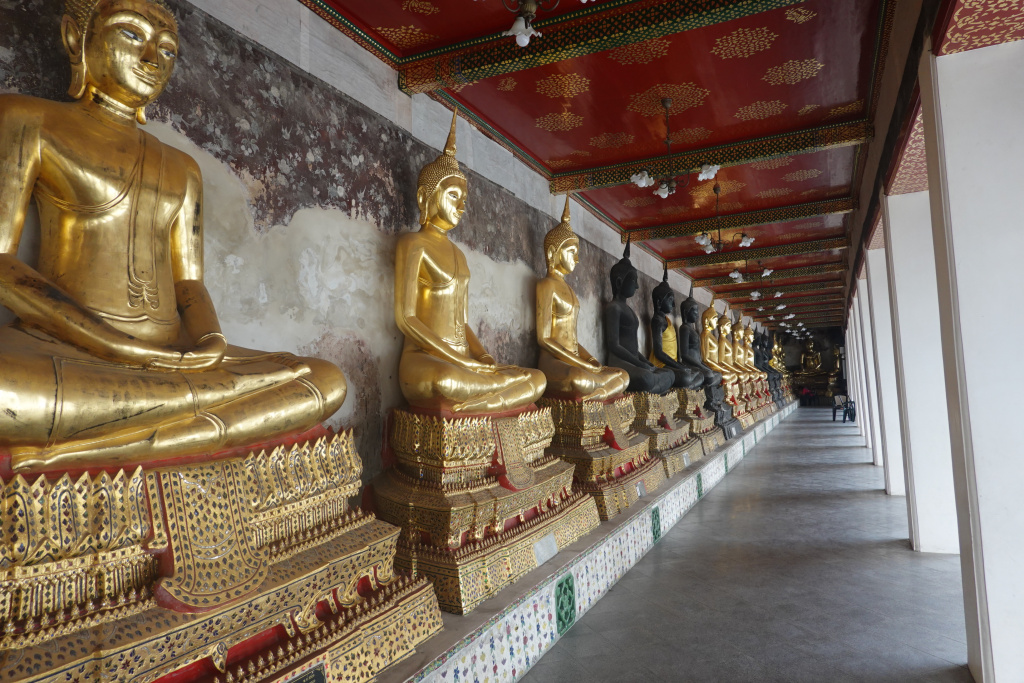
Cloister at Wat Suthat
One of the most significant features of Wat Suthat is the large square cloister around the large viharn. This cloister includes over 150 Buddha statues, all seeming alike, most in gold and some in black. I could see no differences in the images and no pattern of the sporadic color change. Each of these statues has a patron who is responsible for the statue’s upkeep and many have the ashes of the patron’s relative interred under the statue. Here are two photos of opposite sides of the cloister.
Main Viharn at Wat Suthat
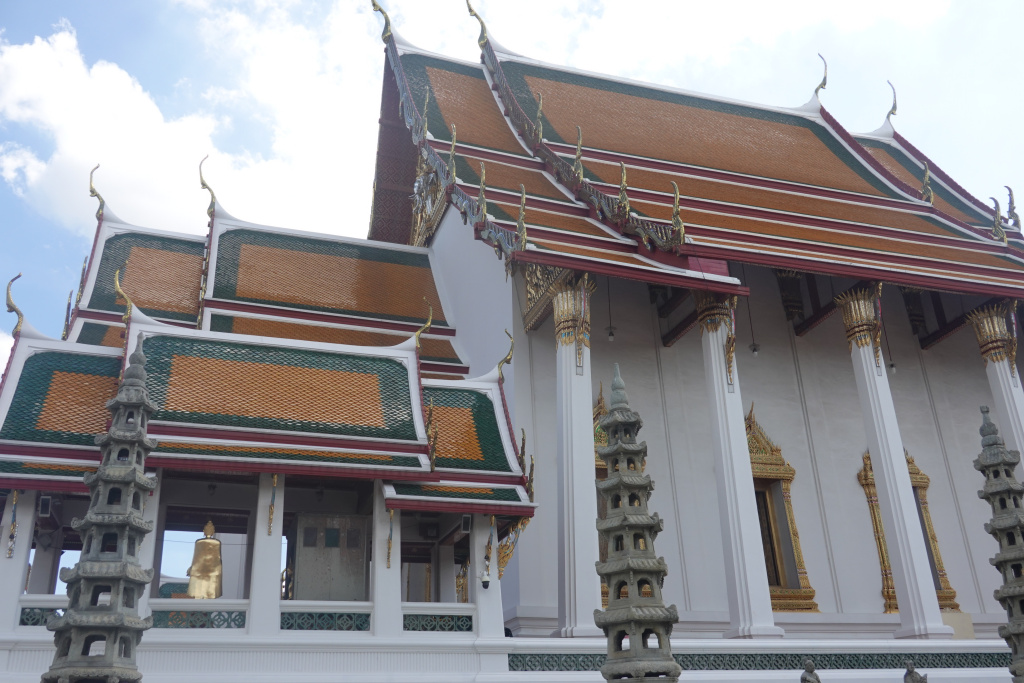
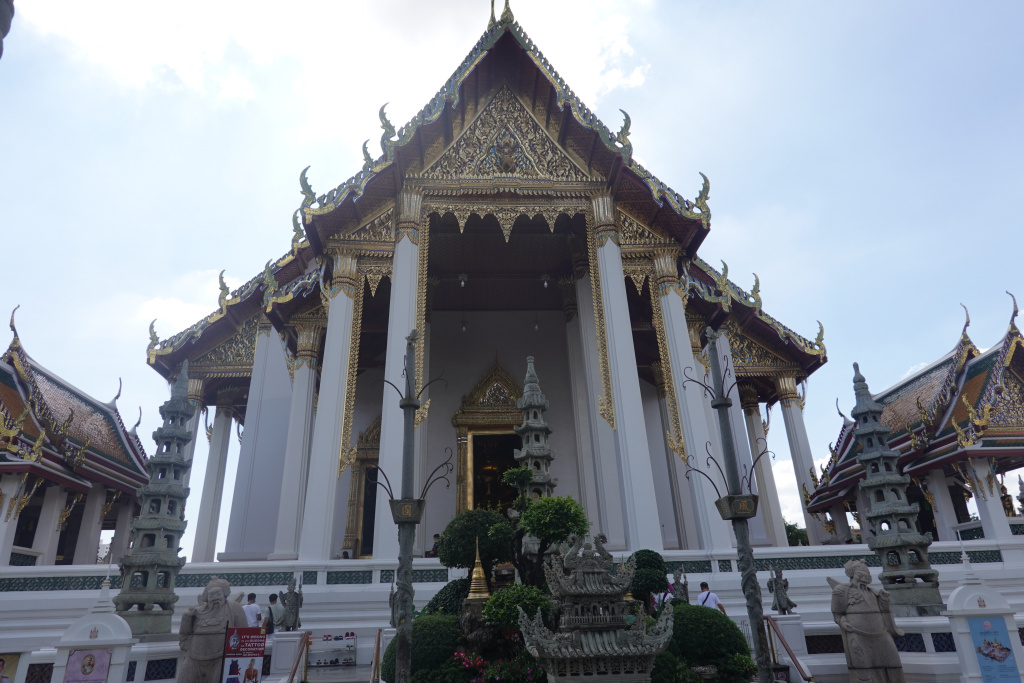
The viharn is a large structure, and very tall, said to be the tallest such structure in all of Thailand. It was built to house a very tall Buddha statue. This viharn has an almost modern, northern-Thai-style multi-layer roof design. Here are two views, of the side and the front of the viharn at Wat Suthat.
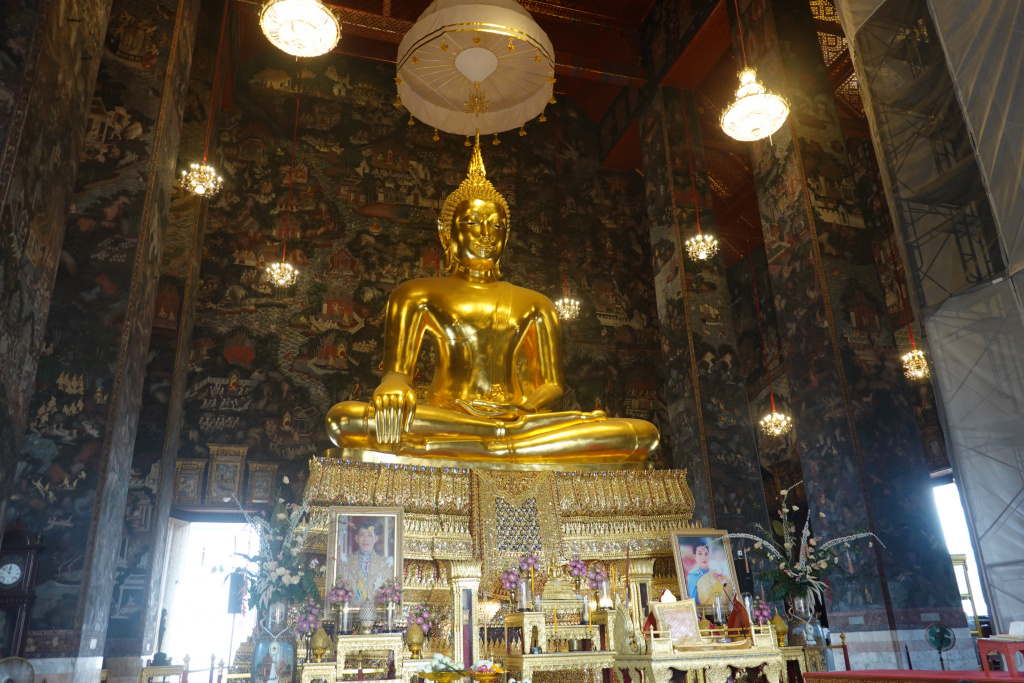
Inside the viharn is the 8-meter tall Buddha image Phra Sri Sakyamuni, large and imposing, which had been moved to Bangkok from a derelict temple in Sukhothai Province in the northwest region of Thailand.
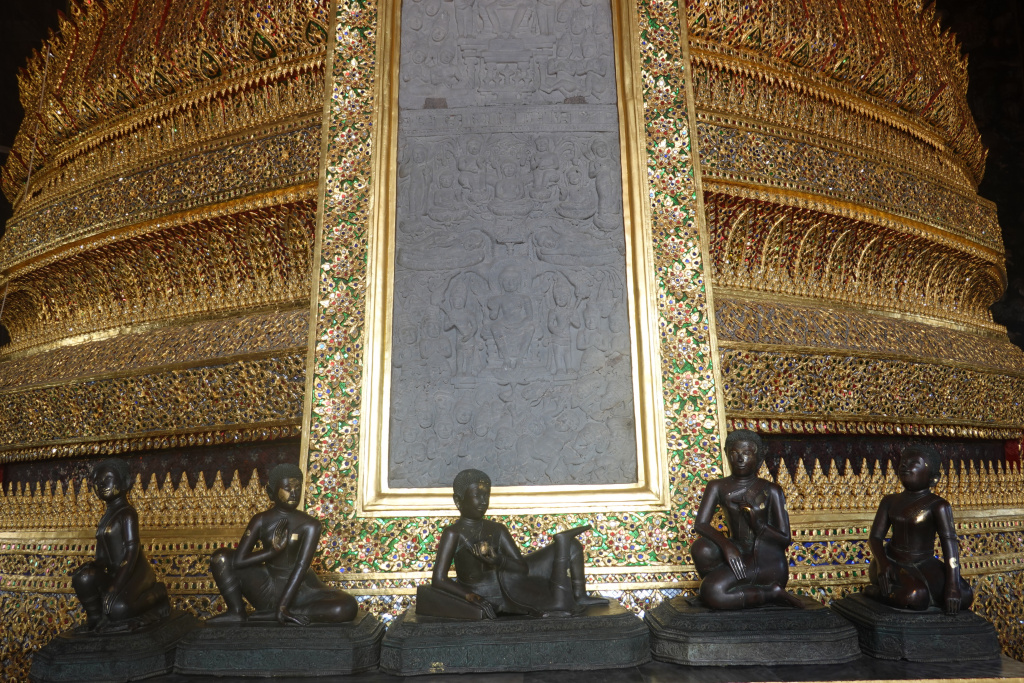
Also inside the viharn was this carved panel against a wall of gold decoration. I saw no indication of what this is or what is represented, and took a photo because it seemed very interesting in its elegant simplicity.
Ubosot at Wat Suthat
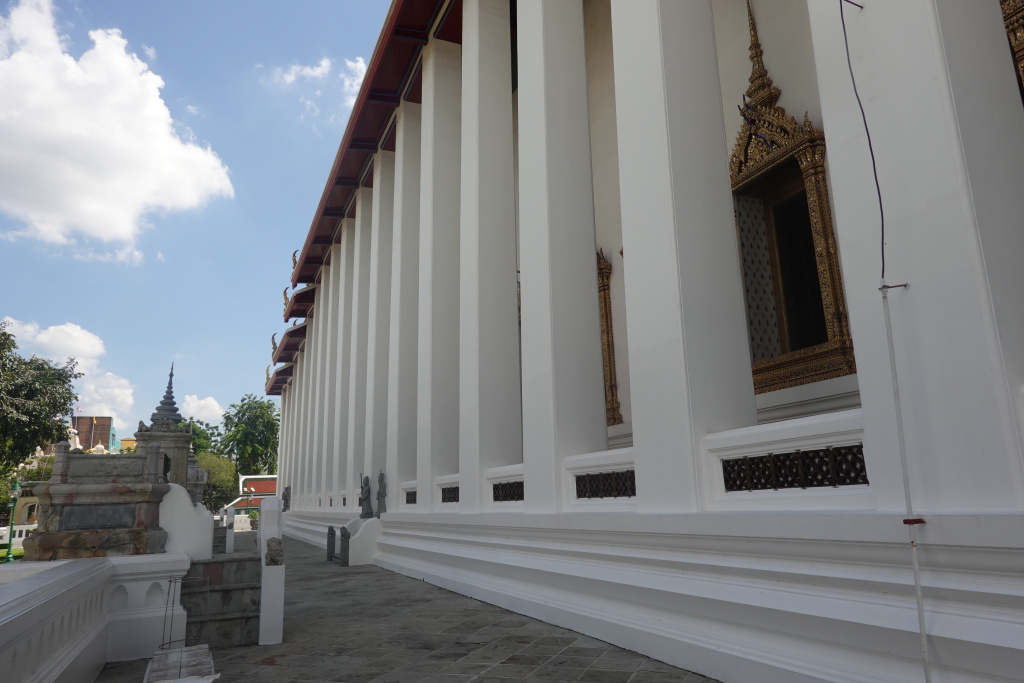
Behind the courtyard around the viharn is a further larger courtyard containing the Ubosot, or Ordination Hall. The ubosot in a Thai temple is the place where men come to be ordained as monks. Both the entrance side and the back side were being remodeled, so I could only get a photo of the side of this very large ubosot with the tall white columns.
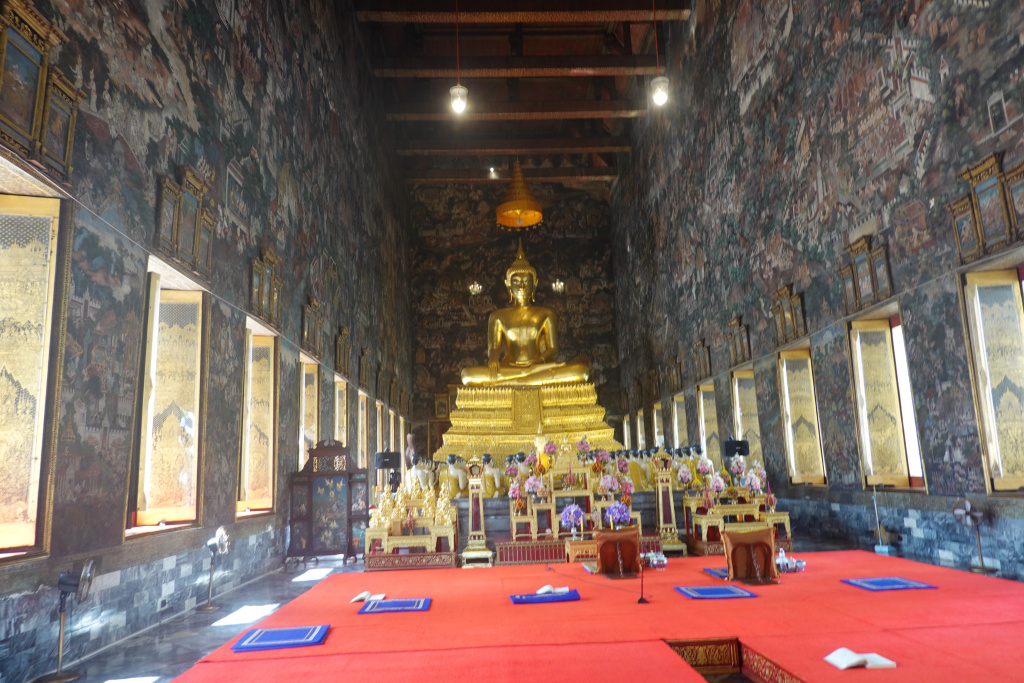
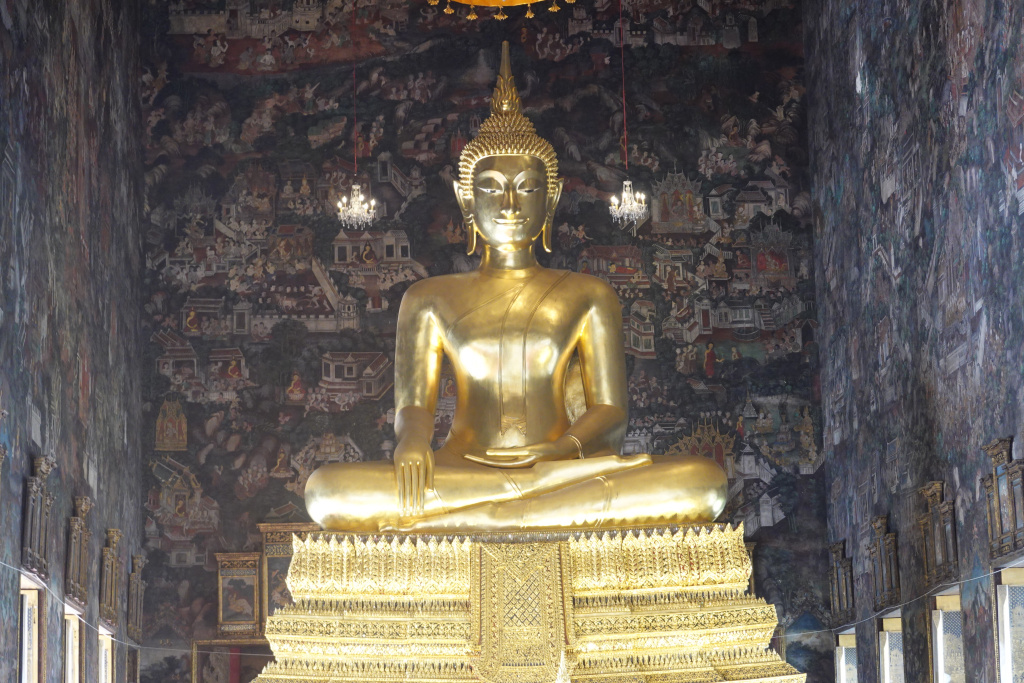
Inside the ubosot is the Phra Buddha Trilokachet Buddha statue, which was cast in Bangkok during the reign of Rama III. Two views of the inside of the ubosot:
Being at Wat Suthat is a very quiet experience, in stark contrast to Wat Pho and Wat Arun. I saw only 3 or 4 other tourists at Wat Suthat, while at Wat Pho, there were probably 300 or more. I saw no monks or other official people other than one lady selling the entrance ticket and one security guard taking the ticket. Being a Royal Temple of the First Class, it is important to the Thai culture and Buddhist religion, but I did not feel much of a connection to Wat Suthat unlike Wat Arun and Wat Pho (both also Royal Temples of the First Class).
Next: Full Day in Bangkok Part 4 – Wat Saket

 James the Intrepid Pilgrim