Tuesday, 30 January 2024
Prapokkloa Road
Leaving Wat Fon Soi and walking north on Prapokkloa Road, just 80 meters further is Wat Jed Lin, sometimes spelled Wat Chet Lin, Wat Jet Lin, or Wat Nong Chalin.
Wat Jed Lin
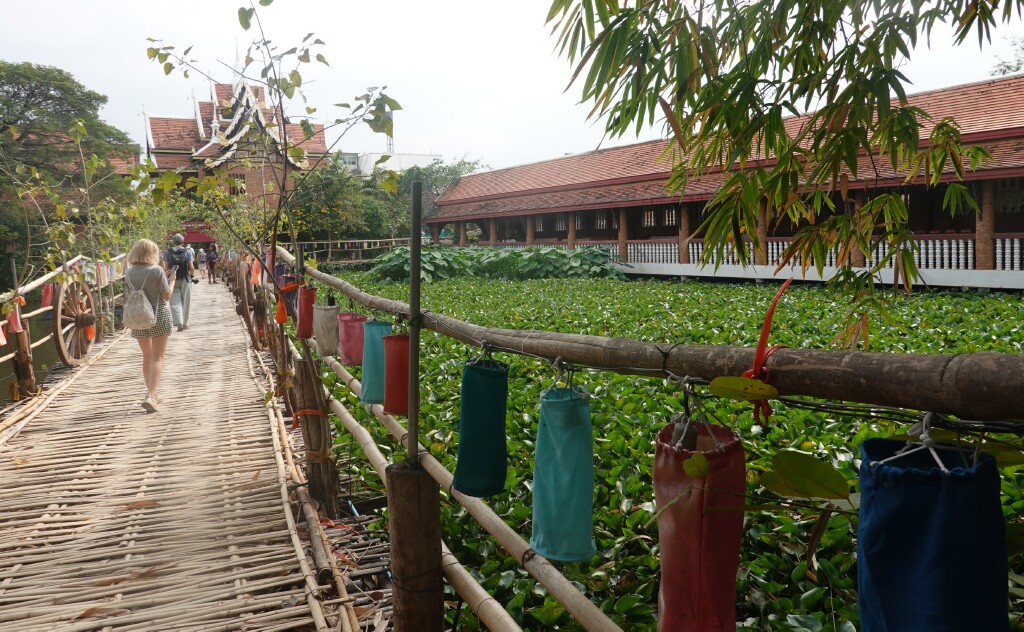
Wat Jed Lin is a beautiful, serene temple beside a large pond with lotus flowers, lily pads, fish, and fairly large turtles. Sitting in one of the bamboo pavilions, relaxing beside the pond, it’s hard to imagine you’re in the middle of a city. There’s also a long bamboo walkway decorated with colorful banners along the side of the pond leading to the monks’ quarters.
Wat Jet Lin was first built in the early 16th Century. The major event that took place at Wat Jet Lin was the coronation of the Lanna King Mekut Sutthiwong in 1551. The name Wat Jet Lin means the ‘Temple of the Seven Channels’ and refers to 7 water channels under which members of the Lanna Royal Family used to come to the temple to bathe.
Wat Jed Lin Entrance
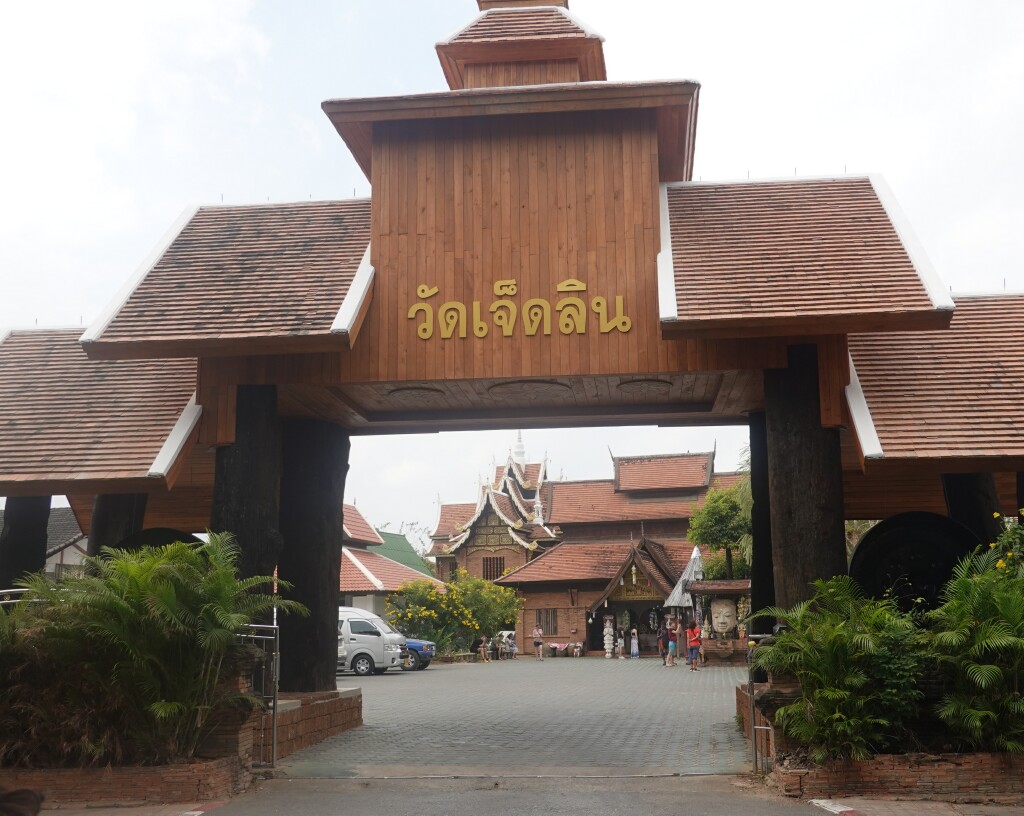
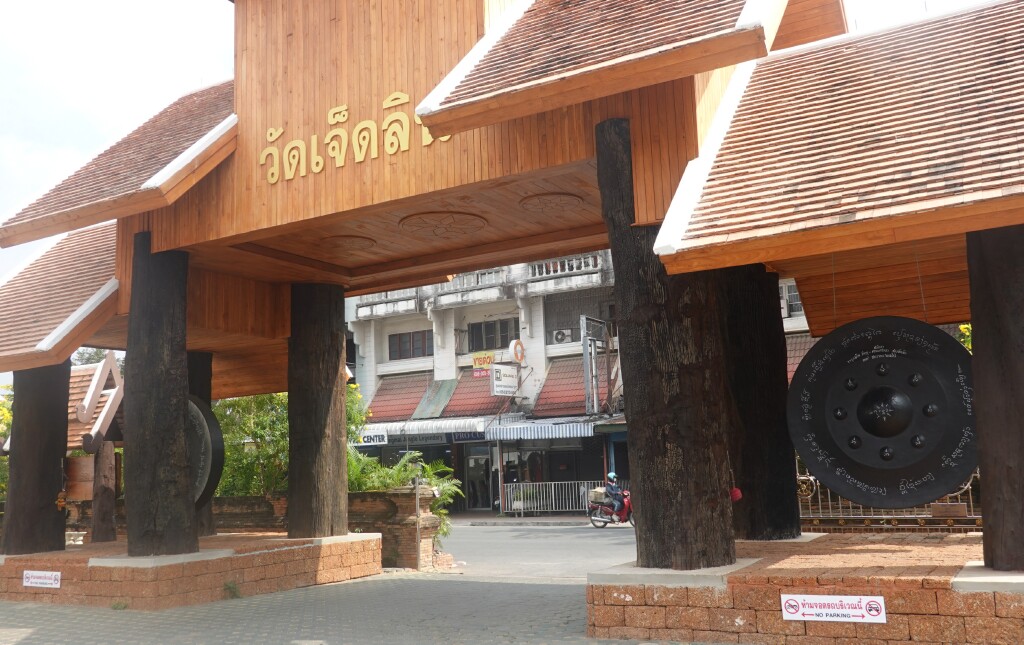
The large and dramatic entrance structure is new since last year. Here are two views of this new entrance portico. First from outside across Prapokkloa Road and second looking back towards Prapokkloa Road from inside.
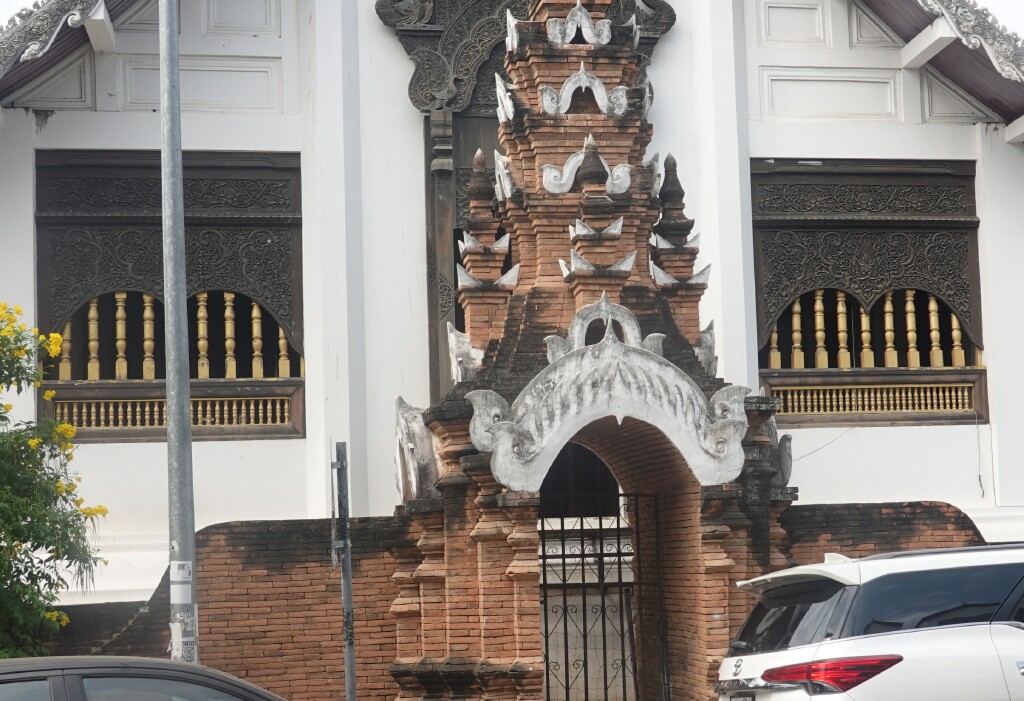
Also from Prapokkloa Road the old entrance that leads directly into the east entrance to the viharn can be seen. This entrance has not been used in all of the 11 years I have visited Chiang Mai. The gate and the east entrance to the viharn are always closed.
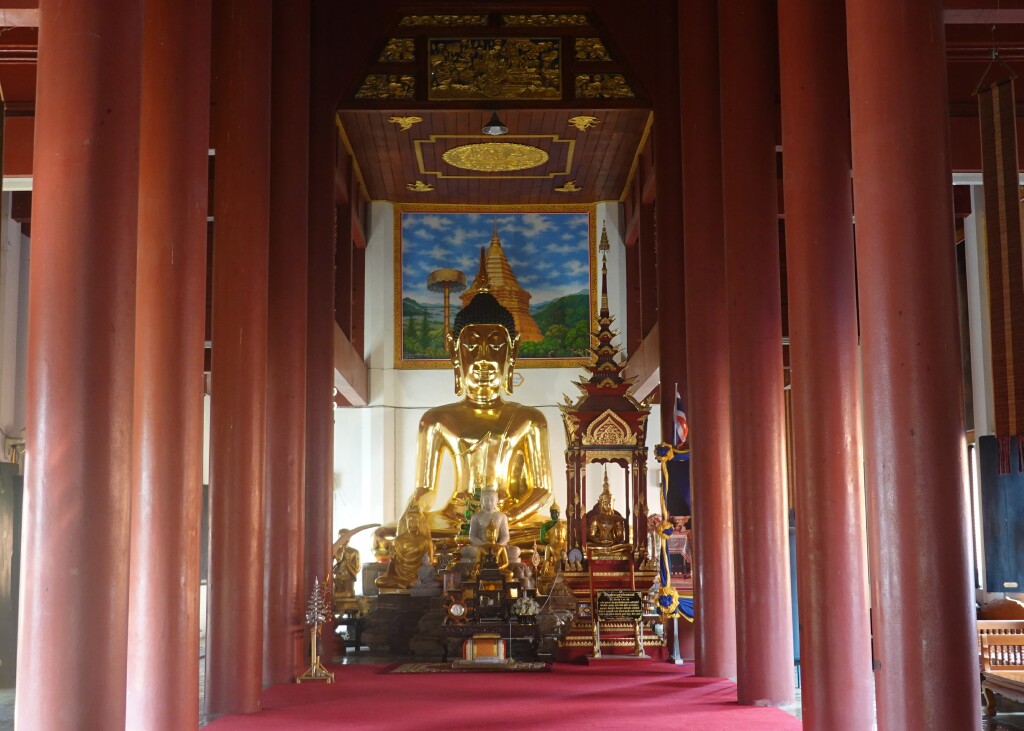
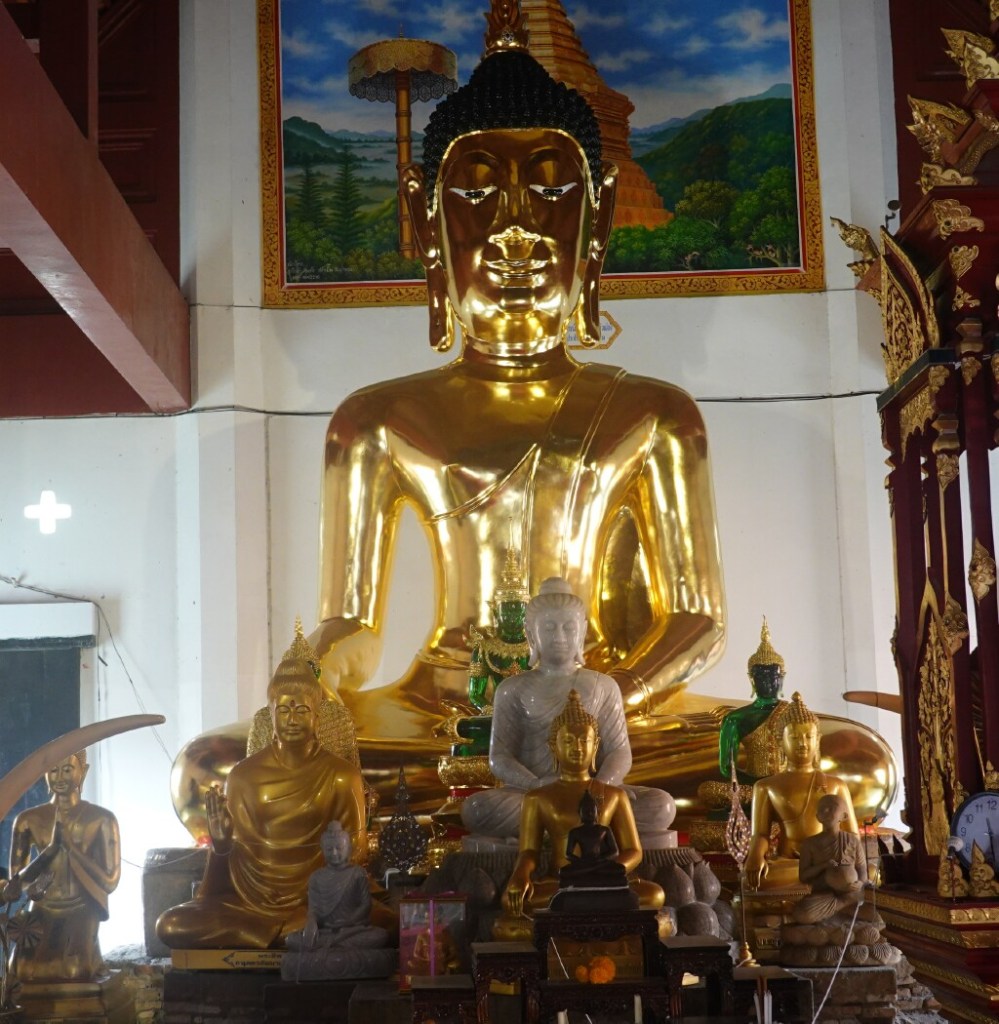
The viharn (worship hall) is entered from a side entrance. The current viharn was constructed in the late 19th or early 20th Century. The outer walls are plain white concrete, and the structure is built in the Lanna style with a grand three-tiered over-lapping roof and large columns inside supporting the roof. Here are two photos showing the inside and a close-up of the large gold Buddha statue.
At the back, west end of the viharn is the chedi. This one is old, brick, and rustic, a style more to my preference. The style of the chedi is very similar to the chedis in other old temples in Chiang Mai, particularly the one at Wat Lok Molee, suggesting that the chedi was built at the time of the temple’s founding, making it the oldest part of Wat Jet Lin.

In this photo of the chedi you can also see part of the outside of the plain white viharn and a small part of the Lanna-style overlapping roof.
Pond
West of the chedi and viharn are some structures, a coffee sales counter, and then the large pond. The pond has two sides – one is mostly open water with fish and some fairly large turtles. I did not see the turtle today, but people were feeding the fish, and they were quite actively swarming and eating the fish food (the fish food can be bought from the coffee place for 10 baht, about 35 cents). I walked down the decorated, covered walkway and then back up the bamboo walkway separating the dense lotus-covered part of the pond from the open water part of the pond.
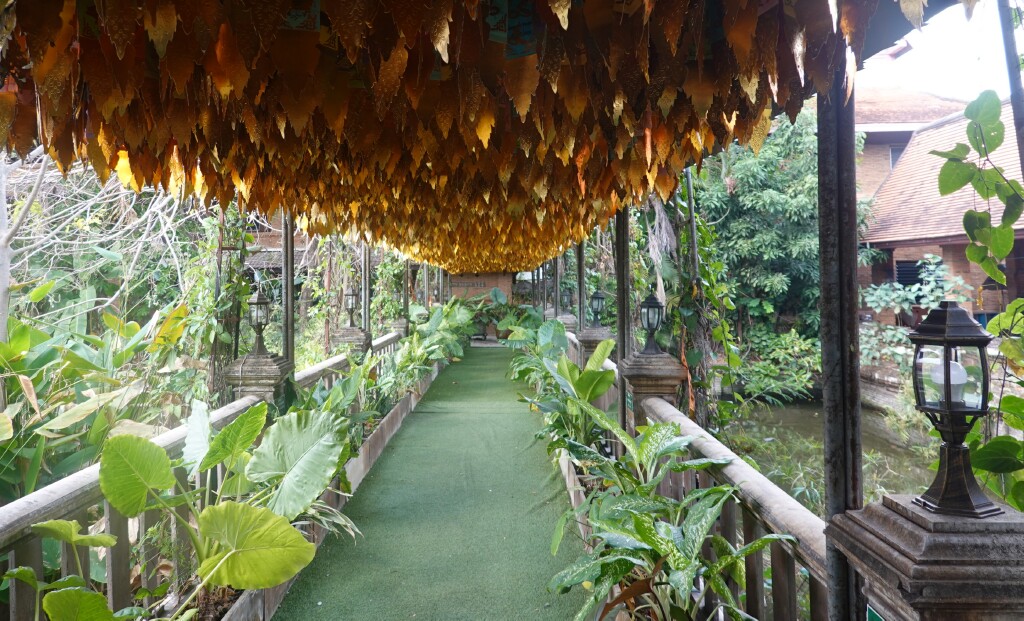
And then up the bamboo walkway to view the lotus plants, none of which were in bloom.
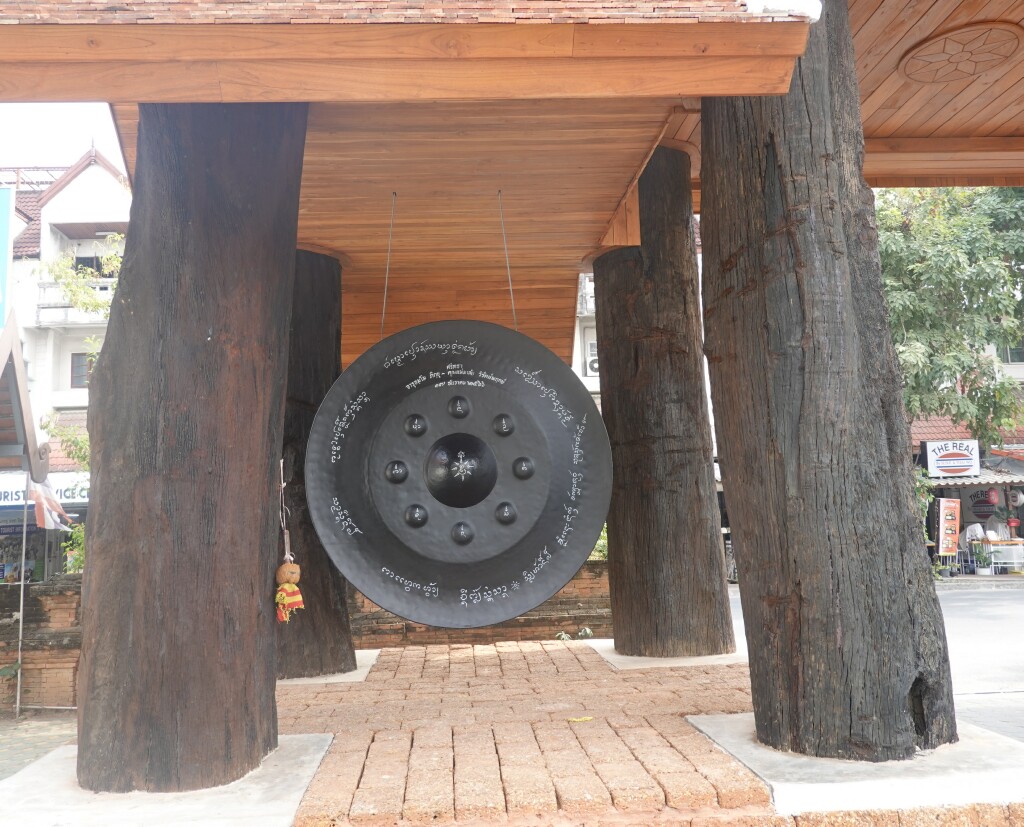
I walked back across the courtyard to the large entrance and struck the large gong. I was not able to get someone to take my picture. All of these large gongs are made in several shops along the 20-mile Gong Highway, highway 2222 between Ubon Ratchathani and the Mekong River in northeast Thailand, an area of eastern Thailand called Isan.
Next: Prapokkloa Temples 3 – Wat Muen Tum

 James the Intrepid Pilgrim