Sunday 21 January 2024
Revisiting Wat Jed Yod
I have been to Wat Jed Yod many times over the eleven years visiting Chiang Mai. The temple grounds are large with many trees, almost like a park with a serene atmosphere. There are always tourists here, but not many, and I feel like I have much of the temple to myself. I like the many chedis at Wat Jed Yod, all old and rustic looking and in various states of repair. Today everyone comes to the newer entrance, built for car traffic with a modern sign.
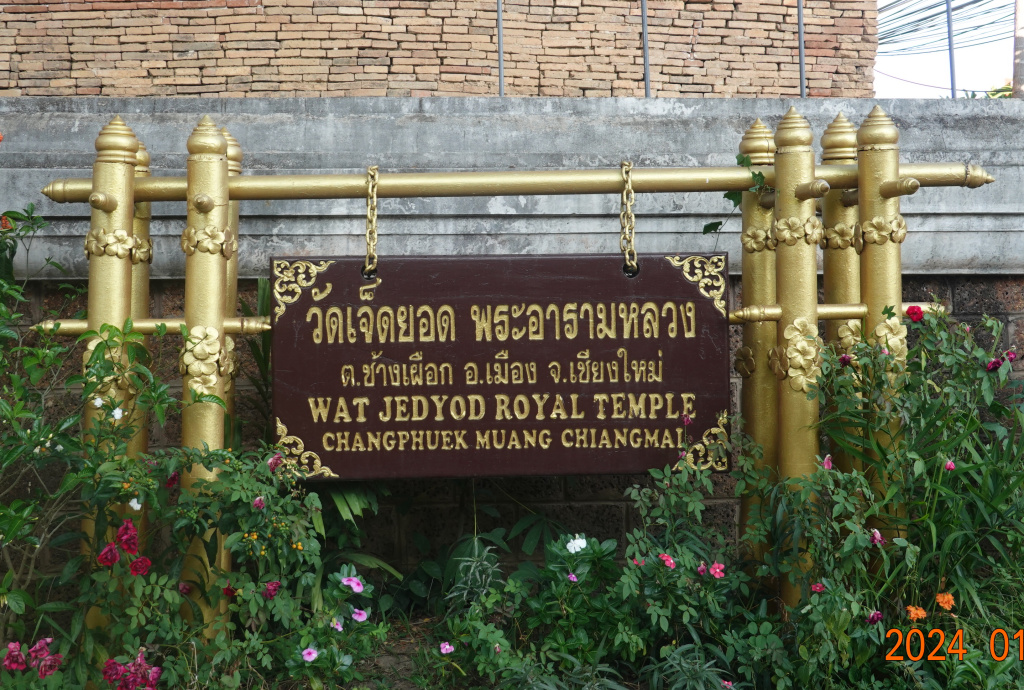
Wat Jed Yod (sometimes spelled Chet Yot or Jet Yod) is an old temple dating back to 1455 when King Tilokarat planted a bhodi tree on the grounds and then established a temple. He ordered that the design of the main temple be copied from the Mahabodhi temple in Northern India where the Buddha achieved enlightenment under a bhodi tree. By 1476 he had established a large sanctuary in this monastery for the commemorating 2000 years of Buddhism. The following year the 8th Buddhist World Council was held at Wat Jed Yod.
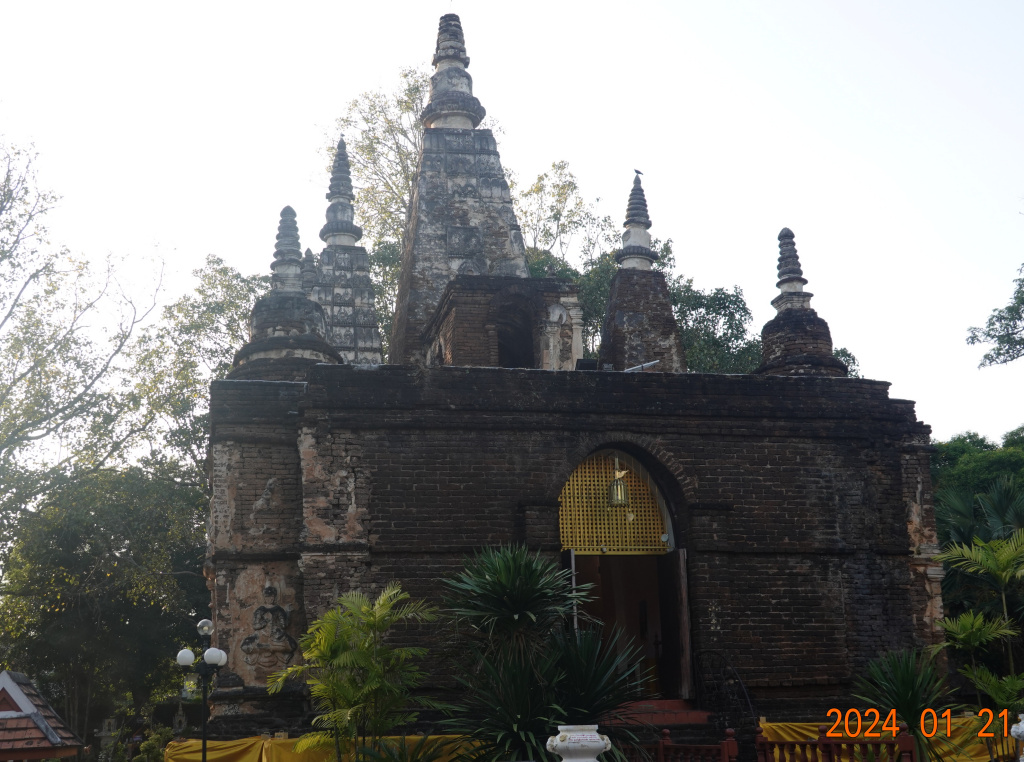
Just behind the new entrance is part of the temple grounds few tourists visit since they are focused on the old viharn (worship hall) with the seven spires and the elaborate old stucco carvings on the sides. The temple name “Wat Jed Yod” translates to “temple of the seven spires” referring to the seven spires atop the old viharn.
Muccalinda Pond
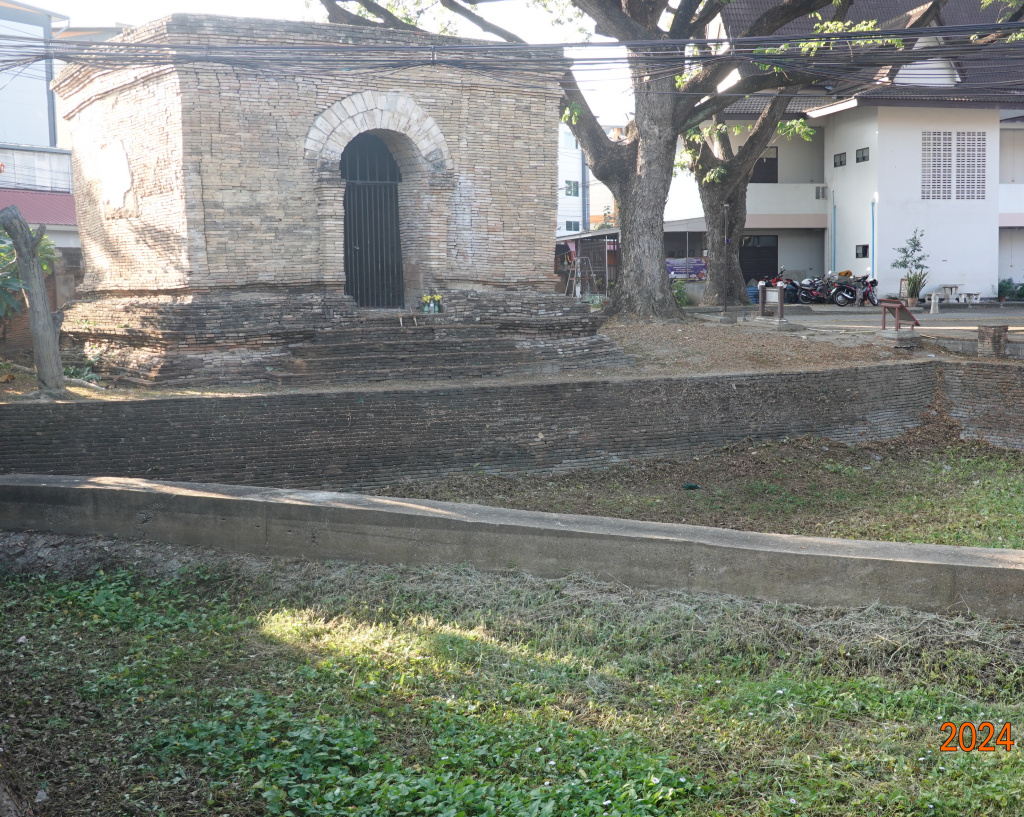
I walked behind the new entrance to the Muccalinda Pond, currently empty, beside a rustic old square building used for some ceremonies.
Ku Kaew Chedi
Near the Mucalinda Pond was an old chedi, called the Ku Kaew Chedi on a sign nearby. This is a very old and quite deteriorated chedi.
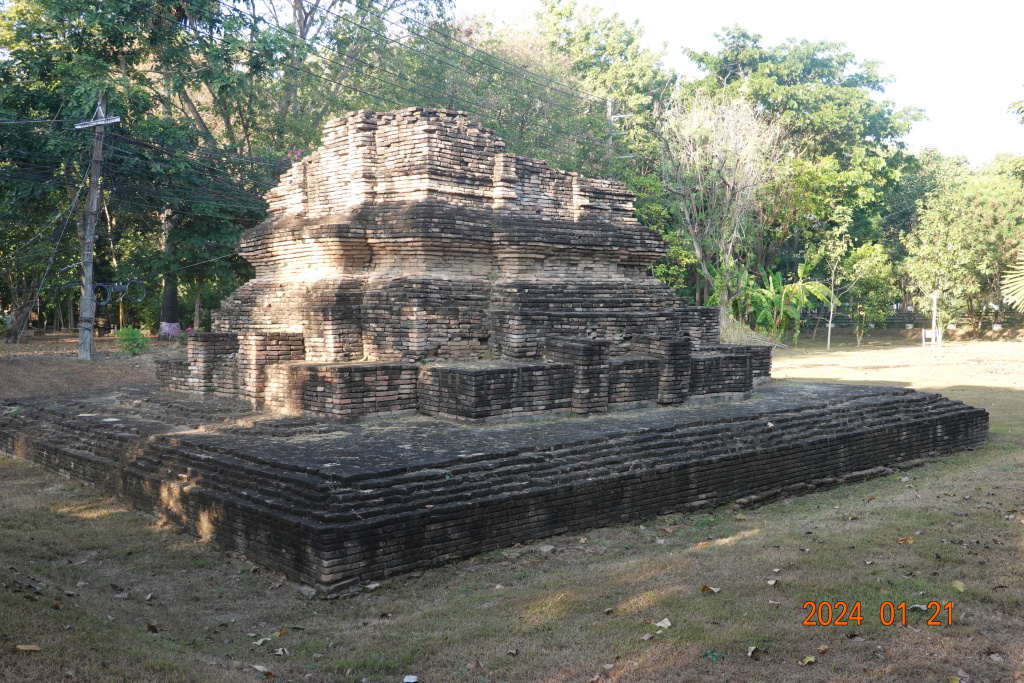
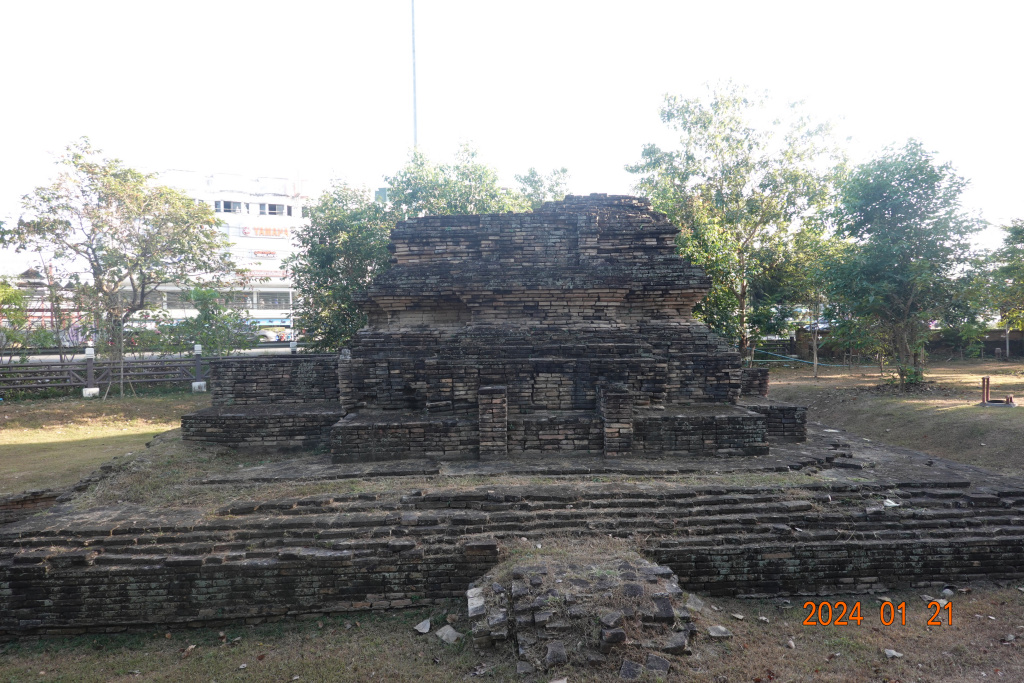
Beside the old chedi, I noticed what appears to be the last remains of a foundation, shaped to suggest that it might have been an old viharn. It is oriented so that the chedi would have been to the west, as is the typical design of temples in Thailand.
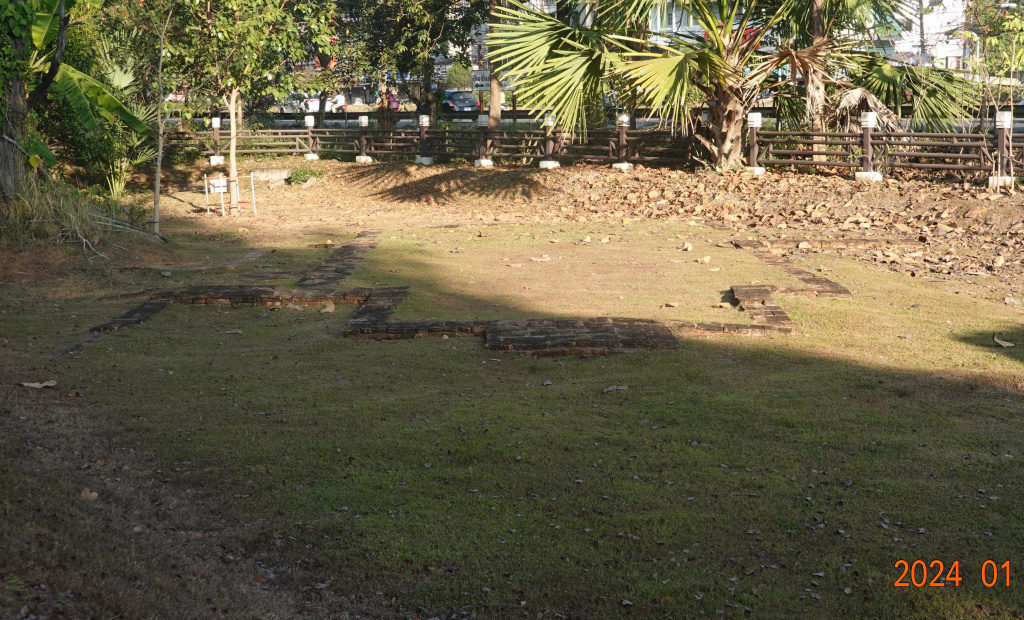
Newer Viharn
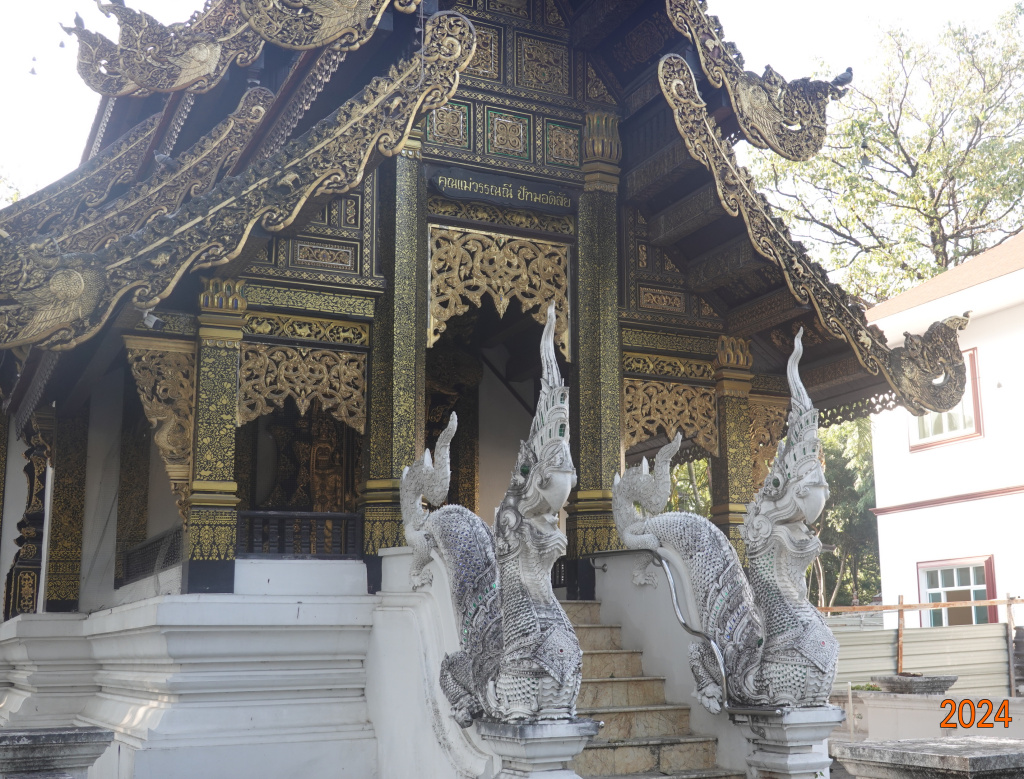
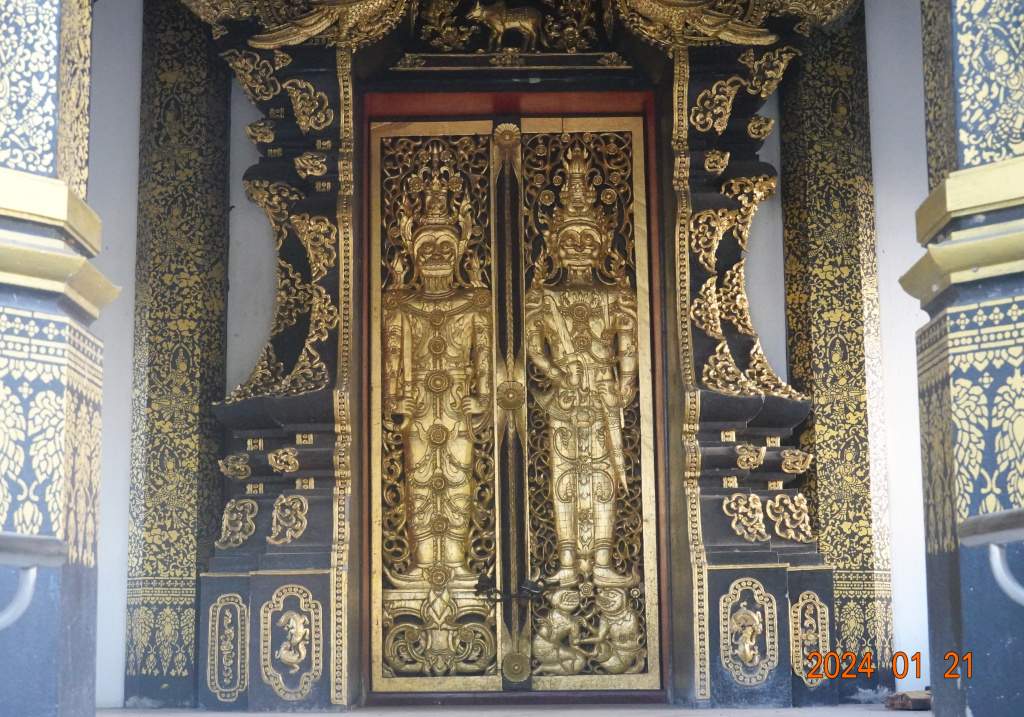
Behind me, as I was taking the photo of the old foundation is a new, small viharn. A sign indicated that it was built to celebrate the 700th anniversary of the temple. In particular, I like the design on the doors – very solemn-looking thewada (a “thewada is an “angelic being that lives in the heavenly realm). Thewada have no gender but can look very male or very female depending on the artist and the context.
Original Entrance
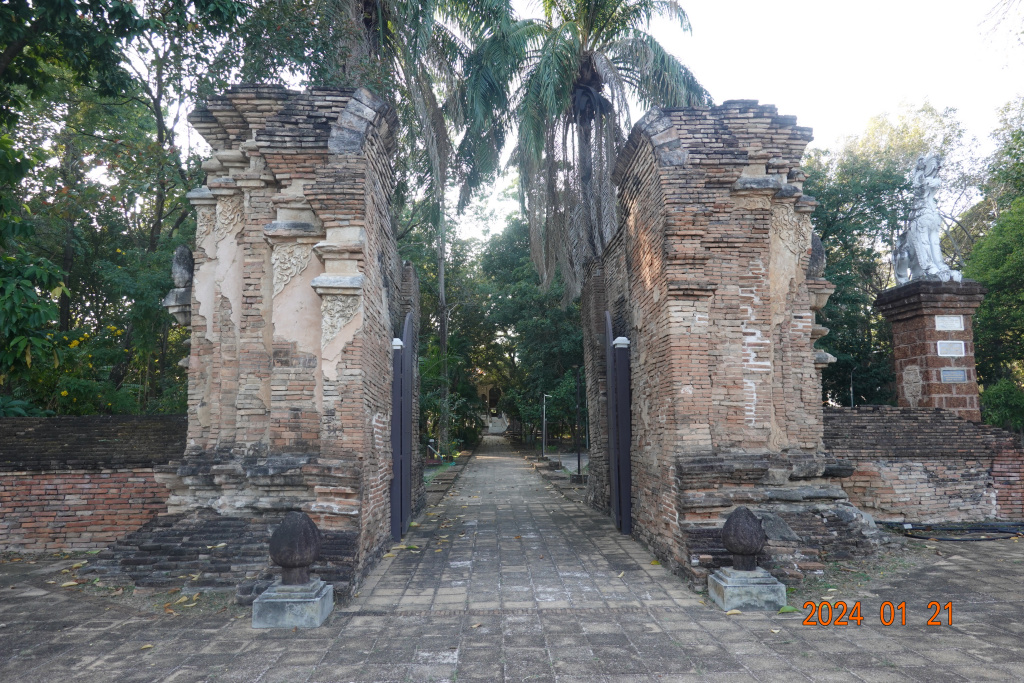
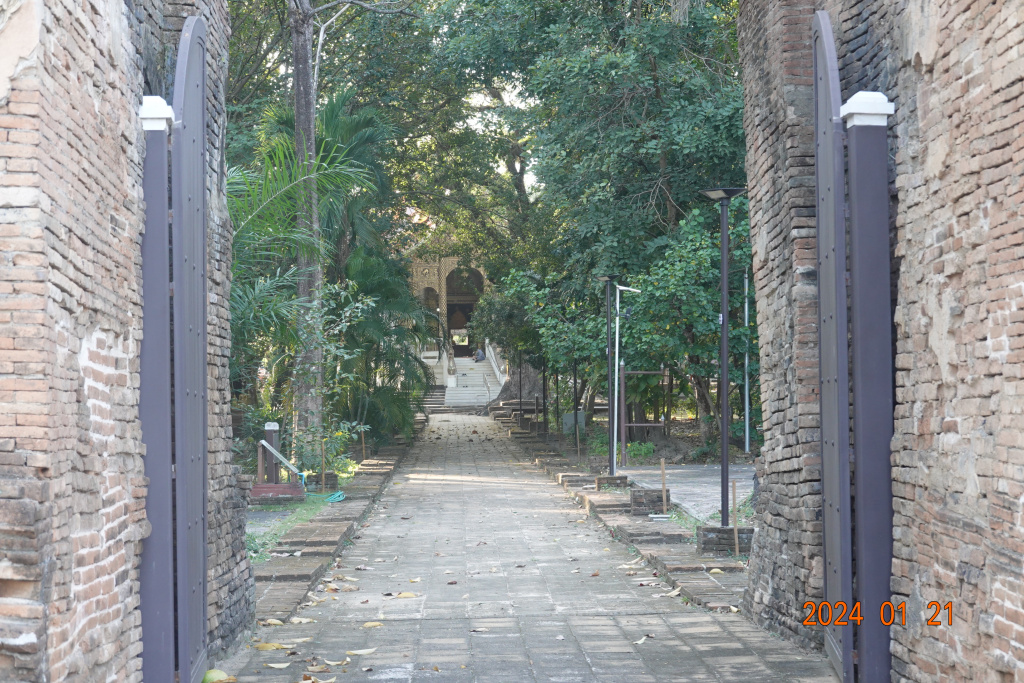
The old front entrance portal design and thickness suggest that the temple grounds were once surrounded by a wall, now gone. I find the old entrance almost majestic in character. And from the old entrance, there is a path leading directly to the current main viharn.
Ubosot and Ku Kanchan Chedi
I walked through through the old entrance portal and to my right I could see the ubosot through the trees. Then as I got closer, the ubosot was in dark shadow.
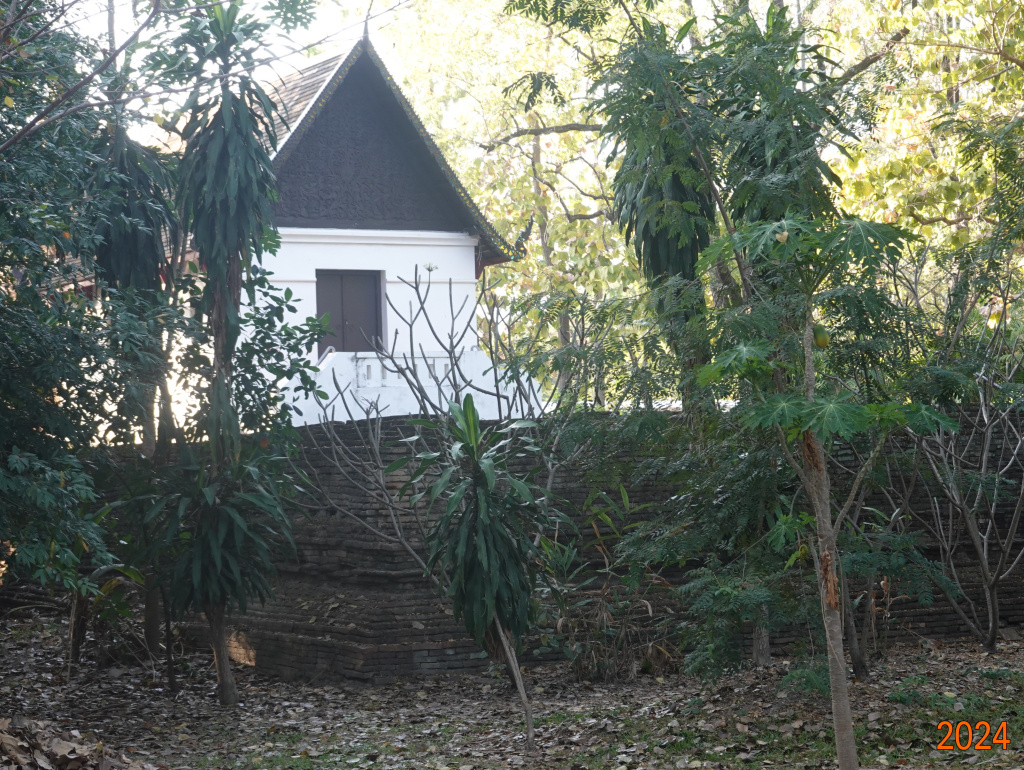
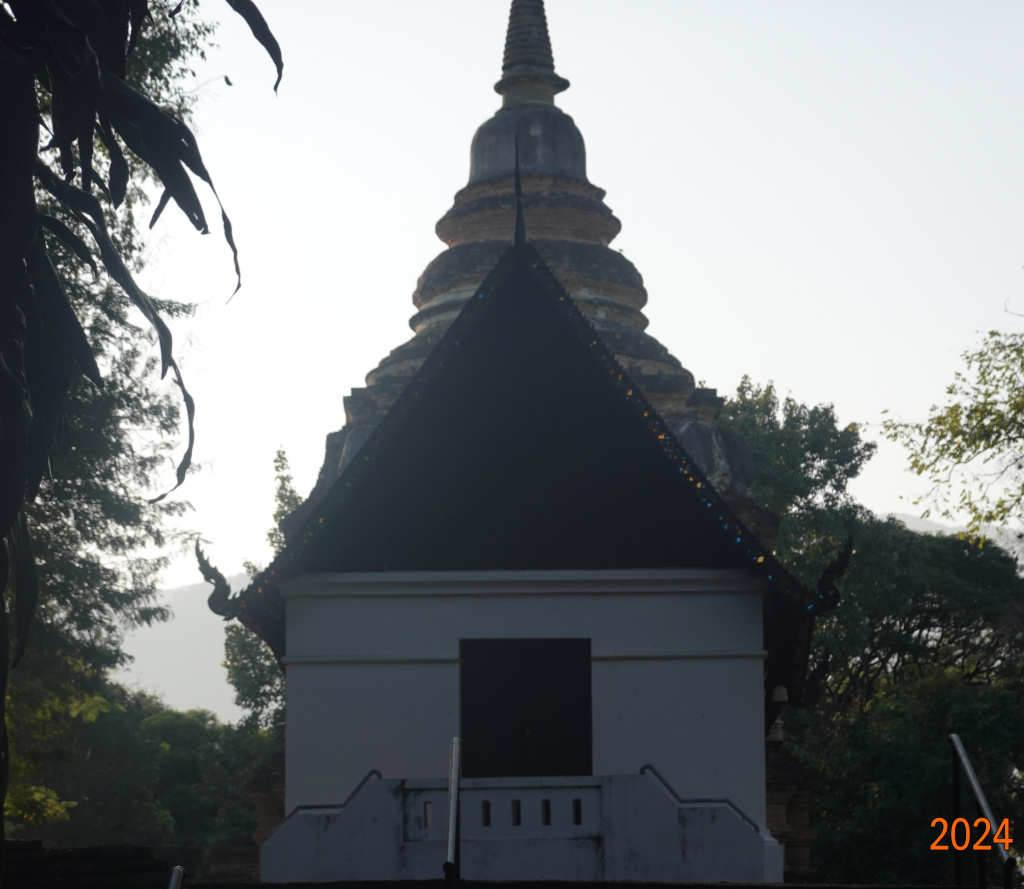
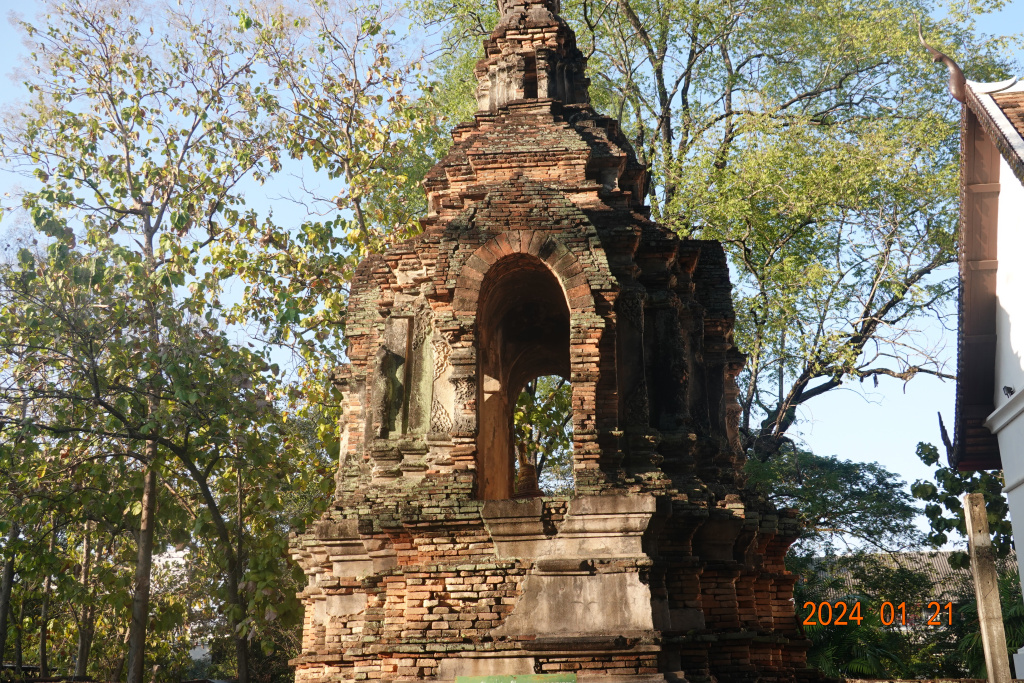
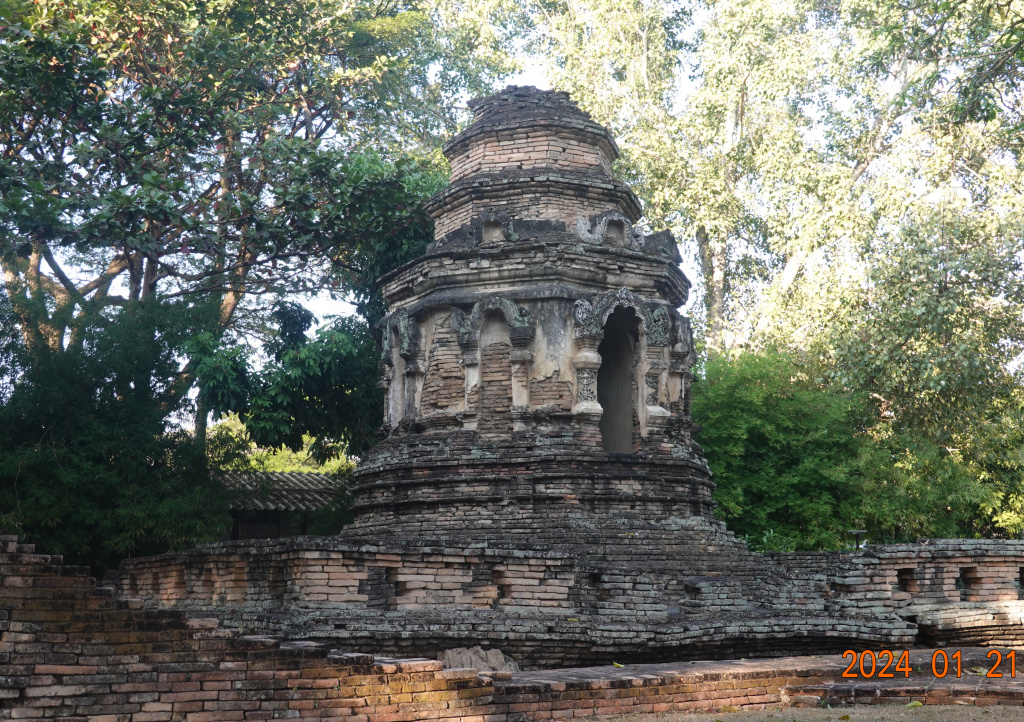
Behind the ubosot the Ku Kanchan chedi and the larger Tilokarat Chedi can both be seen. Walking to the back, I took the right photo of the Ku Kanchan Chedi itself. It was built in the reign of King Mueangkaeo who ruled Chiang Mai from 1495 to 1525. The top section is open and houses a Buddha image visible from all four sides.
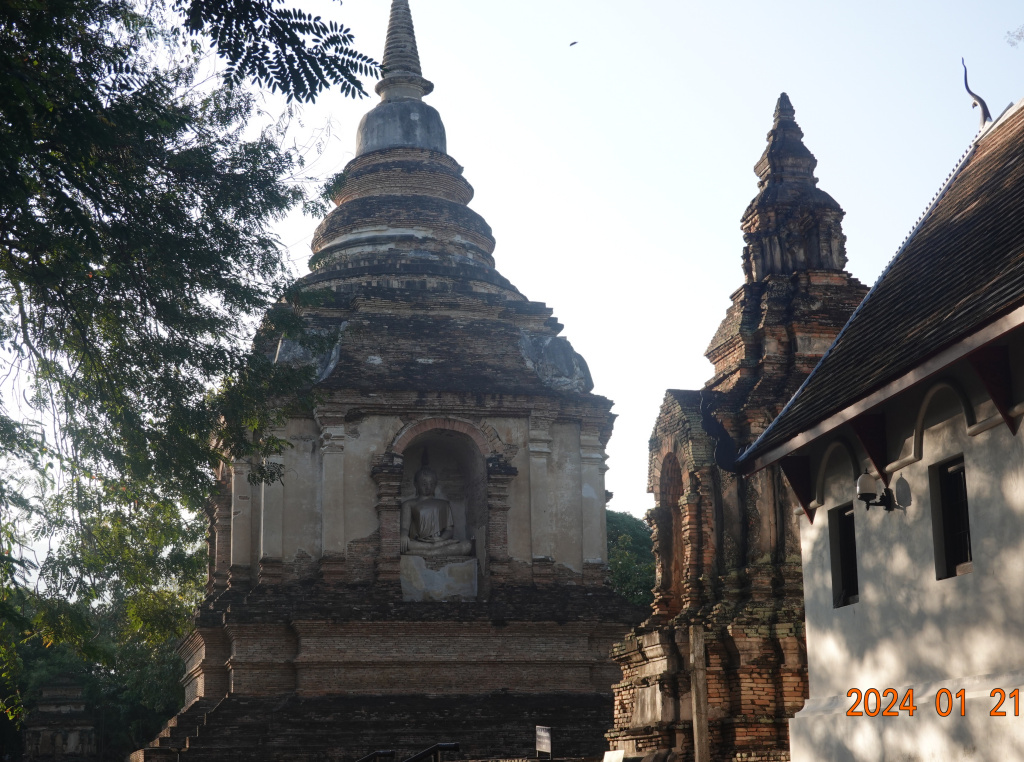
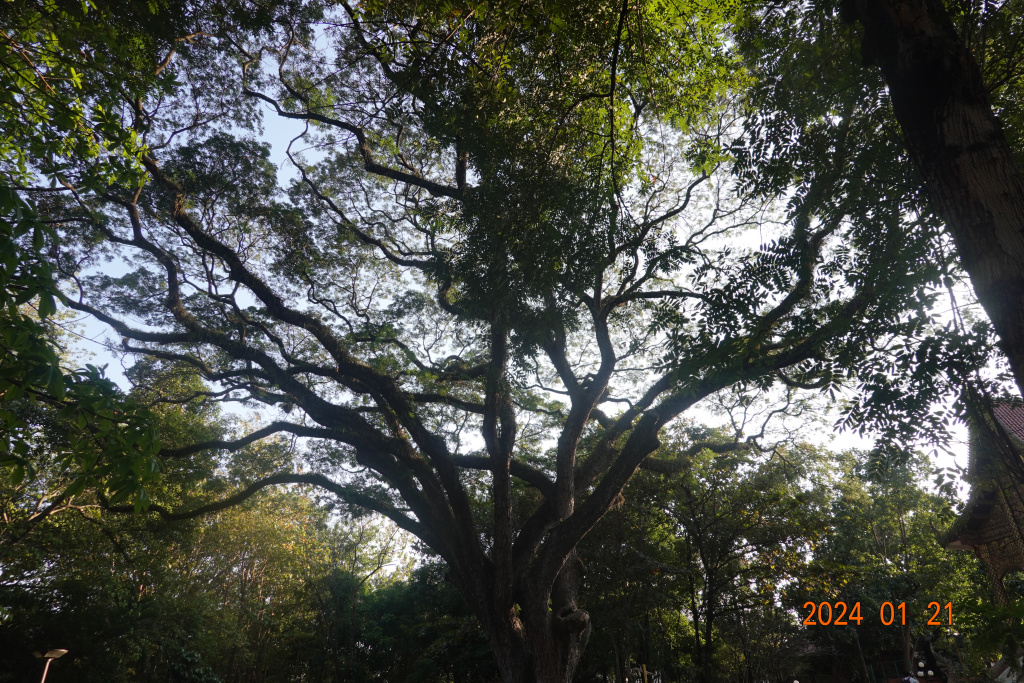
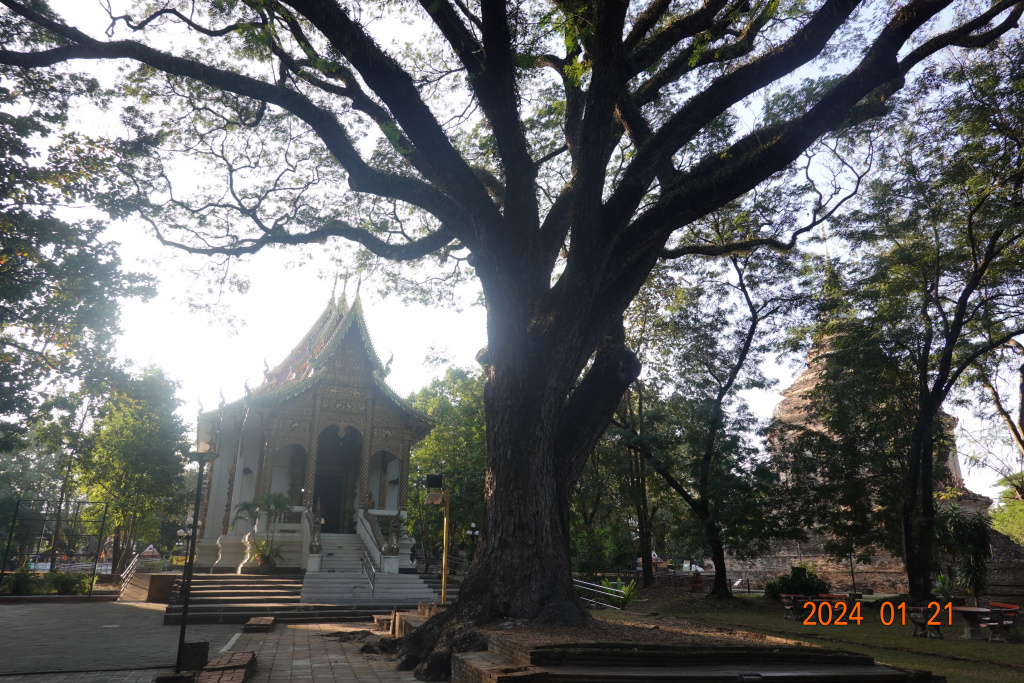
Walking around to view and photograph the Tilokarat Chedi, I saw this large, old, quite dramatic tree.
Tilokarat Chedi
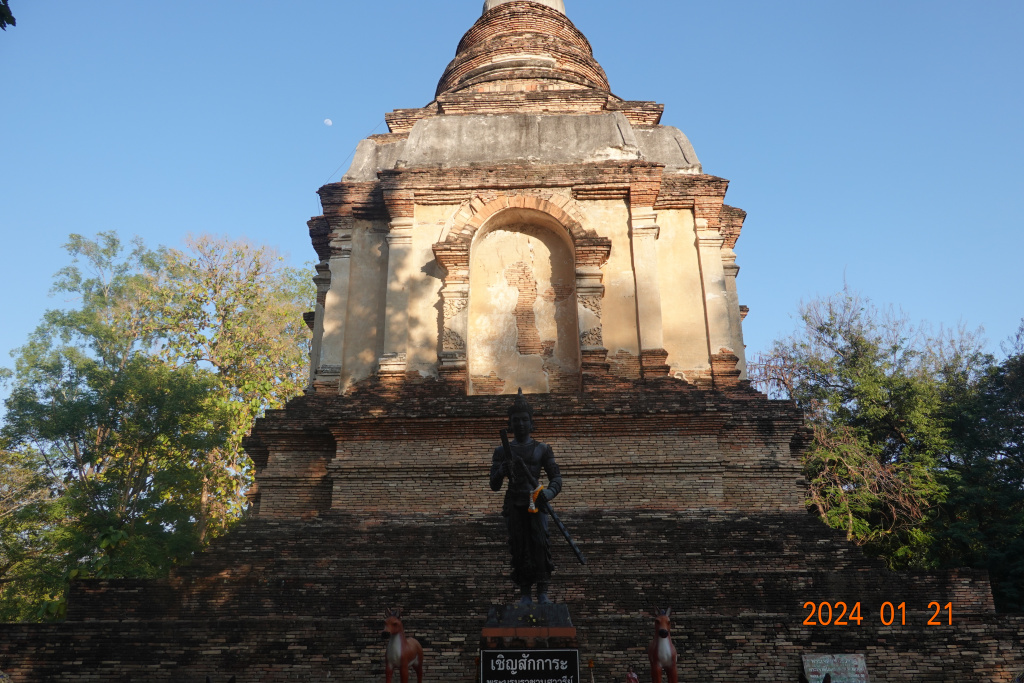
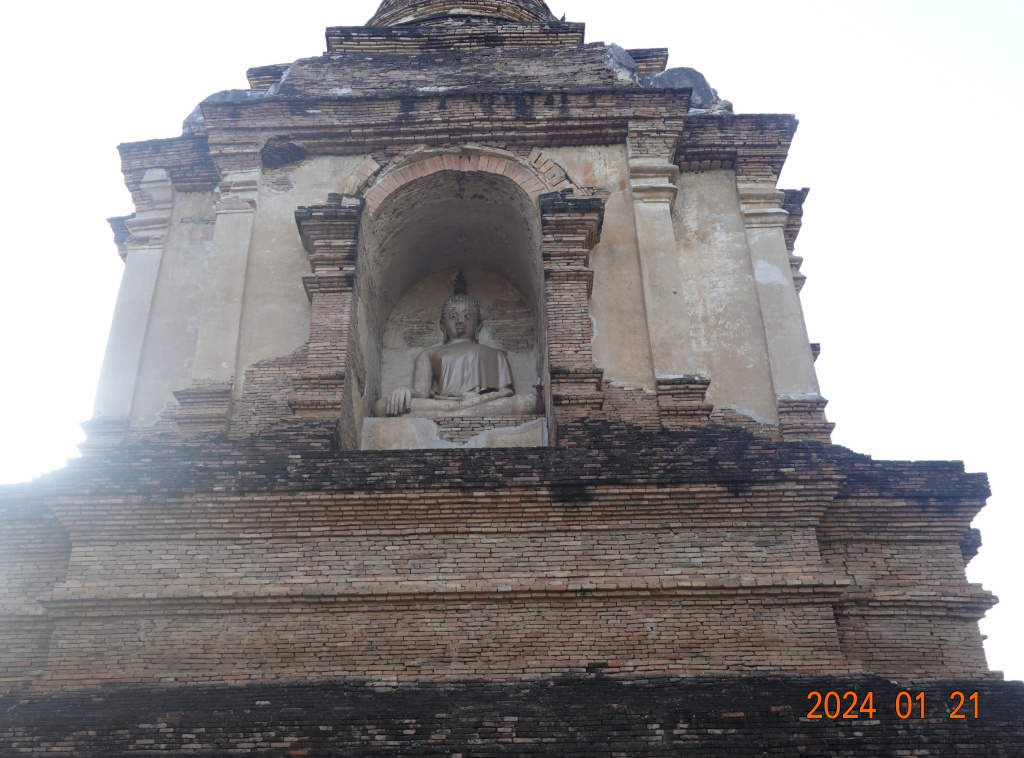
The Tilokarat chedi was built in 1487 to house the ashes of King Tilokarat who ruled the Lanna Kingdom from 1441 until his death in 1487. It is in the Lanna style typical of this era, similar in design to the chedi at Wat Lok Moli (possibly my favorite chedi). In front of the chedi is a statue of King Tilokarat who founded the temple and whose ashes are in the chedi. Here is a view of the statue in the front and the back with the large Buddha statue in the upper niche.
Animisa Chedi
The Animisa chedi at Wat Jed Yod is part of the original temple, dating back to the 1450s. On each of the six sides is a niche for housing a Buddhist image, although all are now empty.
Wat Jed Yod Modern Viharn
The more modern viharn at Wat Jed Yod dates from the 19th century and is very much in the Lanna style with the nagas on the banisters of the entrance stairway, and a roof line typical of Lanna-style temples.

Buddha in the Trees
In and among the trees is this Buddha statue, providing a fairly isolated place for prayer or worship in a natural setting.

Maha Pho Viharn
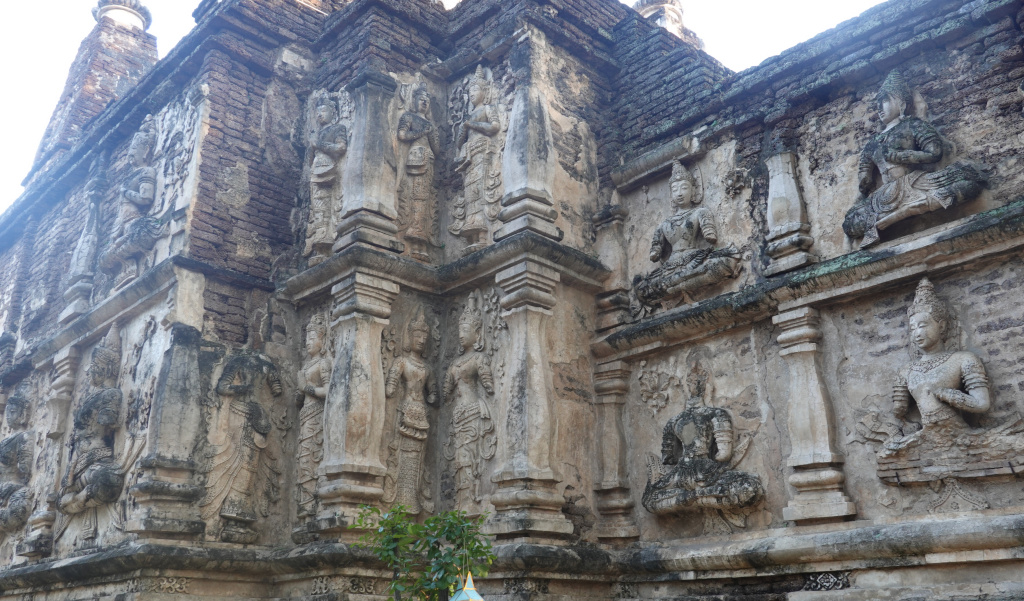
The old viharn, also called a shrine with seven spires on the roof is named the Maha Pho Viharn. The design is based on the Mahabodhi temple where the Buddha achieved enlightenment and so has many features in the Indian style although it also has elements of Chinese and Thai architecture.
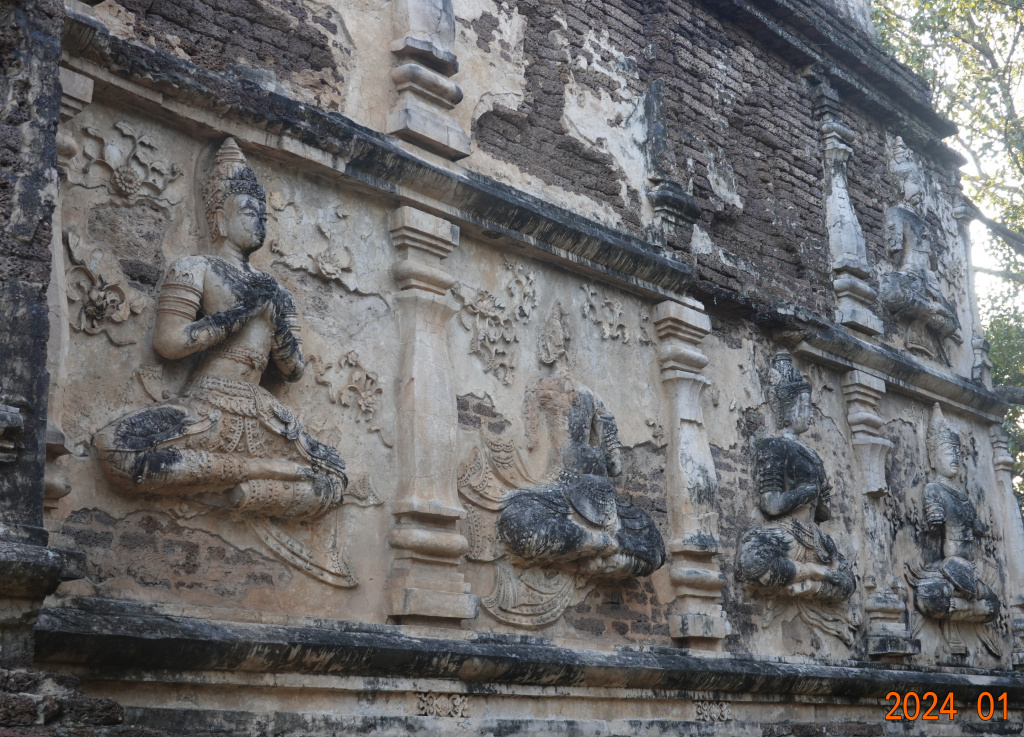
On the sides of the Maha Pho Viharn are large stucco thewada carvings in bas-relief. Unfortunately, they are in somewhat deteriorated condition.
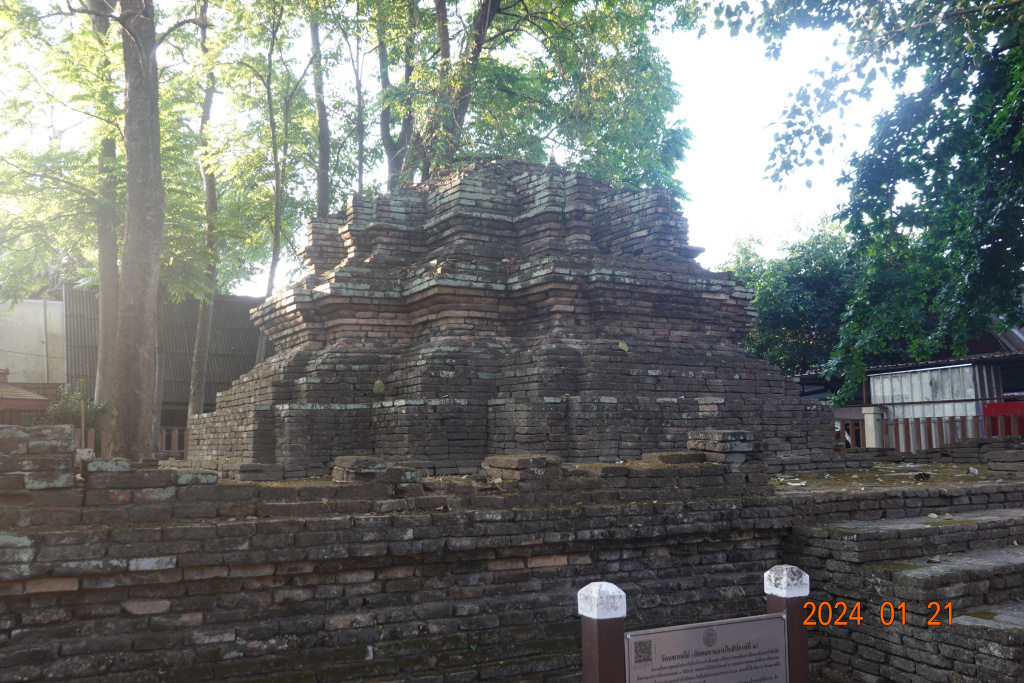
Behind the Maha Pho Viharn is another chedi, in a much-deteriorated state and for which I could find no name or other history.
I enjoy my visits to Wat Jed Yod and the peaceful, park-like grounds. Every time I visit and then research Wat Jed Yod, I learn more. As well as having a fascinating history it’s also an important pilgrimage temple. There are twelve such special temples in Thailand each representing an animal of the zodiac which all Thai adherents must visit once in their lifetime according to their birth animal. Four of these are in Chiang Mai and one in nearby Lamphun (which I visited):
- Year of the Snake: Wat Jed Yod
- Year of the Great Snake (Dragon): Wat Phra Singh
- Year of the Ram: Wat Phra That Doi Suthep
- Year of the Dog: Wat Ket Karam
- Year of the Rooster: Wat Hariphunchai, Lamphun
Next: Prapokkloa Road Temples

 James the Intrepid Pilgrim
Looks beautiful!
LikeLike