Sunday 21 January 2024
Three temples on Tha Phae Road
I walk past three temples on Tha Phae Road often as I walk to the Story 106 co-working space for coffee and to work on my blog. Since I have visited these temples many times in the past, I generally ignore them and walk by. Since seeing these temples is part of my daily routine, and they are very different with different histories, I thought I’d take some time, stop at the temples on my walk back from Story 106, take a few photographs, and share what I see.
Wat Buppharam
This temple is very old. There has been a temple here since the late 1400s. Wat Buppharam was first established in 1497 by King Mueangkaeo, the 11th king of the Mengrai Dynasty. The Mengrai Dynasty, started by King Mengrai, ruled the Chiang Mai kingdom 1292 to 1558.
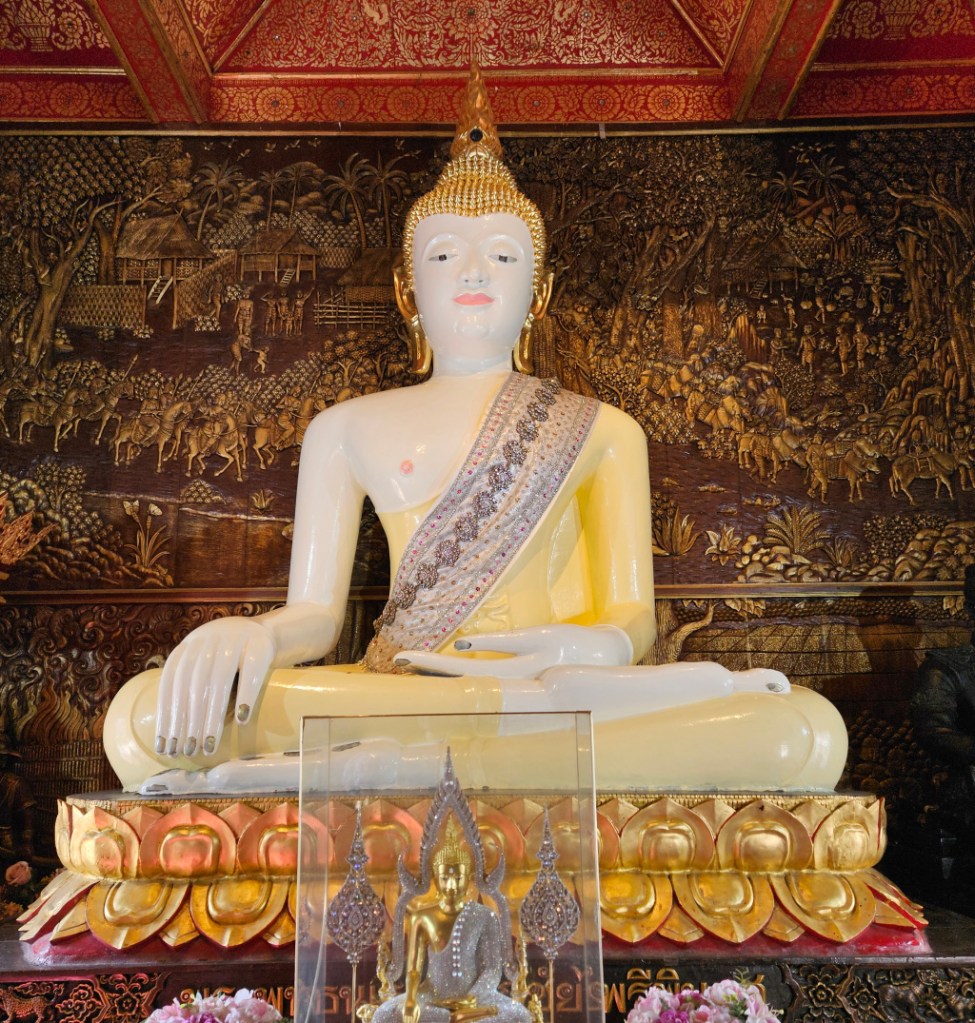
One of the most noted features or attractions of the temple is the large white teak Buddha which dates from the 1600s. This is the largest teak Buddha in all of Thailand. It was made in celebration of the victory over the Burmese and their expulsion from Northern Thailand. It was made in the Chiang Saen style of Northern Thailand and sits in the customary Subduing Marra mudra with the right hand towards the ground. The photo does not really show the scale well; this statue is almost 3 meters (10 feet) high – a large teak statue.
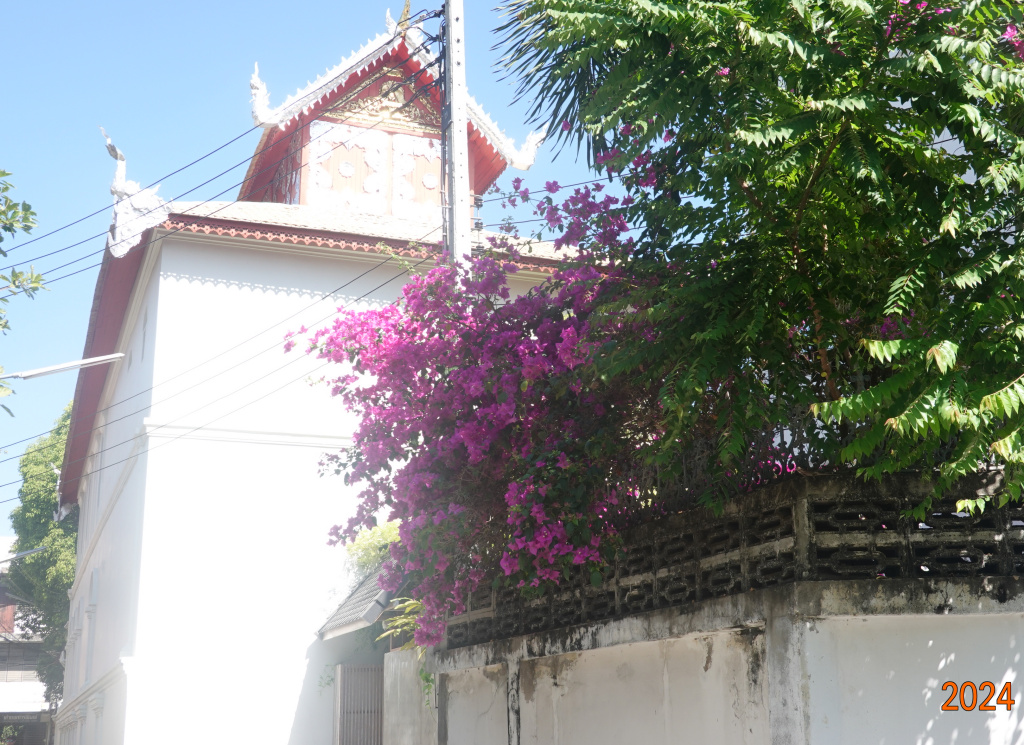
As is common in southern California and also northern Thailand, bougainvilleas are commonly seen adding color and cheerfulness, sometimes in odd places. As I walk through the sois (avoiding the main road and the busy traffic) my first view of the back of Wat Buppharam is the photo on the left and there are bougainvillea within the temple grounds.
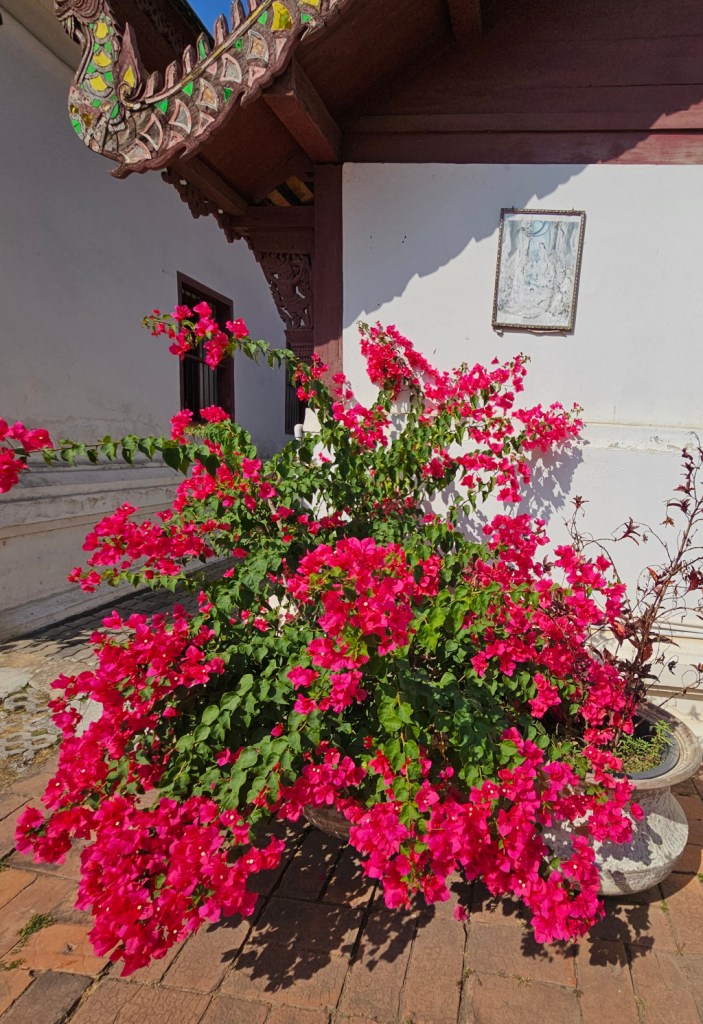
All structures within the temple grounds at Wat Buppharam except the chedi have been constructed or reconstructed since the 1800s.
Main Structure
The main, two-story structure near the entrance was constructed in 1996 in commemoration of the late King Bhumibol Adulyadej’s (King Rama 9) 50th year on the throne. It is of a unique style not at all common in Northern Thailand, constructed on two levels with a ho trai on the ground floor and a shrine on the upper floor. The “shrine” looks like a viharn (worship hall) to me, but is called a “shrine” in documentation I found online.
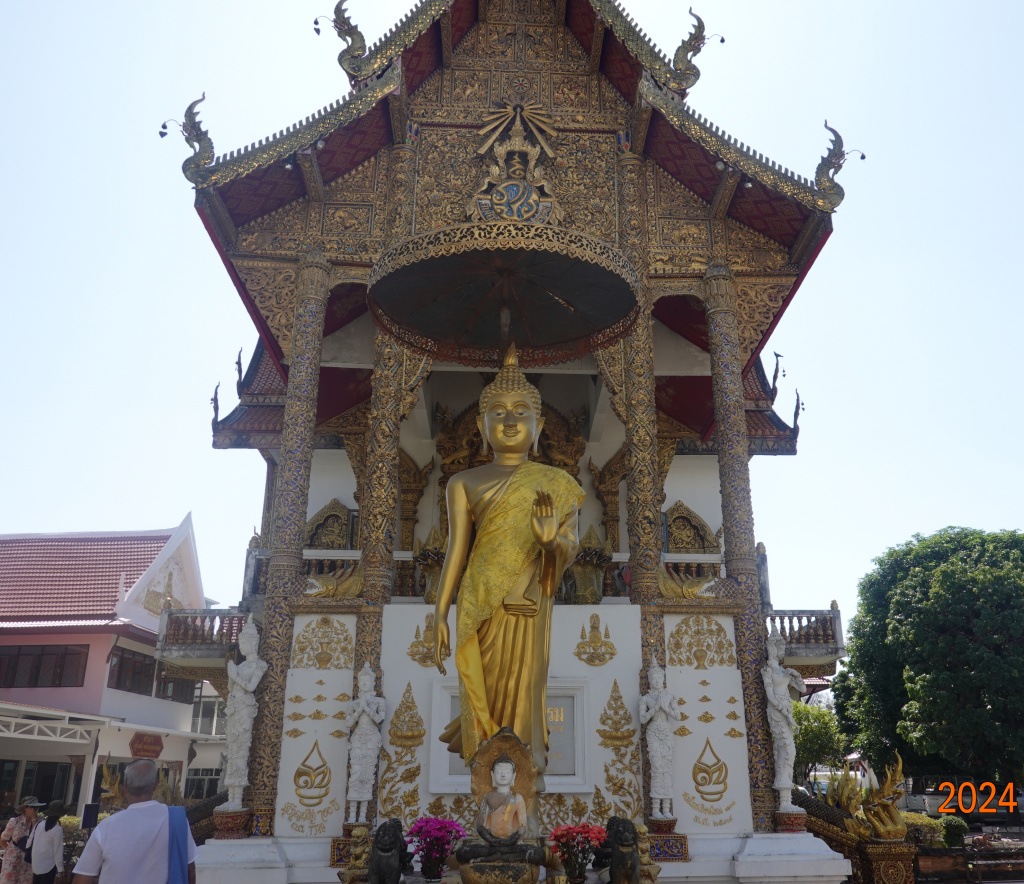
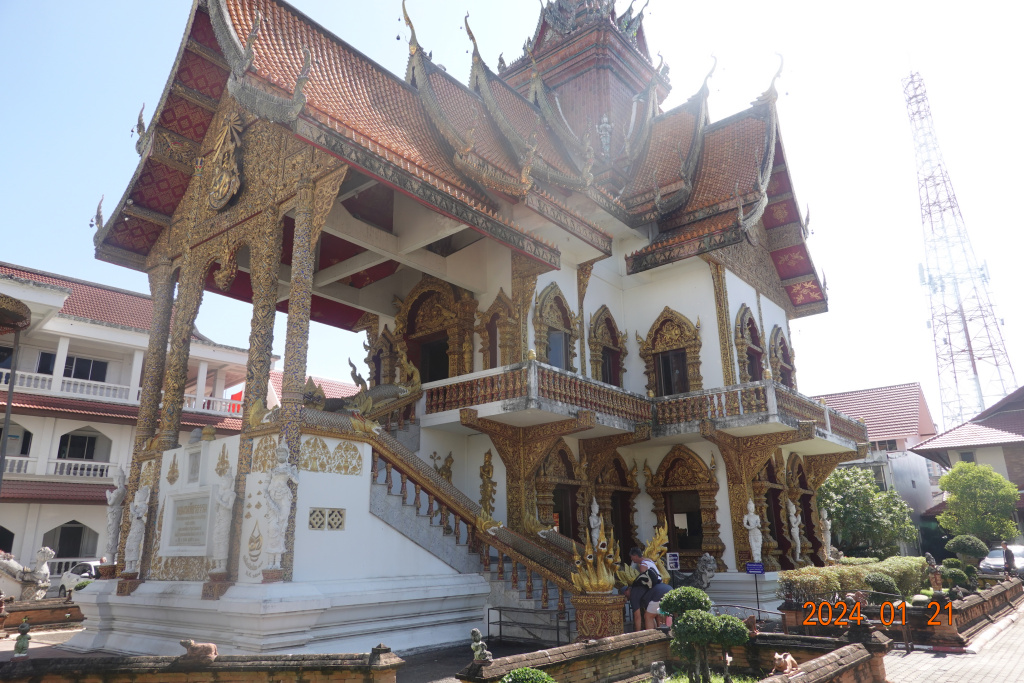
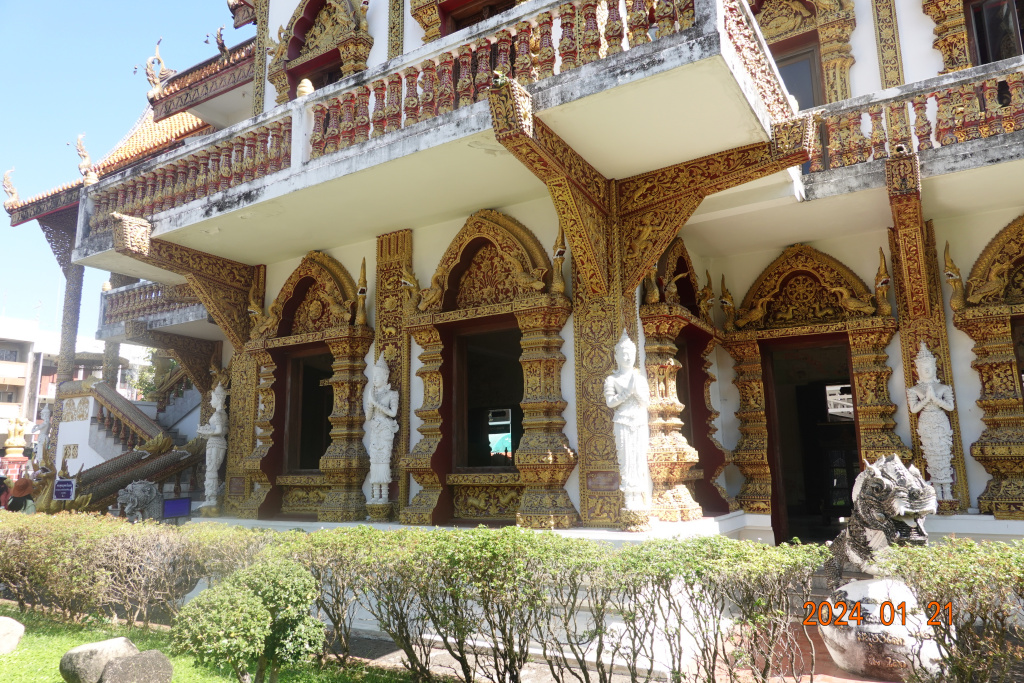
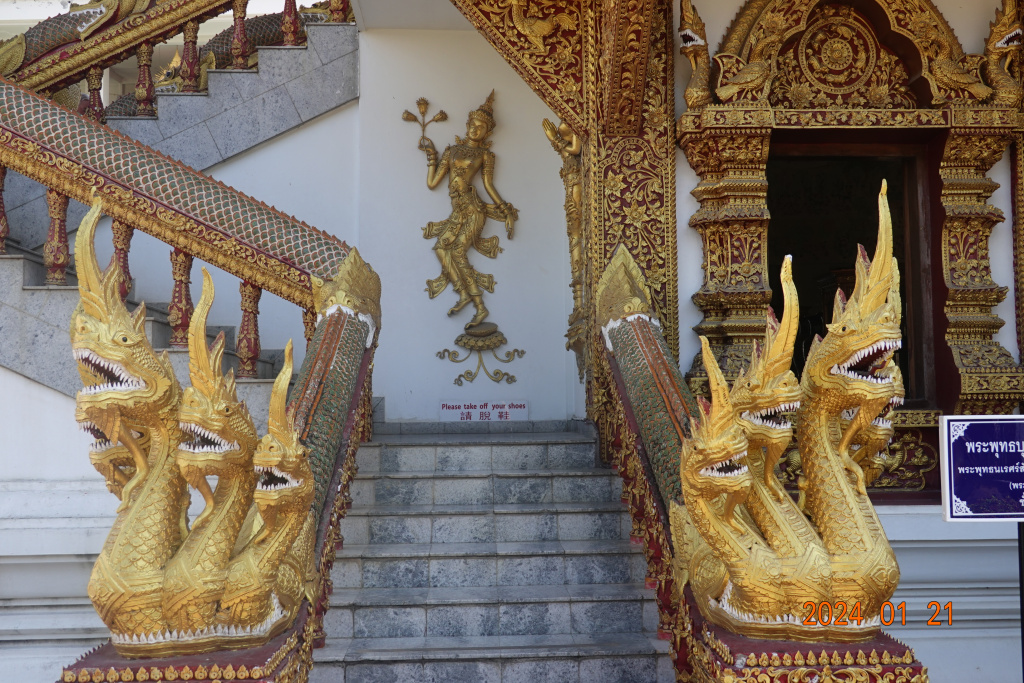
The shrine & ho trai structure is elaborately decorated and the stairs are guarded by 5-headed Naga serpents and a dancing thewada on the wall at the first landing.
The Shrine
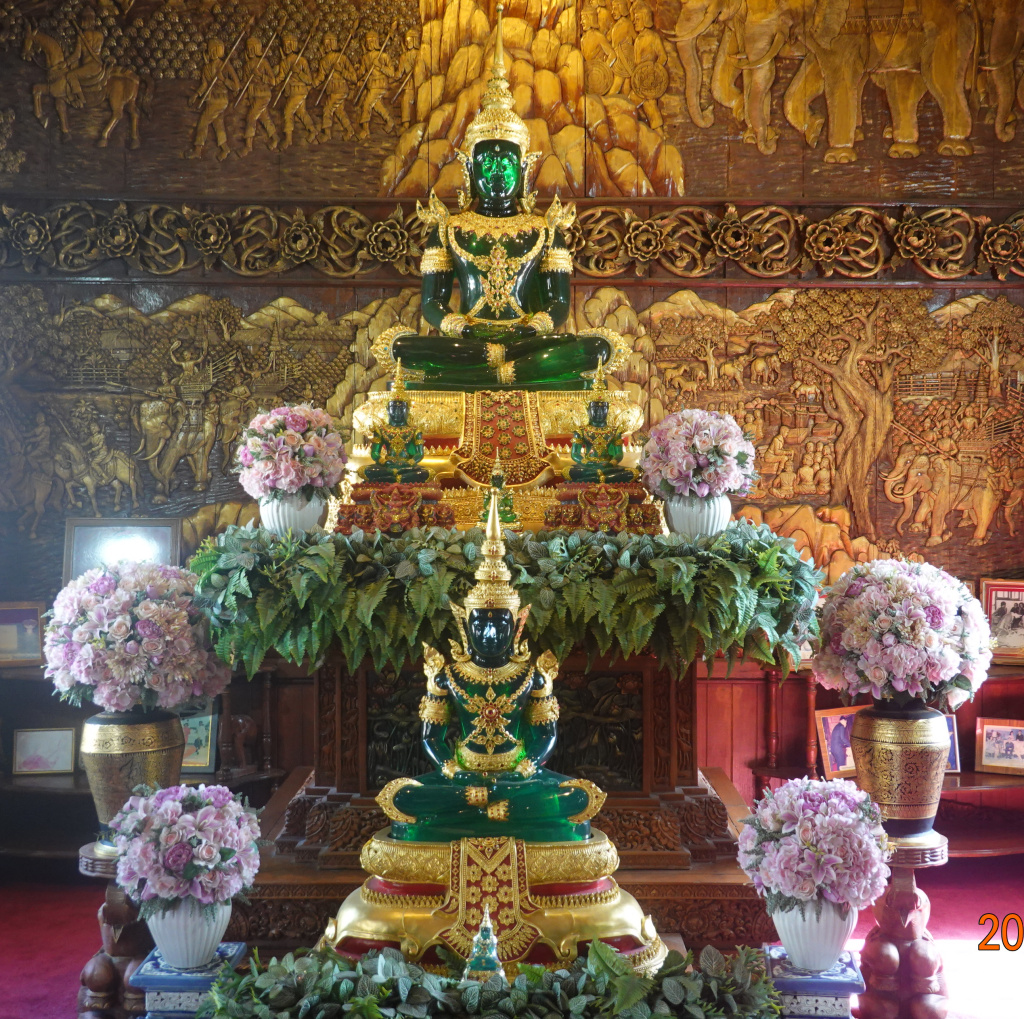
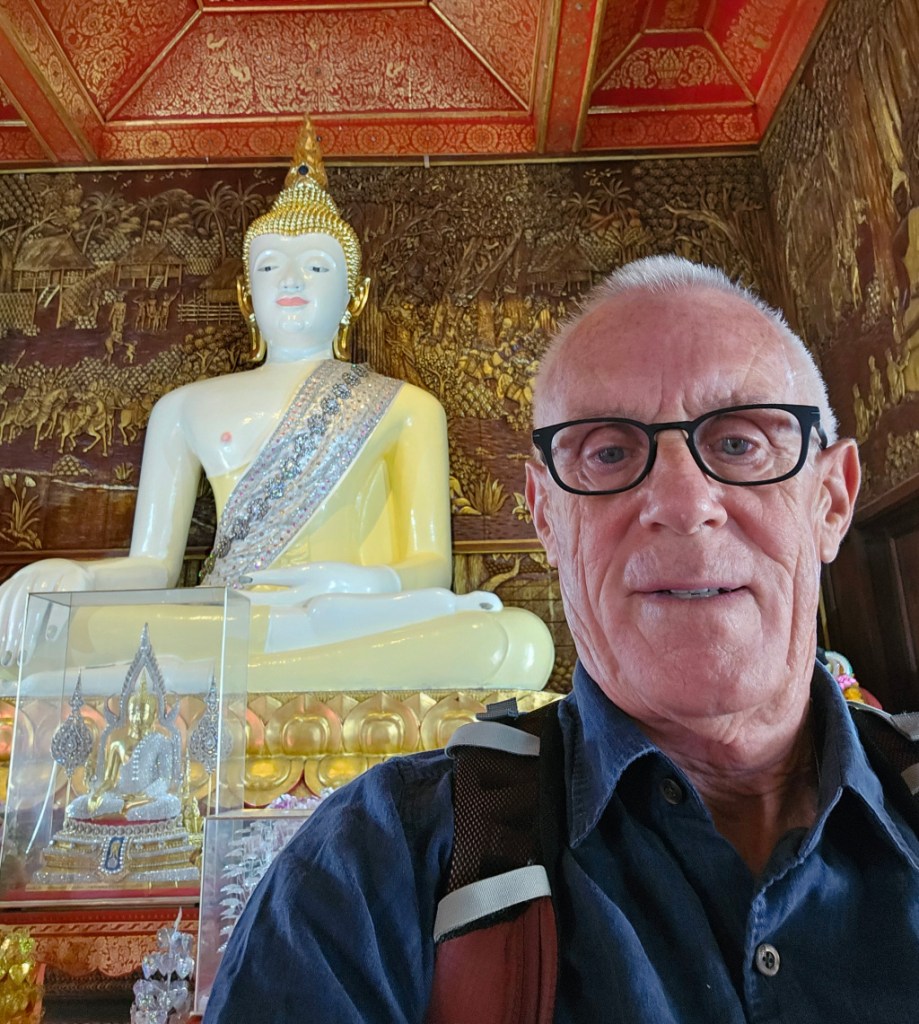
Upstairs in the shrine, the appearance is much like a viharn, but with an alcove on the right for the large teak Buddha and an alcove on the left for two emerald-colored Buddha statues.
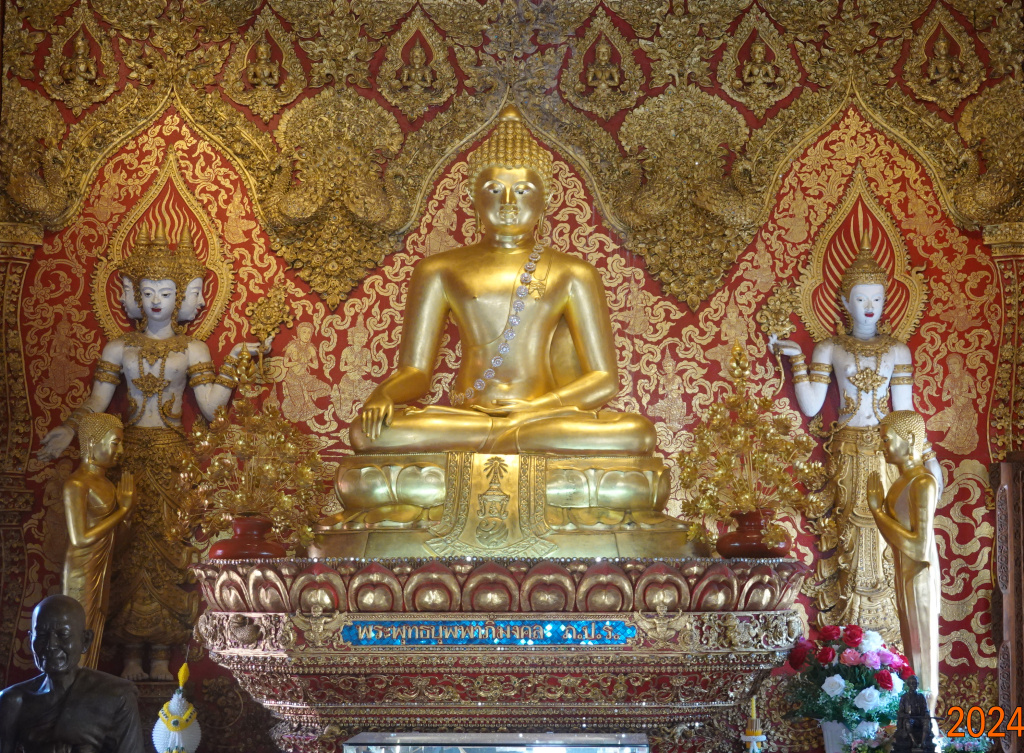
On the left is a replica of the “Emerald Buddha” which is in Bangkok at Wat Phra Kaew in the Grand Palace. On the right is the large teak Buddha – in this photo I am there as well, almost smiling as I try to get both me and the Buddha in the photo.
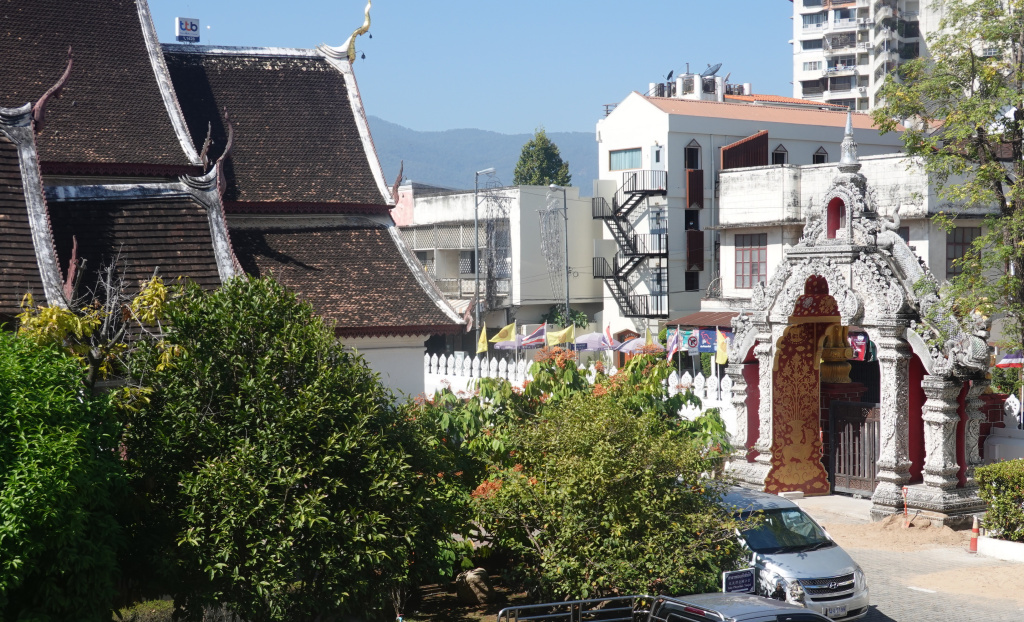
The shrine has a balcony and this is a view of the temple grounds and the old entrance from that balcony.
Ho Trai
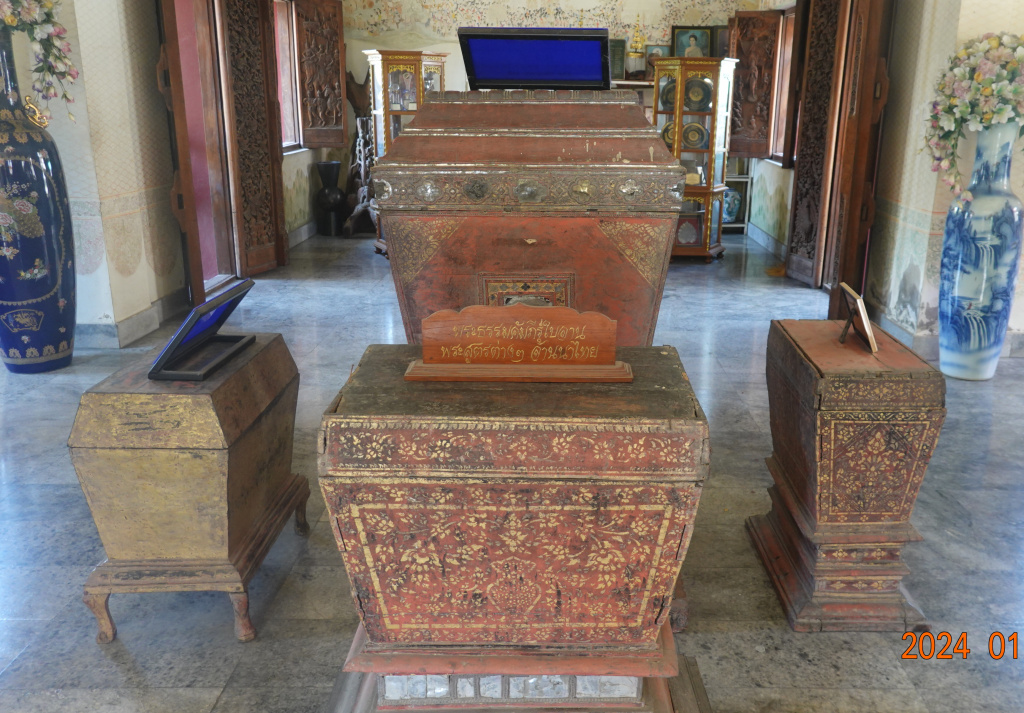
In the Ho Trai downstairs are some very striking large ceramic vases along with the very rustic crypts that hold Buddhist texts and temple documents.
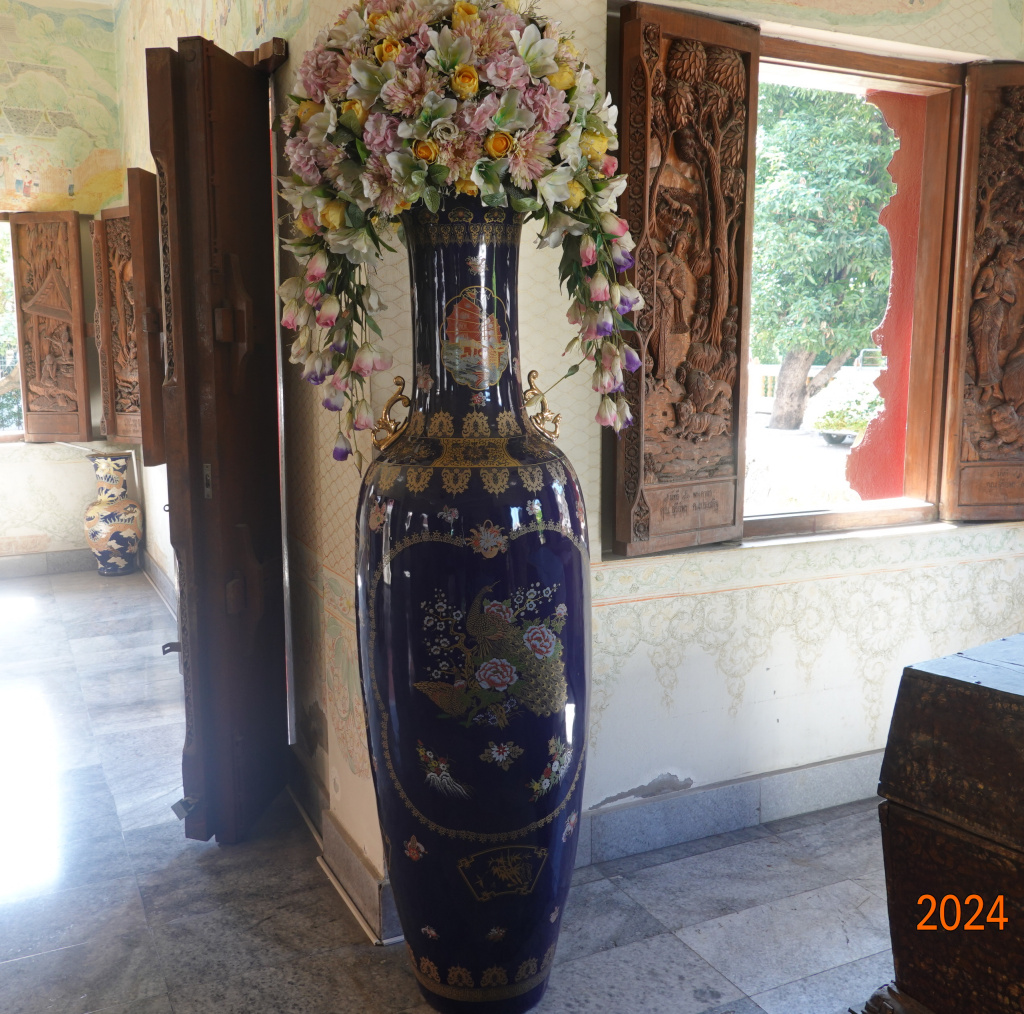
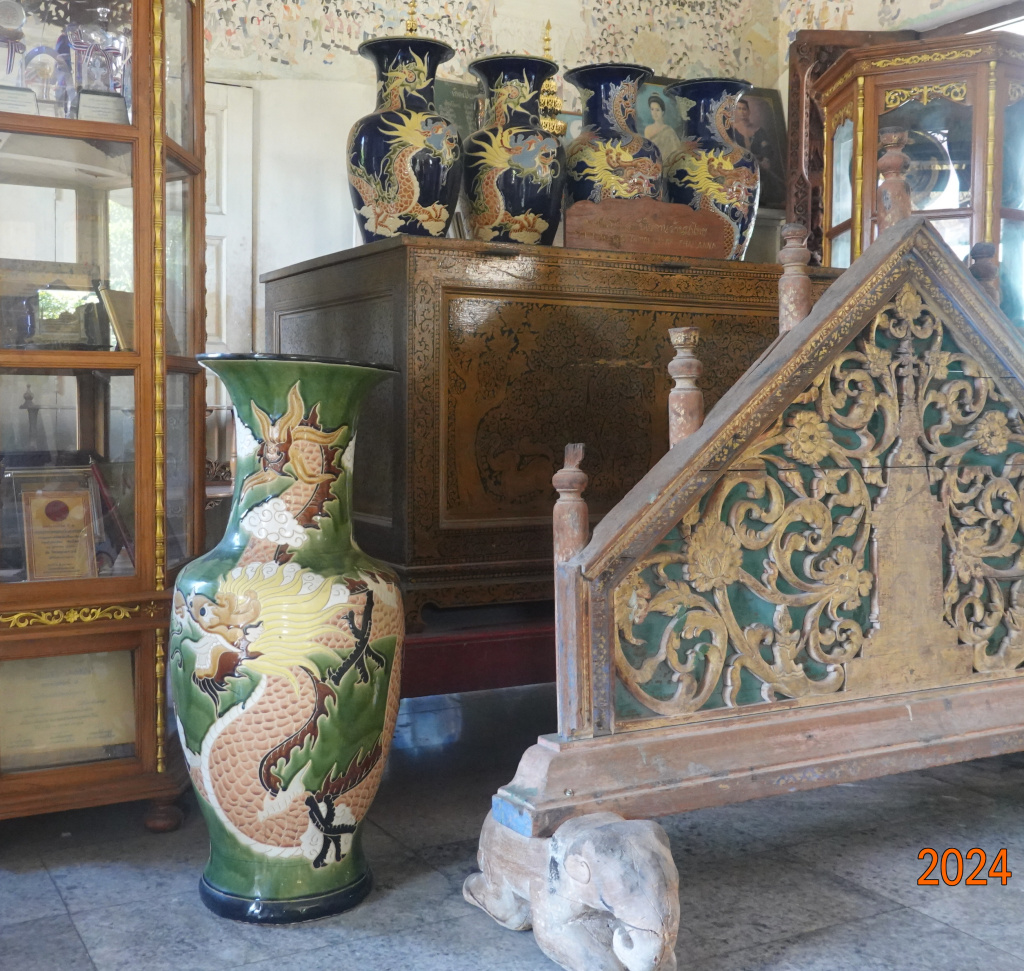
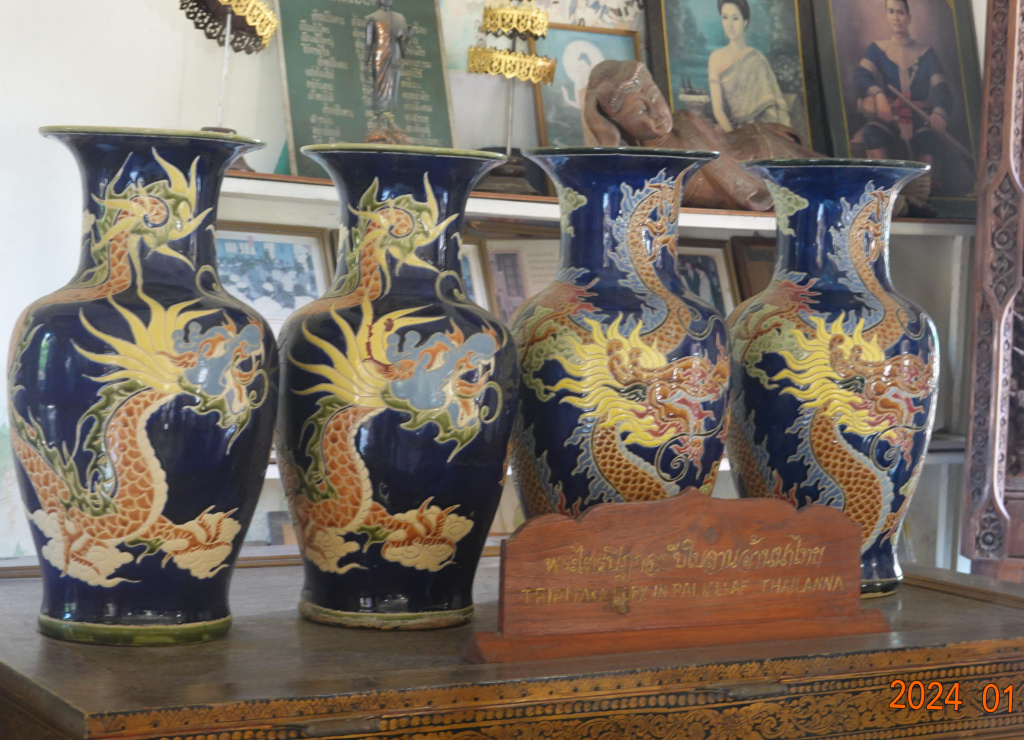
The old, rustic wooden crypts holding Buddhist texts and temple documents are in stark contrast to the shiny ceramic vases.
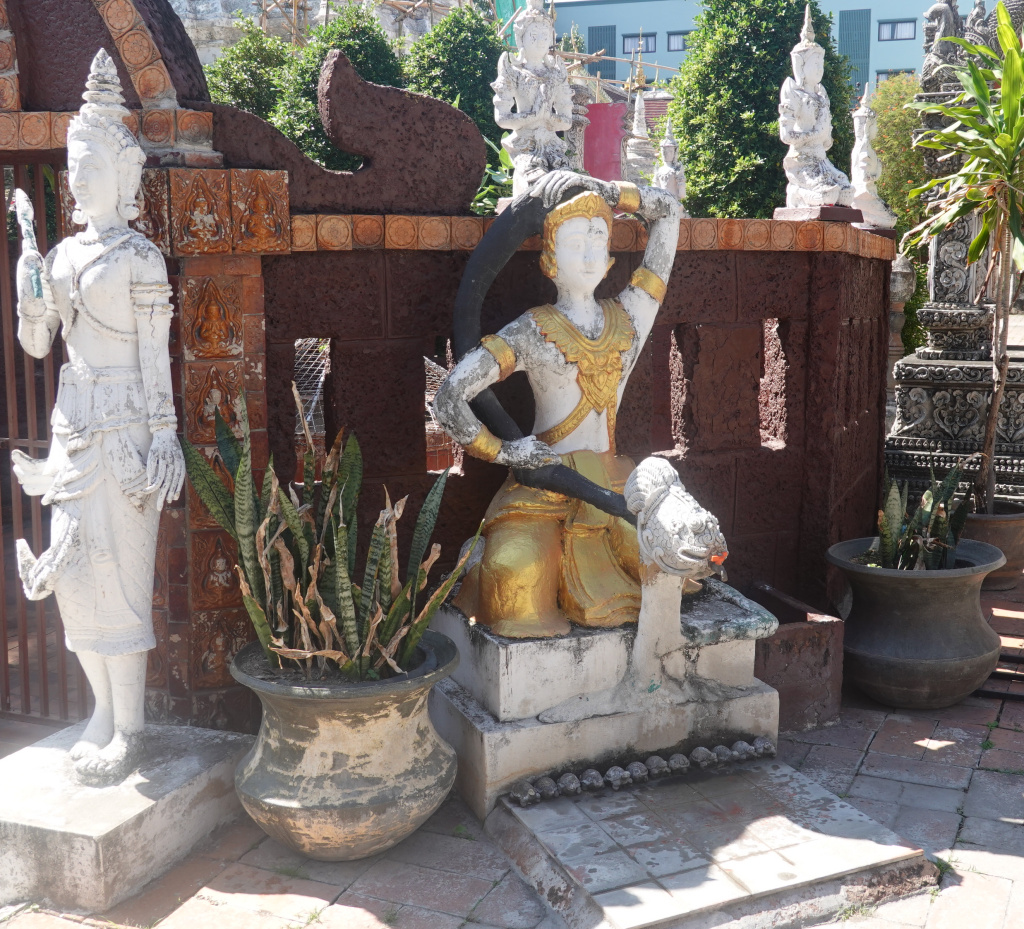
Phra Mae Thorani
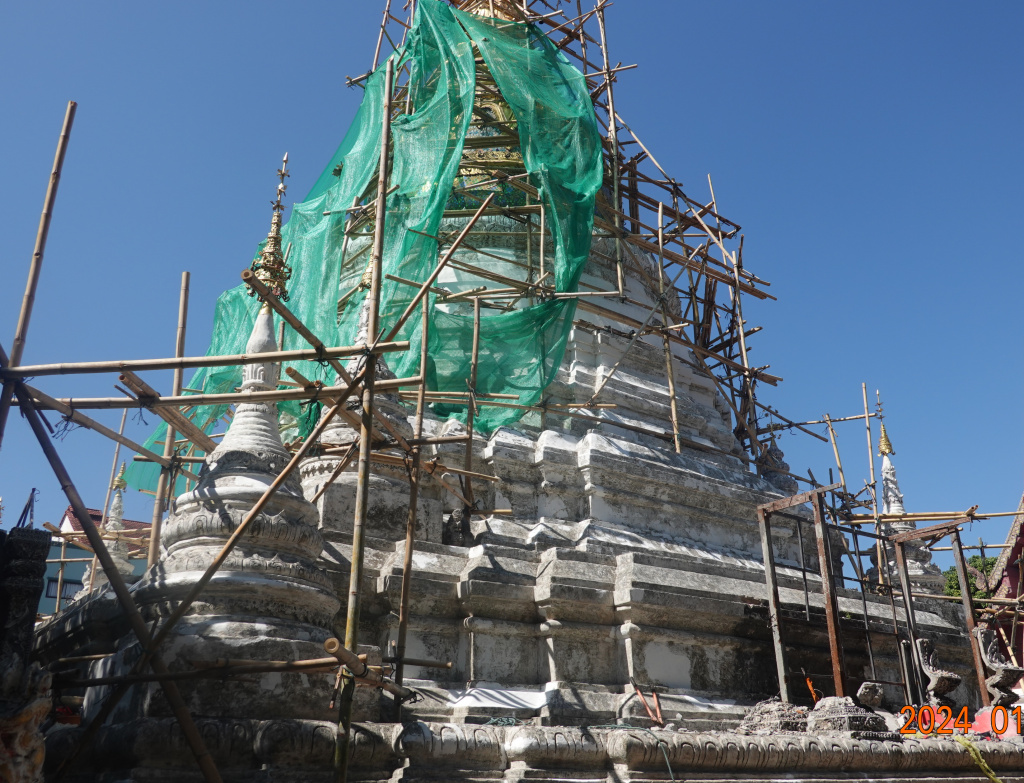
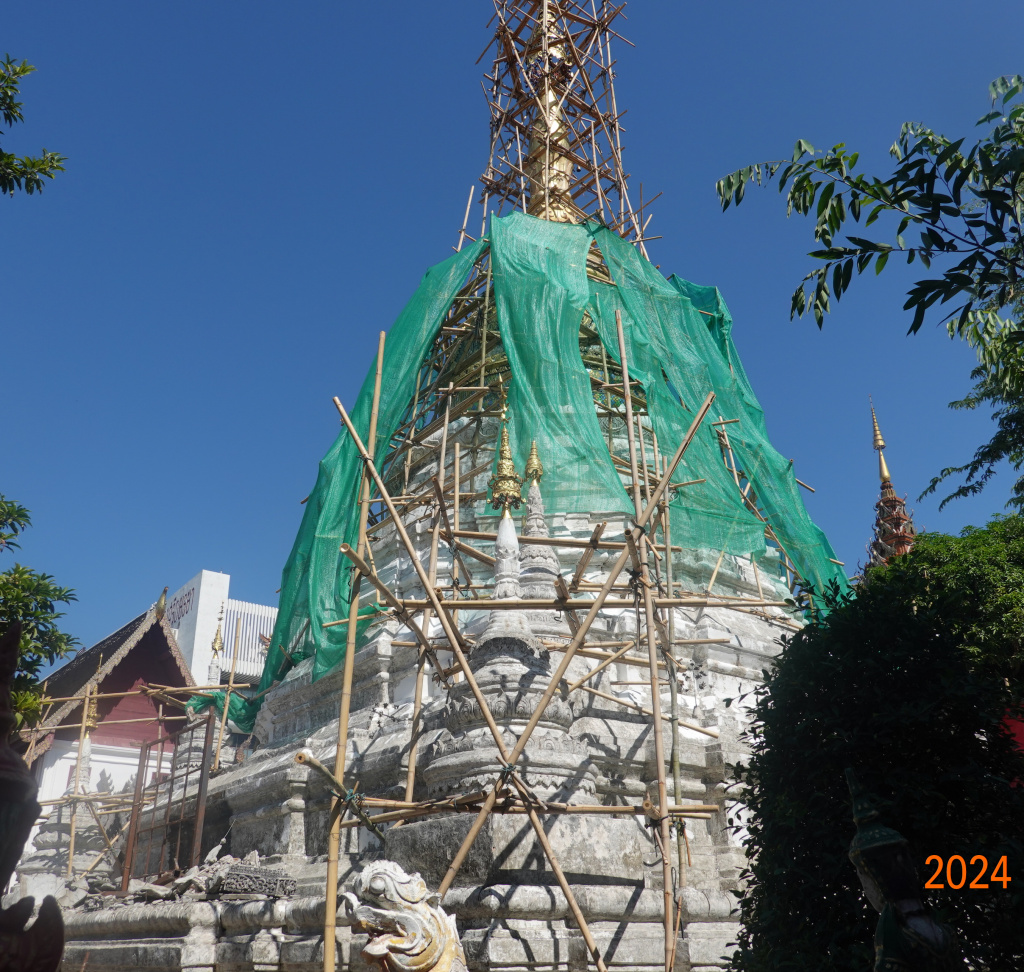
As is common at Buddhist temples, they honor Mother Earth with a statue of Phra Mae Thorani. The Mother Earth statue at Wat Buppharam is in need of restoration or at least a cleaning. This may come because there is much restoration work in progress: the chedi is undergoing a massive restoration and the outside walls are being rebuilt.
Passing the statue of Phra Mae Thorani is an archway to the older part of the temple grounds. This archway appears very much the same as the old, now unused entrance which would have opened to Tha Phae Road. It may have been the eastern entrance when the temple grounds were smaller.
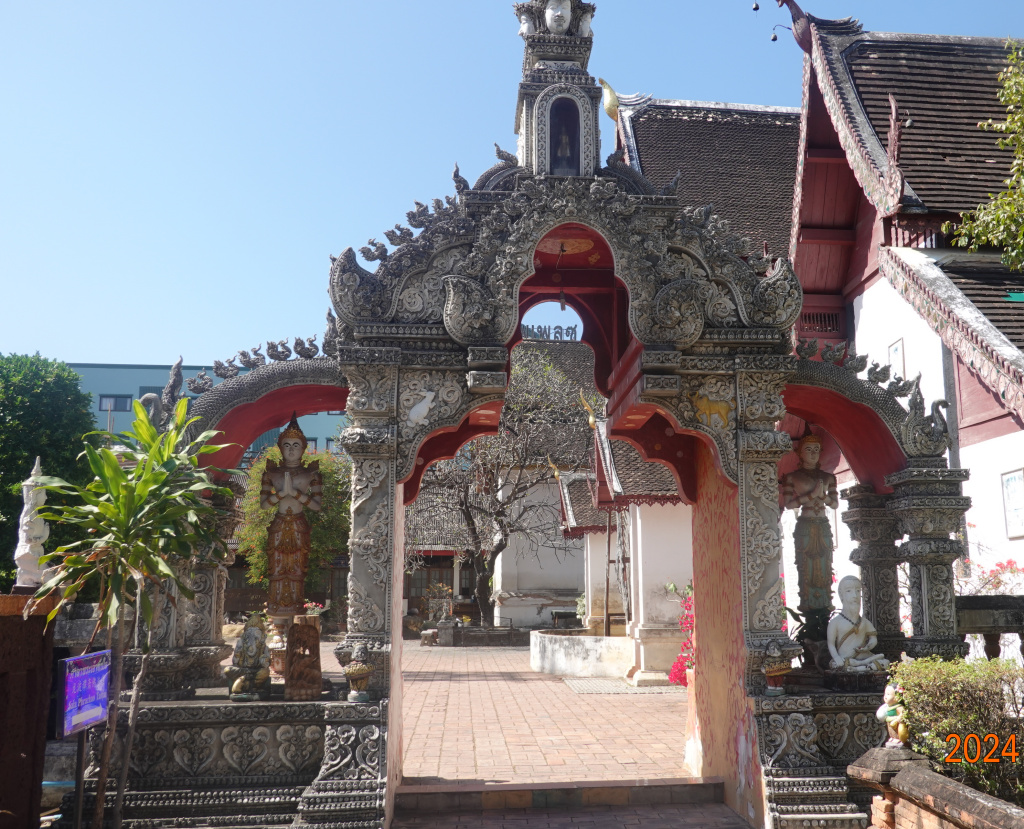
Just past the archway and to the left is the chedi, now undergoing major renovation.
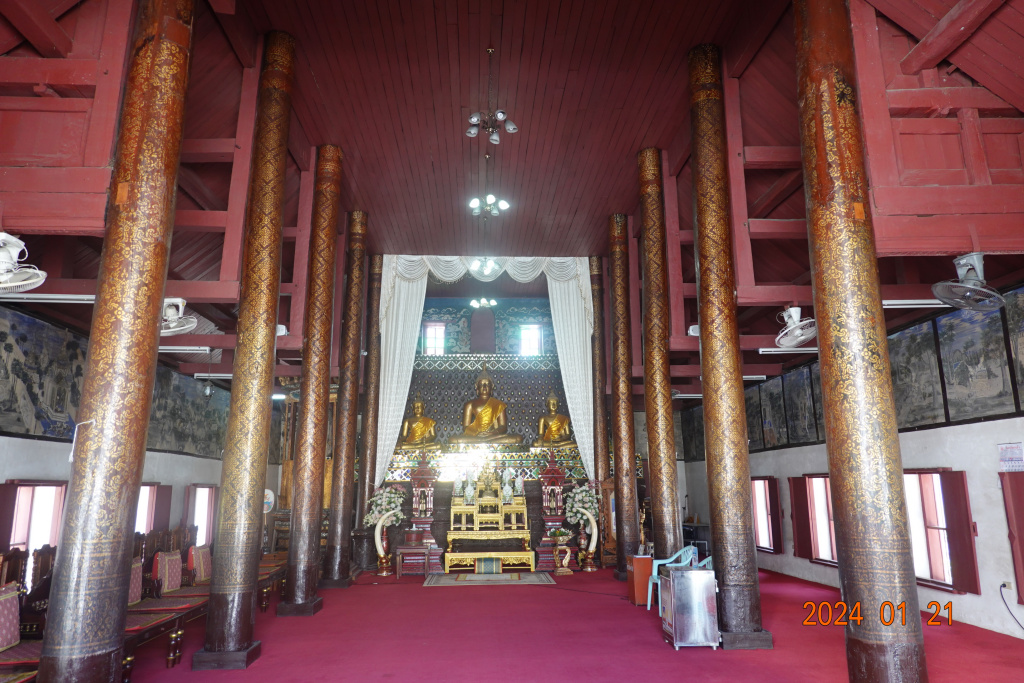
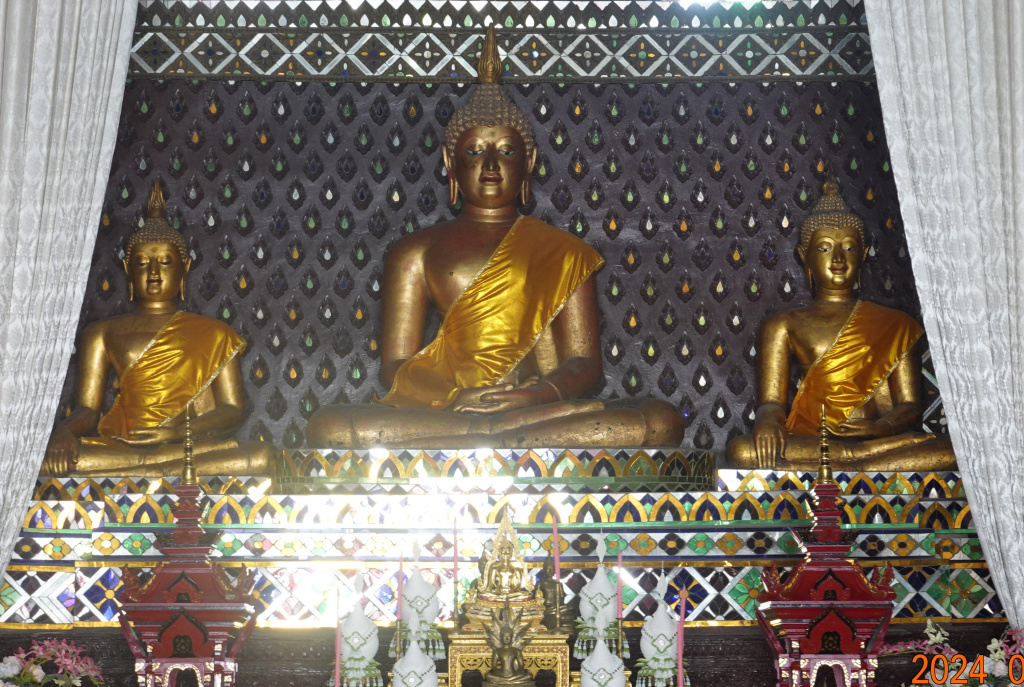
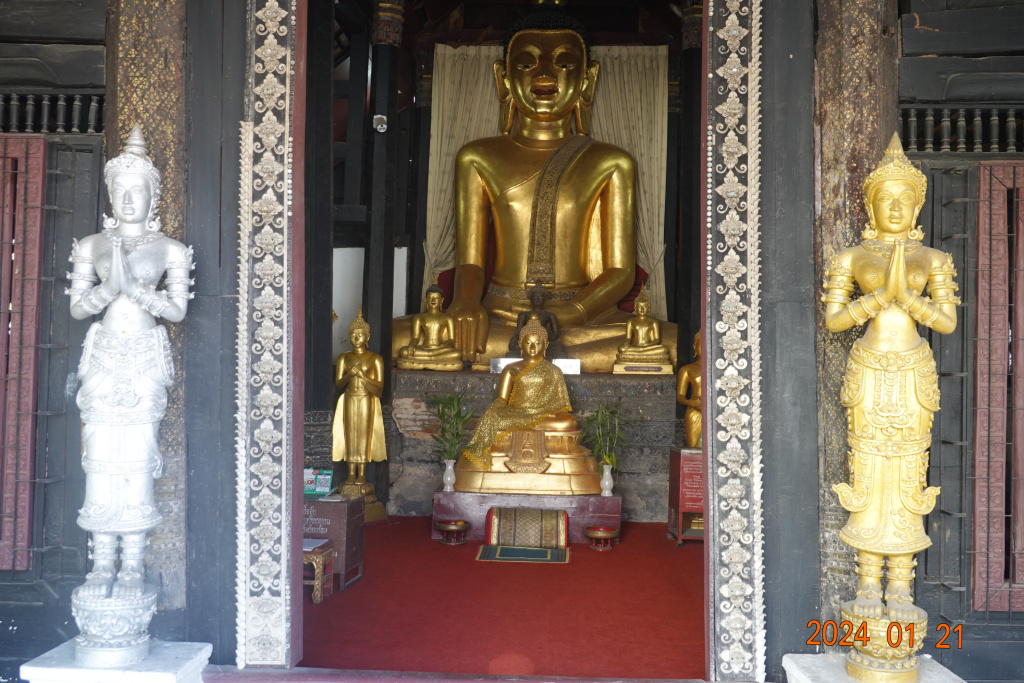
Directly in from what was probably the old entrance is a very nice, rustic, but nicely decorated smaller viharn (worship hall). The inside is simple and elegant.
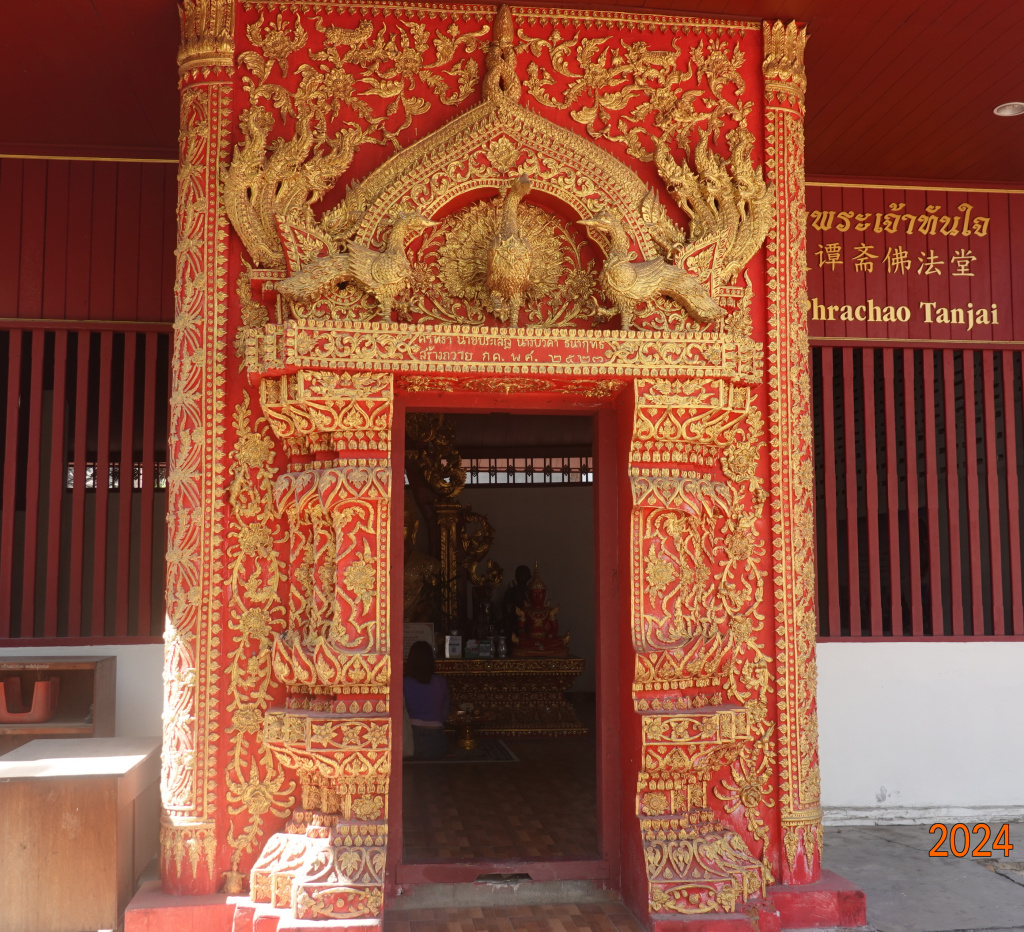
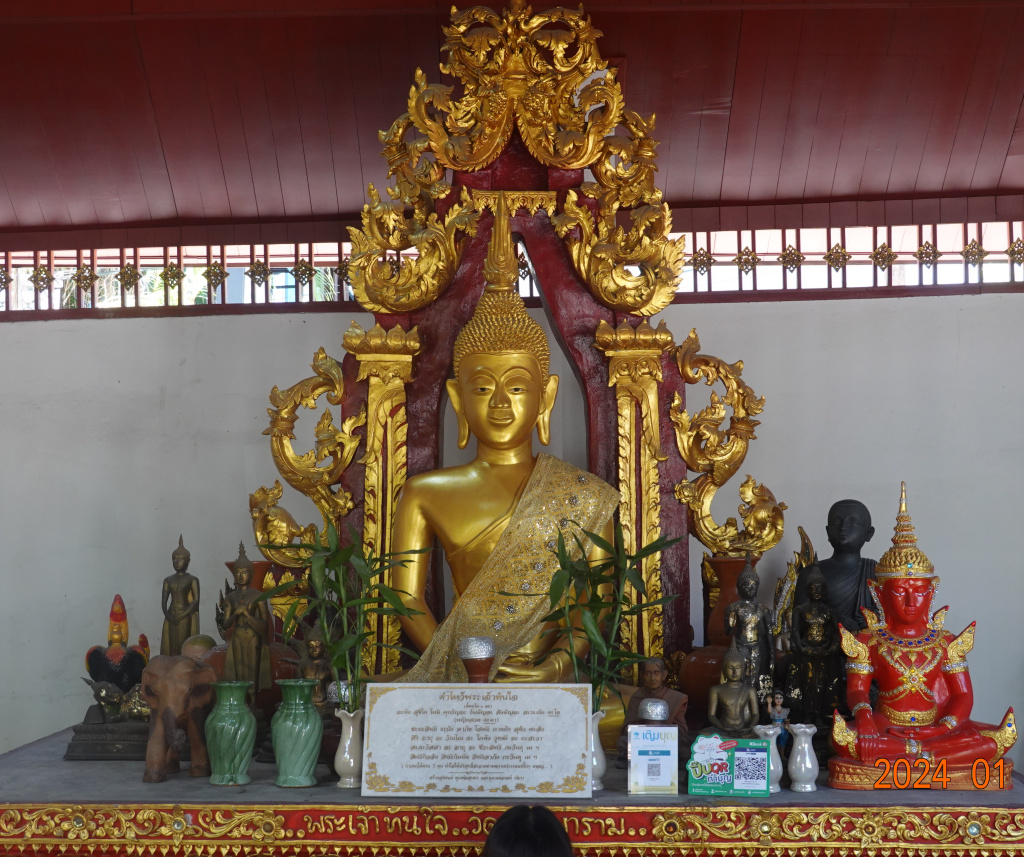
Next to the smaller viharn are two other old structures. One is a larger viharn, much more elaborate than the smaller, and fairly large in design.
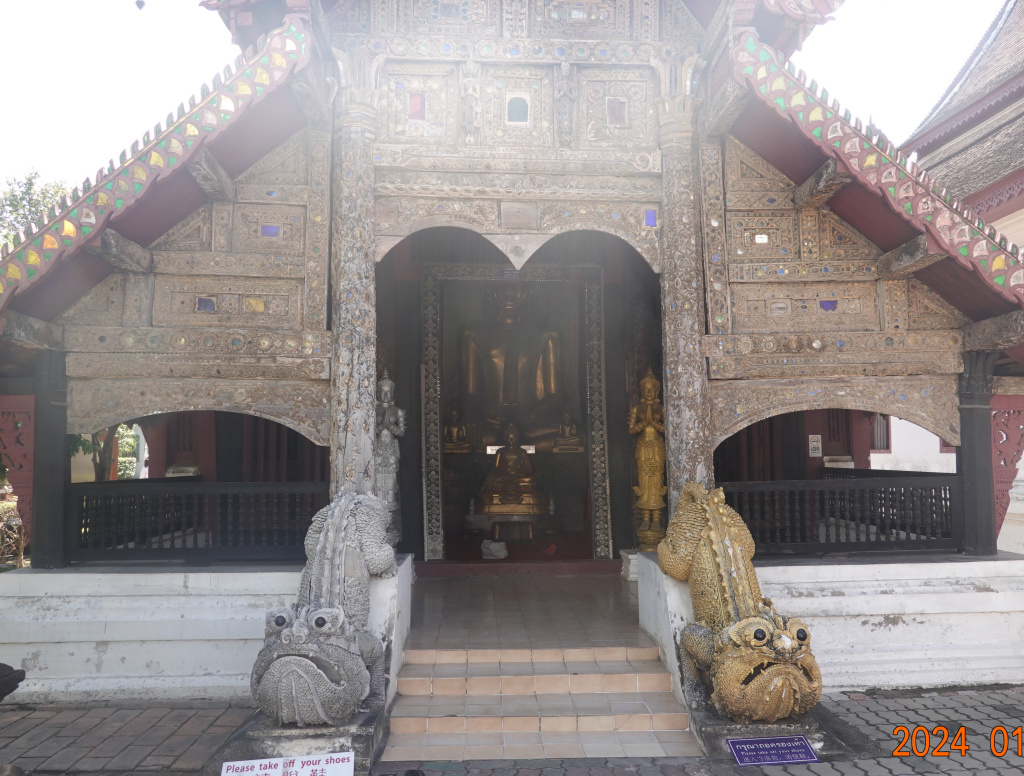
And by this viharn is another structure, designed much like a viharn, but the entrance is guarded by two mythical lizard creatures called a mom (pronounced as if it were spelled moam with a long “o” sound). I highlight this because consistently at temples where there is a ho trai (library), the ho trai is guarded by mom creatures. It could be that this structure was a ho trai at one time, and that function was moved when the two-story structure was built in 1996.
The renovation has extended to the outer wall of the temple. When I go to Story 106, I pass by Wat Buppharam, so I have been watching the restoration of the outer wall. I’m looking forward to seeing the full extent of the restoration and renovation work at Wat Buppharam when I return to Chiang Mai in November (if all goes well).
Next: Temples on Tha Phae Road 2 – Wat Chetawan

 James the Intrepid Pilgrim
Reminded me to trim our bougainvillea
LikeLike