Wednesday, 10 January 2024
Return to Wat Phra That Doi Kham
After my adventure to Lamphun I decided to return to a temple just a little outside Chiang Mai to the south and slightly west. I last visited Wat Phra That Doi Kham four years ago in 2019. Being more than 12 kilometers away, I arranged for a driver to take me there, wait while I viewed the temple, and return me to The 3-Sis.
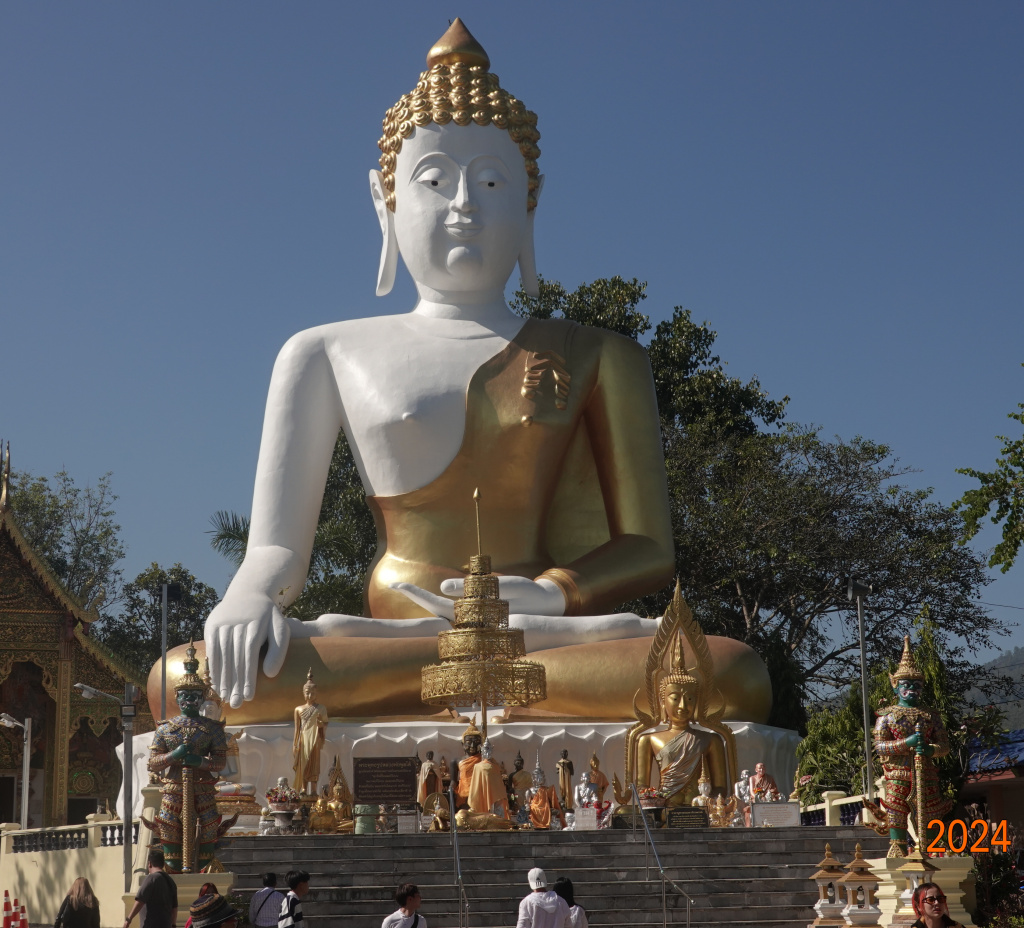
Wat Phra That Doi Kham, which translates to Golden Mountain Temple, is a temple on top of a forested hill with a large presence, but not a strong tourist following. The large presence is twofold: First, a large tall standing Buddha statue that can be seen from several kilometers away; second, a large, 17-meter (55 feet) tall seated Buddha, the largest seated Buddha in the Chiang Mai region. I have learned that this temple is where Thai people go to pray for good luck in their lives, quite often for good luck with the lottery. There are only a few signs with English, another indication that few tourists visit this temple. The temple was originally constructed in 687 during the reign of Queen Jamdevi of Lamphum by both of her twin sons, several hundred years before the city of Chiang Mai. All of the structures except the chedi have since been rebuilt.
As I posted a couple of days ago, when the temple name includes “Phra That,” Phra means the temple holds an honorific Buddha image, and That means a relic. So Phra That in the name tells that there is a relic of the Buddha in the sanctity of the temple. I have found no more detail about this relic at Wat Phra That Doi Kham, leaving me very curious.
Seated Buddha
Right at the entrance to the temple grounds is the large 17-meter high seated Buddha.
Durian Statues
Near the large seated Buddha I noticed these very large statues of durian fruit. A fully-grown durian is about 1 foot long. Unclear why large statues of fruit would be here, but whatever the reason, there are two statues of durian near the large seating Buddha.
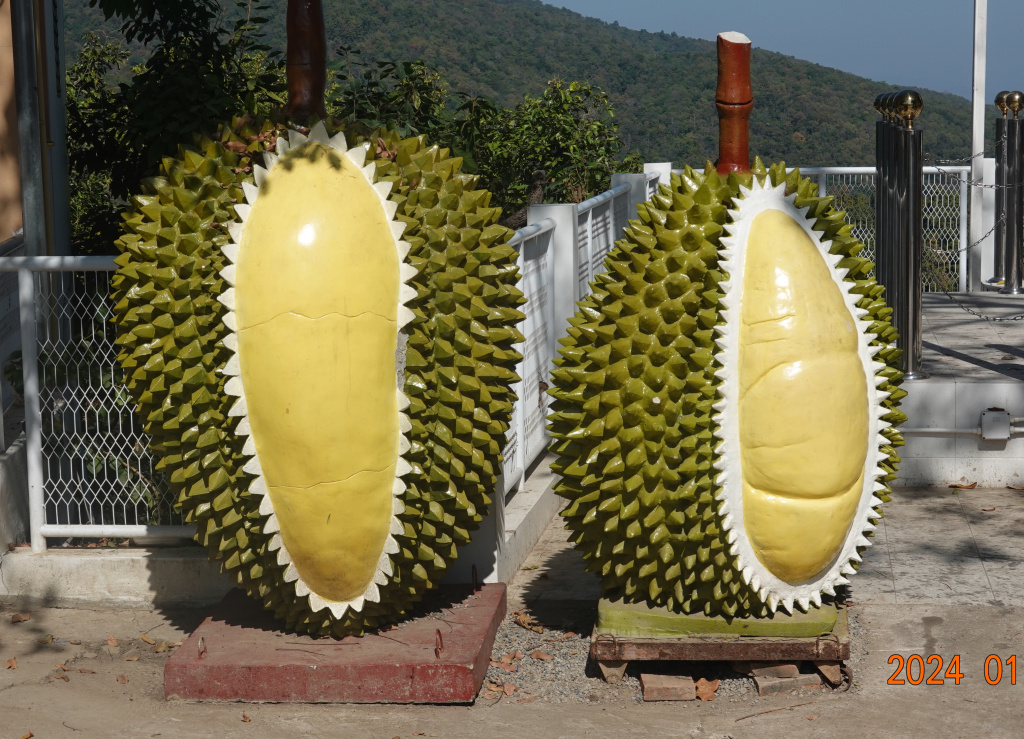
Durian is banned in many places in Thailand because it has an extremely peculiar, pungent odor often compared to Limburger cheese but less pleasant. Some people have even compared its odor to rotten onion, stale socks, or raw sewage. Thus, the fruit is banned from hotels, public transportation, and flights in Thailand. But durian is also very popular. It is often said that if you can get past or somehow ignore the odor, the fruit is delicious and highly nutritious. I just do not think I can get past the smell – smell and taste are closely linked.
The foul odor of durian is caused by a rare amino acid called ethionine. Earlier research blamed the odor on a chemical compound called ethanethiol, but that research was not clear how the fruit was producing it. The new study, published in the Journal of Agriculture and Food Chemistry, finds that, as a durian ripens, its ethionine content increases, releasing the smell.
Chang Pu Majestic Elephant
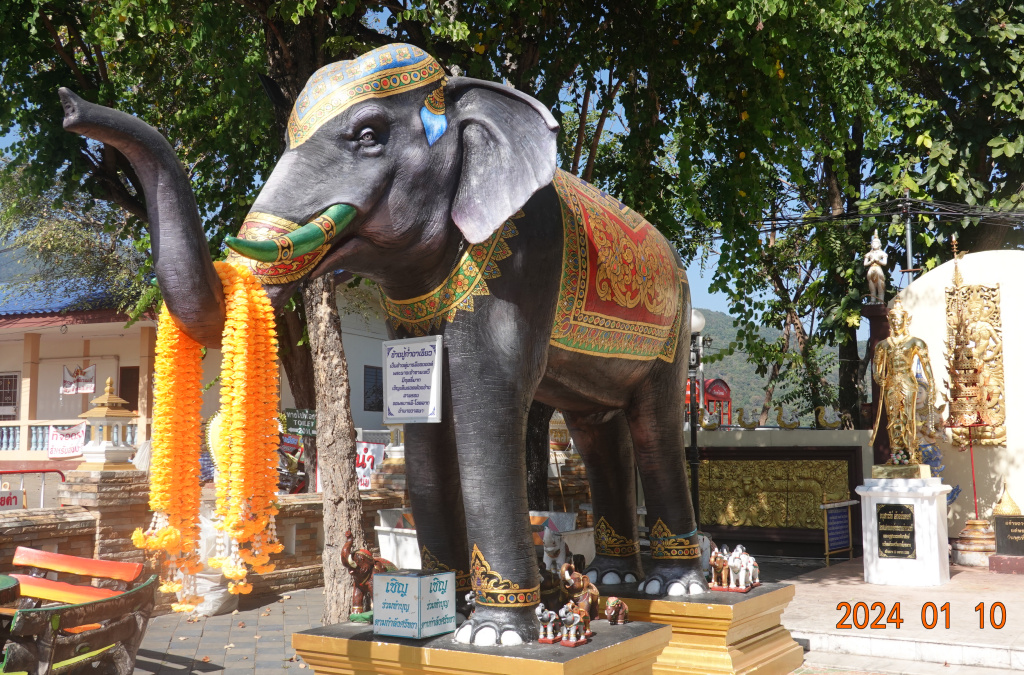
Almost right by the durian statues is this statue of Chang Pu, the majestic elephant. I love the statue and can find nothing of the story of this majestic elephant. This elephant, like the Bpu Kum Ngaa Keo elephant at the Elephant Memorial in Lamphun, has green tusks.
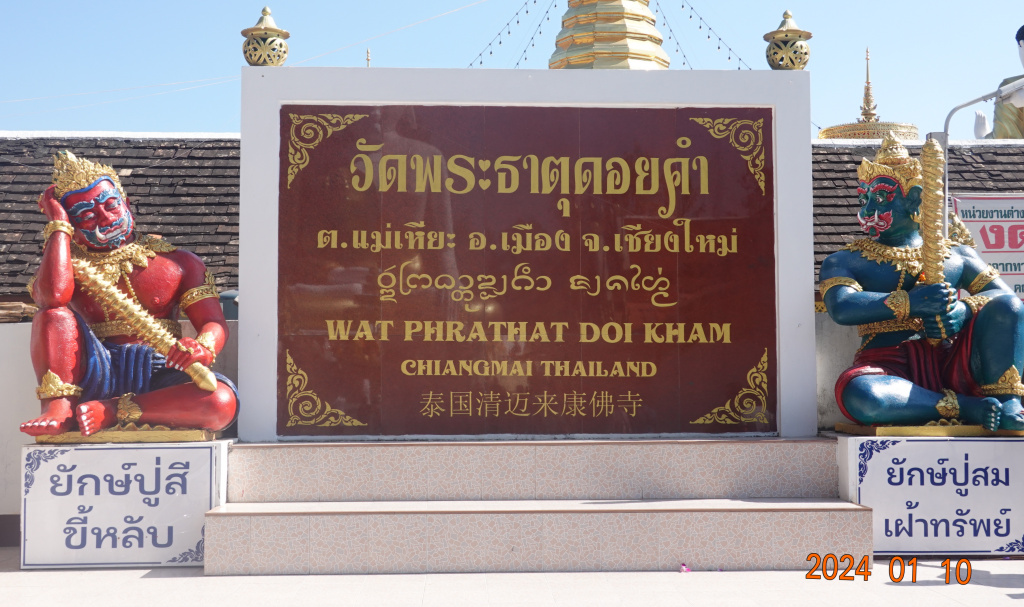
The arrangement of this temple is different than most. The large seated Buddha, a viharn (worship hall), the statue of the majestic elephant, and the durian statues are outside the actual temple “compound.” Passing the Chang Pu statue, I got to the temple sign guarded by two lazy-looking yaks.
Offering for Luck and Gratefulness
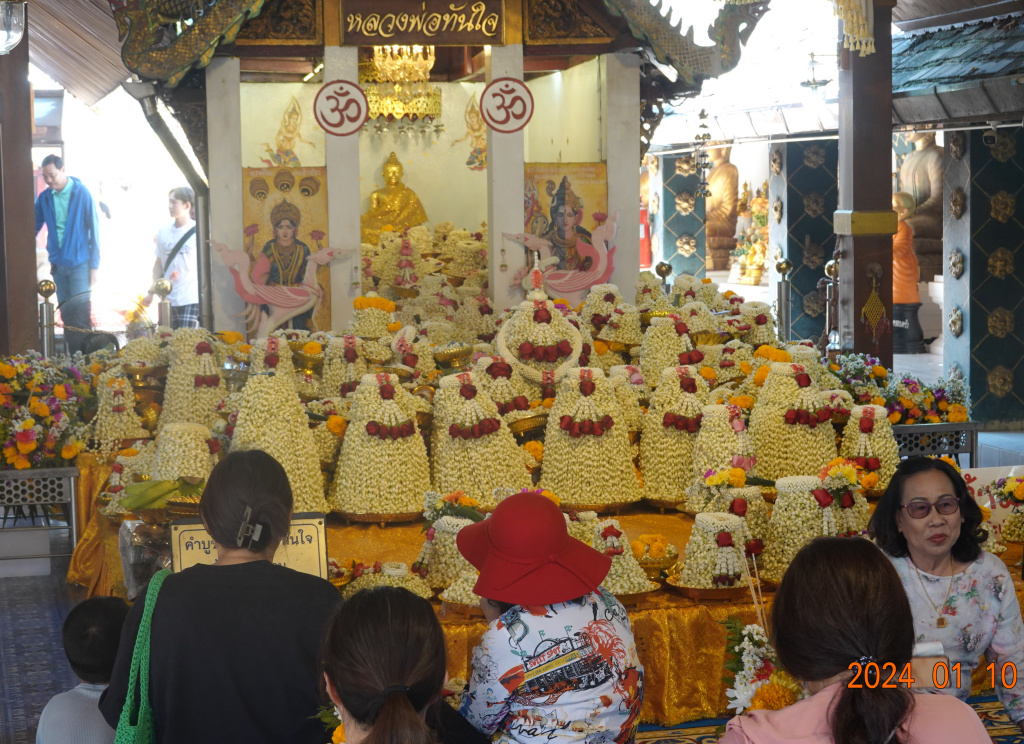
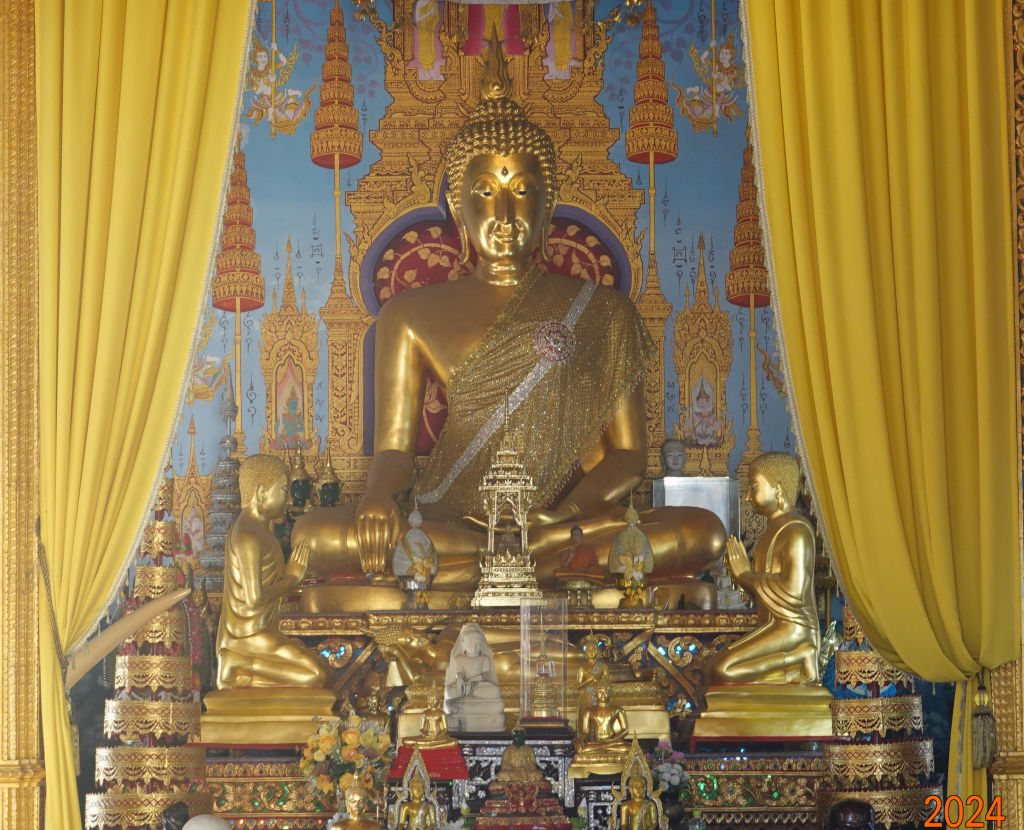
In the temple itself, there is also “Luang Por Tun Jai,” the Buddha image of success which people come to worship and make a wish. If your wish comes true in 3 months, you must return to fulfill your promise with at least 50 jasmine garland flower offerings. There is a large pile of garlands on the table in front of the small chapel with the Buddha statue. The two times I have been here, the room is packed with people praying.
The Overlook
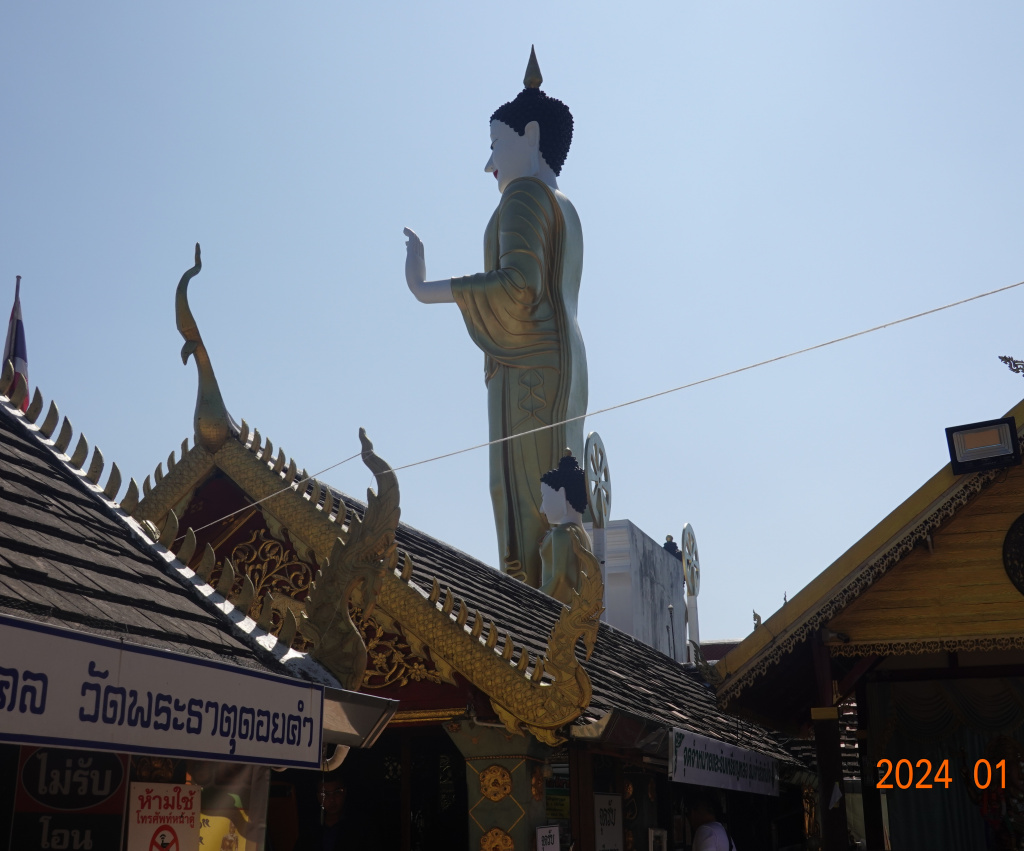
Past the offering room, there is something of another entrance to what I think of as the overlook – a fairly large space near the edge of the mountain overlooking the forest and Chiang Mai. As I approached this overlook, I could see the large standing Buddha from the back.
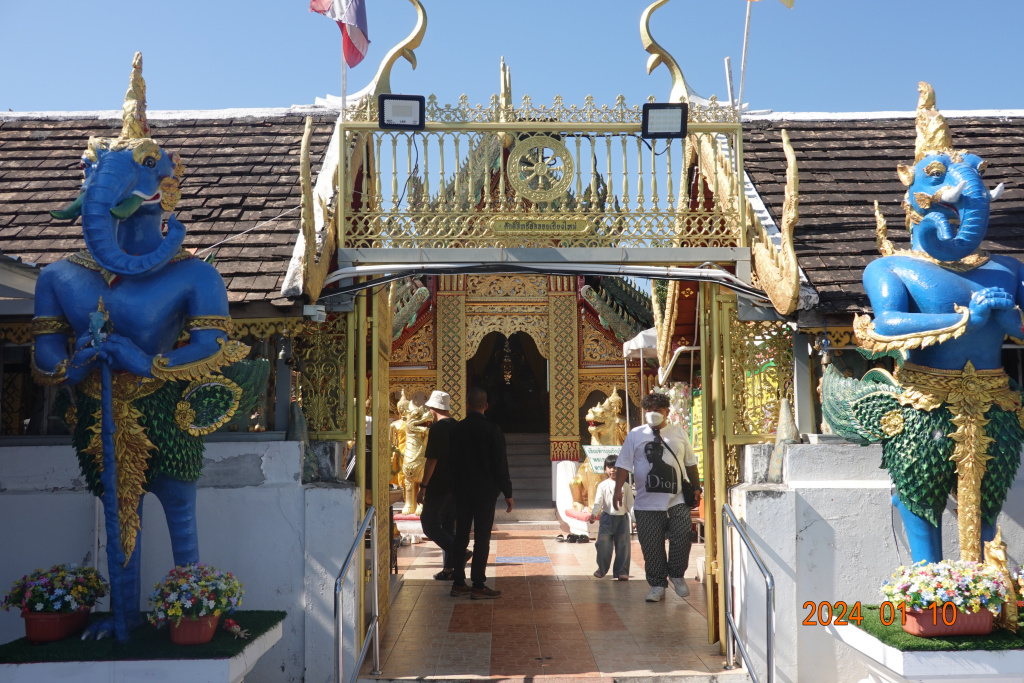
Passing through the entrance to the overlook and looking back, the entrance to the main temple grounds is guarded by two elephant-man creatures. I do not know what these are called.
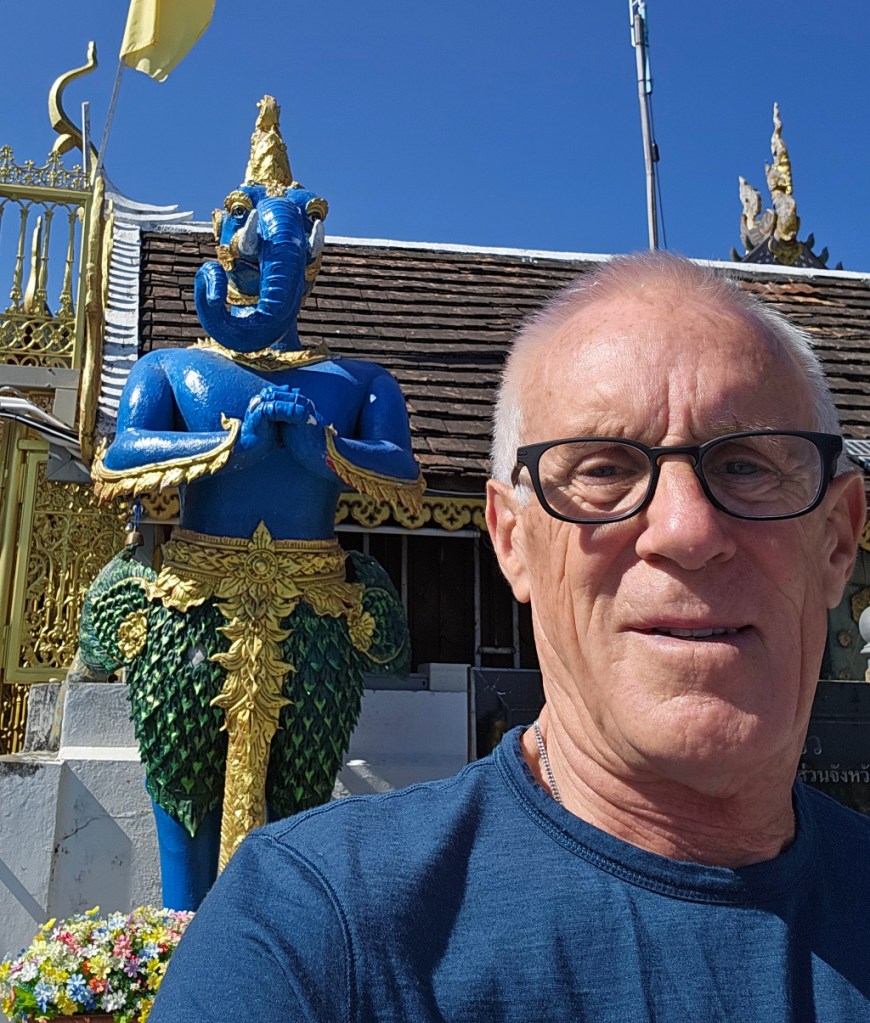
And, yes, I was really there…
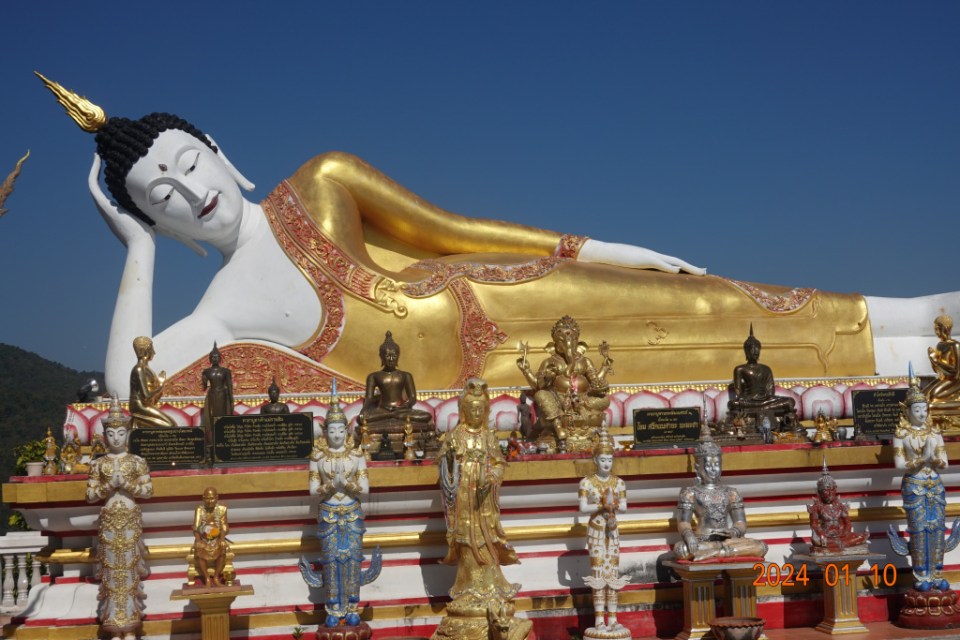
To my left is the reclining Buddha, not nearly as large as the 46 meter (150 foot) reclining Buddha at Wat Pho in Bangkok, but still large at over 10 meters (33 feet).
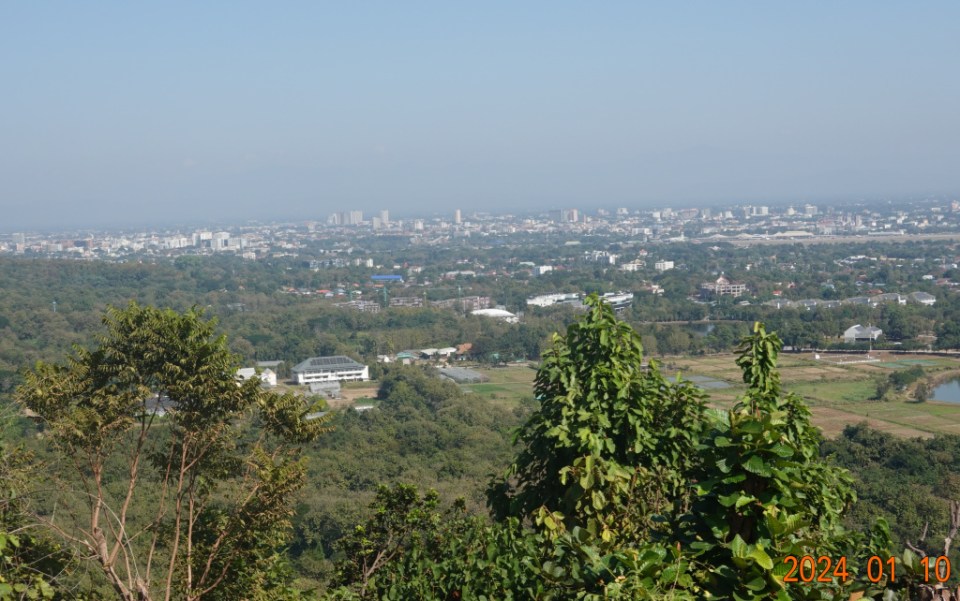
From this overlook, you are looking over the forested mountain and Chiang Mai below.
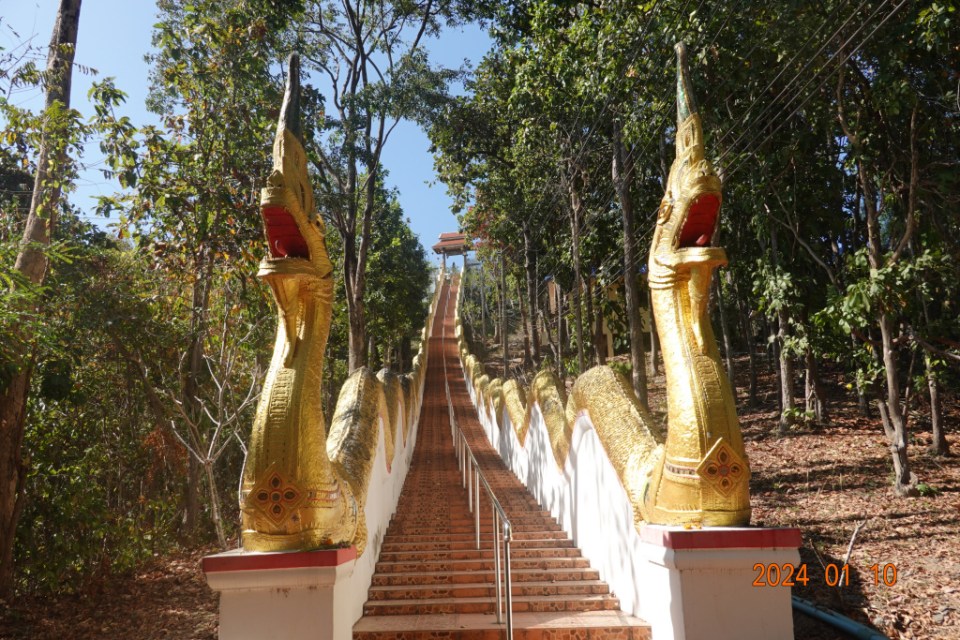
The last time I was here, we (my friends Tom and Julie from Sydney and I) had heard that the Naga Stairway here had over 700 steps and decided not to go down and back up. Today I walked down to the landing in the forest and walked back up, counting the steps. I got 189 steps and I may have lost count once or twice. Not even close to 700.
Standing Buddha
It is difficult to get a good photo of the large standing Buddha because the overlook is not deep enough. I backed into the farthest corner and got a photo, then a selfie to prove again that I was here…if there was doubt. A drone with a camera might give a better photo; I know little about drones, and think I have heard that their use in Thailand is highly restricted.
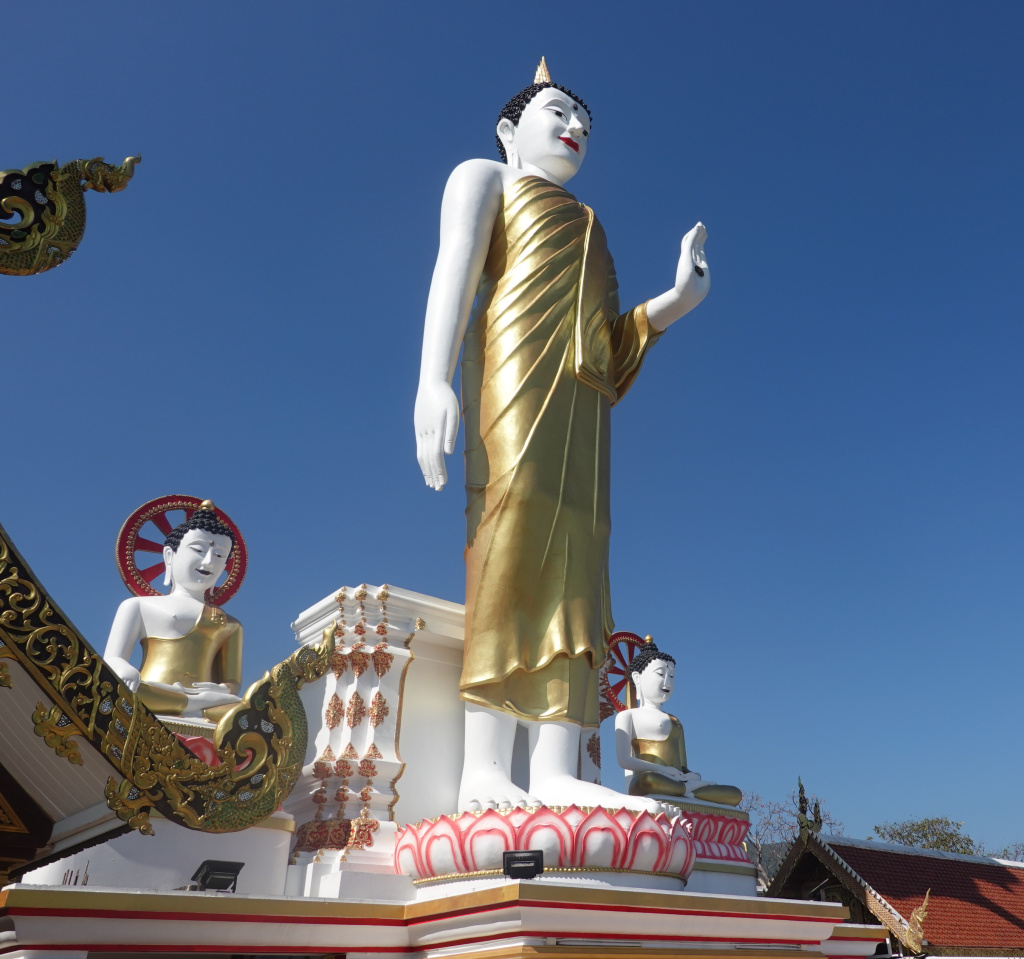
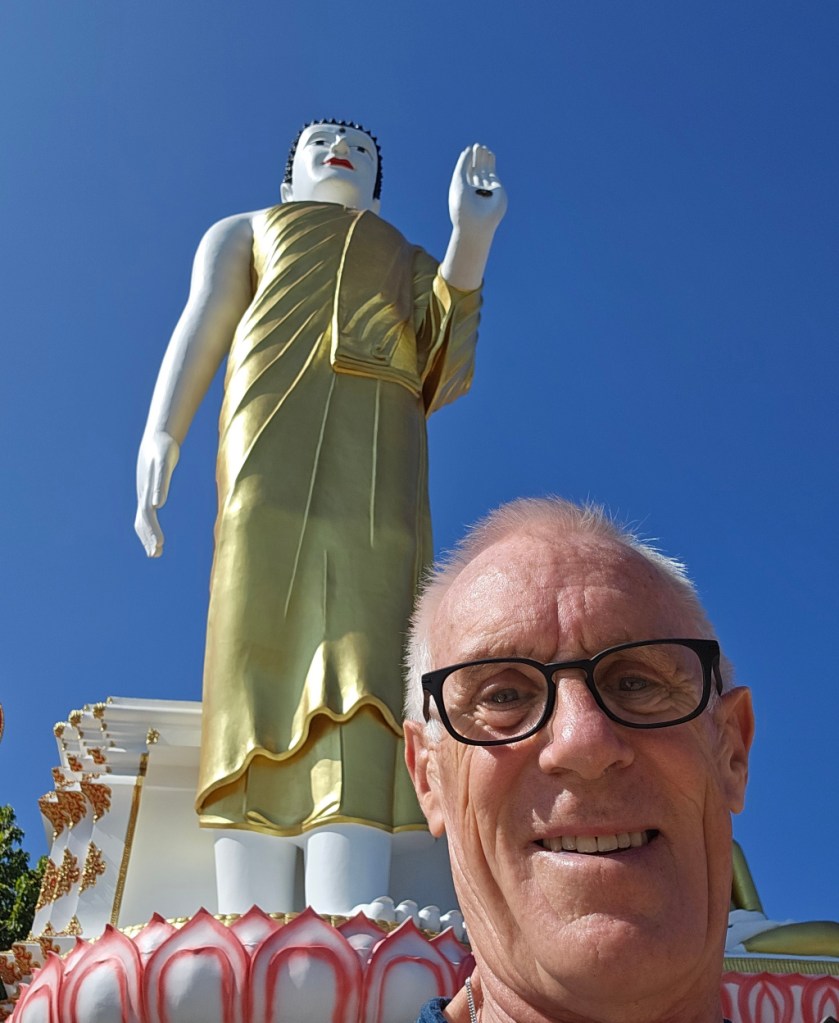
I found nothing in my research that indicates the height of the standing Buddha here. I estimate approximately 20 meters (65 feet).
All Buddhist temples I have seen have a chedi in which the remains of someone important are interred. The chedi at Wat Phra That Doi Kham is the only original structure here.
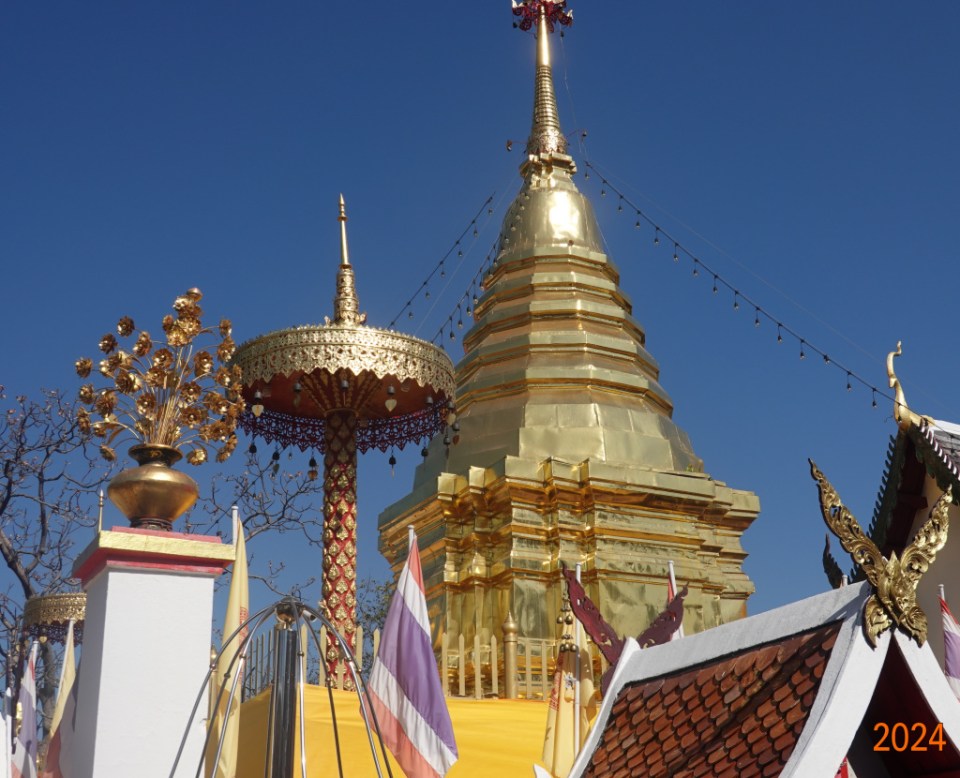
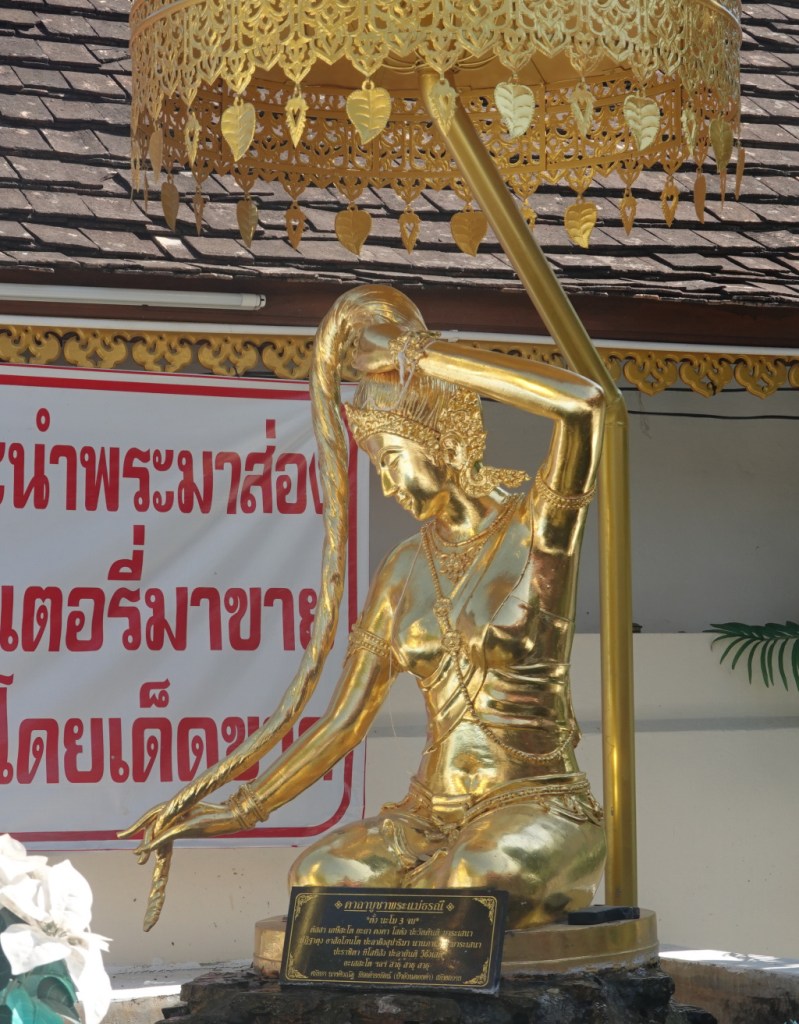
And, like at many temples, there is a statue honoring Phra Mae Thorani, the goddess of the earth or mother nature. This is shiny gold, not my favorite style.
Large Gong
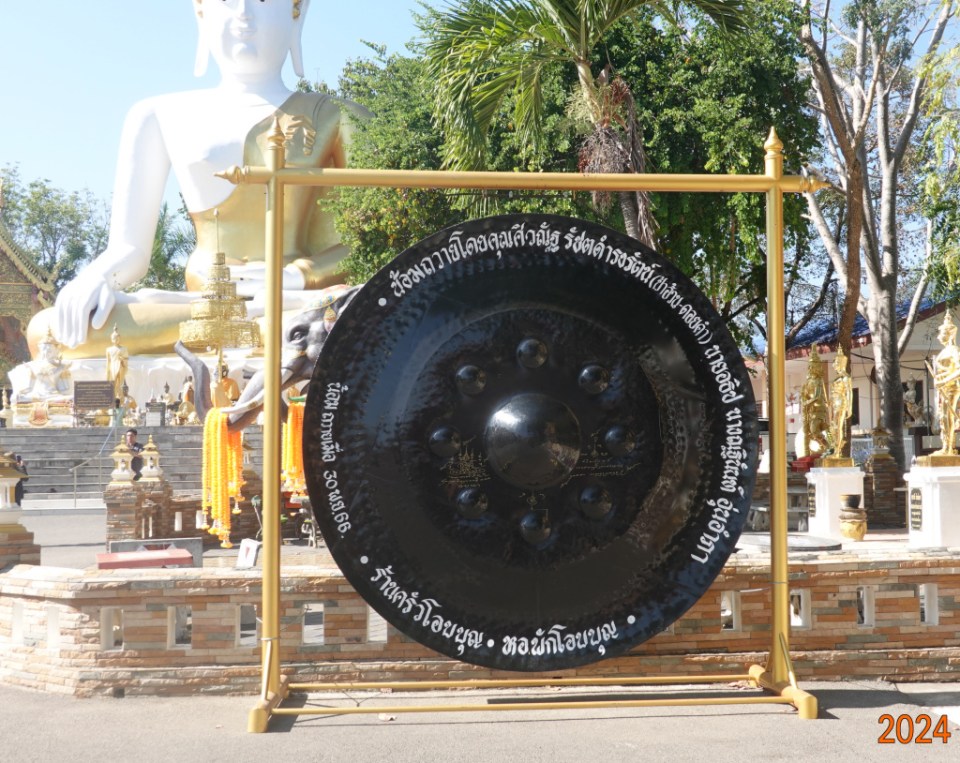
I love the sound of these large gongs, powerful, deep, and penetrating. Almost all of these large gongs are made by hand in several shops along the “Gong Highway,” a 21-mile long road in Thailand’s rural northeast from Ubon Ratchathani to Khong Chiam on the Mekong River.
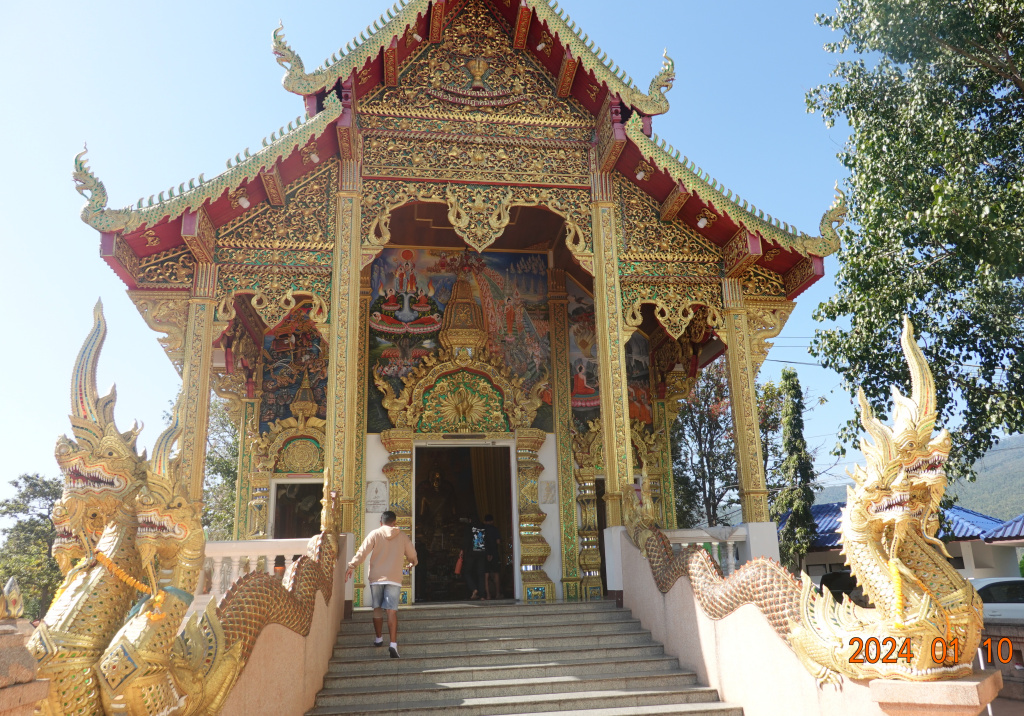
On my way out of the temple grounds, I passed the large viharn (worship hall) here. Nicely decorated, elegantly regal, and not gaudy
In researching the history of this temple, I did find this photo that was taken from a drone or something similar.
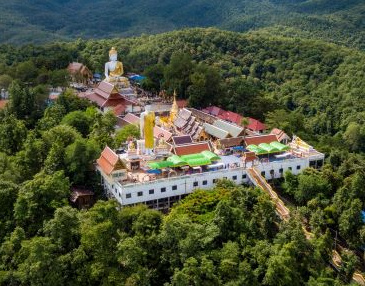
From this view, you can see the large seated Buddha in the background, the overlook area with the tall standing Buddha, and the Naga stairway in the foreground. When this was taken, there were several green awnings on the overlook area, probably for some celebration event.
I found my driver relaxing in the shade, patiently waiting, and we headed back to Chiang Mai.
Next: Hiking 18 kilometers on Doi Suthep

 James the Intrepid Pilgrim
Looking great!
LikeLike