Saturday, December 23, 2023
Hiking up to Wat Phalad and Wat Phra That Doi Suthep
The morning temperatures have cooled a bit, and the afternoons, while still warm, are also a few degrees cooler. With no yoga class and no strength training scheduled today, it seemed like a good day to return to the Doi Suthep mountain and hike the monk’s trail for the first time this winter. “Doi” in Thai means mountain, and “Suthep” is the name of the mountain. When I first heard about the monk’s trail, I asked about finding the trailhead. I was told to go out past Chiang Mai University, then look for the two communication towers, and I would find the trailhead. It seemed a bit too ambiguous, especially to be out on foot in the hot sun looking for a trailhead. I hired a driver to take me one way to the entrance to Wat Phalad on the main highway to Wat Phra That Doi Suthep. From there, I walked down to the actual temple (which is not seen from the main road), looked around, and saw a few people coming out of the jungle on what looked to be a trail. I hiked down that trail, and after about 40-45 minutes, was at the trailhead. That is how I learned where the trailhead is. Now it is on Google Maps.
Wat Phalad and Wat Phra That Doi Suthep Story/Myth
Wat Palad is a remote temple in the jungle/forest that has a very long history. In the story of the relic with supposed magical powers that broke into two pieces as it was to be interred in the chedi at Wat Suan Dok, one piece was interred there, and the other piece was placed on the back of a royal elephant. The king declared that wherever the elephant stopped, a temple and chedi would be built to house the relic. The elephant (being followed by the king and his army on horseback) went up the mountain now known as Doi Suthep. He stopped, trumpeted three times, sat down, and died. The very famous temple Wat Phra That Doi Suthep is the temple with the chedi built to house the second half of the relic. Of the more than 40,000 Buddhist temples in Thailand, 19 are categorized as Royal Temples of the First Class (only one, Wat Phra Singh, is in Chiang Mai), and six are categorized as Royal Temples of the Second Class. Wat Phra That Doi Suthep is a Royal Temple of the Second Class.
According to the stories, almost halfway up the mountain, the elephant slipped and fell while crossing a small river and waterfall. He got up and continued on up the mountain. Apparently, the elephant’s slipping and falling or sitting down to rest was significant enough to justify building a temple. A Thai phrase for “to slip and fall” is “pah lert”. It is believed that the temple’s short name was originally Wat Pha Lerd, and was later changed to Pha Lad, often spelled Palad or Phalad, and sometimes Pha Lat. Wat Palad was also historically used as a resting place for people making the pilgrimage up to Wat Phra That Doi Suthep before motorized transport became commonplace and easily accessible. It is now known as a meditation temple as it is surrounded by nature, having been built into the forest.
Hike to Wat Phalad
I got a Bolt (like Uber and Grab) ride to a place called Base Camp. This is a hiking/outdoor store and cafe at the end of Suthep Road and the base for hiking the monk’s trail and also other trails on the Doi Suthep mountain. Here is the sign at Base Camp indicating the distance for the monk’s trail and the map from Samsung Health of my hike for the day.
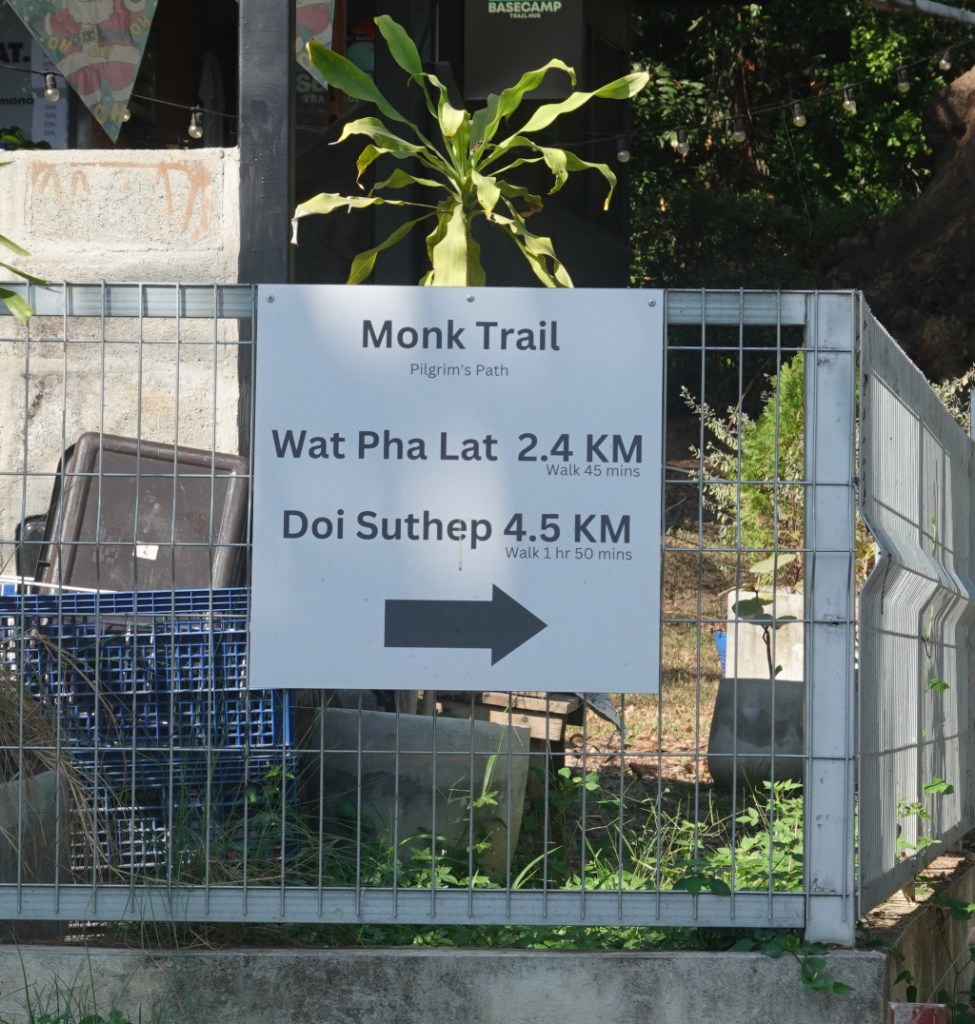
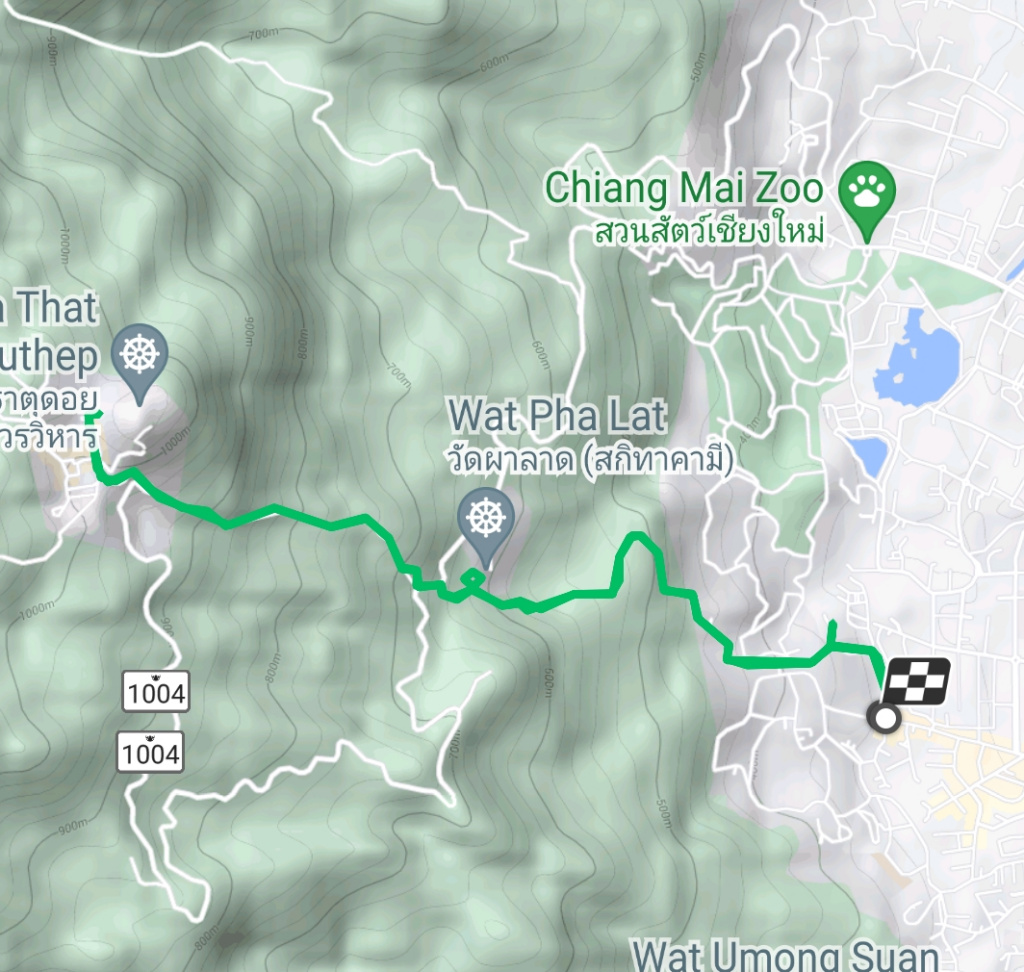
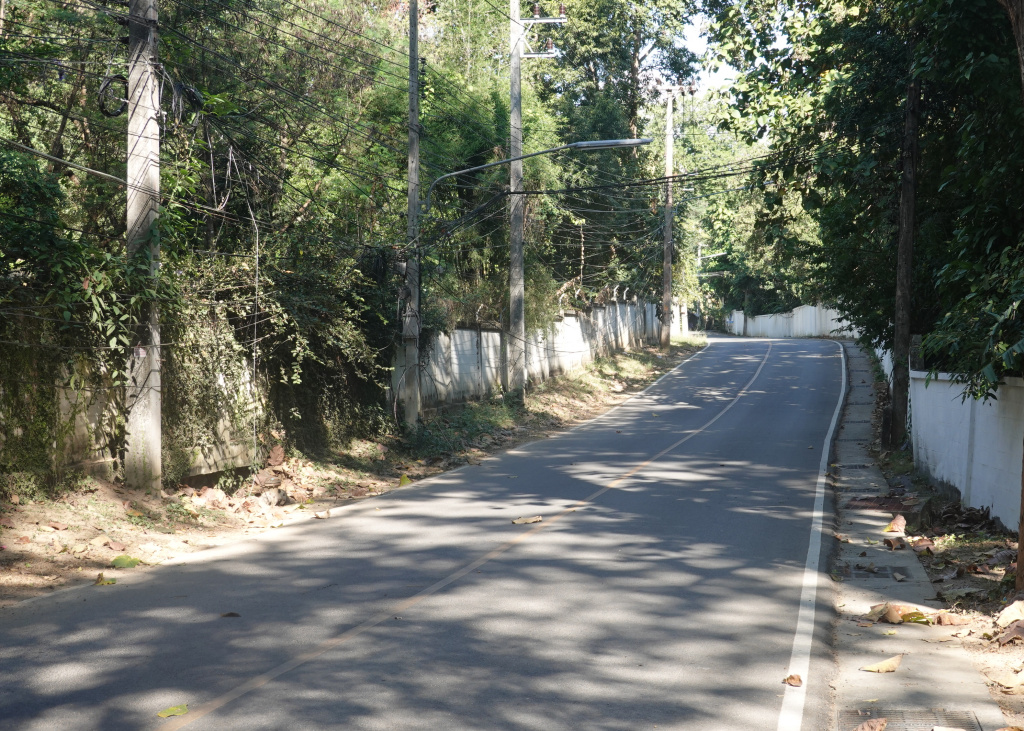
The first part from Base Camp to the trailhead is on a paved road with very little traffic, and being uphill, gradually increasing in steepness, is an introduction to the steep climb ahead.
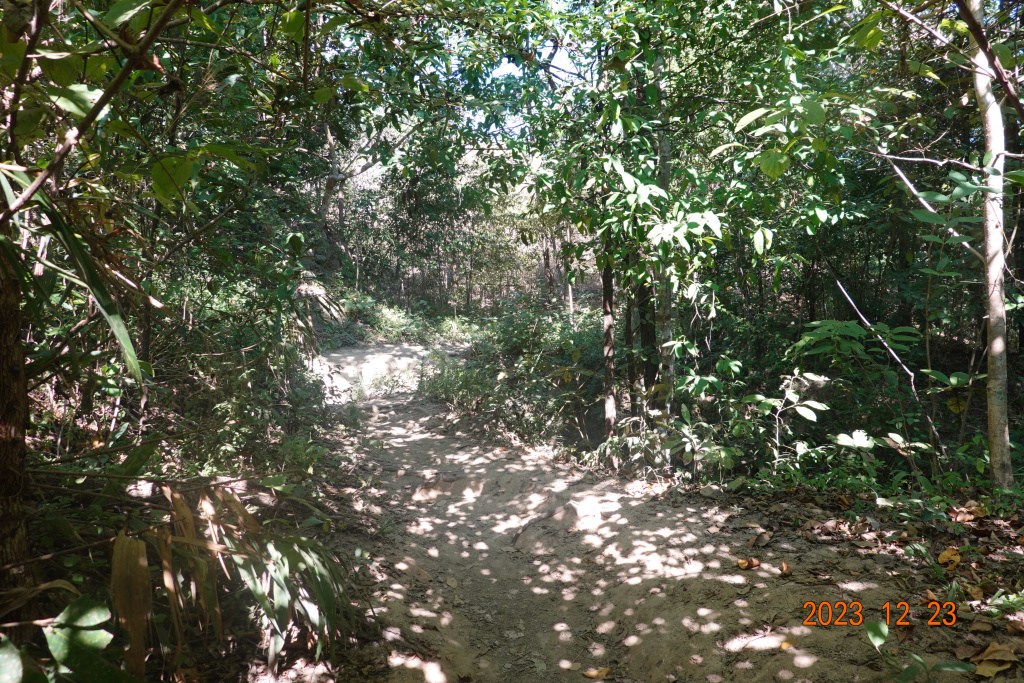
I got to the trailhead where there were many motorbikes and cars parked, more than I had ever seen. Given social media and its location noted on Google Maps, this has become a popular hike. I headed into the forest/jungle (something in between a forest and a jungle) up the trail. I immediately remembered that the first part of this trail is fairly steep and very rocky from erosion from recent rains.
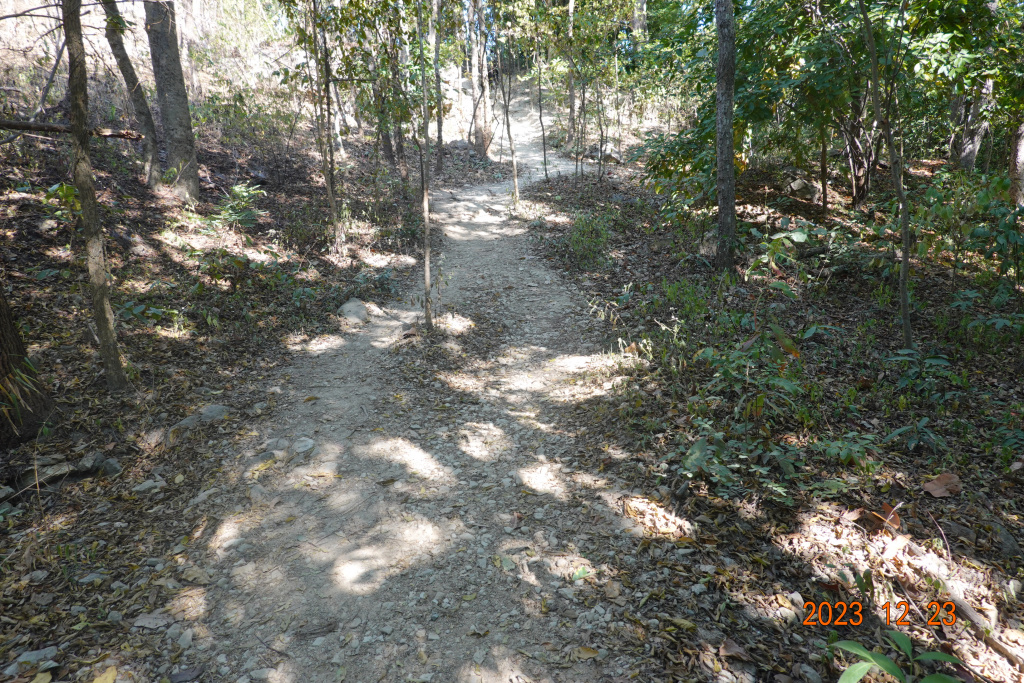
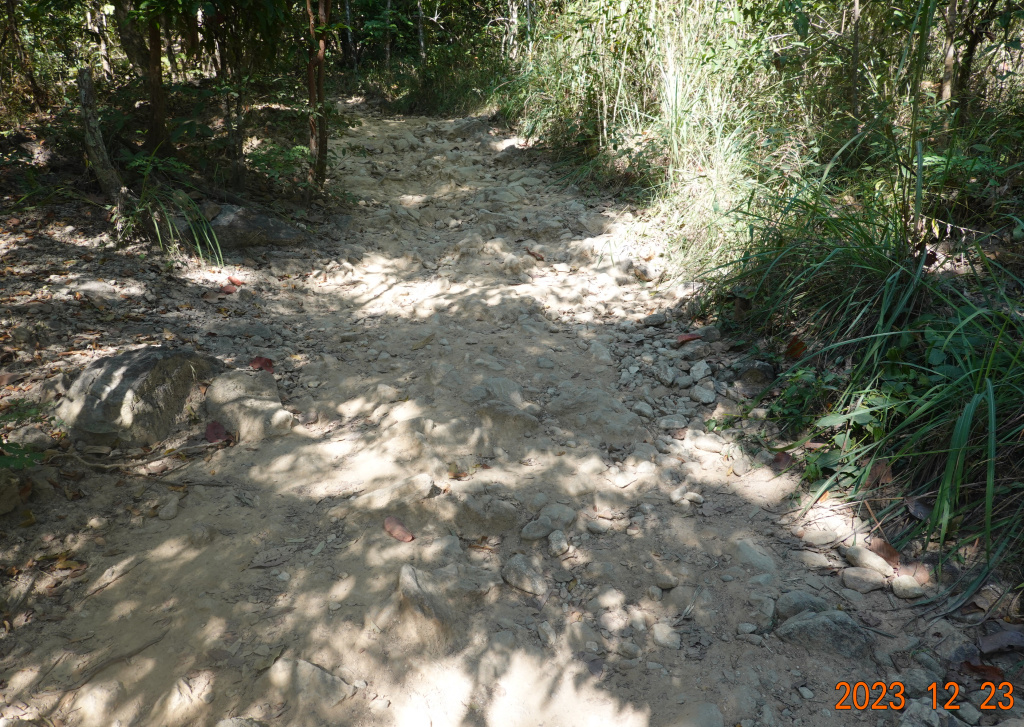
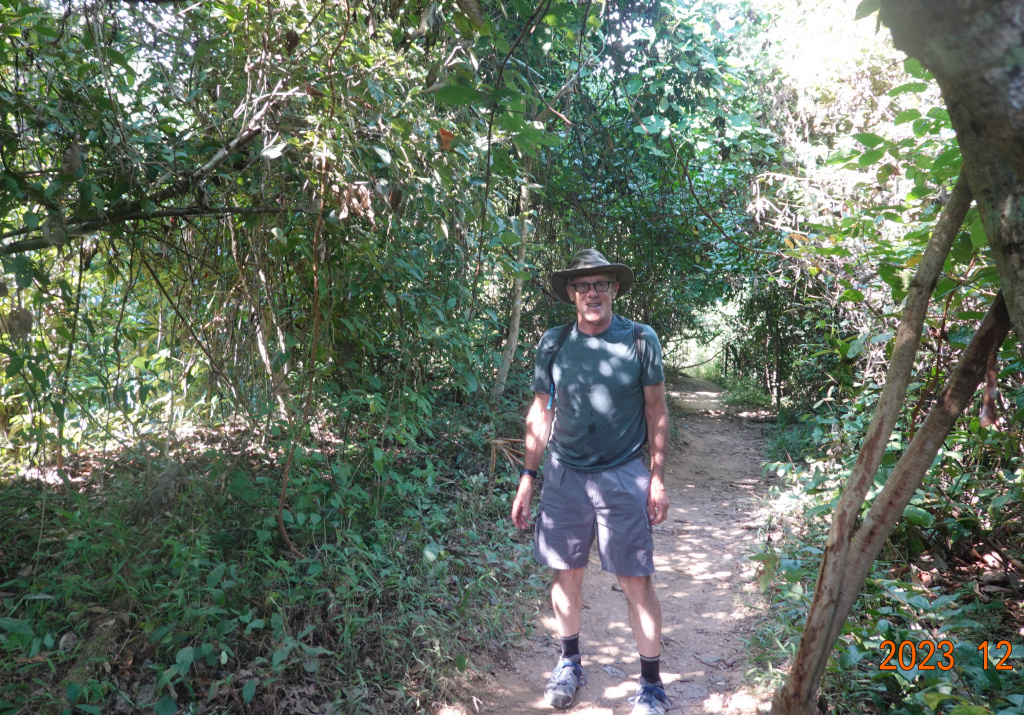
Finally, I made it to a slightly less steep part of the trail where I could catch my breath a little. Despite the temperature being a few degrees cooler and most of the trail being in the shade, it is warm and I am sweating. Met a man from Italy, and he offered to take my photo, so here I am on the trail, sweaty, tired, and enjoying hiking up the Monk’s Trail.
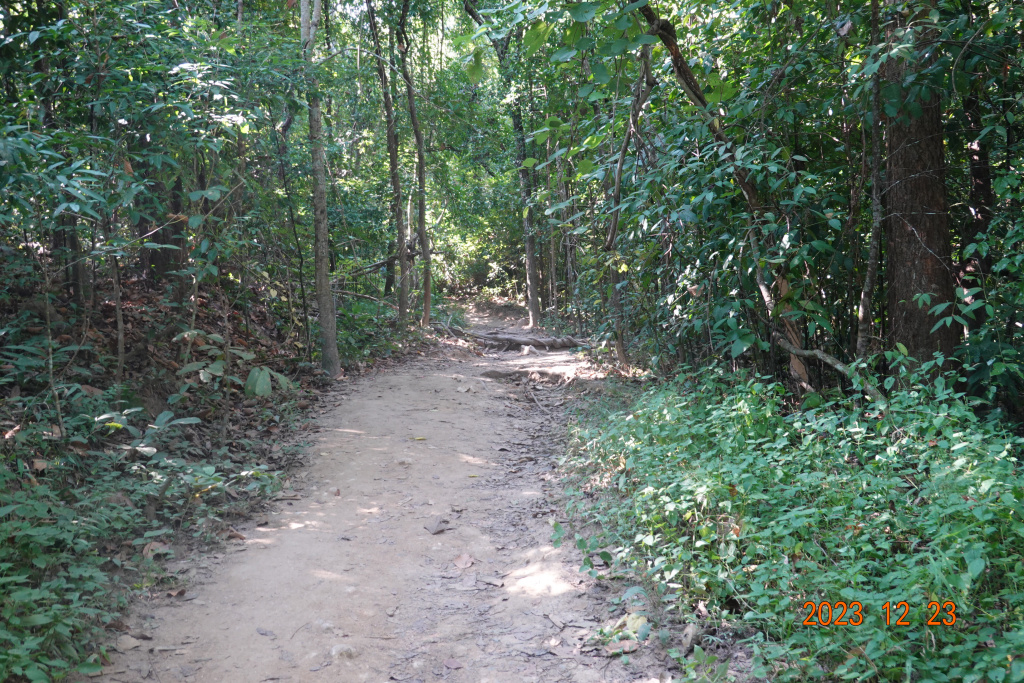
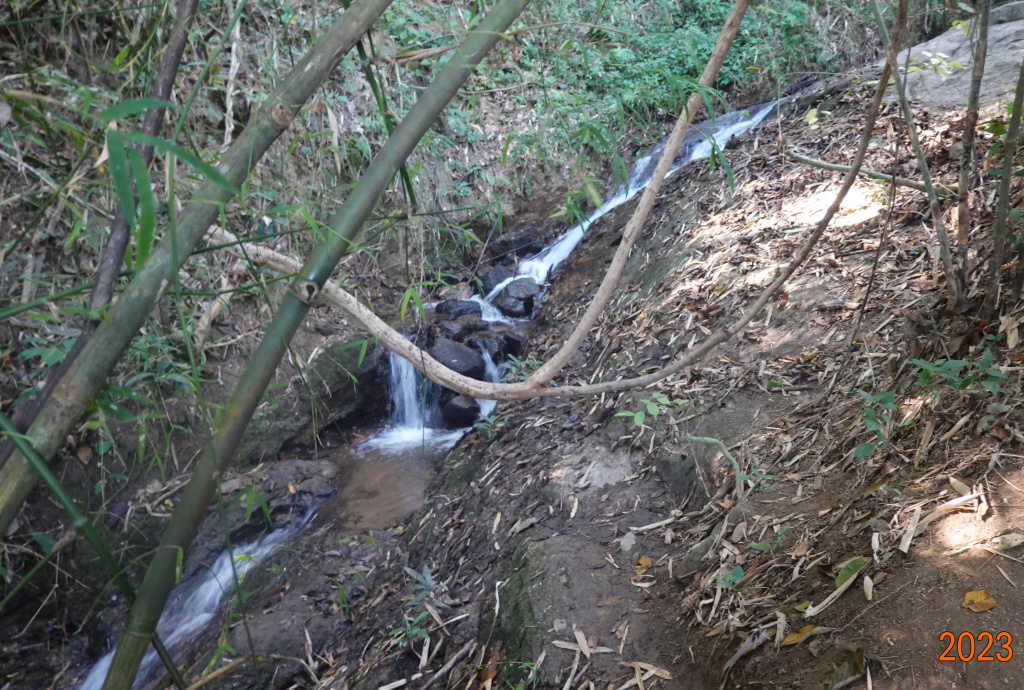
The recent rainy season was a little later than usual, so there is still water running down the various creeks on the mountain. After about halfway up to Wat Phalad, the trail is near a creek and the sound of the creek and waterfalls accompanied us up the trail. At one point where it was particularly loud, I went off the trail to see the creek and got a photo:
Wat Phalad
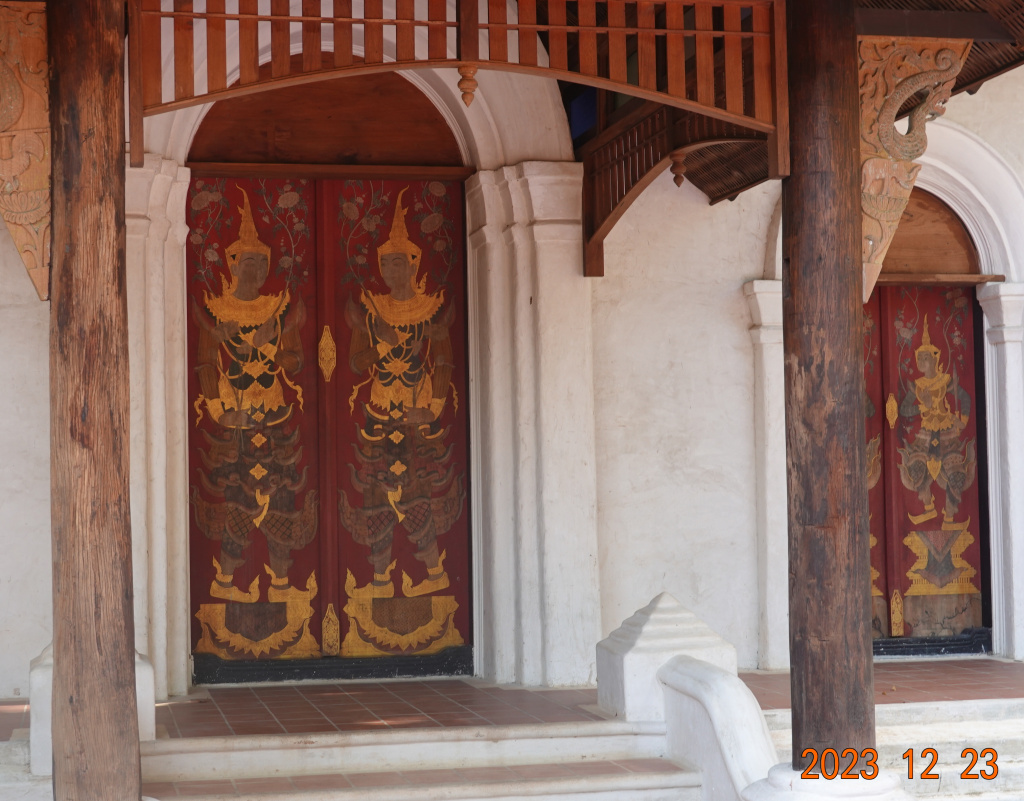
I made it to Wat Phalad. After crossing the creek on the new bridge, I always love seeing the colorful doors of this small viharn that is a bit away from the main part of the temple. The doors are always closed and are pretty and colorful. I do wonder what the inside looks like.
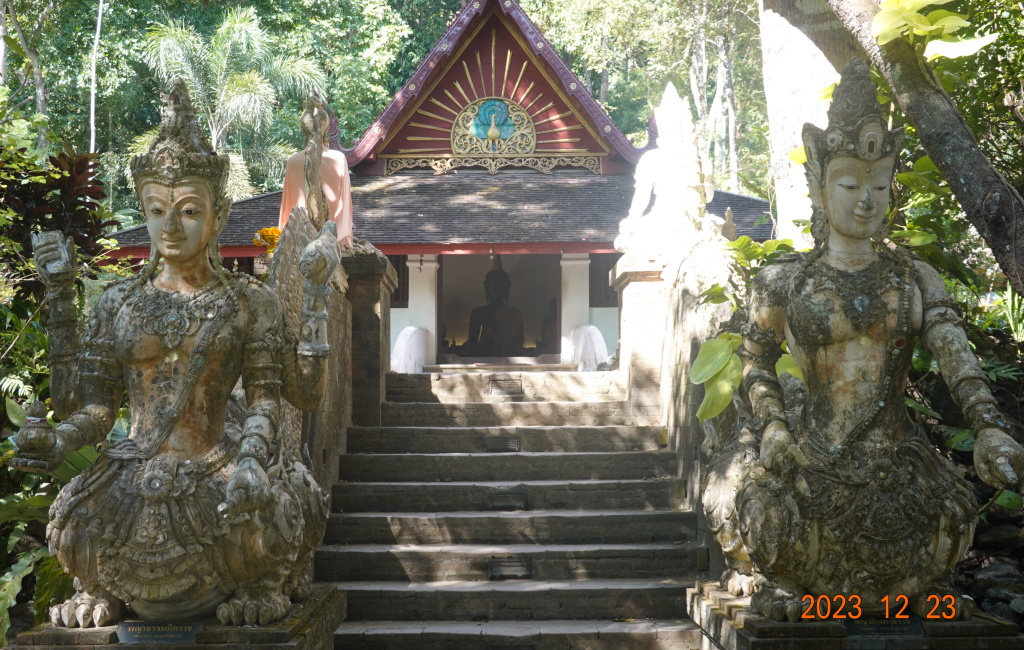
The smaller of the two main viharn was recently renovated and is brighter inside. Before the renovation, it was dark and gloomy with no windows. The statues outside could use some cleaning and/or restoration.
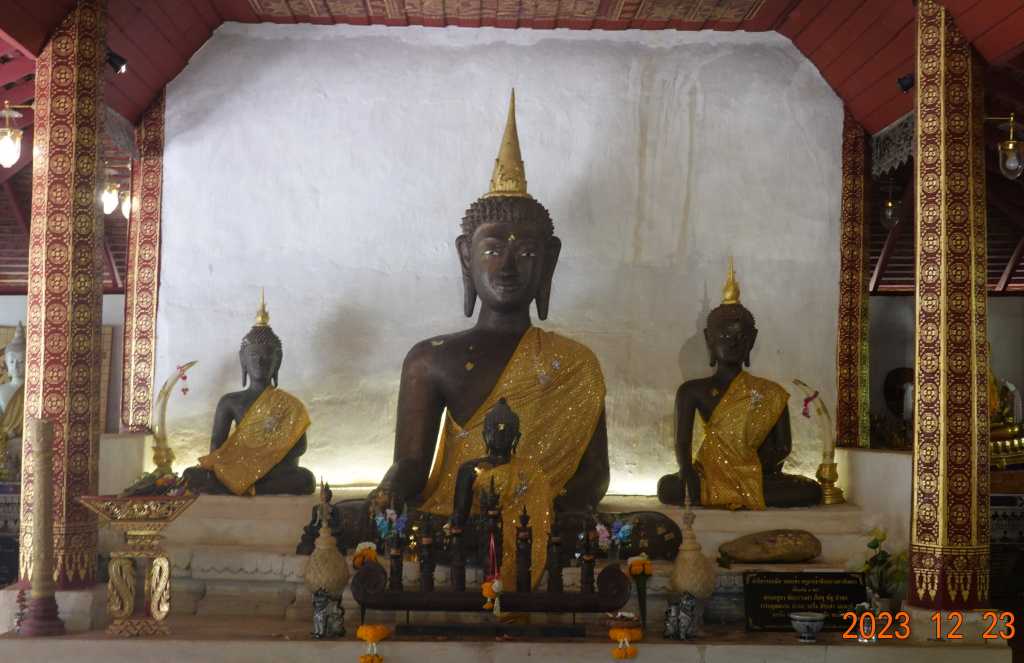
Changes are always taking place at Wat Phalad. I saw this Buddha image under a tree that I do not remember seeing before. Very peaceful looking in nature. The main viharn is behind the statue and the trees.

There seem to be steady, some small and some larger, changes at Wat Phalad. There is an open rectangular courtyard where there once was an open-air viharn. On the north side of the courtyard, there is a Buddha image (statue). On the left is this year, on the right last year (the photo is from almost two years ago). Instead of the flowers, a new Buddha image has been added.
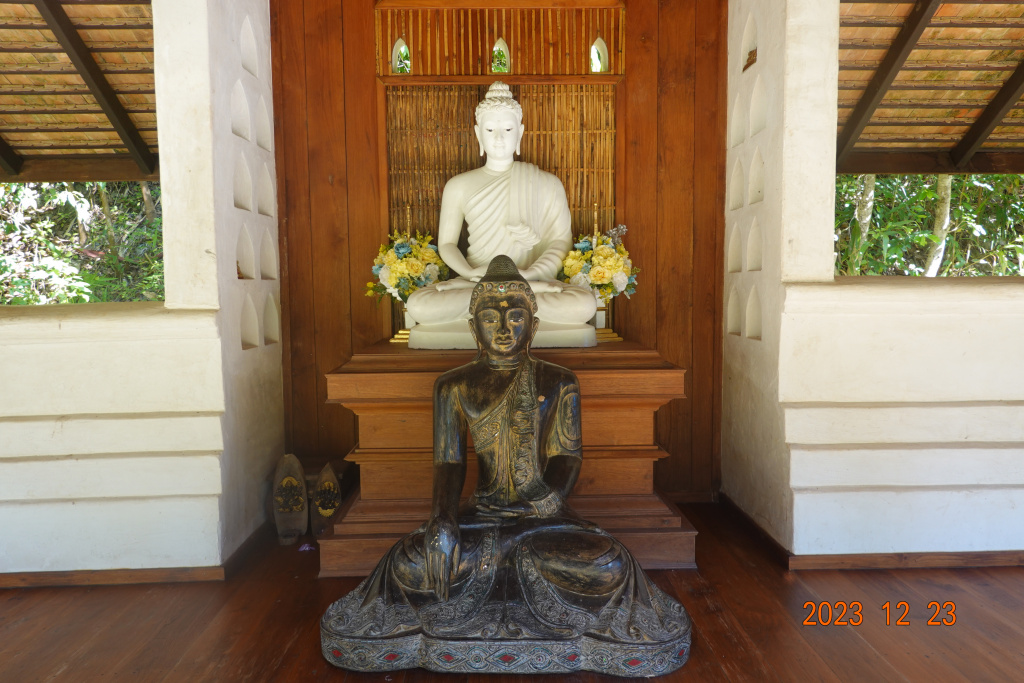
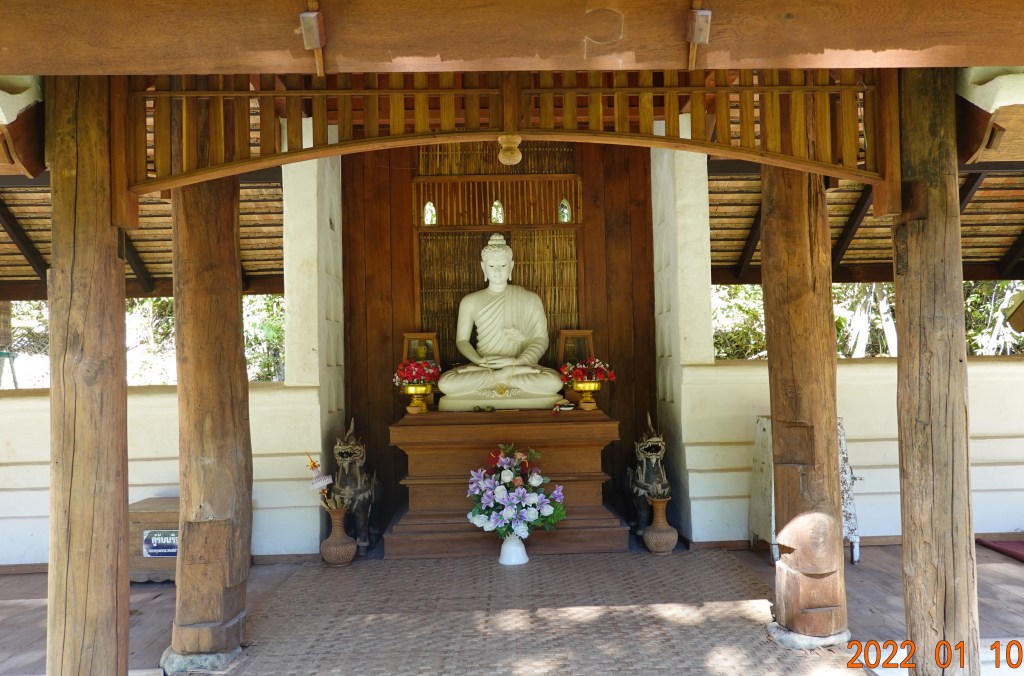
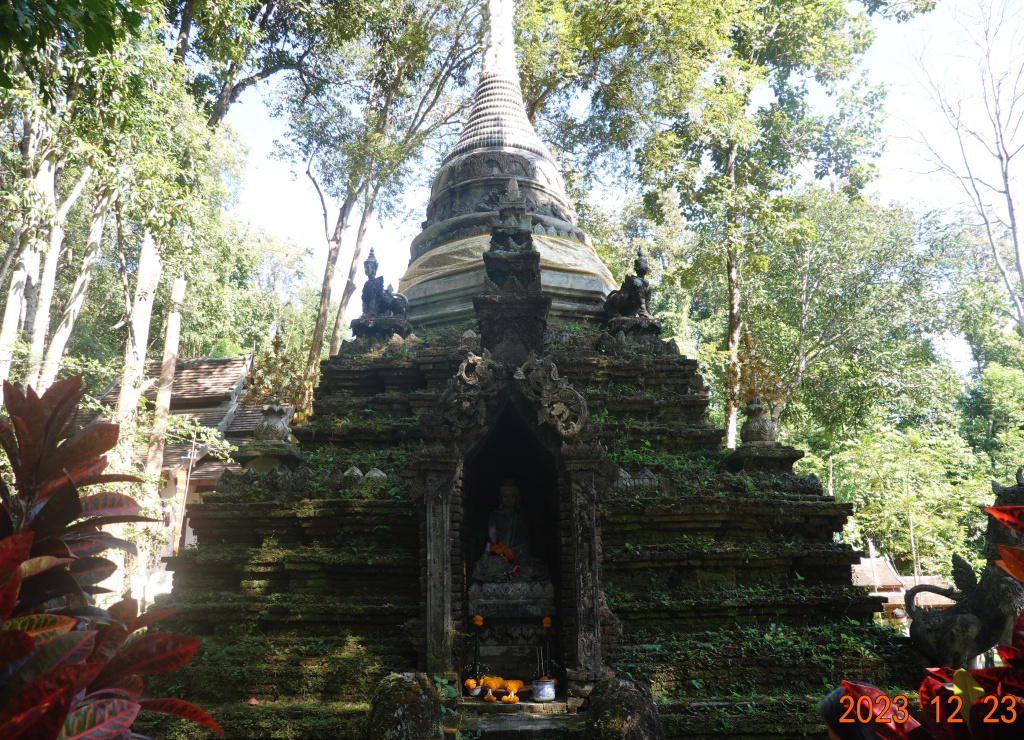
With all the recent renovation and changes, it seems that the old chedi has been neglected. I like its appearance and wish they would at least pull the weeds and do some cleaning.
Continuing upwards
After walking around and resting, I felt energetic enough to continue up the trail to Wat Phra That Doi Suthep. The most difficult part is getting from the back of Wat Phalad to the road. The last 40 meters or so getting to the road is steeper than climbing stairs. I made it and climbed over the new, double guardrail, and was on the road. Fifty or sixty meters up and across the road is the entrance to the second half of the trail. There used to be an orange cloth tied around a bush (the same orange color as a monk’s robe), but that disappeared several years ago. Once I saw the trail entrance, It was pretty obvious, so into the jungle I went and up the steep start of the trail to Wat Phra That Doi Suthep. After having hiked this many times, I think of this part of the trail in three sections: 1) a very steep section at the start for about 300 meters, 2) a not-as-steep section in the middle, and 3) a very steep final climb to the road below the temple. On the first, very steep section, I do not take out my camera because there are times when I need my hands and feet to negotiate this part of the trail. Then it levels off a little, and I could stop, catch my breath, and get a photo. The photos do not convey the steepness of the trail.
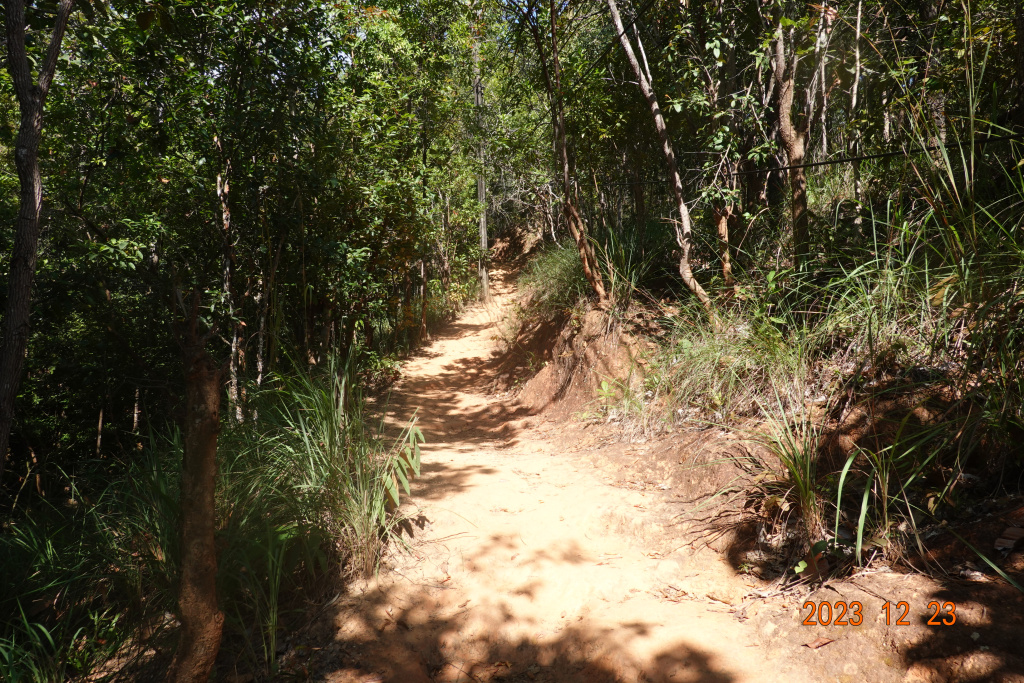
Then came more trail, steep, and sometimes steeper. Still, a beautiful, warm, and sweaty day hiking up the mountain.
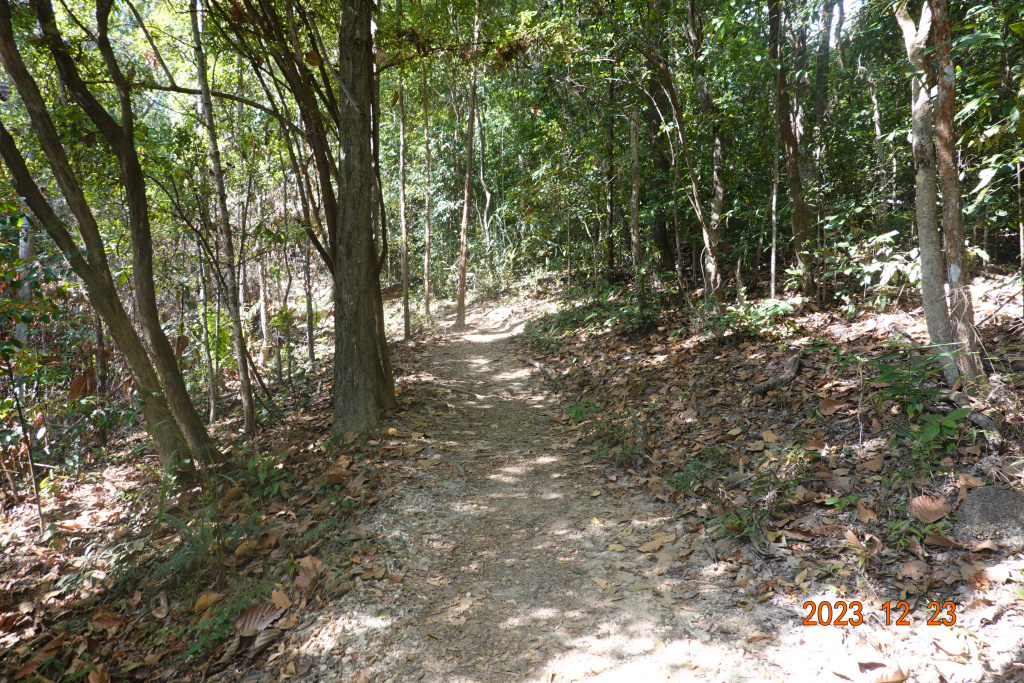
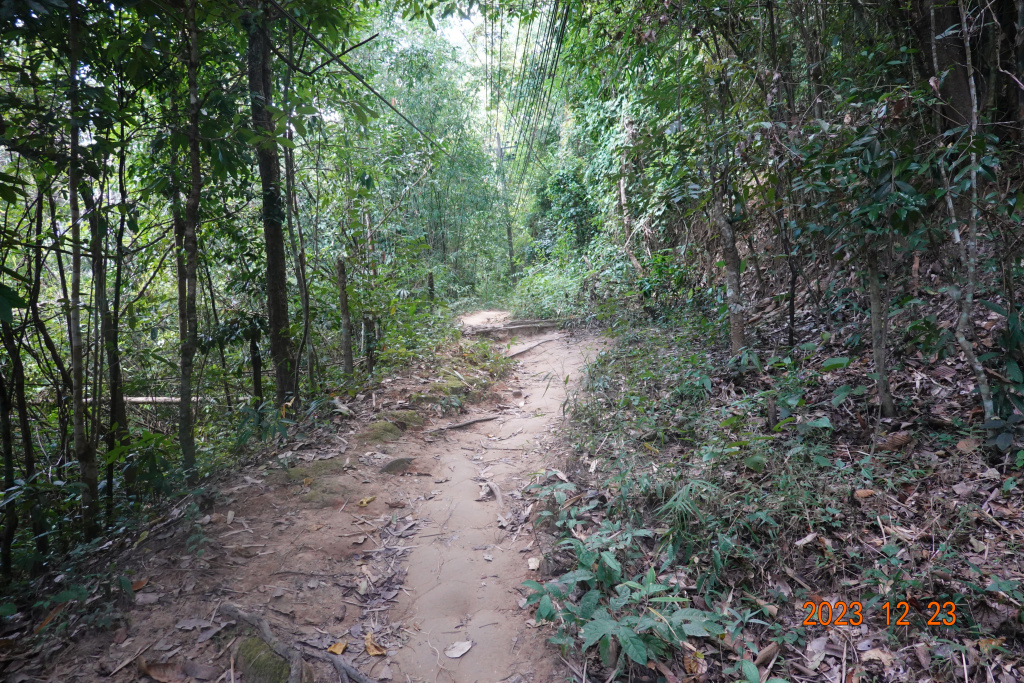
Sometimes the recent rains have allowed the bushes to almost block the path, and sometimes the path is there and still steep.
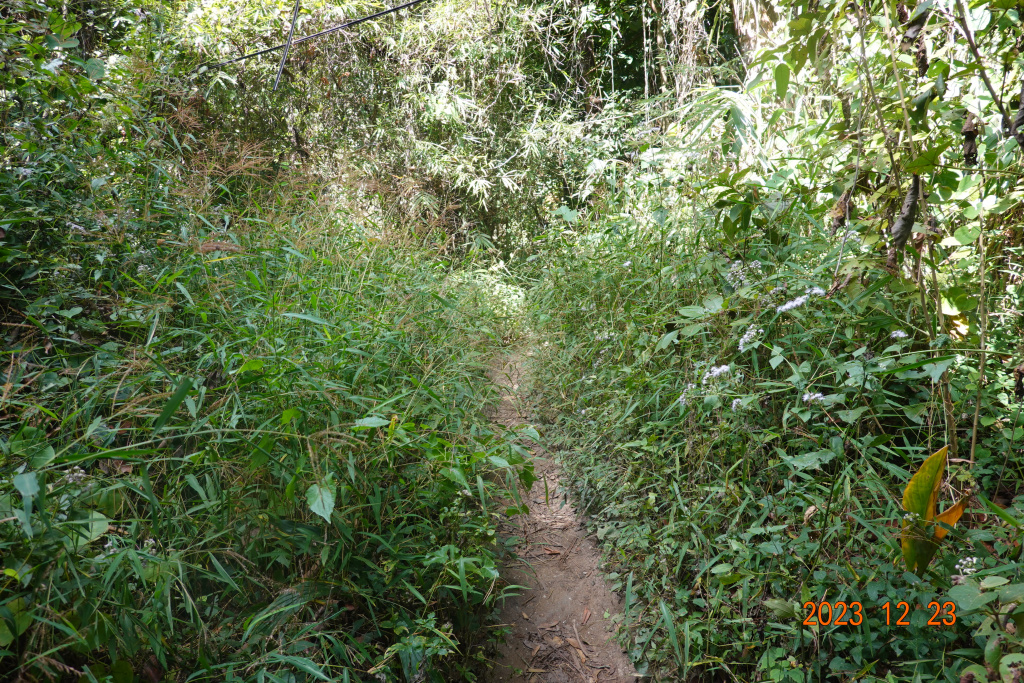
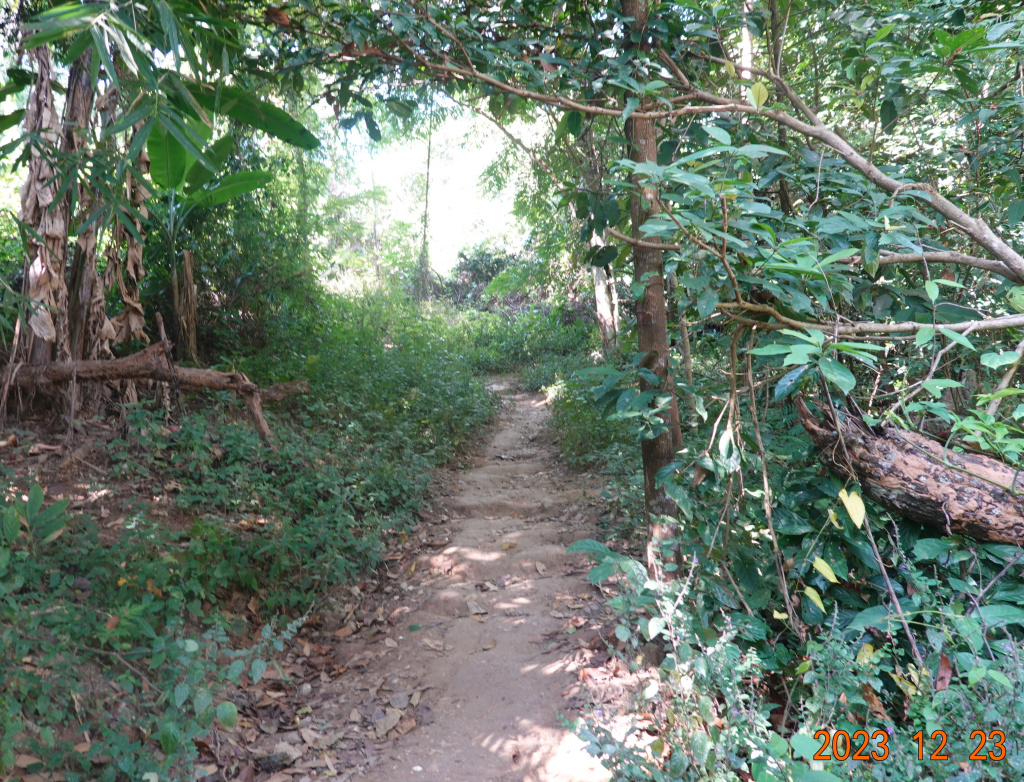
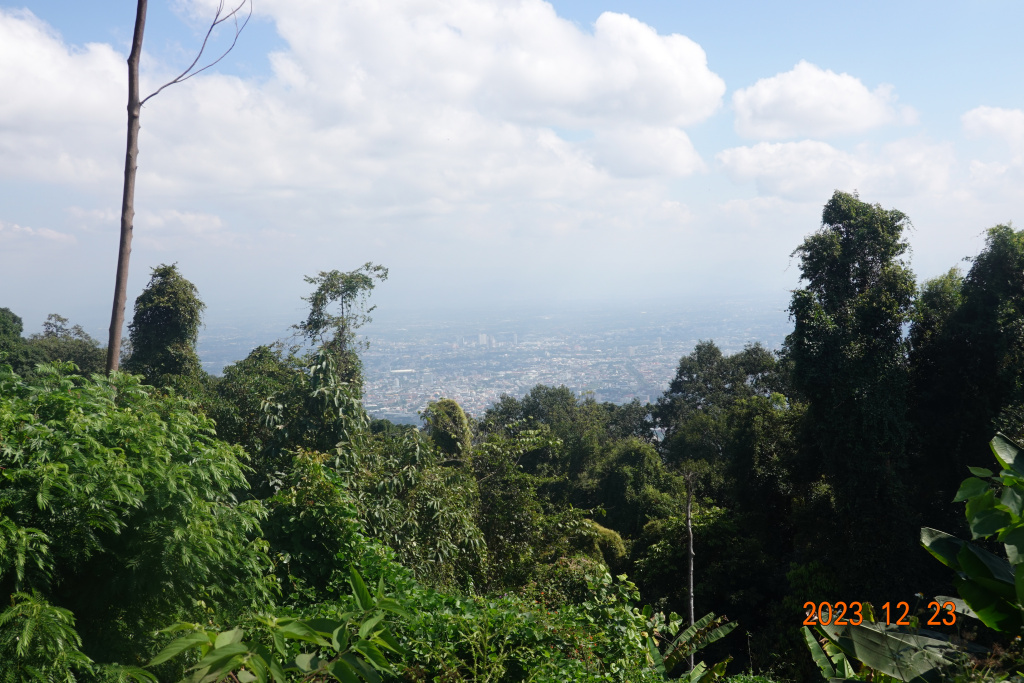
And then I emerged to the road and a nice view of Chiang Mai.
Wat Phra That Doi Suthep
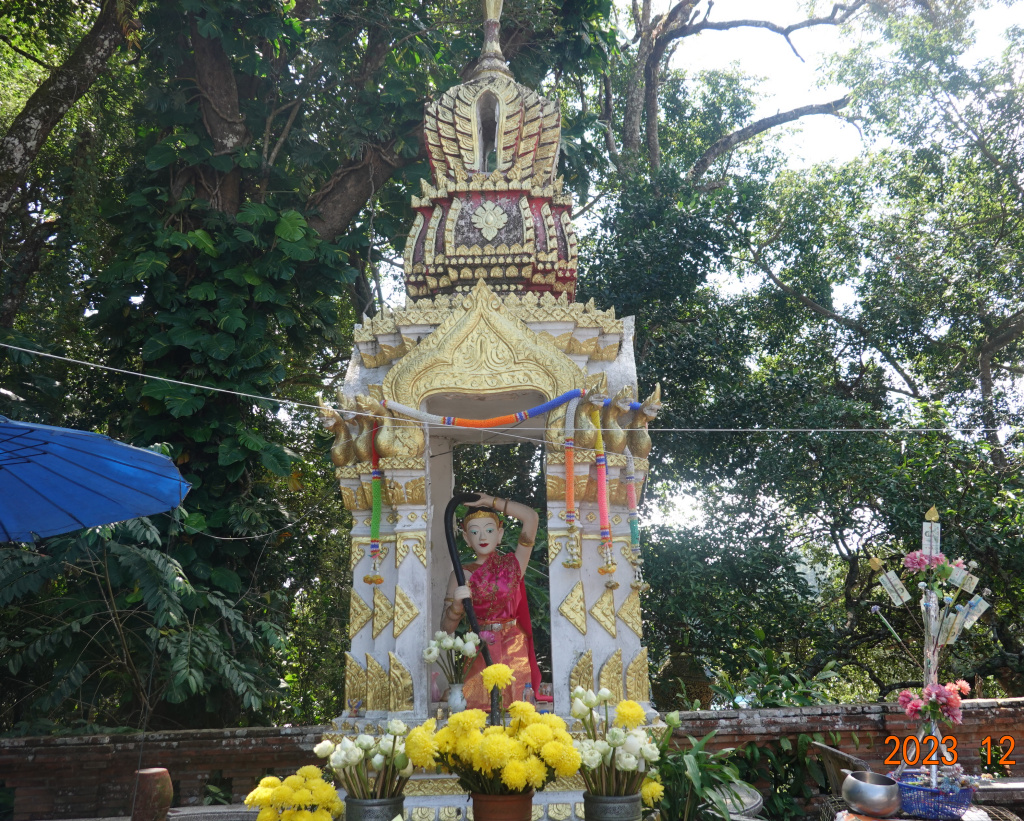
From the end of the hiking trail (where the photo above was taken), it is about 400-500 meters uphill walking along the road to the entrance of Wat Phra That Doi Suthep. Because there are thousands of visitors every day, there are many vendors near the entrance selling fruit, snacks, fruit juice, trinkets, and souvenirs. I bought and drank a freshly squeezed orange juice – tasted so good after the long, hot, sweaty hike. I went into the temple grounds and stopped at a statue of the earth deity Phra Mae Thorani (Mother Earth). From an earlier post I made this year, “According to Buddhist myths, Phra Mae Thorani is depicted as a young woman wringing the cool waters of detachment out of her hair to drown Mara, the demon sent to tempt Gautama Buddha as he meditated under the Bodhi Tree.” Statues of Phra Mae Thorani are seen at many temples in and around Chiang Mai. I had forgotten that this statue was here at Wat Phra That Doi Suthep.
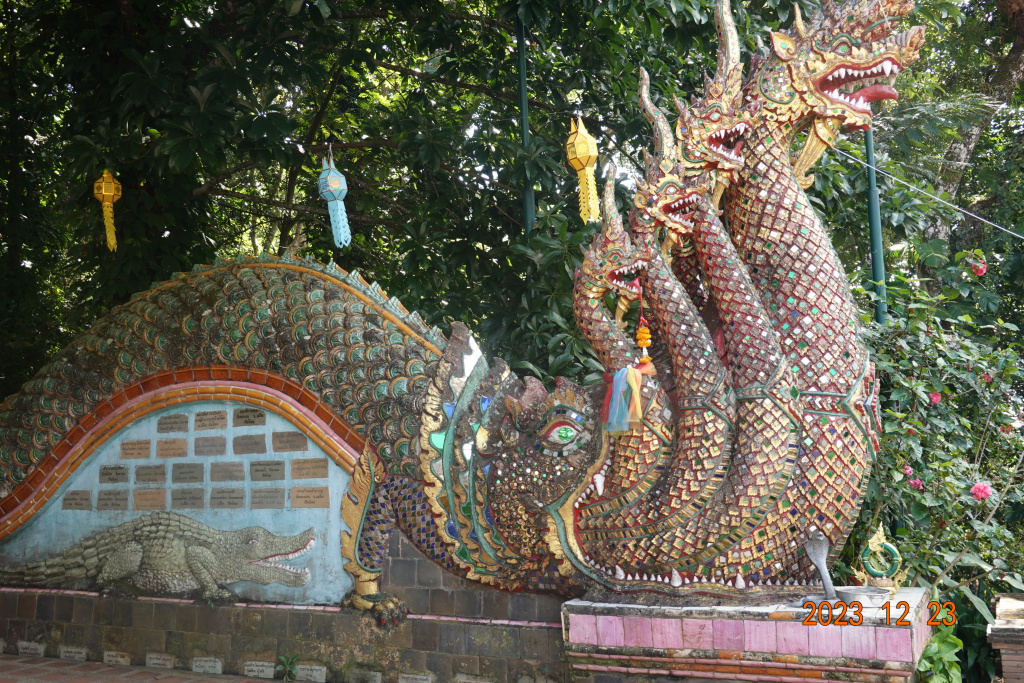
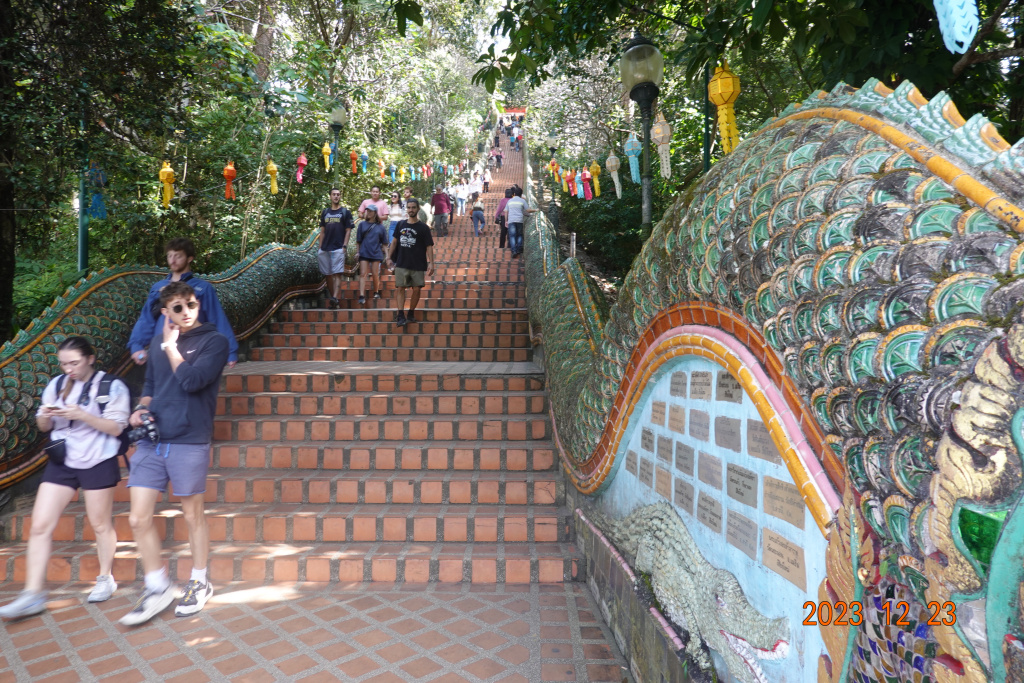
I climbed up to the base of the Naga Stairway and took a photo of the seven-headed Naga (dragon or serpent) and the stairway itself. From this point, there are about 200 steps to the top and to the main temple grounds. I have been to this temple many times over the years and just was not feeling like climbing another 200 steps. Notice the alligator under the first arch of the Naga’s body. I have seen this at a few other temples and do not know the symbolism or significance.
I did not take out my camera on the walk down, I was focusing on not slipping. About halfway down I got a good shot of the view with my phone. A beautiful day hiking up and down the mountain.
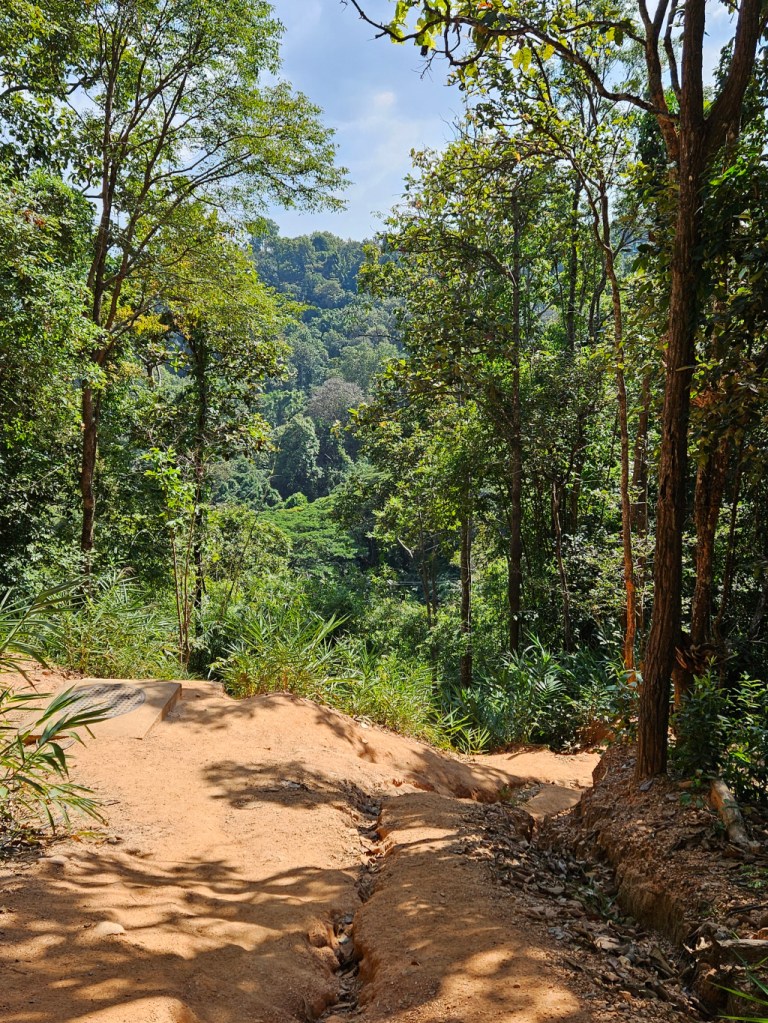
The trail ahead cannot be seen because, to the right of the manhole cover, the trail turns steeply down.
I made it to Wat Phalad, and here is proof (if you were doubtful).
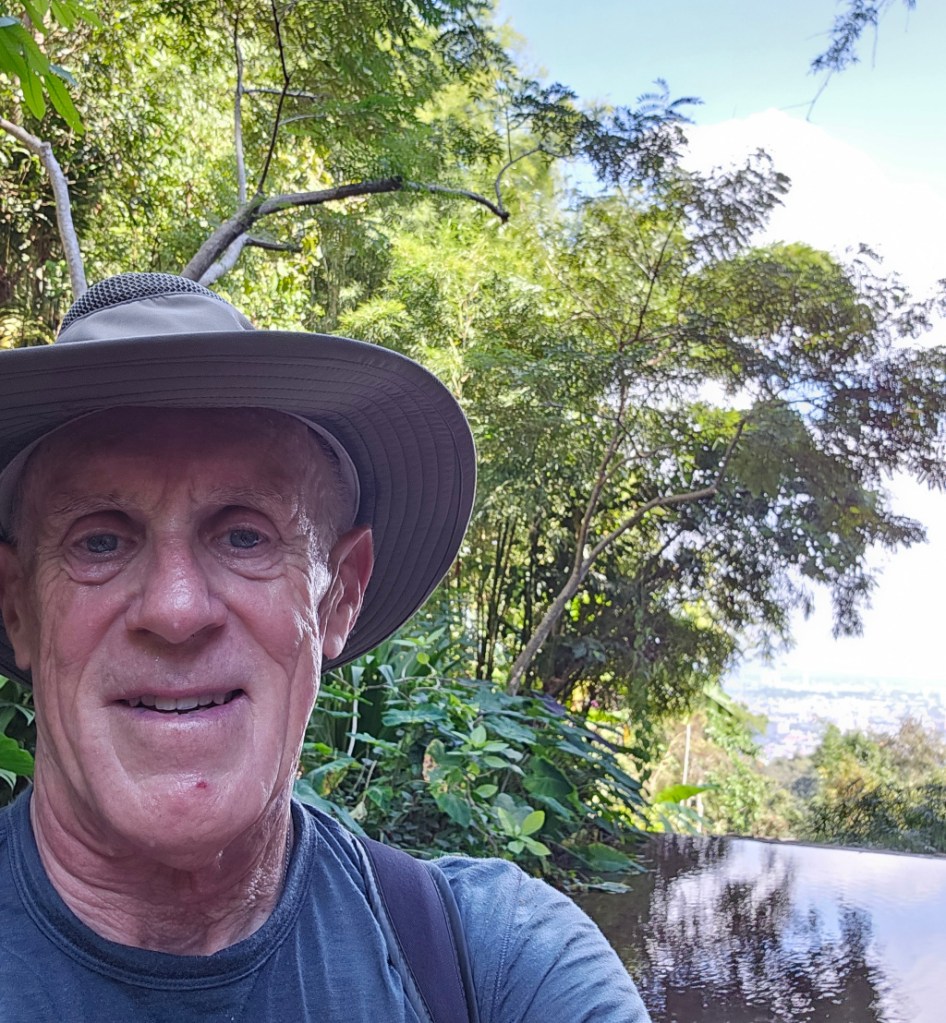
I continued down the Monk’s Trail to the trailhead, then down the road to Base Camp, and got a bolt ride back to The 3-Sis. The total hike up and down, including the time spent at Wat Phalad and Wat Phra That Doi Suthep, was a total of 2 hours and 34 minutes, and the distance walked was 10 kilometers with an elevation gain of 723 meters (2372 feet). I’m happy with the overall time – the hike up all the way to Wat Phra That Doi Suthep was just about 90 minutes, a little less than I expected. A very nice day hiking in the jungle on Doi Suthep.
Next: Photos of meals I forgot to post

 James the Intrepid Pilgrim
Pretty demanding total ascent.
LikeLike