Thursday, December 21, 2023
Temples nearby Akha Ama Coffee Shop
Akha Ama is a coffee company that gets its coffee beans from selected small, organic, mostly hill tribe coffee growers in Northern Thailand.

There are a few Akha Ama coffee shops in the Chiang Mai area, and one is easy walking distance from The 3-Sis guest house where I stay. Akha Ama is one of John’s favorites, as well as mine, so today we met there when he had time for a break. I walked there, and on the way, stopped at three neighborhood temples that I often pass and generally ignore.
It is said that in the Chiang Mai old city, or what is called “inside the moat,” there are at least 50 temples. The area surrounded by the wall & moat is approximately 1 mile square, or about 1570 meters square. Fifty temples in one square mile – many temples in a fairly small space.
The walled town of Chiang Mai was not a perfect square, but is often described as a rectangle. I would like to suggest that it is more of a trapezium (or trapezoid) shape, since the southeast corner is clearly off. On the map the green lines outline perfect square. The surprising fact is that the map-makers have drawn this trapezium shape of the town very accurately. The northern wall is 1600m wide, the southern wall is 30m less long, a difference of 2 percent.
A Thousand Miles on an Elephant in the Shan States – by Holt Samuel Hallett, 1890
I found the 1893 map of Chiang Mai referred to in the quote above showing the roads, sois, temples, and other important locations in the old city. [I do not have a computer, only a Samsung Android tablet, so I was not able to select the map from the text to download.] I could see that most of the temples seen today are on the map, and even with the tiny, blurred writing, I could count at least 45 temples.
Wat Chai Phra Kiat
This temple, as are all three, is in an area in which there are many temples close to one another, and being close the center of the old city, gets many visitors.

The viharn is one of the exceptions of having the doors open to the east to greet the rising sun. The viharn here is aligned north-south. The grounds are relatively spacious, and there are a couple of benches where one can sit and relax under the shade of a tree. The viharn is typical of Lanna (northern Thailand) temples, nicely decorated, and appears to have been restored not long ago.
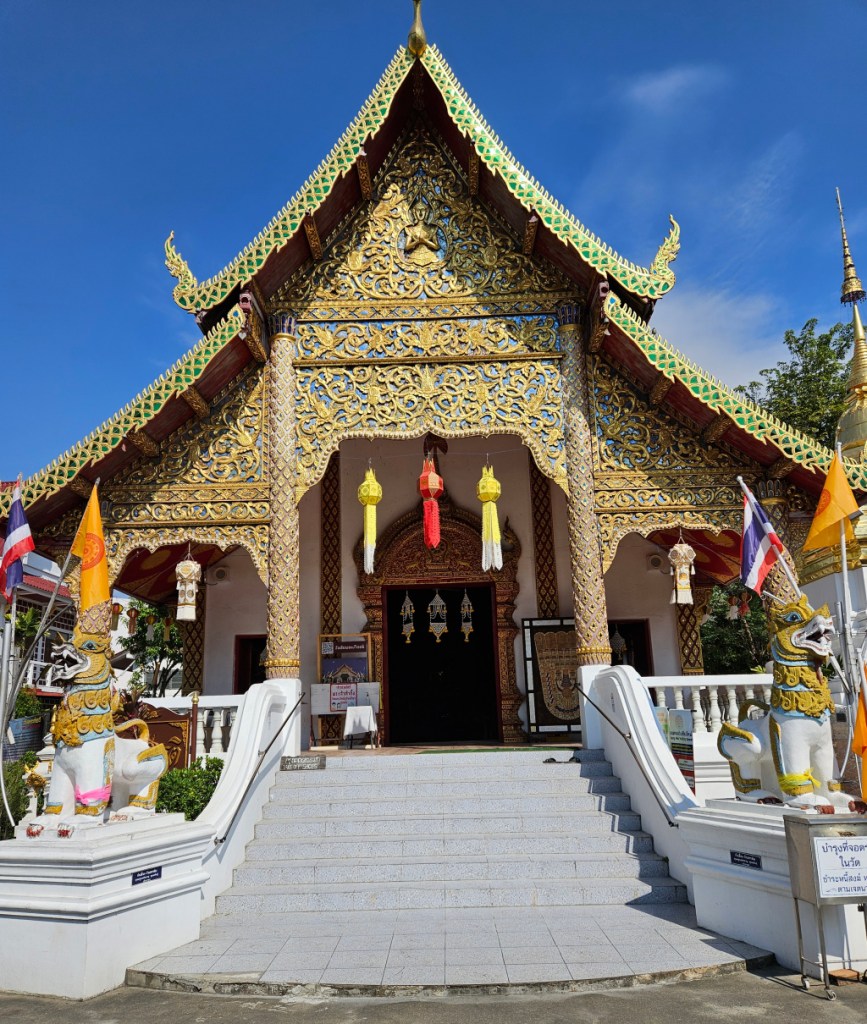

The chedi is very modern-looking, clean, and with fairly new gold covering on the top, and not to my taste; I prefer the more rustic, older-looking chedi styles.

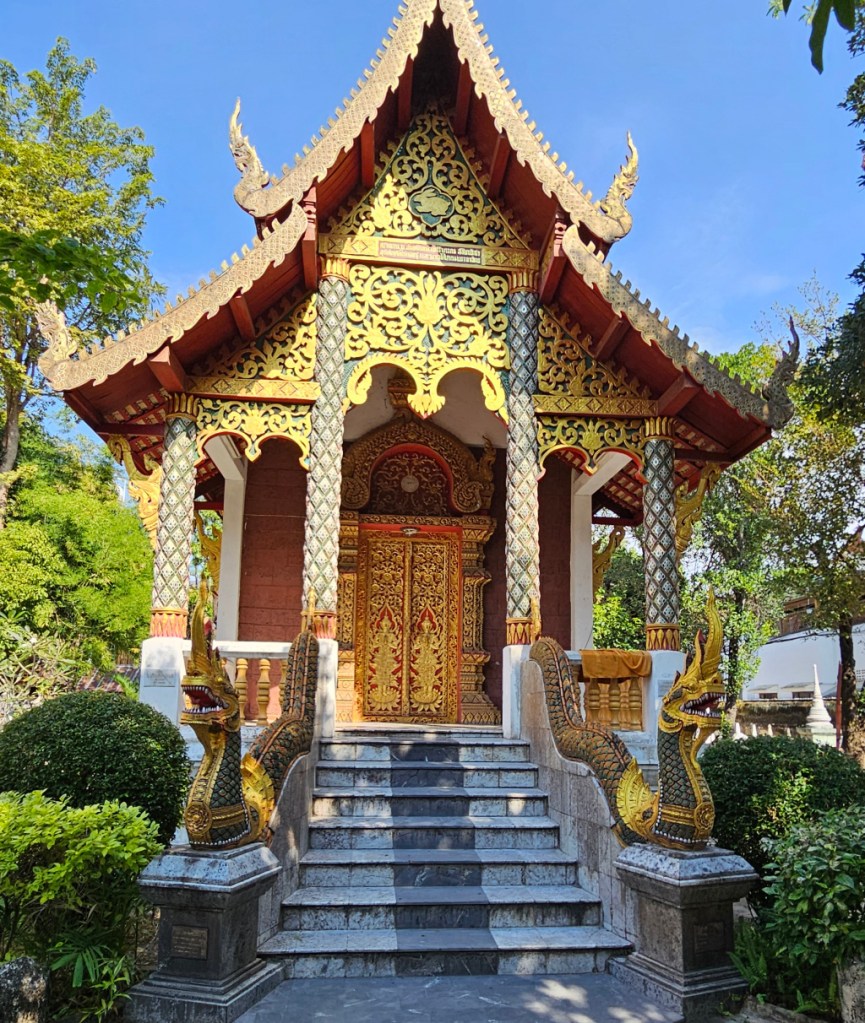
I found the ubosot (ordination hall) to be very nice. It is of an older style, and set among trees and bushes, giving it a park-like feeling.
Chiang Mai City Police Station
Directly across the street from Wat Chai Phra Kiat is the Chiang Mai City Police Station. There are always cars there, but I have never seen anyone coming out or going in (of course I do not just hang out there, either).
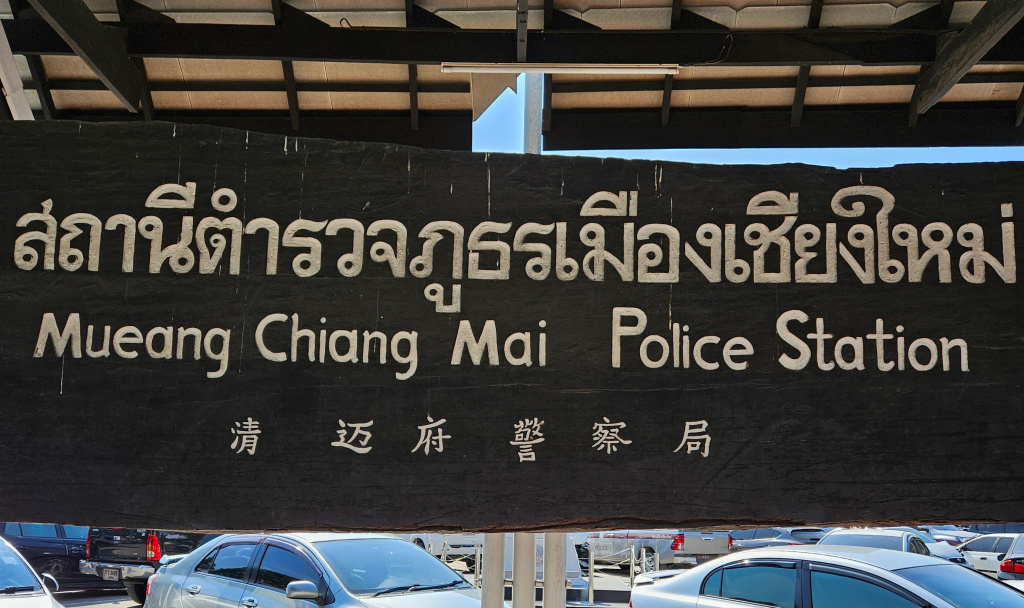
This is an example of the word “mueang” meaning “city.” Earlier in my visits to Chiang Mai, seeing several cities or towns on maps with the word “Chiang” in the name (Chiang Rai, Chiang Saen, Chiang Dao, Chiang Khan, Chiang Khong, etc.), I asked what “Chiang” meant and was told “city.” That did not seem right, because I already knew that “mueang” meant “city.” More research told me that historically “Chiang” refers to a city with a wall around it, a fortified or walled city. Languages evolve, and most Thais just think of “city” when they see the word “Chiang.”
Wat Tung Yu
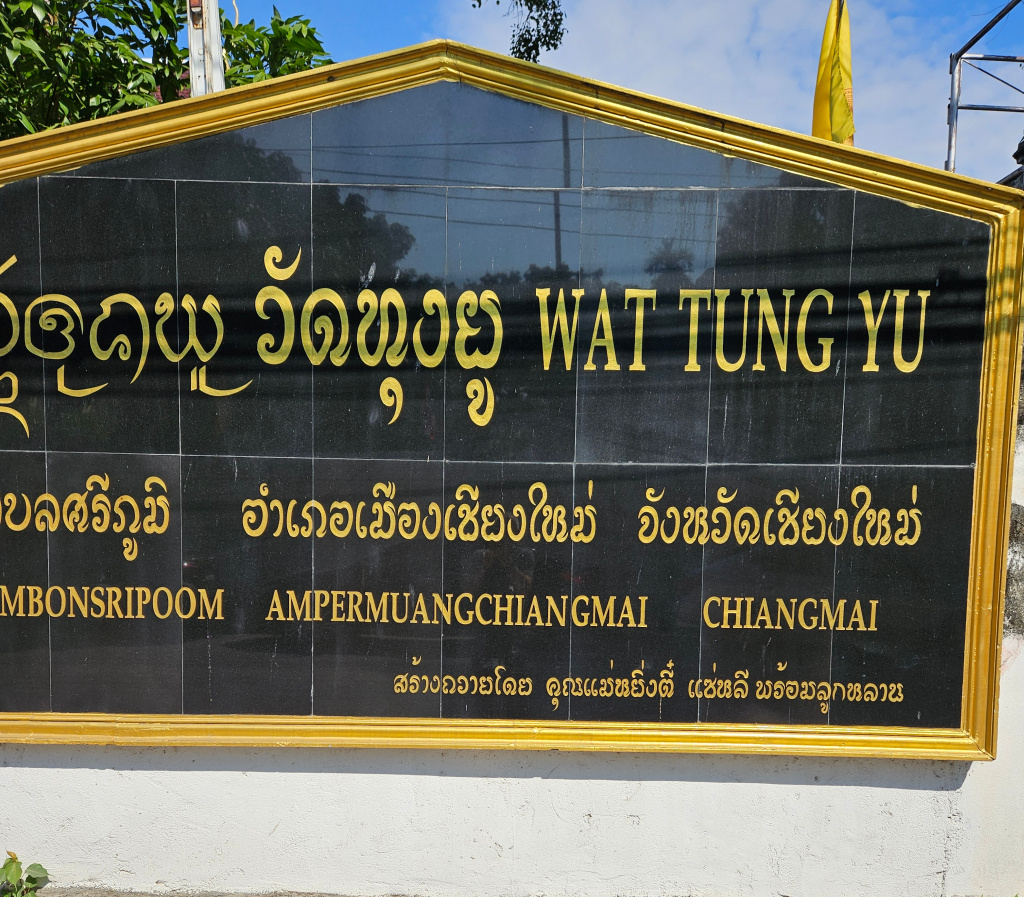
Sometimes spelled Wat Thung Yu, this temple is something of a hidden gem in the Chiang Mai old city. Almost next door to Wat Chai Phra Kiat, Unlike the busy tourist attractions nearby, like Wat Phra Singh, The Monument to the Three Kings, etc., it remains a serene place. The temple grounds are neat and well-maintained.
The viharn is small, and just to prove that I was really there, I took a selfie by the Naga, something at which I am less than adept.


Inside the viharn, the large Buddha image is nice with a bit more of a smile than it typical:

Also on the temple grounds is an ubosot (ordination hall).
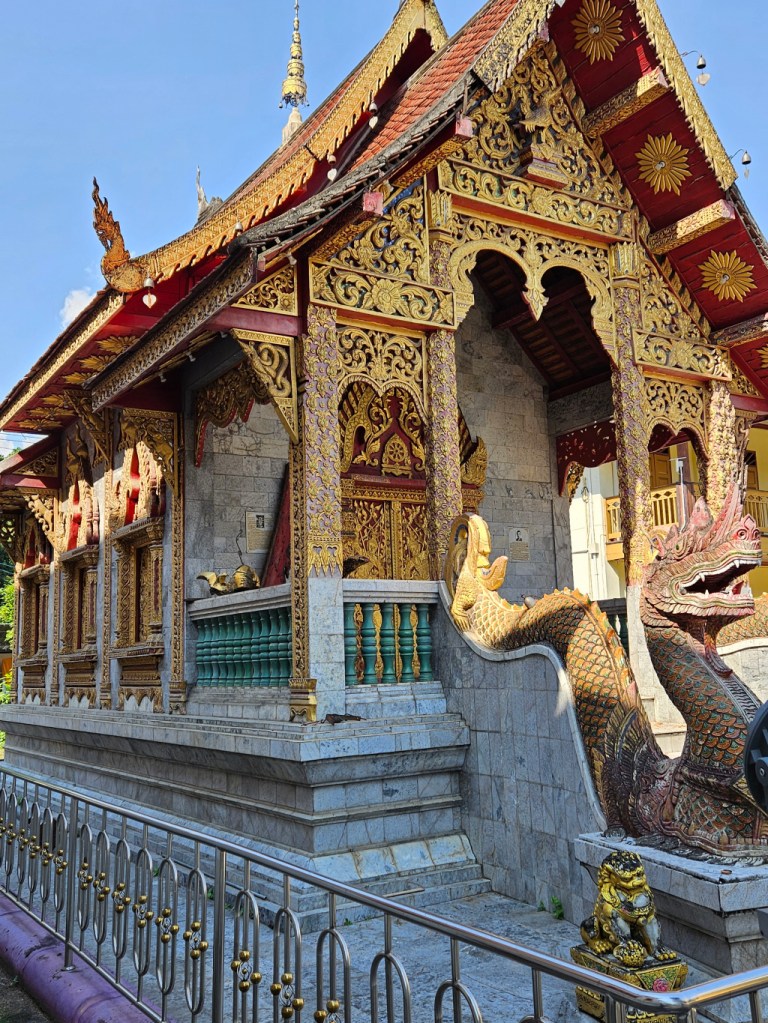
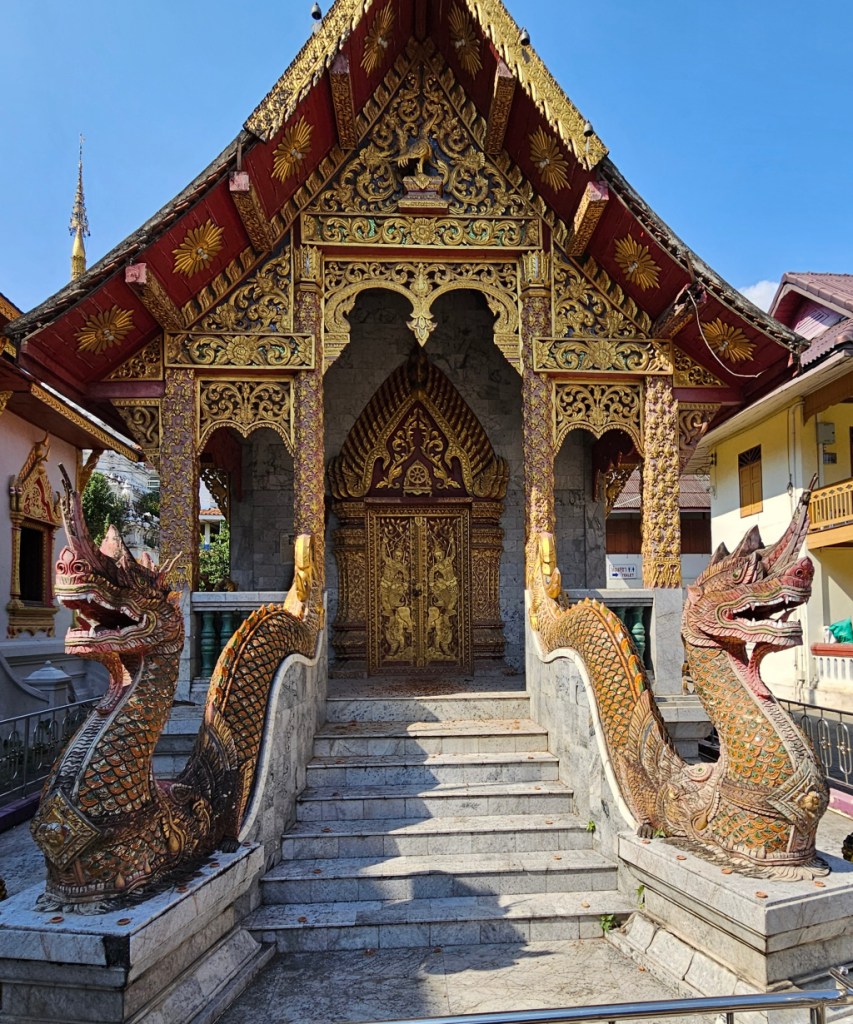
The ubosot is closed, as they are mostly. It is a nicely decorated structure and looks to be in need of some serious cleaning or restoration.
Wat Sri Koet
This temple, sometimes spelled Wat Si Koet, was built around 1638 and was restored during the reign of King Kawila (mentioned in my previous blog post, Chiang Mai Railway Walk – 4) after the Burmese were forced from Chiang Mai and the area in 1774. A feature of the temple grounds is a 500-year-old Bhodi tree. I completely missed that tree when I visited, only learning of it in my research about the temple history. Exactly how I missed a 500-year old tree is a mystery. I’m nearby often, so I’ll have another look.

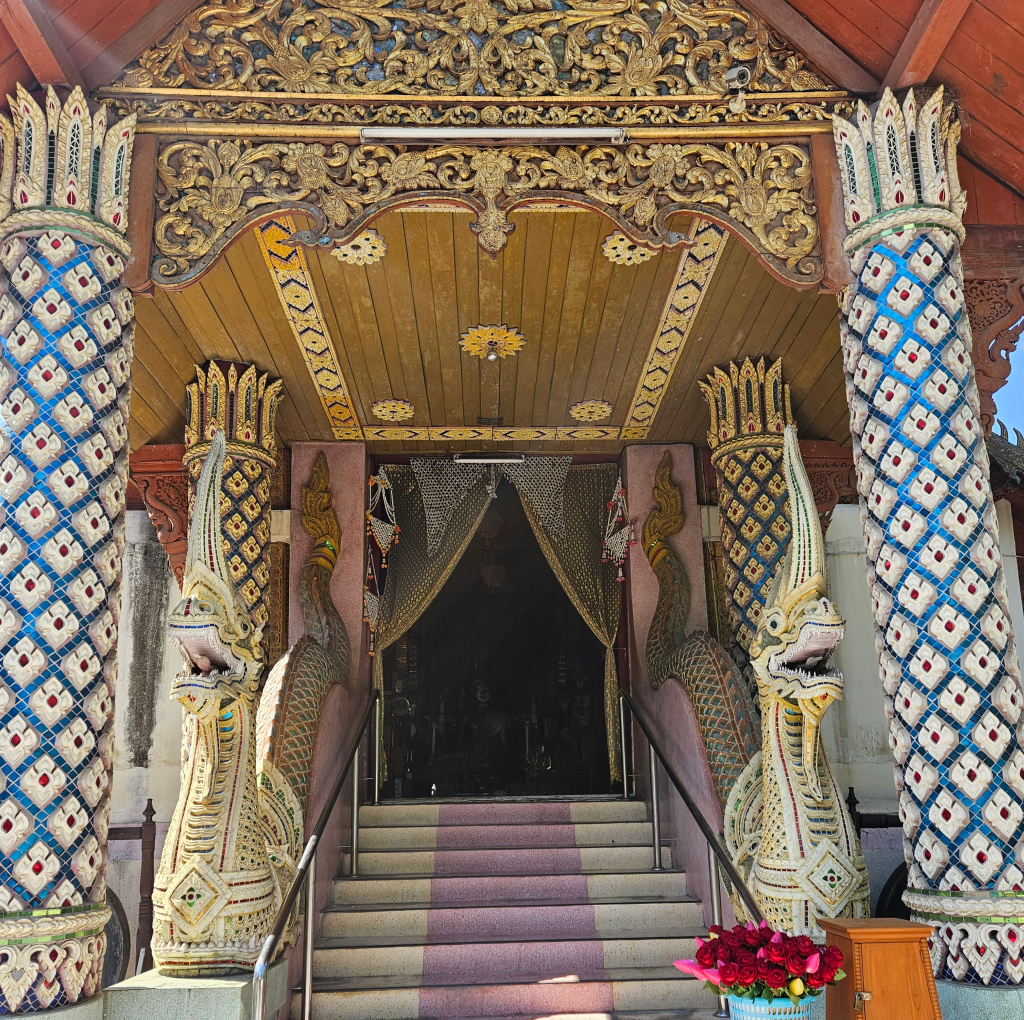
In spite of this temple being in an area with many tourists, there is no English on the sign. The sign appears worn and the wall around it dirty. Overall, the grounds echoed that feeling, not the cleanest and in need of cleaning or restoration. The viharn seemed better. And I like the blue columns holding up the roof to the entrance.

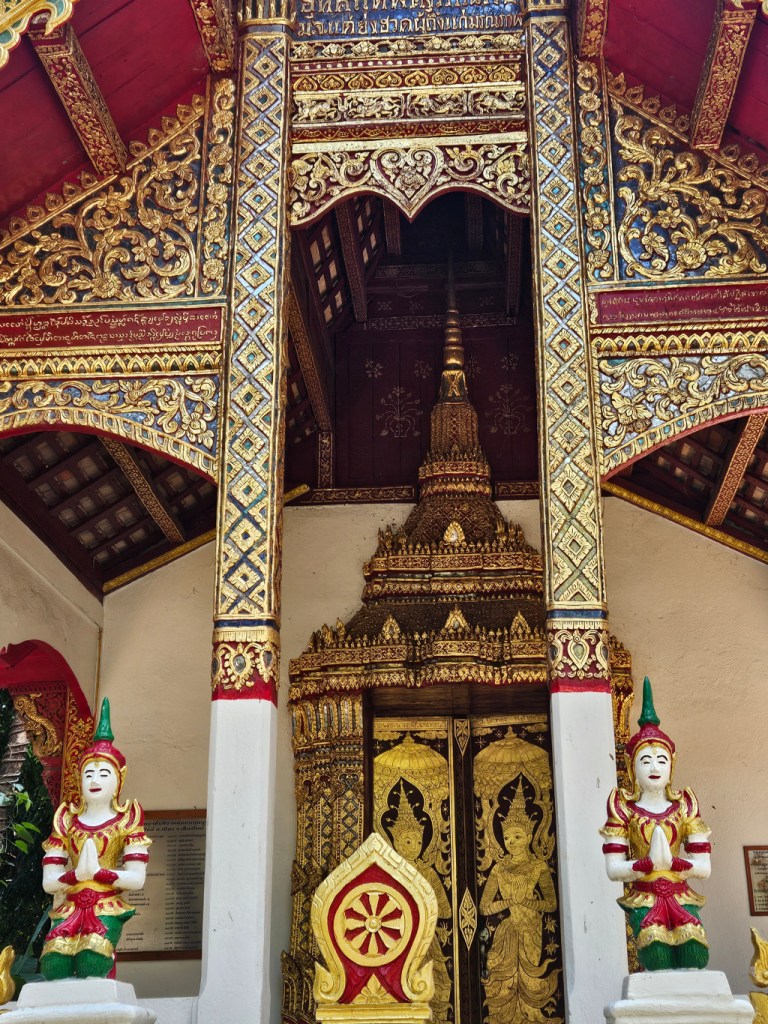
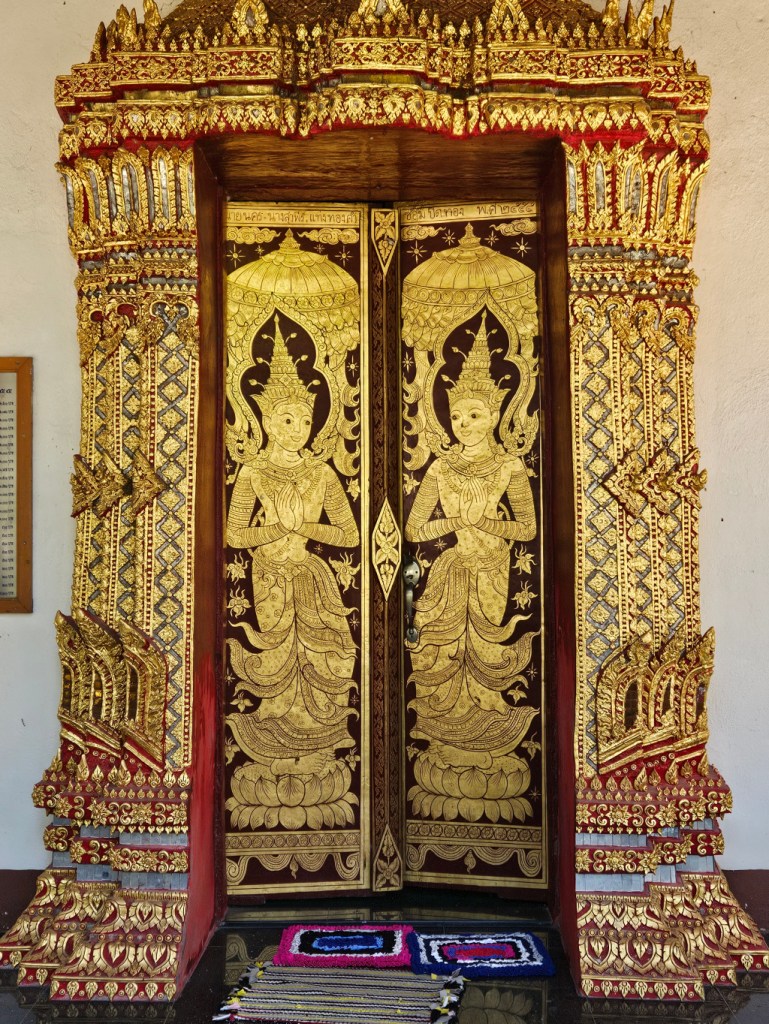
My favorite structure here is the ubosot. Nicely decorated with very nice thewada designs on the doors.
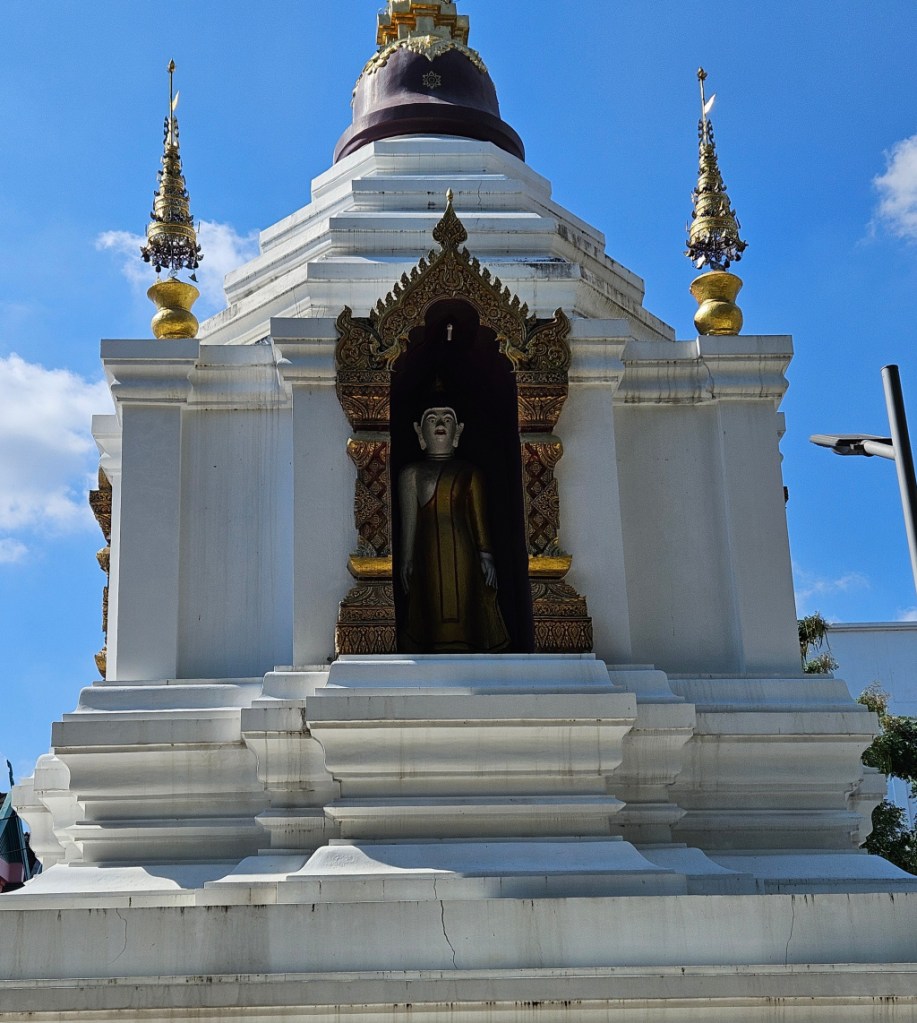
And, as with almost all Buddhist temples in Thailand, there is a chedi. Here, it is almost hidden in a corner of the temple grounds. The chedi is very modern-looking with large niches on each of the four sides for large Buddha images. This is not my favorite style, I prefer the more rustic, exposed brick chedis.
After my three-temple exploration, I met John for coffee at Akha Ama next door to Wat Sri Koet. There are many more of these smaller, local neighborhood temples in the Chiang Mai old city. All similar, and all very different.
Next: Hike up the mountain in the jungle/forest to Wat Phalad and Wat Phra That Doi Suthep

 James the Intrepid Pilgrim