Wednesday, December 20, 2023
Walking east of the Old City
Chiang Mai Railway Station
It is a hot, sunny day, and I’m glad I have my hat to prevent sunburn on my head. I finally made it to the Chiang Mai Railway Station.
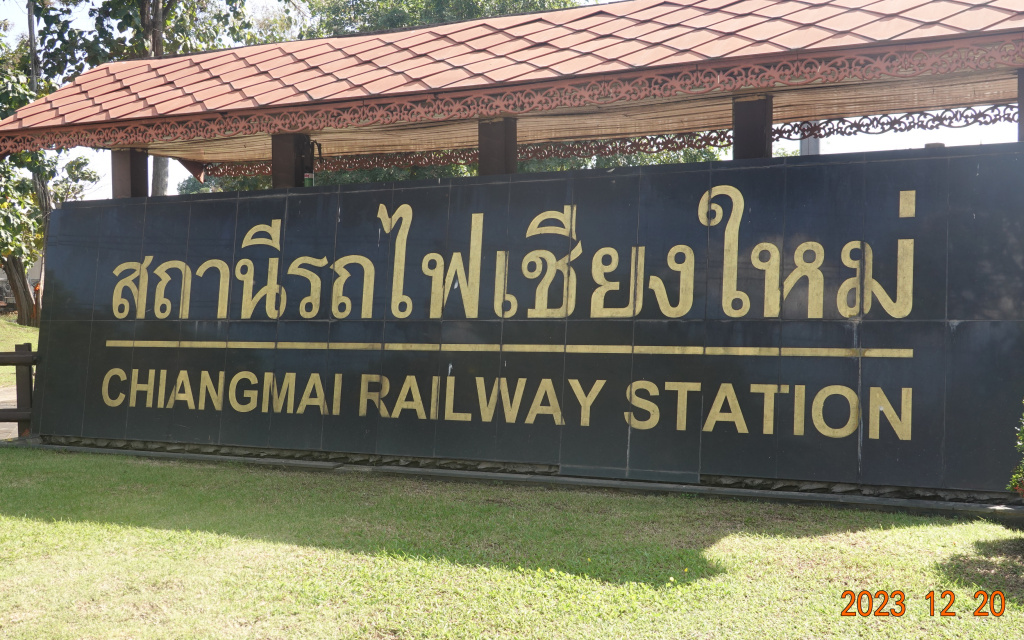
Here is a view of the overall station and one of the entrance.
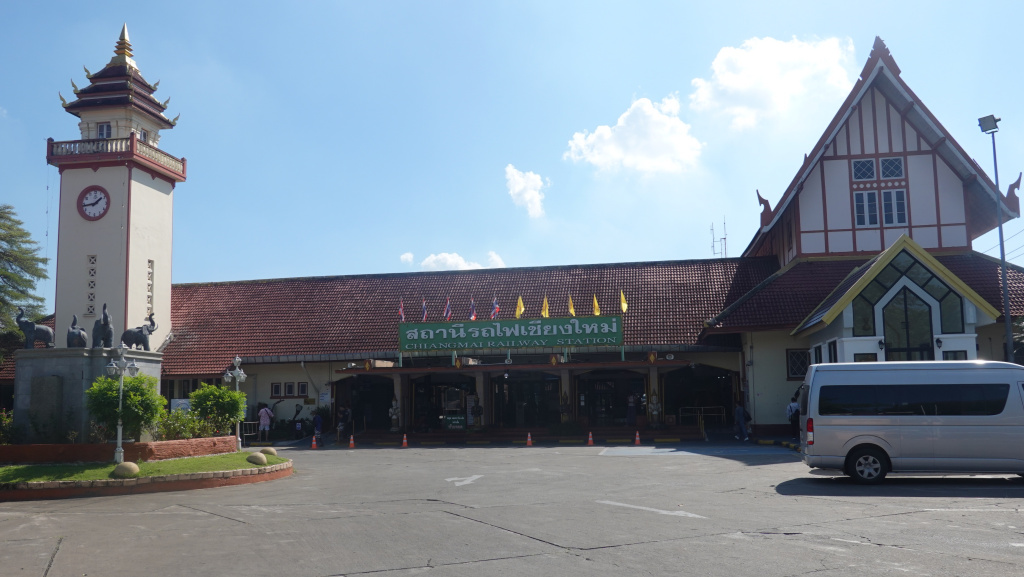
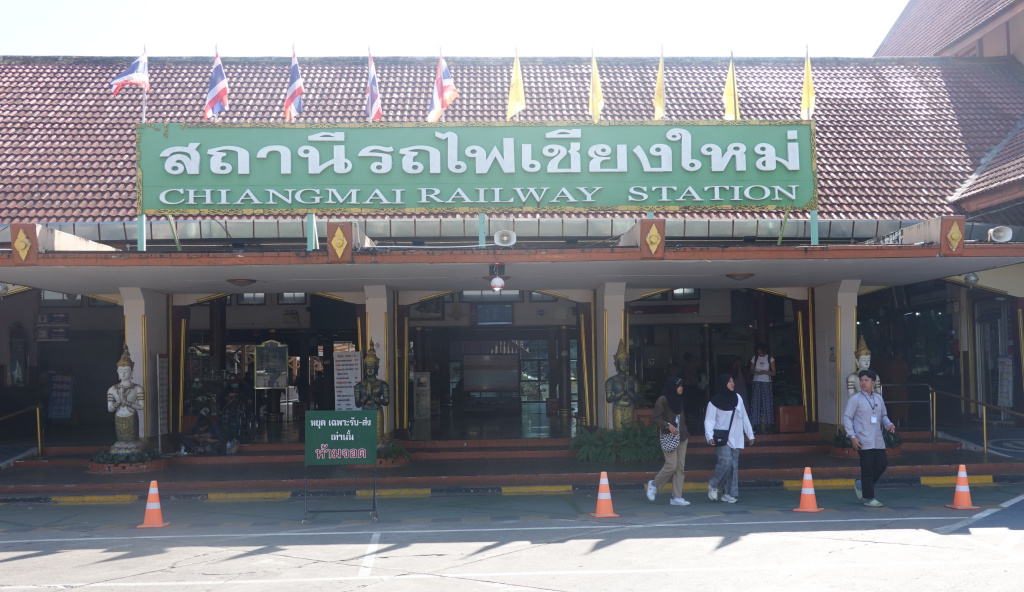
I was last here very briefly 11 years ago when I arrived after taking the daytime train from Bangkok to Chiang Mai. That trip made a lasting impression. After leaving the Bangkok metropolitan area, for hours and hours there were rice fields as far as could be seen on both sides of the train. Occasional banana trees, some other fruit farms, but mostly rice fields. Rice is a very important crop in Thailand and Thai rice is exported all over the world. As we were getting more than halfway and fairly close to Phitsanulok, we were in a dense jungle that came practically right up to the train. After Phitsanulok, we descended into more farmland, rice fields, and many other types of farms as the train made its way to Lamphun and then to Chiang Mai.
Inside the railway station just before the platforms is this large picture of Chulalongkorn also known as King Rama V (the fifth king in the Chakri Dynasty, the current reigning dynasty of the Kingdom of Thailand). The current King is Rama X, Maha Vajiralongkorn who was proclaimed king on 1 December 2016, after the death of his father Bhumibol Adulyadej who had held the throne for 70 years.
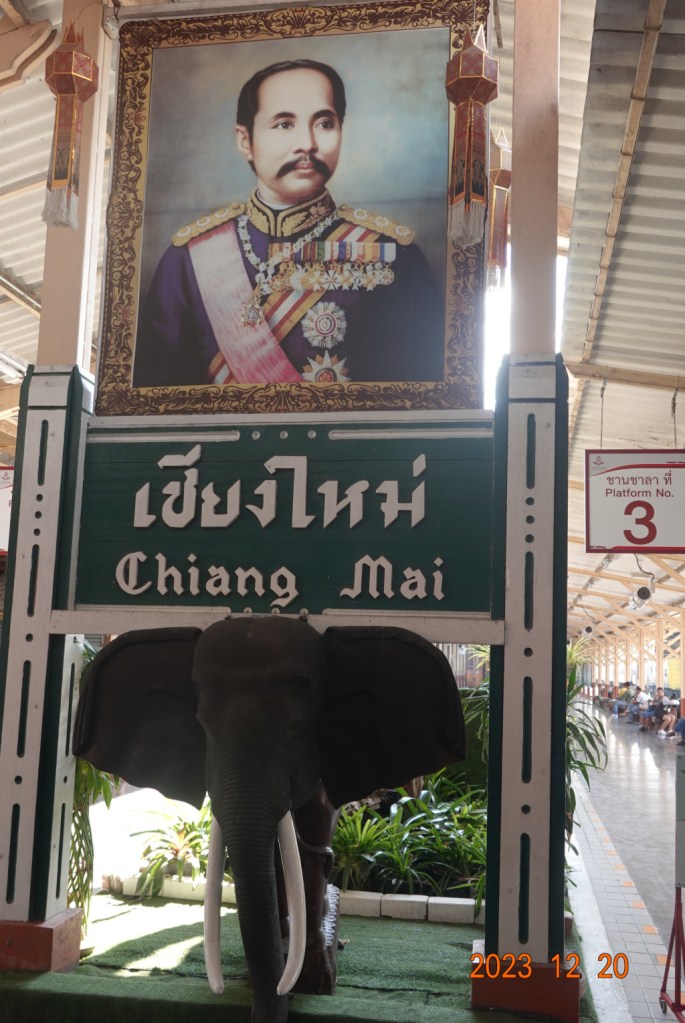
Chulalongkorn was an important King of Thailand, then Siam. His reign saw the modernization of Siam and governmental and social reforms. While Siam was surrounded by European colonies, and given their increasing encroachment, he made territorial concessions to the British and French ensuring the independence of Siam. This saw the merger of the former, northern-Thai region known as Lanna into Siam, and the giving up the land east of the Mekong River to France, French Indochina, which later became Laos and Cambodia.
Chulalongkorn also saw the creation of the Royal State Railway of Siam (RSR), whose name was changed to the State Railway of Thailand (SRT) in 1951.
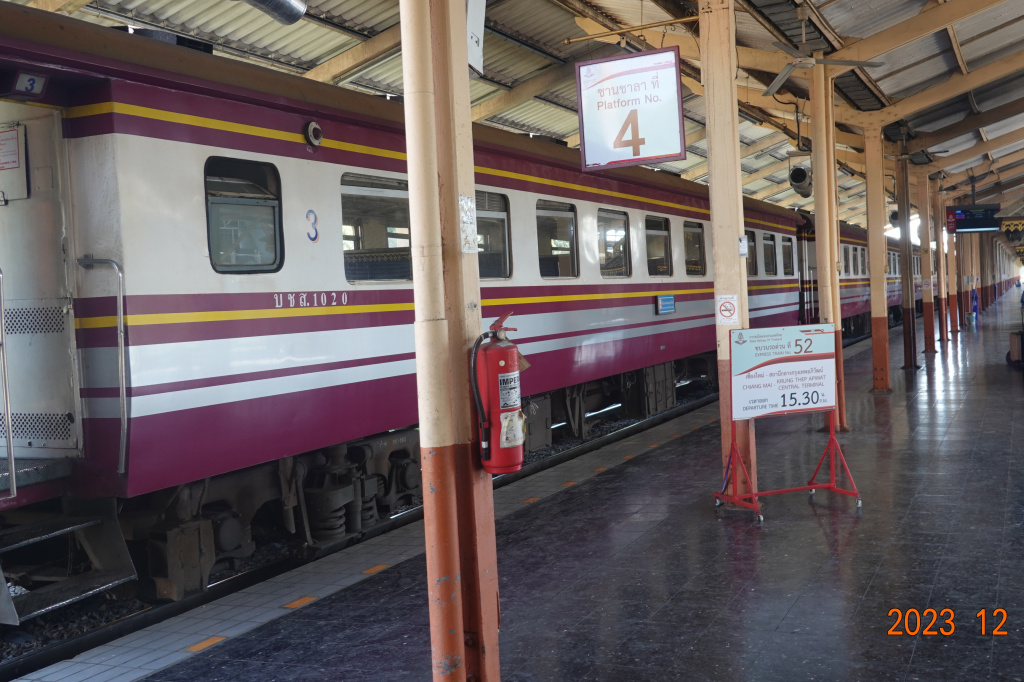
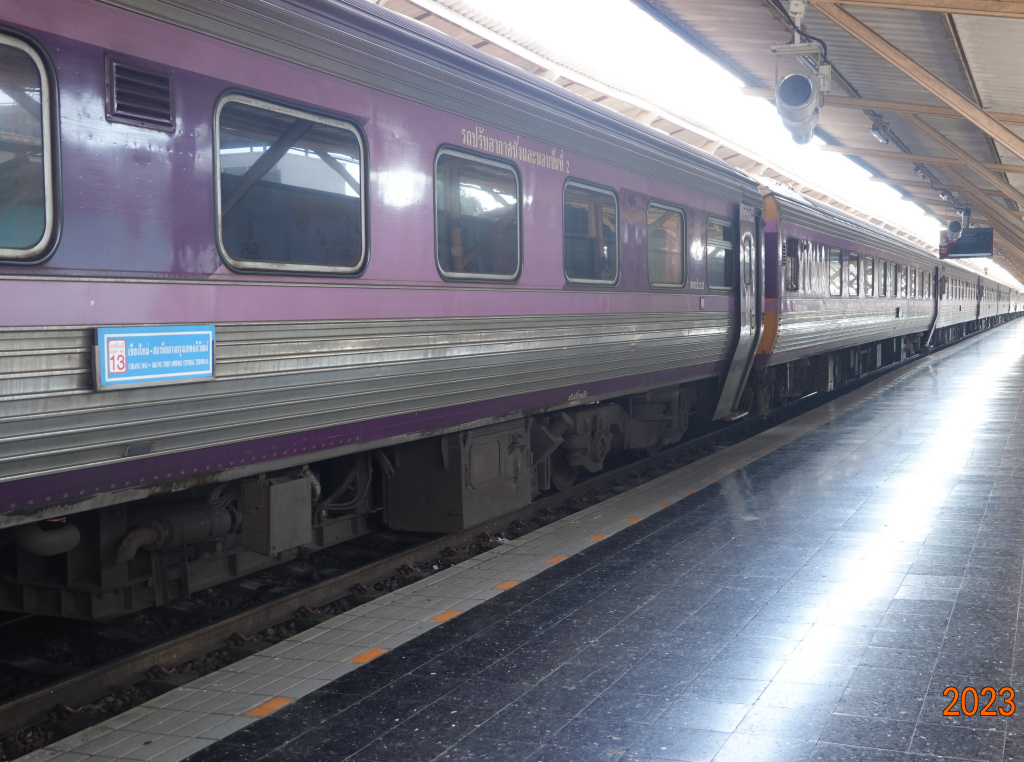
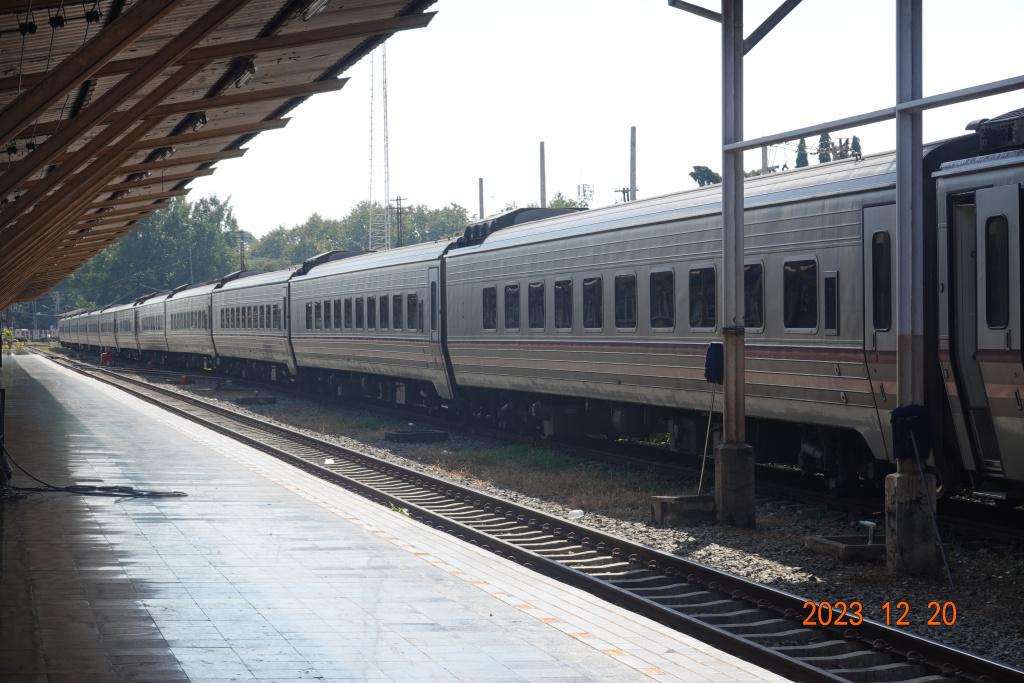
I walked down the platforms looking at the waiting trains. They are all fairly old-looking, although the sleeper cars for the nighttime trains were bought in 2016, so are fairly new. Here are the three trains I saw. All three were fairly long, 12-15 cars each.
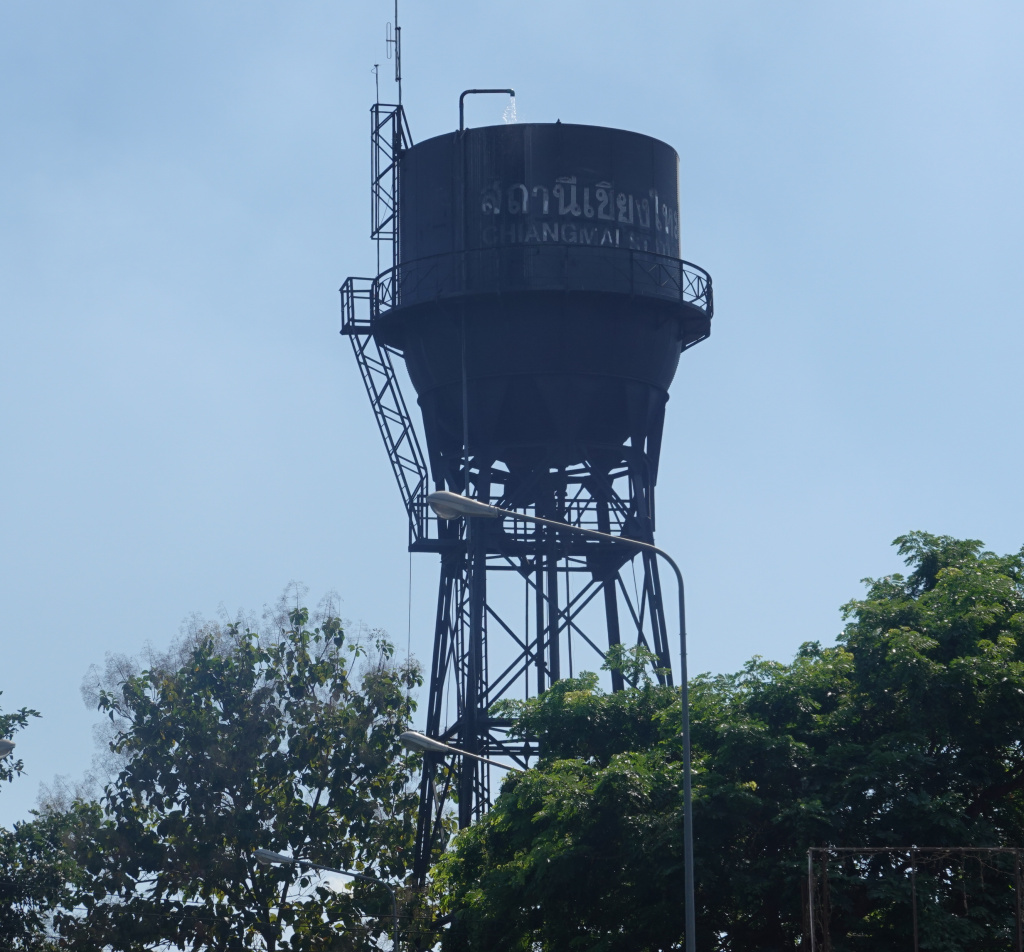
I walked back into the station, bought and drank an orange juice, and made my way to the road adjacent to the railway to walk south along the tracks. This road on Google Maps is named “Road Along the Railway.” As was once common near train stations in the U.S. I saw a large water tower:
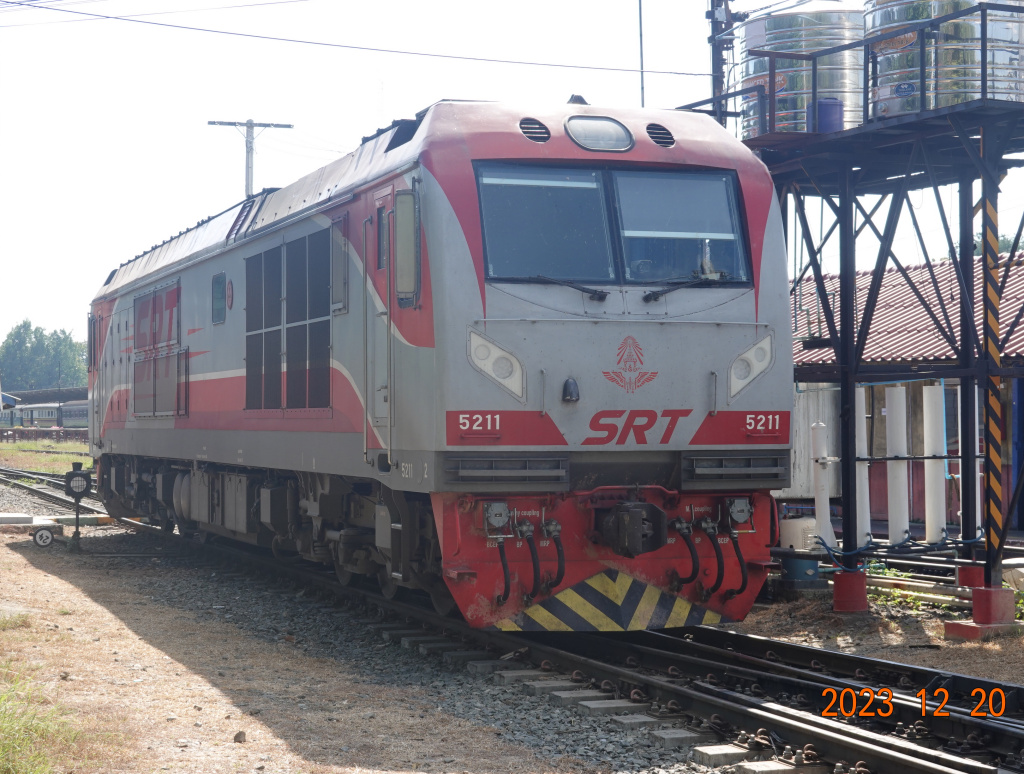
Then I saw a lone diesel locomotive at what appears to be a refueling or a light maintenance facility.
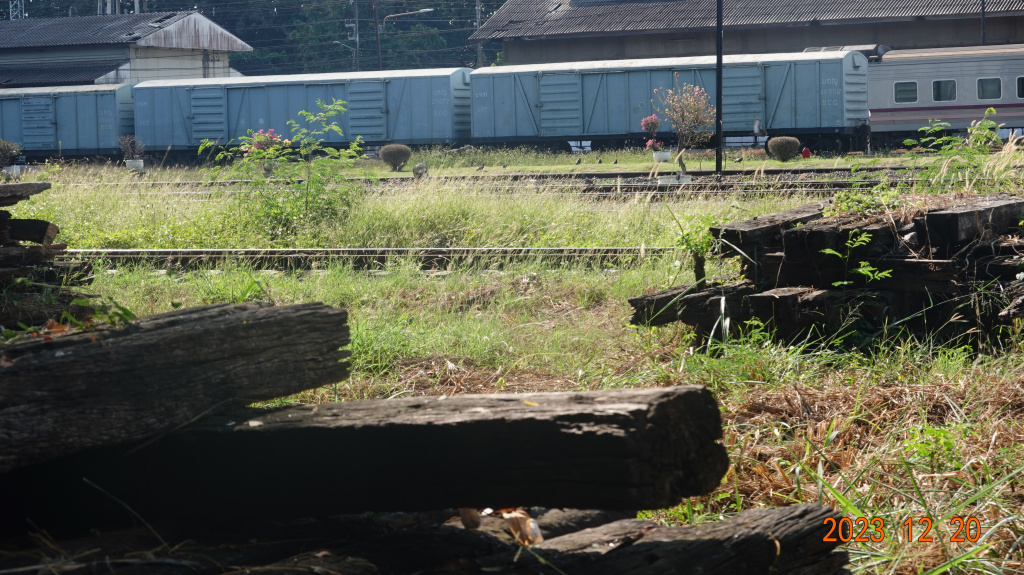
Just a little further south, throughout the rail yard, there were piles of wooden railroad ties, having been replaced with concrete ties. I saw a few boxcars across the field. In the U.S. they would be covered with graffiti.
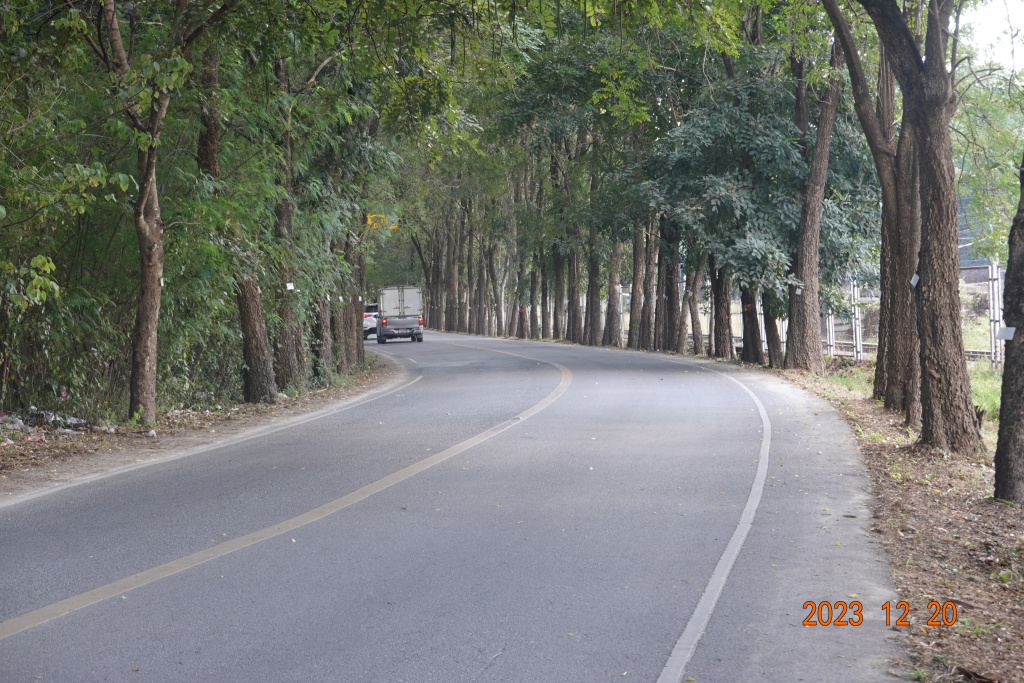
I continued down the road adjacent to the rail line. A nice, tree-lined road.
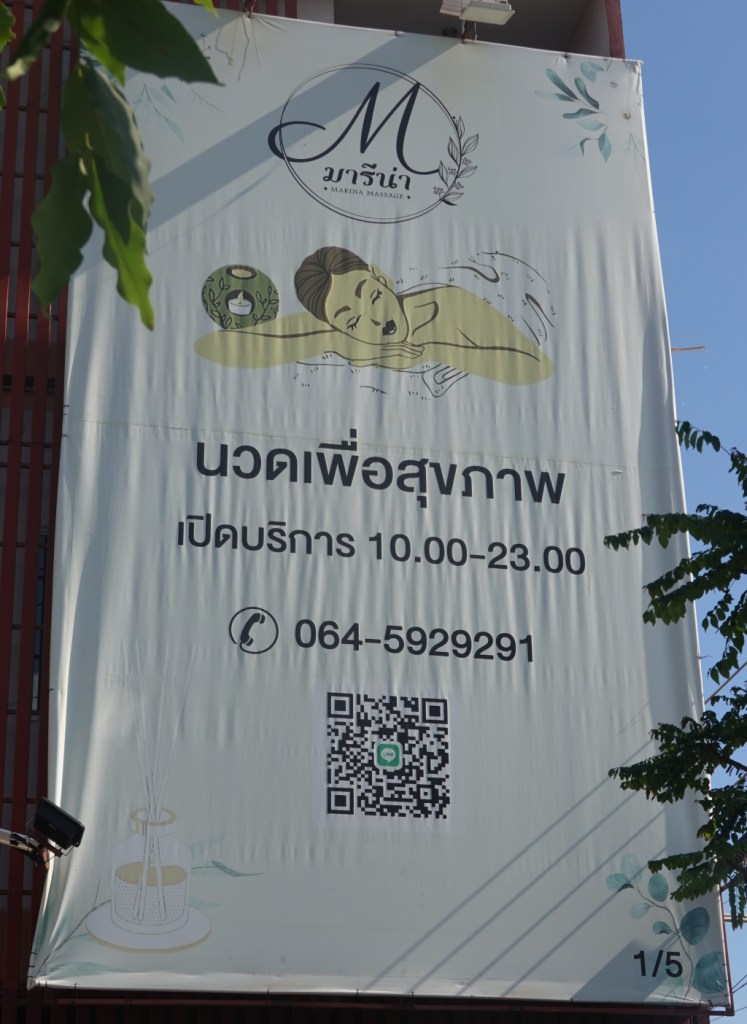
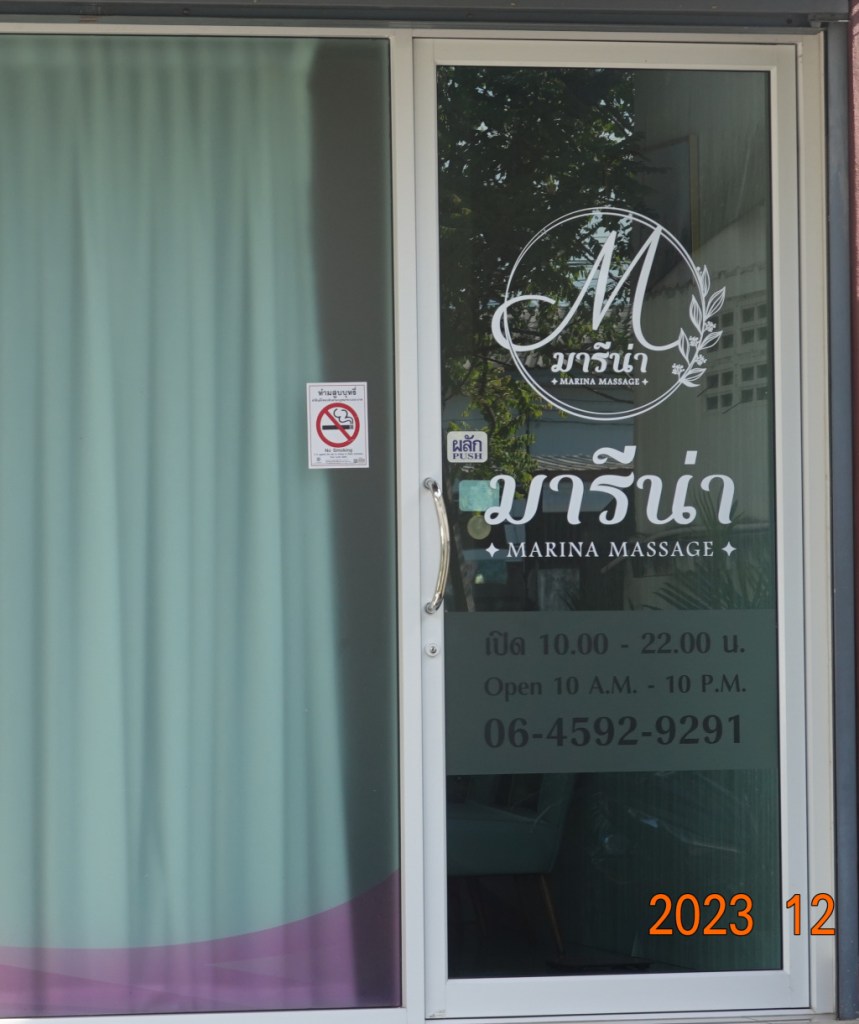
I continued walking south. I got to a point where I wanted to turn right and cross the tracks to visit a temple I had seen on the map. The next road crossing was at least a kilometer south (and it’s hot and I’m getting a little tired). I also noticed to my left a massage shop. This is pretty much the “middle of nowhere,” so it was a bit of a surprise. I suspect this is an erotic massage place, not catering to tourists, but who knows – the name is in English on the sign. The sign on the left says “Massage for Health, open for service 10:00-23:00” and the Thai lettering on the sign on the door on the right says “Marina.”
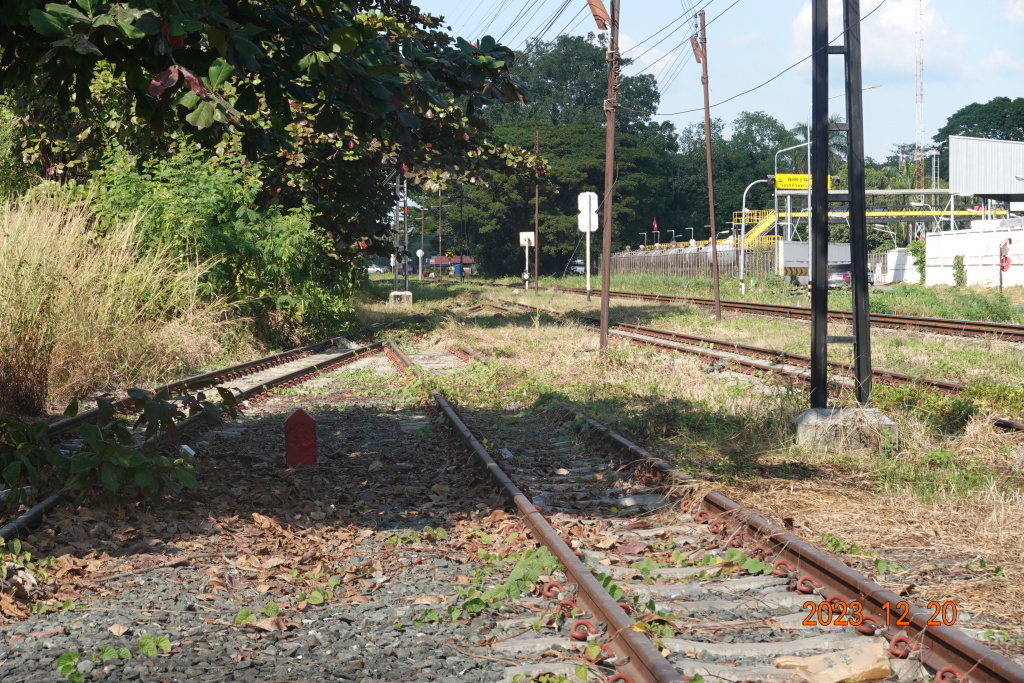
To my right, I saw that someone had placed some boards across the drainage ditch. They looked fairly sturdy, almost like a 4×12, so I went for it and crossed carefully. Looking closely at the tracks as I crossed, I realized that this rail line is “meter gauge” instead of the more standard 4′ 8-1/2″ gauge. Standard gauge is also called Stephenson gauge (after George Stephenson), international gauge, UIC gauge, uniform gauge, normal gauge, and European gauge. Here is a view looking north towards the station as I crossed the tracks. Meter gauge with all concrete ties.
I had seen on Google Maps that there was a temple in the area, and after crossing the tracks, I was on the road leading west towards that temple.
Next: Railway Station Walk – 4 – Wat Muang Kai

 James the Intrepid Pilgrim