Wednesday, December 20, 2023
Walking east of the Old City
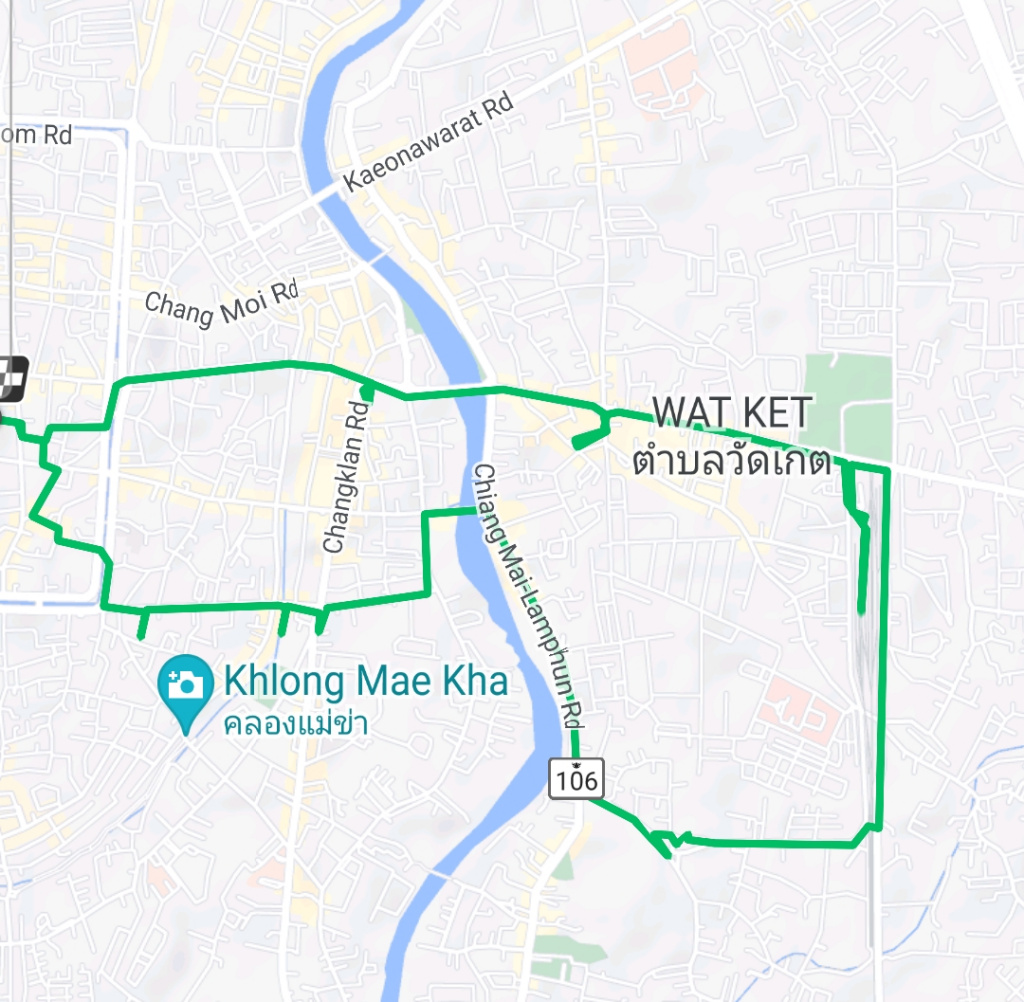
With the weather not quite as hot as it has been, I decided to get out for a longer walk. I have not explored east of the Mae Ping River except right along the river, so I headed east thinking I might walk to the Chiang Mai Railway Station. I have been there only once, in 2012 when I arrived in Chiang Mai after taking the daytime train from Bangkok. My walk ended up being over 12 kilometers (7.5 miles), so this post will be in four parts.
The walk is shown on the map below. The sort of double dip at the upper right is when I was in the railway station walking down the platforms and looking at the waiting trains.
Wat Upakhut
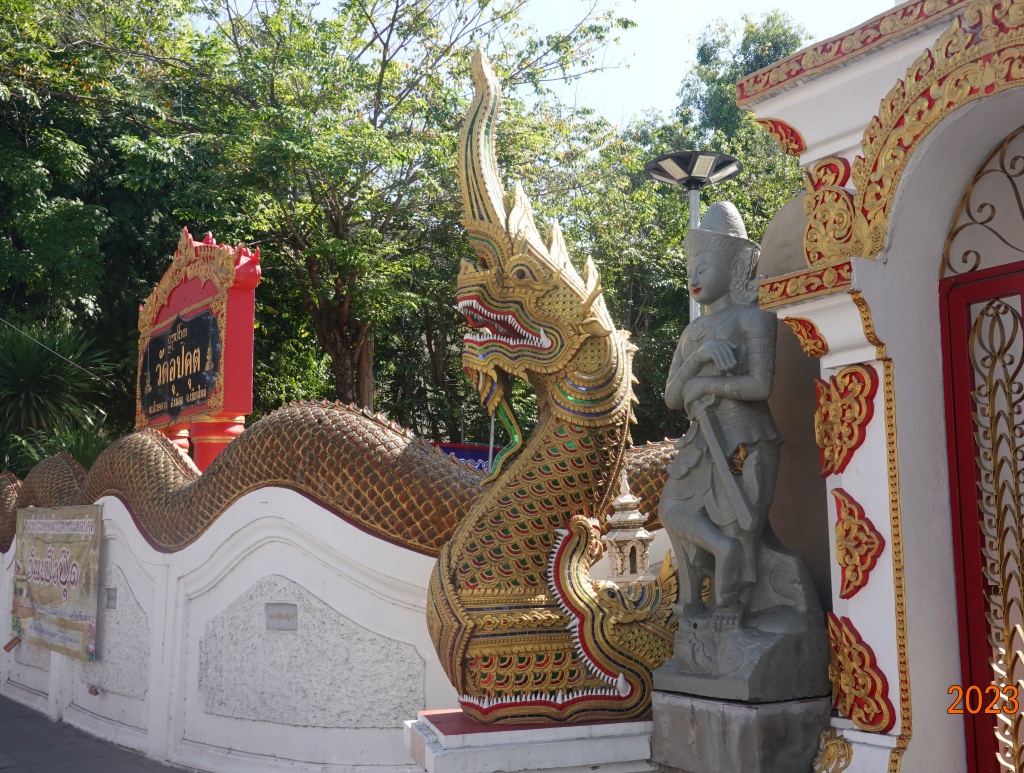
Just before I got to the Nawarat Bridge over the Mae Ping River, I passed Wat Upakhut. This is sometimes called the temple with 1000 Buddhas. Most of these Buddha statues are in a small building that has always been closed when I have been there. According to what I read as I searched for its history, this temple used to be much larger but was reduced in size and lost some of its buildings in recent times when the Puttasatharn Buddhist complex was built next door. Today was a “big Buddha day,” something that seems to occur often, so there were many, many people in this small space. It is difficult to get a good view of the entrance without standing in the busy street, so here is an angled view of the outside, and a view of the top of the entrance tower from the inside (which looks the same outside).
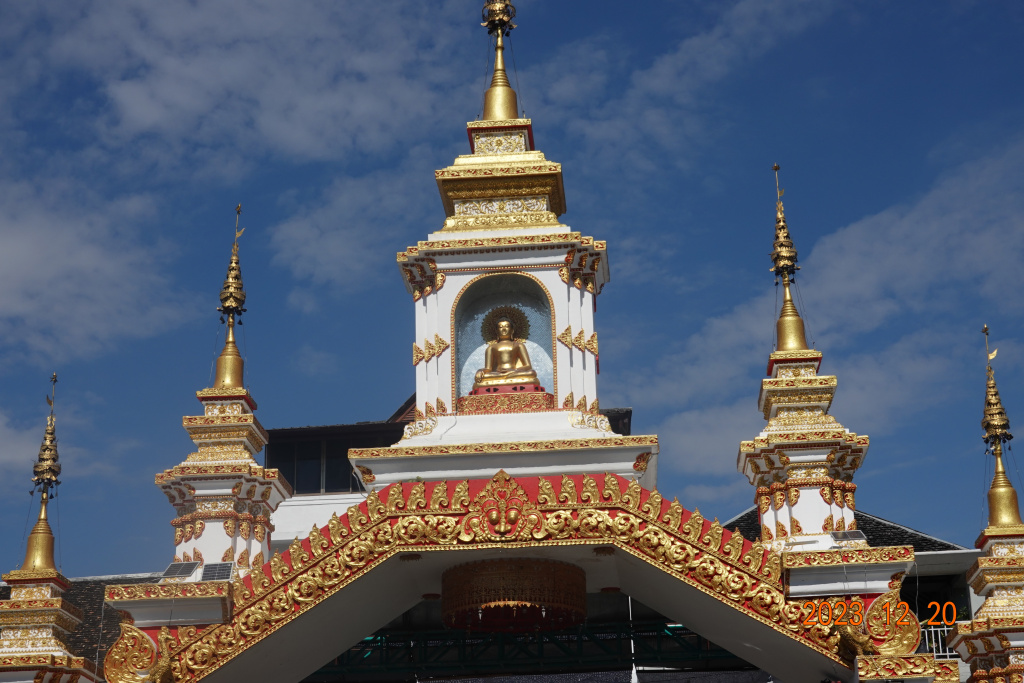
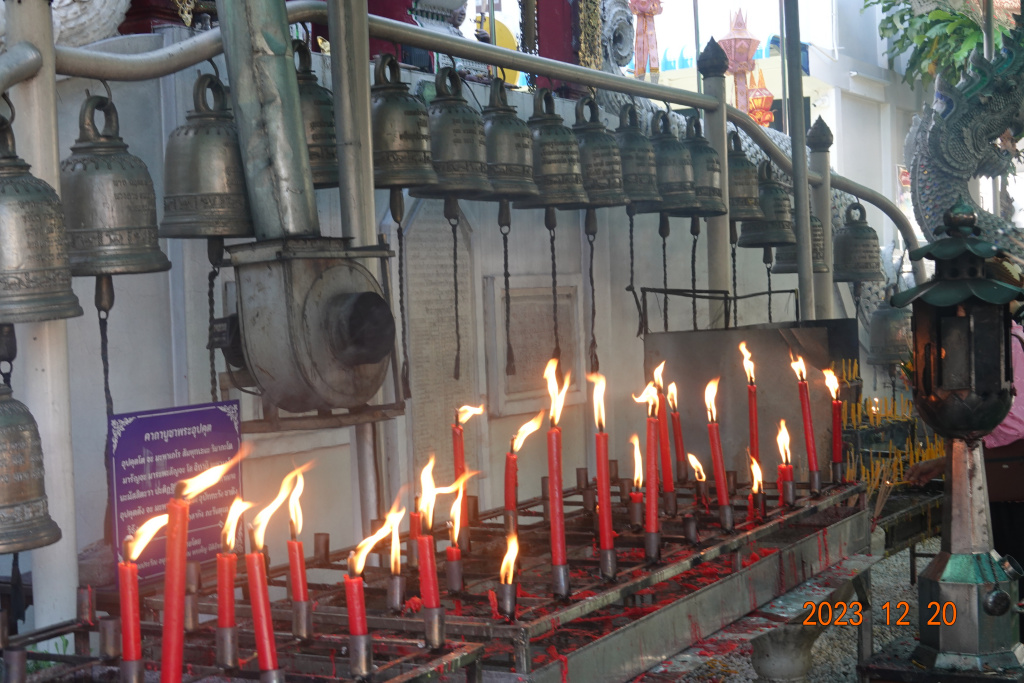
Most of the buildings here appear clean and recently painted or restored. Although crowded together, the buildings are nice. I get the feeling that this is not by any means a “poor” temple. In front of the main viharn (worship hall) was a place where people light candles as an offering (much like in Christian churches). It was very crowded with people and I somehow managed to get a photo without other people. An interesting observation is the size of the flames, much larger than I would have expected.
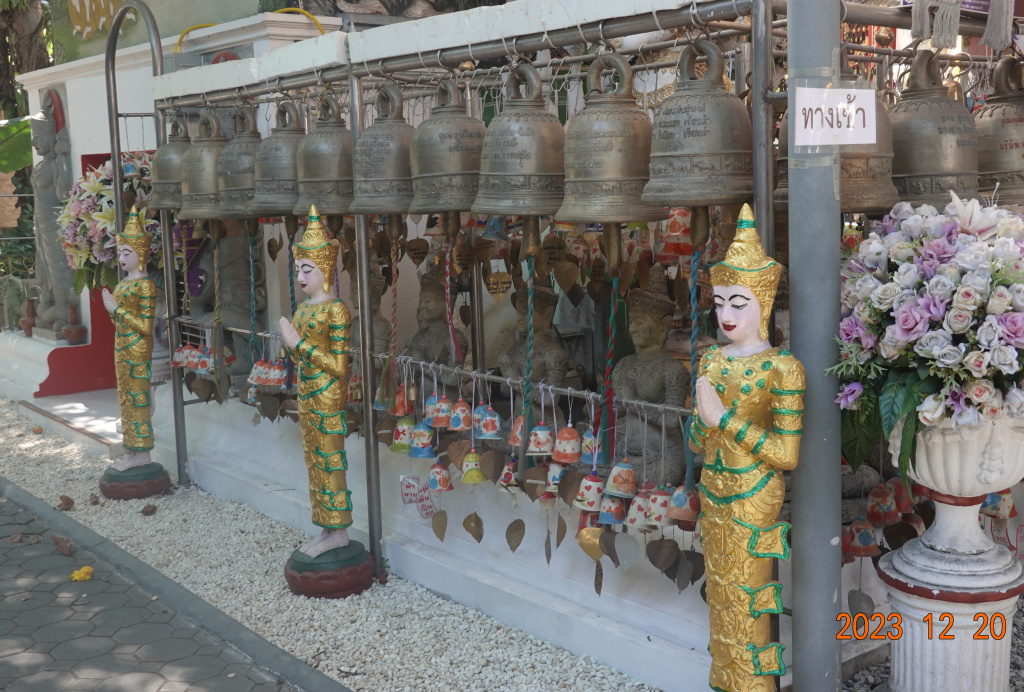
Beside the viharn was a line of thewada (angelic beings that live in the heavenly realms) along a line of bells. Thewada have no gender, and can appear very male or female depending on the artist. Here, the thewada appear very female, at least to me.
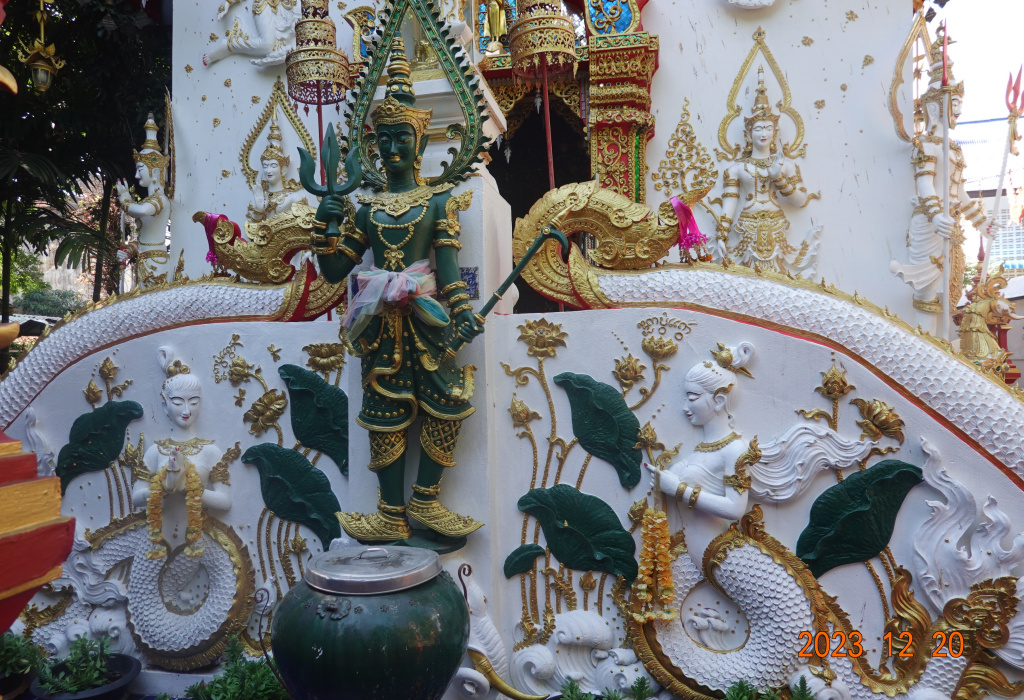
Just behind the bells was this very dark yaksha. Yaksha, according to Wikipedia are “a broad class of nature spirits, usually benevolent, but sometimes mischievous or capricious, connected with water, fertility, trees, the forest, treasure and wilderness.” They are considered guardians, and often they flank a temple entrance, guarding the temple from invading spirits. Almost always their skin is green, blue, white, or red. I do not remember seeing a yaksha as dark as this one. It was difficult to get a clear photo because I was looking directly into the sun.

The side of the main viharn is decorated with thewada, and the entrance to the smaller viharn is guarded by two very female-looking water nymphs and a large green yaksha.

The chedi is all white and clean. Everything at this temple appears newly restored or painted.

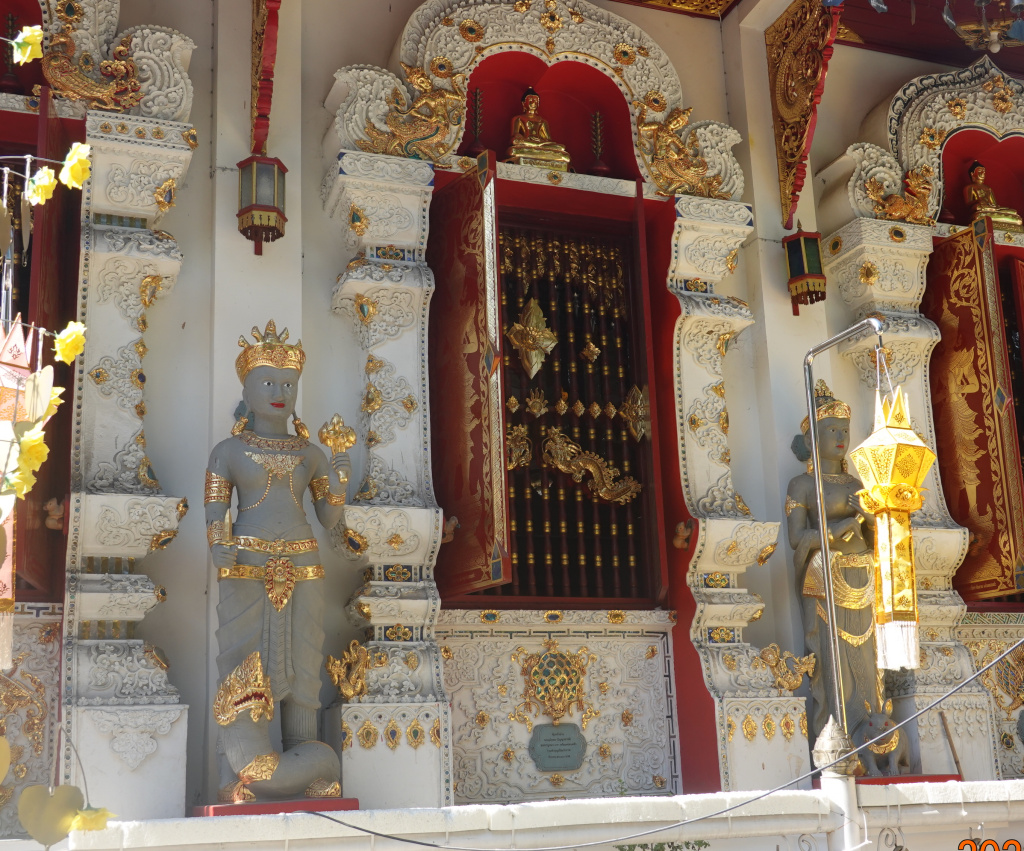
On another part of the main viharn were these gray thewada, also very female-looking.
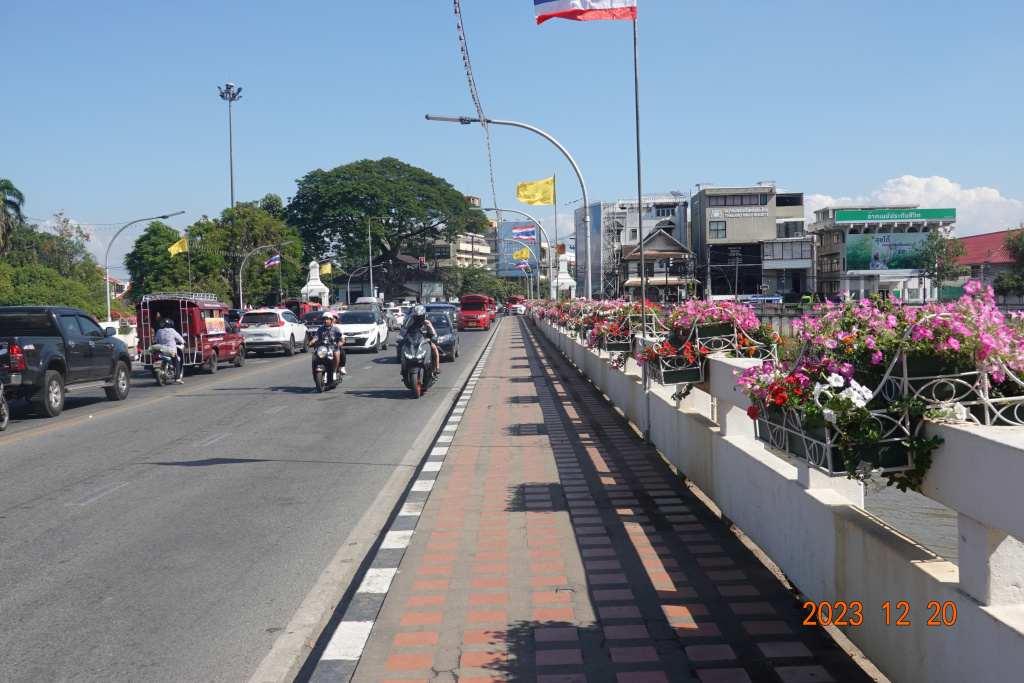
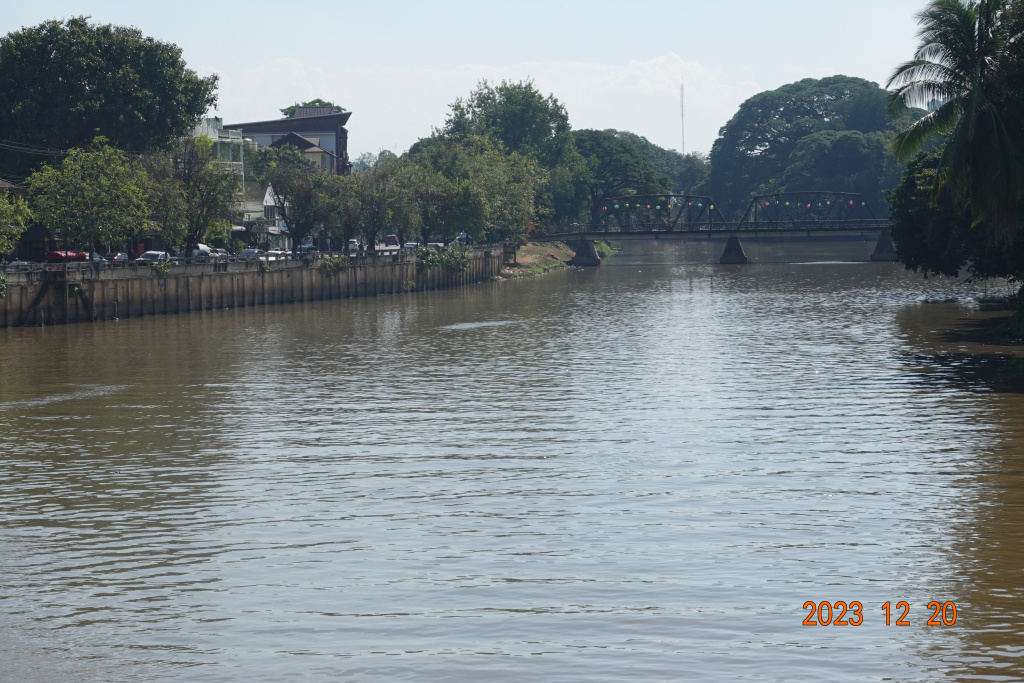
I left the crowds at Wat Upakhut, proceeded east over the Mae Ping River on the Nawarat Bridge, and looked downriver to the Iron Bridge which I expect to be crossing in the opposite direction on my return to the old city.
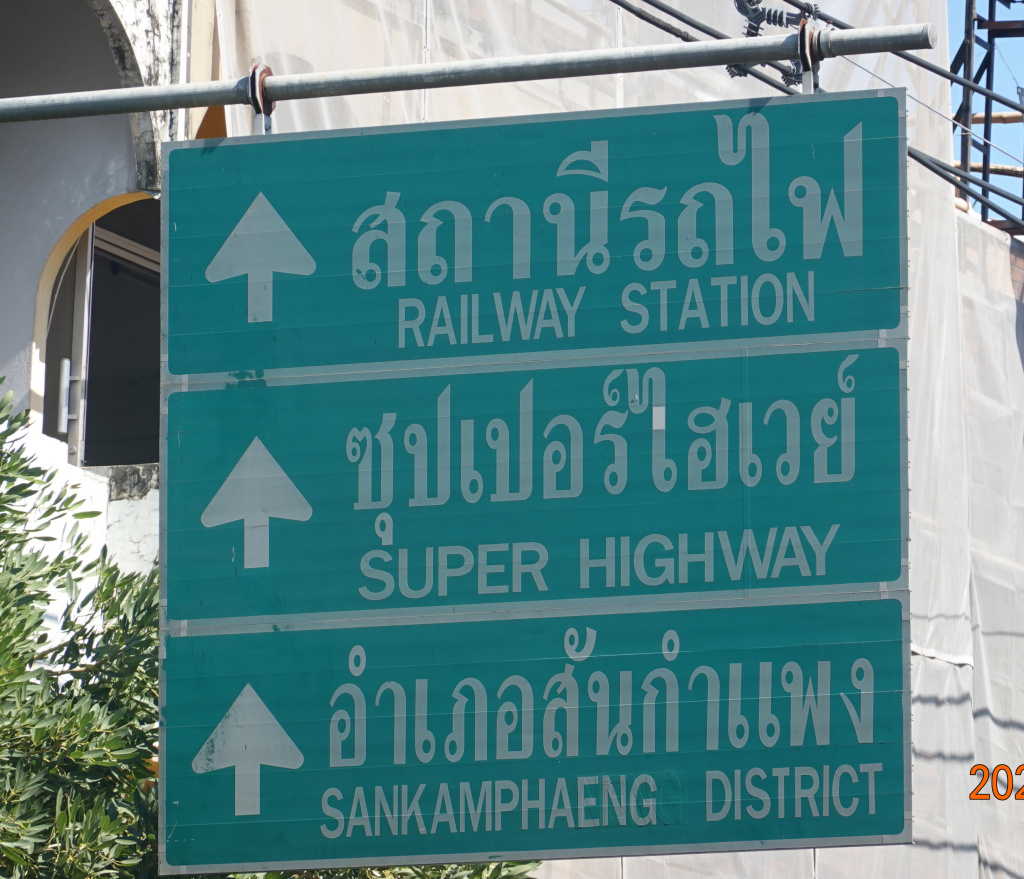
After negotiating the very busy intersection at the end of the Nawarat Bridge, I saw this sign, suggesting that I was on the right route to the railway station (I had no doubt, thanks to Google Maps). Unfortunately, the sign does not indicate the distance to the three places.
Next: Railway Station Walk – 2 – Local temple in the San Pa Khoi neighborhood

 James the Intrepid Pilgrim
Very well kept temple indeed.
LikeLike