Wednesday, December 13, 2023
Walking back from Chiang Mai Ram Hospital
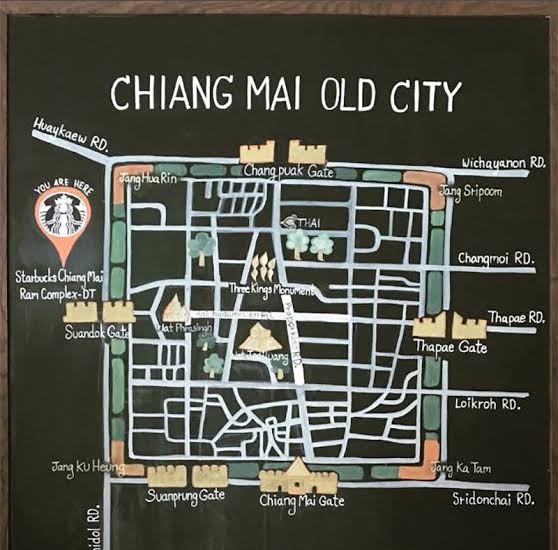
Chang Phuak Gate
Chang Phuak Gate was originally named Hua Vien Gate. When King Mengrai had Chiang Mai built, the wall around the city had four gates, one on each side. The gate on the north was called “Hua Vieng Gate.” In Thai, “Hua” means head and in northern Thai, “Vieng” is a fortified place, so Hua Vieng Gate means the gate at the head of the forification, or the gate at the head of the city. Around 1400 AD this name was changed to “Chang Phuak Gate”.
Translated by themselves, the word “Chang” (pronounced more like “chong”) means elephant, and the word “Phuak” means ivory or off-white. I have read and learned at the Royal Elephant National Museum in Bangkok that there are no white elephants. [The Royal Elephant National Museum was listed for a few years as “under renovation” and is now listed as “permanently closed.” I’m glad I got to see it.] In the context of a large animal like an elephant or water buffalo, “phuak” means “not the normal color.” The royal elephants were not the normal gray, rather, they were a reddish-brownish-gray, distinctly not the normal color, or “chang phuak.” All too often, this is translated as “white elephant,” but the term really refers to a royal elephant, one that is not the normal color.
Two events in Chiang Mai’s history contributed to the name of Hua Vieng Gate being changed to Chang Phuak Gate. The first occurred in 1386 AD. King Geu-Na, the eighth ruler of Chiang Mai, was presented with the Buddha relic that exhibited magical powers. The chedi at Wat Suan Dok was built to house the relic, and when it was to be placed in the chedi, it separated into two pieces. One piece was placed in the chedi, and the second piece was placed on the back of a royal elephant. Followed by the King and his army on horseback, the elephant left the city by the Hua Vieng Gate and walked up Doi Suthep until it came to rest at a spot on the mountain that is now the location of Wat Phra That Doi Suthep.
The second event happened about 15 years later. King Saen Muang Ma, the son of King Geu-Na, had led his army on an expedition from Chiang Mai to Sukhothai, with the intention of capturing the city kingdom. When they arrived on the outskirts of Sukhothai, they rested for the night with the intent to attack in the morning. However, while resting, the Chiang Mai army was surprised and savagely attacked by the Sukhothai army. King Saen Muang Ma only escaped the massacre with his life because of the courage and stamina of his two faithful servants, Obb and Yeraka. They got the King out of the camp and then, because of the rough terrain, took turns carrying him on their shoulders 250 kilometers back to Chiang Mai.
Upon his return the King was so grateful that he rewarded his servants with money and materials and nominated them to royal ranking as Khun Chang Sai; the left elephant, and Khun Chang Kava; the right elephant. Both Khun Changs lived at Chieng Chom and later at this location the “Two Royal Elephants” monument was built in their honor. The elephants were originally placed on either side of the road leading to the “Hua Vieng Gate” and the name was then changed to the “Chang Phuak Gate”.
Chang Phuak Gate Collapse
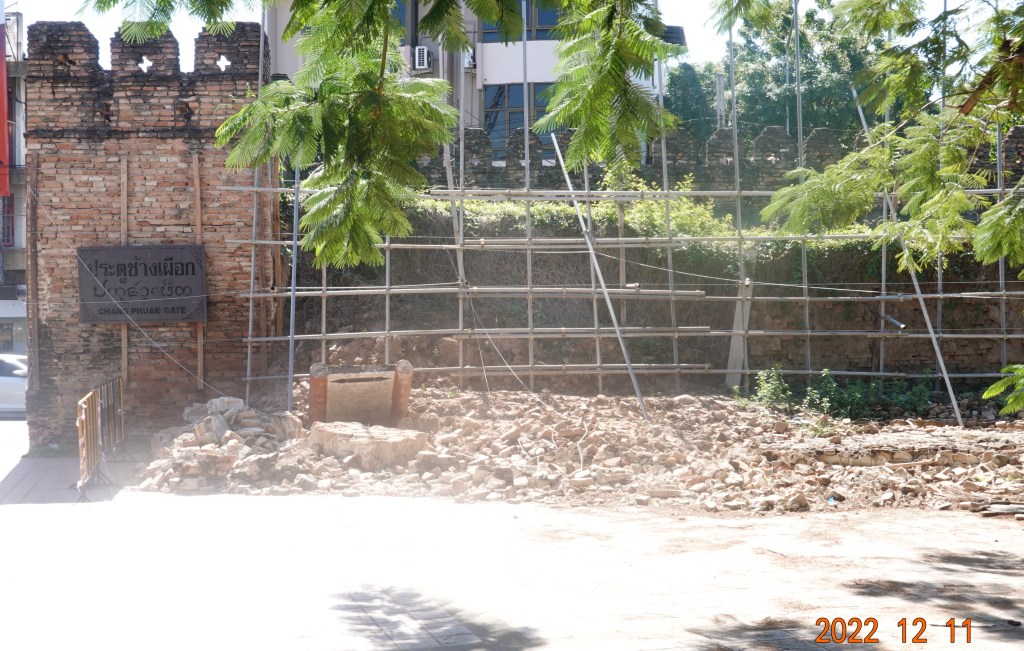
In September 2022, after several days of very heavy rain (during the rainy season), part of the Chang Phuak Gate collapsed, its foundation having been undermined with water. Here is a photo from about a year ago showing the collapsed part of the gate reinforced to prevent further collapse.
During World War II the Japanese occupied much of Thailand. Being wartime, construction supplies were in short supply, so they tore down the old city wall to use the bricks to pave the road to Pai to move military equipment. In the 1960s through the 1980s, the wall corners and the five gates were restored based on old photographs. Over time, those gates and corners have come to look old, but they are not the original dating back over 700 years.
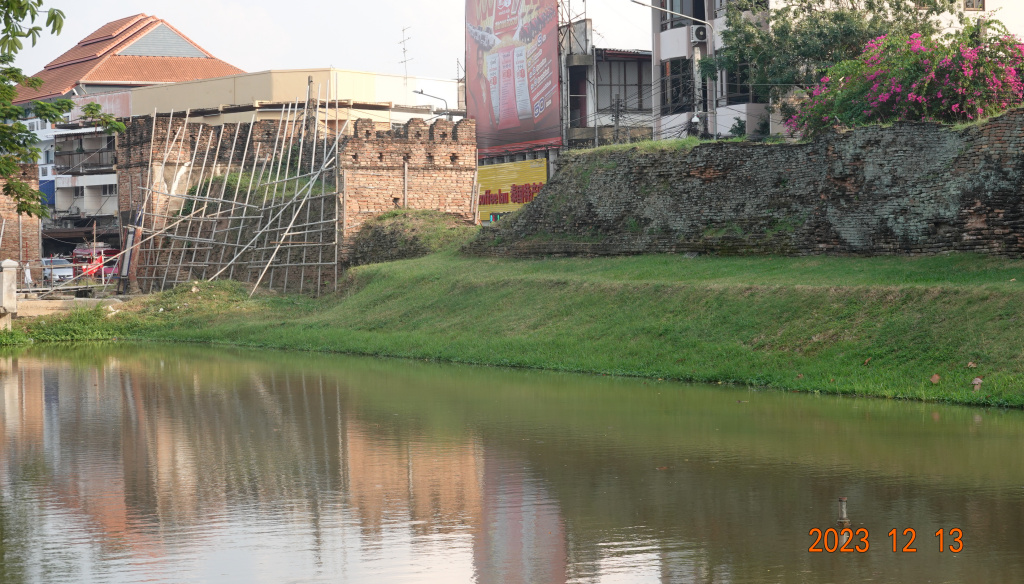
At the Chang Phuak Gate collapse site, excavations were made to learn how extensive the water had undermined the foundation. During those excavations, ancient ruins were discovered, and archeological experts were called upon to excavate and learn what the ruins were from. More of the area has been dug up, and it does appear that there were interesting ruins under the road. The road cross over the moat here is closed, and I have been told may never re-open. While cars may not cross here, a pedestrian bridge was built, and I use that when I walk to Pump Fitness for my strength training sessions with Khun Ning. Here is a photo of Chang Phuak Gate in its current state from the west:
And here are some photos of the excavation.
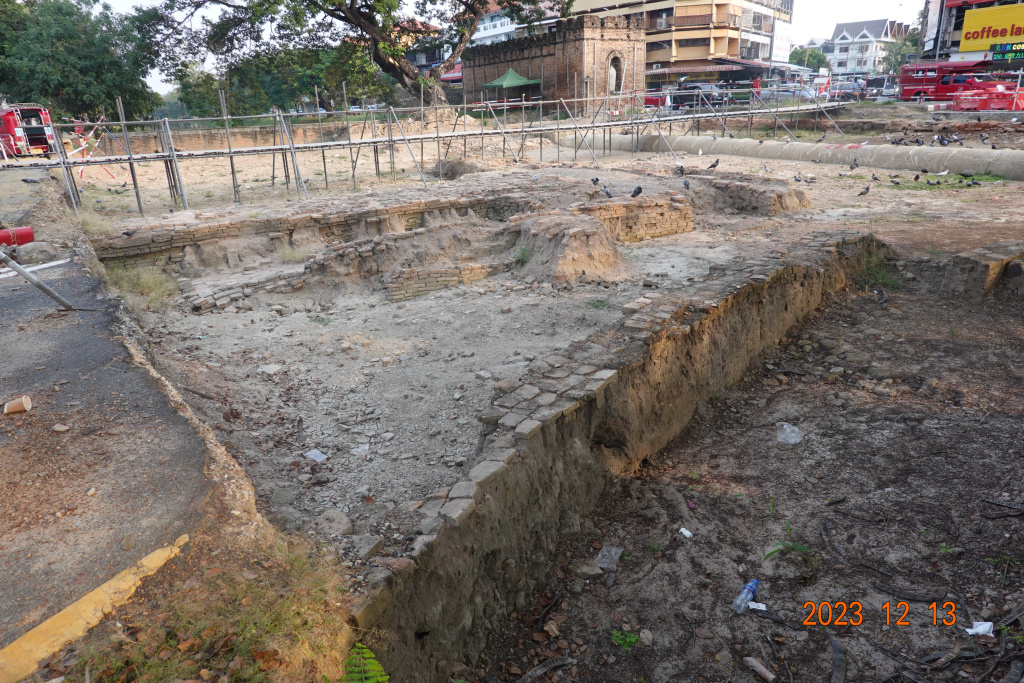
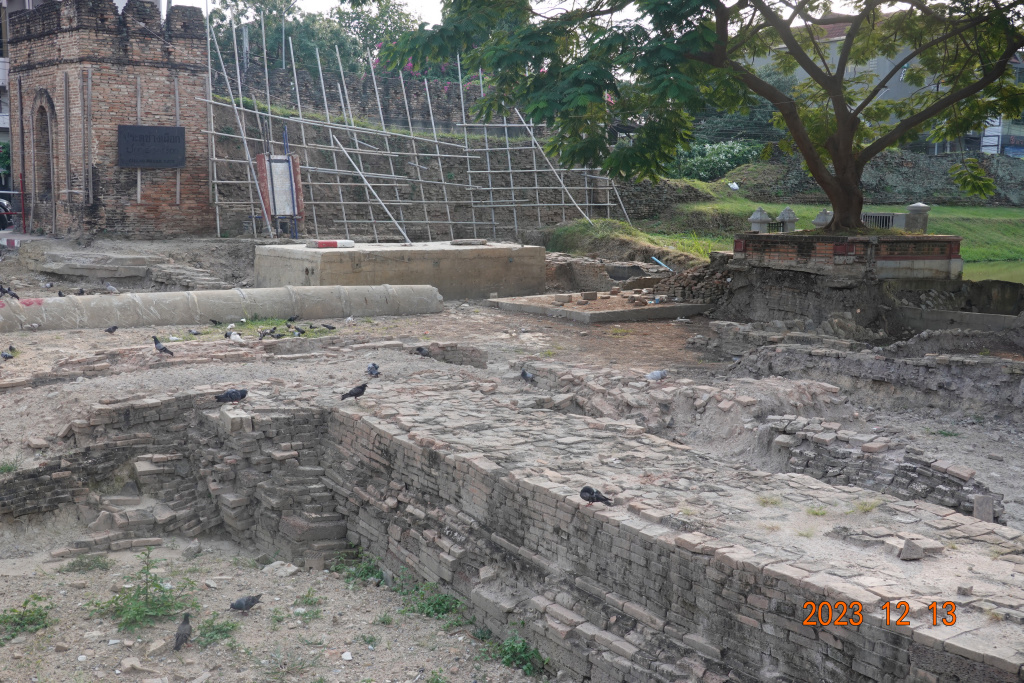
And looking from that pedestrian bridge, here are two more views of the excavation site.
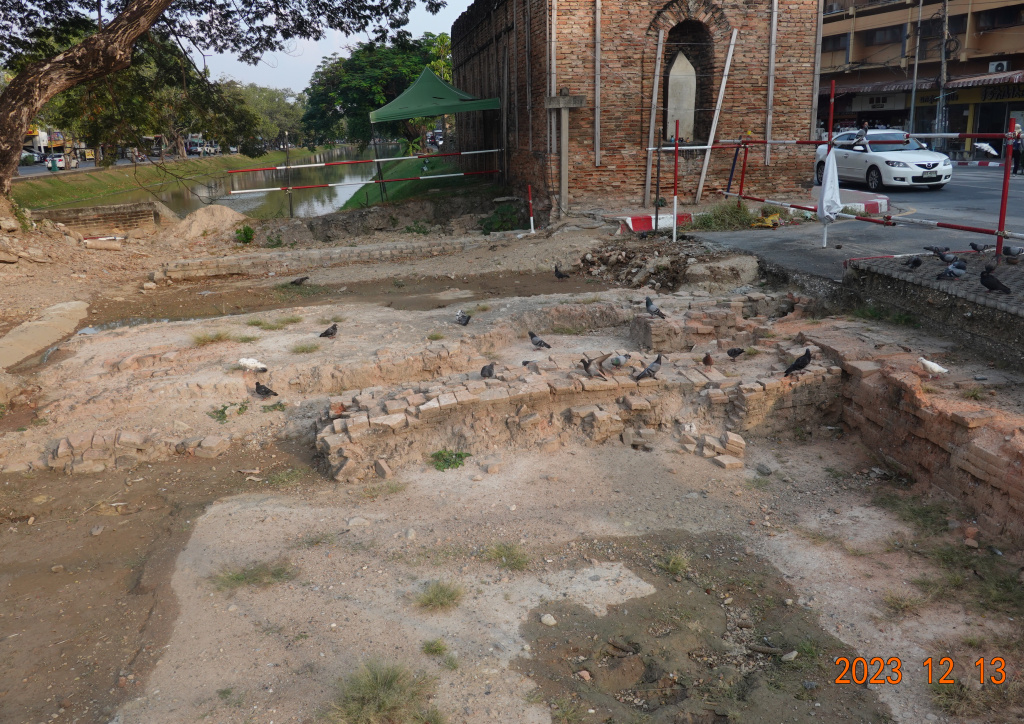
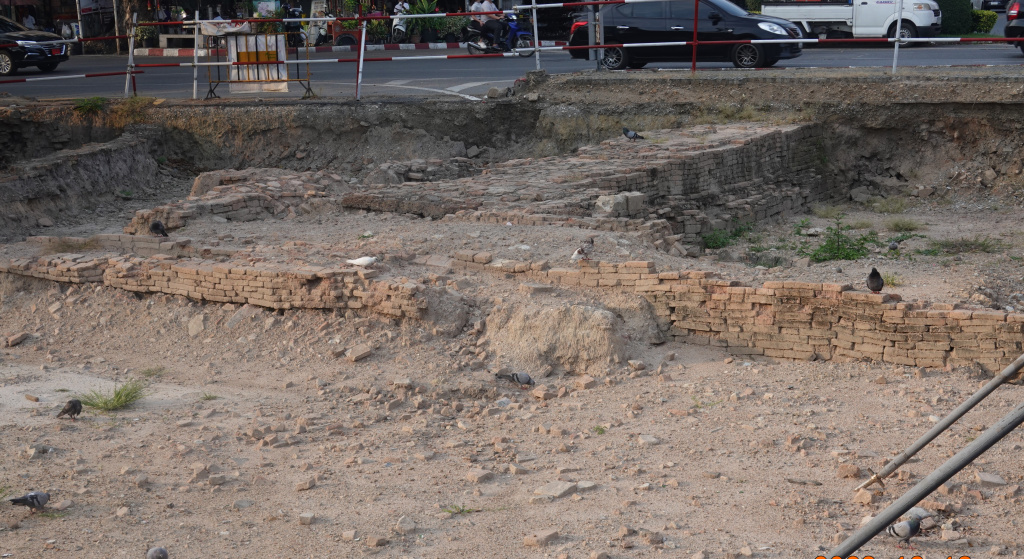
This appears to be a very slow process. Having walked by this site a good number of times so far this winter, I have yet to see anyone working there. I’m sure there is an agenda and maybe a schedule.
Next: Visa extension, Omsala, friends at Tha Phae Gate

 James the Intrepid Pilgrim
Interesting note on the excavation
LikeLike