Wednesday, December 13, 2023
Walking back from Chiang Mai Ram Hospital
Wat Lok Moli
Being one of my favorite temples, I have posted about Wat Lok Moli (sometimes spelled Wat Lok Molee) many times. The staff at The 3-Sis where I have stayed almost every year for 10 years, knowing that I like to visit and learn about the Thai temples, sometimes ask me what my favorite temple is today. After more than ten years, I have come to like some temples so that “favorite” list seldom varies: Wat Chedi Luang, Wat Lok Moli, Wat Suan Dok, Wat Ket Karam, Wat Chiang Man, Wat Sri Suphan in the city, and of course, Wat Phalad up in the jungle on Doi Suthep.
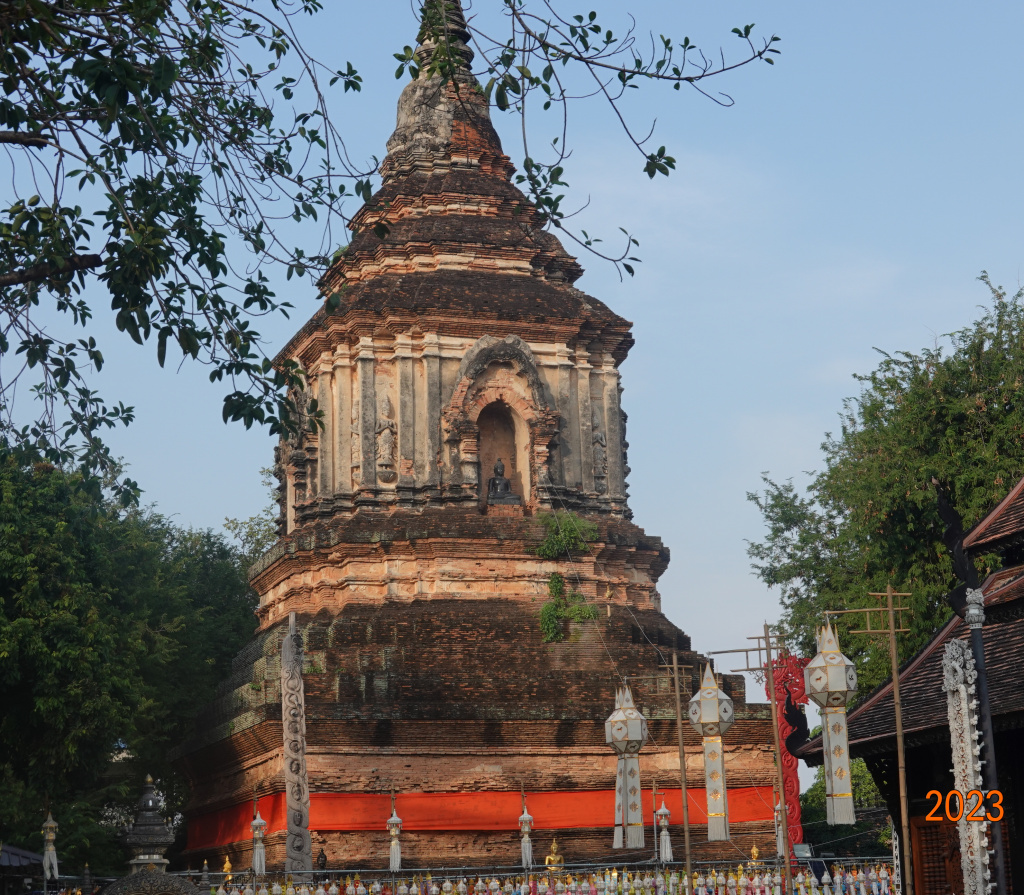
Wat Lok Moli is a very old temple, as are most temples in and around Chiang Mai. The temple was known as a royal temple as members of the Mengrai Dynasty, who ruled the Lanna kingdom from the 1290s to about 1600, maintained it during their rule. The chedi which is seen today dates from the 1520s and was built by King Ket, the 12th Lanna king, to house the ashes of members of the Mengrai Dynasty.
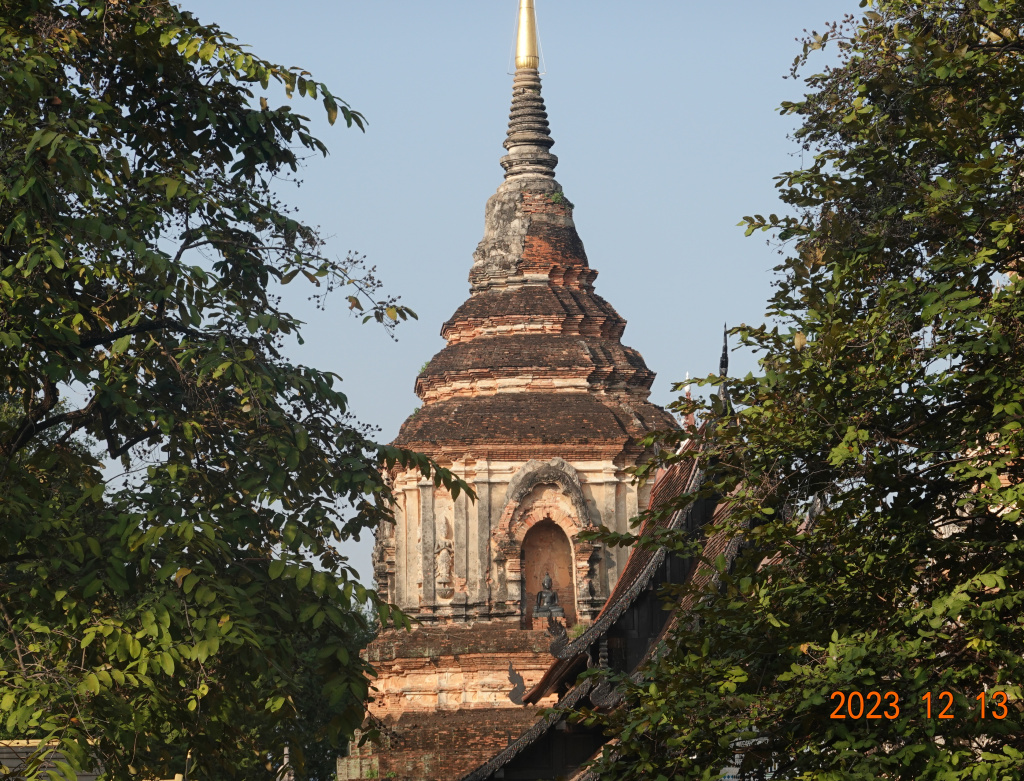
There is a character to that old, tall, and very reverent chedi that appeals to me.
The entrance to Wat Lok Moli is guarded by two yaksha creatures, currently decorated in red flowers. This view is from across a very busy street. I just managed to get the photo between cars. Fortunately, there is a crosswalk with a traffic light nearby allowing me to cross and enter the temple grounds.
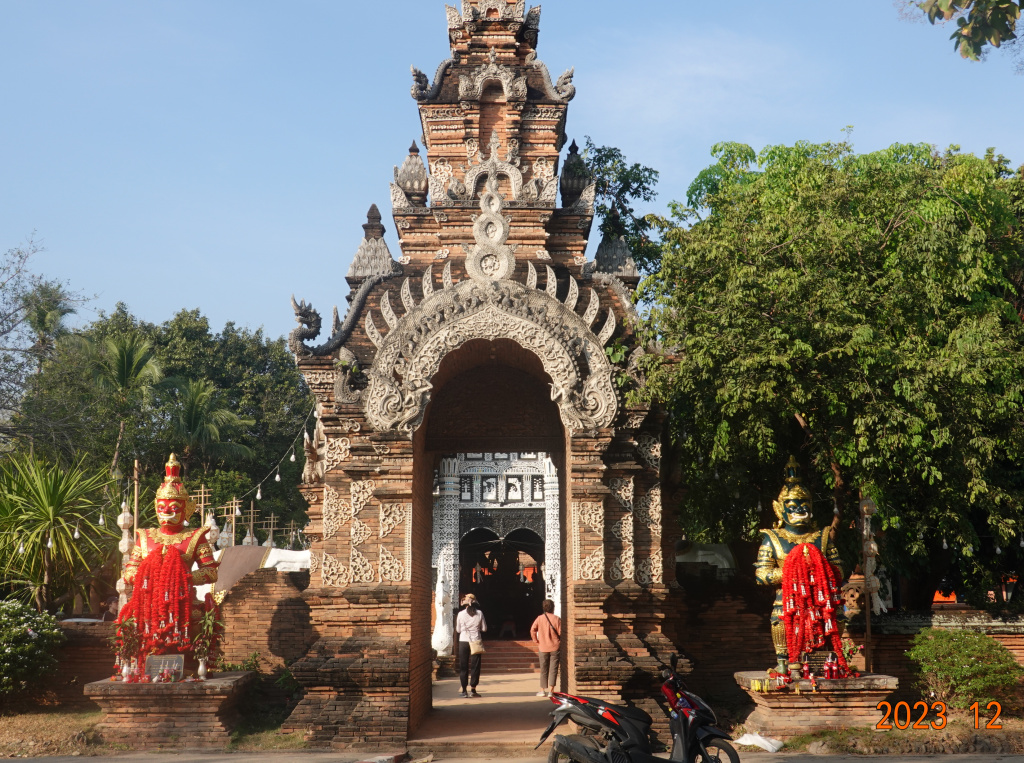
As with all temples, various buildings are renovated or reconstructed as needed. The viharn (worship hall) at Wat Lok Moli was reconstructed recently in the early 1990s. I have heard that a film wanted use the viharn in filming and paid for it to be rebuilt. Here is a closer view of the entrance. The strong tradition, almost a rule, is that the viharn doors open to the east to greet the rising sun. The rising sun represents the beginning. The chedi, in which the remains of someone are typically interred is on the west end of the viharn, since the setting sun represents the end.
Why is the viharn at Wat Lok Moli oriented with the doors opening to the south? I have asked that question often over my many visits here and have no good answer. This year, a tour guide I encountered told me that the temple had become practically abandoned in the mid-twentieth century and the viharn had been dismantled. A road evolved over that plot of land connecting neighborhoods to the north to the outer moat road. When the temple was resurrected and the viharn rebuilt, it was placed between the chedi and the outer moat road. And across the street, immediately to the east of the chedi are remnants of what was likely part of a temple. So the story might be right. The aspect of the story that does not seem right is that this temple, a seemingly very important temple, was all but abandoned for a time relatively recently and the viharn dismantled. I’ll keep asking.
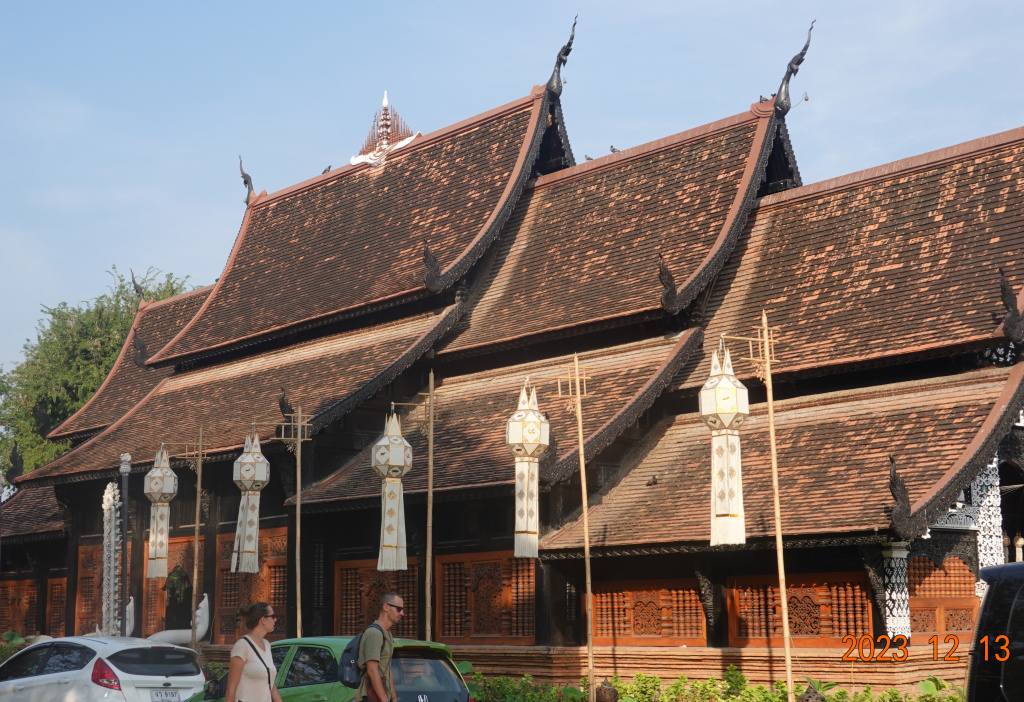
The viharn is not particularly large, nor is it small. I like the rustic, all-teak construction and the fairly intricate decoration outside. This is a Lanna-styled temple, with the entrance guarded by two dramatic naga creatures.

Inside the viharn is dark with black lacquered teak making up the walls and columns, with small windows with wooden bars adding to the darkness inside. The Buddha image is bright and gold in stark contrast to the dark teak.
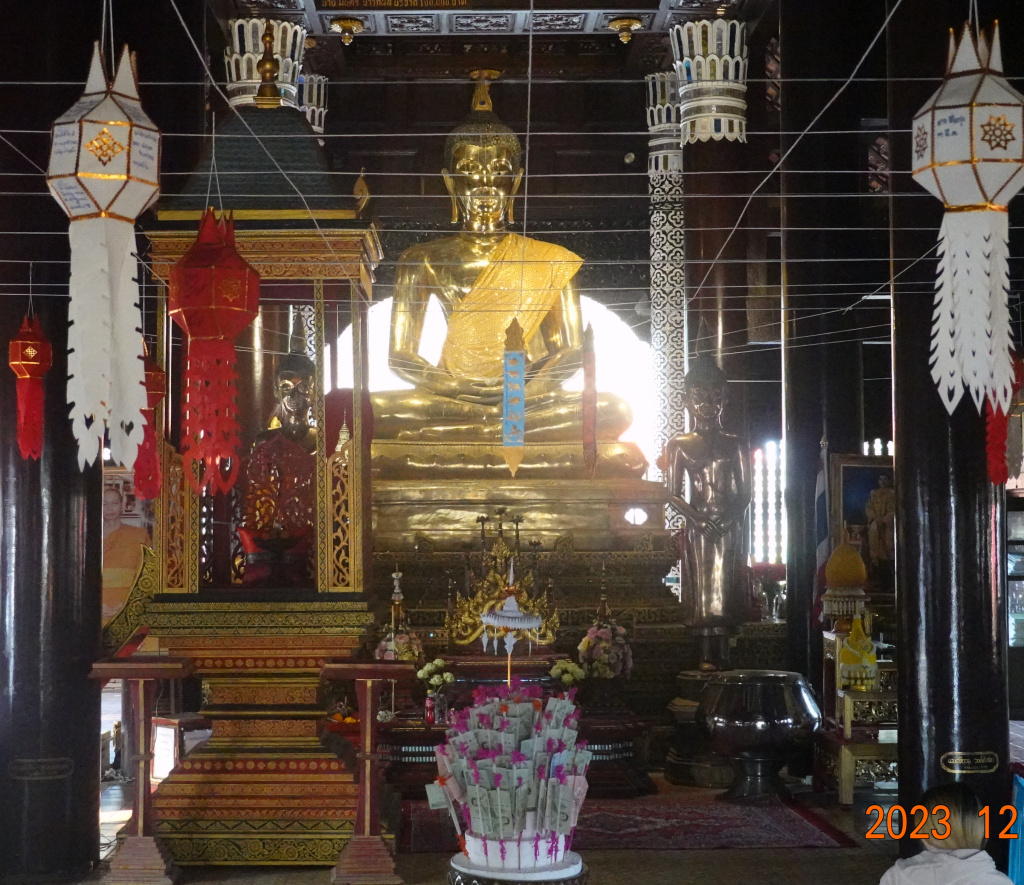
I did not spend much time inside as there were many visitors, mostly Thai. I went outside and got a good photo of the side of the viharn with the Lanna-styled, low-sweeping tiered roof. The roof is looking somewhat worn and may need renovation.
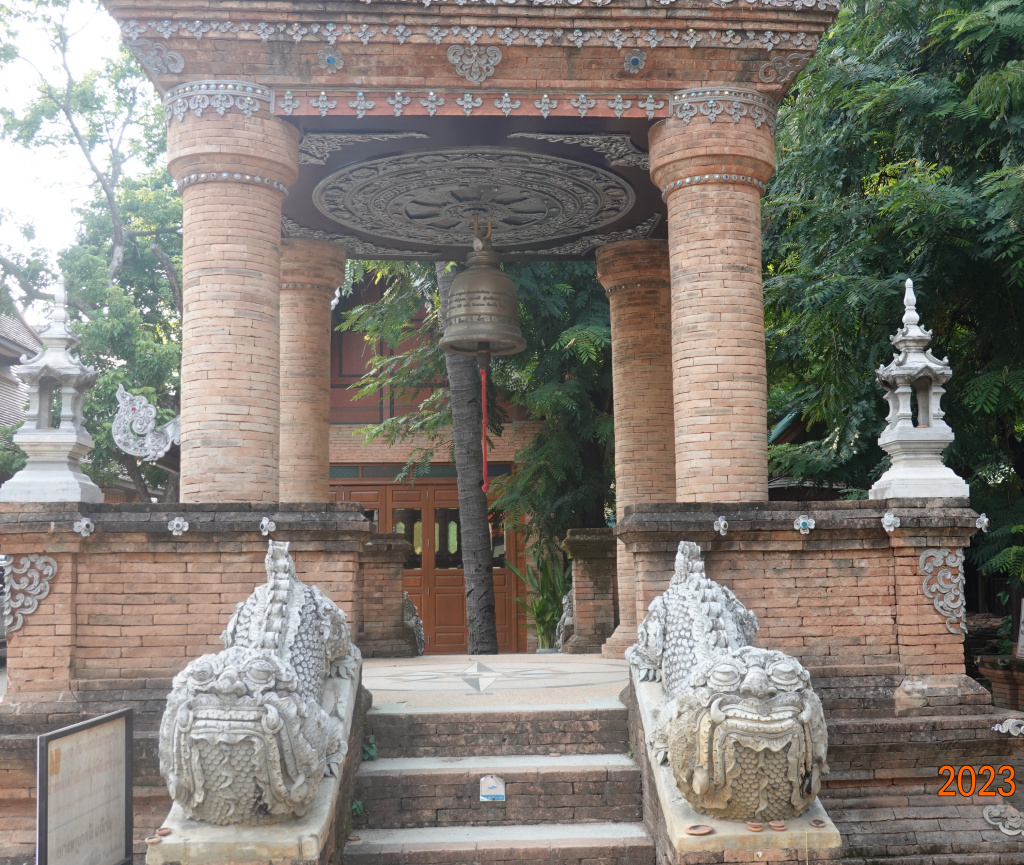
To the west of the viharn are several buildings that have been built over the time I have been coming here. They are all built well but have an old-style feeling. An example is the bell tower that was only finished a year ago:
And before I leave the temple, I take another look at the tall, beautiful chedi:
Next: Archeological dig at Chang Phuak Gate

 James the Intrepid Pilgrim