Monday, December 4, 2023
Wat Nantaram
When I was writing my post about my walk south of the old Chiang Mai city, it seemed to be long so I skipped a couple of the temples I had stopped to view. Those temples are Wat Nantaram (which I mentioned) and Wat Puak Hong close to the Samlaan Barber near Saen Pung Gate.
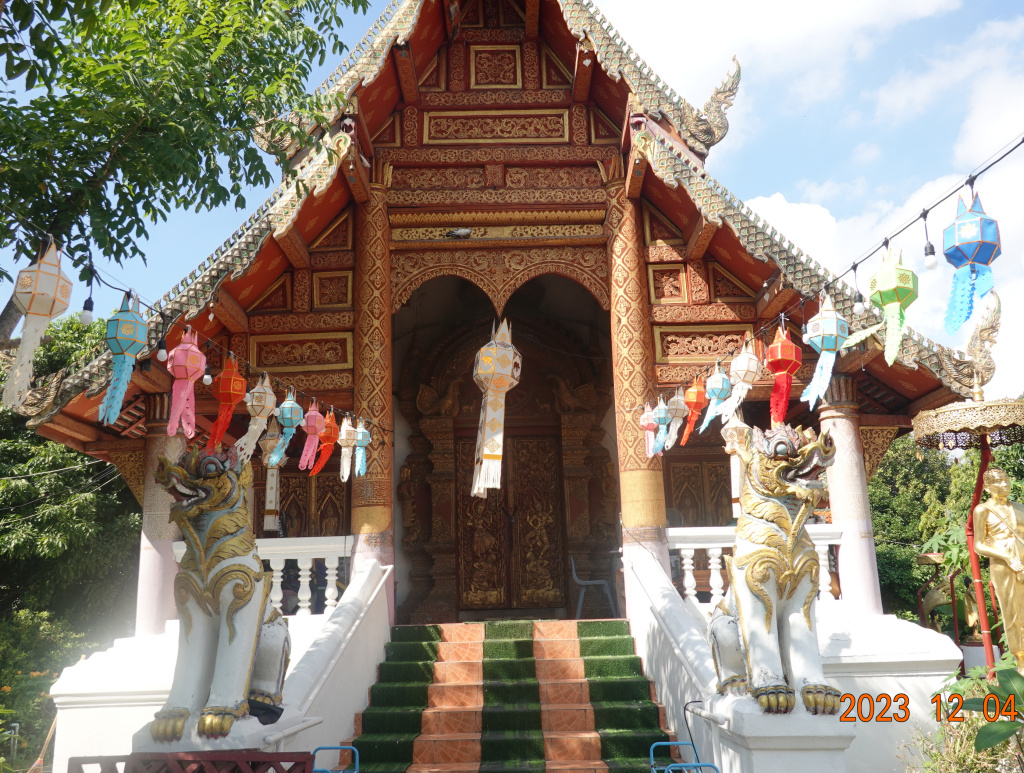
I have mixed feelings about Wat Nantaram. Historically, this was an important temple in the region south of the old Chiang Mai city. Wat Nantaram was established in 1403 and was located just inside the second, earth and clay wall known as the Kamphaengdin (about which I have a continuing fascination). The temple looks much the same as when I visited it 10 years ago, run-down, unused, and it could use serious cleaning and/or renovation. Most of the buildings I saw looked to be permanently closed. At least the grounds are open. The structures are quite nice, and if cleaned and renovated, this would be a beautiful temple. If there were not very territorial and aggressive dogs here, I would take my time and explore more. I came into Wat Nantaram today almost unexpectedly from the old eastern entrance. I had not realized that I was close to this temple.
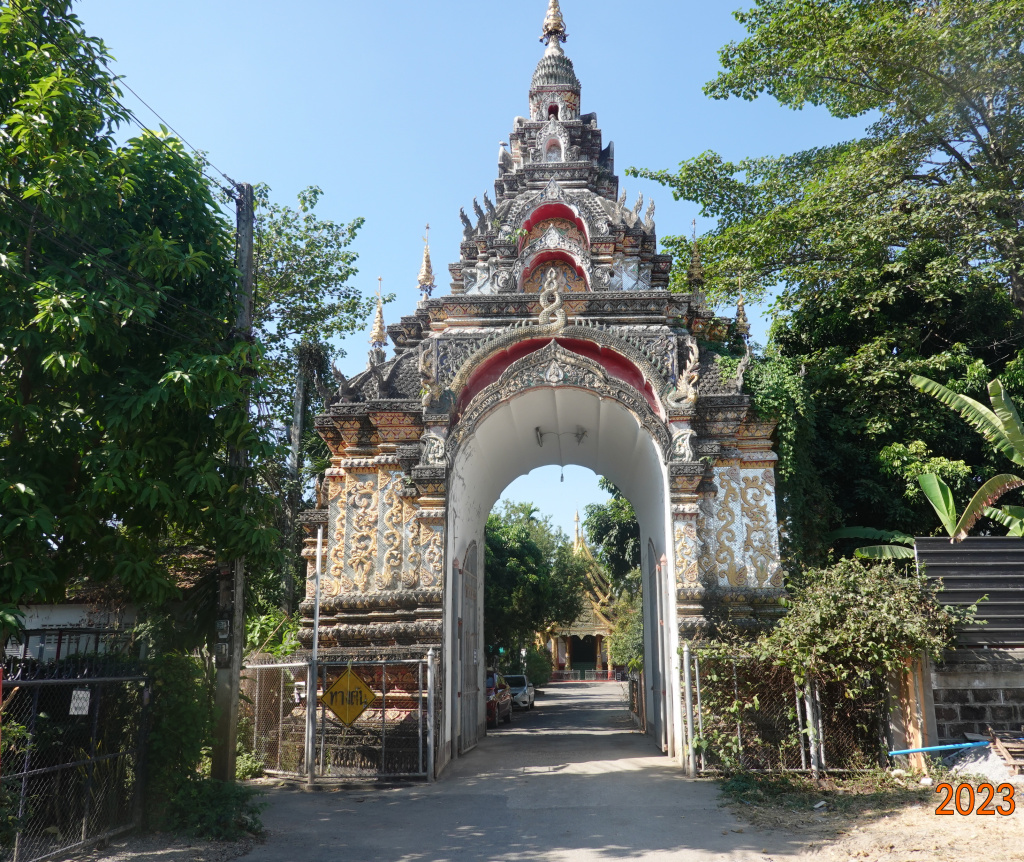
Notice that the old entrance leads directly to the viharn (worship hall). Inside the elaborate entrance is the viharn which I read dates from the 19th century. It has an impressive Lanna-style four-tier overlapping roof with a horizontal split. The front is nicely decorated with a floral motif. The doors have always been closed, so I have never seen inside.
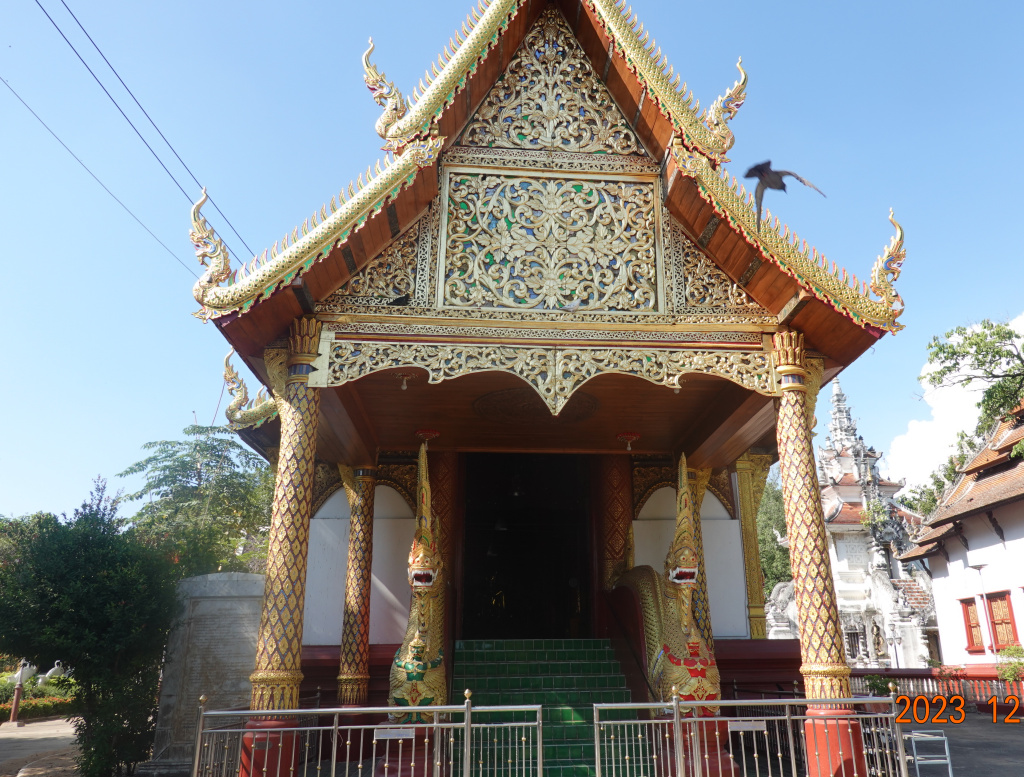
To the left and a bit farther away is a smaller viharn amid a somewhat overgrown garden. Concerned about my past encounters with the dogs, I used the extent of my camera’s zoom lens to get a photo. It also has the Lanna style overlapping and tiered roof and the front is very nicely decorated.
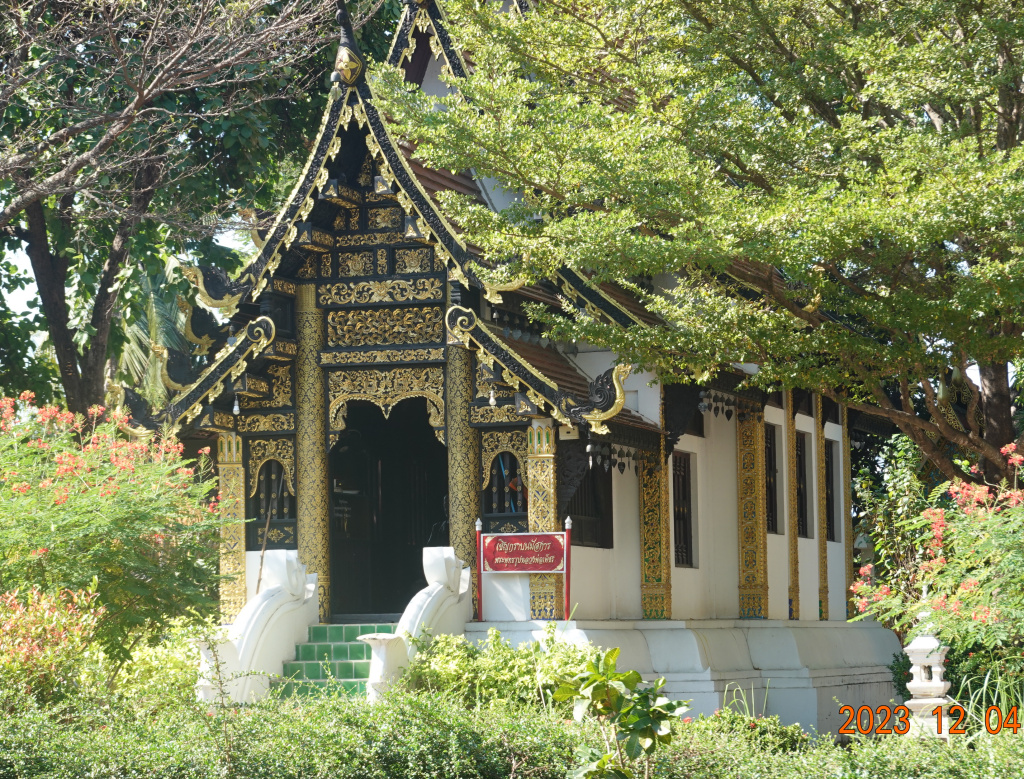
To the right of the main viharn and slightly behind is a relic tower. This is not a chedi, there is a chedi here, but I was not inspired to photograph it. The relic tower, although somewhat dirty and run-down looking, is interesting. I do not recall ever seeing anything quite like this at other temples. I read that it was built to house relics and images and possibly as a depository for the Buddhist texts (almost like a very elaborate ho trai, or library). I did not want to spend much time getting close or composing more photos. The tower is very interesting in its elaborate presentation.
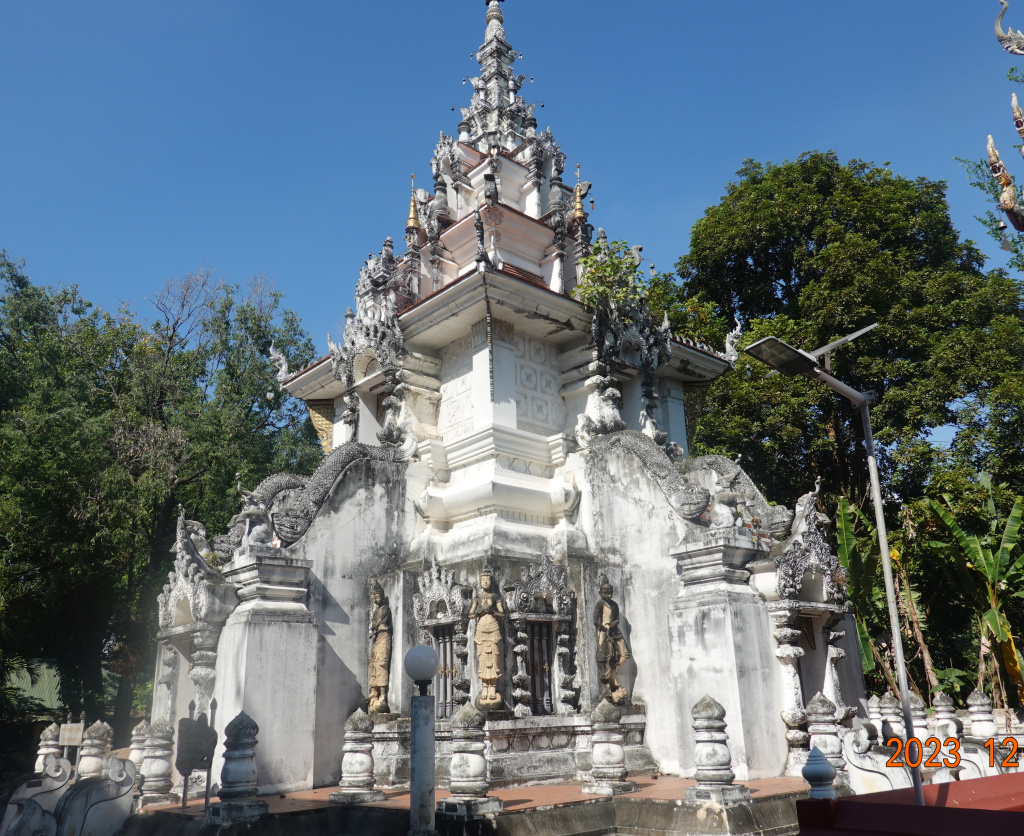
Wat Puak Hong
Leaving Wat Nantaram, I walked up Nantaram Road. There was not much of interest to photograph along the way. Once I reached the moat near Chiang Mai Gate, I walked west and crossed into the old city through Sean Pung Gate. This gate was built in the sixteenth century by King Saen Mung Ma for his queen whose palace had been built outside the city walls. Later the Queen used this gate daily while she was supervising the building of the large chedi at Wat Chedi Luang after her husband the king passed away. Still later this gate was used to move cadavers out of the old city for cremation. Today, some Thais believe there to be bad spirits at Sean Pung Gate and avoid it.
A little inside Sean Pung Gate almost across the main street from the Samlaan Barber is Wat Puak Hong. This temple is another in need of renovation to restore it to its former glory. There has been a temple here for over 600 years, although (as is the case at almost all temples) the viharn has been more recently reconstructed. There are really only two structures here, the viharn and the 600-year-old chedi. The front of the viharn looks all right, but it is closed and has been every time I have visited over the past 6 or 7 years. I first discovered this temple when I learned about the Samlaan Barber (being somewhere from 6 to 10 weeks, a haircut is needed along the way).
Walking around the viharn, the sides do look worn and in need of cleaning. More interesting than the viharn is the ancient, near-crumbling chedi. The chedi looks as though it’s been repaired and reassembled on numerous occasions, made of a mixture of old and new bricks. Generally very dirty, there are shrubs and plants sprouting from the brickwork.
The shape of the chedi with its eight circular levels rising in diminishing size like a wedding cake is of a unique style in Chiang Mai’s old town. There is a newer, similar one at Wat Santitam which was based on the chedi at Wat Chedi Liam in the ancient city of Wiang Kum Kam about 5 kilometers south of the old Chiang Mai city.

The chedi does not look so bad in the photograph, but in person, its deterioration is much more evident.
Those were the parts of my walk south of the old Chiang Mai city that I left out when I posted yesterday. A question I fairly often get is, “You are there for two months, what is your daily life like?” I do slip into something of a routine – yoga practice or strength training at the gym many mornings, walking around or working on my blog in the afternoon, dinner, and talking with friends in the evening. Not nearly as repetitive as when I walked routes of the Camino de Santiago in Spain. There, the daily routine was:
- wake up, eat breakfast
- walk to the next town
- eat lunch or early dinner
- get a shower, change into clean clothes
- wash dirty clothes
- eat dinner
- sleep and then repeat (return to step 1)
The routine was basically the same every day. However, every day was very different – different roads or paths, sometimes different terrain, walking to a different town with different places to eat and sleep. Like being on the Camino, every day here in Chiang Mai is different even though some or even many aspects are the same. I am reminded of a quote from the Greek philosopher Heraclitus:
“No man ever steps in the same river twice, for it’s not the same river, and he’s not the same man.”
Heraclitus
I return to Chiang Mai because I do like visiting here, even though I stay in the same place, practice yoga in the same place, eat meals in some of the same places, and visit many of the same temples and sights. Every visit is distinctly different…Chiang Mai changes, and I change.
Next: Daily life – walking to Story 106

 James the Intrepid Pilgrim
Excellent quote.
LikeLike