Monday, November 27, 2023
Wat Umong Mahatera Chan
Across the street from the back entrance to Wat Pan Ping is the entrance to Wat Umong Mahatera Chan (not to be confused with Wat Umong east of the old city).

In the Thai language, there are no spaces in a phrase or sentence, spaces delimit sentences. So it is often natural for a translator to run the words together in English, as seen in this sign. This is similar to sometimes seeing the name of the city Chiang Mai written as Chiangmai. Where should the spaces be? I do not really know, so I use what I see most online in various references, Wat Umong Mahathera Chan.
This is only one part of the translation problem. How does one approximate phonetic spelling in English where there are 21 consonants and 5 vowels a language with 44 consonants, 12 vowels, and 8 diacritical marks to indicate tones and pronunciation? The answer is that it is all an approximation and often poor since there is no way of indicating the tones in English.
Wat Umong Matathera Chan was built by the three kings who founded Chiang Mai, early in the construction at about the same time as Wat Chiang Man and Wat Pan Ping across the street. This temple is open for Thais and foreigners interested in Vipassana meditation practice. Two very old chedi exist within the temple grounds, and with all the trees, it is almost like an oasis of calm in the middle of the busy old city.
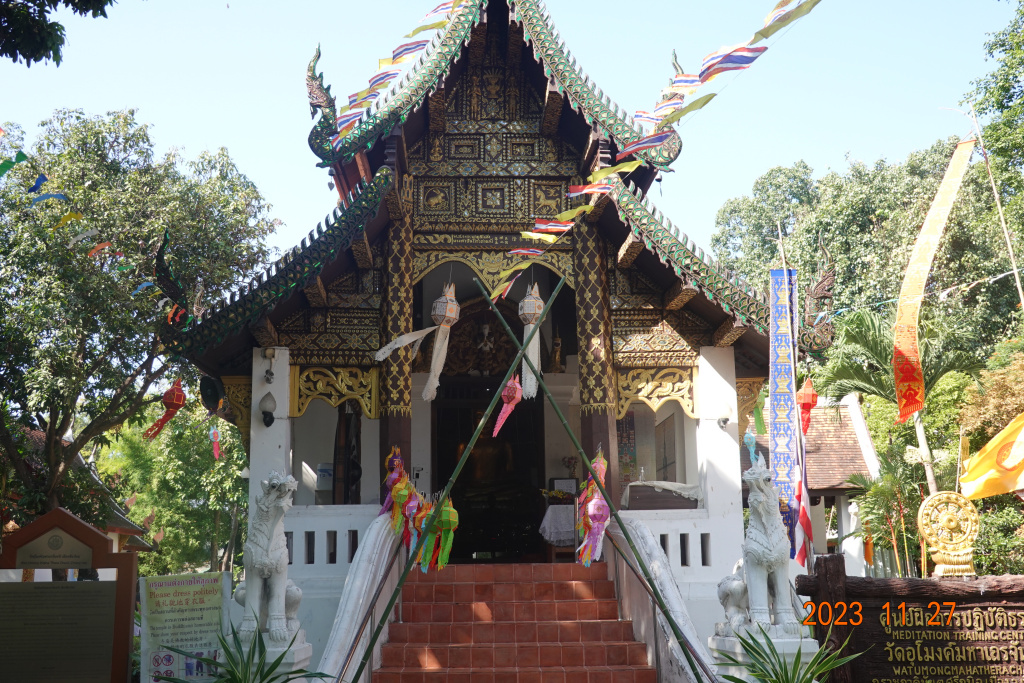
The viharn is Lanna-style (Lanna was the kingdom making up northern Thailand and Laos before Lanna and Siam merged in the later 1800s), guarded by two Singhs (mythical lion-like creatures) and no naga (dragons) on the stairway banisters:
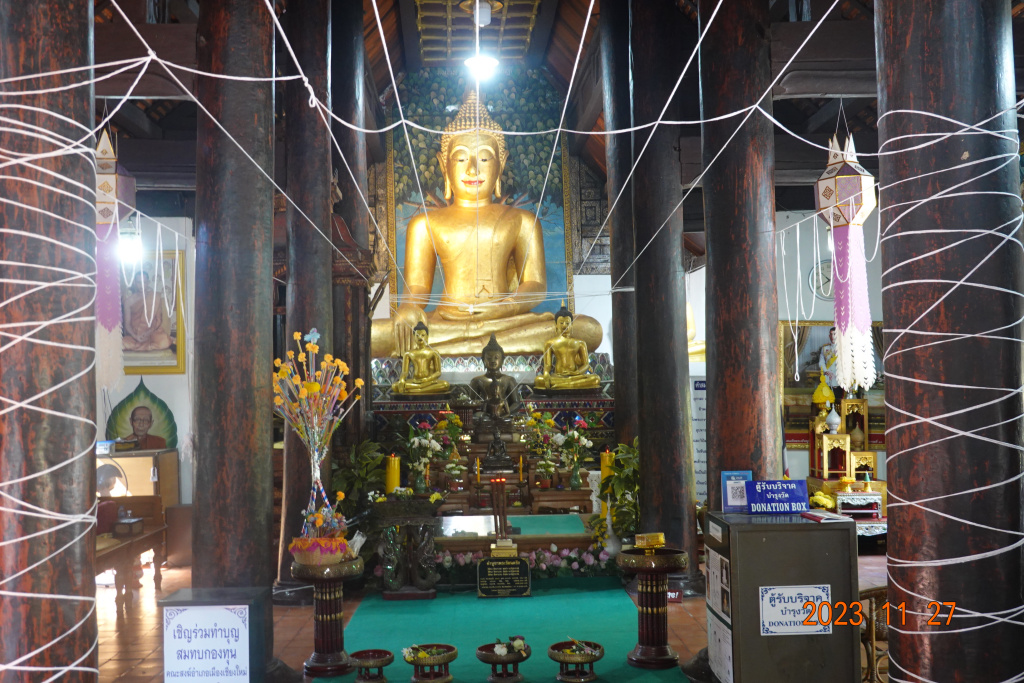
Inside, the viharn is very peaceful with its dark teak wood and large, 650-year-old Buddha statue:
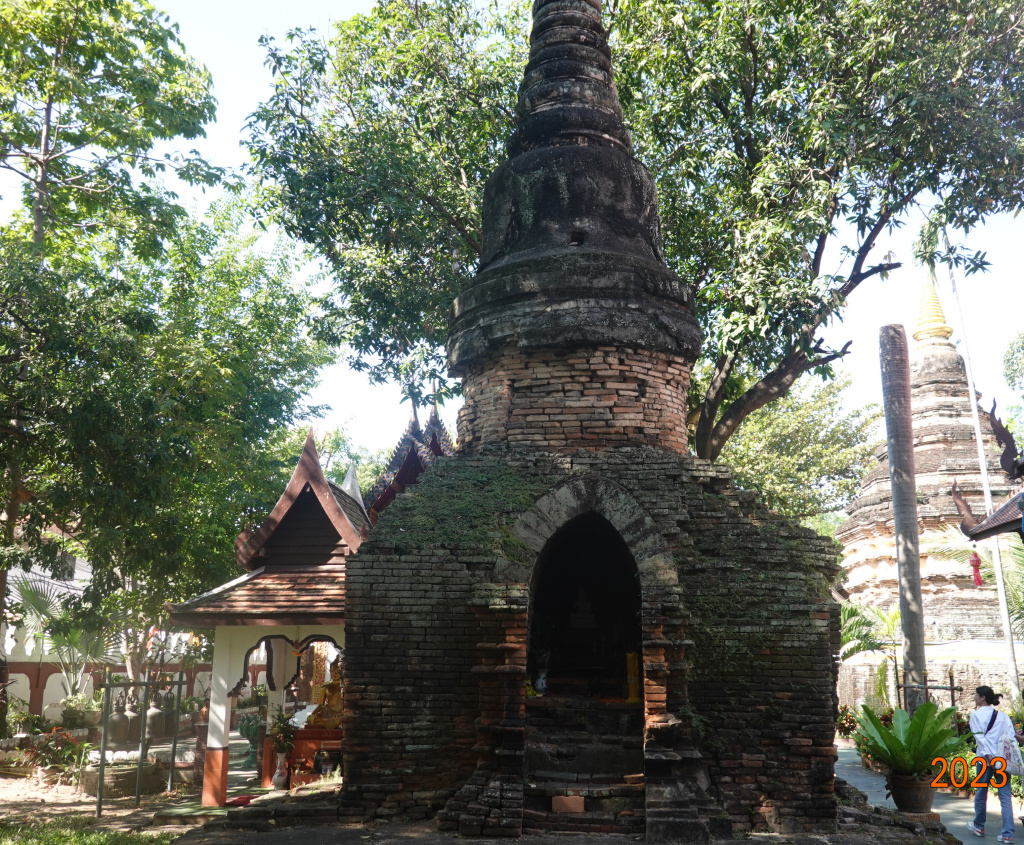
Just south of the viharn is this very old chedi. It is slightly smaller than the main chedi, looks older and in less pristine condition. It is unusual in that it is hollow, almost like a mixture of a chedi and a very small viharn (worship hall) :
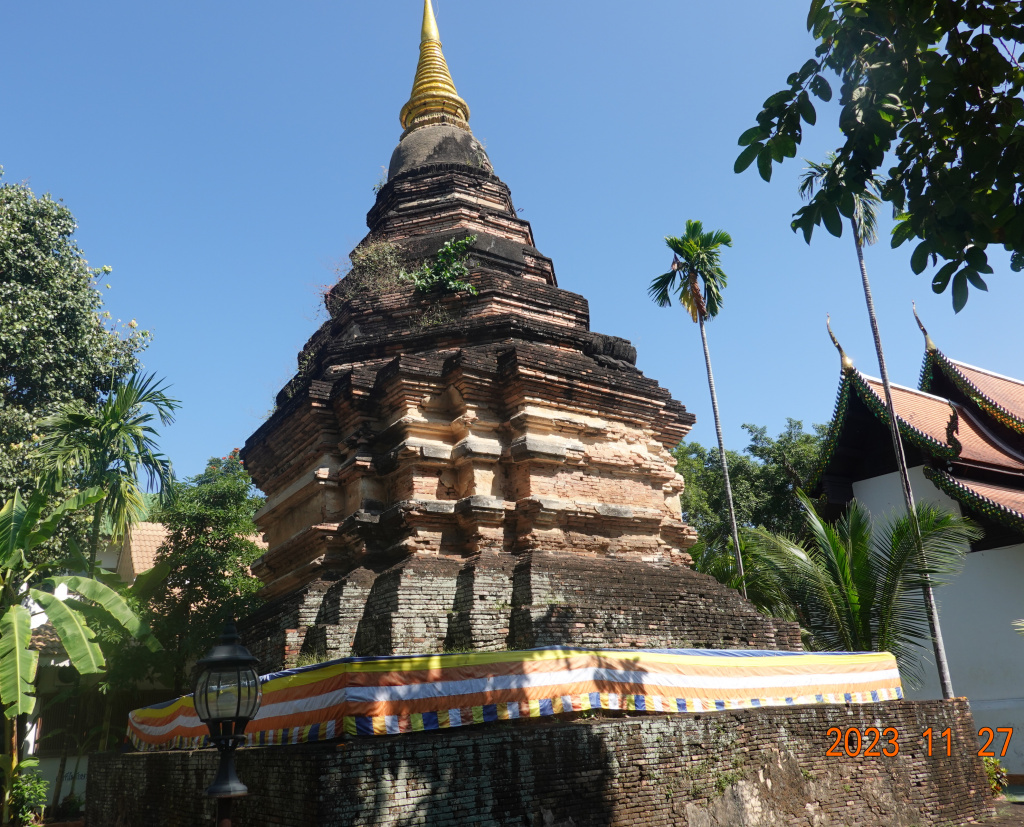
Behind the viharn is what I am referring to as the “main chedi” here. Larger and in better condition, it is elegant in the sunlight:
Wat Duang Dee
Wat Duang Dee, sometimes spelled Wat Duang Di. This is known as the “Good Luck Monastery.” The word “di” (more often spelled “dii” because of the slightly elongated “ee” sound) means “good” in Thai. If something is good, you say “dii” and if it is very good, you say “dii mahk”. If something tastes good, the word is “aloy” and if it tastes very good, you would say “aloy mahk” or “aloy mahk mahk” for very, VERY good. This is just down the street from The 3-Sis, but down a soi (lane) just off the main road very near the Three Kings Monument. Today I was coming in from a small soi leaving the back of Wat Umong Mahathera Chan.
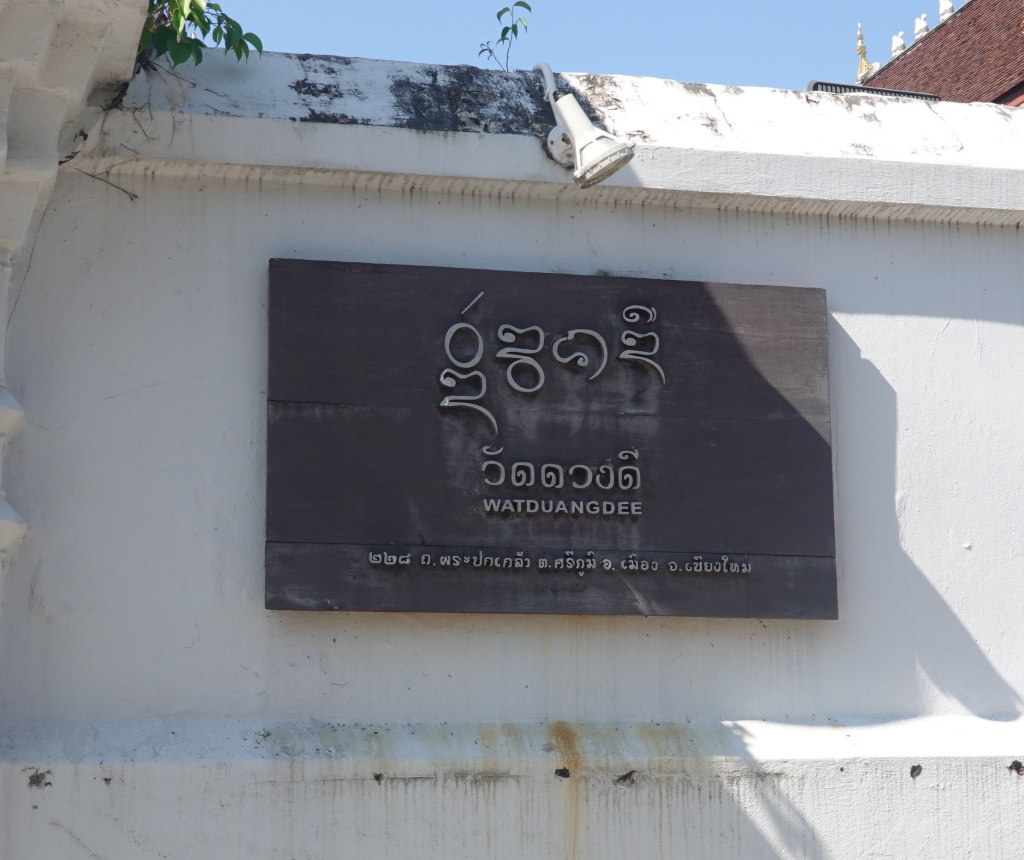
This is a smaller temple, with only four structures: (1) a viharn (worship hall), (2) a ubosot (ordination hall), (3) a ho trai (library), and (4) a chedi (pagoda). There was what appeared to be a professional photographer with models here, so I worked around them and only took a few photographs. The ho trai is known for its fine stucco decoration, and the viharn is remarkable for its highly decorated facade.

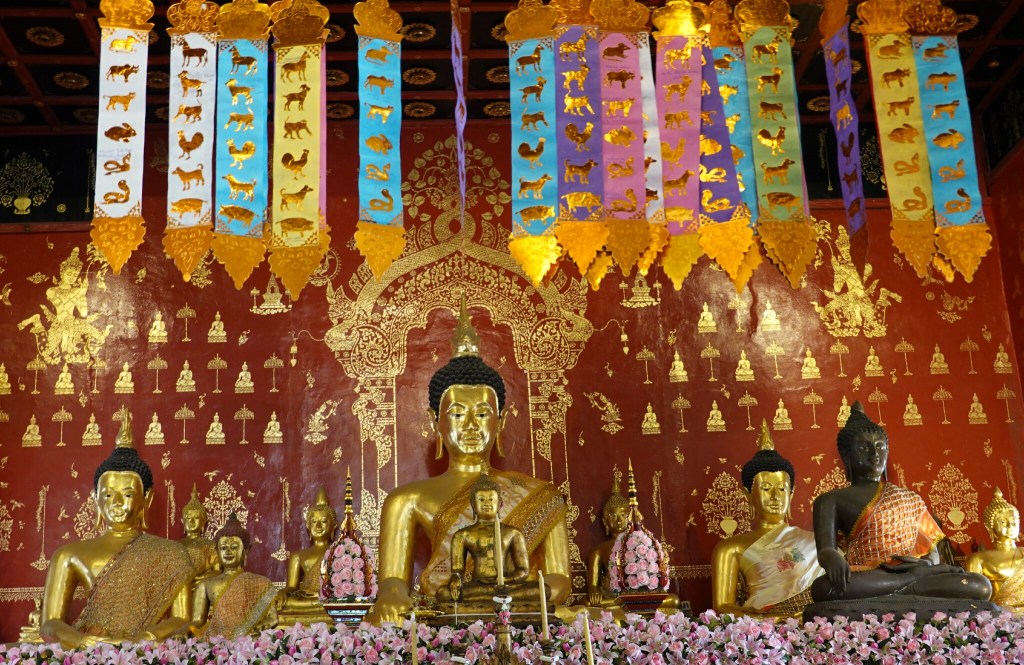
To the right in the picture above is the viharn. Today it was quite busy inside, so here is a photo of the inside I took four years ago.
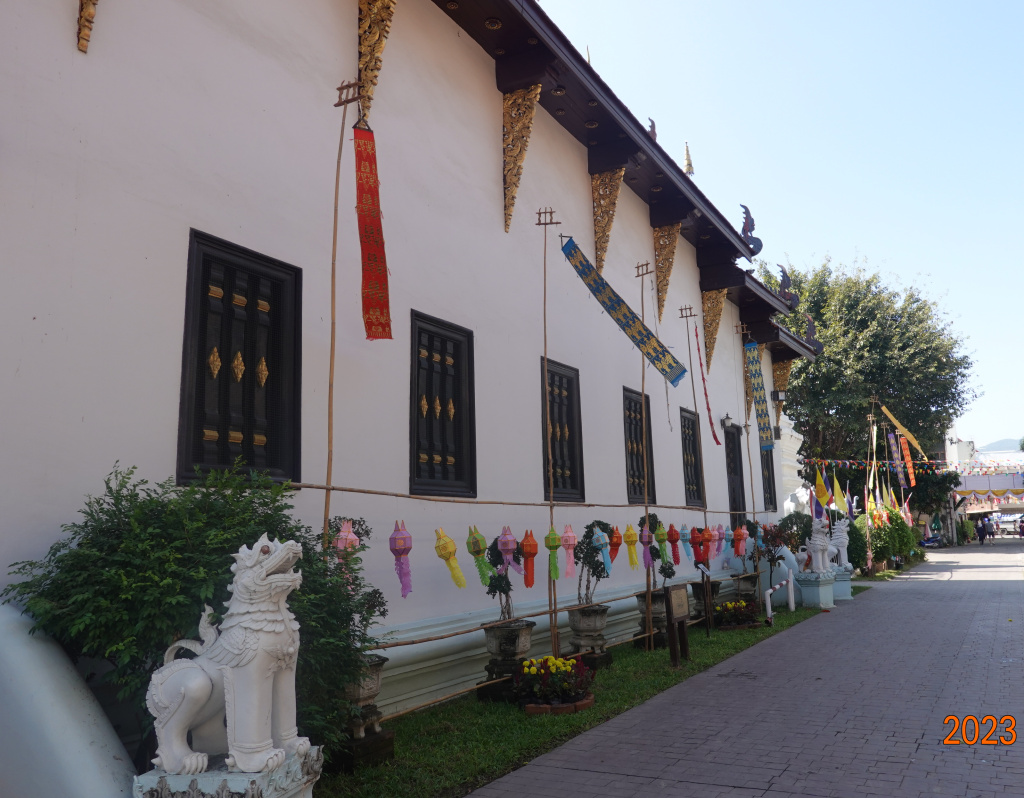
I took this photo of the side of the viharn. It looks very modern, almost stark in comparison to the viharn at many temples.
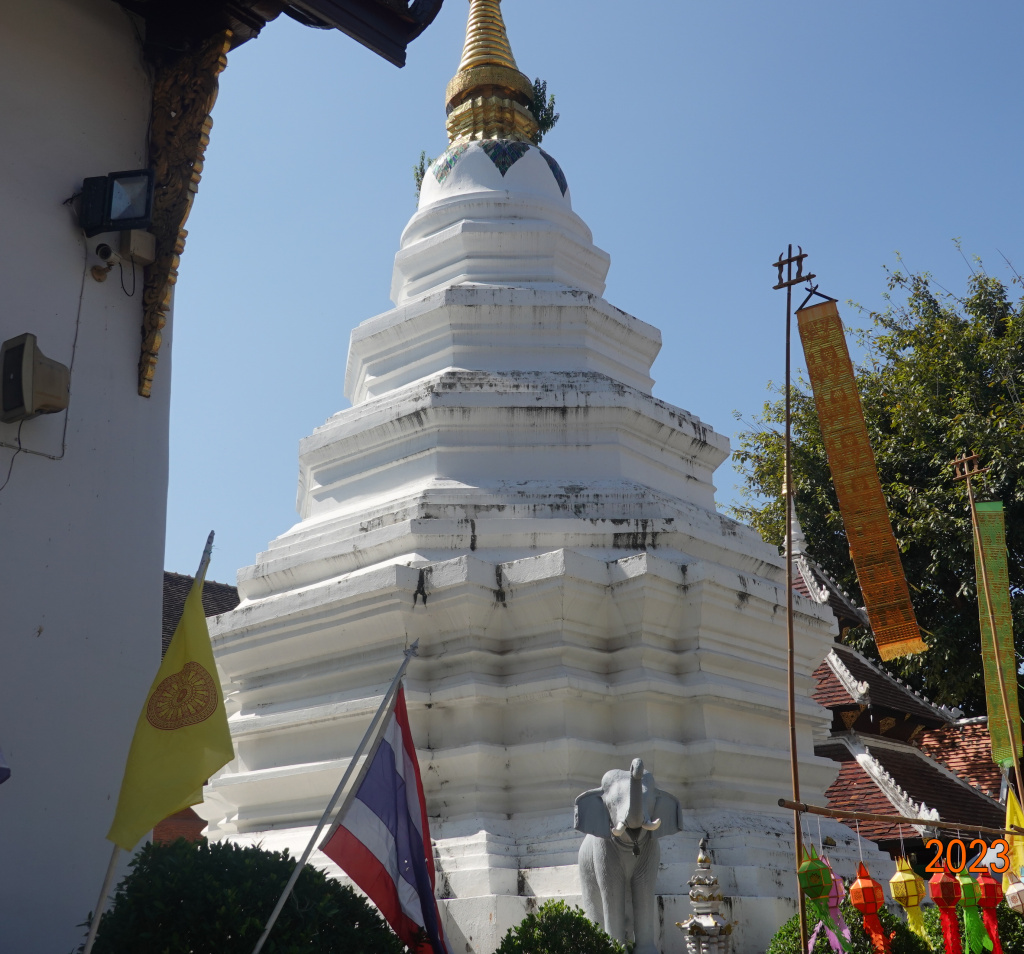
The chedi at the west of the viharn is also modern in look and style:
Next: Wat Inthakin

 James the Intrepid Pilgrim