Thurssday, May 4, 2023
Walking from El Cuba de Tierra del Vino to Zamora
31.8 kilometers
After the very long day yesterday walking over 30 kilometers to the bus stop at the prison and then the bus ride into El Cubo de Tierra del Vino, I was not looking forward to another day of over 30 kilometers to Zamora. It had to be done because the only intermediate town was very short of pilgrim infrastructure.
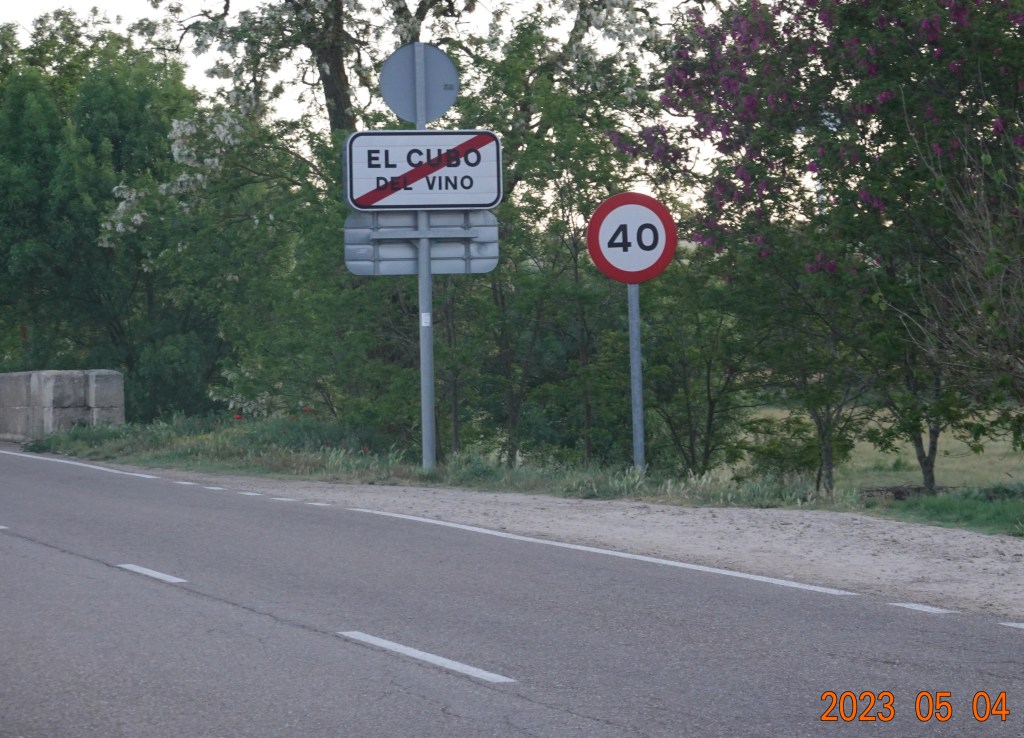
Knowing that this would be a very long and warm day and that the albergue in Zamora is limited, we left El Cubo early, a little after 7 AM. Here is a photo marking the end of El Cubo. We must keep moving today because the albergue is likely to be full and there are limited options for sleeping in Zamora.
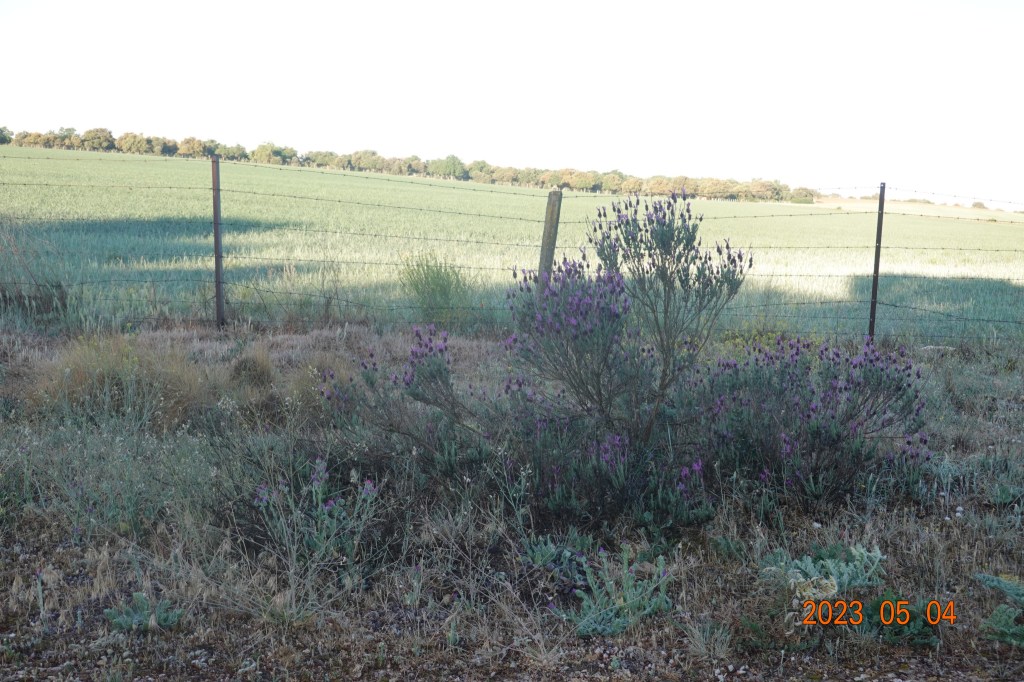
Being a small town, as soon as the town ended, we were walking in farmland with wildflowers along the way, not as dense or thick as in other places, but nice nonetheless.
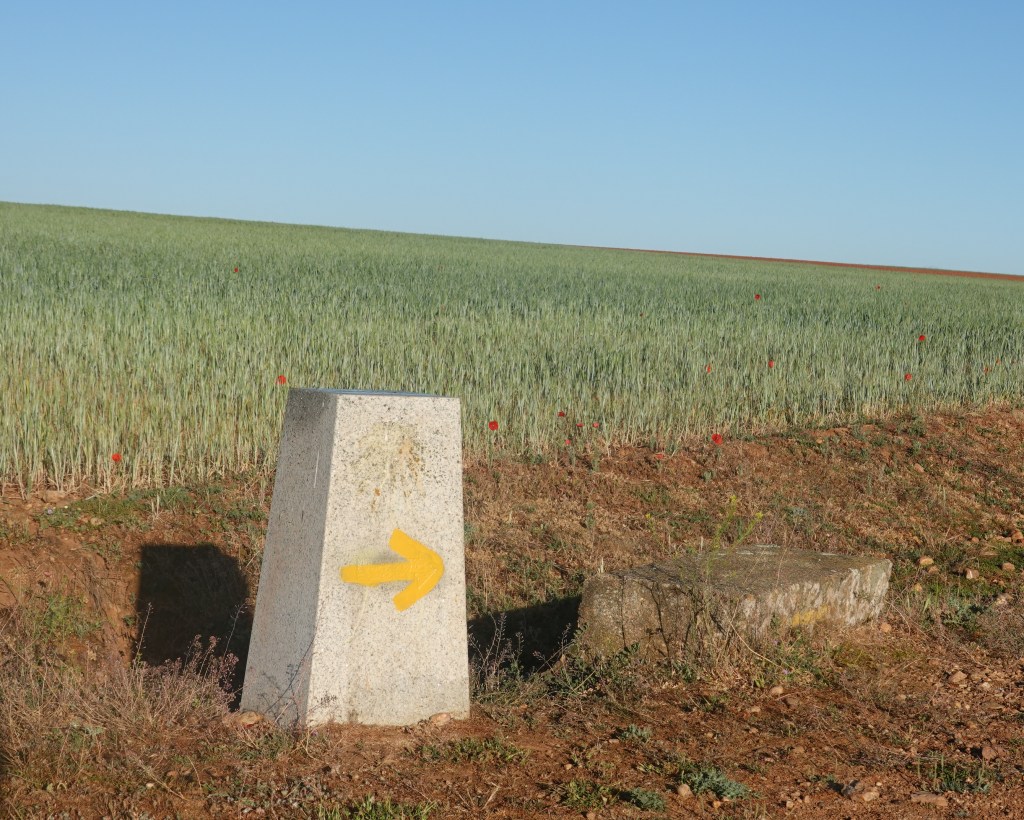
I saw a Camino Way marker very similar in size and shape as those marking the Camino Frances. This is the first of this type we have seen. It is clear that the administration of Castille y Leon involved with the Camino routes is not emphasizing the Roman heritage of this route as in Andalusia and Extremadura. Aside from a few inconsistently placed replicas of Roman way markers, we do not see the signage or descriptions of the Roman road through this part of Spain.
We came upon a relatively new vineyard along the Camino path. I’m not an expert, but this appears to be only a few years old, growing nicely in the spring.

Then we were passing by more expansive wheat fields, a sign we have seen much of the past few weeks. This is not a surprise, we are in what is essentially the southmost part of the meseta, and when walking through the meseta on the Camino Frances, many expansive wheat fields are seen.
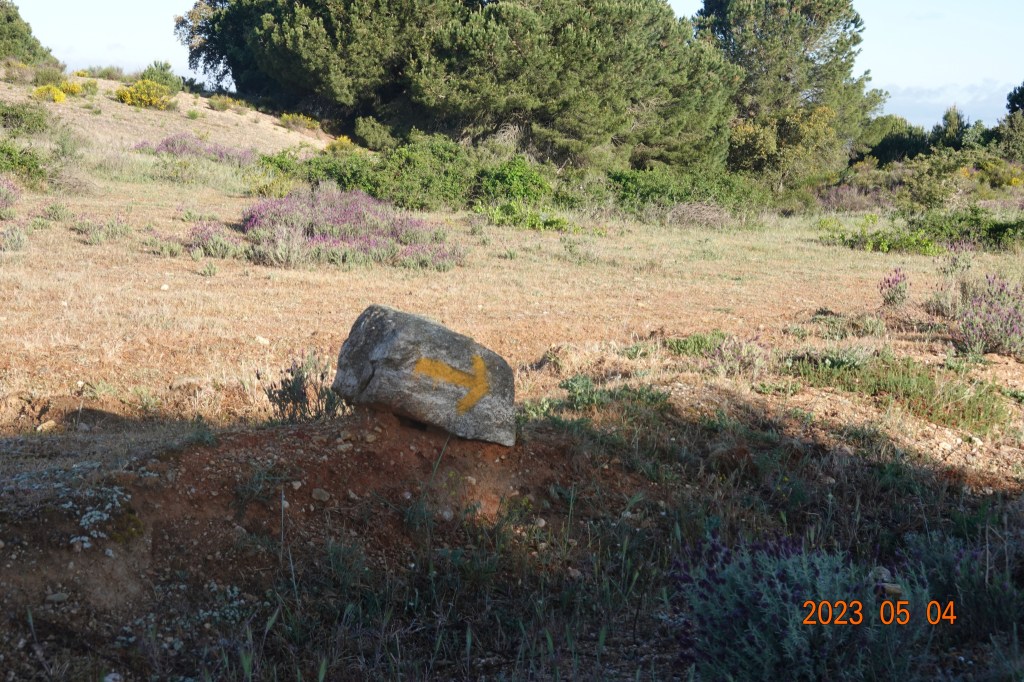
Whoever paints the yellow Camino arrows marking the way and turns is very creative at times. Here we see a yellow arrow on a rock. It does not look very permanent, but it gave us confirmation that we are on the correct path.
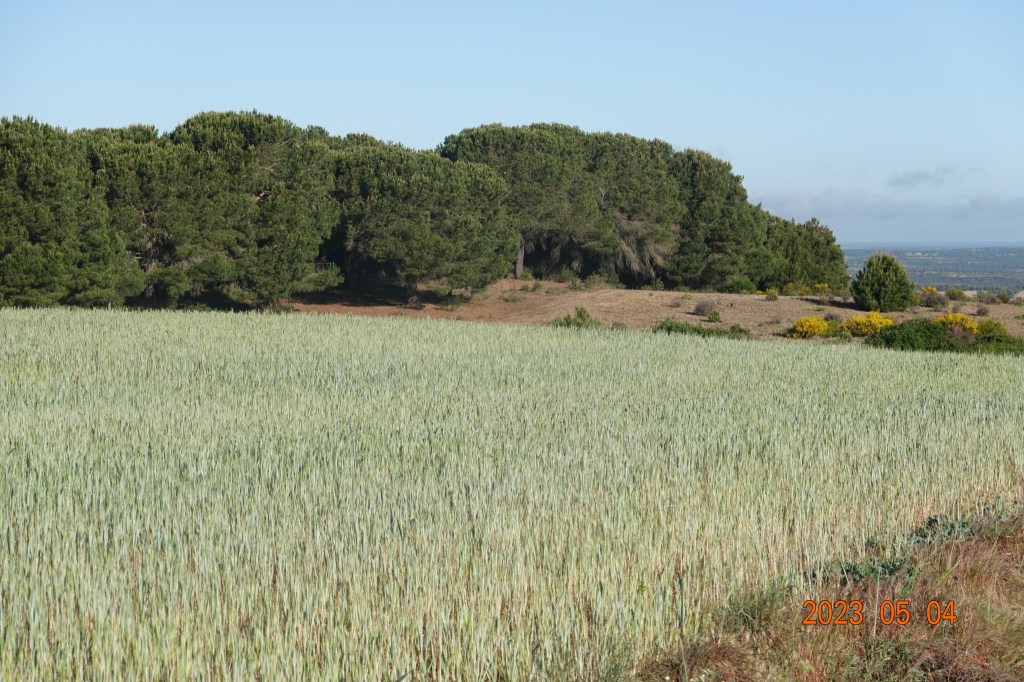
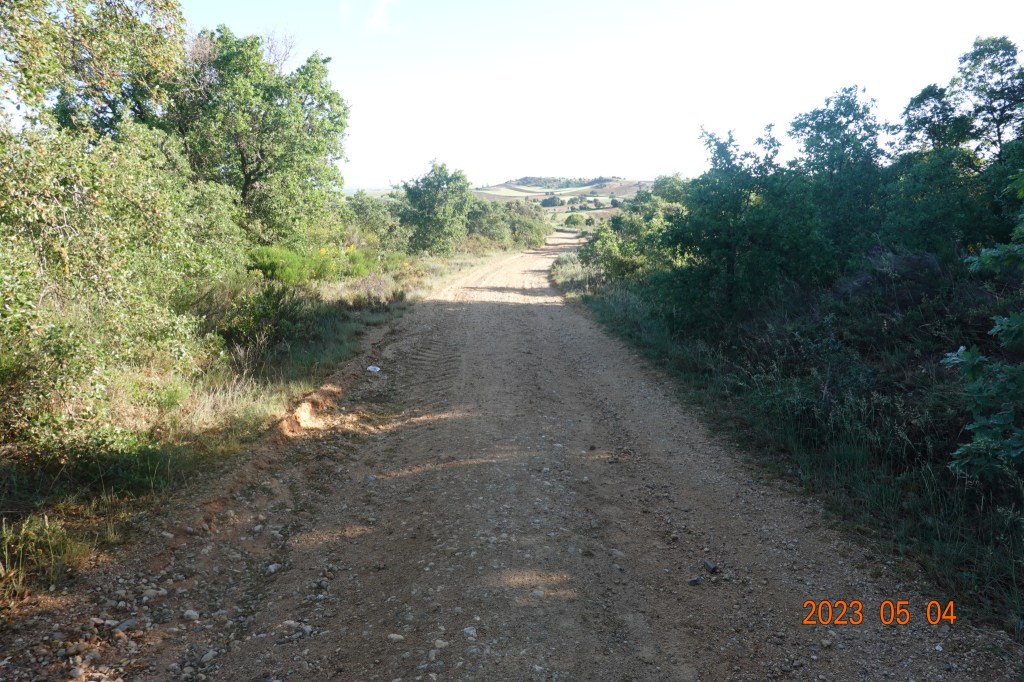
After more wheat fields, we found ourselves walking through trees and large bushes, almost a forest. Perhaps the land here is not as suitable for farming, or perhaps some of the land is being preserved to remain natural. Always beautiful.
We came upon a replica of a Roman way marker indicating the “Via de la Plata” in three languages. It is unclear what the bottom two are. We know this is a replica because (1) it is not worn enough for having been there for over 2000 years, and (2) the Romans did not use English. Being about 2 meters tall, this was not a cheap installation.

The road to Zamora through expansive fields is very long, and the day is warm, almost hot. And the Camino path seems to go uphill more than down.

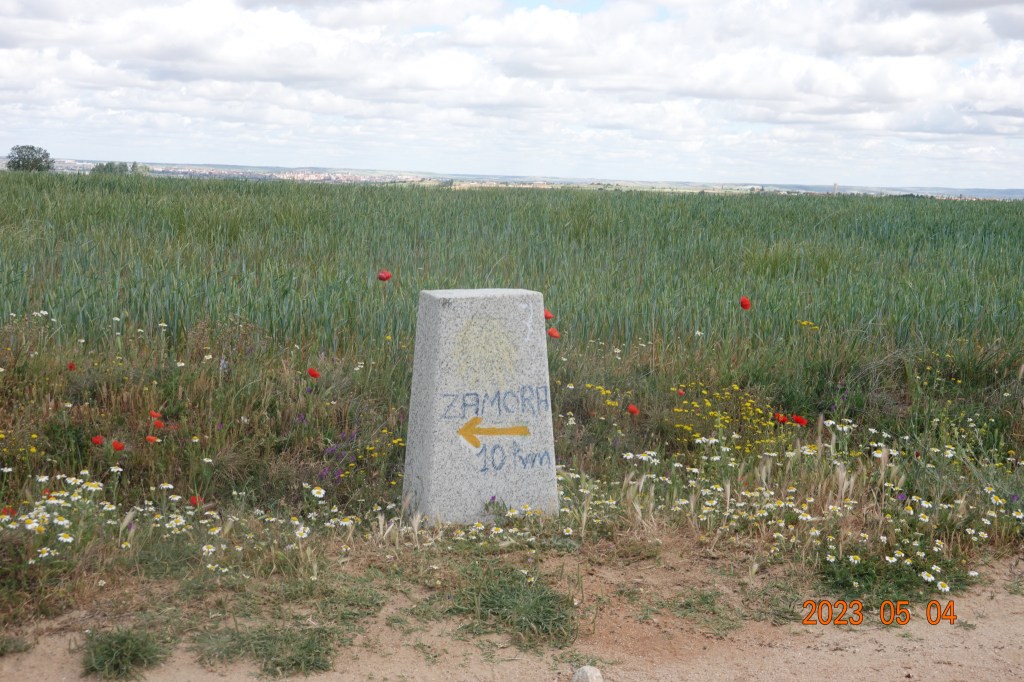
We saw another of the Camino Way markers on which someone had added “Zamora 10 kilometers” meaning over 2 more hours of walking. We are tired and would like to stop, but where – there is nothing here, so we continue to Zamora.
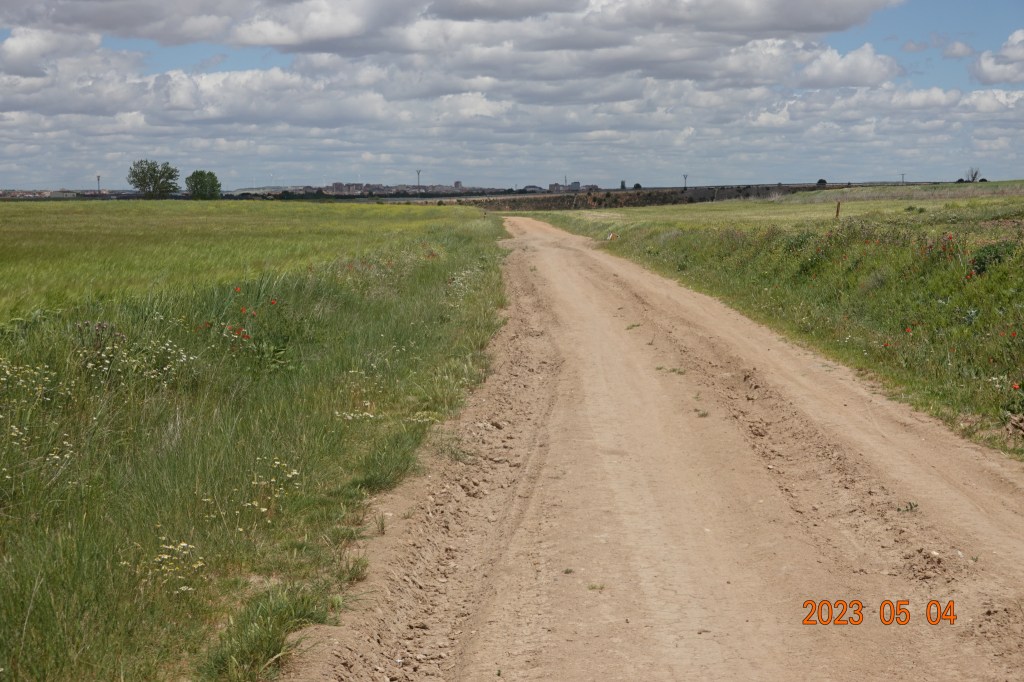
The long road to Zamora continues through the fields.
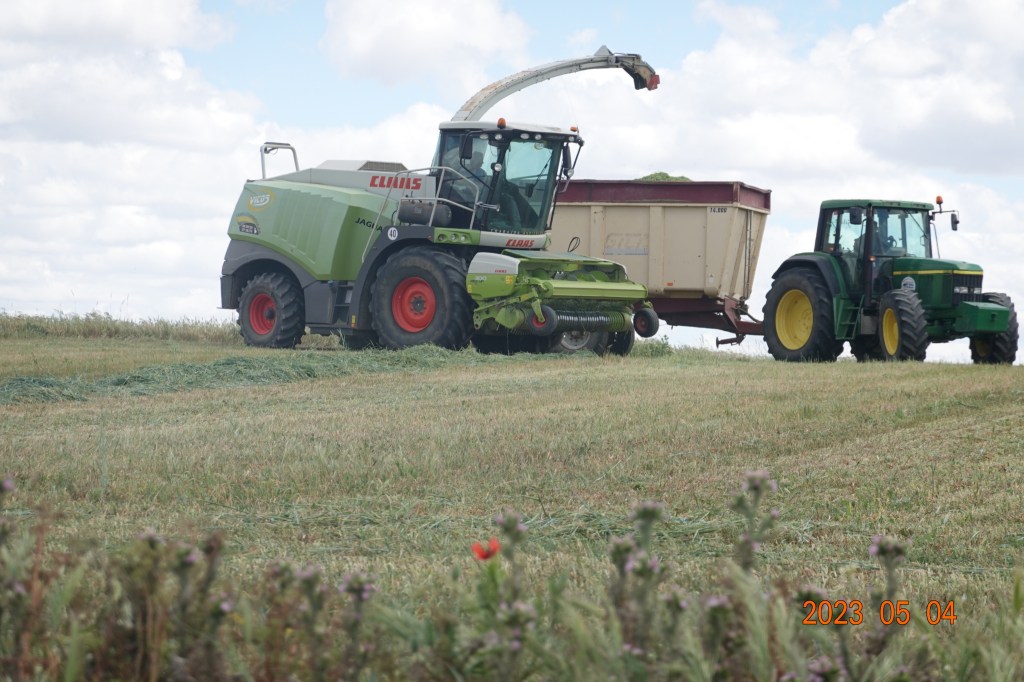
Getting close the the outskirts of Zamora, we saw farmers working in the fields with their equipment. Farms in Spain are very modern.
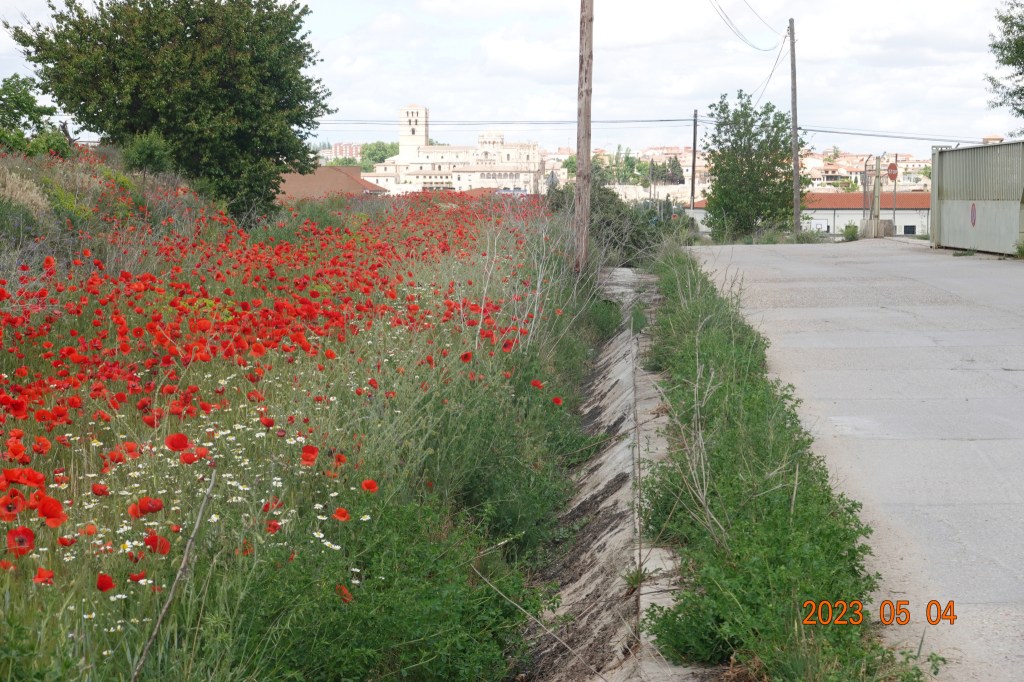
On the outskirts of Zamora, poppies lined the street on which we were walking, almost welcoming us to the near completion of a very long day. We can see the old town of Zamora in the distance.
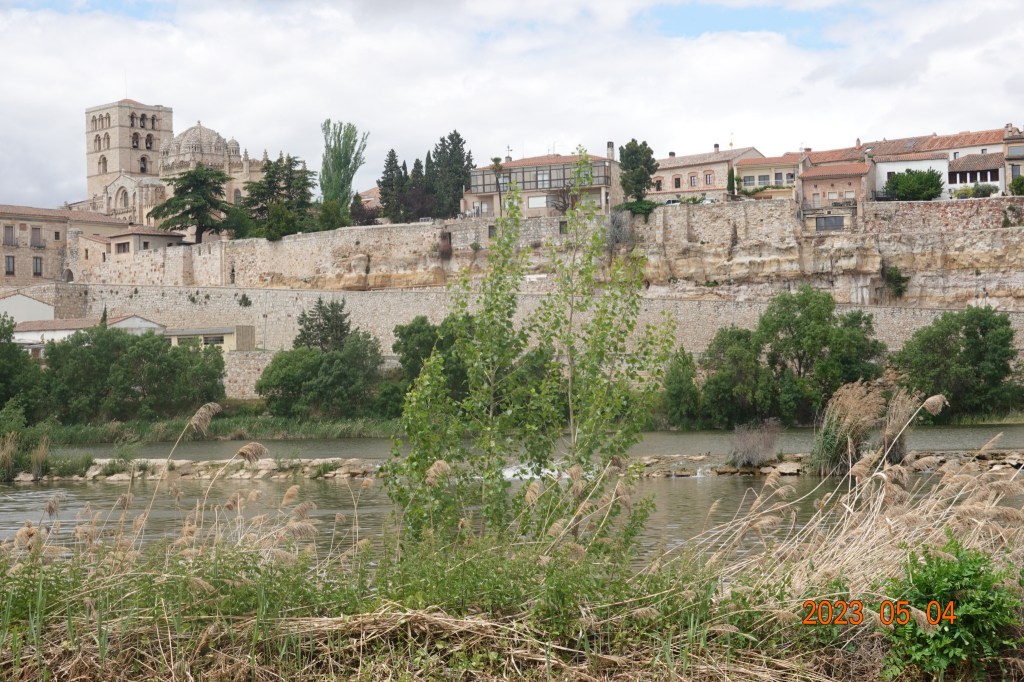
For a short distance, we walked along the river with Zamora across.
And here is the Roman bridge into the old city of Zamora, now for pedestrian use only.

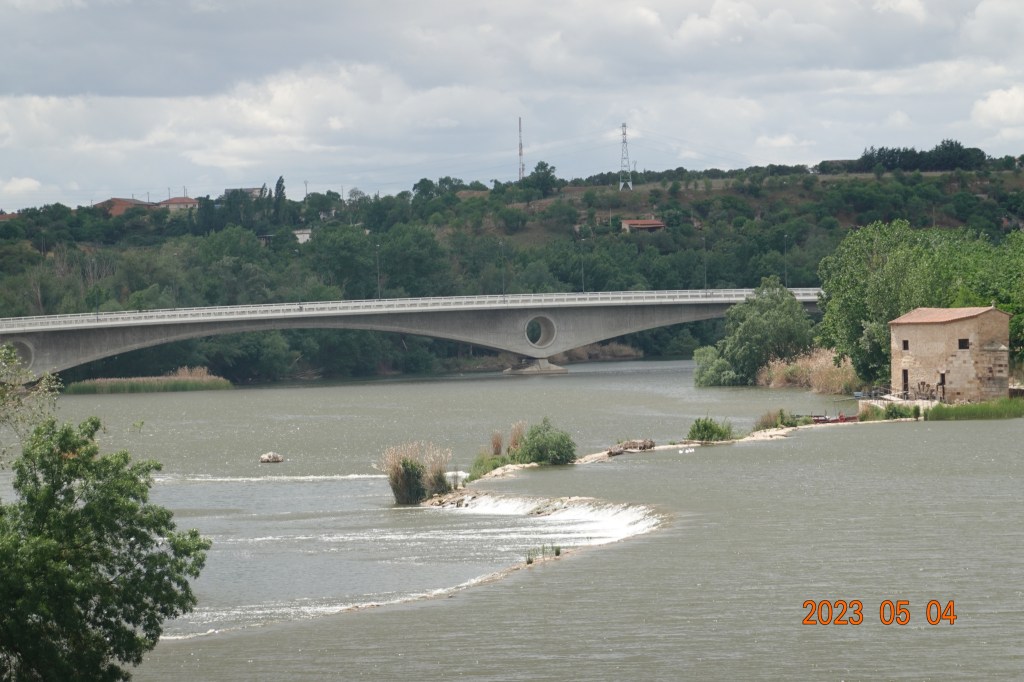
From the middle of the Roman bridge, I took a photo downstream to the newer highway bridge into Zamora, a fairly elegant, modern bridge.
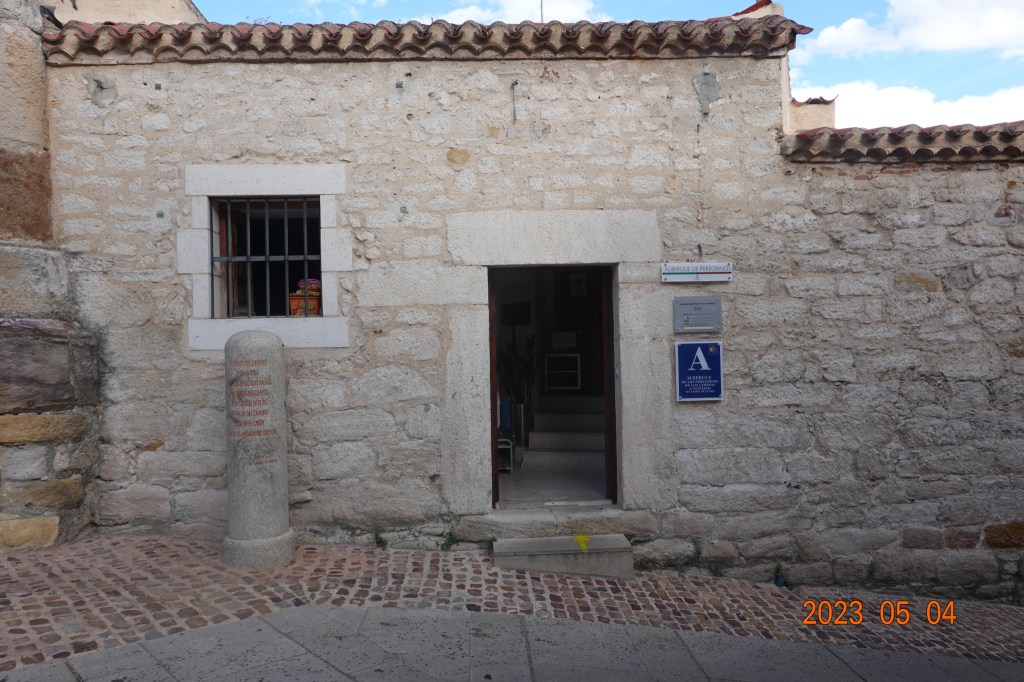
After crossing the bridge and (of course) walking uphill, we came to the albergue in Zamora. There are only 30 beds here, and we were the 26th and 27th people to arrive. Not my favorite albergue, not the worst, either. They have no blankets, so I am happy that I bought a lightweight sleeping bag in Salamanca. The one nice thing here was that after washing your clothes by hand, they have a machine that spins the water out of your clothes, making the process of drying on the line outside much faster. Other than that one nice thing, it was pretty bleak, a forgettable place to stay with an over-controlling hospitalero (manager).
A more somber note:
My general impression of albergues on the Via de la Plata is not good. Most are (in my opinion) dirty, and cramped, with minimal facilities and often poor plumbing. For 8 or 10 Euros, one cannot expect much. I tolerate them because that is where Tom likes to stay. I do not sleep well at all in the albergues. We have stayed occasionally at private accommodations, and I sleep much better there. They are more expensive. Tom gravitates to the albergues because he likes mixing and talking to the other pilgrims – that’s where he gets his energy and recharges. They drain me and I dislike the albergues a lot. I am also having two physical problems: (1) my right foot is not healing as I had hoped, and (2) I am experiencing increasing pain in my left lower leg on the outside of the tibia, likely tendonitis. Both are not going away, and the tendonitis is worsening every day, making every step painful. I would like to continue on to Santiago de Compostela, but that is at least two and a half more weeks, and this is not fun anymore. Am I doing this for me or for my ego? It may be time to listen to my body and see about going home.
Next: Zamora to Montamarta

 James the Intrepid Pilgrim
I can’t do the albergues (even privados) anymore. I stayed in pensiones and hostales for a few euros more last year on the Argonés and Invierno and enjoyed it a whole lot more as I could unwind and have my own schedule and get sleep.
Take care of those feet though. The Camino will always be there to finish. See a doctor to see how serious it is. ¡Buen Camino!
LikeLike