Friday, April 21, 2023
Walking from Aljucén to Alcuéscar
21.2 kilometers
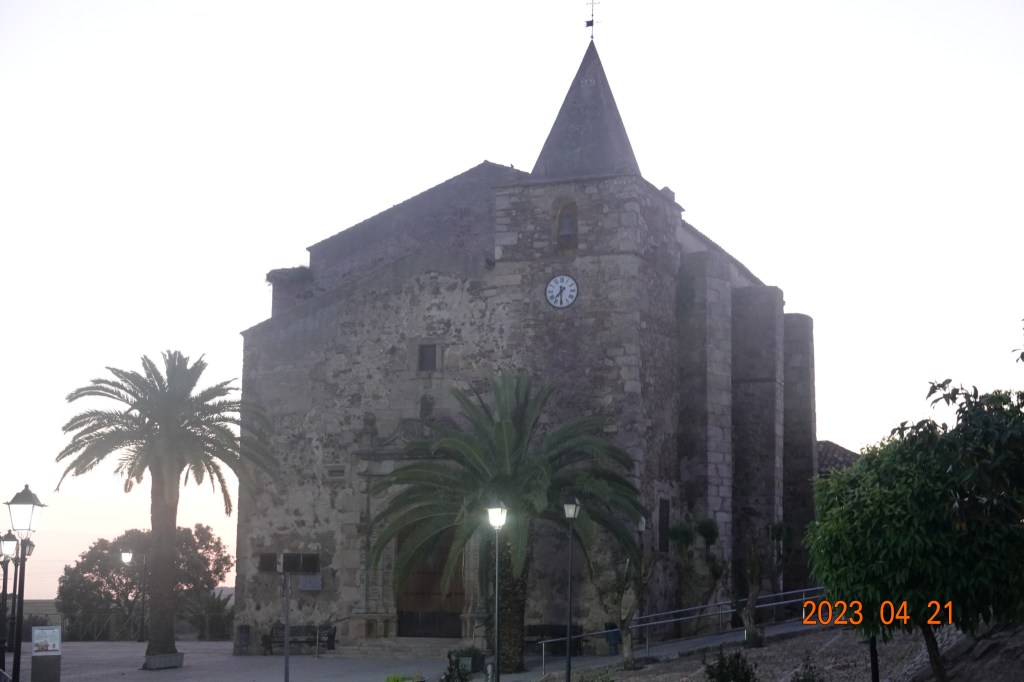
Another day starting cool and brisk as we left Aljucén. We walked out of town at about 7:30 AM and the bar/cafe was already doing a good business, including with some pilgrims inside having breakfast. We walked by this old stone church, similar to many we have seen in southern Spain.
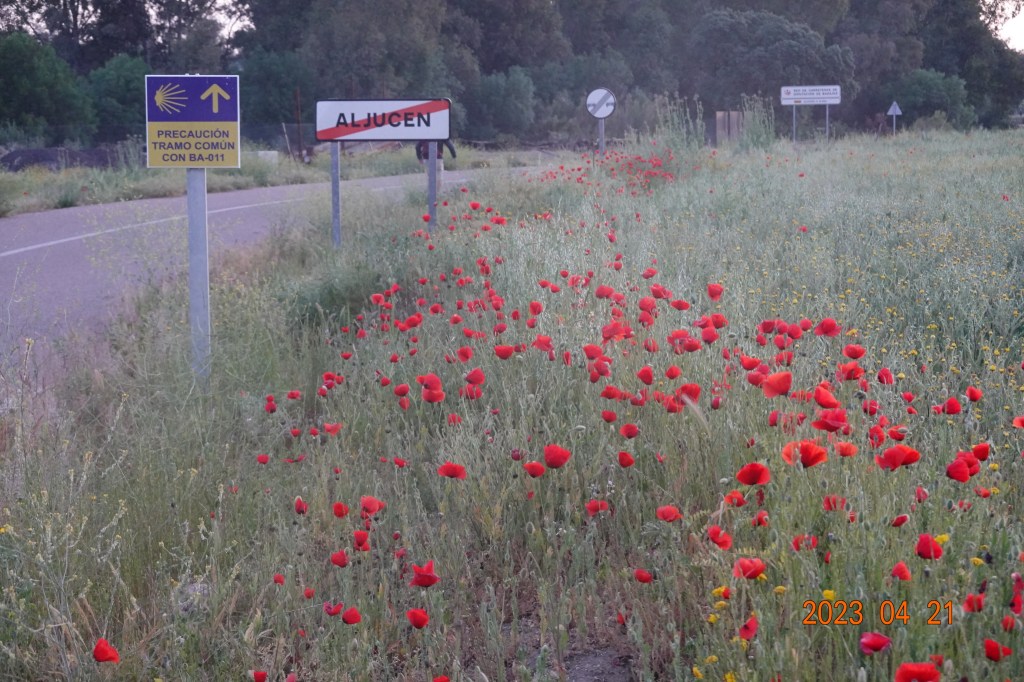
Very quickly we were down in a broad river valley leaving Aljucén. The sign is typical in Spain, a similar sign announces the town and when leaving the town, it is crossed out – as if to say, “no more Aljucén” by a field of bright red poppy-like flowers.
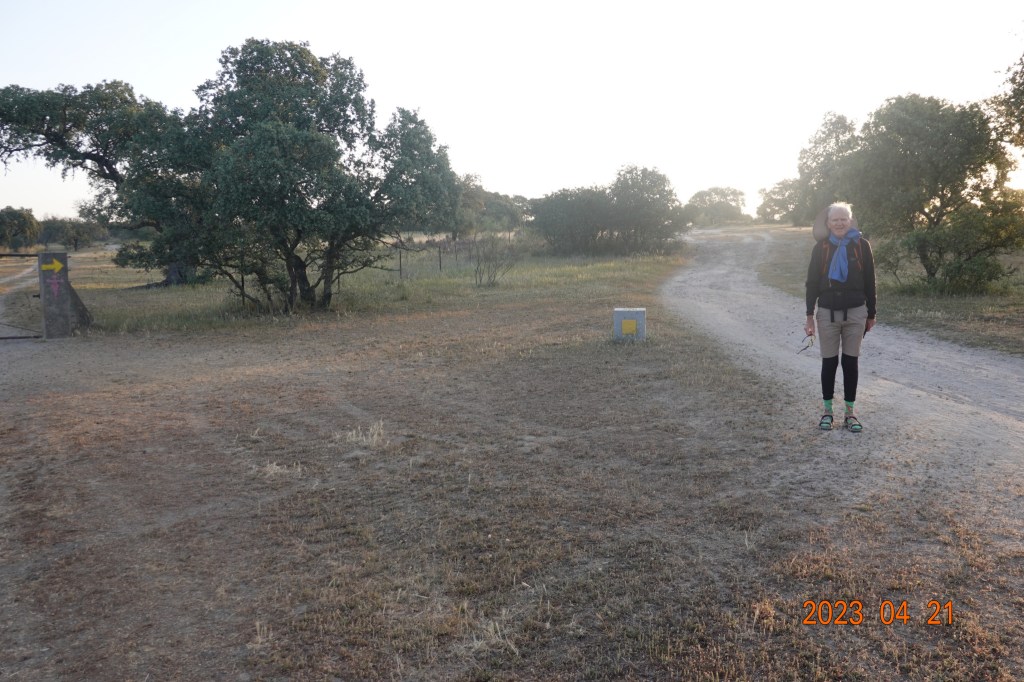
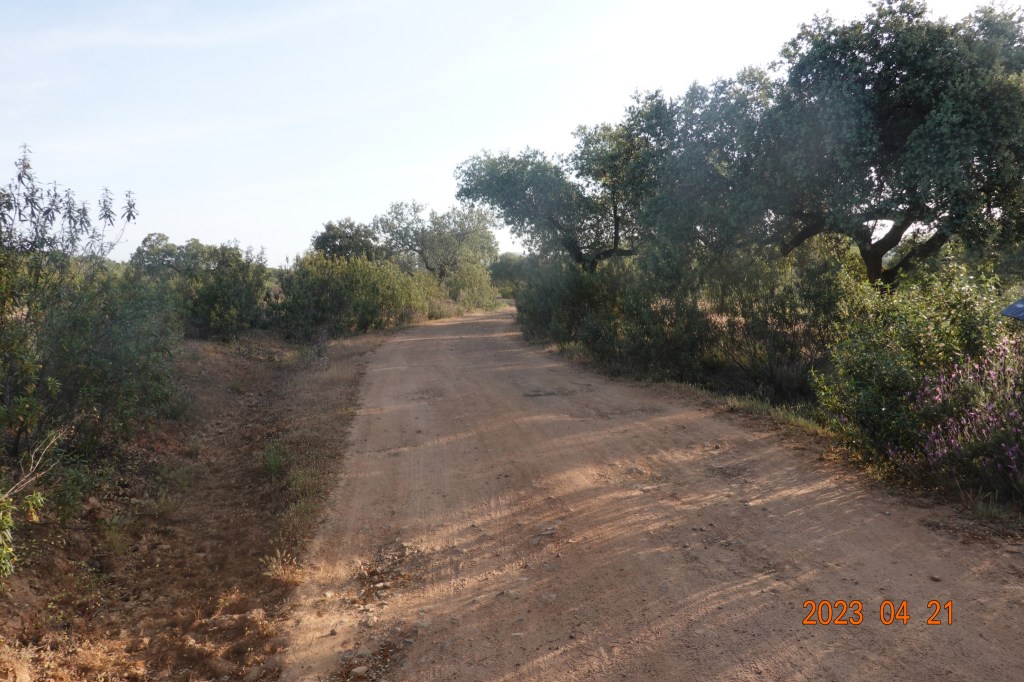
After walking along the road for close to a kilometer, the Camino path veers off the road onto a rocky & dirt country/farm road on which we will be walking all day. The rockiness increases and decreases and is very hard on the feet. My feet are feeling pretty good today, but this could be a very long day on the rocks. To the right of the photo the everpresent yellow arrow can be seen and in the foreground to the left of Tom is one of the newer granite markers.
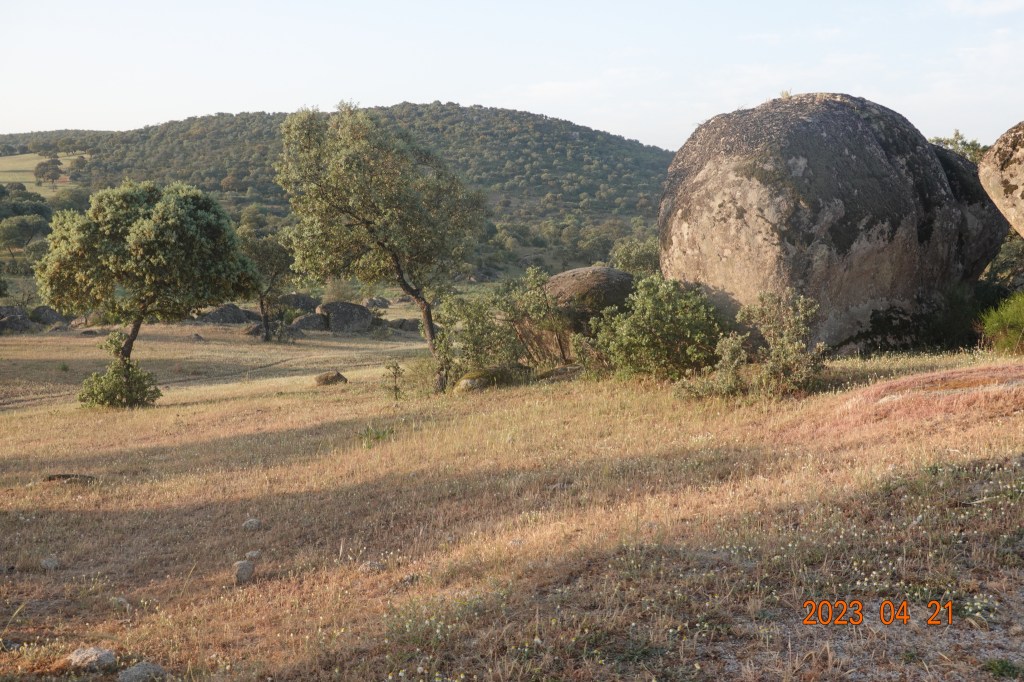
All day we are off and away from the main highway and on this road through farmland. Frequently we see large boulders in the landscape, quite dramatic.
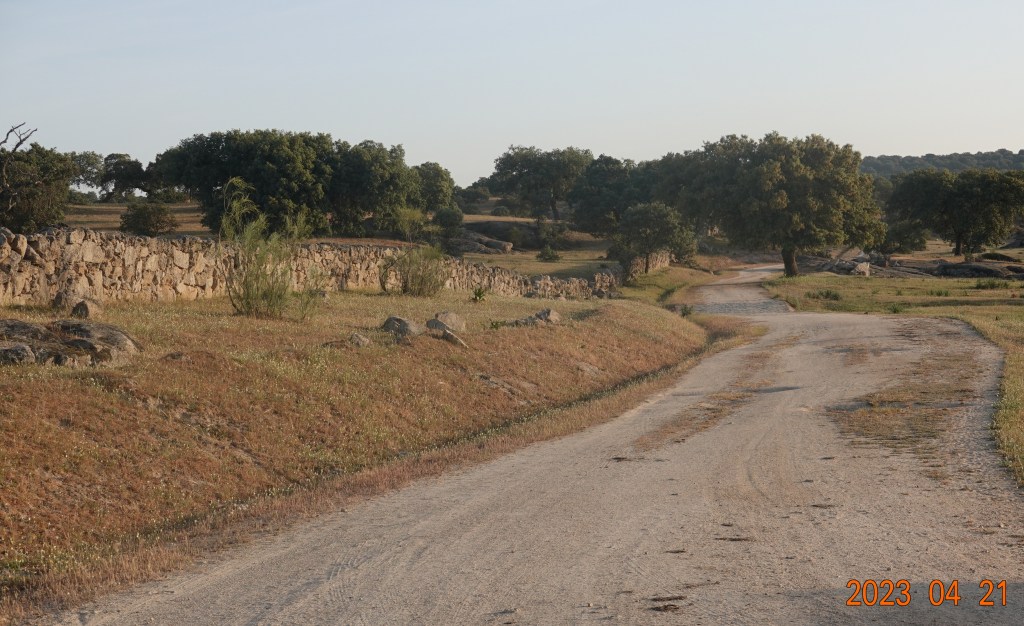
We are walking in a cool morning, but it is warming fairly quickly. The scenery in this dramatic natural landscape is striking. For some time we walked along this old stone wall likely separating the grazing land from the road.
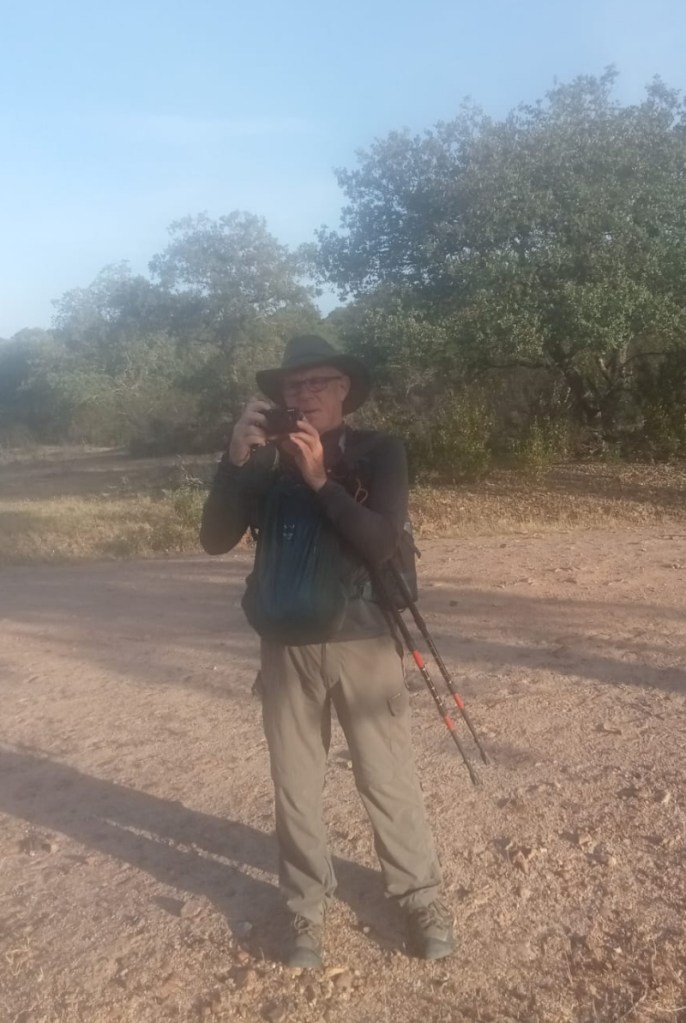
About 1/2 way into today’s walk we stopped to have a break, eat a second breakfast, and rest for a few minutes. Tom got a photo of me taking a picture of something. A little blurry because Tom was looking into the bright sun.
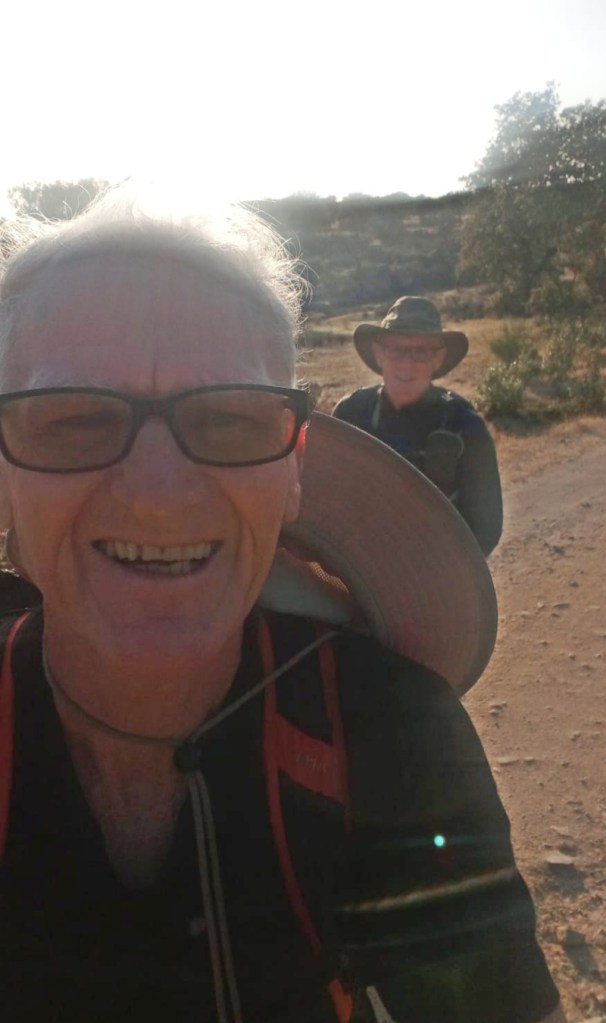
Tom and I made a selfie to share with our former group. We have a WhatsApp group and share pictures even though we are no longer together.
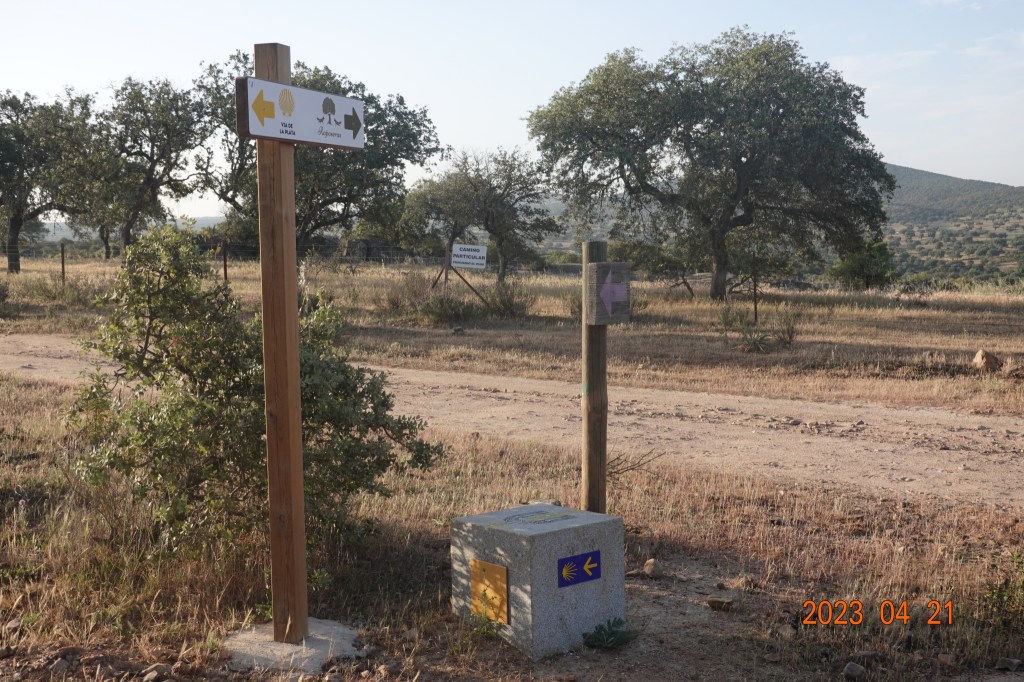
We came to a turn in the route, and it was very well marked. The arrow above the granite way marker is purple, something I have not seen before but have seen several times today.
The natural landscape along the Camino Way today is quite beautiful. The road itself is not so beautiful, very rocky at times transitioning to less rocky, but always rocky. The natural trees, bushes, and wildflowers along the way lift our spirits some as we negotiate the rocks.
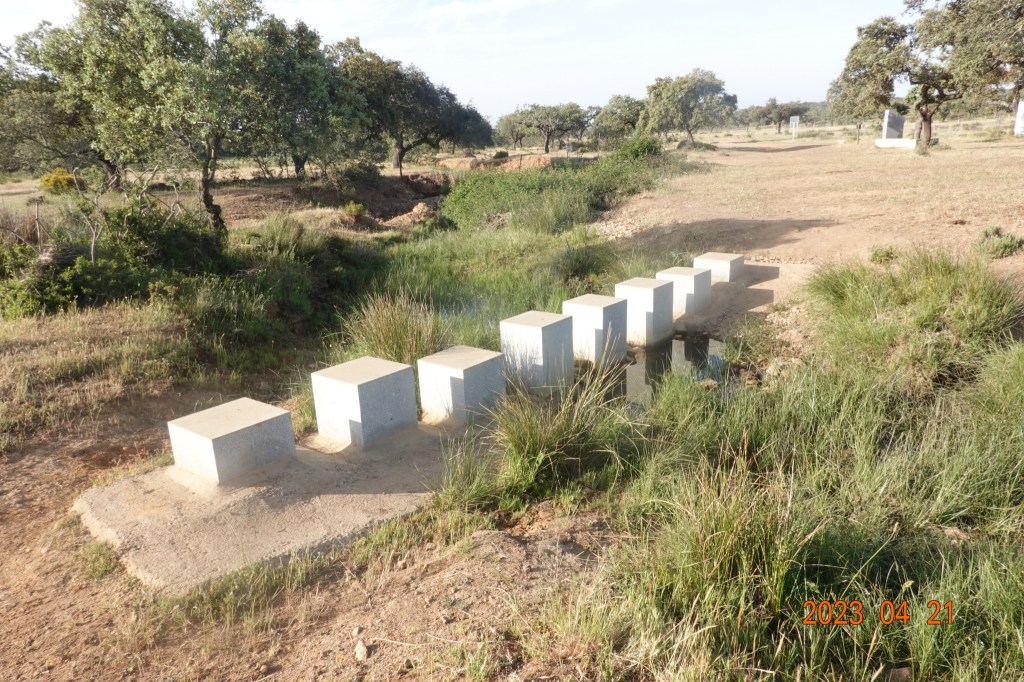
We came to a bridge over a small creek. This is a simple but effective bridge, relatively easy to construct, and always lets water through and people across.
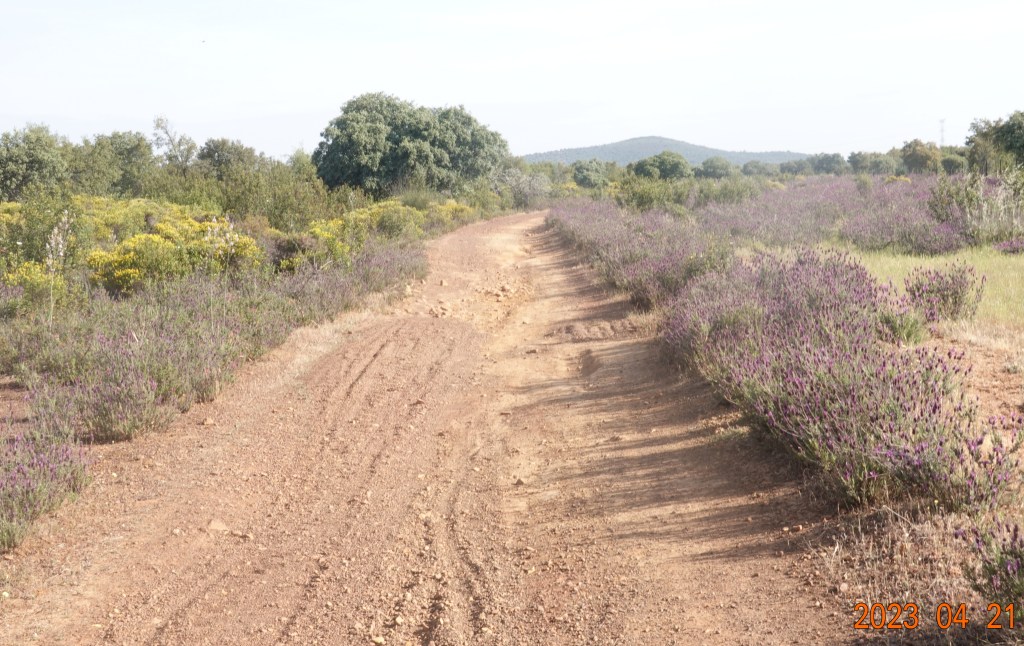
Wildflowers on both sides, yellow on the left, and purple/blue on the right.
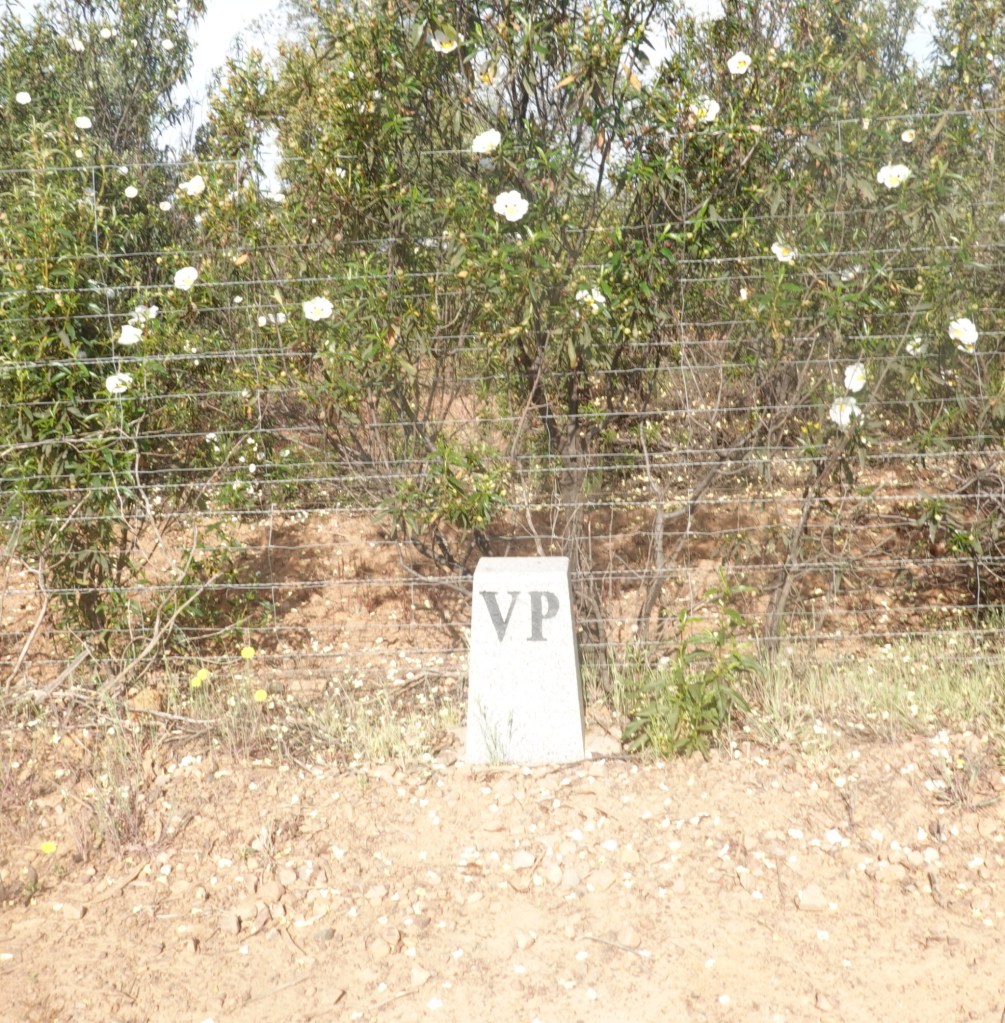
Today we have seen a new smaller Camino Way marker with VP on it. We presume the VP means Via de la Plata.
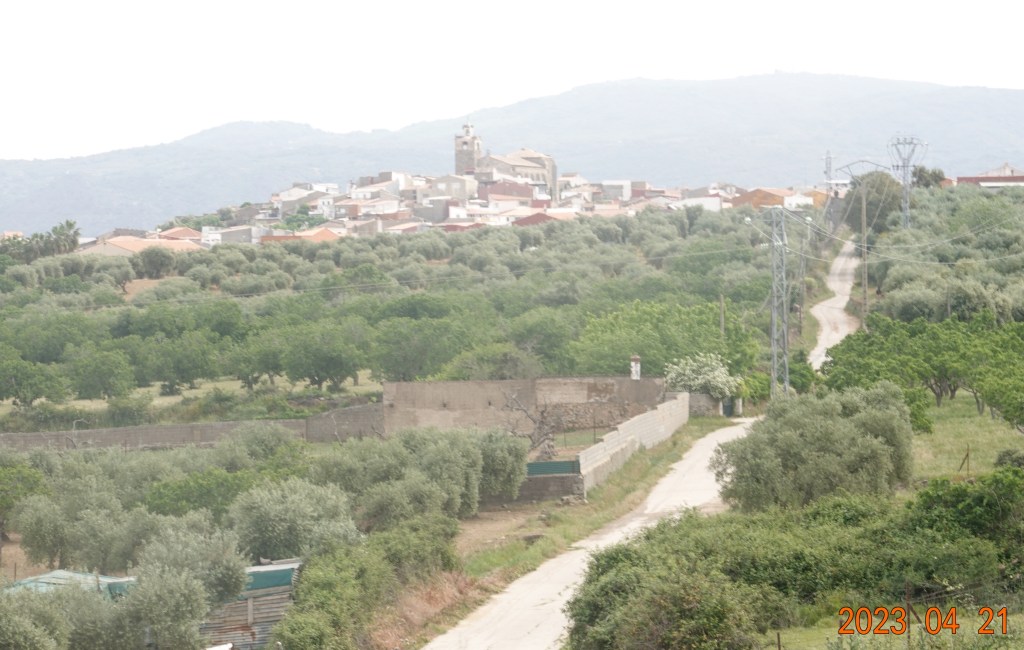
After more walking, we started down a slight hill and saw Alcuéscar ahead, up a hill, as is typical in Spain. Towns were often built at the top of hills to be easier to defend, and it makes for a mental challenge for a tired pilgrim.
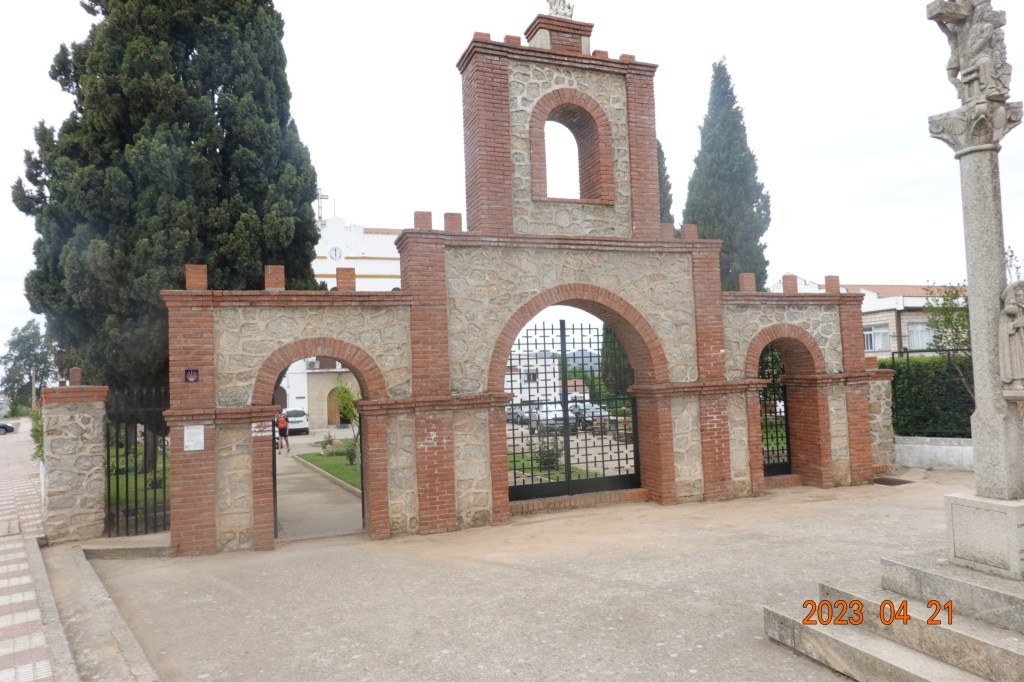
Our albergue tonight is in a convent. We found the entrance and headed in to check-in.
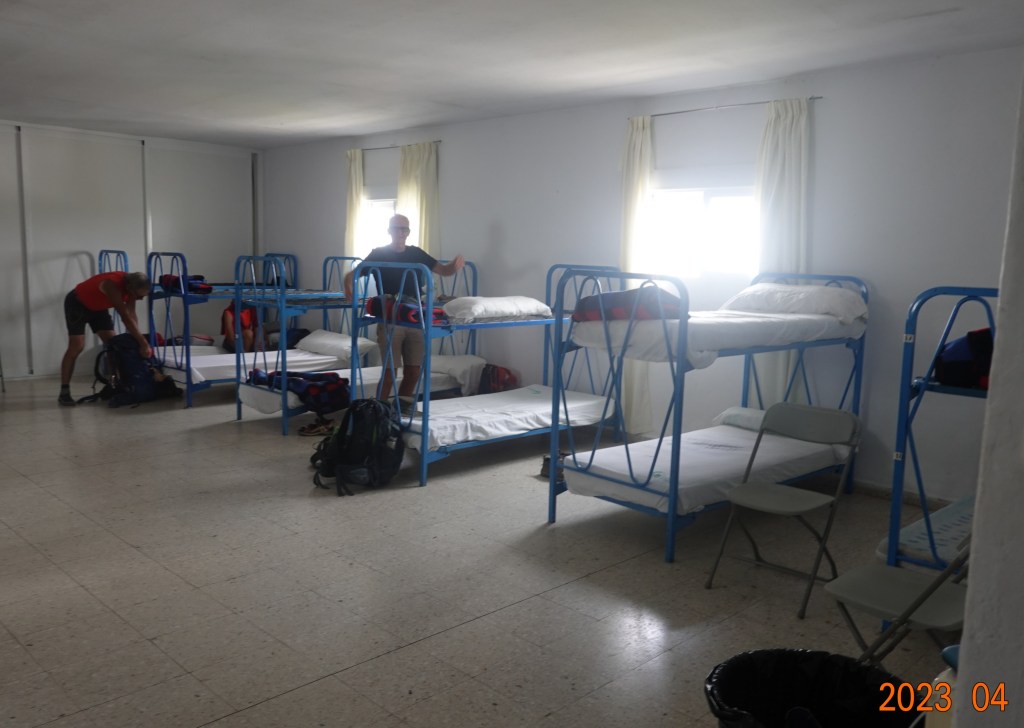
The dorm room in this albergue is very spartan. There are 12 bunk beds, and they are only using the lower bunks, so a maximum occupancy of 12. Because they serve dinner here, there is no kitchen and not a good “common area” in which I can work on my blog. I did find a place and am trying to finish quickly as it is time for lights out.
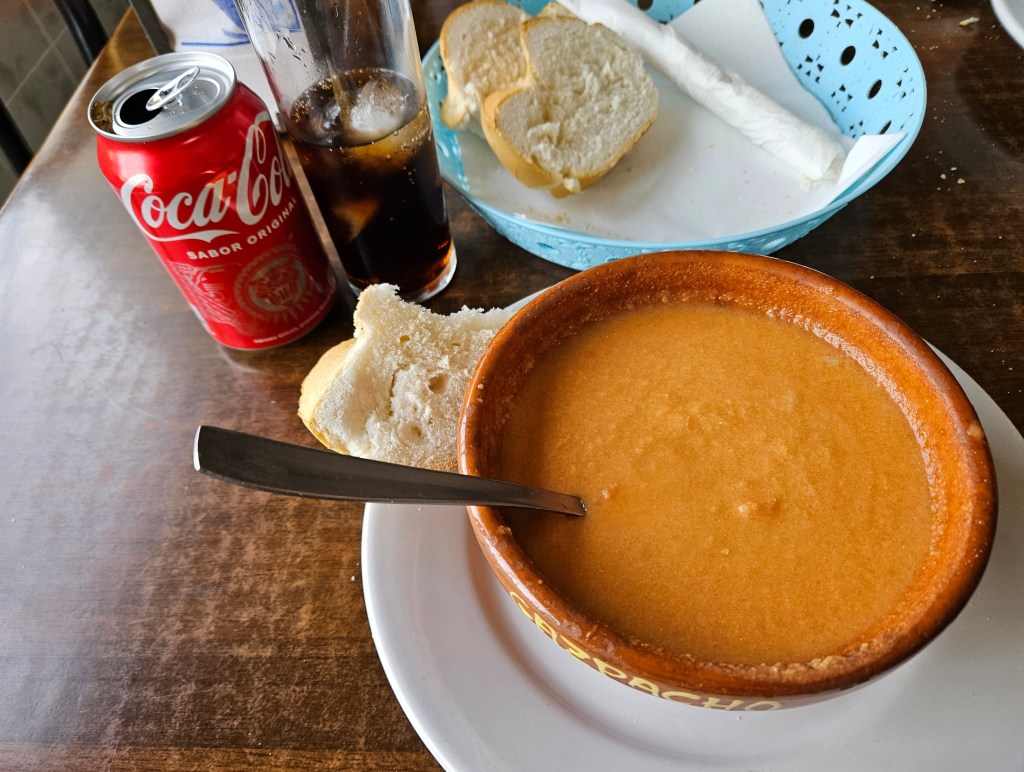
After checking in. Tom and I went down the street for lunch before siesta time in the town in which everything closes. I had my typical after-walk Coke and also very good gazpacho followed by a sausage dish that was not that great (so I did not photograph it).
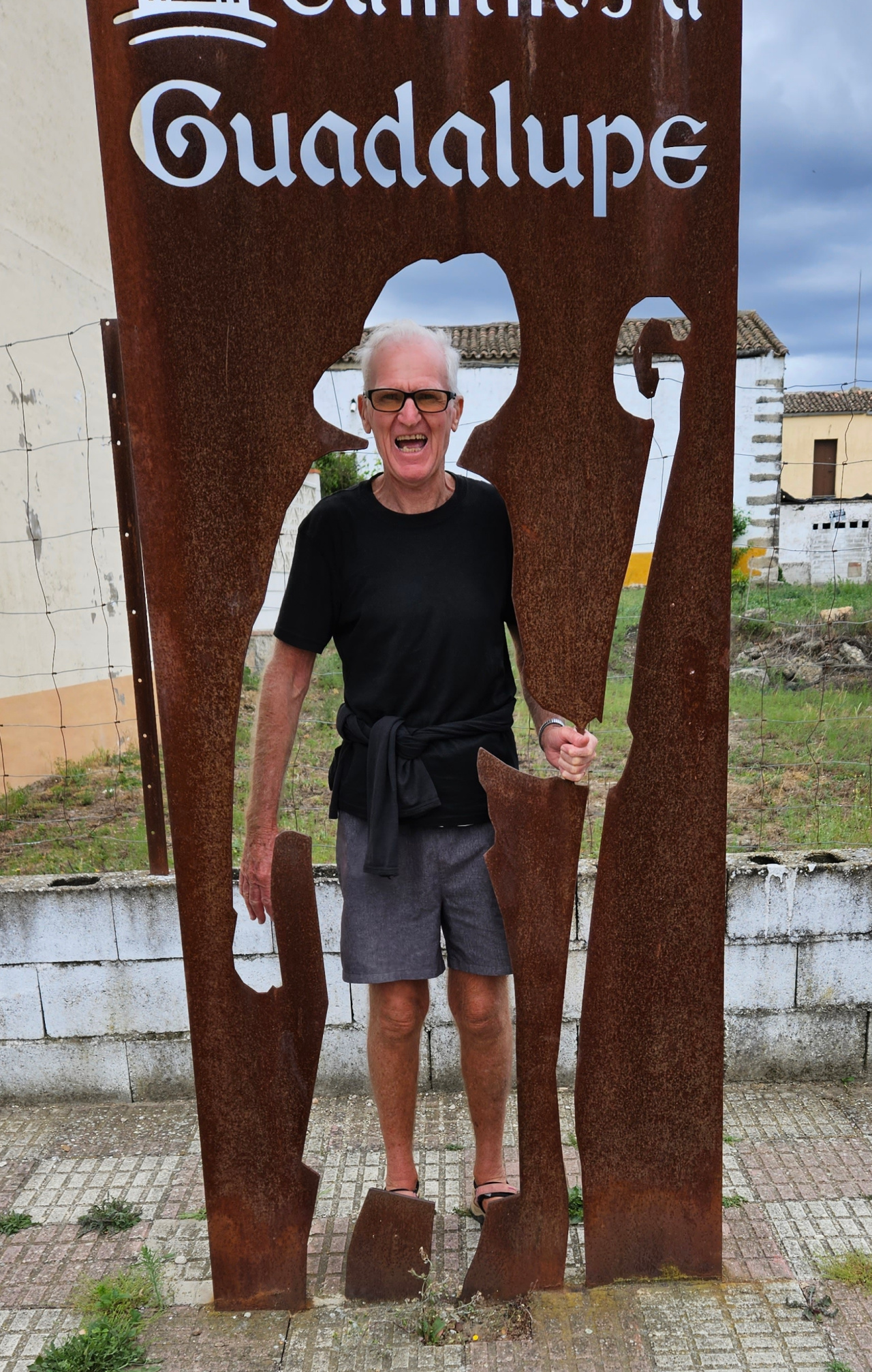
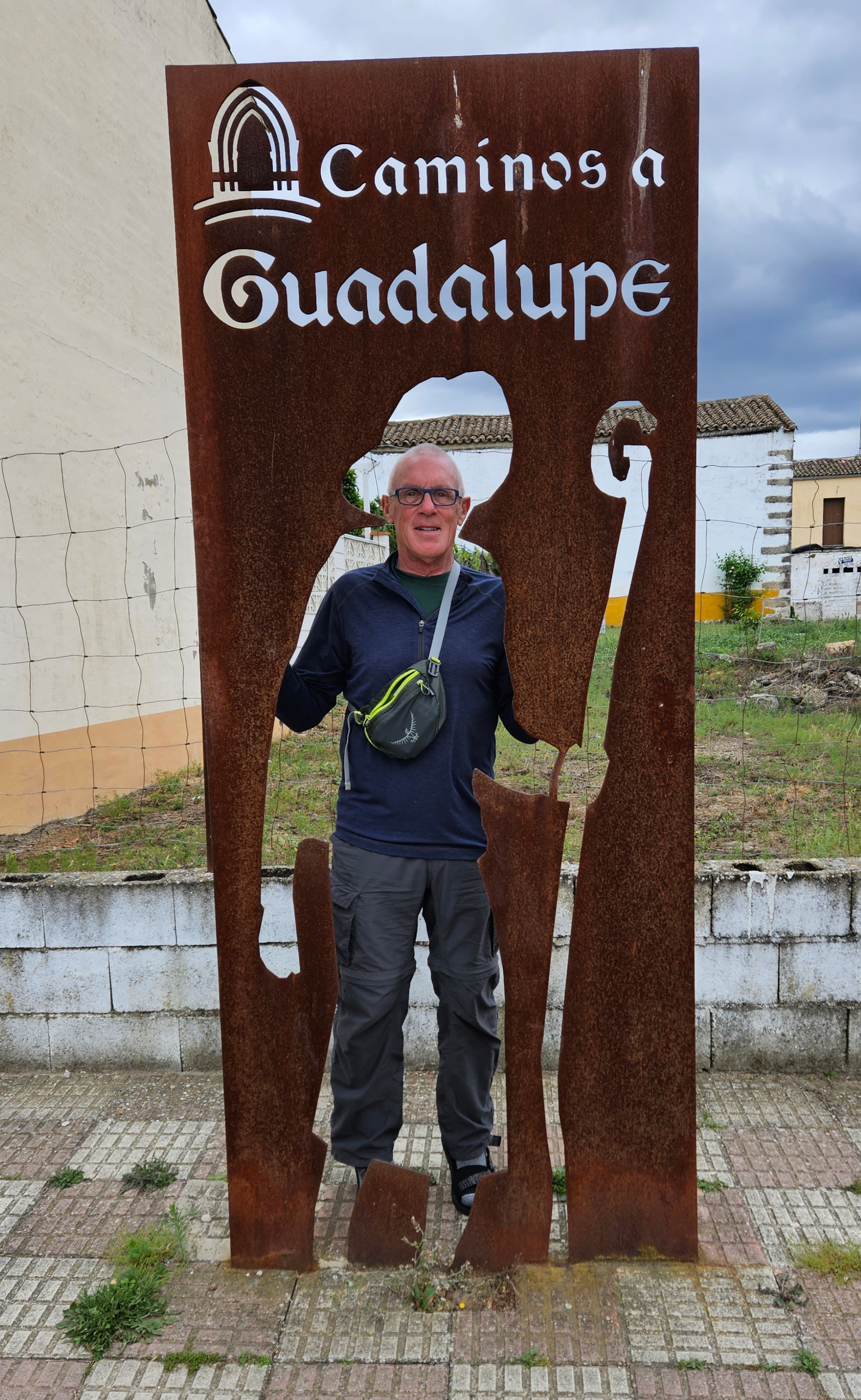
Near the entrance of the convent was this metal cutout of a pilgrim, so Tom and I took our pictures there for a little fun and also to share with our WhatsApp group.
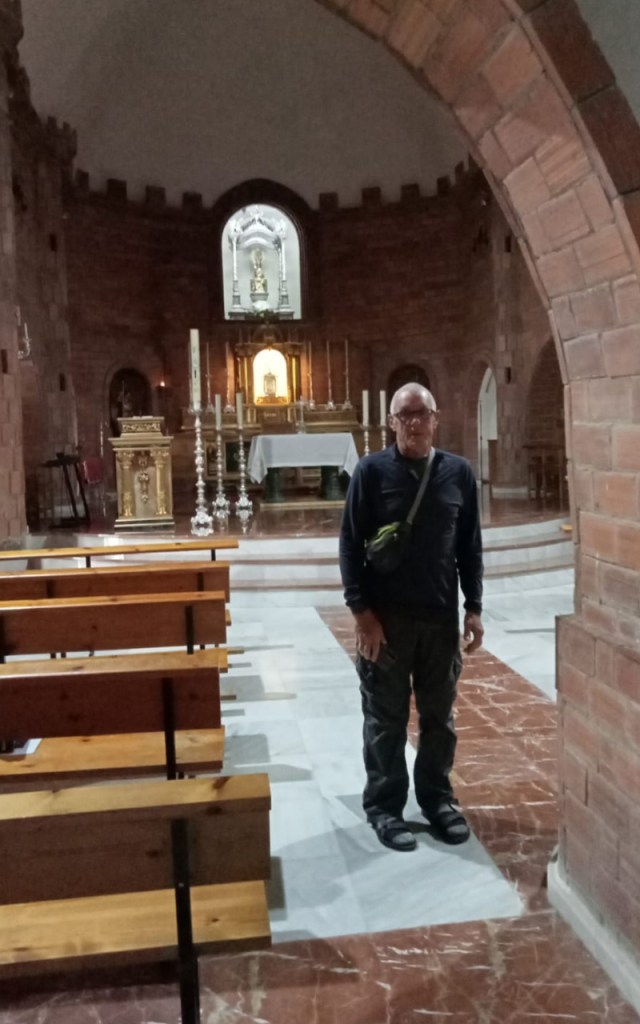
After getting a shower, washing clothes, and getting generally settled, we went to Mass at 6:30. Tom got a photo of me looking a little startled in the chapel after Mass.
I am feeling well, a little concerned about my right foot, but it is definitely getting better gradually. Walking much of the day every day does not provide the best foundation for quick healing, so I’ll take the gradual improvement. And it is better enough that much of today’s walk was at 5 kilometers per hour, and we were not intending to walk fast (maybe we just wanted to get off the rocky road).
I am not unhappy with the albergues because there are far fewer people walking the Via de la Plata than the Camino Frances. It is typical to see only a dozen or so people in the albergues, and they are often the same people we saw the night before and “sort of” know. And being that the Via de la Plata is a more solitary pilgrimage route, the people on this route are typically a little older and less the “party-type.” So it is working out. There are times when I feel a little drained by having a group of people always around. I suspect we might step away from the albergues in some upcoming days for some additional rest.
Several upcoming days will require walks of 30 or even 34 kilometers. I think we are getting into shape to handle that, especially of my foot continues healing.
Next: Alcuéscar to Valdesalor

 James the Intrepid Pilgrim
Where do you go to the bathroom? Those are poppies. Maybe opium poppies. Picture this says flanders poppy, field poppy, corn poppy or cornfield poppy. You may enjoy one of my favorite go to apps: https://apps.apple.com/us/app/picturethis-plant-identifier/id1252497129 it’s pretty accurate. I often hold my cell phone up to a photo on a facebook page and identify things that way. LOVE the Merlin Bird app as well. https://merlin.allaboutbirds.org/
LikeLike
If there are small towns along the route, we stop at a cafe/bar and use the restroom then buy a drink or water or something. If no small towns, we urinate behind a bush like the cattle, sheep and goats. On this route there are so few people in comparison, it does not present a problem.
LikeLike
Hello Jim,
I think those are Papaver rhoseas – Flanders Field poppies. They bloom from March to June for us in LA. They call them Shirley Poppies also. The red is the native poppy in Europe from the Baltic to Turkey. Famous for WWI, of course.
Have you had much Mustard plants yet? I remember from Art History the fathers used to sow mustard seed to lead the way to to the churches. Junipero Serra did it in California. You still see it even though mustard and all the Brassica family (canola, rapeseed) tend to go where they want. It’s a nice idea, mustard seeds and faith.
LikeLike