Monday, January 23, 2023
Visiting three temples on Monday
I will be leaving Chiang Mai and returning home in just nine days. I have been in the Kingdom of Thailand for 50 days now. As is often said, time flies by when you’re having fun. And I am enjoying my time here in Thailand, mainly Chiang Mai. I am comfortable here, this being my tenth yoga-focussed visit to Chiang Mai. I have Rose (the owner of Wild Rose Yoga) and her husband John to thank for the foundation on which so many of my good experiences have emanated. For example, they have recommended many good places to eat, some of which have become my favorites; I have met lasting friends at Wild Rose Yoga, and the yoga itself is challenging and good. And, this year, John took me to some gyms, I chose the gym at which he works out, and from the brochures on the bulletin board, I called Ning, the personal trainer. Working with her has not only augmented my fitness, but I met her boyfriend Patrick and some of their friends, so my “circle” is expanding a little.
Today started with a workout with Ning at the O2 Gym. After I got back to See You Soon, it occurred to me that I have not visited Wat Jed Yod this year. I was unable to last year because it was closed to the public as some of the monks there had Covid. Wat Jed Yod is about 5 kilometers away, but difficult to get to walking, as it is on the other side of a very busy highway. So I got a Grab ride there.
Wat Jed Yod
Wat Jed Yod (sometimes spelled Chet Yot or Jet Yod) is an old temple oueside the old city of Chiang Mai and set in a large, almost park-like grounds when many large trees and space between the various structures. The temple dates back to 1455 when King Tilokarat planted a bhodi tree on the grounds and then established a temple. He ordered that the design of the main temple be copied from the Mahabodhi temple in Northern India where the Buddha achieved enlightenment under a bhodi tree. By 1476 he had established a large sanctuary in this monastery for the commemorating of 2000 years of Buddhism. The following year the 8th Buddhist World Council was held at Wat Jed Yod. It is said that the grounds have changed very little over the years, and while there are always a few tourists and Thais, the atmosphere is serene and quiet.
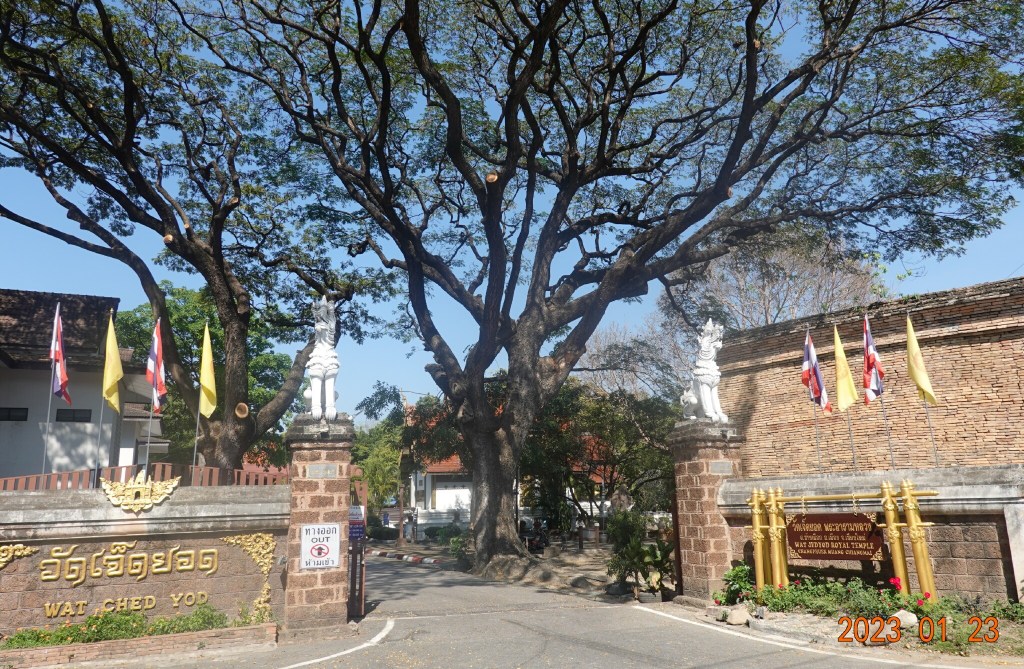
The current entrance has a sign on the left and the right, with the English translation slightly different in each, Ched Yod on the left and Jed Yod on the right:
Instead of going into the main part of the temple grounds, I went to the right, to an area I have never explored. The temple grounds are quite large and spread out. I found this old chedi I have not noticed before, and not adjacent to a viharn (worship hall) as is typical of almost all Thai Buddhist temples. This chedi is quite deteriorated, almost in ruins.

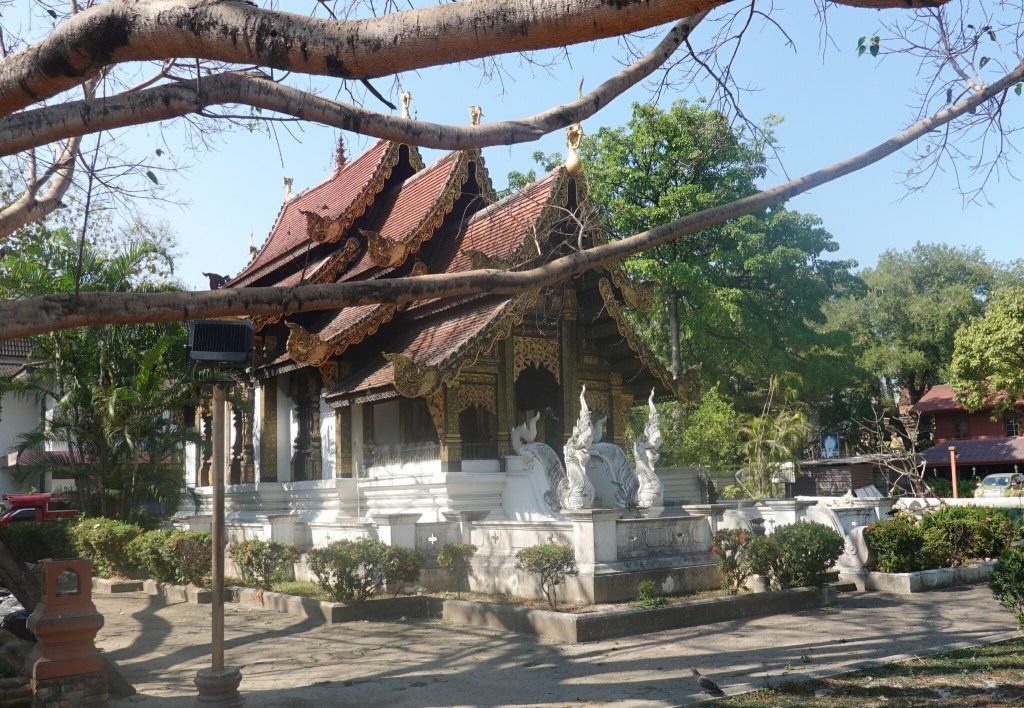
Continuing north towards the original entrance, I saw this old viharn which I have also never seen before.
Continuing through the trees towards the original entrance, I saw this fairly large Buddha statue, by itself surrounded by trees:
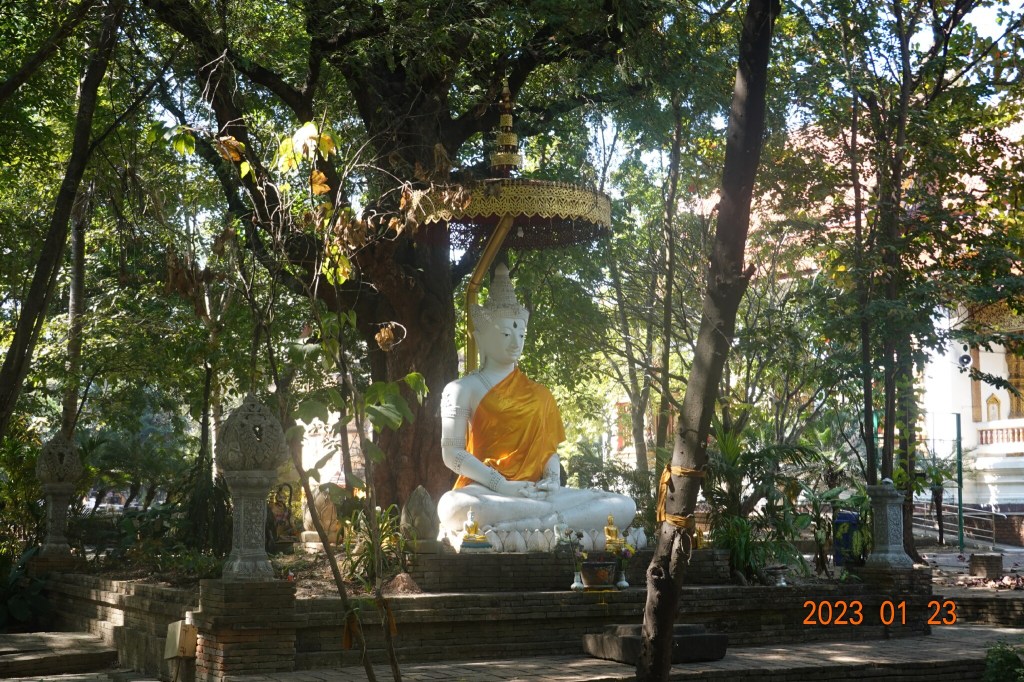
I have seen this Buddha before. It is close to the modern viharn, slightly visible through the trees in the right of the photo. This led me to the original entrance, now almost never used. It is a large structure and suggests from the construction that the temple grounds may have been surrounded by a wall in the past.

The path in the middle leads directly to the more modern viharn, a structure that dates to the 19th century. This viharn is is very much in the Lanna style with the nagas on the banisters of the entrance stairway, and am overlapping roof line typical of Lanna-style temples.
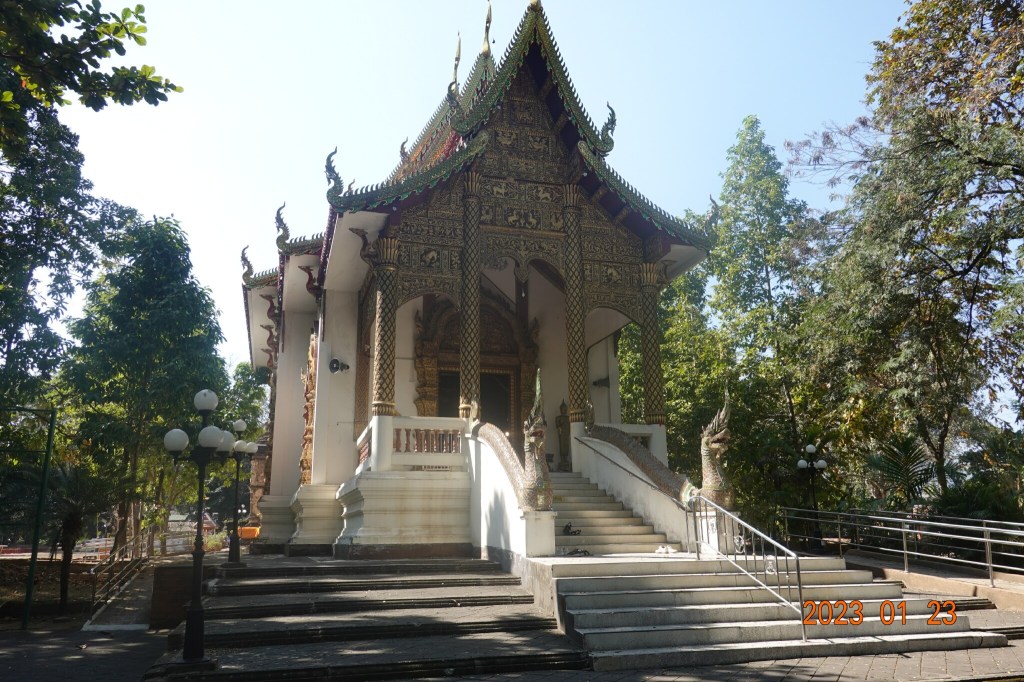
There are many chedis at Wat Jed Yod, and none are directly behind a viharn. To the right of the modern viharn is the very plain ubosot (ordination hall). The ubosot has been closed in all my visits to Wat Jed Yod, so I have never seen inside. Behind the ubosot is a chedi, the Ku Kanchan Chedi, and directly behind that the Tilokarat Chedi.
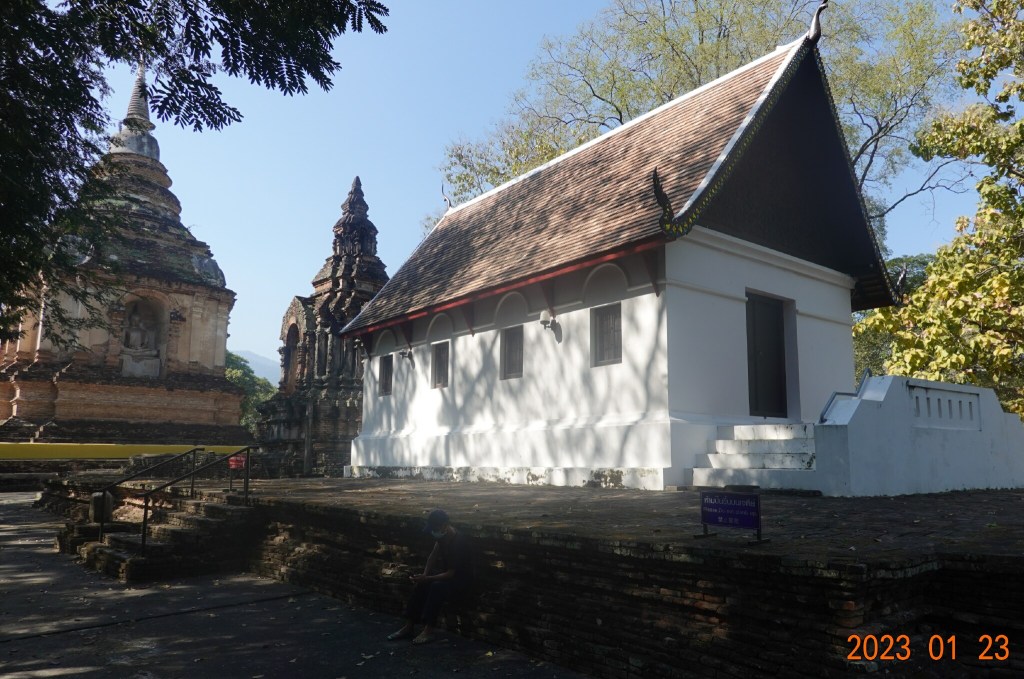
Here is a better view of the Ku Kanchan Chedi. This was built in the reign of King Mueangkaeo who ruled Chiang Mai from 1495 to 1525.
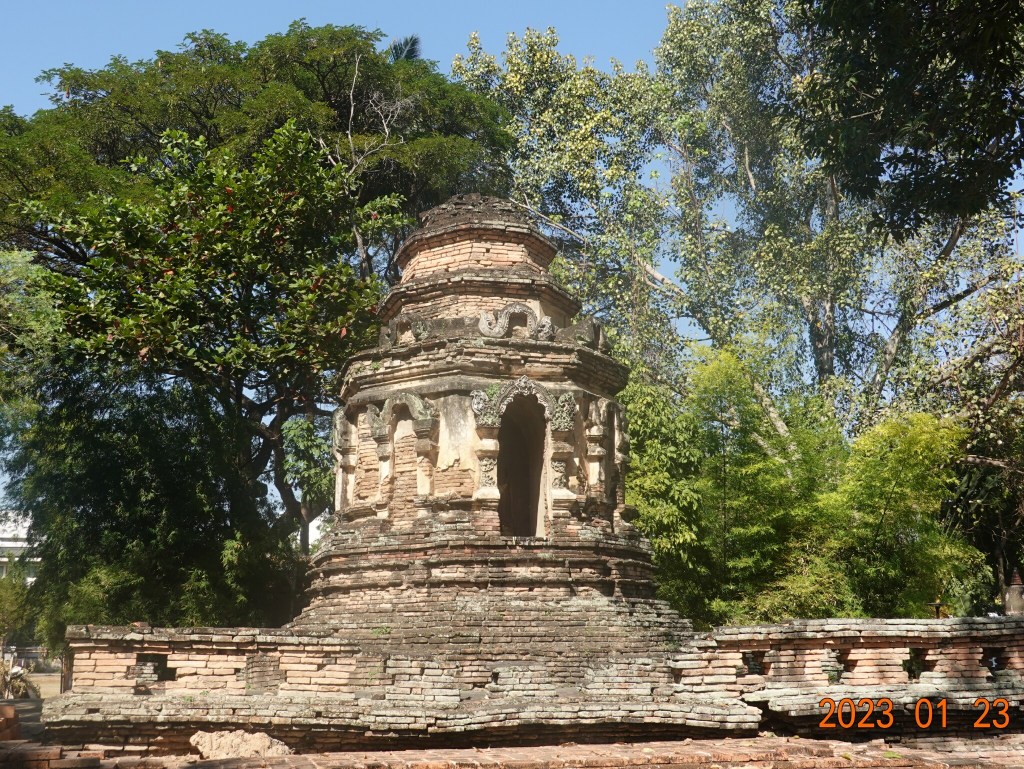
On a lower level, about 2 meters lower, I walked around to the largest and most important chedi at Wat Jed Yod, the Tilokarat Chedi. This chedi is named for King Tilokarat, who founded the temple and in which his ashes are interred. King Tilokarat ruled the Lanna Kingdom from 1441 until his death in 1487. The chedi is in the Lanna style and typical of this era.
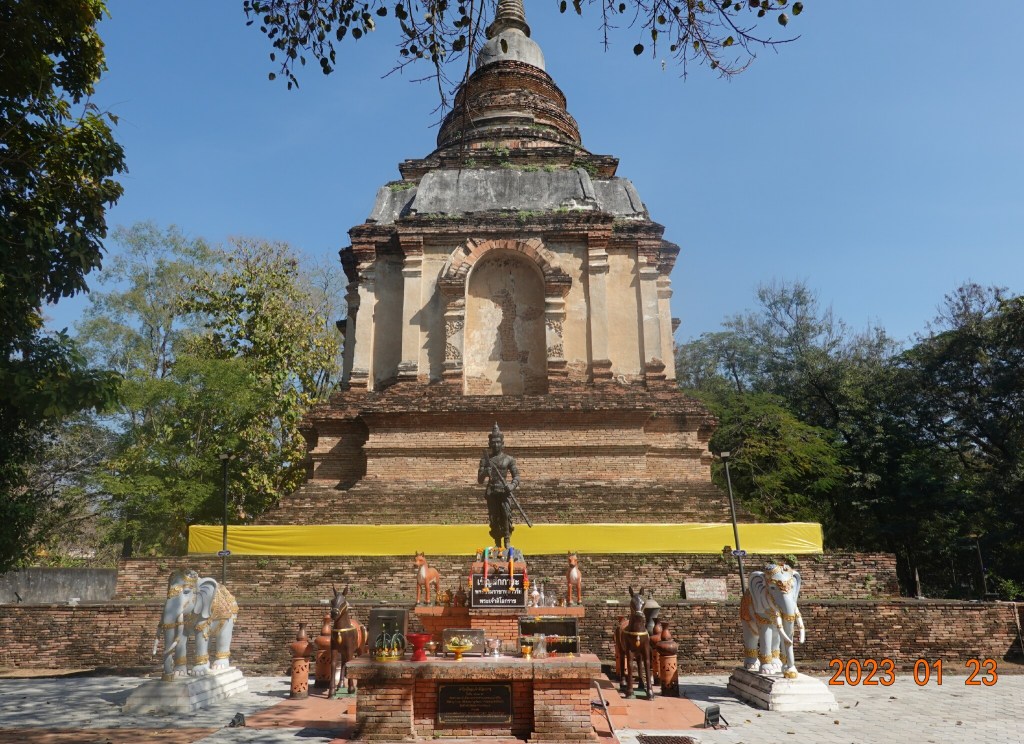
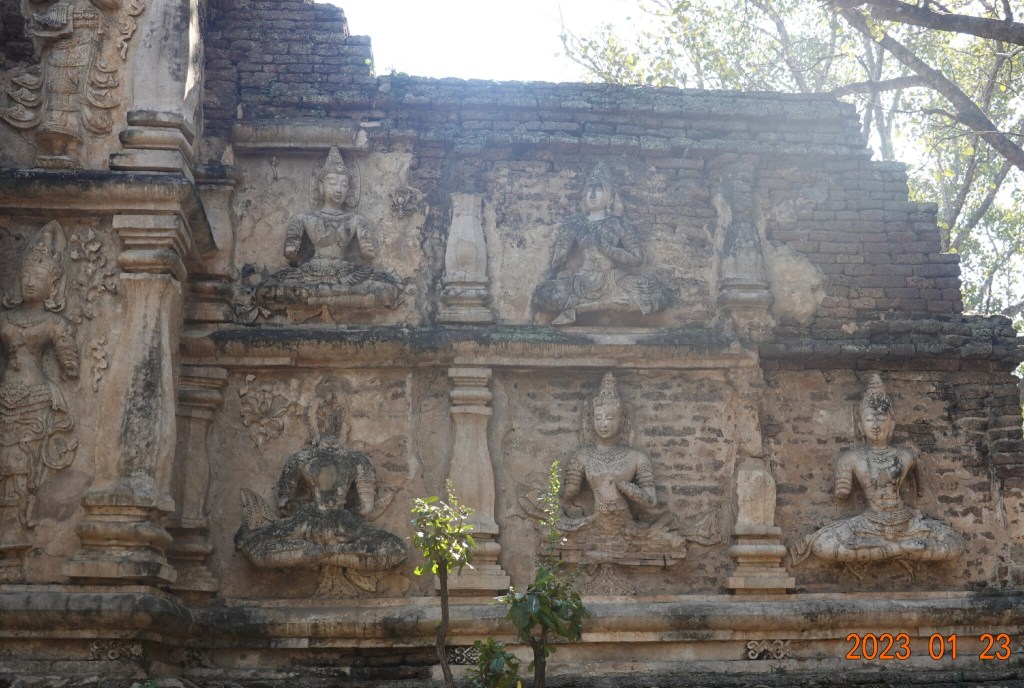
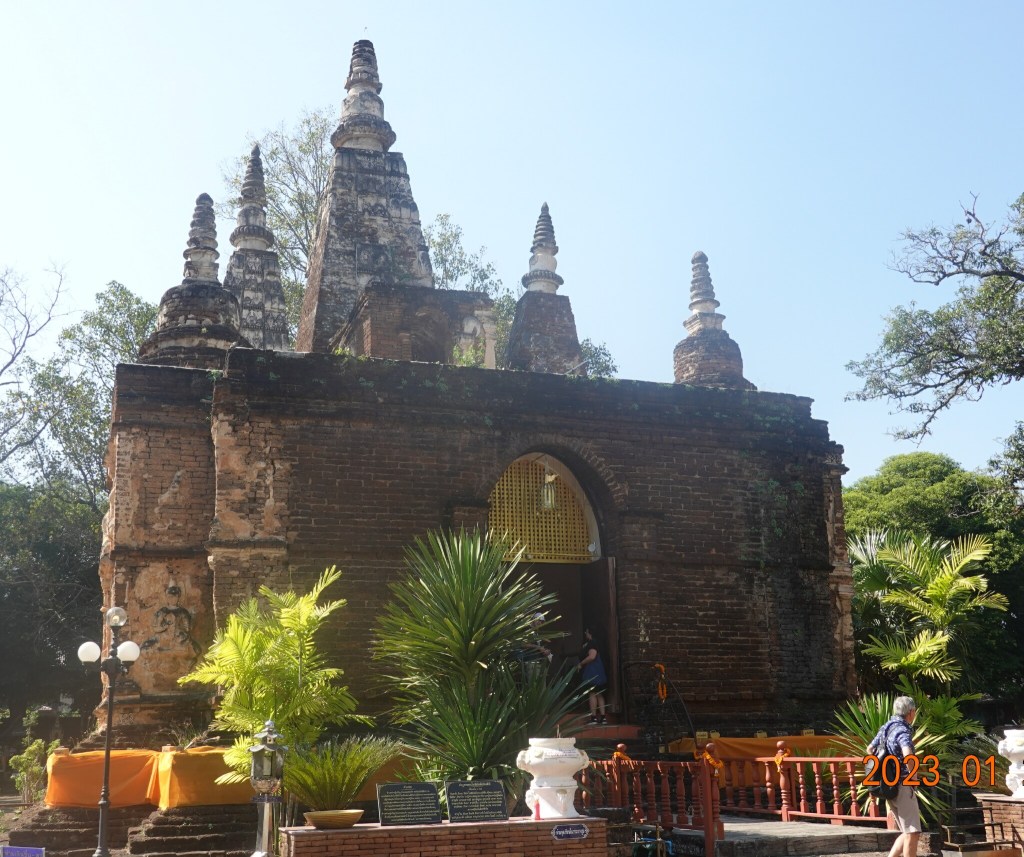
From where I stood taking the picture of the Tilokarat Chedi, I walked to the right to view the very old windowless viharn. This is unique because of the carved depictions of thewada (angelic beings that live in the heavenly realm) on the sides. In Thai, jed (or ched) is “seven” and yod (or yot) is “spire.” In the next photos, some of the seven spires on the roof are visible. The carved thewada are what draws me to this building – that carved stucco is almost seven hundred years old.
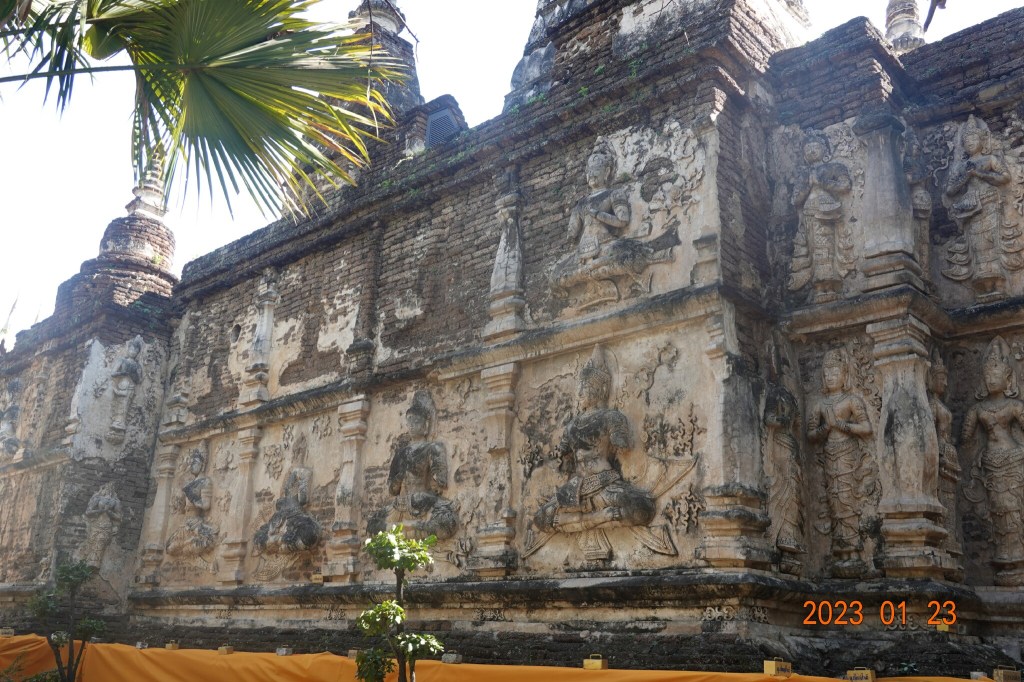
And on the other side, the carvings are even better:
From the front of the viharn, some of the seven spires are visible:
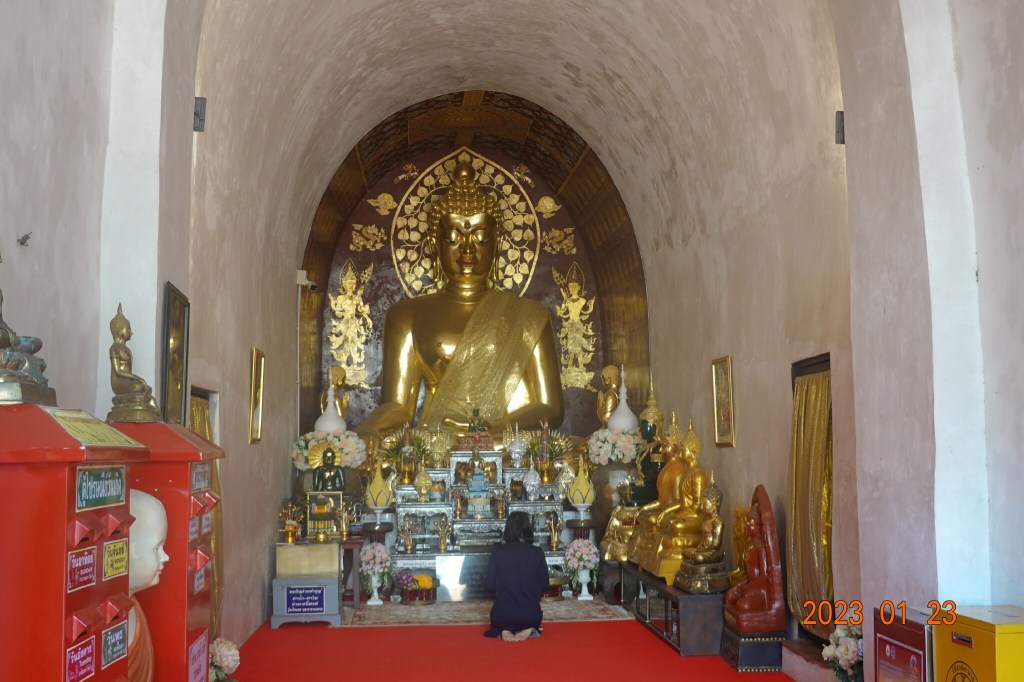
This old viharn is very small inside.
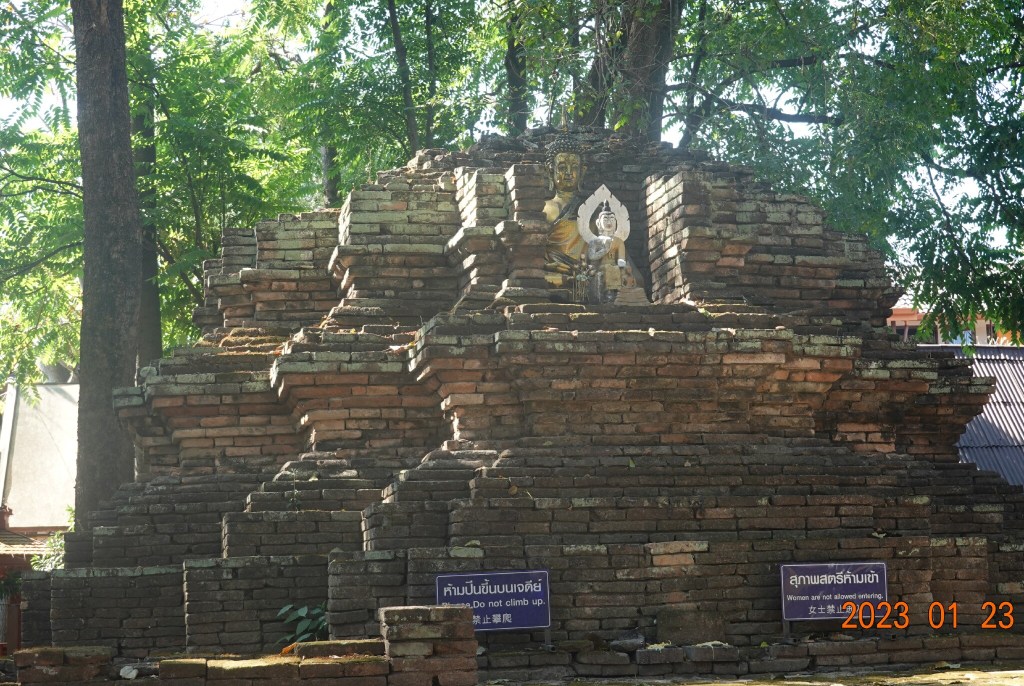
Walking over near the current entrance, there was one more chedi in ruins.
It is always a peaceful time walking around Wat Jet Yod. I always enjoy my time here, deep in the history of the Chiang Mai area.
Next: Three Temple Monday 2 – Wat Chiang Chom

 James the Intrepid Pilgrim