Monday, January 9. 2023
Walking to Mush for dinner, diverted to Wat Phra Chao Meng Rai
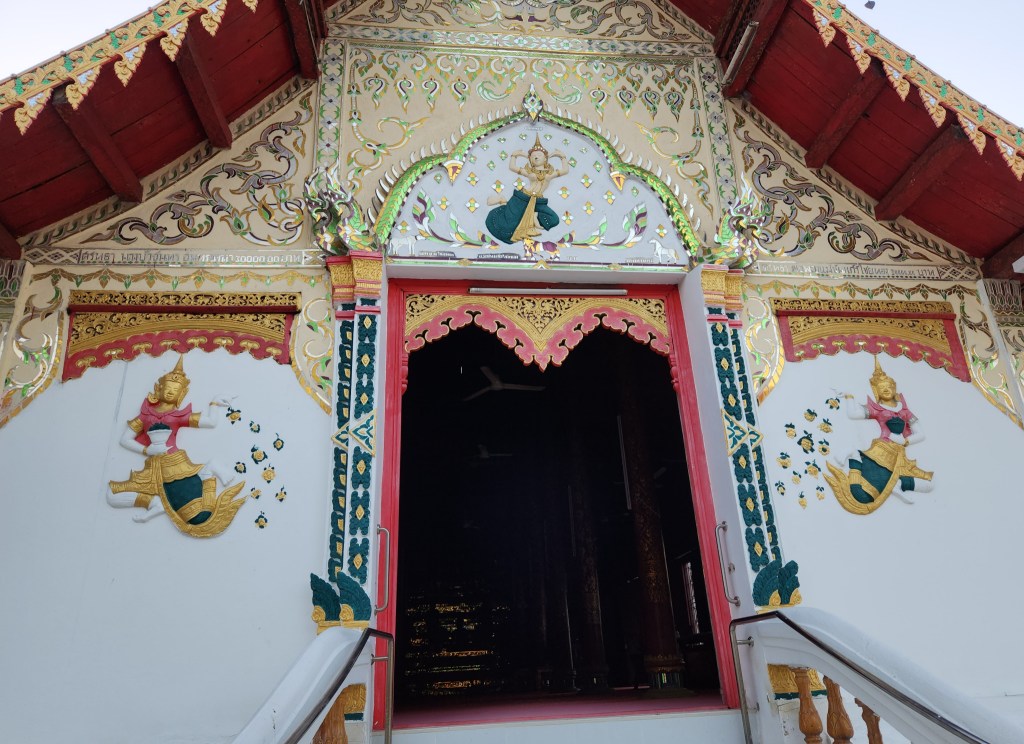
Walking west along Ratchamanka Road on my way to Mush for dinner, I realized I had not stopped to visit Wat Phra Chao Meng Rai this year. I have always liked this temple because of the depiction of the dancing thewada on the front of the viharn. As I have likely mentioned many times, I find the artistry of the temples in northern Thailand (formerly Lanna) to be more exuberant or expressive compared to the temples in and around Bangkok (central Thailand). In the many central Thailand temples I have visited, it is common to see yaksha guarding the temple entrances, and an occasional cinthe (or singha) lion-like creature, but I have never seen a naga dragon creature guarding the viharn entrance, and seldom, if ever, have seen thewada on the doors or sides of the viharn. Granted, my exposure to temples is limited to perhaps a couple hundred of the more than 30,000 active Buddhist temples in Thailand.
Wat Phra Chao Meng Rai
I turned down Ratchmanka Soi 6 and in just 30 or 40 meters was at the entrance to Wat Phra Chao Meng Rai. This is a temple that few tourists seem to visit which is a pity as it’s one of my many favorites, and has an interesting place in Chiang Mai history.
King Mengrai (sometimes spelled Mangrai), the first King of Lanna (1292 to 1311), and founder of Chiang Rai and Chiang Mai, build Wat Chiang Man in 1296 as a place to live and worship while he was supervising the construction of Chiang Mai city, the city walls and moat. The story goes that King Mengrai had a new Buddha image cast called King Ka King and was travelling to install it at Wat Chiang Man when the cart carrying it broke a wheel. Instead of repairing the cart and proceeding on, King Mengrai took the breakdown as an omen, decided to leave the Buddha image where the cart broke down, and establish a temple to house the Buddha image. Thus the temple was established in 1296 or shortly thereafter, and was called “Wat King Mengrai Temple” or Wat Phra Chao Meng Rai.
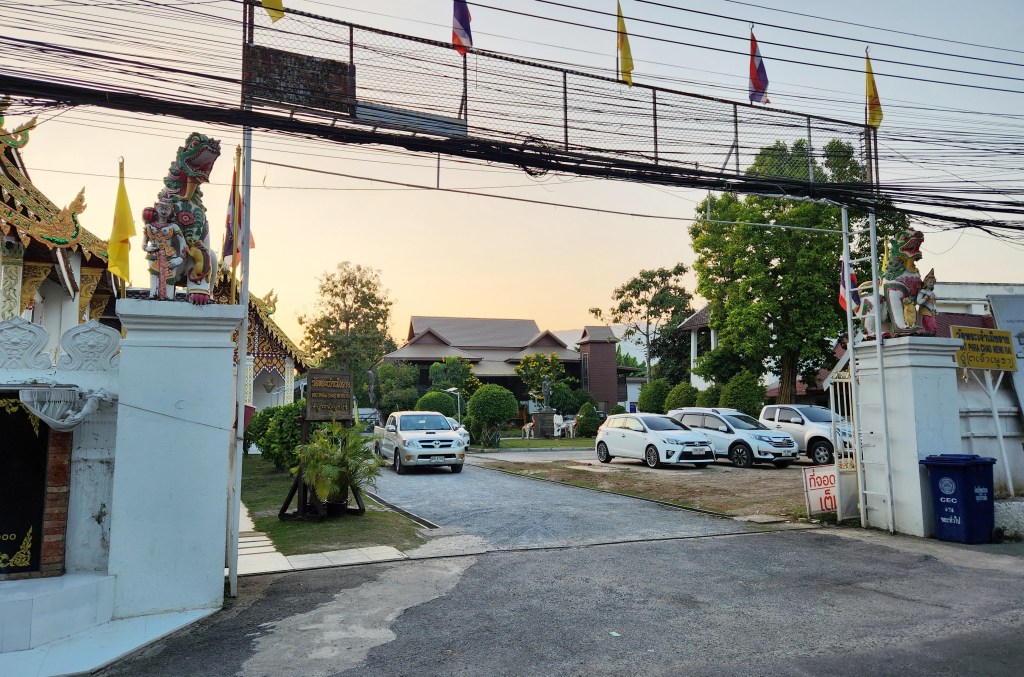
Having just mentioned the artistry of the temples in northern Thailand, Wat Phra Chao Meng Rai is a fairly plain temple, artistically, for the most part. The view of the current entrance (large enough for automobiles) and the old walking entrance are partially obstructed by masses of communication wires.
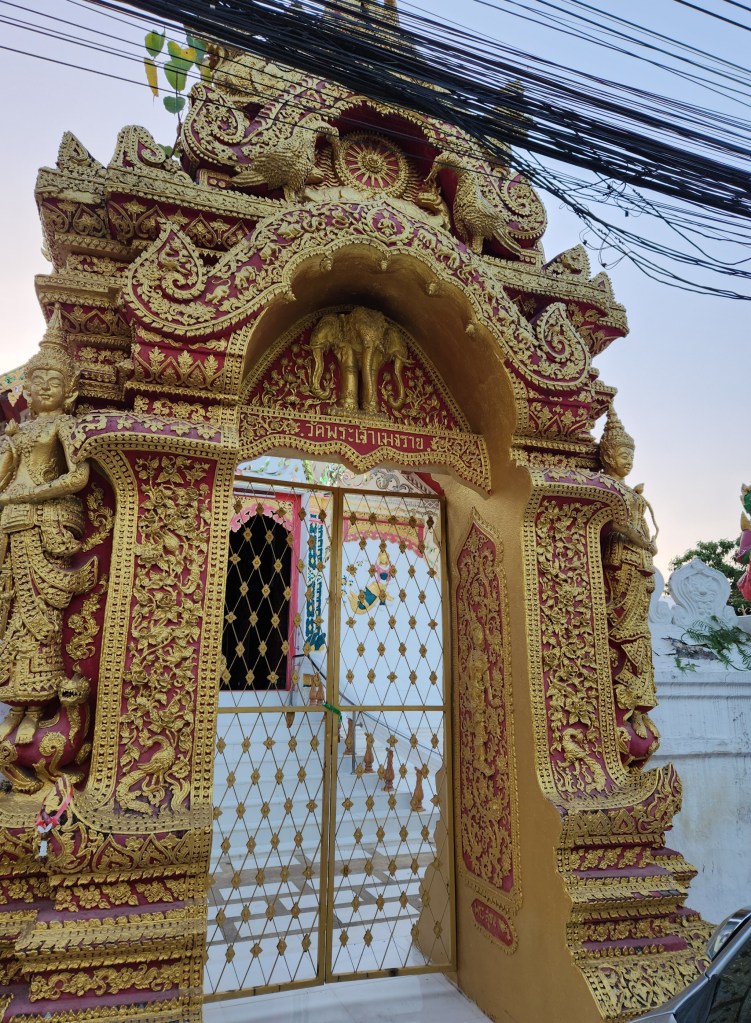
And the now closed walking entrance, while ornate and closed, is also only seen partially behind masses of wires:
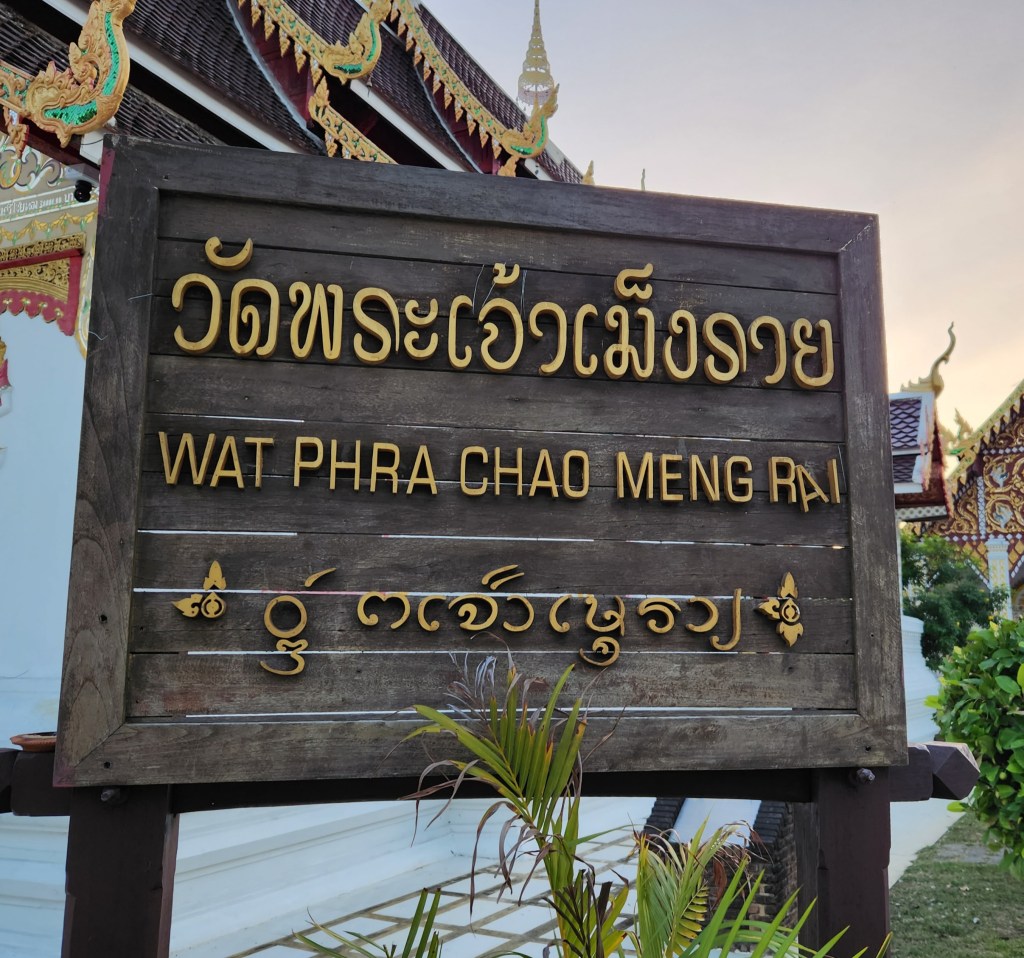
A few years ago when I last visited, there was a banner over the main sign announcing the name of the temple in Thai and English. That banner is now gone. Just inside is this sign giving the name (the “A” could use a little repair):
And here is the front of the main viharn I mentioned earlier with the artistically depicted thewada dancing and dropping flowers. But no naga on the entrance stairway bannister, overall, fairly plain:
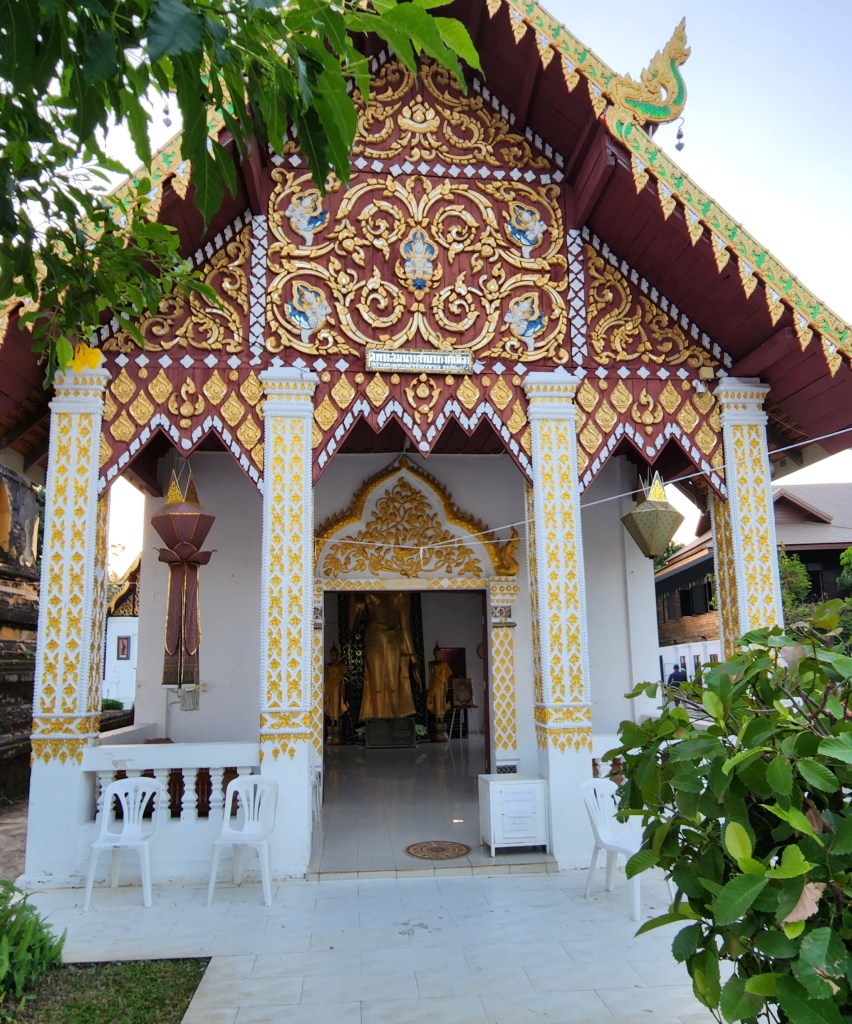
To the north and slightly to the west, is the secondary vihan where the Buddha statue from the story is housed. This is also a very plain structure – no stairway, no naga, thewada, yaksha, or singha creatures at the entrance, only a fairly plain building:
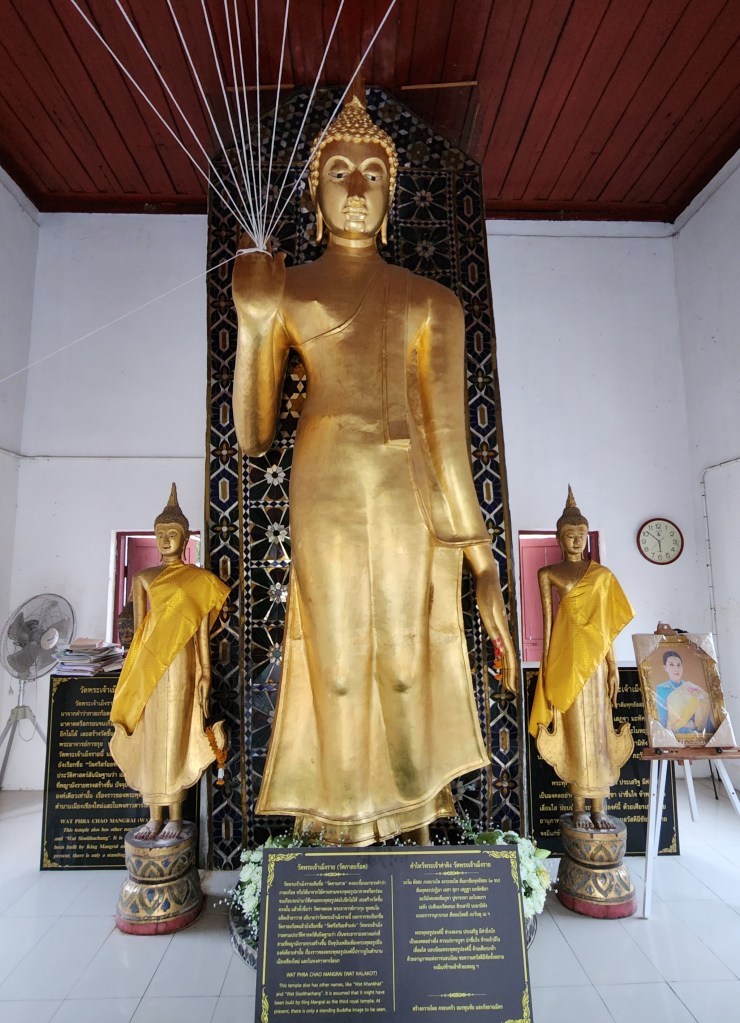
Inside is the standing Buddha statue (also known as an “image”) King Ka King from the story that was the motivation for the building of this temple:
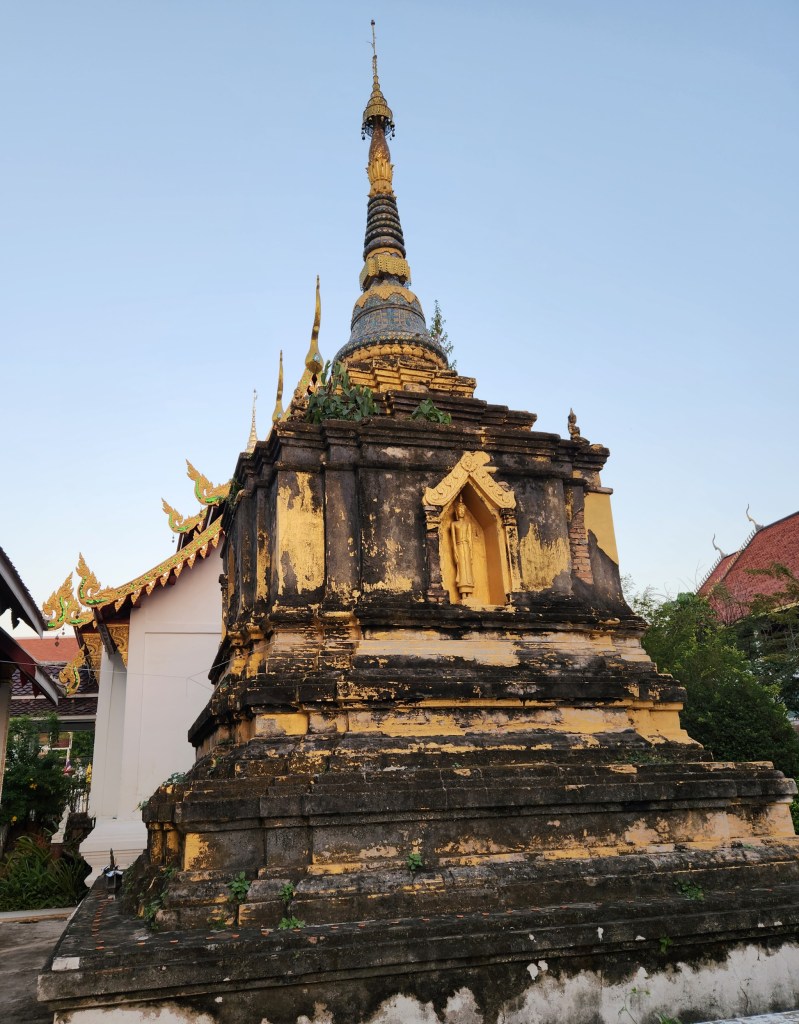
Behind (to the west) of the main viharn is the chedi. This one appears to be structurally sound and in almost desperate need of renovation. I have seen it described as white, but there is little “white”left – the chedi appears very deteriorated and dirty.
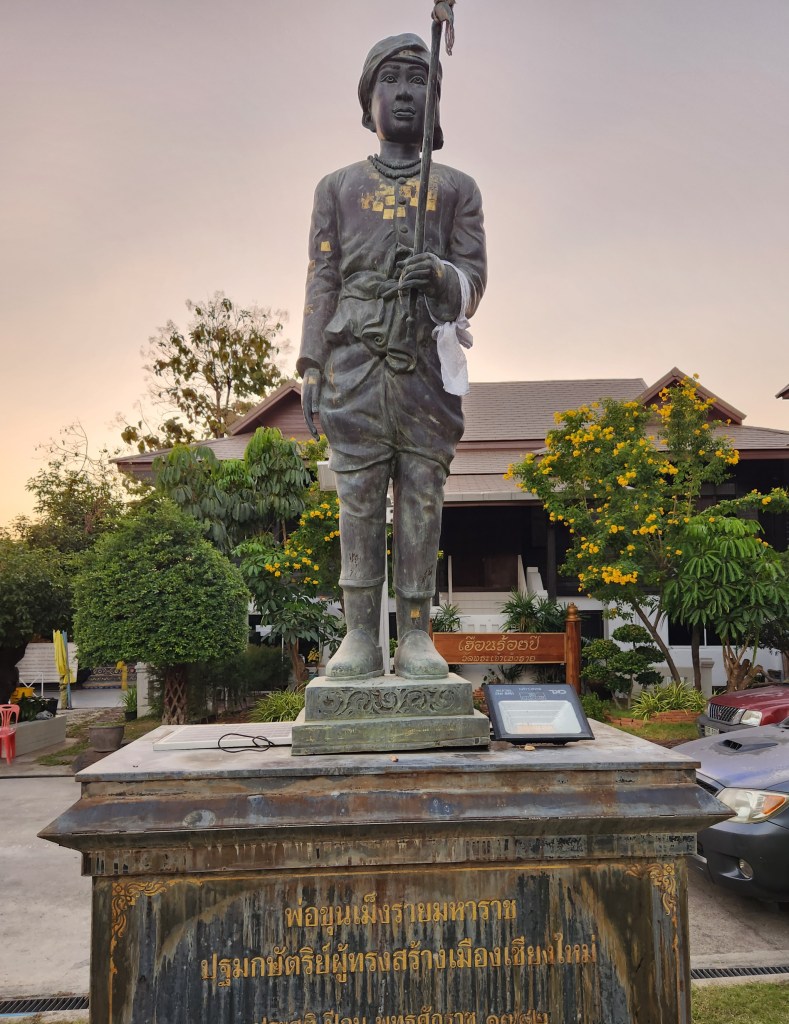
Near the entrance is a statue of King Mengrai himself, looking very regal and proud:
I left this temple and continued on to Mush for dinner. Another good day in Chiang Mai.
Next: Hiking up to Wat Phra That Doi Suthep

 James the Intrepid Pilgrim