Thursday, January 5, 2023
Two temples walking back from Blue Diamond Part 2 Wat Umong Mahathera Chan
After visiting Wat Lam Chang, I continued in the direction of The 3-Sis, my accomodation, south along Ratchapakhinai Road. Soon I passed Annie’s and Archer’s, two restaurants next to each other I like, and then I frequently pass Wat Umong Mahathera Chan. Unclear where the spaces should be – in the Thai tradition, since their language uses spaces to delineate sentences, the English on the sign outside has no spaces:
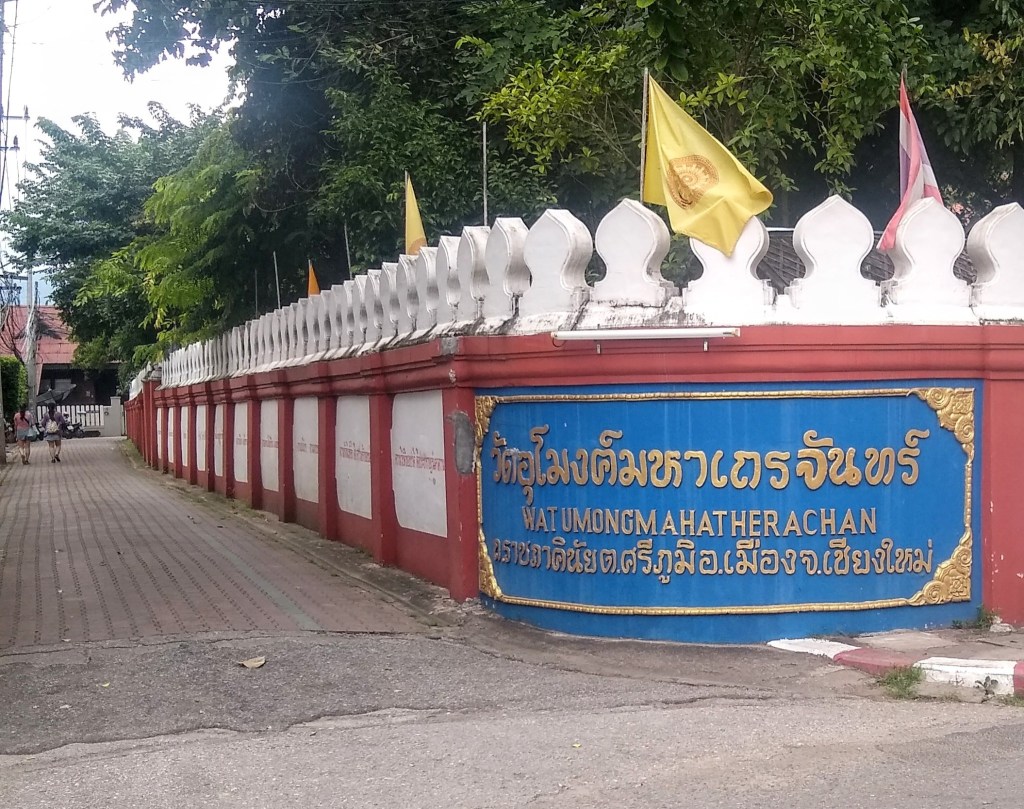
Today, I stepped inside, as I have done very infrequently. This temple grounds are very peaceful in spite of the busy road in front. Wat Umong Mahathera Chan is a 700-year-old temple, named after a famous monk Mahathera Chand (1365 – 1445) who lived in Chiang Mai and often stayed at the temple. A plaque inside tells us that the word Umong, which means “tunnel”, refers to an underground tunnel which once linked the chedi to the viharn of which little remains.
The first thing I notice is the viharn, a Lanna style structure, small in size compared to many Buddhist temples. The roof is Lanna style with a tiered roofline, naga decorations on the gable ends, and the entrance steps guarded by two singha (also sometimes called cinthe) lion creatures instead of the typical naga:
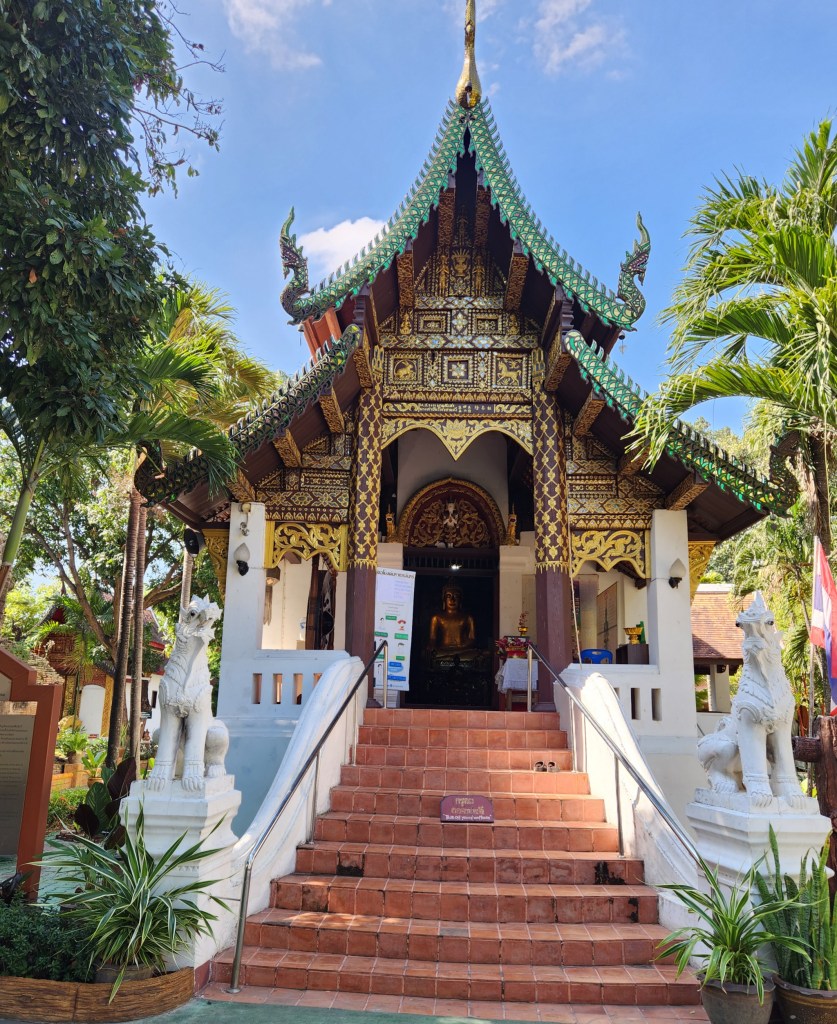
To the left of me as I was standing taking the photo above, there is a sign that says this is a meditation center. There is also an area to the left with seats in a park-like setting where one may sit to meditate. I have seen monks go in and out of this temple, and an occasional visitor, but have never seen anyone sitting and meditating here.
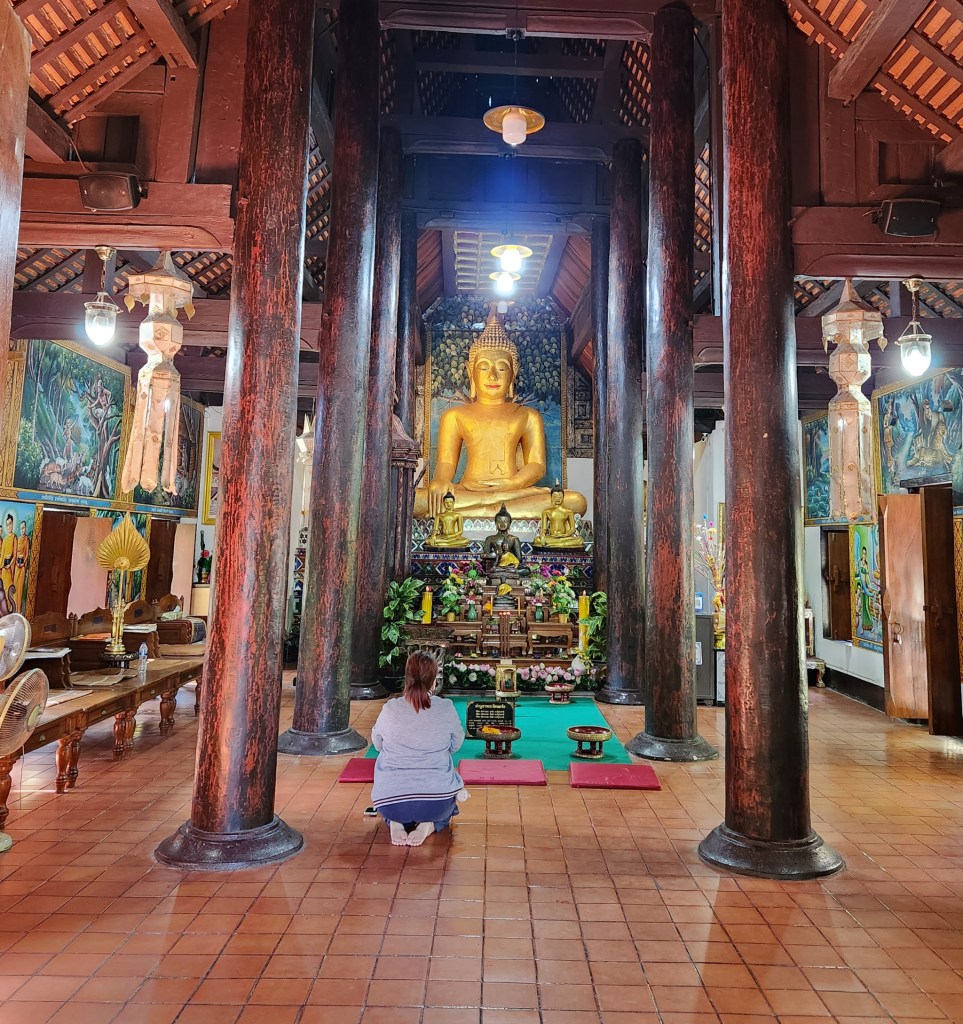
Inside the viharn is a rather nice Buddha image. This is not a large viharn, but more than adequate for the need. A plain tile floor and beautiful teak columns supporting the roof.
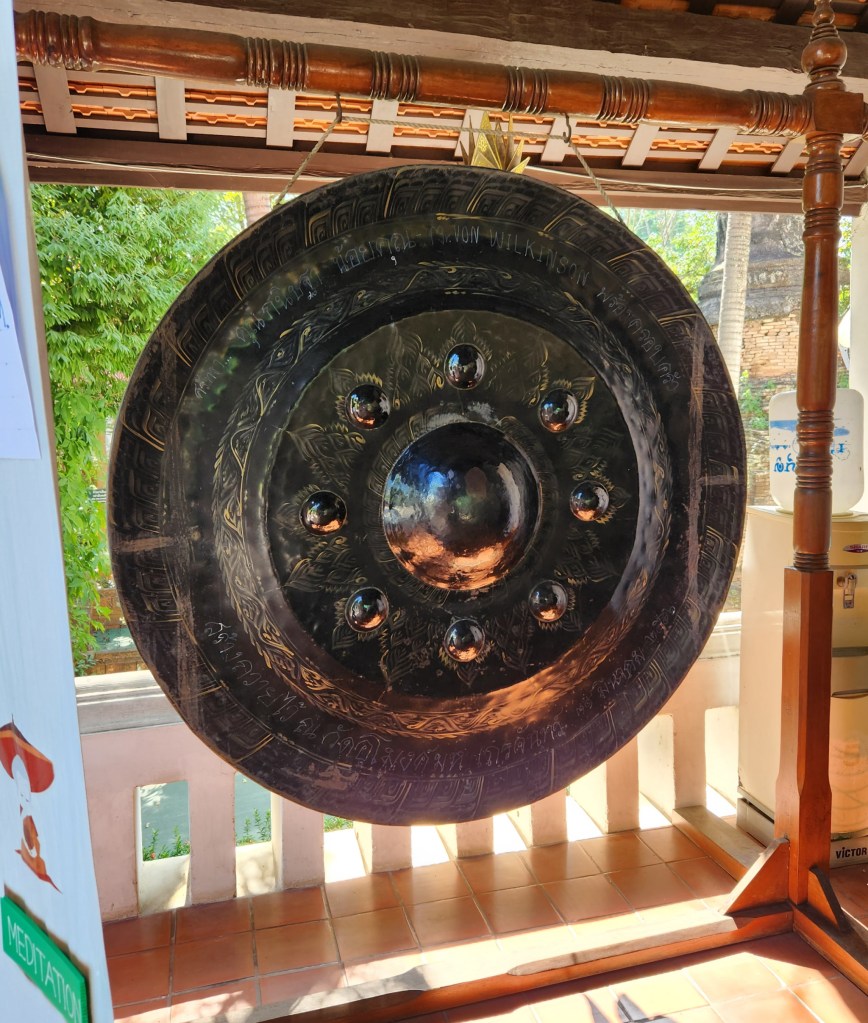
On the porch is this large gong. These gongs are used to summon monks to prayer or meditation, and are seen at many temples, although this is the only gong I have seen on the porch of a viharn. Almost all of these type of gongs are made along what is called the “gong highway” a 30 kilometer stretch of road in a small area of Isan in northeast Thailand near where Laos and Cambodia meet along the Mekong River. This gong is fairly large, about 1.4 meters in diameter (about 4-1/2 feet).
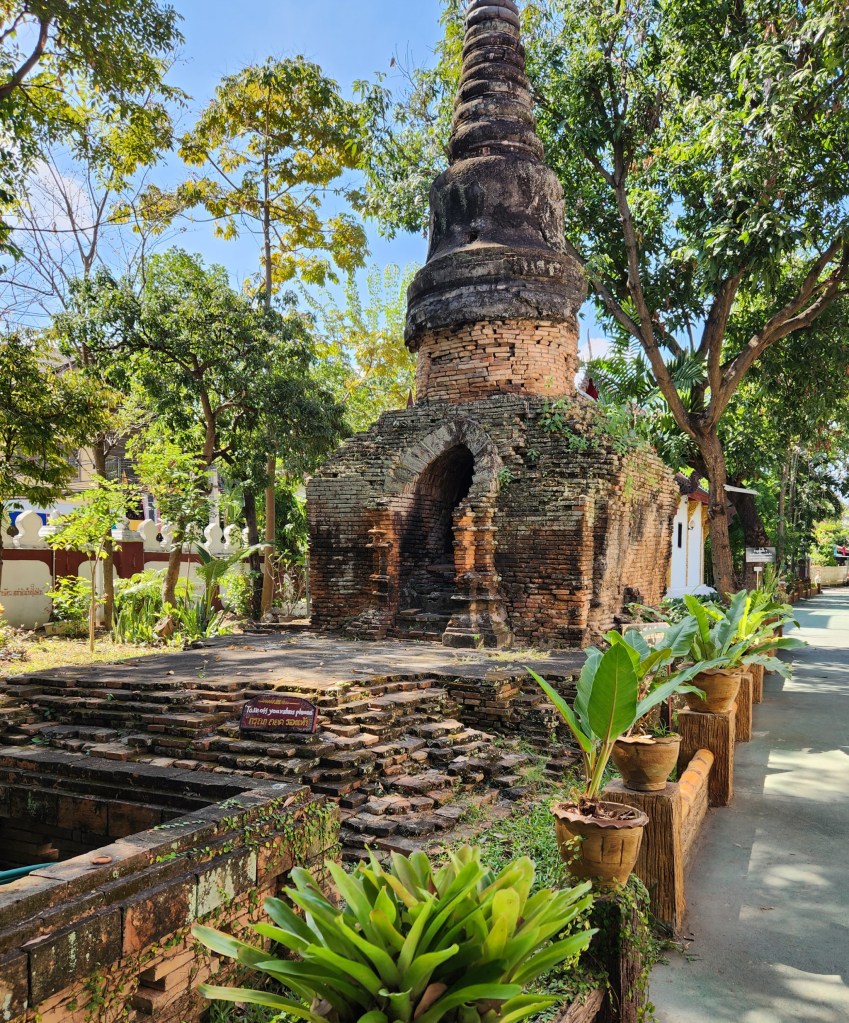
To the south of the viharn is the old chedi, called the Umong Chedi, or what remains of it. This structure is the original chedi built in the 14th century when the temple was established. “Umong” in the temple name means “tunnel” and there is said to be an underground tunnel or Umong, between the chedi and the viharn. The chedi is made substantially of bricks, bare to the elements with many appearing loose and about to fall. The whole structure looks precarious and even seems to tilt to one side.
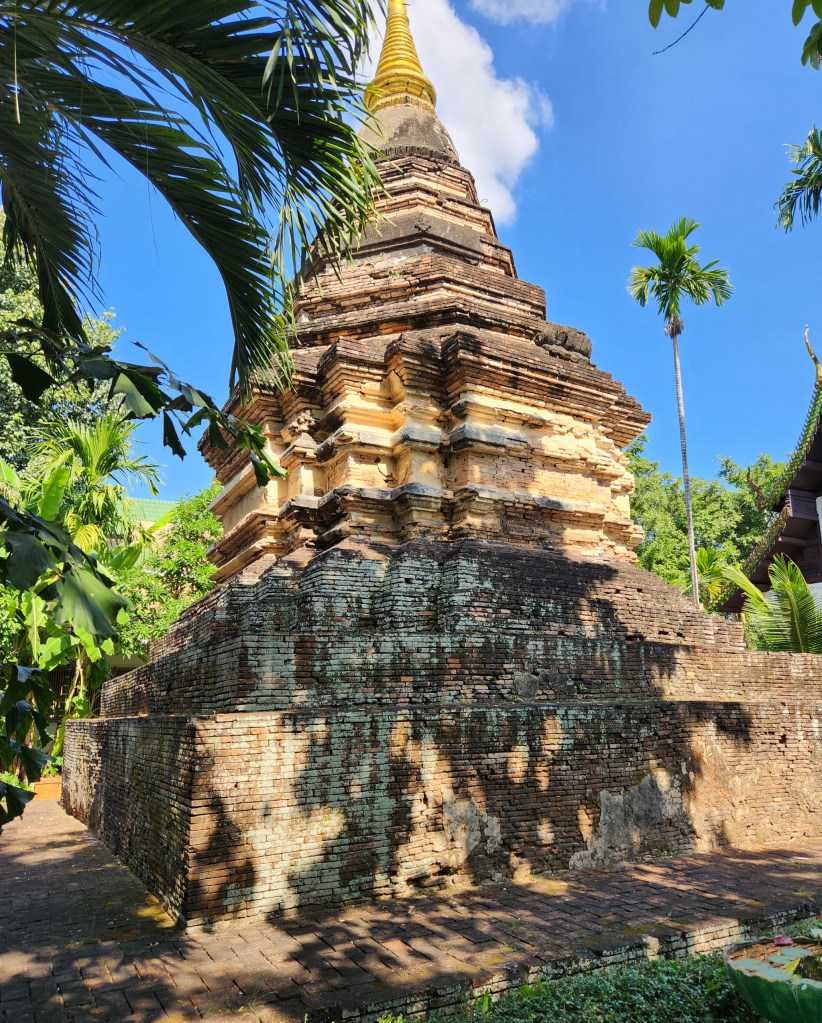
Directly behind the viharn, as is common at most Buddhist temples, is the newer chedi. This is still quite old, much larger than the older chedi, also in bare brick.
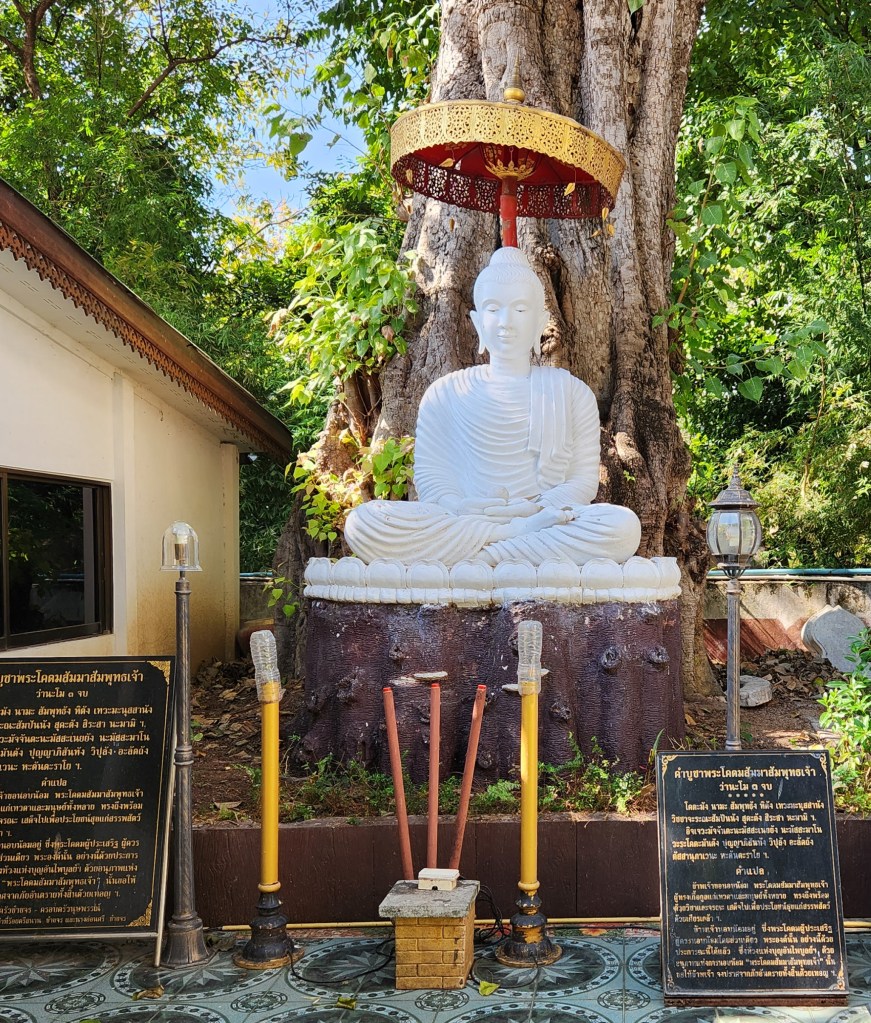
On the north of the viharn I saw this rather striking white Buddha image. This may be another place where one can meditate.
After leaving the temple, I returned to The 3-Sis, and eventually went to a coffee shop to work on blog postings. It seems that I am always a few days behind in spite of my trying to catch up every day. As I said earlier, since I am not working part-time while here, I thought I woud have much free time to keep up with my blog postings. However, I seem to get busy with friends, and am enjoying my time here.
Next: More exploration south of the old city

 James the Intrepid Pilgrim