Monday, January 2, 2023
The temple by the river, Wat Chai Mongkhon
My target for today was to visit Wat Chai Mongkhon by the Mae Ping River, or as they would say in Thai, Mae Nam Ping. “Mae Nam” means river. “Mae” is “mother,” “Nam” is “water’ so I think of the term for river as being water from mother nature. In English it is translated to be “Mae Ping River” or just “Ping River.”
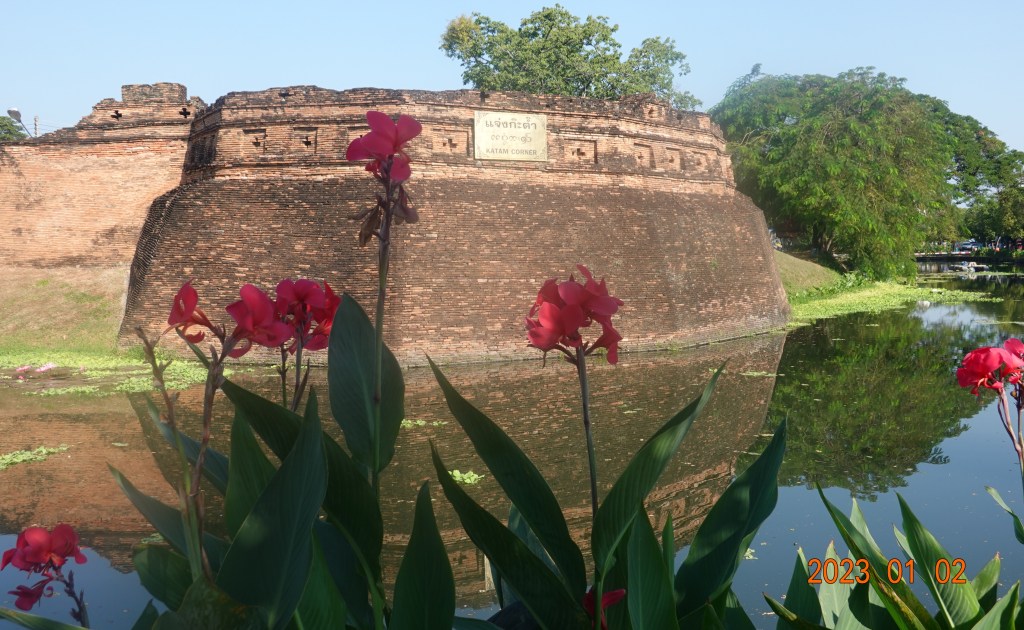
While walking to Sridonchai Road, I passed Katam Corner, the southeast corner of the old city wall and moat, looking very peaceful in the clear early morning.
I continued down Sridonchai (about 1 kilometer) and turned right at Charoen Prathet Road. And there before me was the entrance to to the temple. Wat Chai Mongkhon is a 16th century temple situated on the banks of the Ping River. The viharn (worship or assembly hall) and chedi were under reconstruction when I last visited in 2018. The origins of the Wat Chai Mongkhon go back to the 16th century and was later abandoned during the Burmese occupation before being rebuilt by King Kawila after the Burmese were forced out. King Kawila ruled the Chiang Mai kingdom from 1782 until 1816. When during that period the temple was rebuilt I could not determine.

Surprisingly, I actually got a photo of the entrance with no cars passing through. Wat Chai Mongkhon is one of the busiest temples in Chiang Mai with worshipers coming and going continually passing into the viharn to meet the monks. While I was there, a constant stream of cars were coming in and leaving and there were two men directing traffic.
The entrance is on the west end of the temple grounds. Therefore, the first structure noticed is the large gold chedi. During the reconstruction, the chedi was changed from being a very natural looking stucco and brick to being clad in a shiny gold material. I have seen the same change in other chedis, most notably at Wat Phra Singh and at Wat Pan Tao. I am not a fan of the shiny gold metal. To me it is unnatural and almost gaudy in appearance. But, it is apparently what the monks in charge like.

The next structure is the viharn. Negotiating my way between the continual stream of cars, the side entrance steps to the viharn are guarded by these rather fierce mom creatures (pronounced “moam”).

The viharn is typical Lanna styled with the tiered roofline and roof sweeping low on the sides. The entrance is guarded by the naga dragon-like creatures, also typical of Lanna styling.
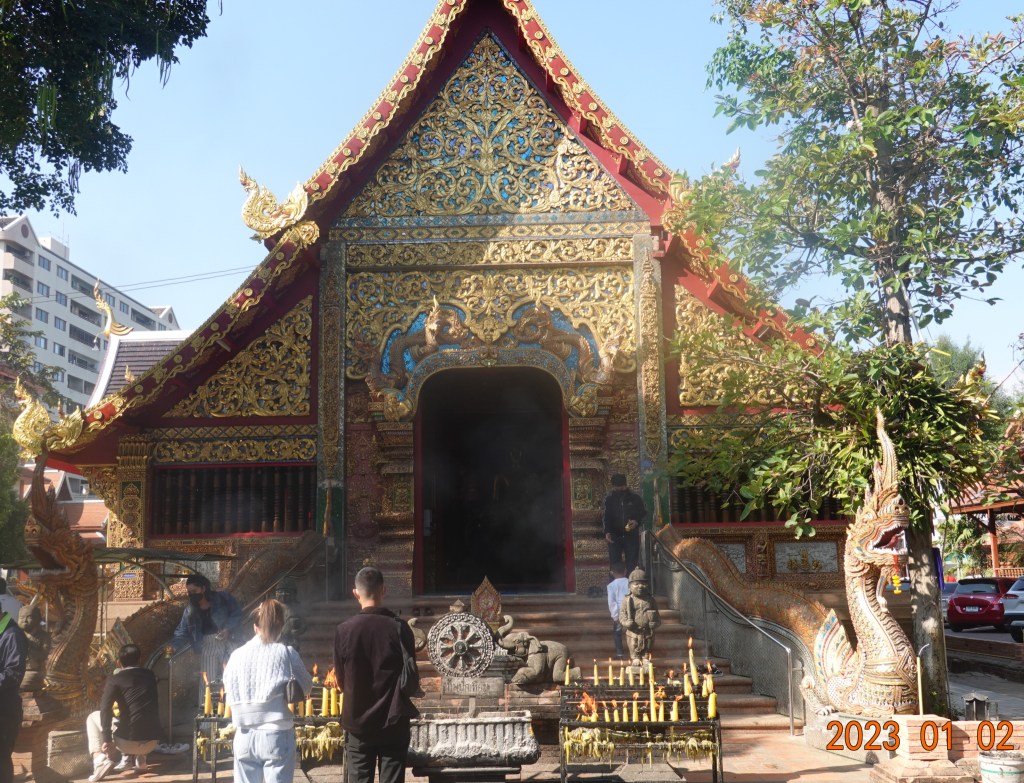
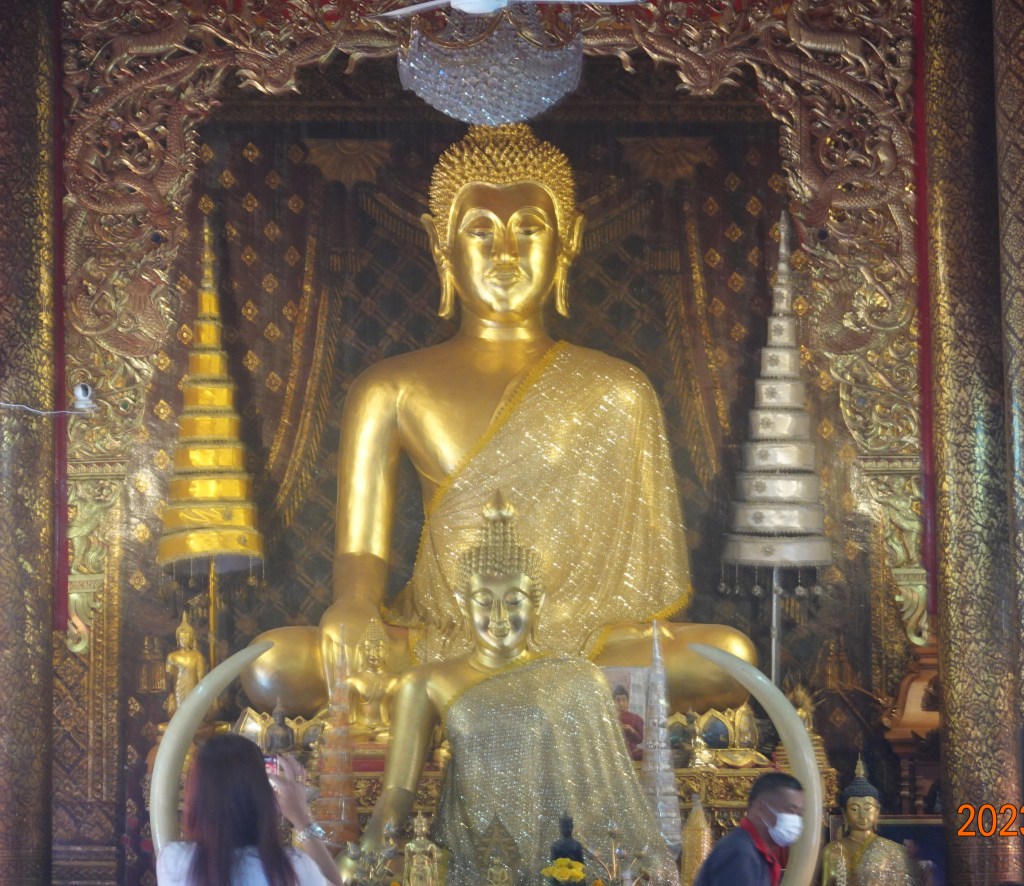
Inside the viharn was a busy place today (and, as I learned, every day), and I managed to quickly snap this picture between the crowds of people.
Just to the north of the viharn was a statue of King Chulalongkorn, King Rama V. Chulalongkorn is the king during whose rein the Lanna kingdom and Siam kingdom were combined to make up what is now Thailand. Sometimes it is said that Chulalongkorn annexed Lanna, and there are other stories about how that unfolded. When Lanna became part of Siam, the part of Lanna east and north of the Mekong River became what is now Laos, a concession to the French, I think.
Chulalongkorn was the fifth monarch of Siam under the House of Chakri, titled Rama V. He was known to the Siamese of his time as Phra Phuttha Chao Luang. Chulalongkorn’s reign was characterised by the modernisation of Siam, governmental and social reforms, and territorial concessions to the British and French.
Wikipedia
He was one of the most beloved of the Thai kings due to his many activities including abolishing slavery without bloodshed and especially his skillful diplomacy which succeeded in steering Siam out of the grips of the colonial powers. His activities also included reform of the administration of the kingdom according to the European model and in bringing Siam into the modern era with such exquisite skills that he is still vividly remembered today. His reign also saw many developments in medicine and public health. The King’s role in these areas, however, were clouded by his more visible activities in politics and diplomacy.
National Library of Medicine

(My apologies for the glare – it is a bright day!)
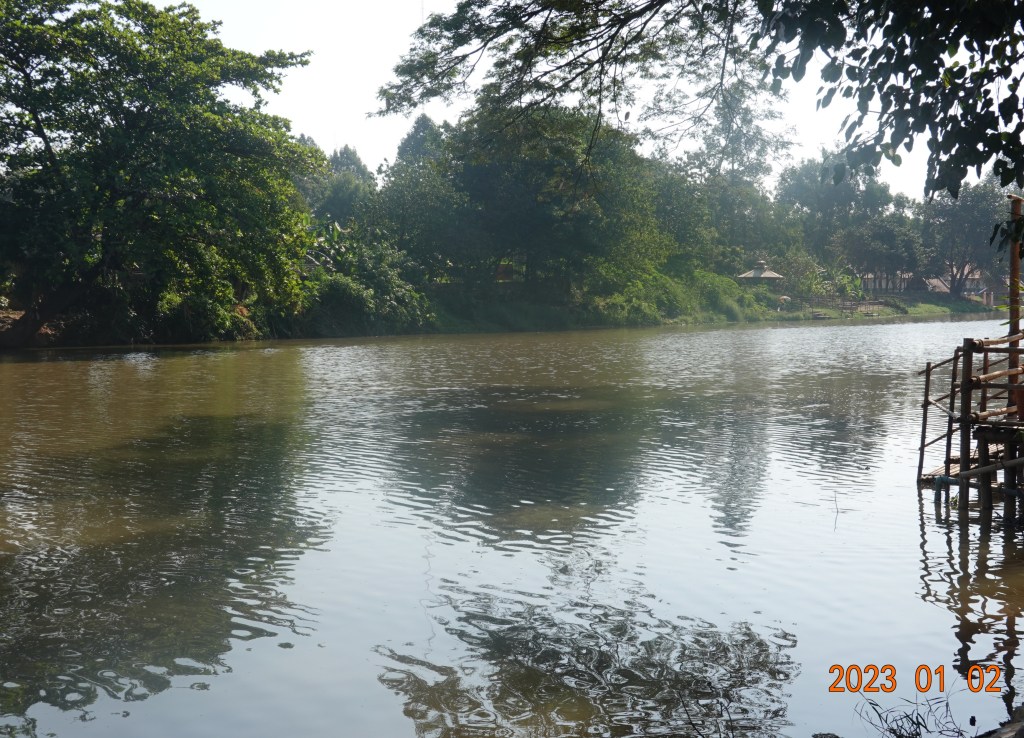
A nice aspect of this temple is its being right on the river bank. Just a few meters down some steps to the docks, and one is presented with peaceful views of the Ping River:

From Wat Chai Mongkorn, I returned to Sridonchai and continued my exploration of the Kamphaengdin along the Klong Mae Kha, discussed in the previous post (I got things a little out-of-order). Today is starting to be another beautiful day in Chiang Mai!
Next: Two temples walking back from lunch at Blue Diamond

 James the Intrepid Pilgrim