Friday, December 23, 2022
Walking South Exploring Hai Ya Sub-District
Continued south on Suriyawong Road and noticed ahead the khao soi place that is very popular with the Thai people, Khao Soi Lung Prakik Kaat Gorm. It was about noon, and there were 25 or more people waiting outside. I tried this place last year, and it was the only of the 7 or 8 khao soi places I did not like at all (broth too greasy, meat fatty, and far too spicy). I noticed a soi to my right and decided to explore and head west.
I continued into the soi which turned, then turned again, and I was feeling a little lost. Then, right before me, there was a stretch of the Kamphaeng Din. It is often, and more Thai-like to spell it as one word, Kamphaengdin, since in the Thai language spaces are not used in a sentence or phrase. If you have followed my blog for any length of time over my previous visits to Chiang Mai, you already know of my fascination with the Kamphaengdin.
The rectangular wall with its surrounding moat is well-known, defining what is known as the “old city.” Most of the actual wall is gone after the Japanese were here in World War II dismantling the Chiang Mai wall to use the bricks to pave the road to Pai to move military equipment. I find it fascinating that little is known about the Kamphaengdin. I have searched for information, and have walked many times looking for evidence of it. There is a good stretch along Kamphaengdin Road between Tha Phae Road and Loi Kroh Road, and there is more than 100 meters of the Kamphaengdin just south of the southwest corner, Ku Hwang Corner, of the inner wall.
Chiang Mai was originally laid out by King Mengrai at the end of the thirteenth century as a rectangular fortress, or citadel, about 1800 by 2000 meters, with an inner wall of brick and a moat around the inner wall. This “citadel’ or main old town is where the king and nobility lived along with the Buddhist monks in their monasteries. As the city expanded outside the central citadel, a second earth, clay, and brick wall was added to protect the expanded part of the city. This is the Kamphaeng Din. Kamphaeng Din means earthen rampart in Thai, and it circled around the southeast area of Chiang Mai along the Klong Mae Kha (a “klong” is a small canal). The Kamphaeng Din is mostly made of a quite strong clay substance and has surprisingly survived hundreds of years of monsoon rains.
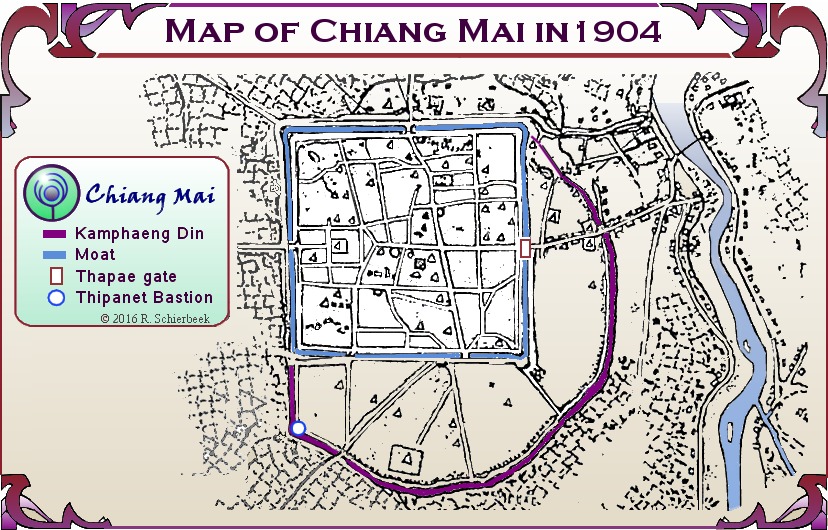
In the map, the triangles are temples, although a few important temples seem to be missing. Near the bottom in the center is a triangle with a square around it. I believe this is Wat Nataram. Several years ago, I started searching for the Kamphaengdin at Wat Nataram. I found the Klong Mae Kha, but could find almost nothing of the wall itself. I found many houses build along the Klong Mae Kha, and no means of getting behind the houses between the houses and the klong.
Today, while I was walking along a soi that has no name in Google Maps, wondering if I was lost, in front of me was the Kamphaengdin. Here is the first picture I took:
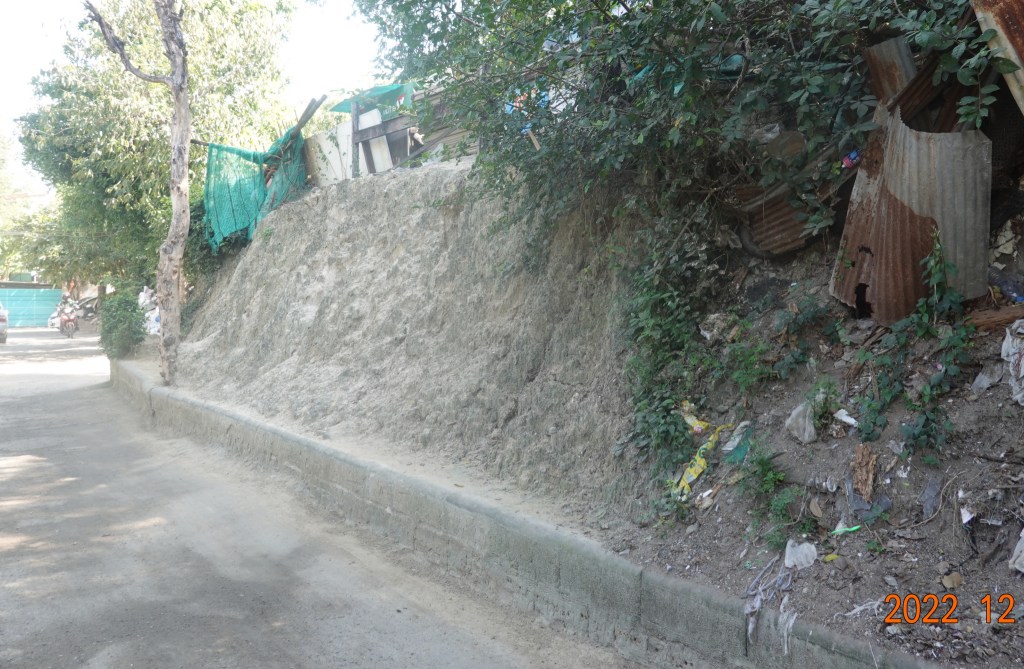
This area I believe is east and south of Wat Nataram. Here is a picture from about 100 meters further:

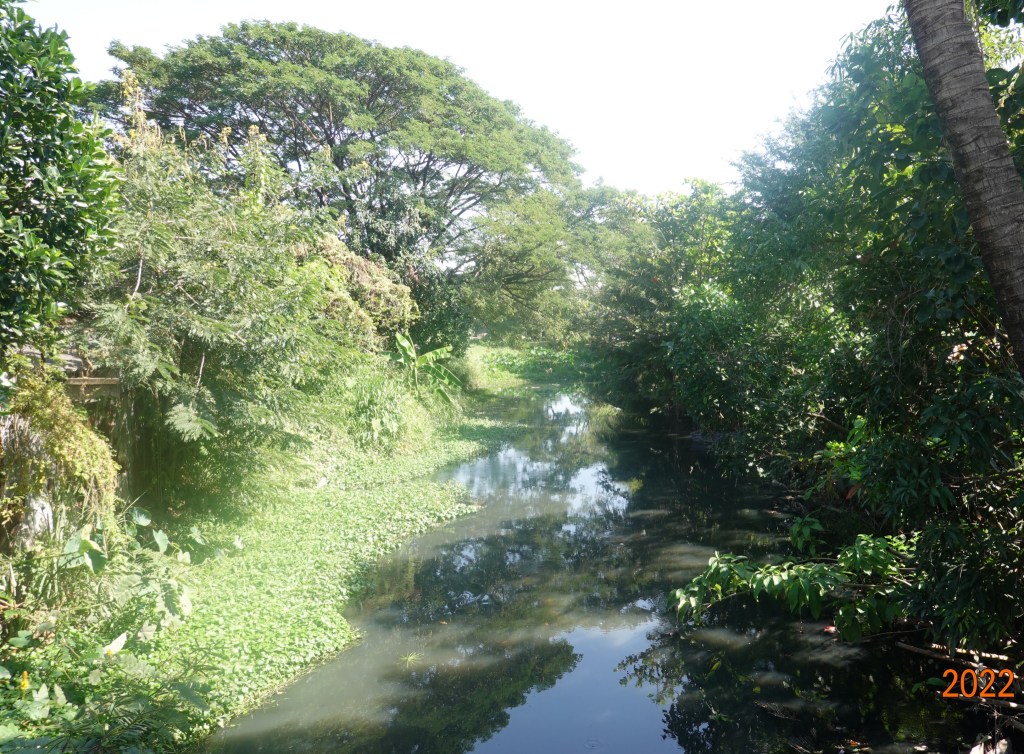
Continuing on, I got to a road crossing. This is Nantaram Road Soi 6. I went to the left, and from the road I could see Klong Mae Kha. The Kamphaengdin would be on the right of the klong in this picture:
I went back to where the unnamed soi crossed Nantaram Road Soi 6, and went west (left) down another unnamed soi that I approximated would be a continuation of where I had been. And I did see more of the Kamphaengdin:
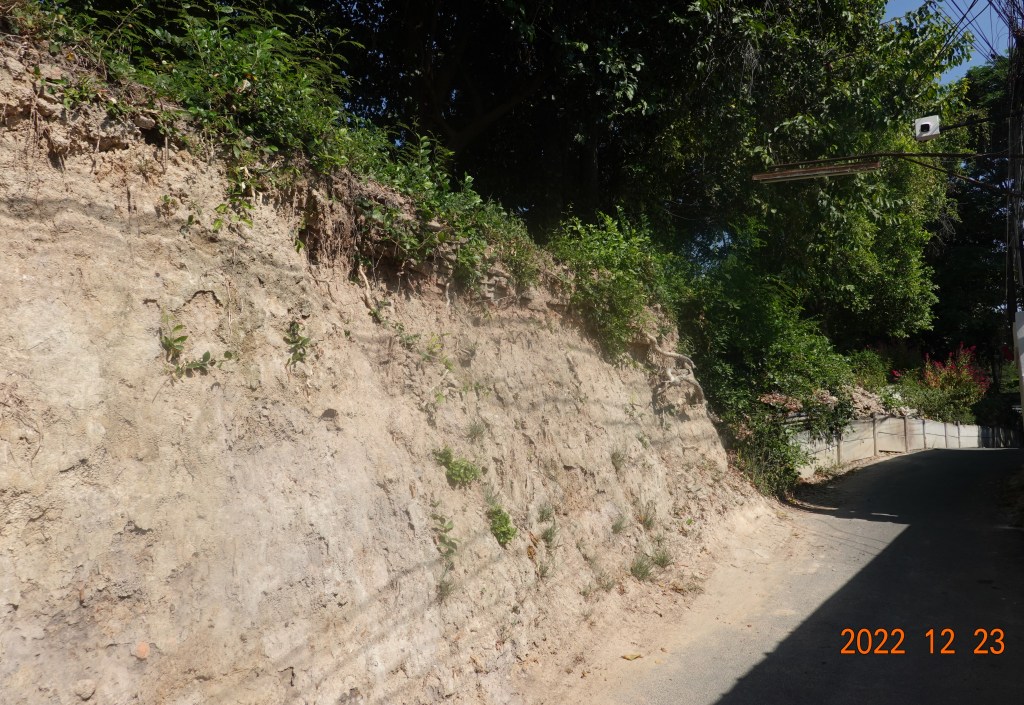
And further yet, the Kamphaengdin continued:
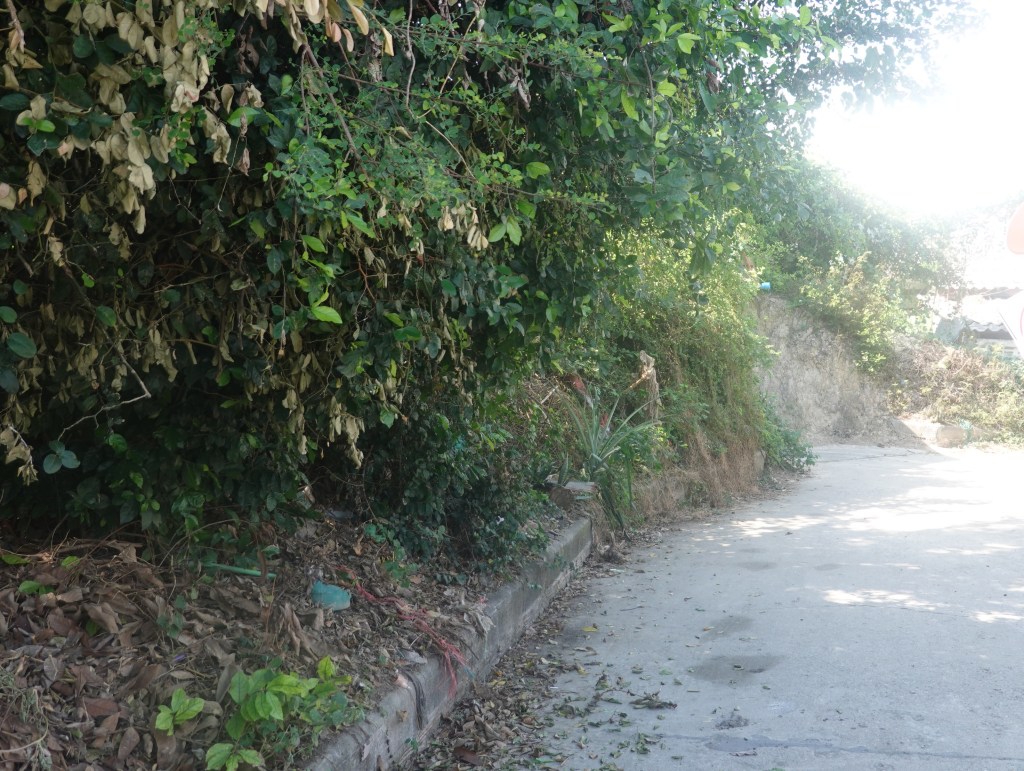
I soon came to the end of the soi, blocked by houses. On my walk back to Nantaram Road Soi 6, I marveled at how much new parts of the Kamphaengdin I had seen – new to me, that is. Much has grown on the Kamphaengdin, including trees, shrubs, and sometimes flowers:
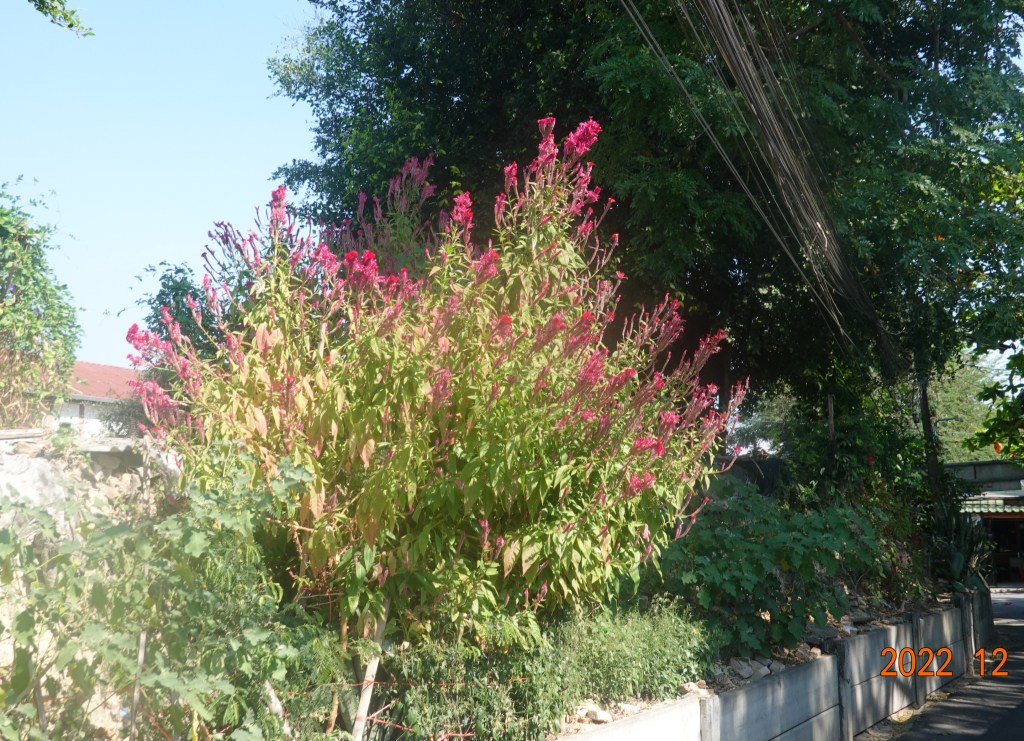
I made my way up Nantaram Road Soi 6 to Thipanet Road, then west to Wua Lai Road, and to the Artisan, a good coffee shop in which one can sit and work for a spell. I have been to the Arisan several times, and am known by the proprietors. I am quite elated at how much more of the Kamphaengdin I have seen today.
Next: Hai Ya Sub-District 3: Soi Signs

 James the Intrepid Pilgrim