Friday, December 23, 2022
Walking South Exploring Hai Ya Sub-District
Three parts to this blog entry: (1) Two temples, (2) Kamphaengdin wall, (3) Soi clarification and signs
The Hai Ya sub-district of Chiang Mai is directly south of the old city. I have walked through on the main Wua Lai Road many times going to Wat Sri Suphan and to the tok sen massage lady, Nun, who works at Wat Sri Suphan. This area is mainly residential and known for its traditional silver workshops, which sell artisan jewelry and housewares. The abbot (head monk) at Wat Sri Suphan chose to use the silver craftsmen in this area to create the ornate facade of the ubosot when it was to be renovated. Now that silver ubosot is relatively famous, and the temple is most often called The Silver Temple.
The road to Wat Sri Suphan is Wua Lai road which runs diagonally southwest from just south of Chiang Mai Gate, the main south gate to old Chiang Mai city. Instead of walking down Wua Lai Road, I went directly south on Suriyawong Alley. It is unclear why this is called an “alley” because it is a medium-busy two-lane street. I’ll call it Suriyawong Road.
Standalone Chedis
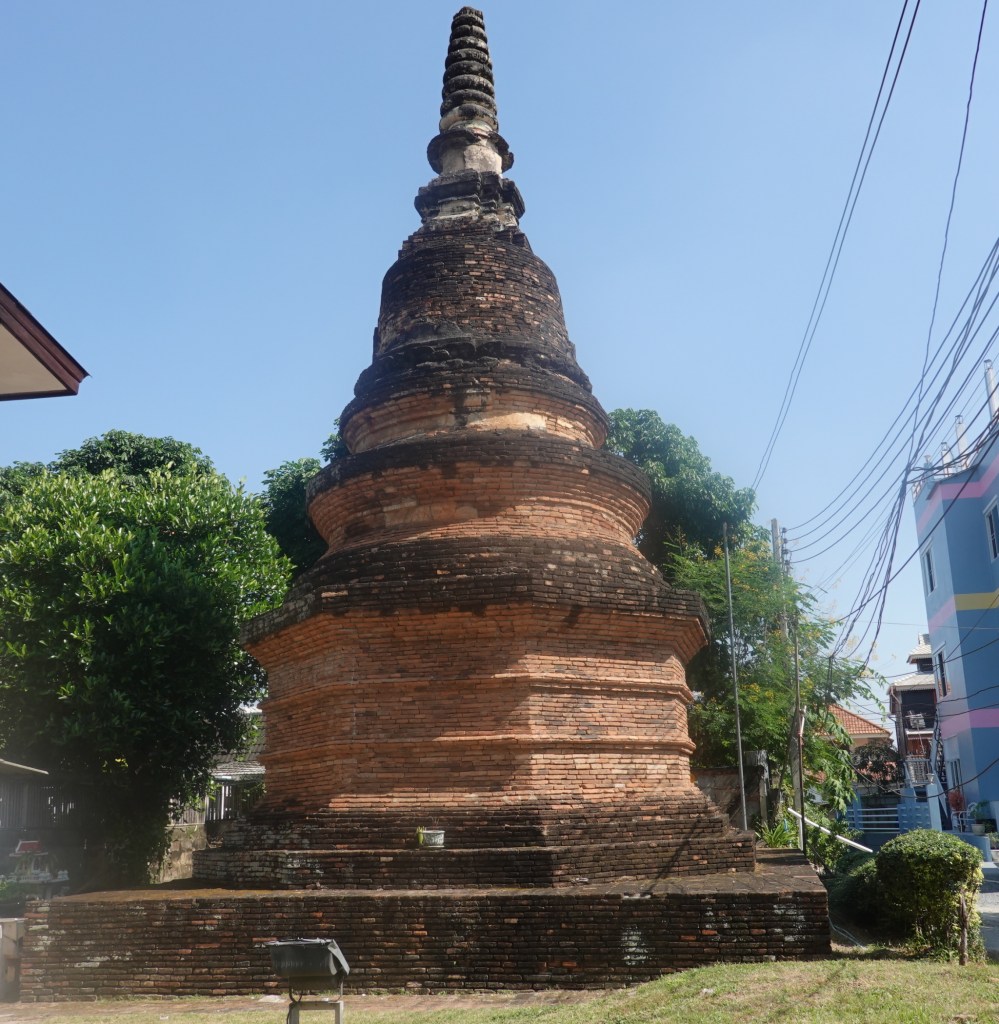
I soon came to this old chedi standing all by itself with no temple nearby, in a residential area by Suriyawong Road. There are a good number of these in and around Chiang Mai, but most are small, 4-5 meters high. This is easily 10 or maybe 12 meters high and clearly very old:
And just about 300 meters farther south I came upon another similarly styled chedi, larger than the first:
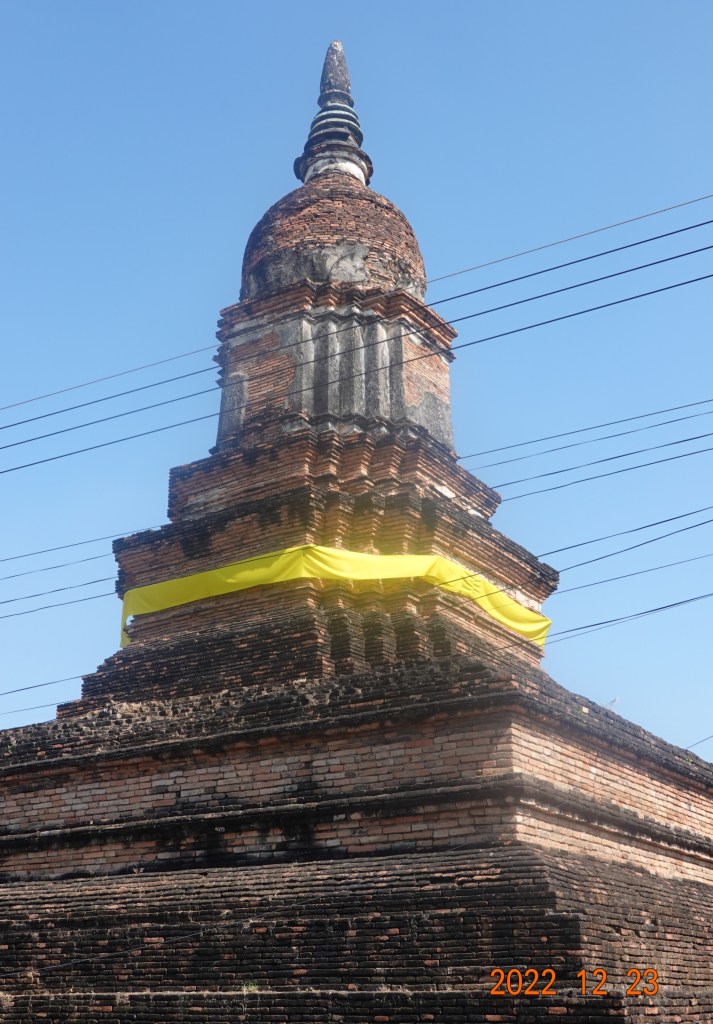
They look very similar in style and must have been constructed near the same time and by the same people. The first one has lights that illuminate it at night, so it must be highly regarded.
Wat Thatkam
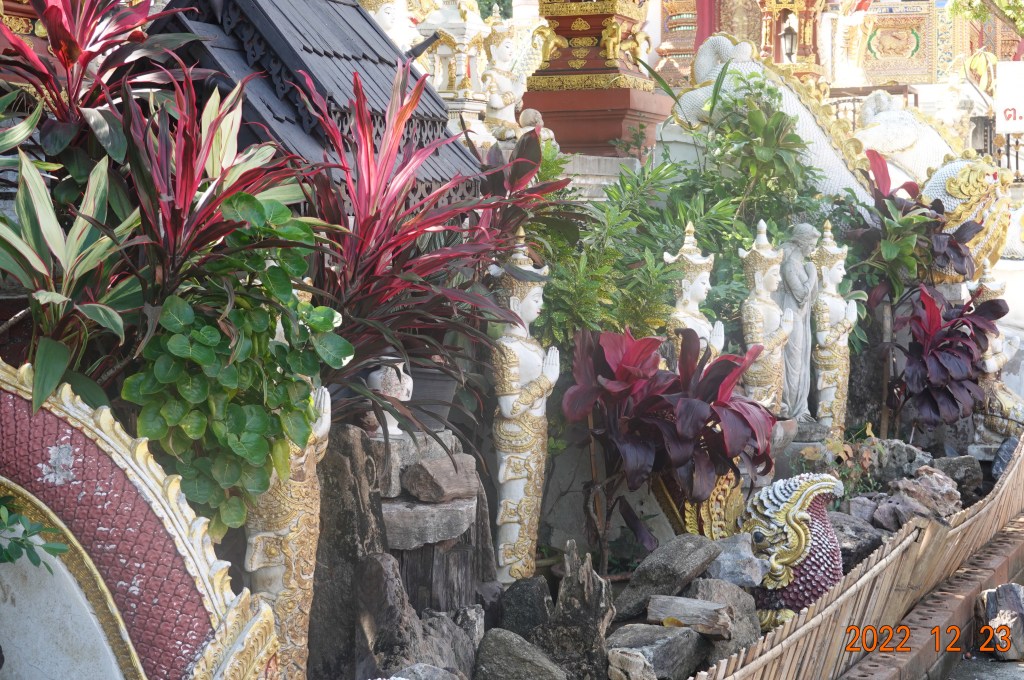
Another 300 meters down the road I came to Wat Thatkam, famous for the ancient “Silver Buddha” image. I have been here before and every time, as today, the doors to the Silver Buddha room are closed. Someday I will see the Silver Buddha at Wat Thatkam. Along the side of the building housing the Silver Buddha are these thewada in the garden, a peaceful scene:
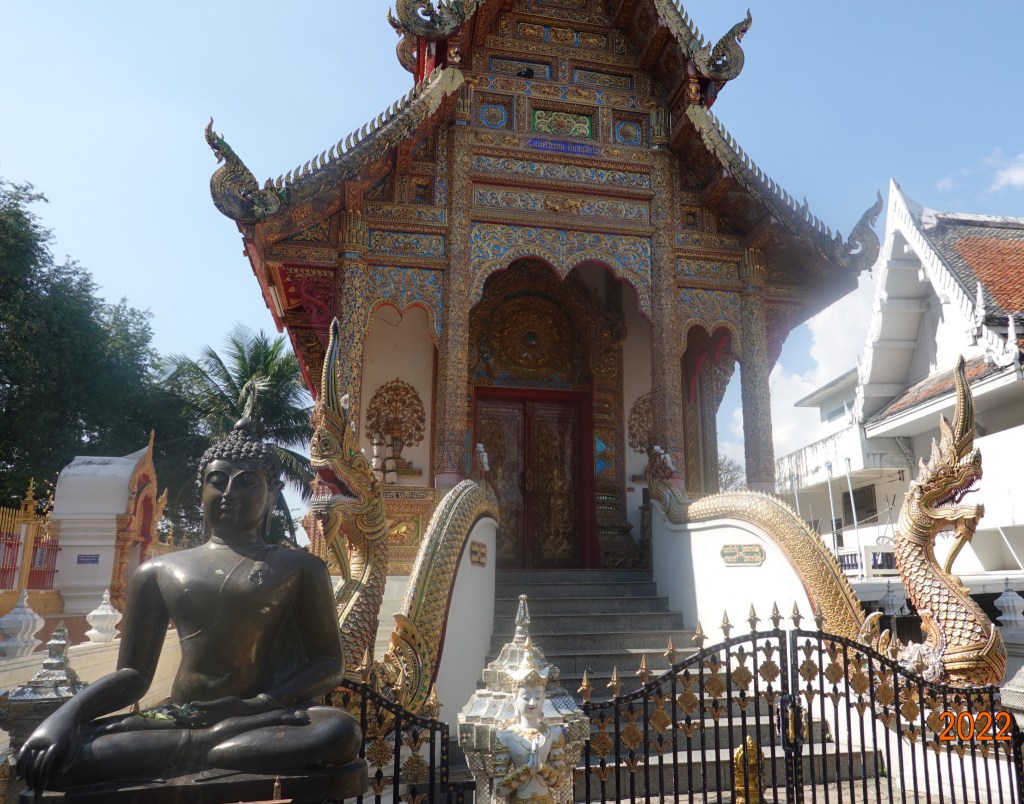
The ubosot (ordination hall) is striking in its style and ornamentation. Here is a view of the front with the stylish naga on the banisters:
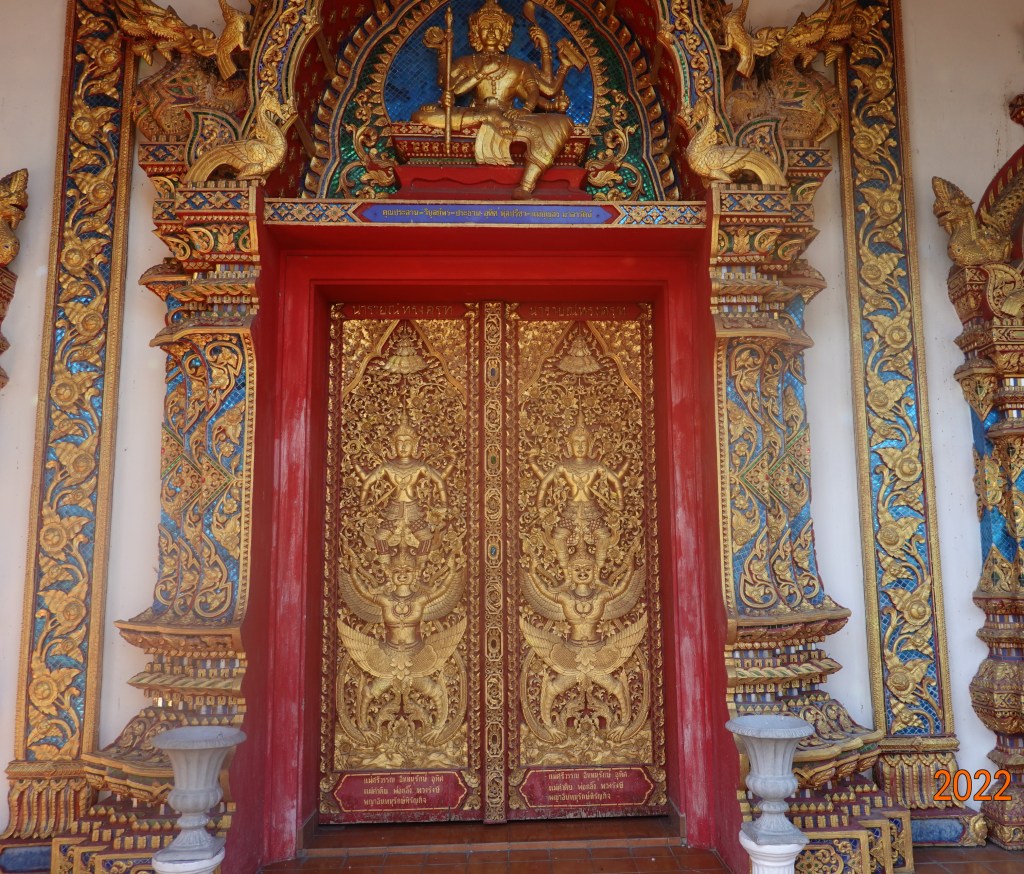
Here is a closer view of the doors to the ubosot decorated in a three-dimensional motif:
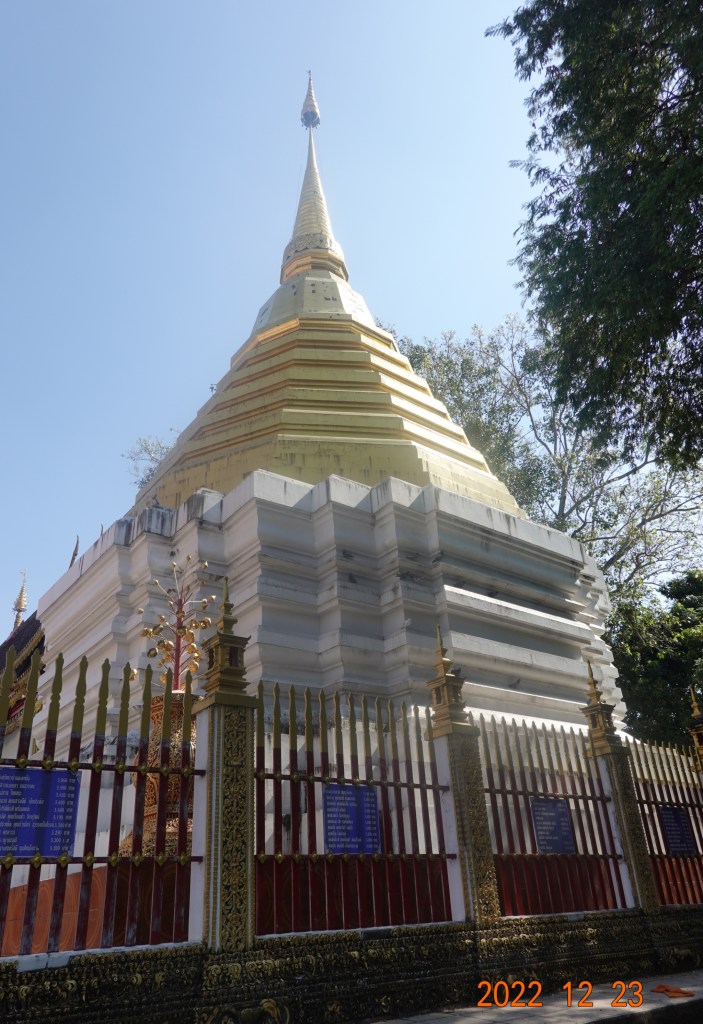
Almost every Buddhist temple includes a chedi, and Wat Thatkam is not an exception.
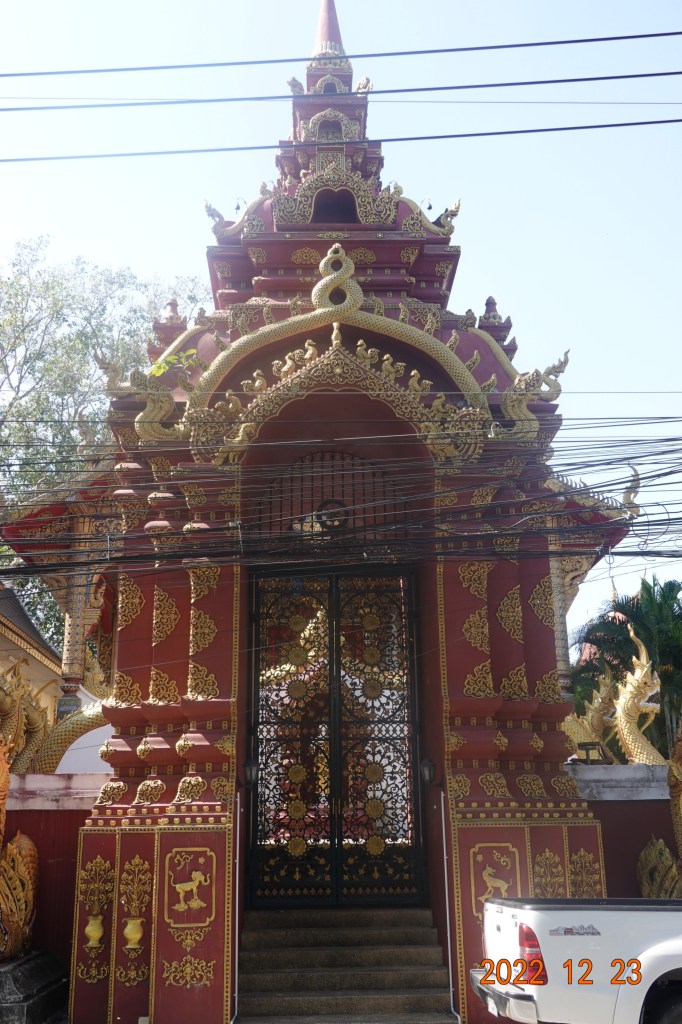
Leaving the temple grounds, I noticed the older, original and much more ornate entrance to Wat Thatkam, now closed. The current entrance allows automobiles to enter. This was too small, but much more interesting and artistic.
Wat Yang Kuang
A short walk south and I came upon Wat Yang Kuang, also spelled Wat Yang Guang. In my past visits, this temple has been under massive renovation and construction. Not long ago, this temple was being renovated, and the remains of a 500-year old temple were discovered. Archeological excavations were started, and some of the existing temple structures were torn down to facilitate the archeological investigation. This year I did not see evidence of the archeological digging, although I did see workers still working on two of the structures.
The temple was abandoned during the Burmese occupation of Chiang Mai and the City News report says: “In 1796 when King Kawila liberated Lanna kingdom, Tai Khun who immigrated from Kengtung and settled in around that area, rebuilt the temple and named it Yang Guang in remembrance of their hometown Ban Na Yang Guang of Kengtung.”
In a way, this is an odd temple, with several structures not in the typical orientation I see at most Buddhist temples in and around Chiang Mai. Walking into the temple grounds one’s attention is immediately drawn to the very large 5 or 6 meter high Buddha statue on the raised platform. It is really large, dominating your attention. In past visits, this was under construction and (as I recall) covered with tarps.
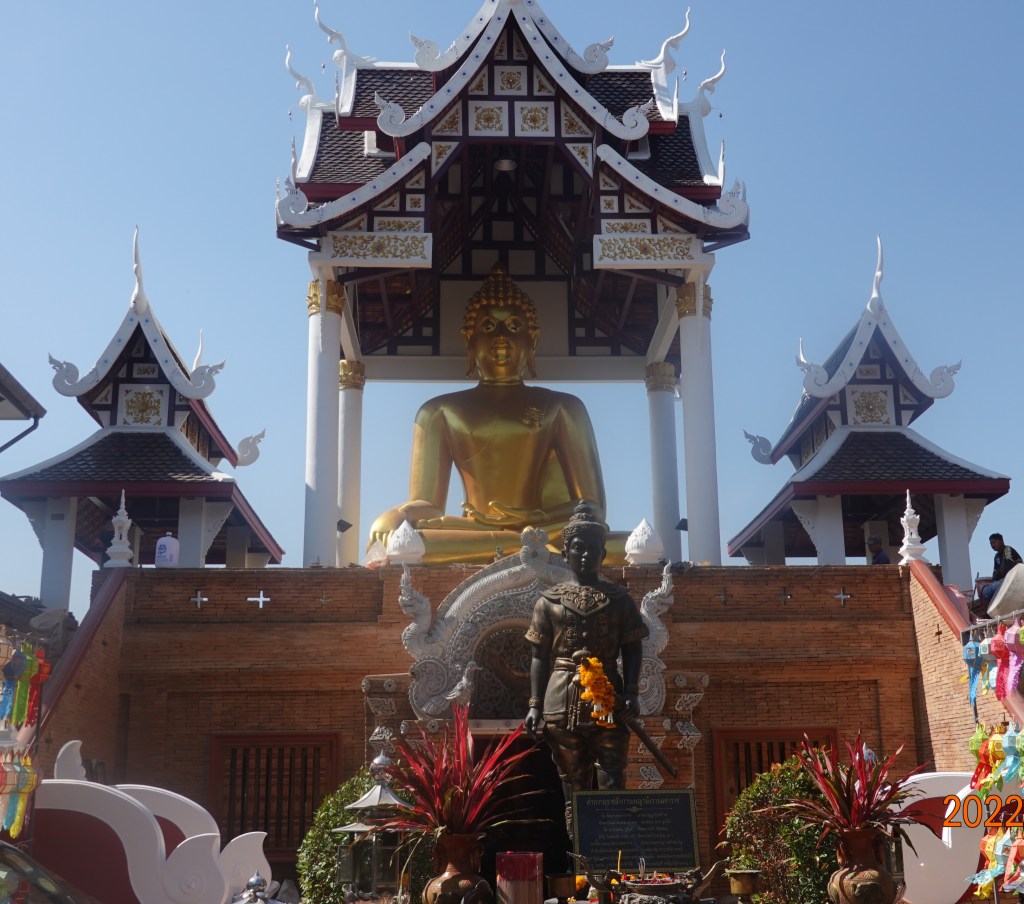
It is impossible to get a picture that really conveys just how large this Buddha is. The statue of the man in the front is probably King Kawila who liberated Lanna from the Burmese in 1796.
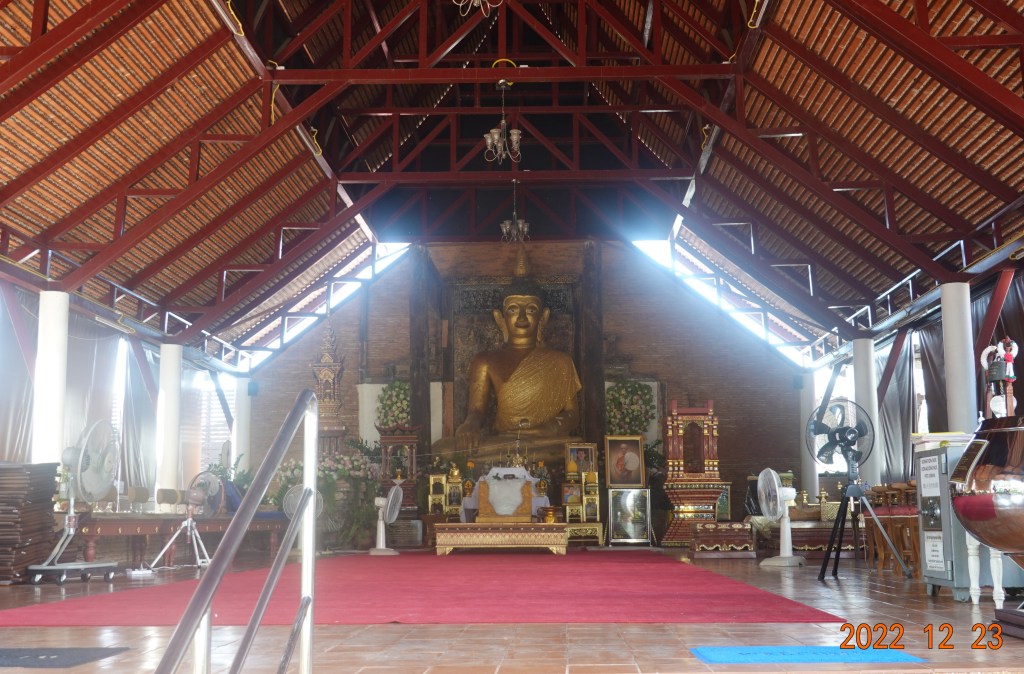
To the right (north) of the large seated Buddha is what I think if as an open-air viharn, a hall without actual walls. I have read that this is called a “sala,” a large open multi-purpose building used for gatherings, for eating meals, or it can refer to the small open pavilions used for shelter from the sun and rain found on temple grounds.
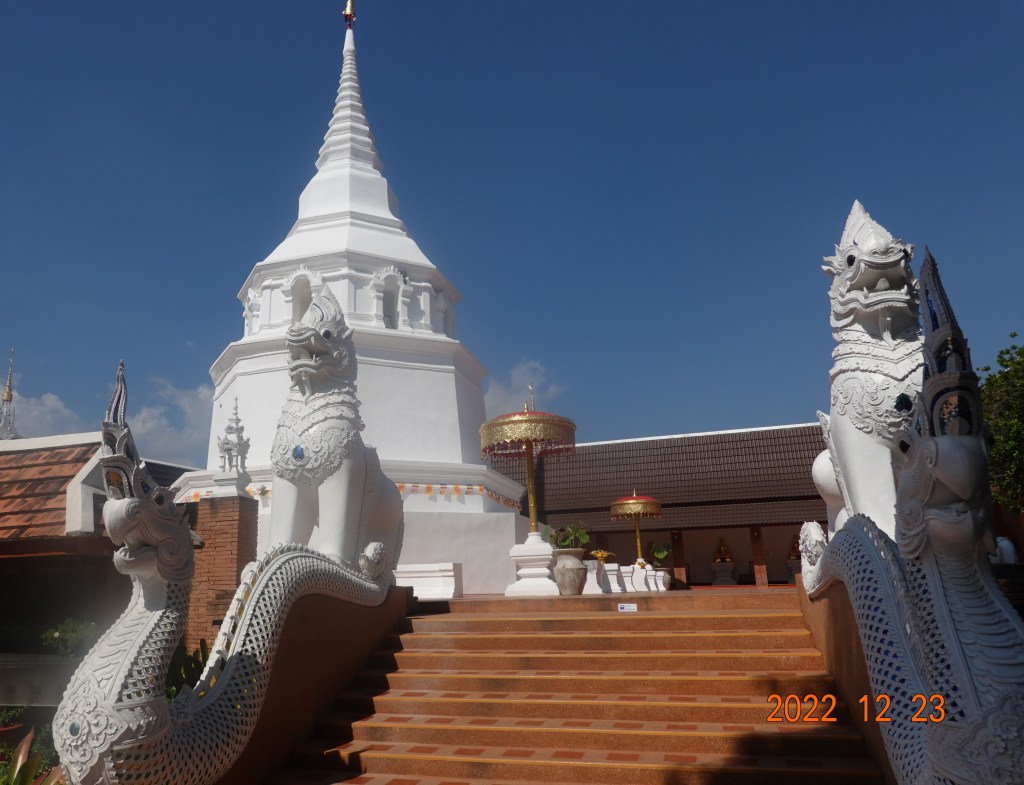
Then to the north of the sala is a raised area with the very white, restored chedi. The stairway is guarded by both white naga dragon creatures and singha lion-like creatures:
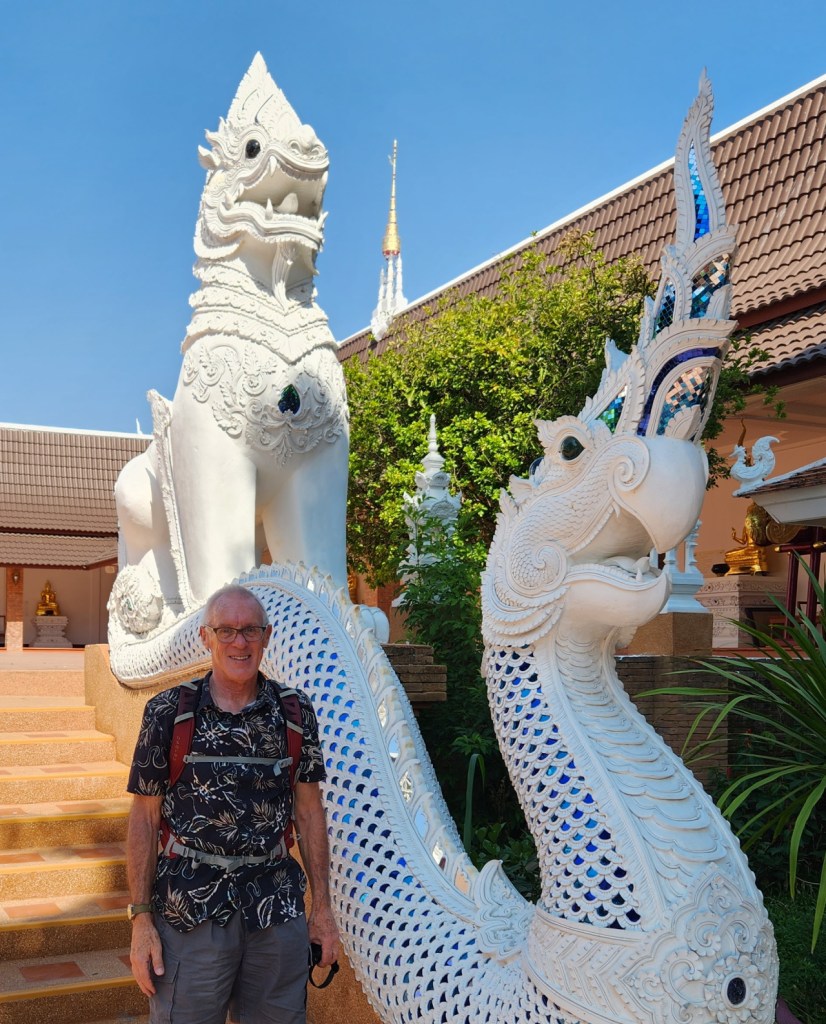
And just prove I was really here, a man I met at the temple, Pablo, from Spain, took my picture by the white naga. I’m in the shadow, but it really is me, squinting into the bright sunlight.
I exited Wat Yang Kuang and continued walking south on Suriyawong Road not knowing of new discoveries upcoming.
Next: Hai Ya Sub-District 2: Kamphaengdin

 James the Intrepid Pilgrim