Thursday, December 22, 2022
Wat Buppharam
When I arrived at Thaphae Road coming from Chang Moi Road, I was close to the old city than I had expected. I had hoped to arrive on Thaphae Road right about where the gate in the Kamphaengdin earthen & clay wall had been to view the temple that is by the road. I was right at Wat Buppharam, so I explored that instead.
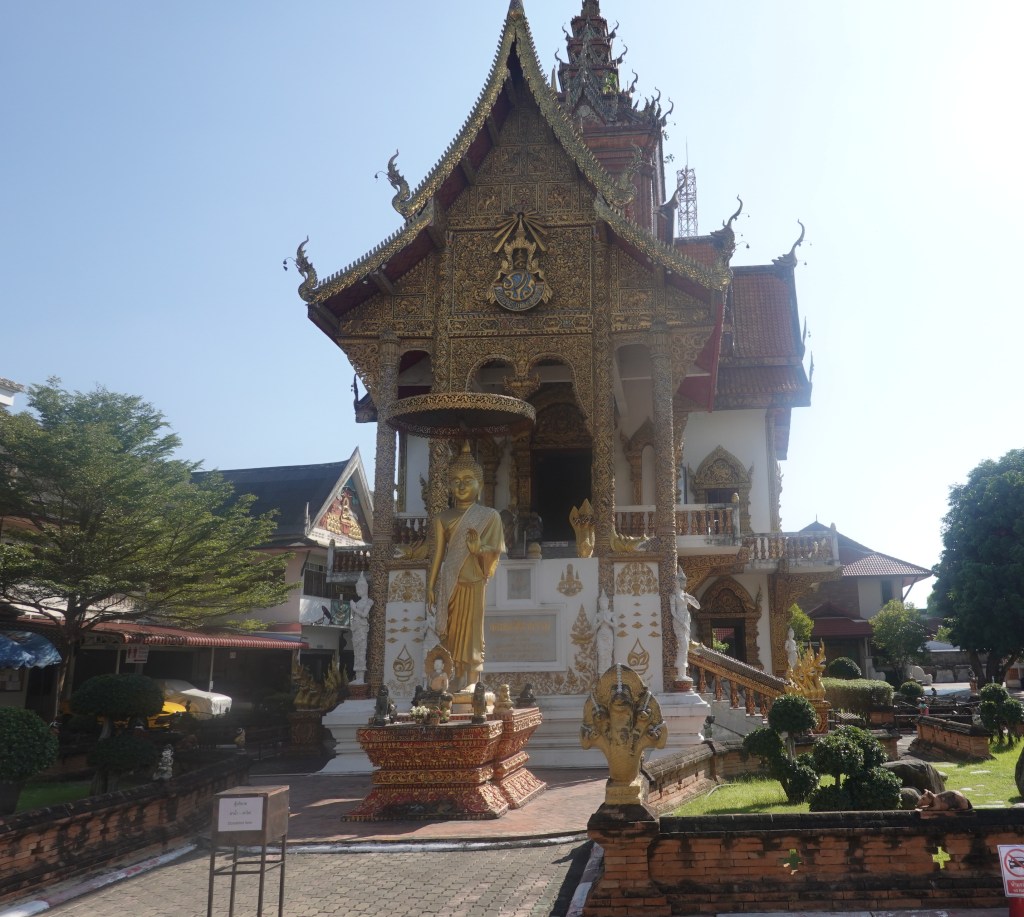
Wat Buppharam is an old temple, like so many in Chiang Mai, first established in 1497 by King Mueangkaeo, the 11th king of the Mengrai Dynasty which ruled Chiang Mai from 1292 to 1558. The most known feature of Wat Buppharam is the white teak Buddha which dates from the 1600s and was made in celebration of the victory over the Burmese. The buildings currently at the temple are from the early 1800s. The “showpiece” building in the middle of the grounds is the two-story main building, housing both a viharn (assembly hall) style shrine to the white teak Buddha on the upper floor, and a ho trai (library) on the ground floor. This building is the most recently built, having been completed in 1996 to celebrate the late King Bhumibol Adulyadej’s (King Rama IX) 50th anniversary of his accession to the throne.
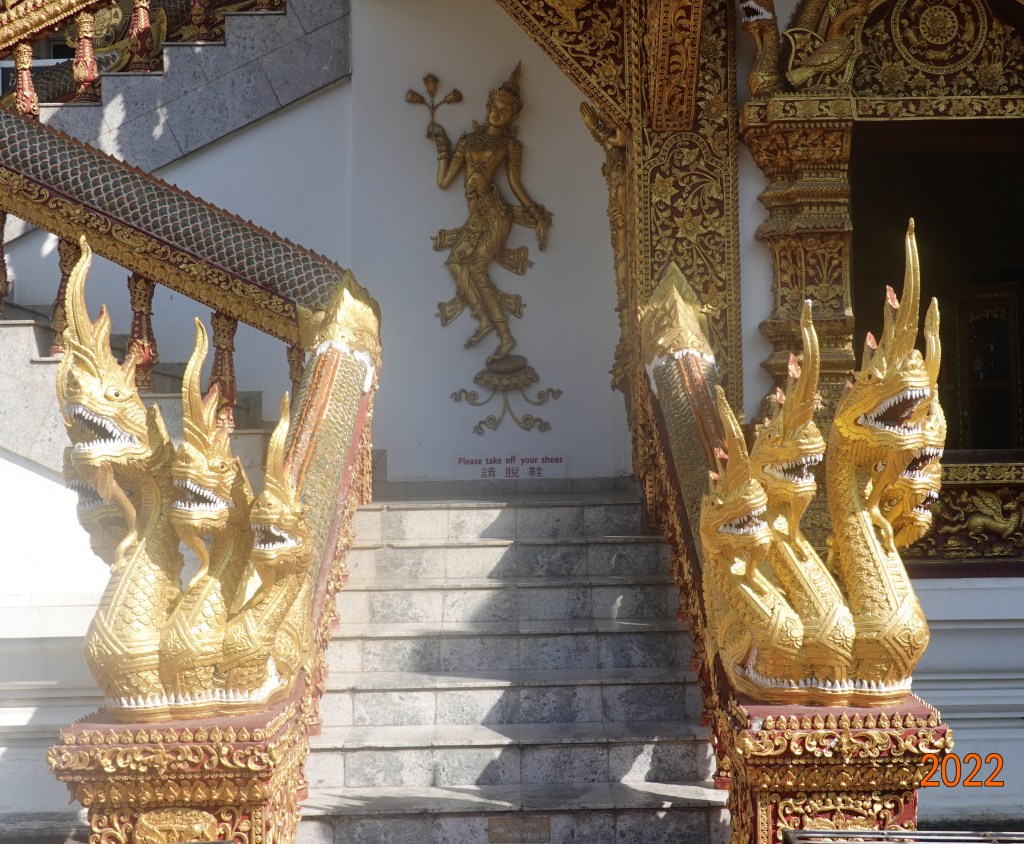
The stairs are guarded by the five-headed naga dragon creatures and a dancing thewada:
The white teak Buddha is in the viharn, and is the largest teak Buddha in Thailand. Unfortunately, the doors were closed by the time I made my way upstairs. Here is a picture I found online:

To the west of the main building is another smaller teak viharn, built in the Lanna style. The entrance is guarded by very fierce-looking mom creatures:
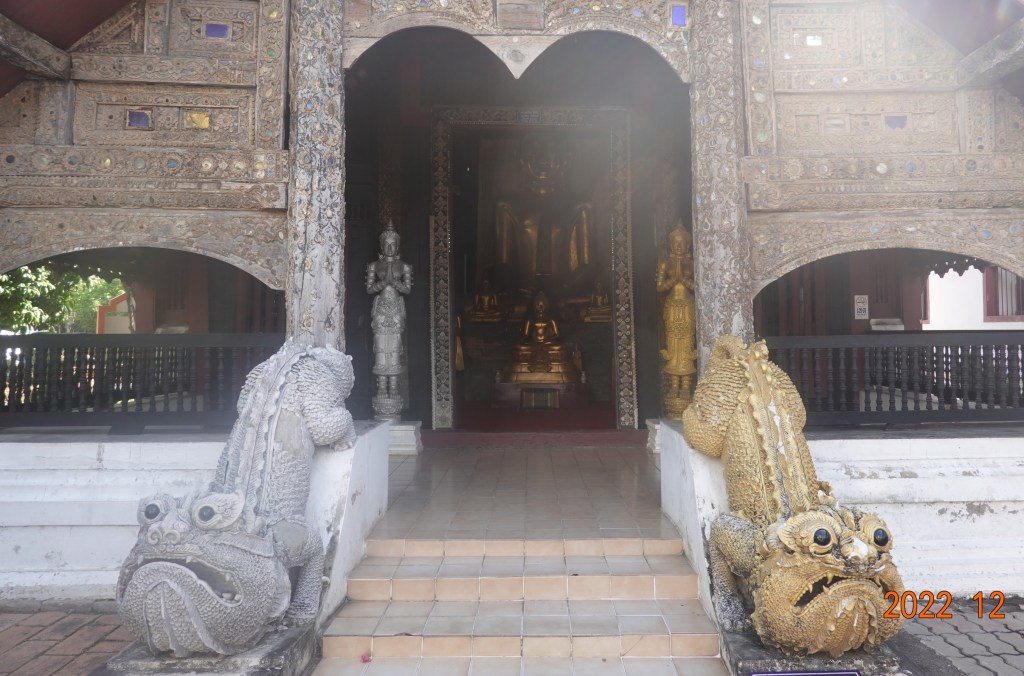
Inside are two thewada (angelic beings that live in the heavenly realms) guarding the inner entrance. Thewada have no gender, and depending on the artist, may appear very male, very female, or neither.
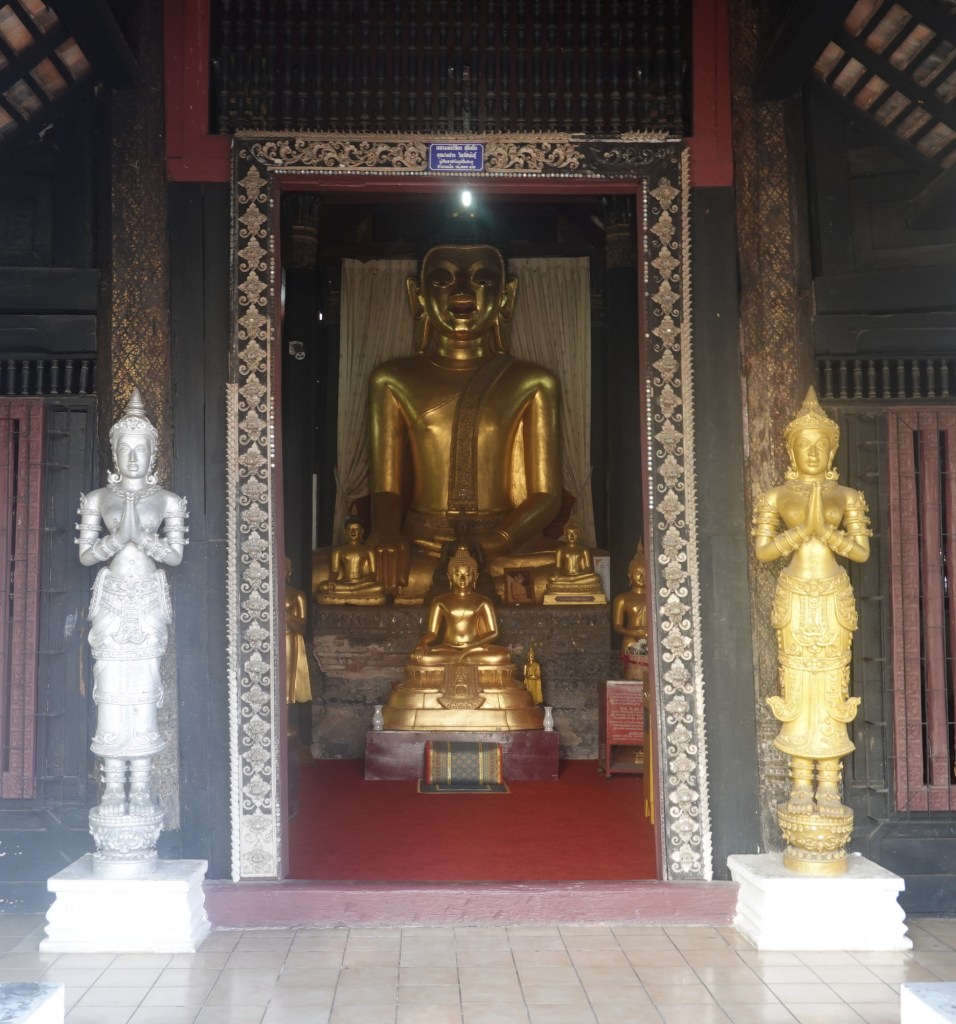
The Buddha image in the smaller viharn at Wat Buppharam is in the Lanna style, as are the smaller images.
Slightly behind the smaller viharn is a larger viharn with this elaborate entrance:
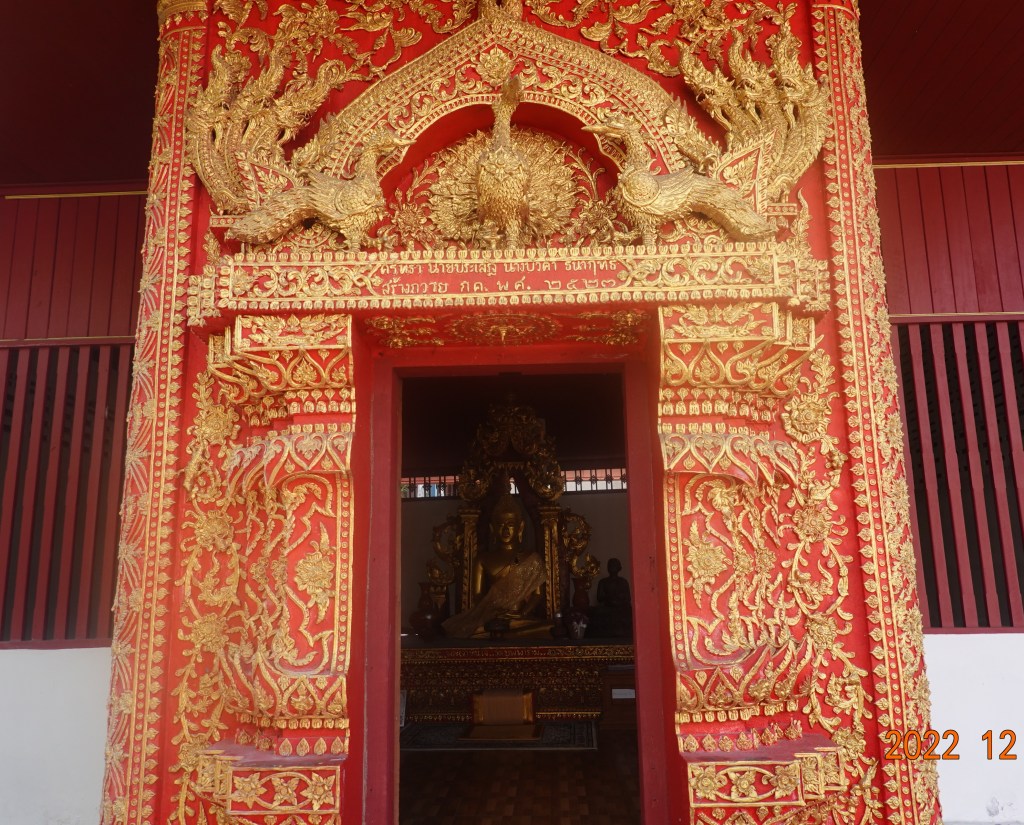
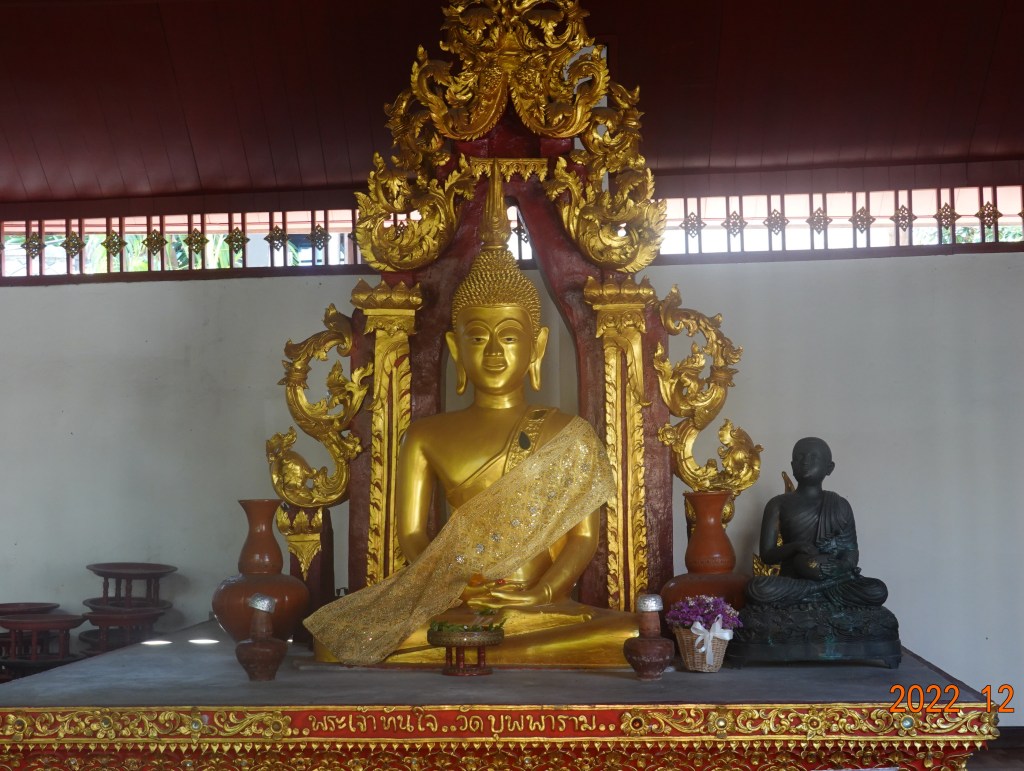
Inside is this striking Lanna style Buddha image:
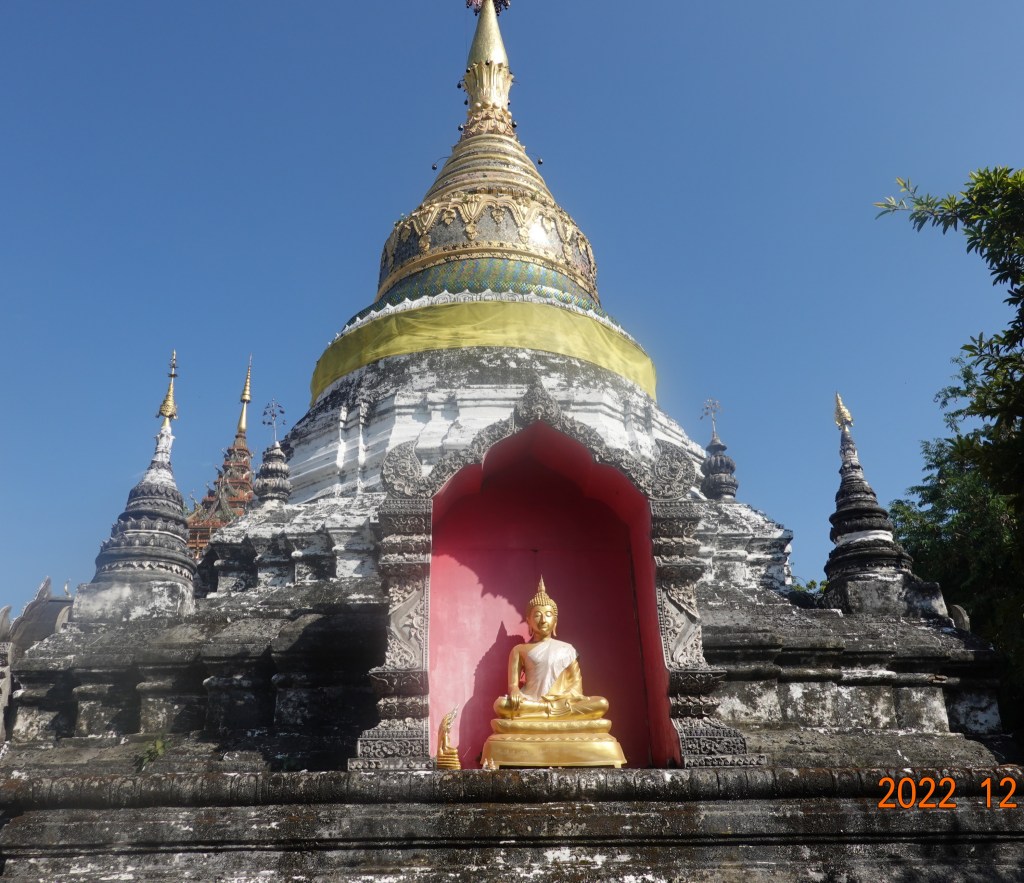
And behind the viharn, as is customary, is a chedi, looking somewhat dirty and in need of renovation in contrast to most of the buildings at Wat Buppharam.
Across from the larger viharn is the former entrance along Tha Phae Road, now closed and no longer used. It was replaced by a larger entrance leading directly to the newest two-story building.
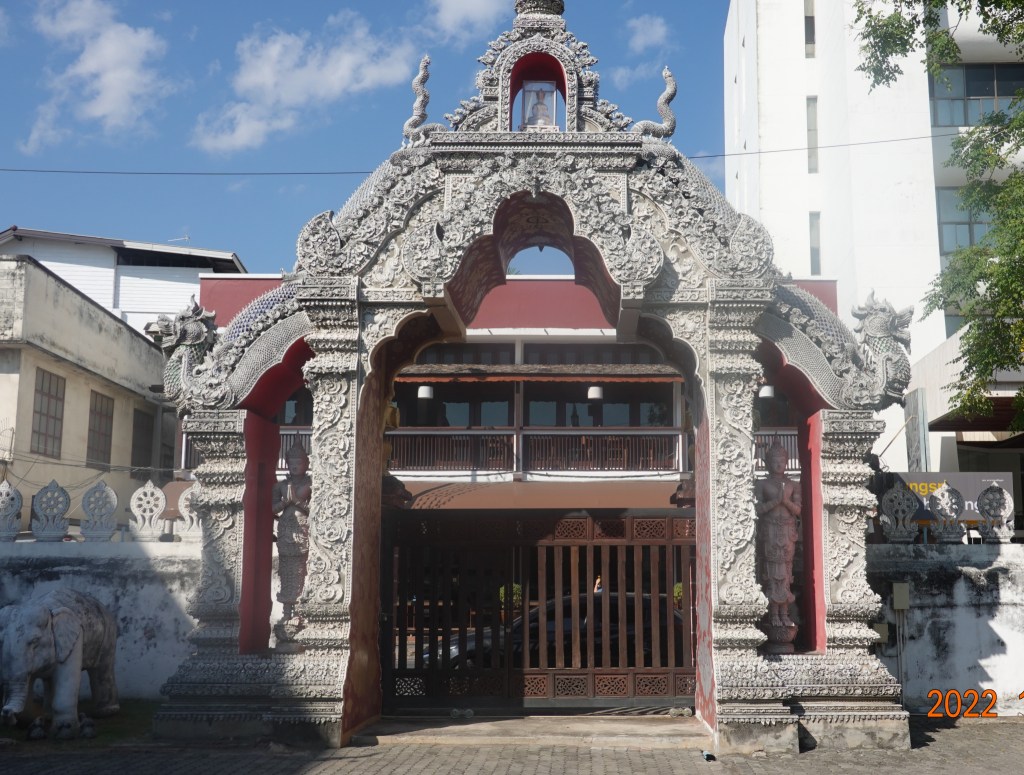
I like the older entrance with its elaborate archway and gates.
Next: Exploring south of the old city, and more evidence of the kamphaengdin earth/clay wall.

 James the Intrepid Pilgrim