Wednesday, December 14, 2022
Three Kings Monument and Wat Chedi Luang
I decided to make a walk from the center of the old Chiang Mai city south to Wat Sri Suphan, stopping at Wat Chedi Luang along the way. Today is a beautiful day in Chiang Mai, just a few degrees cooler. Started the walk at the Monument to the Three Kings.
Monument to the Three Kings
King Mengrai founded Chiang Rai, about a four-hour’s drive north and west of Chiang Mai. Being closer to Burma, the Burmese and his people battled many times. He planned to build a new city, farther from Burma and more fortified. Working with two neighboring kings, the new city was planned and King Mengrai supervised the construction. The monument depicts the three kings that founded Chiang Mai, King Mengrai of Lanna in the center, and his two friends, King Ngam Muang of Phayao (left) and King Ram Nhamhaeng of Sukhothai (right).
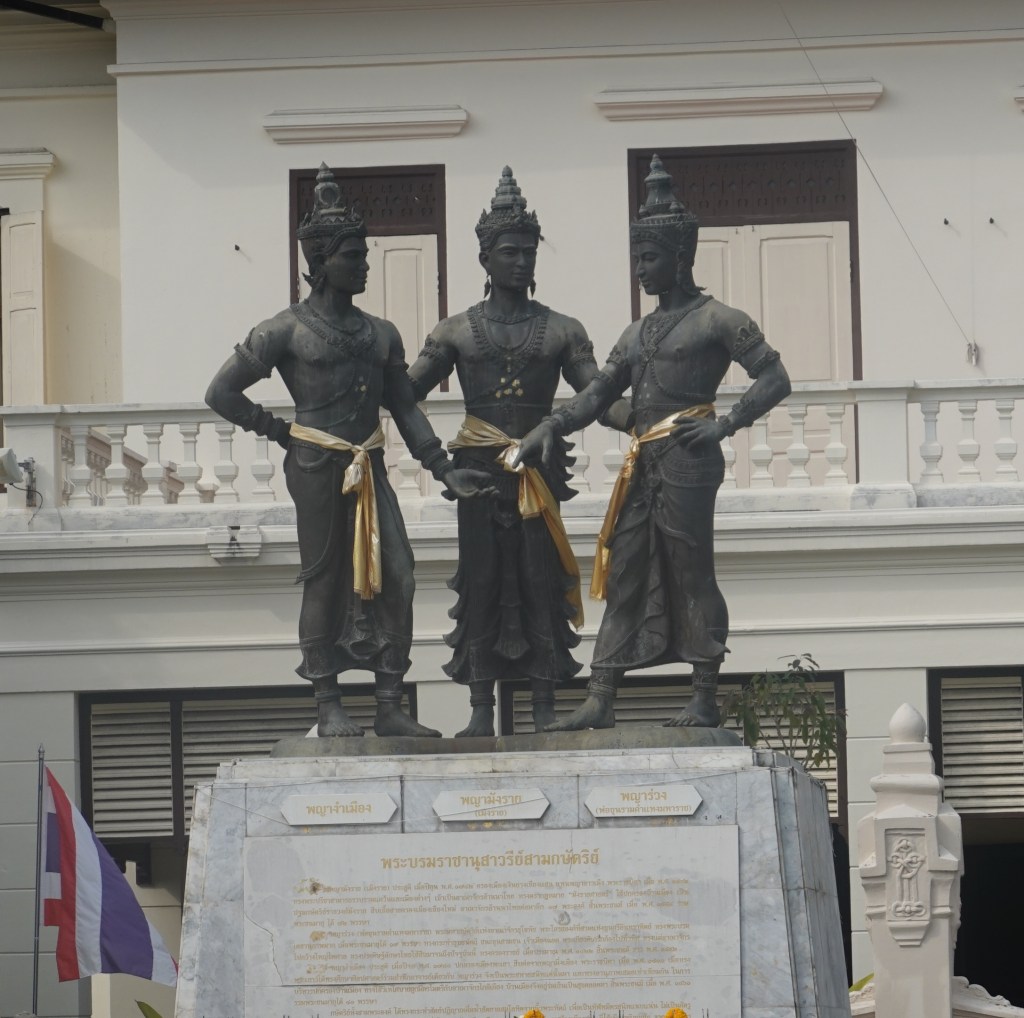
I just love this monument – the three kings look very proud and are pointing as if to say, “here is where we shall build the new city.” Chiang historically translates to “walled city” and Mai translates to “new,” so properly translated, Chiang Mai is the new walled city.
Wat Chedi Luang
I made my way south, to Wat Chedi Luang, directly across the street from The 3-Sis where I am staying. This is a favorite of mine, and I have posted the decription, history, and pictures of Wat Chedi Luang many times. Wat Chedi Luang is where I often sit near the base of the large chedi for my morning meditation on every visit to Chiang Mai.
Wat Chedi Luang is on every map and every guidebook of Chiang Mai. “Chedi” means pagoda, and “Luang” means “really big” or “royal”, so Wat Chedi Luang is the temple with the really big chedi. In about 1390, King Saen Muang Ma started construction of the temple and the chedi in which to hold the ashes of his father. The chedi was not completed until 1475, almost 85 years after construction began. When completed, the chedi was 82 meters high (270 feet) with a base diameter of 54 meters (178 feet), and was by far the largest structure in all of Lanna.
Phra Viharn Luang
After entering the temple grounds, one can see the main viharn (assembly or worship hall). This viharn, known as the Phra Viharn Luang, currently under renovation, has been rebuilt several times, and houses the much revered Phra Chat Attorat standing Buddha. The current viharn structure dates to 1929,
and sits on the original viharn site dating to 1411, built by the Queen Mother of King Sam Fang Kaen who also cast the standing Buddha image. The viharn is closed for renovation, as can be seen:
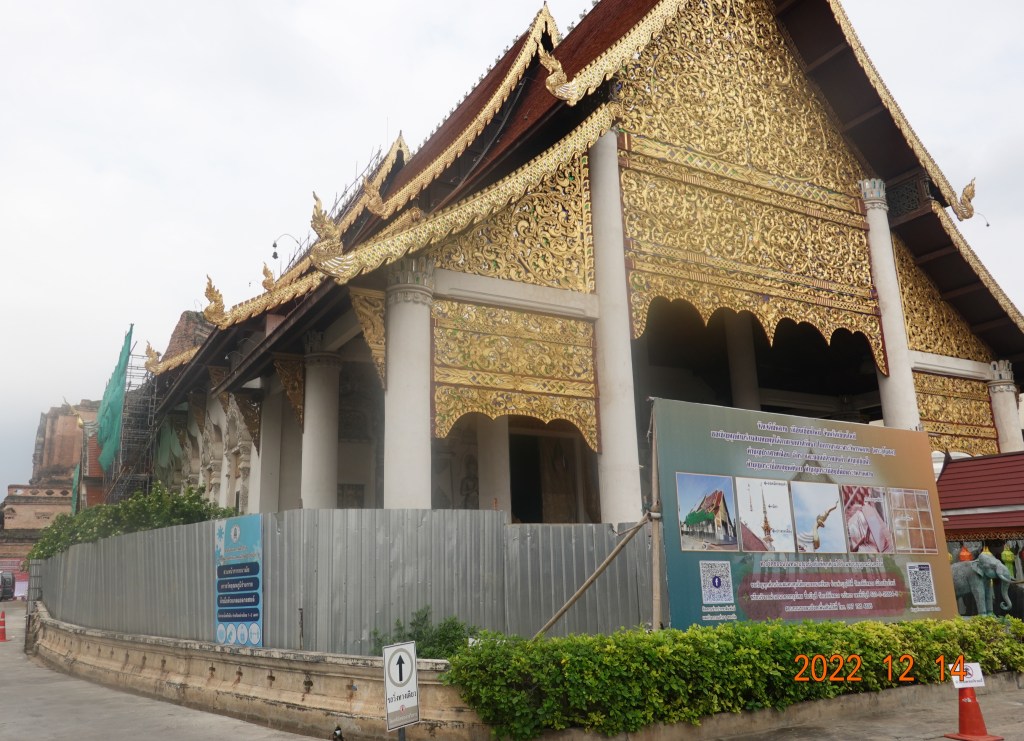
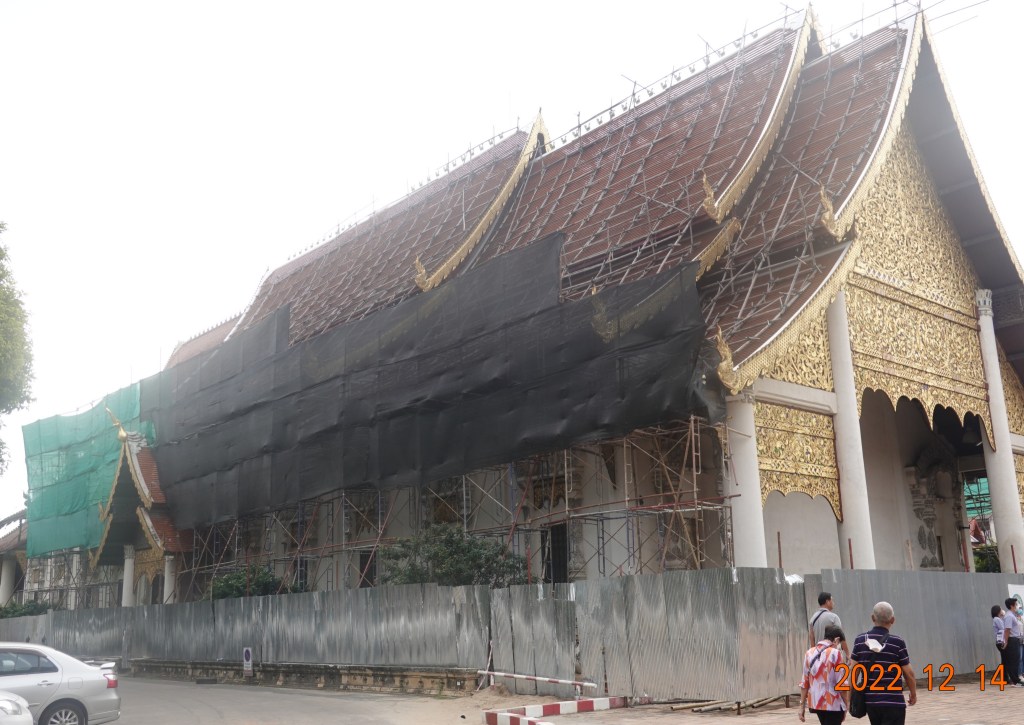
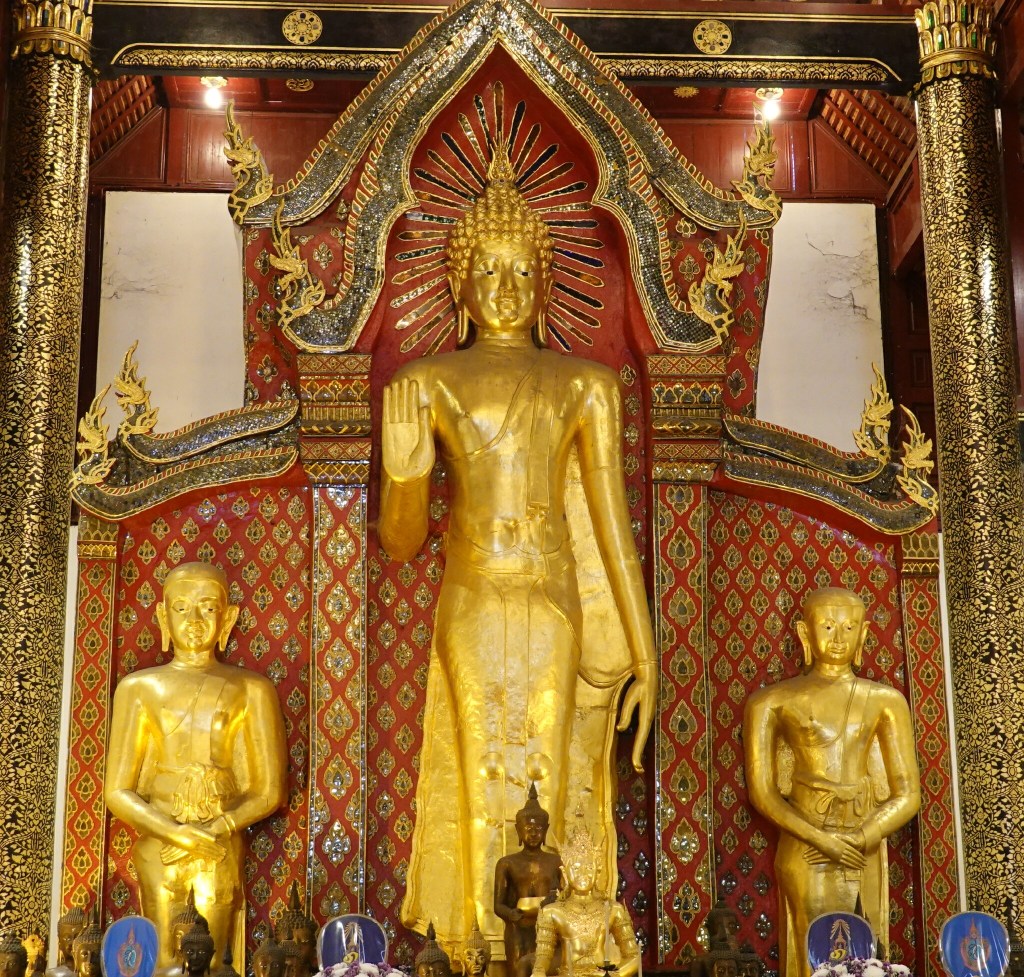
While the viharn is closed for renovation, inside is the large standing Buddha image, the Phra Chat Attarat.
The name translates to “eighteen-cubit Buddha” and as the name implies, it is large. Here is a photo I made during my visit to Chiang Mai in 2020:
Phra That Chedi Luang
Walking to the west of the viharn, the large chedi comes into view. For more than 500 years, the chedi was the tallest structure in the region and could be seen for miles around. As was mentioned earlier, the chedi at Wat Chedi Luang was built by King Saen Muang Ma who was ruler of the Lanna Kingdom to house the ashes of his father. Construction started in 1391 and was completed in 1475 during the reign of King Tilokarat (who also build Wat Jed Yod). King Tilokarat also enlarged the chedi to make it the largest structure in all of Lanna. In 1545, a large earthquake shook northern Thailand and the upper 30 meters of the 80 meter high chedi collapsed. There are no records of what the top looked like before the earthquake, and to restore it improperly would bring it great dishonor, so the damaged chedi is left as it is. Some restorations have been done to the lower parts of the structure over time. Here is a view of the large chedi from where I sit for my morning meditation, just south and west of the chedi:
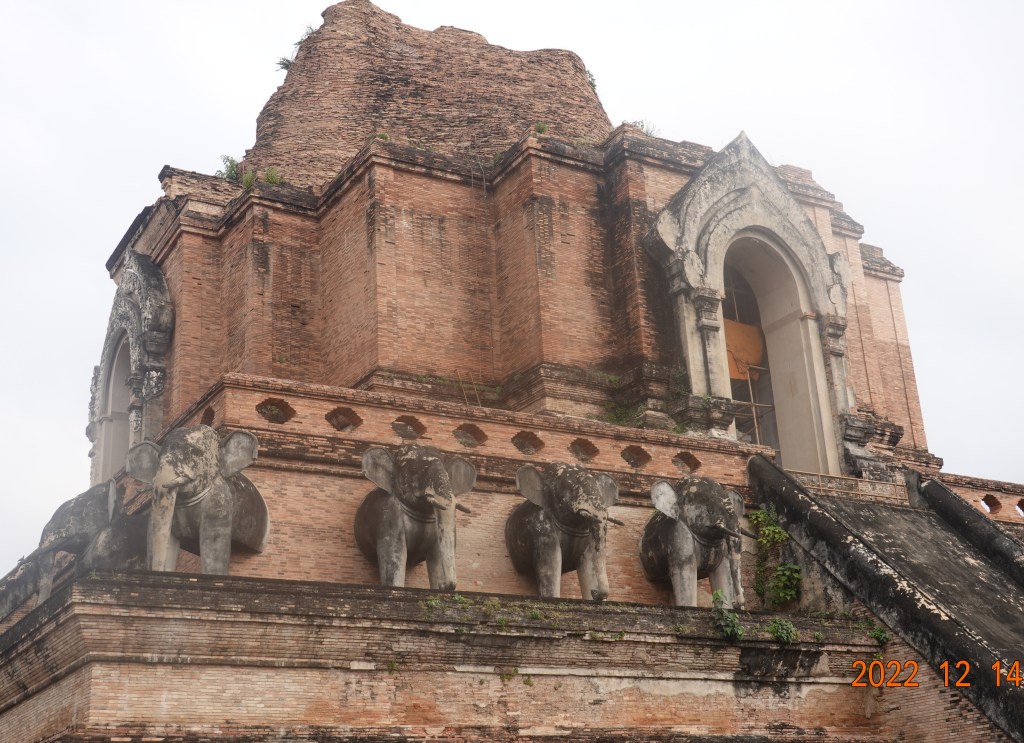
For many, many years, the chedi at Wat Chedi Luang housed the famous Emerald Buddha in the eastern niche of the large chedi. After the earthquake in 1545 that left the chedi massively damaged, the Emerald Buddha was moved to Lamphun, and is now at Wat Phra Kaew in Bangkok at the Grand Palace (the Emerald Buddha is so named for its color – it is not a large emerald stone.
Another view of the chedi from slightly to the north and east looking south and west:

Green Buddha Statues
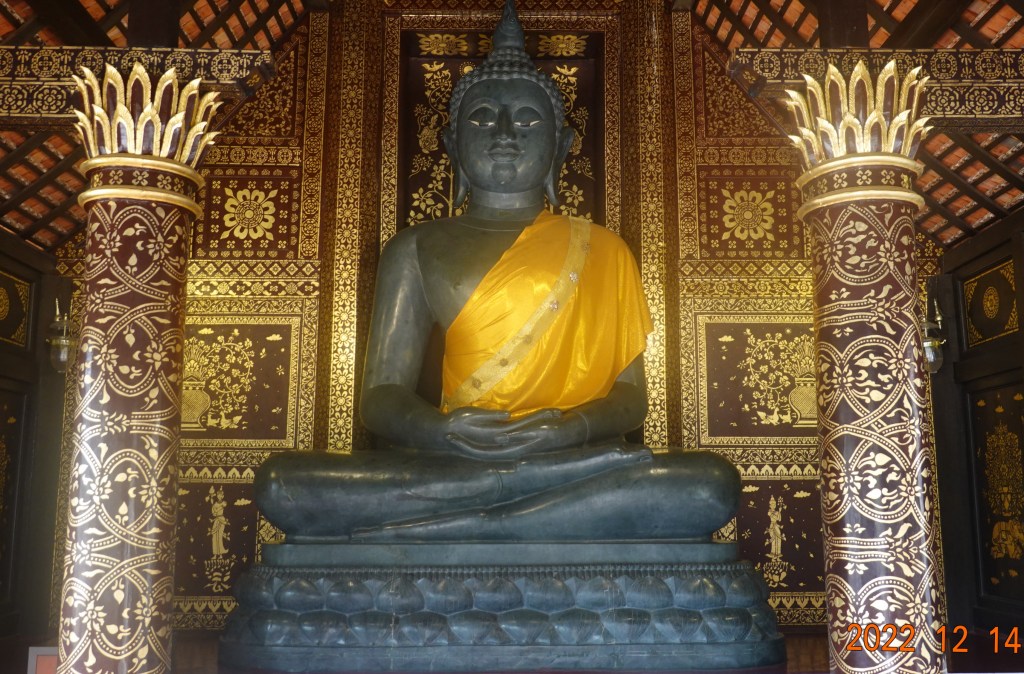
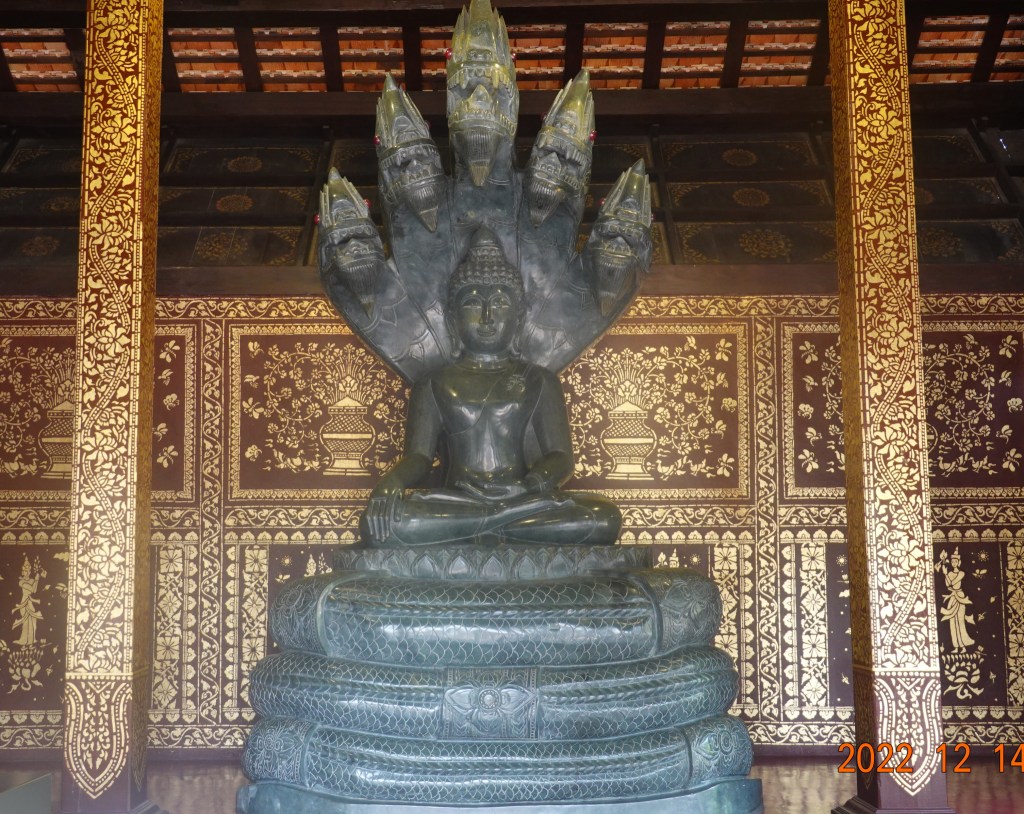
At the back of the chedi are several pavilions. One houses a reclining Buddha statue that dates back to about 1500, and another houses a statue of the Phra Katchayana (Fat Buddha). Next to those are two pavilions that house the 10-ton Phra Buddhamani-Srilanna Buddha and the 15-ton Phra Buddharatana-Naganaphisi Buddha statues. These are quite new, about 5 or 6 years old. They were made from stone quarried near Chiang Rai (about 4 hours drive north and west from Chiang Mai), and then sculpted near there before being brought to Wat Chedi Luang five years ago. I happened to be there the day the statues were being unloaded from the trucks.
These are beautiful Buddha statues, dark green and elegant. The first, the Phra Buddhamani-Srilanna Buddha is about 3 meters high:
The second statue, the Phra Buddharatana-Naganaphisi Buddha image, is three and a half meters high, weighs 15 tons, and is protected by the five-headed naga serpent.
After visiting Wat Chedi Luang, I continued south, exited the old city through Chiang Mai gate, and followed Wua Lai Road diagonally southwest for almost a kilometer to Wat Sri Suphan.
Next: Two favorite temples part 2: Wat Sri Suphan

 James the Intrepid Pilgrim