Tuesday, December 13, 2022
Hiking in the Jungle to Wat Phalad
When I woke this morning, I had it in my mind to make the hike to Wat Phalad for the first time this visit to Chiang Mai. Wat Phalad (sometimes spelled Palad or Pha Lat) is a smaller, less known temple in the jungle about half-way up Doi Suthep, the mountain on which the famous Wat Phra That Doi Suthep is located. Before the pandemic, thousands of tourists visited Wat Phra That Doi Suthep and pass by Wat Palad without stopping. This is good in that Wat Phalad remains a very peaceful place, but sad because so many people miss its charm. With the proliferation of social media, more people are discovering Wat Phalad so while still peaceful, there are more people than when I first discovered Wat Phalad about 10 years ago.
When I first heard about the hike to Wat Phalad about ten years ago, I got ambiguous directions to the trailhead. Not wanting to explore on foot in the heat, I got a one-way ride to Wat Phalad from the highway, looked around, found where the hiking trail emerged, and hiked down. That way I knew where the trailhead was. Since most taxi drivers do not know the trailhead, another landmark I have used is Wat Fai Hin, about 500-600 meters down the hill from the trailhead (the steepest part of the paved road). Before all of the social media, the trailhead was one of those things that “when you know … you know.”
After breakfast, I used Grab (similar to Uber) to get a ride to Chiang Mai University. I then walked about 1.5-2 kilometers to the trailhead of what is now known as the “Monk’s Trail,” the trail up to Wat Phalad. I met a young man and young lady who are from the United States and both teach English in Saigon. We chatted most of the way up the trail so I only got a couple of pictures of the trail going up. This is often called the jungle, but it is really in between what we would think of as a jungle and a forest. Not really either, something in between.
Note: I still do not have my camera settings quite right. I believe I have corrected the problem, so tomorrow’s pictures should be better. Some of these will be over exposed.
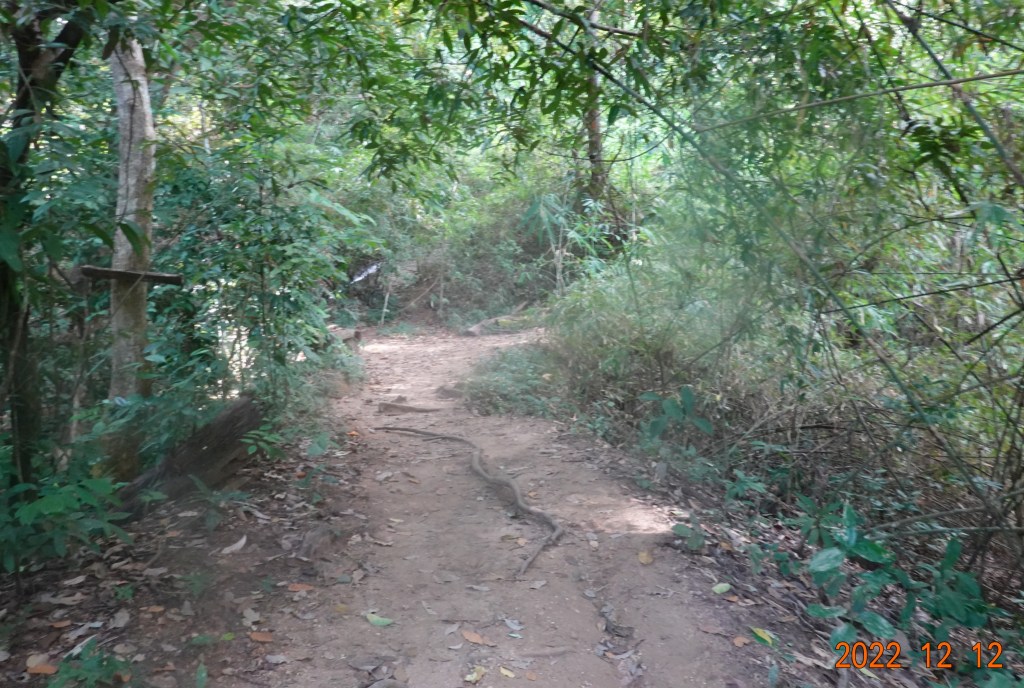
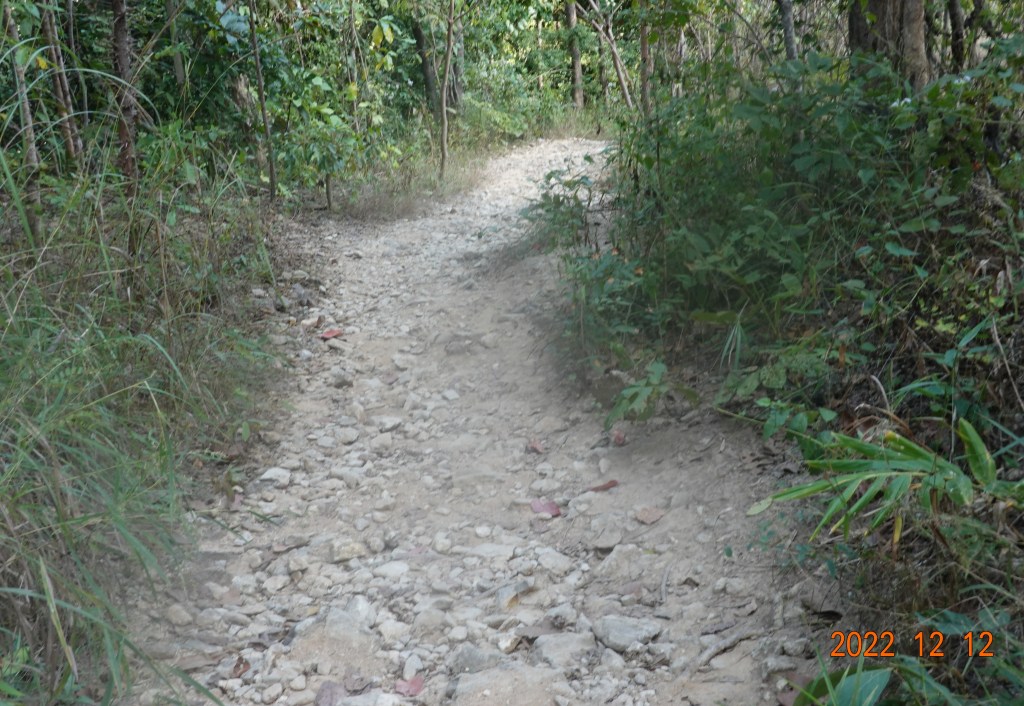
Because we were talking, the hike up to Wat Phalad seemed to go quickly. However, it was more challenging and slower-going than in years past. The rainy season was more intense this year, and many of the steeper sections of the trailhad been eroded leaving a more rocky and unstable path. The jungle was quite green, and because of the shade, the heat was not as intense.
We arrived at Wat Phalad. There is a small viharn (worship hall) that had been pretty dark and gloomy in the past. For the past two years it was blocked off for renovation. A year ago it had been re-opened, so I saw it then. While still a little dark inside and stark, it is much better looking than before.

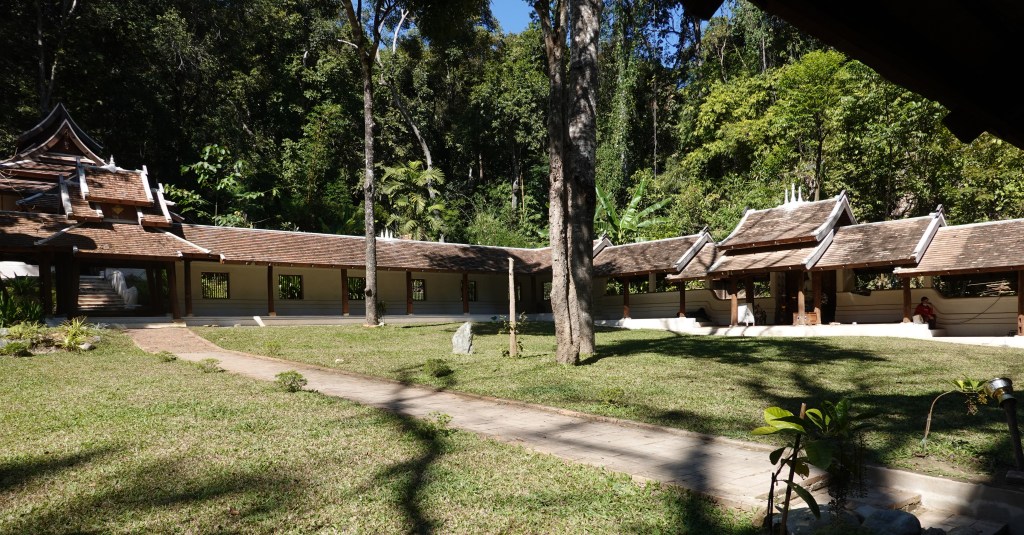
To the north of the small viharn there used to be an “open-air” viharn. This was replaced during the pandemic with a three-sided, rectangular courtyard. I do not know much about this type of a structure. Here is an overview photo I took a year ago:
To the right of the picture above is this Buddha statue:

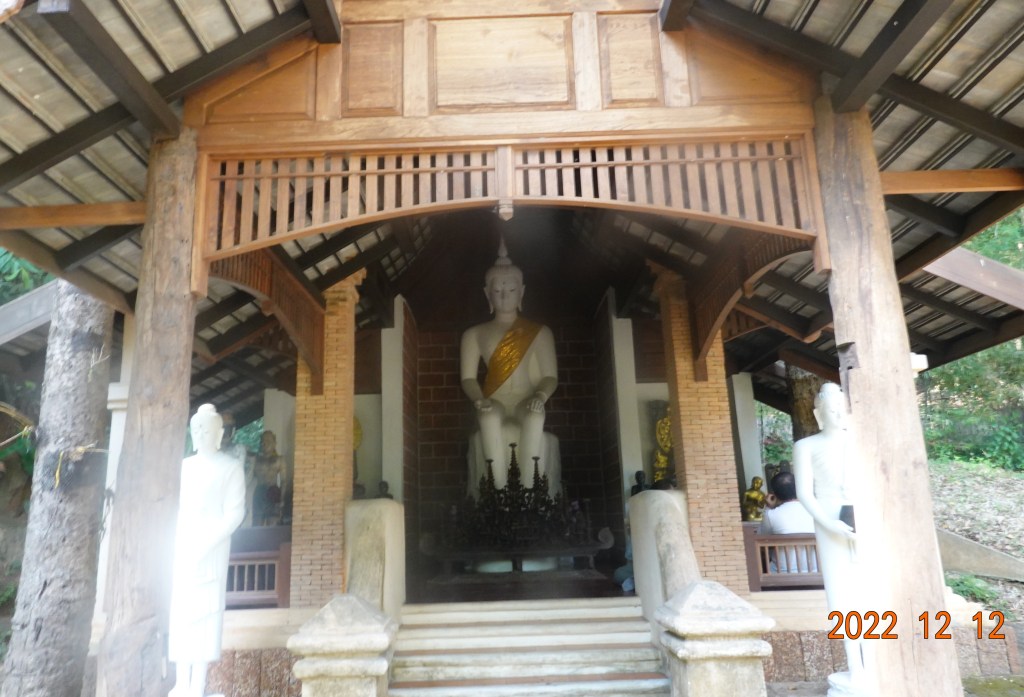
To the left of the picture of the courtyard perimeter structure is an opening. This allows access to a small pavilion that and chedi (pagoda) that are not new. The pavilion houses this fairly large seated Buddha, easily 4 meters tall:
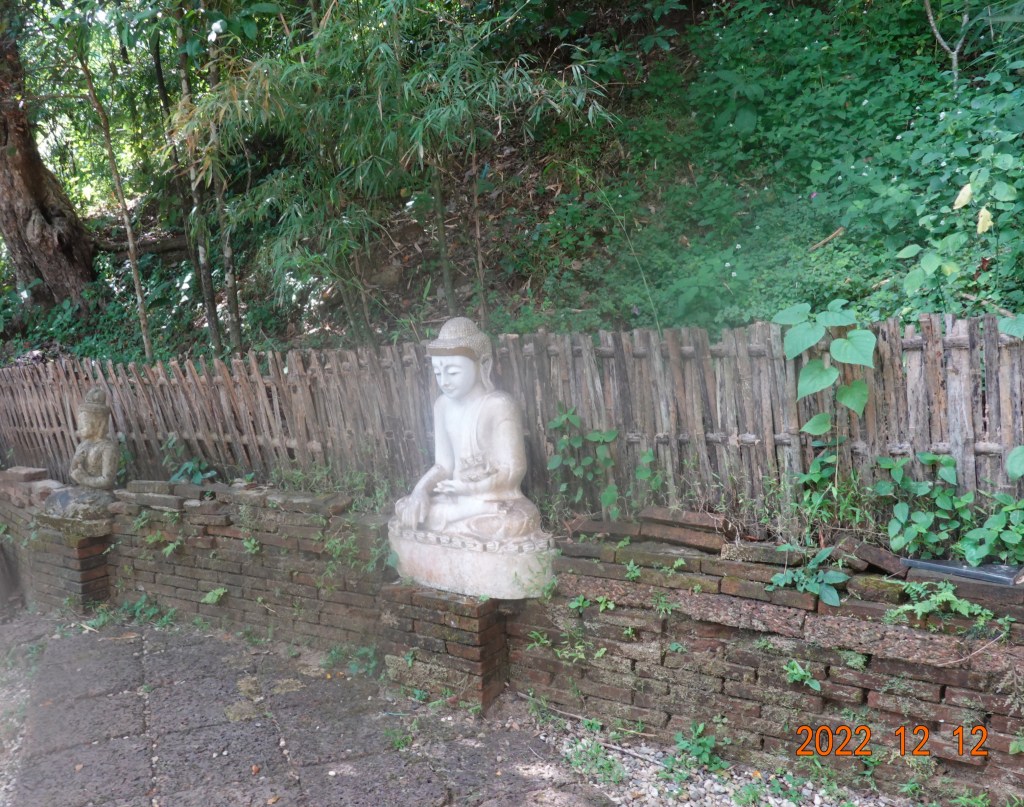
Walking over to the chedi, I noticed this very nice Buddha statue on the wall and fence:
Then there is this very old, and moss-covered chedi. Mostly a chedi is at the west side of a viharn (worship hall). The doors of a viharn open to the east to greet the rising sun, and the chedi is at the west side because the ashes of someone are typically interred in the chedi, and the setting sun represents the end or death. This chedi at Wat Phalad is basically all by itself.
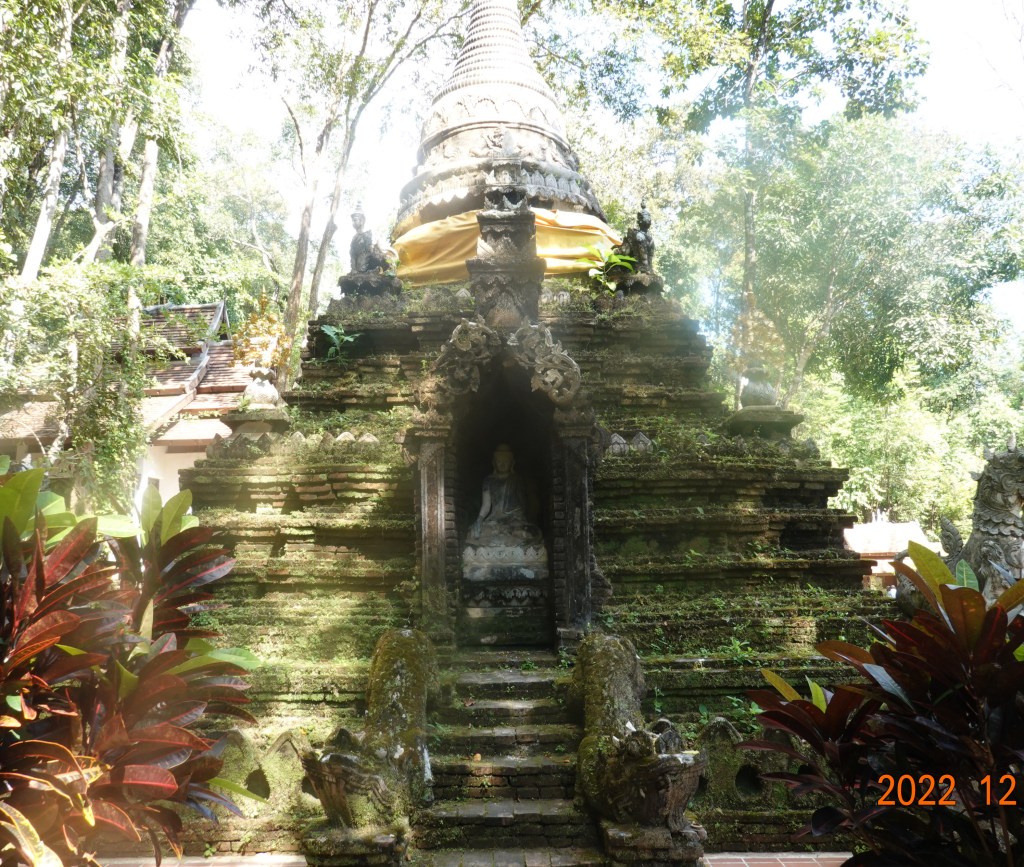
A closer view of the Buddha statue in the inset of the chedi:
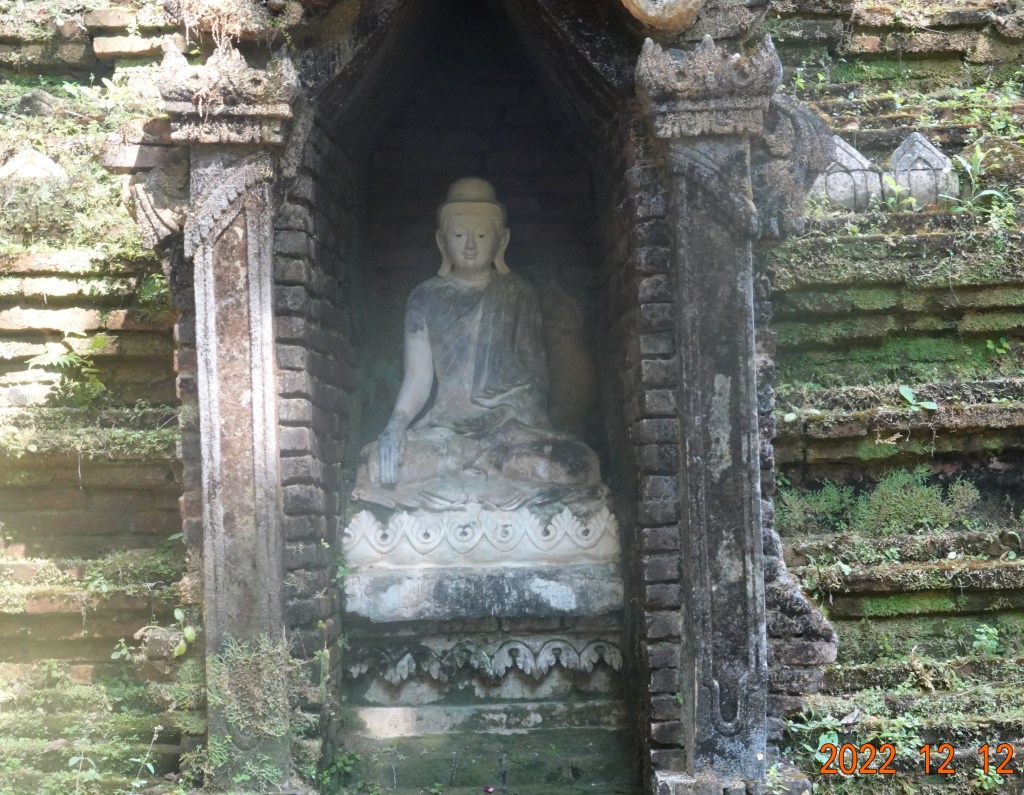
The chedi here could use a good cleaning and restoration. I am surprised that with all of the work that has been done in the past two years, there was no restoration to the chedi. I’ll detail some of the other recent changes in a future visit to Wat Phalad.
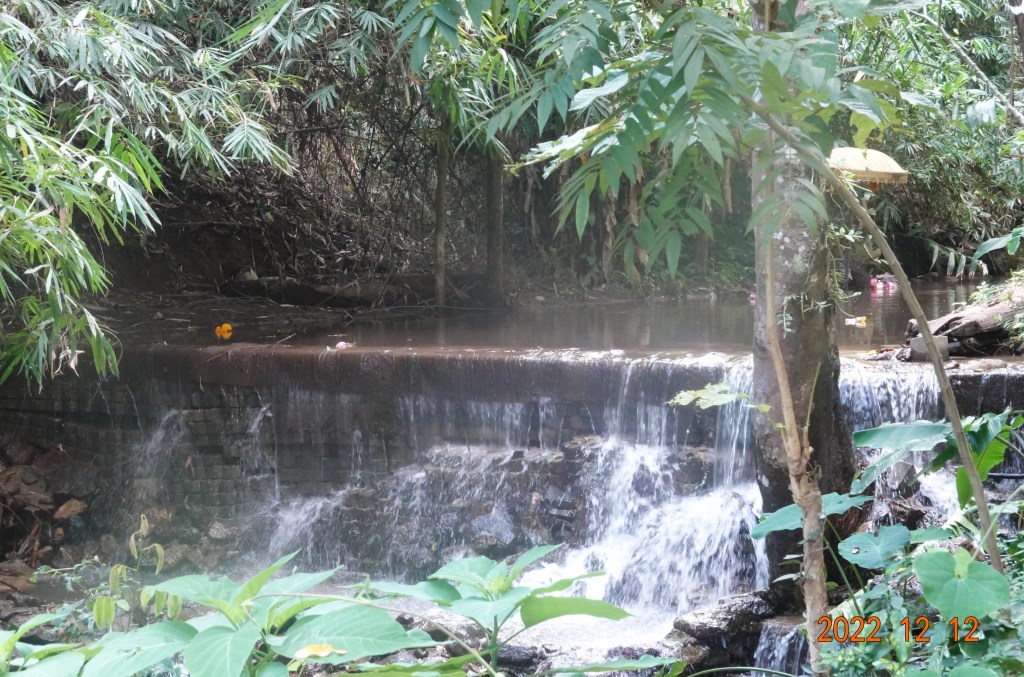
The rainy season only ended a couple of weeks ago. Water in the creek that runs along Wat Phalad was running far more than I have seen in the past. At one point there is a little dam to control the flow, and it was quite full. Here is a picture:
I went further up the beginning of the trail that leads from Wat Phalad to Wat Phra That Doi Suthep. I’ll make that hike another day – the second part is (1) longer, and (2) much steeper than the trail I hiked today. From the start of the second part of the trail, the waterfall was also flowing well:
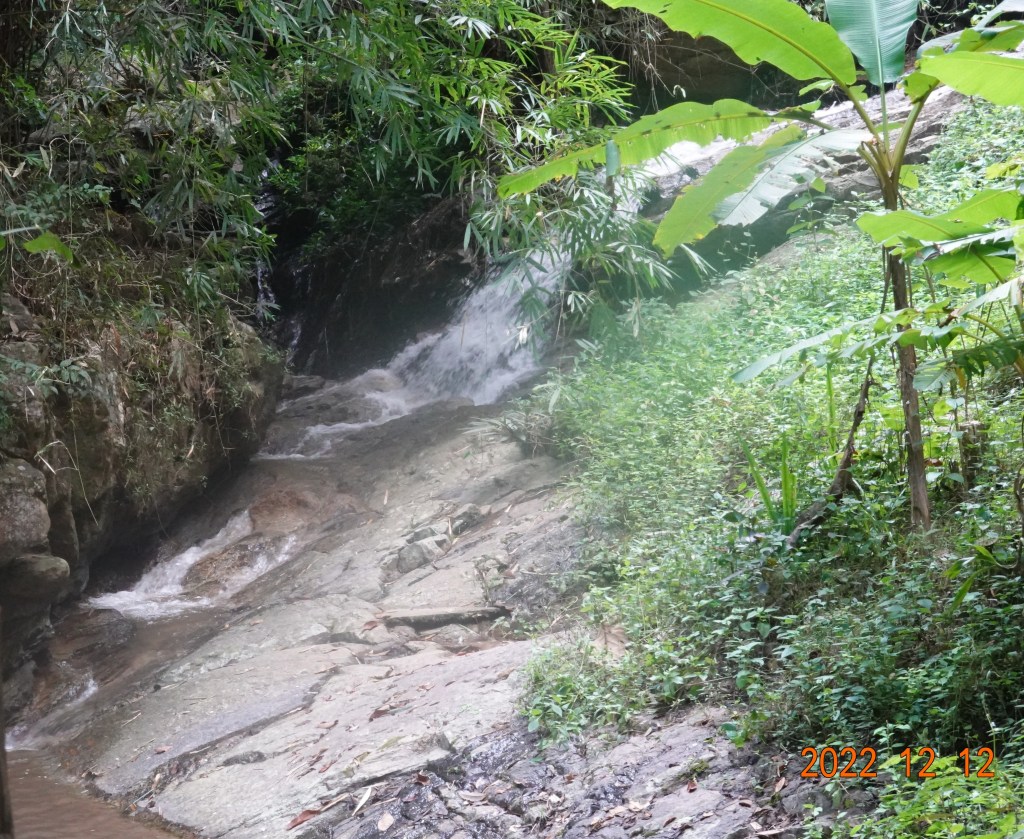
Doi Suthep is a large mountain, so it is not a surprise that so much water is still flowing off the mountain. I walked around over to the larger viharn, but there was an event taking place with many people, so I did not try to get any pictures. Being a fairly hot day and having hiked a fairly long way, I decided to head down the mountain. Hiking down is sometimes more difficult than climbing up. Down is harder on the knees, and there are many slippery leaves on the trail on which it is easy to slip and maybe fall. Also, the erosion has left many sections rocky and unstable. I proceeded downward with care.
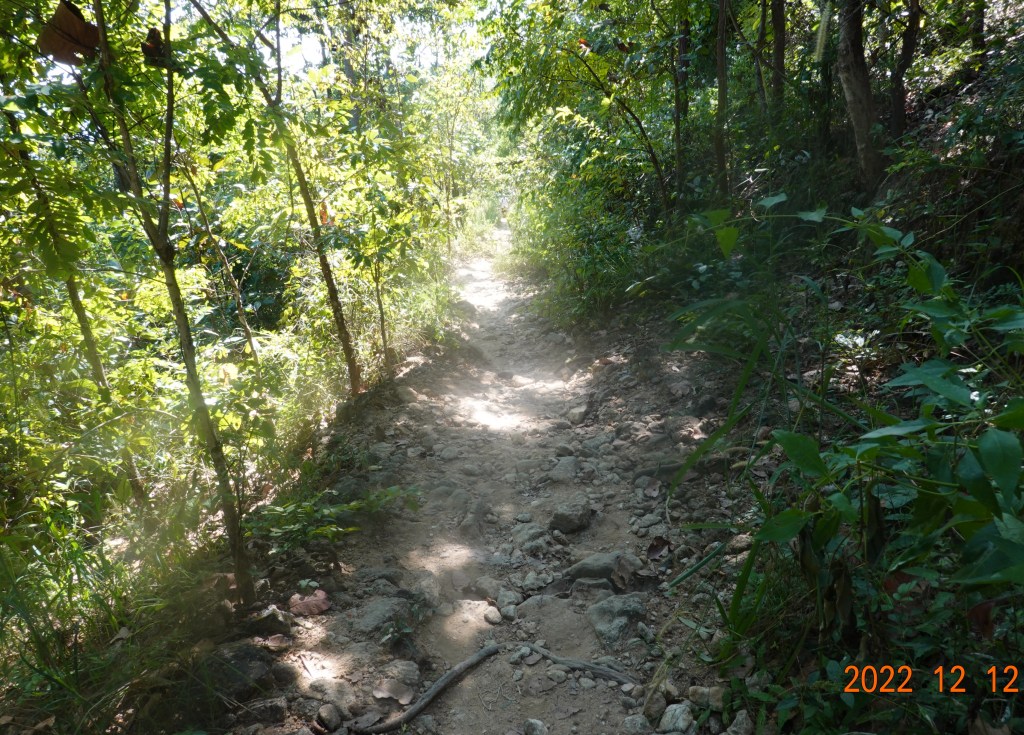
Another view of a rocky and relative unstable section of the trail:
I made it down to the trailhead, and proceeded down the road towards Chiang Mai University, about another 1.5 kilometers or maybe 2. Decided to continue walking to Wat Suan Dok, about another 1.5-2 kilometers. This walk crosses two rather large roads, the outer loop road and the canal road. There are no “walk” signals, you just have to be careful and go when the cars in your direction go. It was a little daunting the first time, and now that I have made this walk many times, I’m not fearful, just cautious.
Just outside Wat Suan Dok is this sign announcing a university with a rather long name:
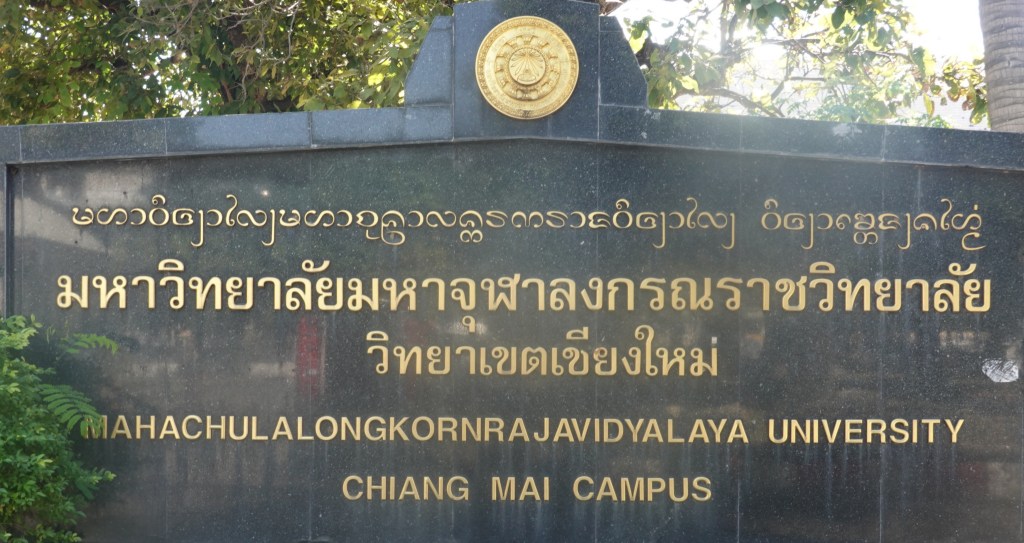
King Chulalongkorn was King Rama V (current king is King Rama X), and I believe “Maha” is a respectful prefix. Regardless, this is one long name at 30 characters in both English and Thai.
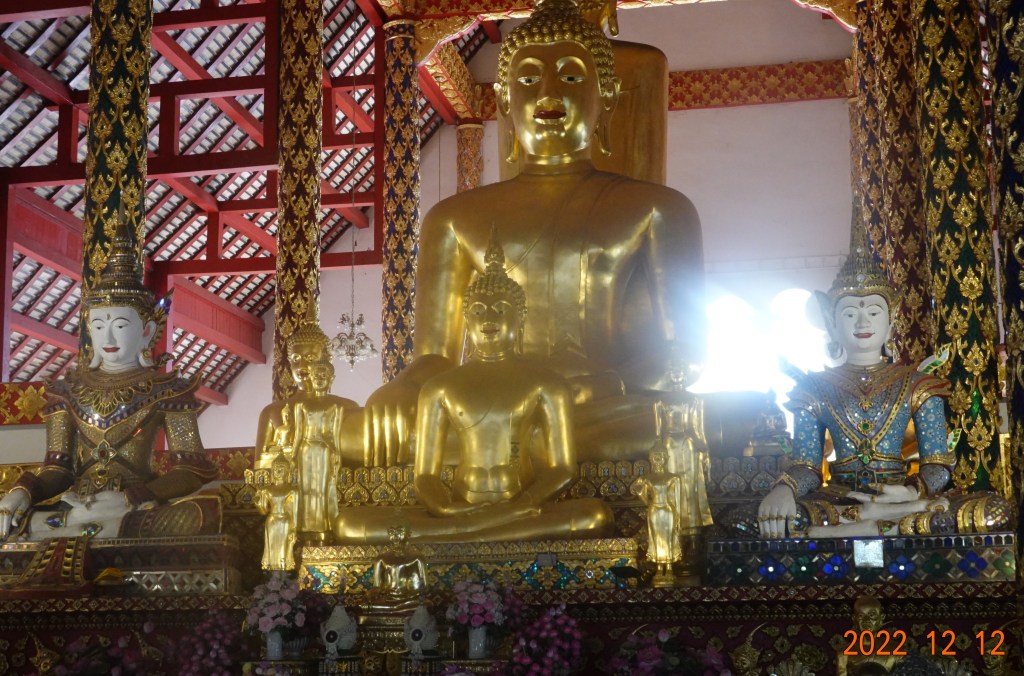
Suan Dok translates to flower gardens. Many years ago, this area was where the Chiang Mai king’s flower gardens were located. I entered the large viharn at Wat Suan Dok. This is the largest viharn of any temple in the Chiang Mai area. Difficult to show how truly large it is from a picture – it is very large!
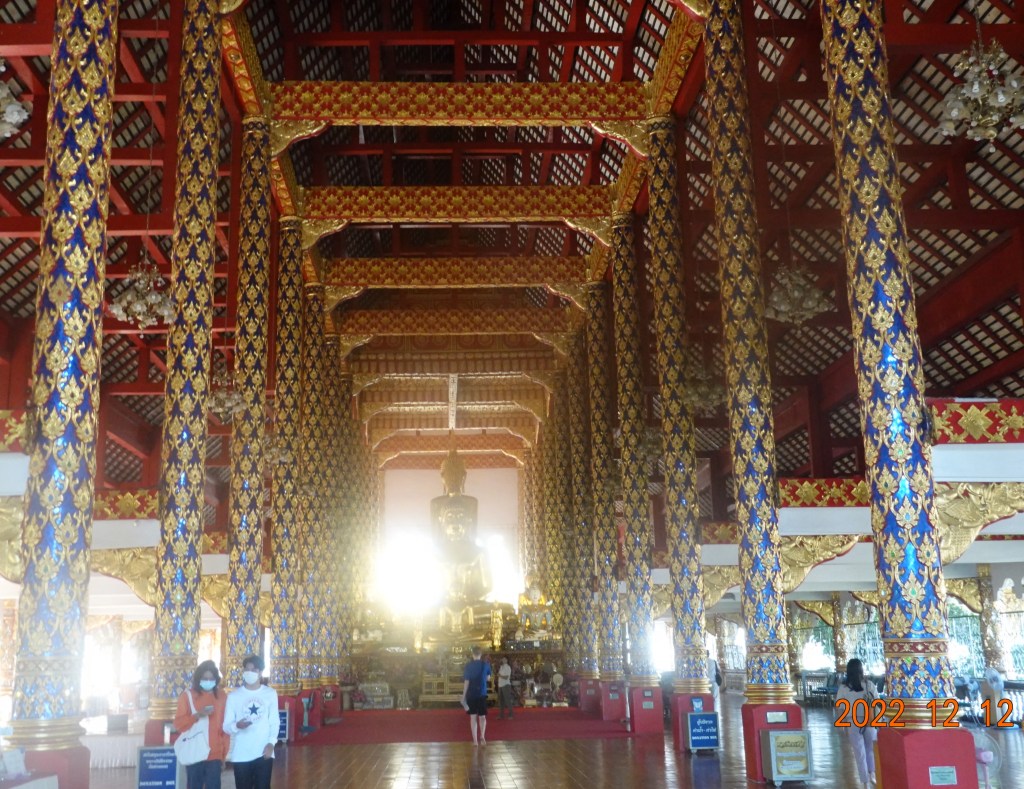
Again, I apologize for the glare caused by the wrong settings on my camera. Hope I have it corrected now. Here is a closer picture of the Buddha statues at the front:
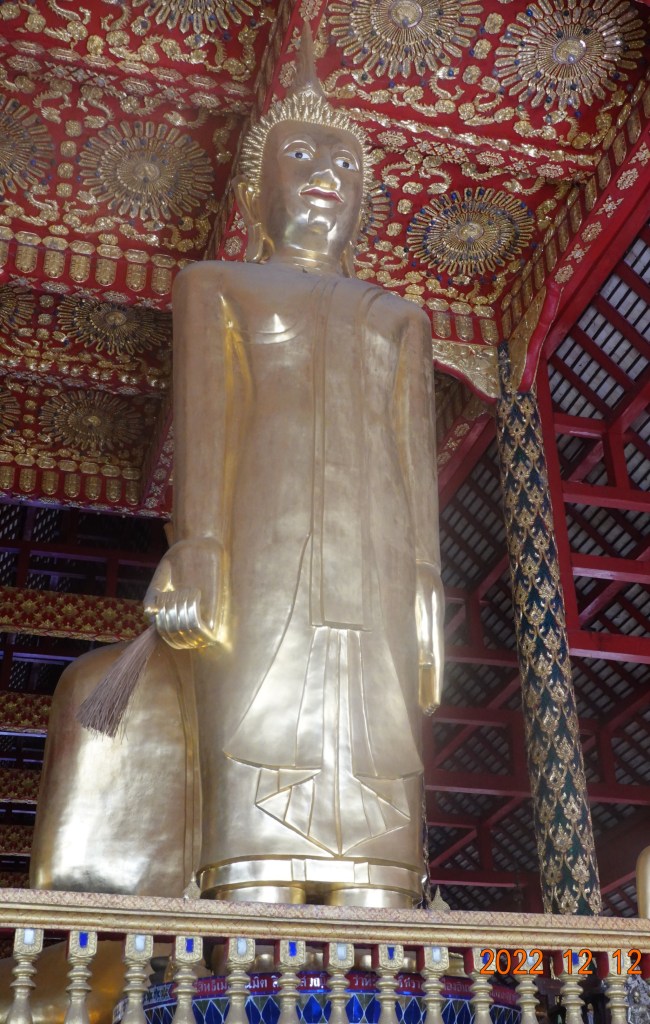
Wat Suan Dok has a deep history and a story which I will give in a future blog post. I walked to the back of the Buddha statues where this very tall standing Buddha looks out to the large gold chedi:
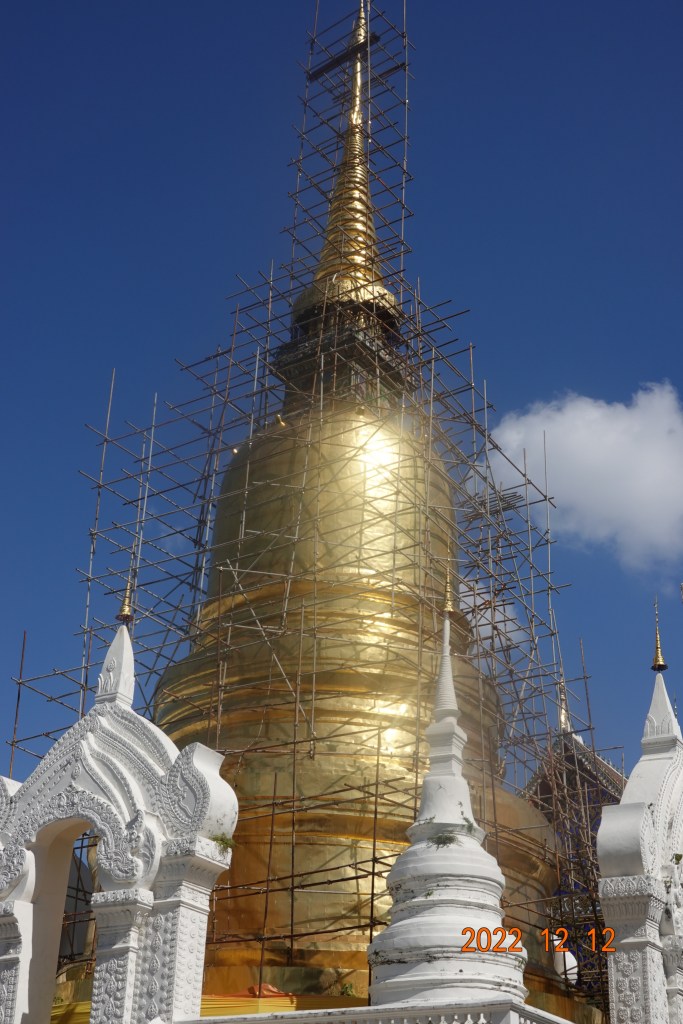
I went outside to see the large gold chedi with scaffolding (the Thais use bamboo for scaffolding) for cleaning or maybe some restoration work:
It has been a long and hot day of hiking. While only about another 3 kilometers to The 3-Sis, I opted to get a ride. Got a shower, rested, and went out for dinner at Airniversary (interesting spelling) near Chiang Mai Gate with John and Rose (Rose is the owner of Wild Rose Yoga). Another good day in Chiang Mai!
Next: Walk to Wat Sri Suphan

 James the Intrepid Pilgrim