Wednesday, December 29, 2021
First Hike to Wat Palad
When I woke early this morning, I had it in my mind to make the hike to Wat Palad for the first time this visit to Chiang Mai. Wat Palad (sometimes spelled Phalad or Pha Lat) is a smaller, less known temple in the jungle about half-way up Doi Suthep, the mountain on which the famous Wat Phra That Doi Suthep is. Before the pandemic, thousands of tourists visited Wat Phra That Doi Suthep and pass by Wat Palad without stopping. This is good in that Wat Palad remains a very peaceful place, but sad because so many people miss its charm.
This being an opportunity to see the landscape along the way, instead of getting a Grab (the equivalent of Uber in Thailand) to the trailhead, I decided to walk the whole way, an energetic endeavor. It is about 6 kilometers (4 miles) to the trailhead, and then about another 40-45 minute hike up to the temple. Part of the trail is quite steep and I always enjoy the hike.
Anniversary Archives of Thailand
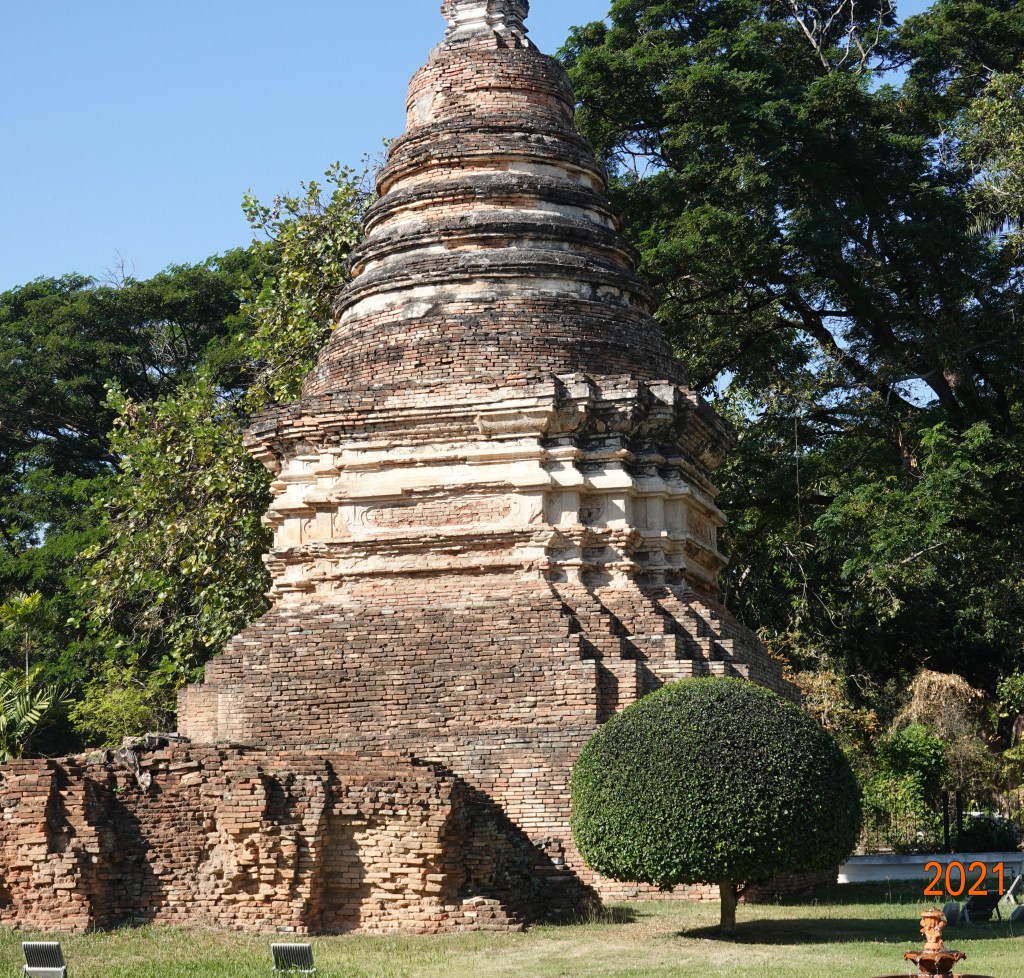
Once I exit the old city at the western gate, Suan Dok Gate, I cross the moat roads and start down Suthep Road. Here is the Anniversary archives of Thailand. I know very little about this place, and could find almost no information in English on line, but I love the look of the old chedi off to the side.
Wat Suan Dok and the Legend
Further down Suthep Road is a very important temple, Wat Suan Dok. I have written about the history of Wat Suan Dok many times. In short, here is the story, copied from a post I made three years ago:
There is a legendary story to the temple at the top of the mountain. In the mid-1300s, a monk in the Sukhothai kingdom named Sumanathera had a dream in which he was to go to Pang Cha and look for a relic. He went there and found a bone, which many claimed to be Gautama Buddha’s shoulder bone. And the legend says that the relic displayed magical powers: it glowed, it was able to vanish, it could move, and it could replicate itself. Sumanathera took the relic to King Dhammaraja, the ruler of Sukhothai. However, when presented to King Dhammaraja, the relic displayed no abnormal characteristics, and the king, doubtful of its authenticity, told Sumanathera to keep the replic.
In 1368, King Nu Naone of Lanna heard of the relic and sent word to Sumanathera to bring him the relic. When presented, the relic showed some of the magical powers, and the king ordered a chedi built at Wat Suan Dok, about 1 kilometer west of the Chiang Mai city wall to house the relic. Suan Dok translates to “flower garden” and at the time, this area to the west of the Chiang Mai city wall was the king’s flower gardens. When the chedi was completed and the relic was to be placed inside, it broke into two pieces. The smaller piece was placed into the chedi at Wat Suan Dok. The larger piece was placed on the back of a royal elephant which was released into the jungle. The elephant (followed by the king and his army on horseback) climbed up the mountain, now known as Doi Suthep, and near the top, stopped, trumpeted three times, and died. King Nu Naone ordered the construction of a temple and a chedi into which to inter the relic.
Thousands of tourists foreign and Thai visit this temple now known as Wat Phra That Doi Suthep every day. Wat Phra That Doi Suthep is a sacred temple to the Thai people and is a Royal Temple of the Second Class. Of the thousands of tourists that travel up the mountain to see Wat Phra That Doi Suthep, only a very few visit Wat Suan Dok, even though it is part of the story.
Wat Suan Dok is one of my many favorite temples in Chiang Mai. Here is the chedi mentioned in the legend Wat Suan Dok:
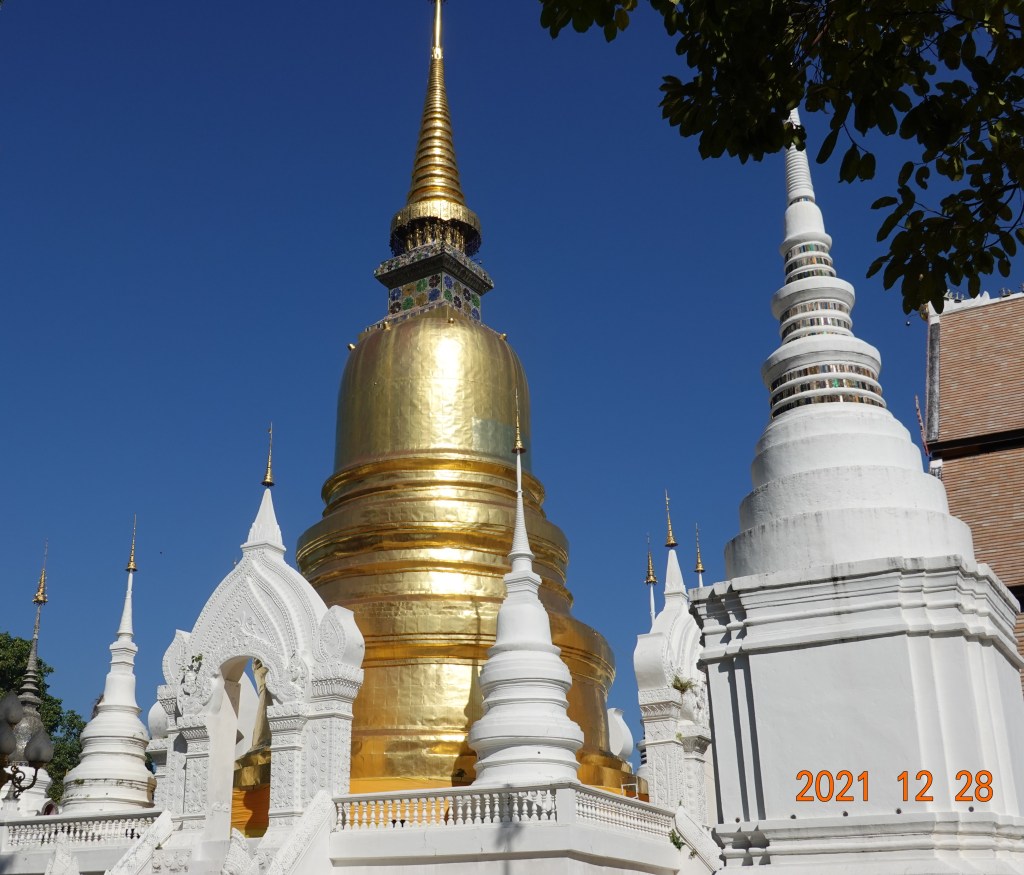
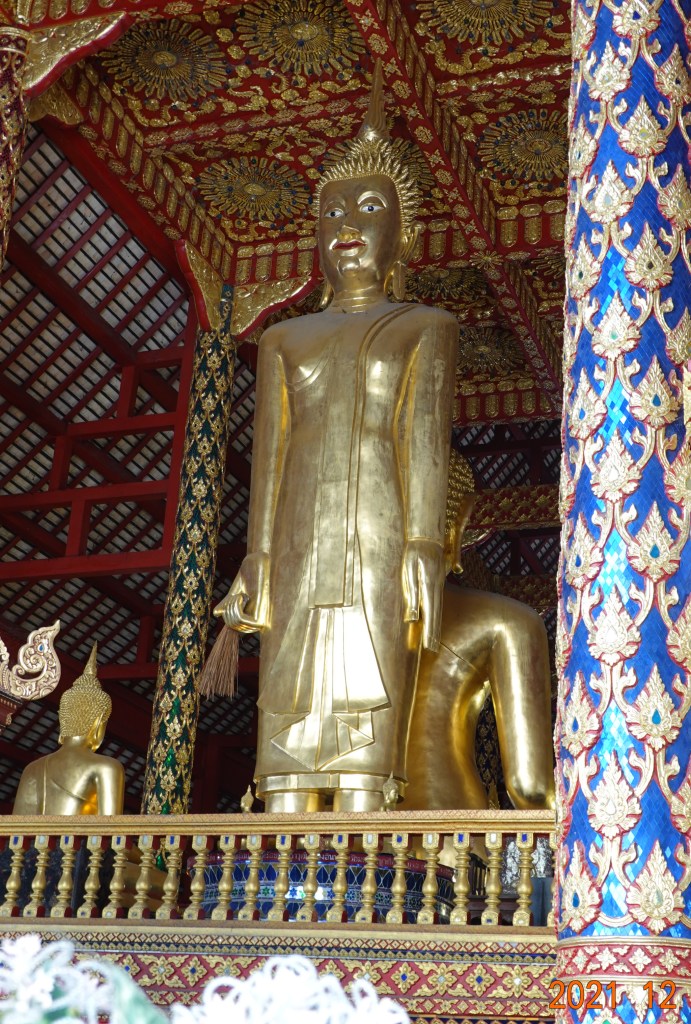
The main viharn (assembly or worship hall) was busy with some event, so I made my way to the back, photographed the chedi, and then got a picture of the large standing Buddha inside the back of the viharn (easily 7-8 meters (20-23 feet) high:
Trail to Wat Palad
It is another 2-3 kilometers from Wat Suan Dok, past Chiang Mai university, and then up the hill road past Wat Fai Hin, past the back entrance to the Chiang Mai Zoo (currently closed), and finally to the trailhead of the trail to Wat Palad. The trail is officially closed. A few people were there waiting for a ride back to town, and told me that many people are just going around the barricade of construction fencing and make the hike.
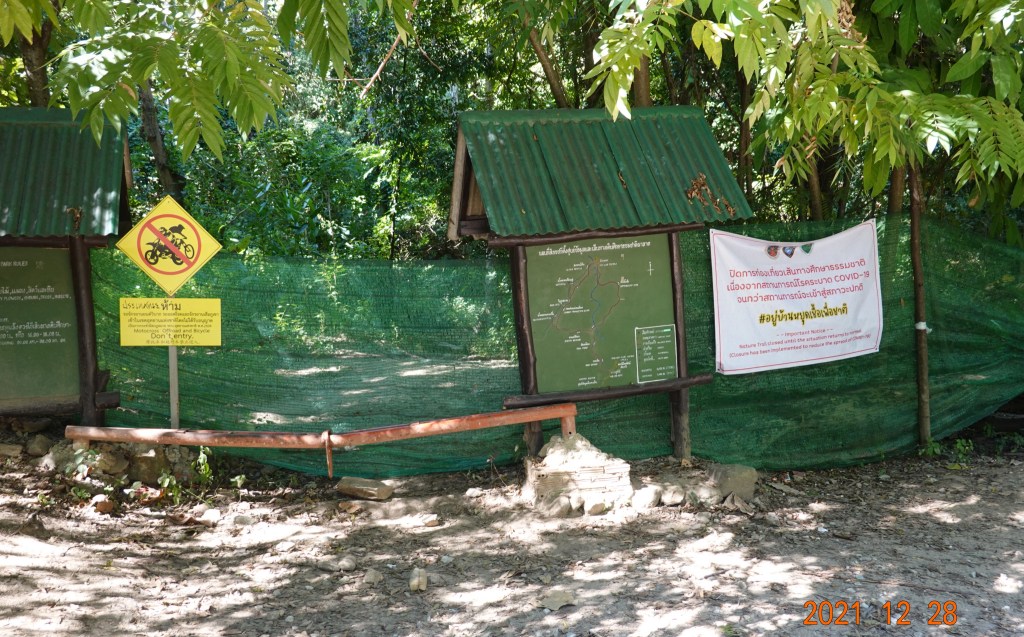
I followed suit after seeing several people do the same, some locals, some foreigners.
The first part of the trail is the steepest, This does not show up well in these photos, but this part of the trail is as steep as climbing stairs, sometimes a little steeper.
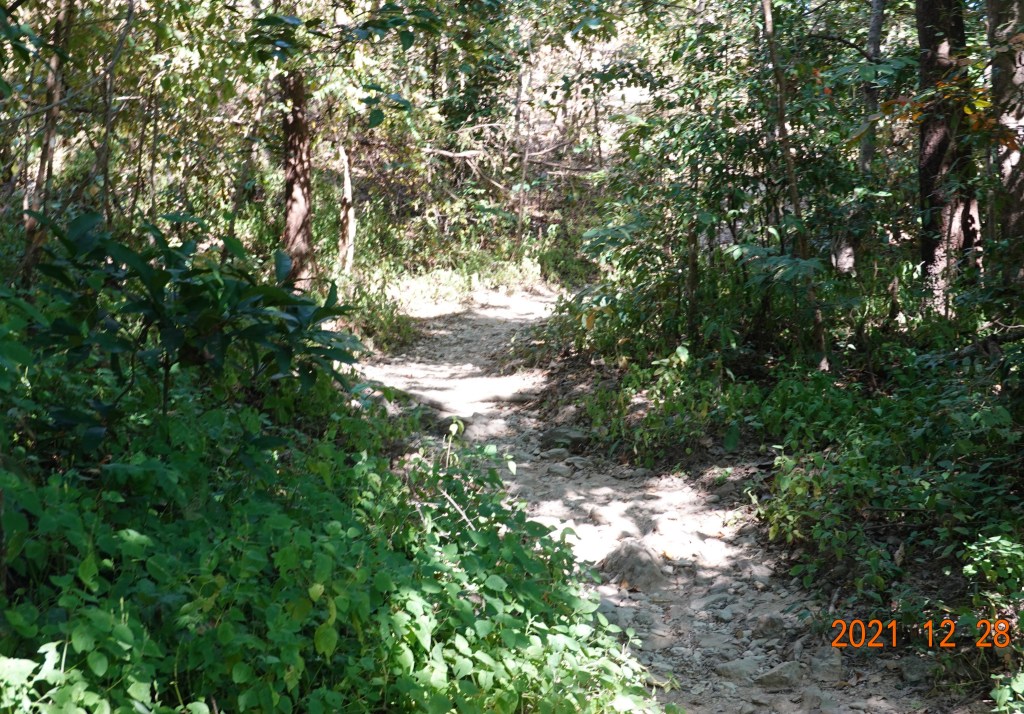
And some of the steep sections are quite rocky and uneven.
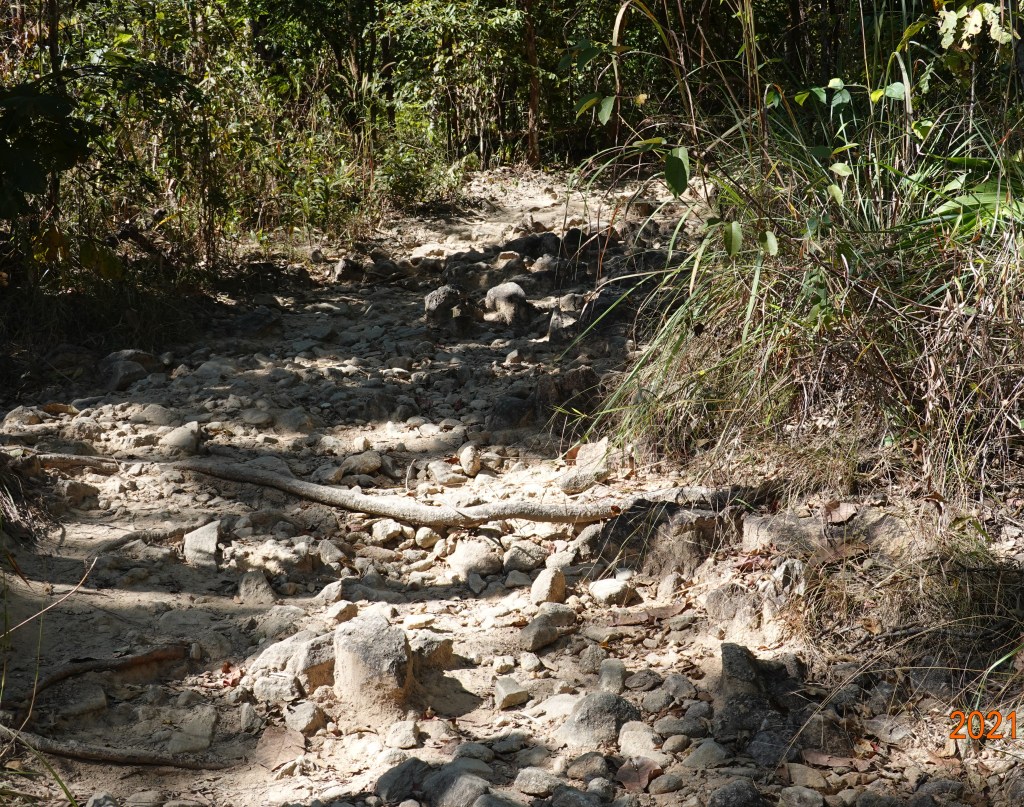
After a little bit of strenuous hiking / climbing, the trail becomes fairly smooth and not as steep. In the shade the temperature dropped a little, making for a pleasant, albeit sweaty hike up to Wat Palad.
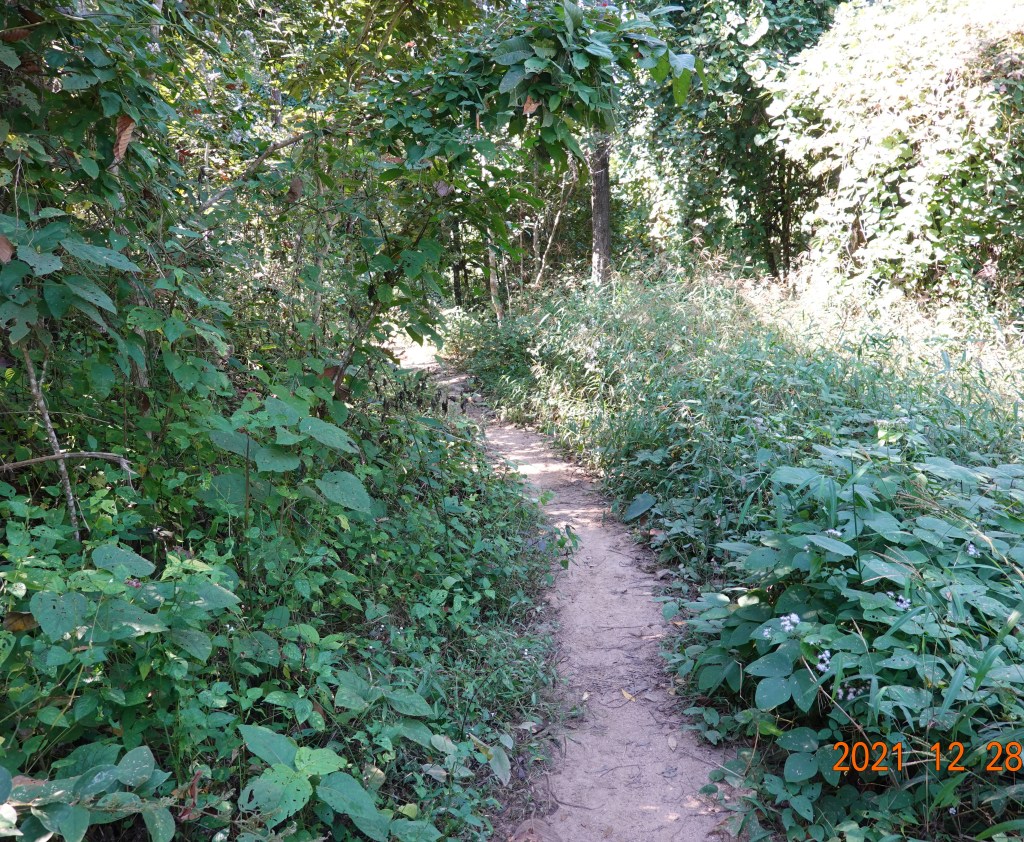
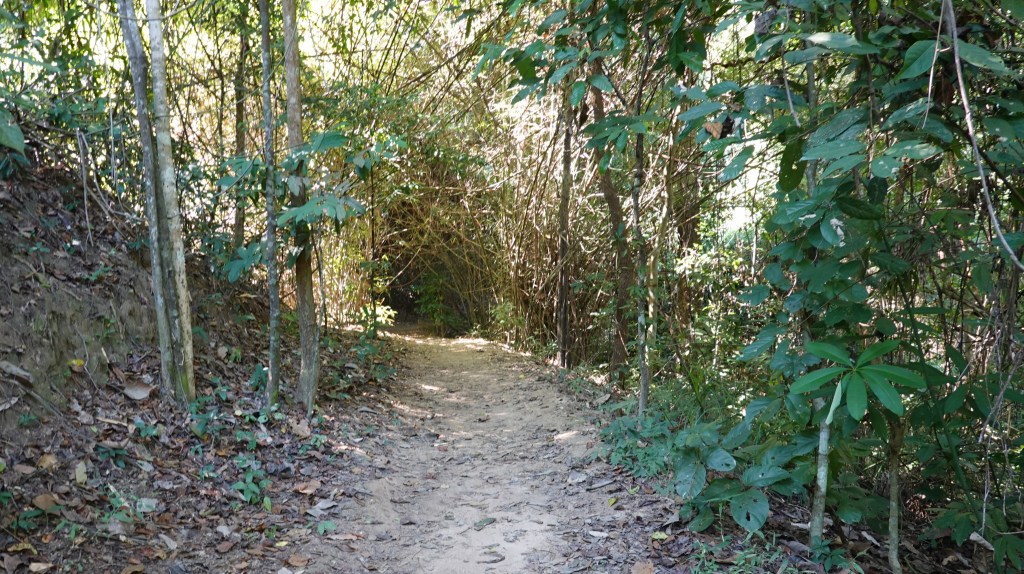
And at times, with the jungle overgrowth, it was as if entering a tunnel:
Wat Palad
Soon I was entering the grounds of Wat Palad. There are a good number of people here today (maybe 15-20), seemingly more than in most past visits. This is a break for many between Christmas and New Year’s, so it is likely to become a bit quieter next week and after. My first stop was this viharn that was under renovation the last two times I visited. I do not know much about is, but before the renovation, it was dark and gloomy inside, not inviting at all. The outside is fairly stark.
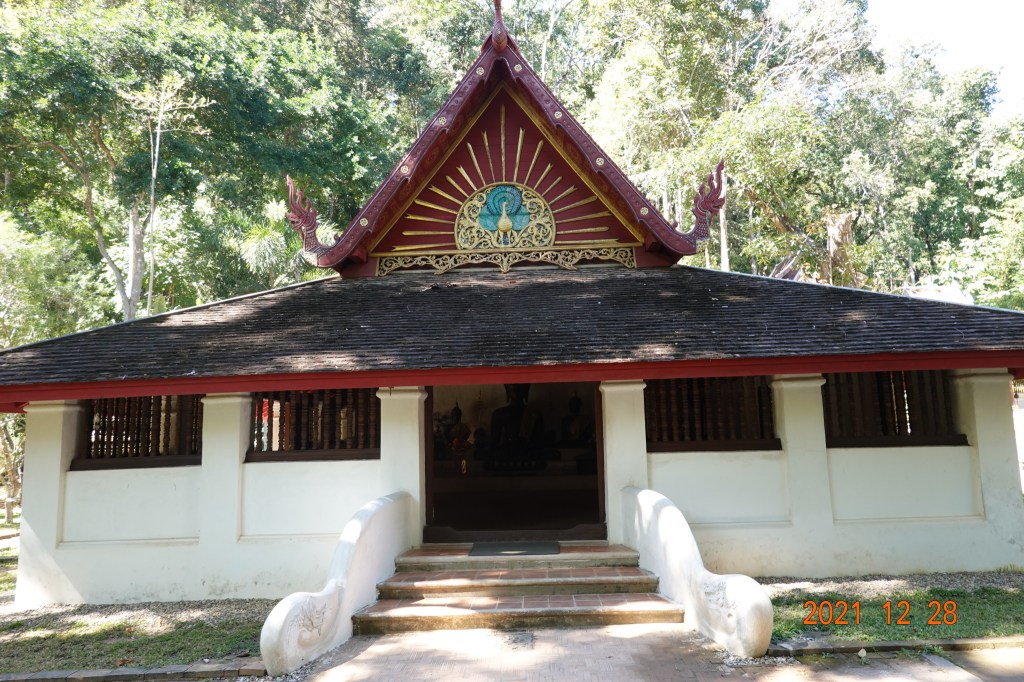
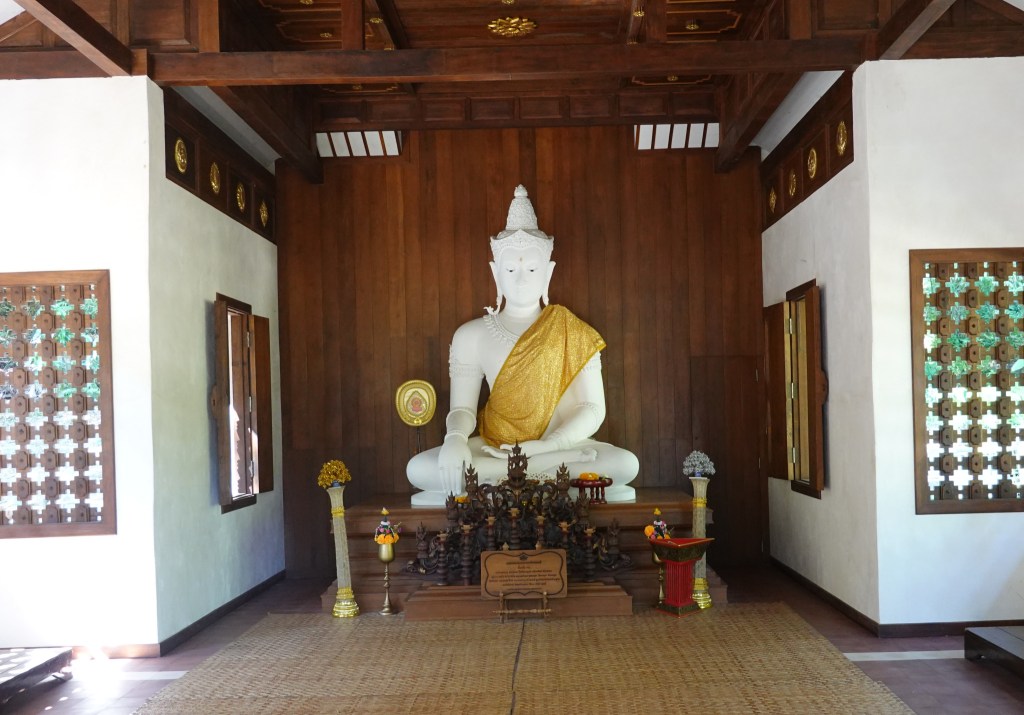
The renovated inside is much nicer than in the past, still very simple, almost stark in appearance.
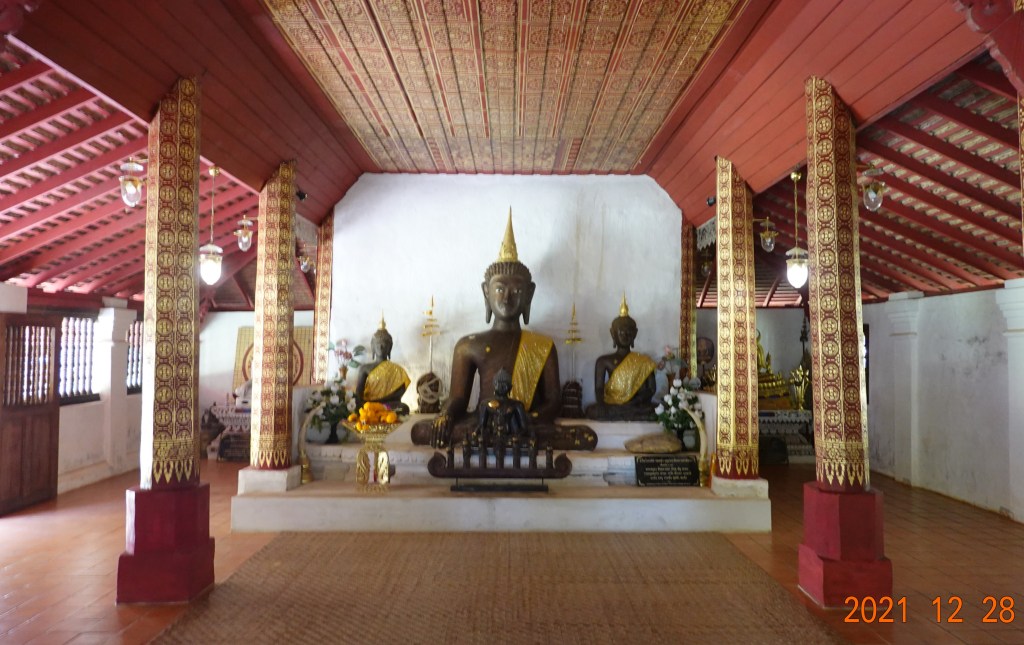
Walking up the hill a bit to where the open-air viharn was, I saw that this whole area has been changed significantly over the past two years. Replacing the open-air viharn is a large rectangular three-sided open-air structure, about 60 meters on each of the three sides with a Buddha in the center and a walkway along the sides. I do not know what these are called, and I have only seen this type of structure a few times. This picture shows two of the sides. The Buddha image in the picture is on the right where the double roof is. The more intricate roof on the left is an entrance to another Buddha statue.
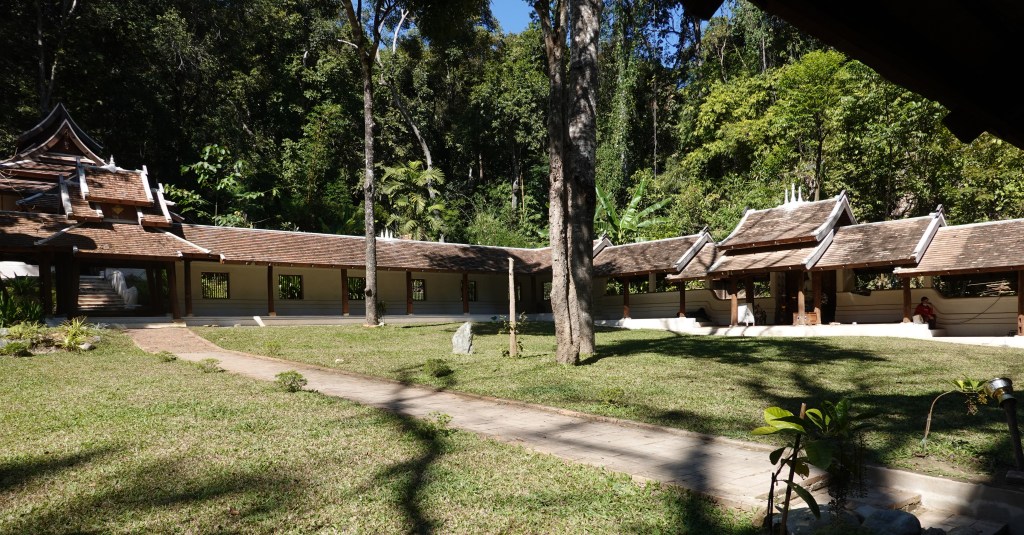
Here is a closer, front view of the Buddha in this new structure.
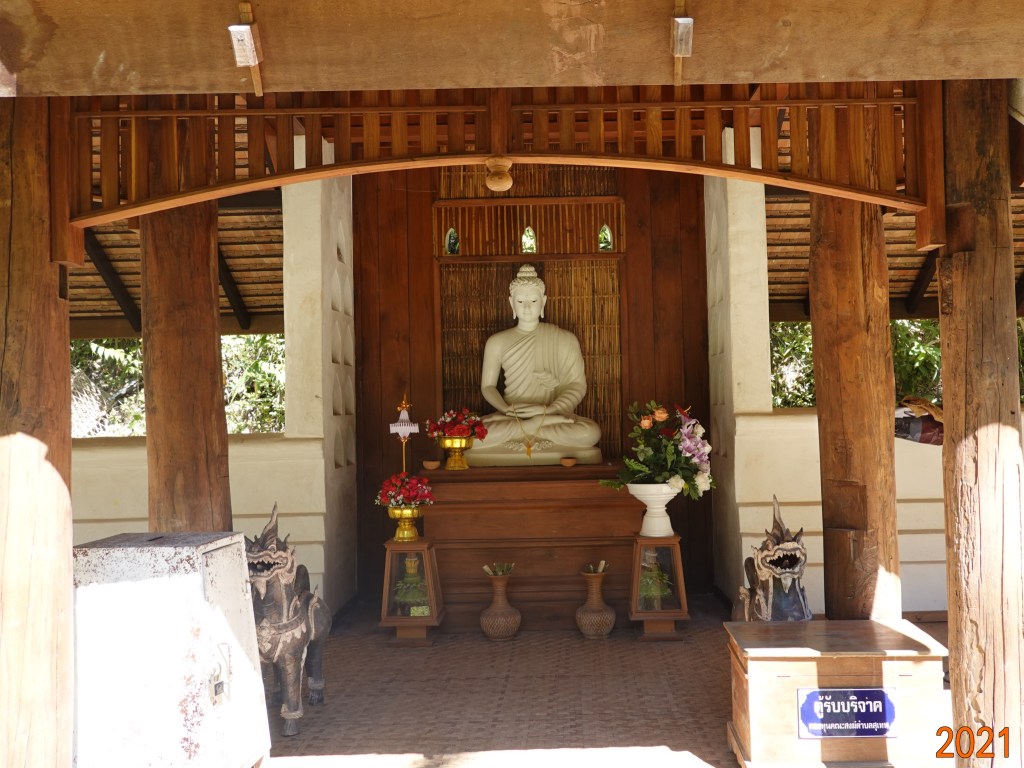
Then going through the entrance to the left one sees this Buddha statue:
After wandering around a bit and talking with some people, I headed down the trail and back into town. After arriving back at See You Soon, I had been gone for 4-1/2 hours. I was tired, and hot, but after a shower and a rest, I thought a visit to another favorite temple before dinner would be good, so I headed up to Wat Lok Molee. Quoting from a previous post:
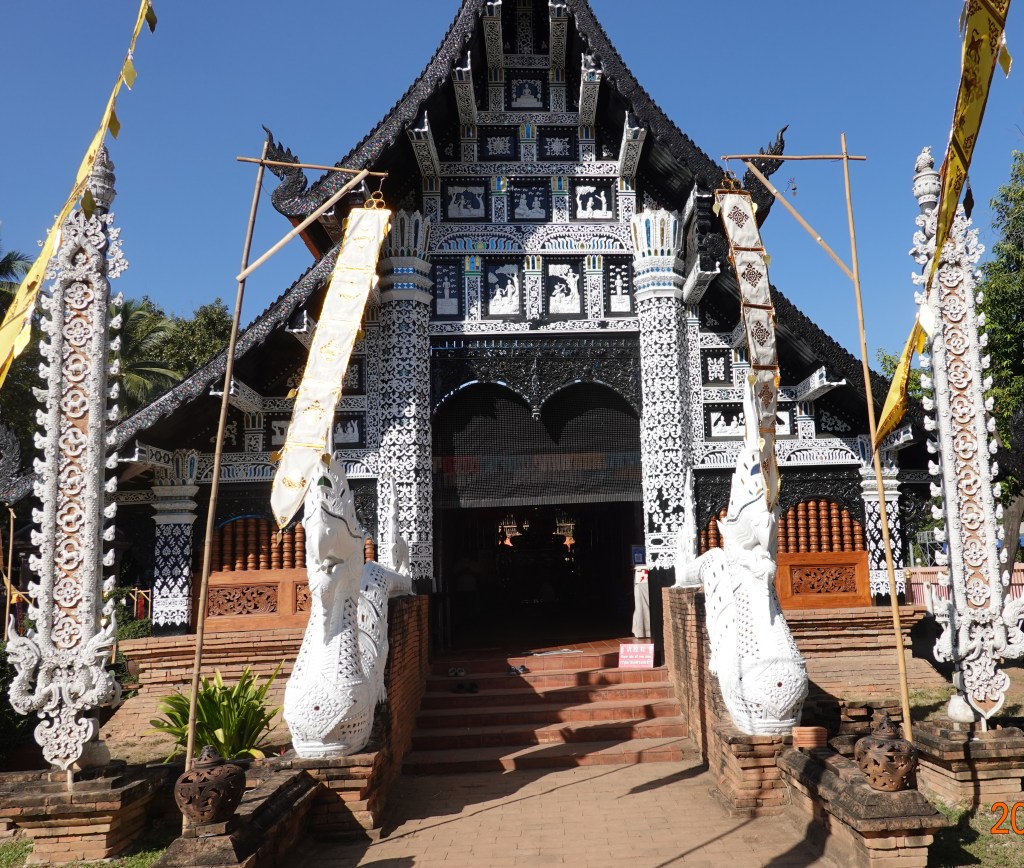
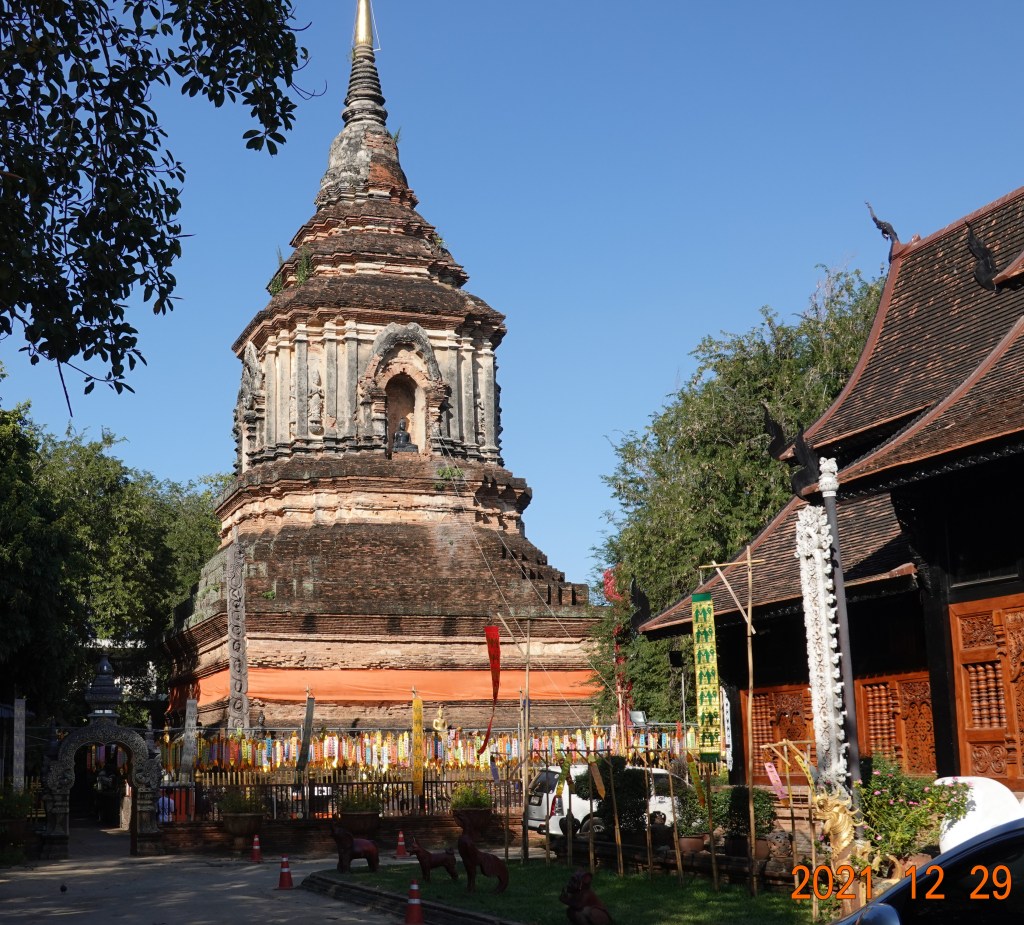
This is another temple name where the translation is open to interpretation. Wat Lok Molee is sometimes spelled Wat Lok Moli. The date when the temple was originally built is not known, but it was already established in the 14th century as records show that the sixth king of the Menrai Dynasty, King Kuena, invited Burmese monks to come, live in the temple and spread the teachings of the Buddha. Wat Lok Molee was known as a royal temple as members of the Mengrai Dynasty, who ruled the Lanna kingdom from 1292 to 1598, maintained it during their rule. The tall chedi seen today dates from the 1520s and was built by King Ket to house the ashes of members of the Mengrai Dynasty.
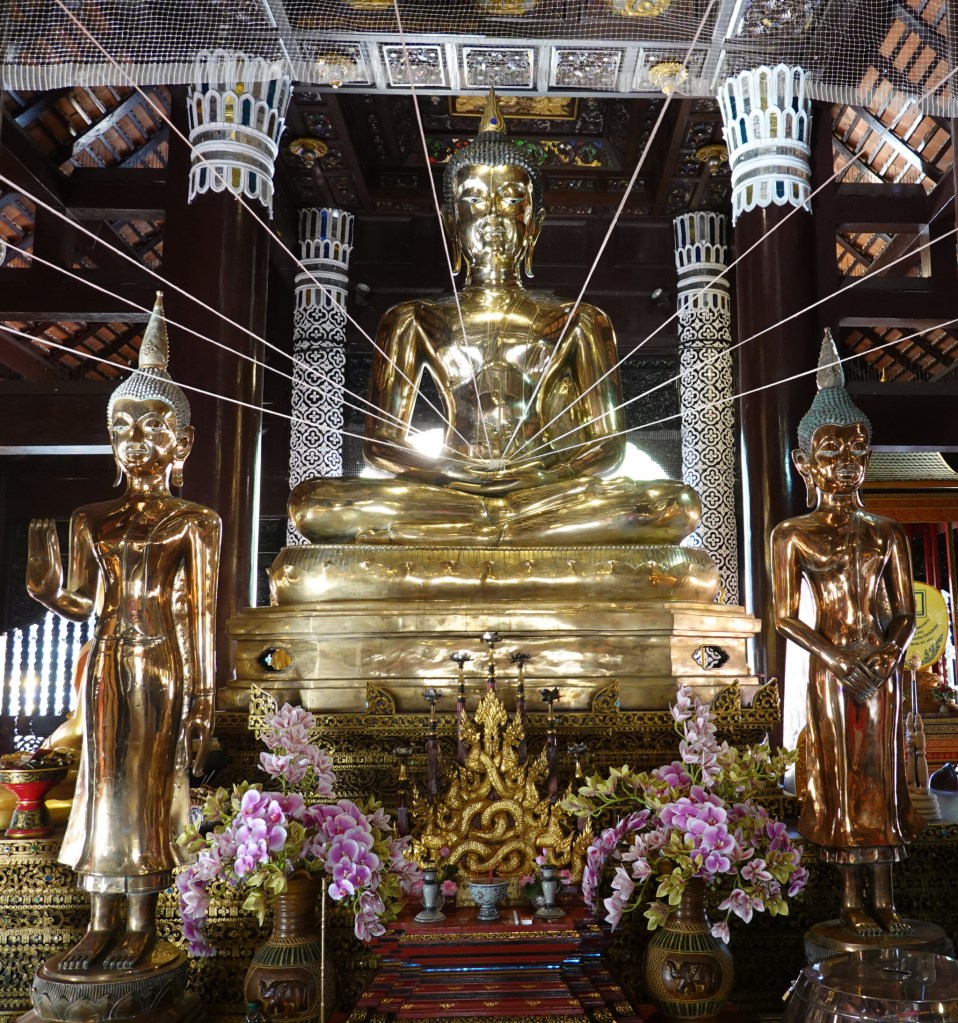
The inside of the Wat Lok Molee viharn is dark and rich teak with a striking large gold seated Buddha at the head.
And the chedi at the back is a favorite of mine, tall and majestic:
Dinner at La Fontana
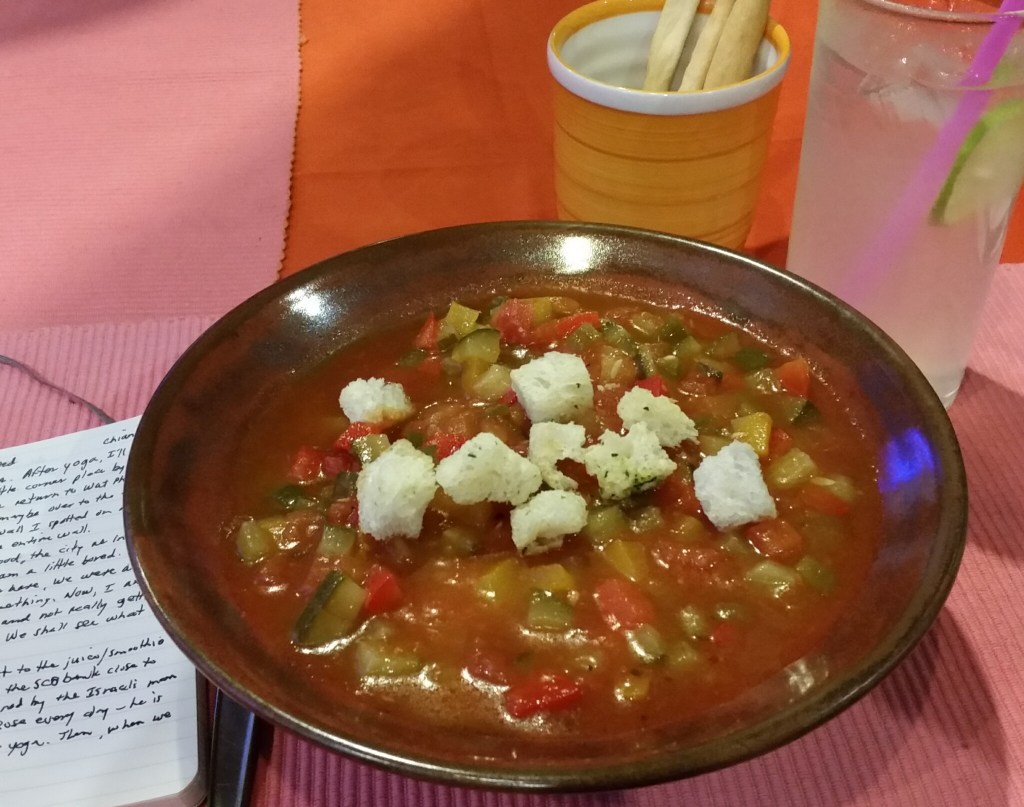
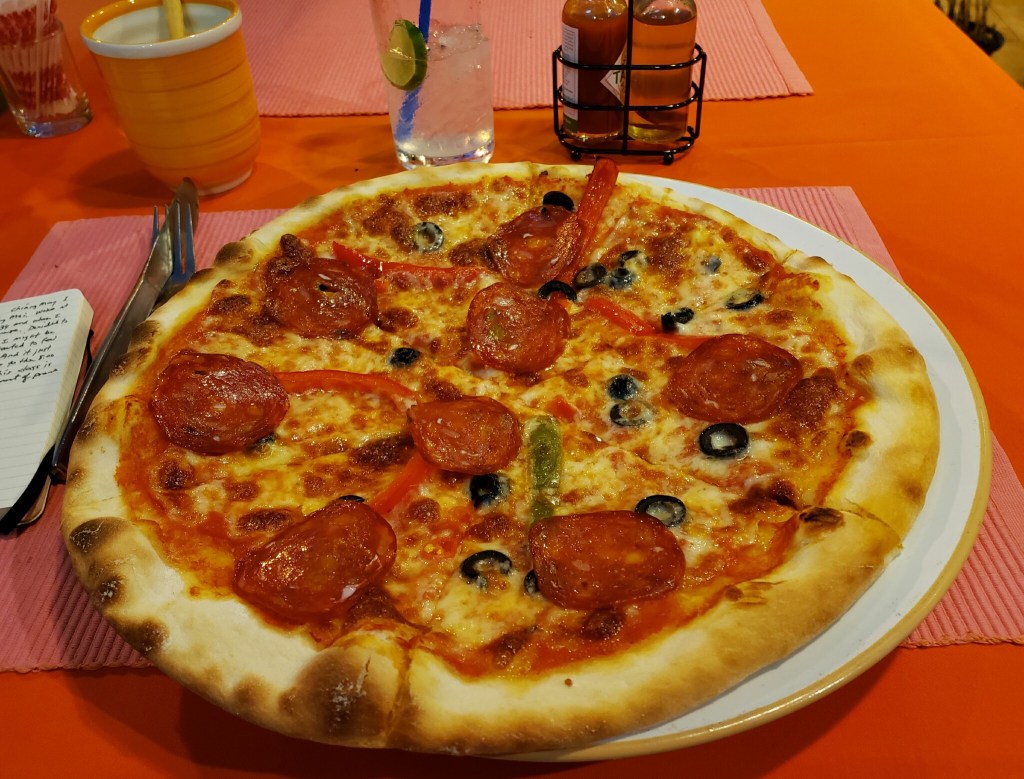
After a very energetic day, I felt that I earned a treat for dinner so I headed over to La Fontana for gazpacho and a pizza. I was so hungry I just started eating, forgetting to take pictures. But here are a couple pictures of essentially the same meal in past years:
No longer hungry, I ended another interesting and nice day in Chiang Mai.
Next: More exploring the old city.

 James the Intrepid Pilgrim
Such a scofflaw!
Btw, Encinitas meditation garden has reopened.
LikeLike