Sunday 19 January, 2020
A Return to Wat Jed Yod
After another energetic and invigorating yoga practice, I thought I might return to one of my favorite temples, Wat Jed Yod. I have not been to Wat Jed Yod for three years. This temple is not within reasonable walking distance from the old city, so I got a ride there.
Wat Jed Yod
Wat Jed Yod (sometimes spelled Chet Yot or Jet Yod) is a temple that dates back to 1455 when King Tilokarat planted a bhodi tree on the grounds and then established a temple. He ordered that the design of the main temple be copied from the Mahabodhi temple in Northern India where the Buddha achieved enlightenment under a bhodi tree. By 1476 he had established a large sanctuary in this monastery for the commemorating of 2000 years of Buddhism. The following year the 8th Buddhist World Council was held at Wat Jed Yod.

The grounds have changed little since the temple was established, and today is a very serene, park-like setting, with many old trees. Surprisingly, while there are some tourists, there are never many, and I feel as if I have much of the temple grounds to myself.
Arriving by car or taxi, one no longer enters through the old, original entrance. Here is a picture of the old entrance.
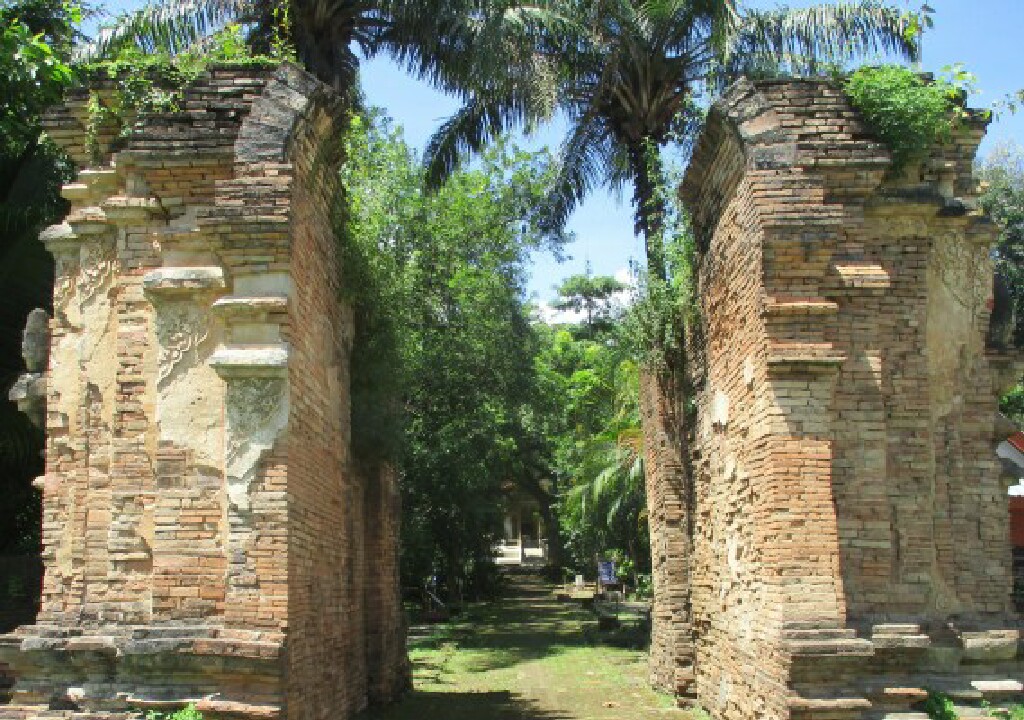
The thickness suggests that this was an entrance through a wall that may have surrounded much of the temple grounds. Today, this is the only real evidence of that wall that I could find as I walked around the grounds.
Wat Jed Yod Old Viharn
The name Wat Jed Yod is for the seven spires on the main, windowless viharn (worship hall). In Thai, jed (or chet) is “seven,” and yod (or yot) is “spire.” In the picture below some of the seven spires are visible.
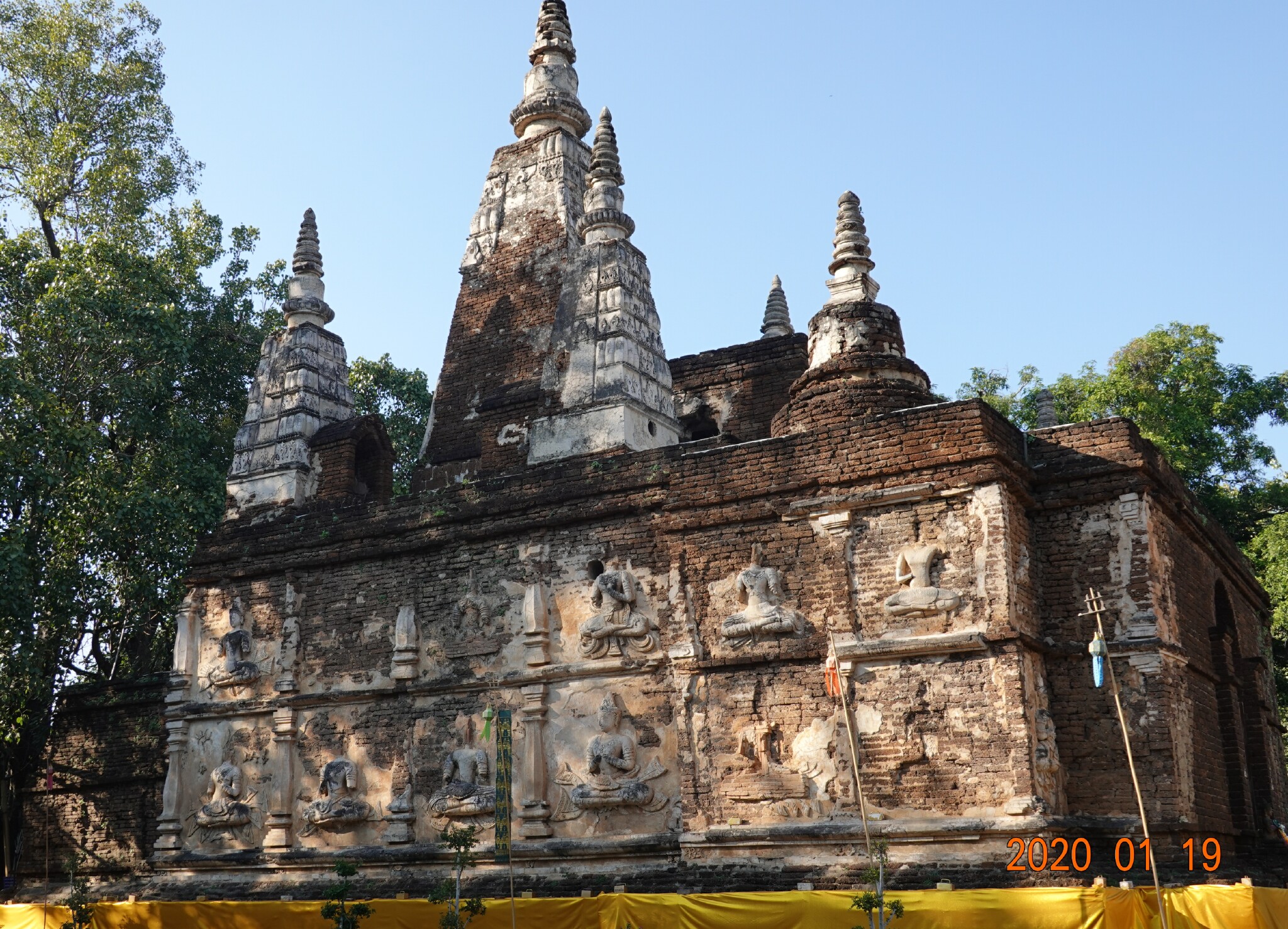
On the sides of the old viharn are thewada carved in stucco (thewada are “angelic beings that live in the heavenly realm,” or angels). These are some of my favorite thewada depictions, partly because I love the old carvings, and partly because of the artistry. Thewada have no gender, and depending on the design and the artist sometimes look very male, and sometimes very female.

The inside of the main viharn is very small, with space for only a few people to worship at a time.
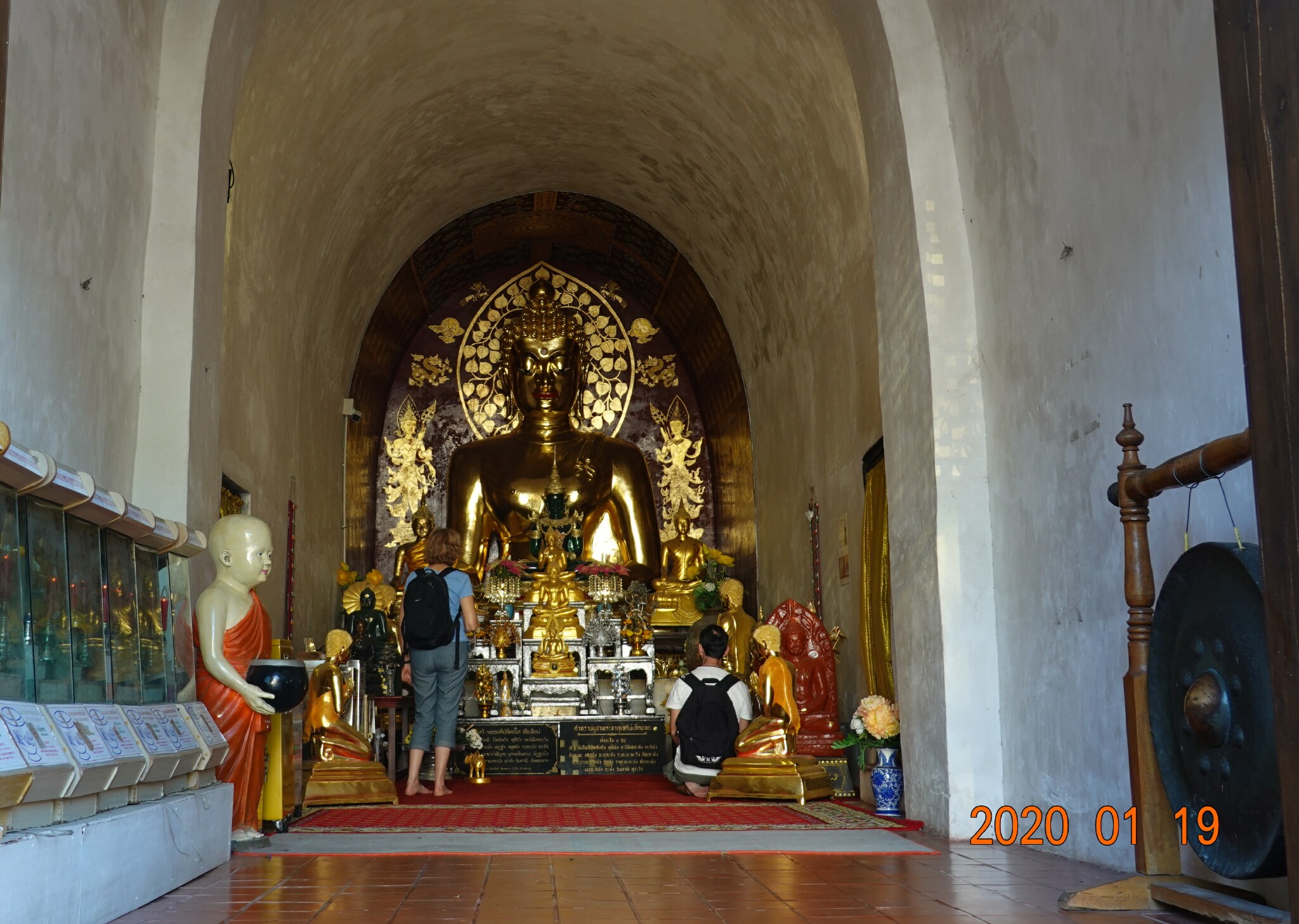
At the back of the viharn, is another large, gold Buddha image, very much like that inside. Oddly, there is no chedi at the back of the old vihan, and no chedi at the back of the modern viharn, either.
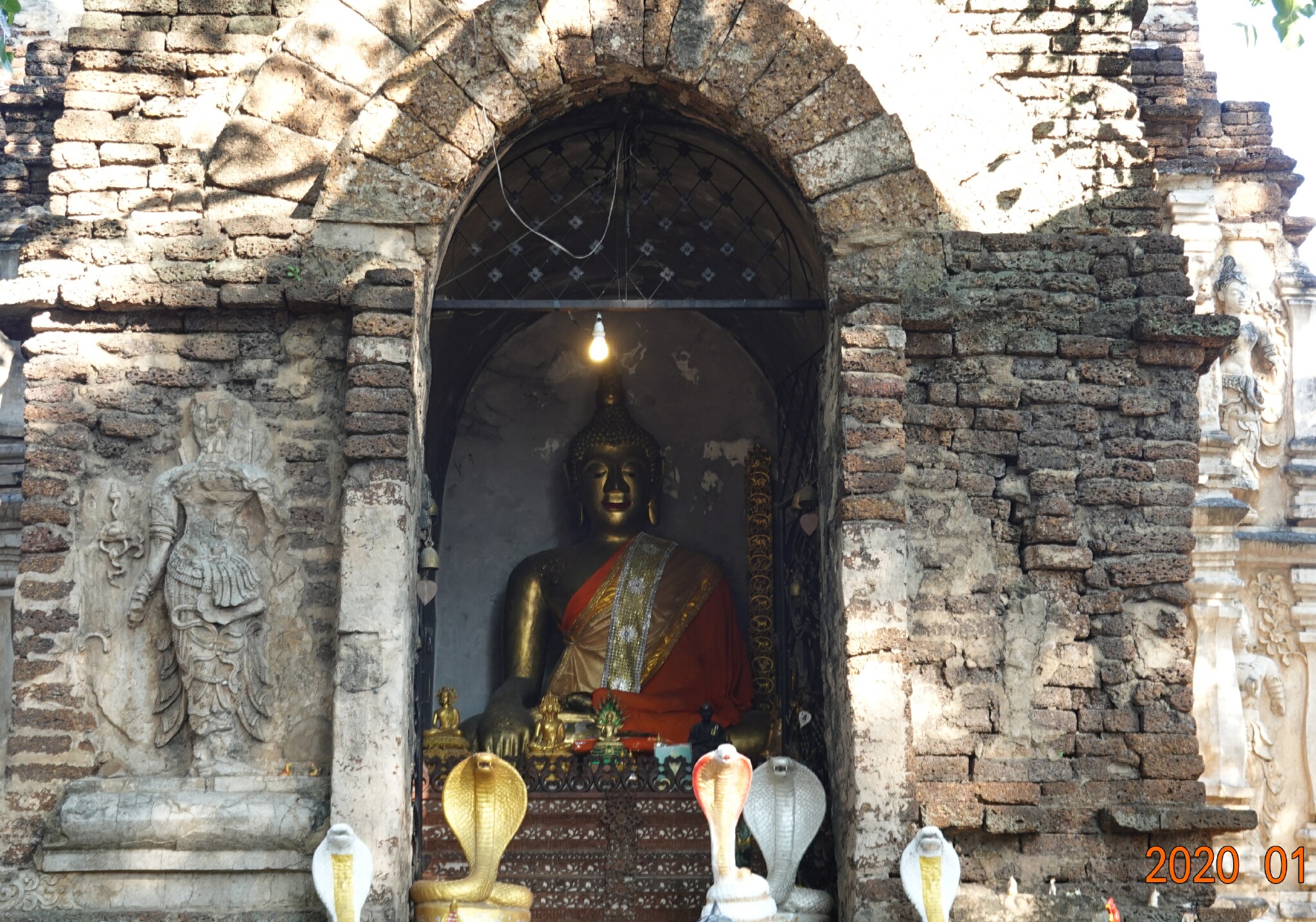
Notice the many statues of the cobra snake. There are twelve temples in Thailand each representing an animal of the zodiac. Many Thai people try to visit or make pilgrimage to the temple associated with their birth year zodiac animal. Wat Jed Yod is the temple of the small snake (in Thailand, they have the “great snake” which we call the dragon, and then the “small snake” which we call the snake).
Wat Jed Yod Modern Viharn
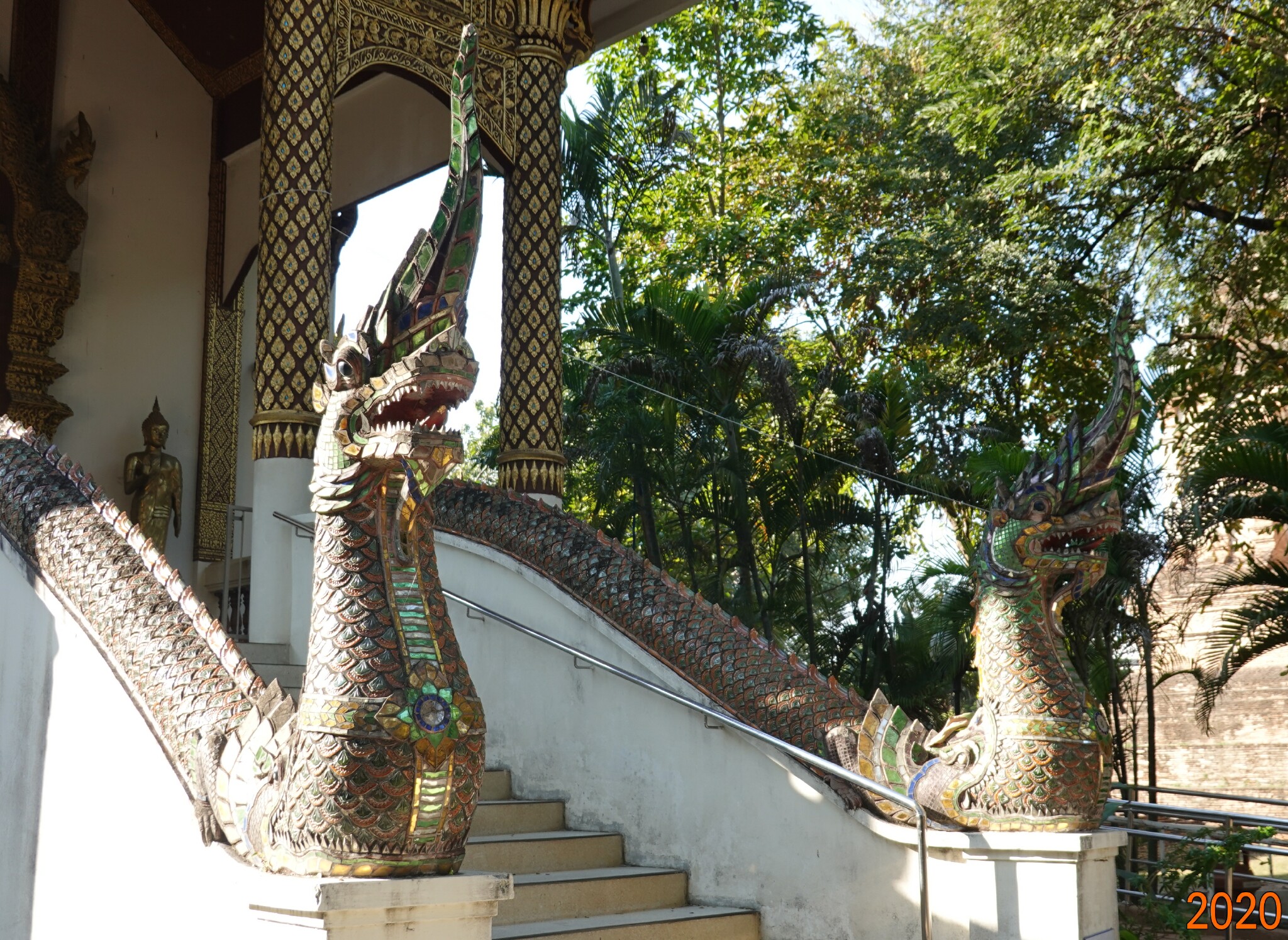
The more modern viharn at Wat Jed Yod dates from the 19th century, and is very much in the Lanna style with the nagas on the banisters of the entrance stairway, and a roof line typical of Lanna-style temples.
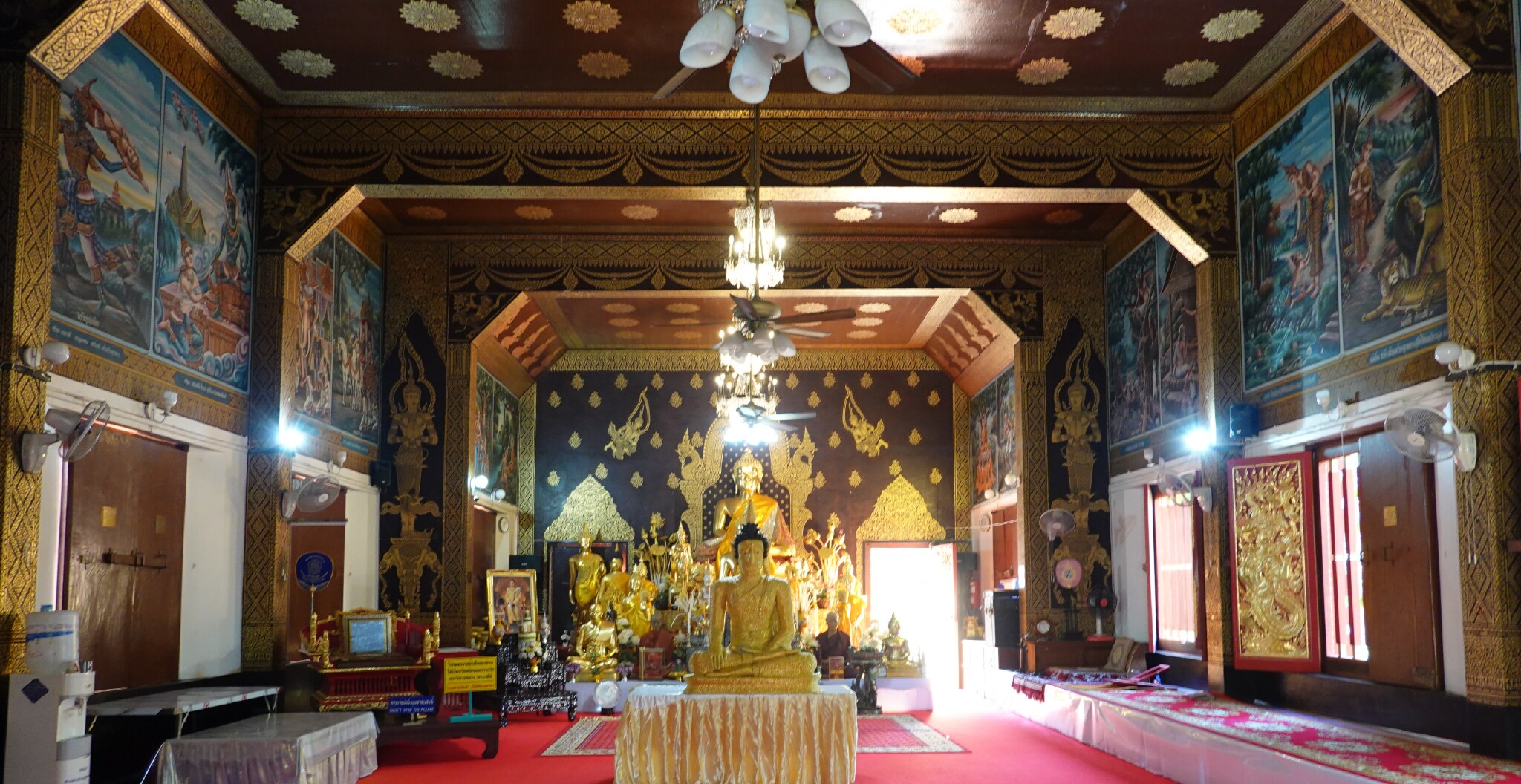
Inside this modern viharn, the style is very austere, and there are no columns. It is colorful, but seems somehow stark in comparison to other more traditionally styled viharn.
Wat Jed Yod Chedis
There are several chedis at Wat Jed Yod, none of them directly behind the two viharn, as is the typical style for temples in northern Thailand (really all of Thailand).
Tilokarat Chedi
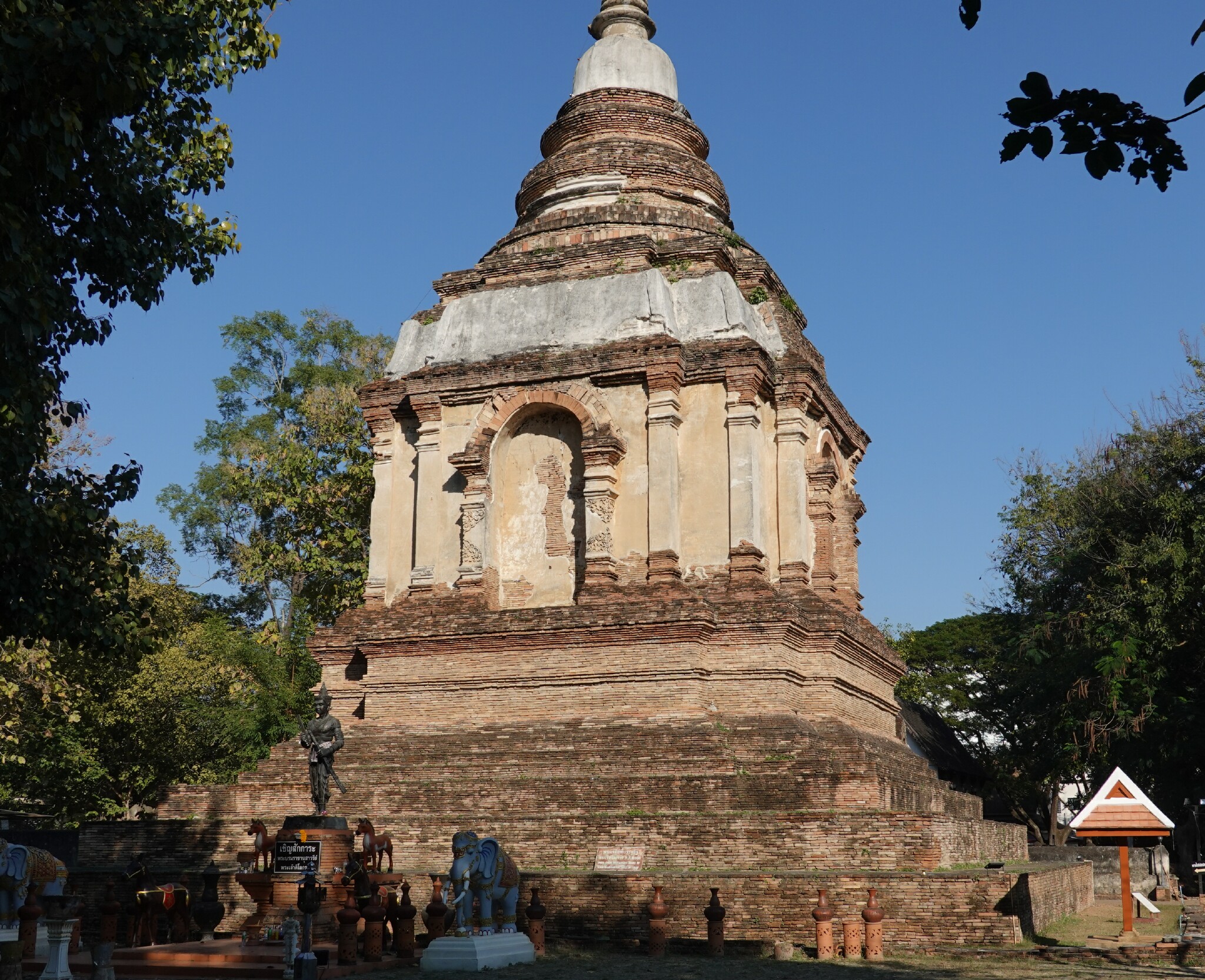
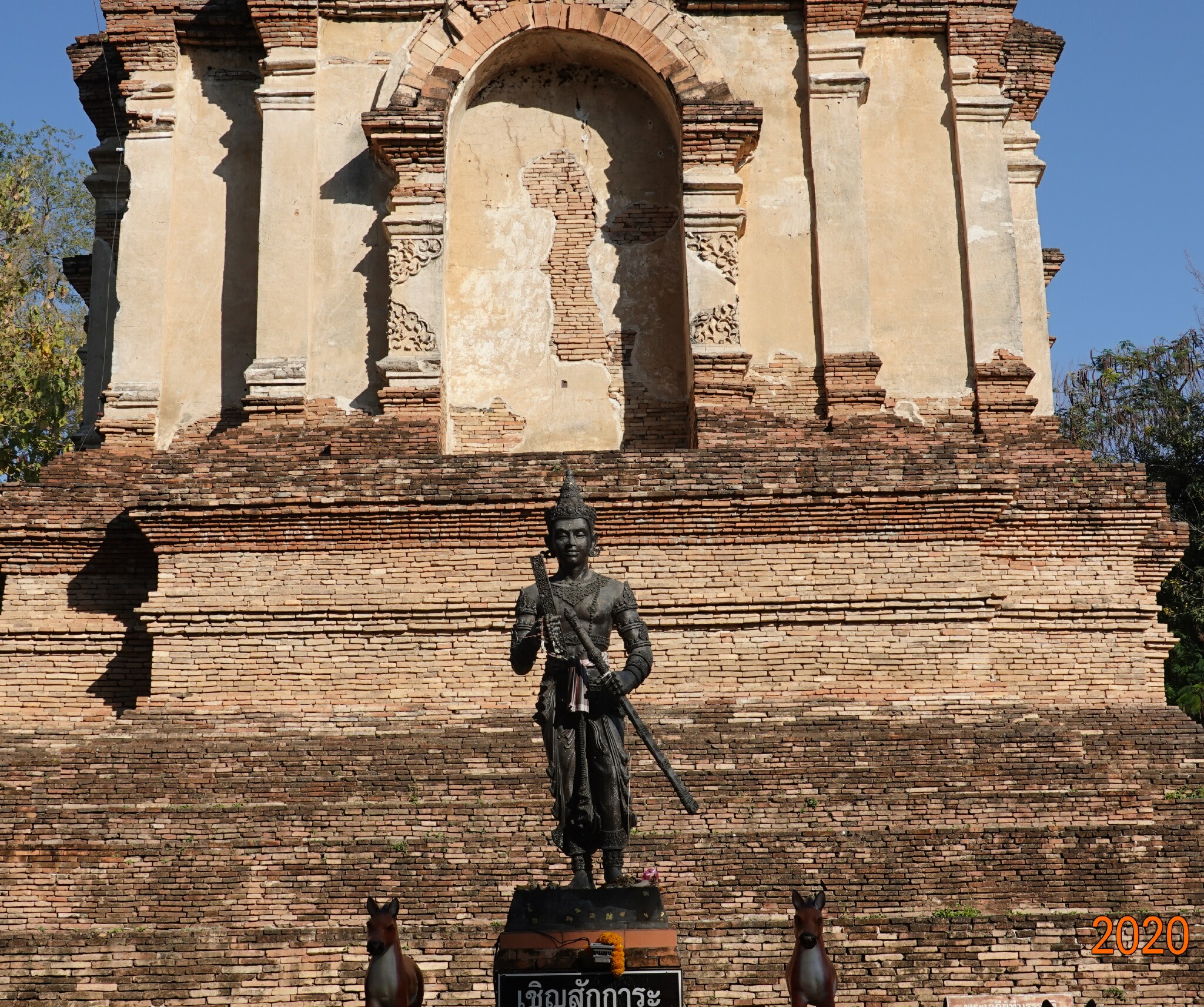
The largest and most important chedi is the Tilokarat Chedi, is named for King Tilokarat, who founded the temple, and in which his ashes are interred. King Tilokarat ruled the Lanna Kingdom from 1441 until his death in 1487. The chedi is in the the Lanna style and typical of this era.
And here is a closer view of the statue of King Tilokarat in front of the chedi in which his ashes rest.
Animisa Chedi
The Animisa chedi at Wat Jed Yod is part of the original temple, dating back to the 1450s. On each of the six sides is a niche for housing a Buddhist image, although all are now empty.

Ku Kanchan Chedi
The Ku Kanchan Chedi is behind the ubosot and was built in the reign of King Mueangkaeo who ruled Chiang Mai from 1495 to 1525. The top section is open and houses a Buddha image visible from all four sides.

Here is a view of the opening and the Buddha image:

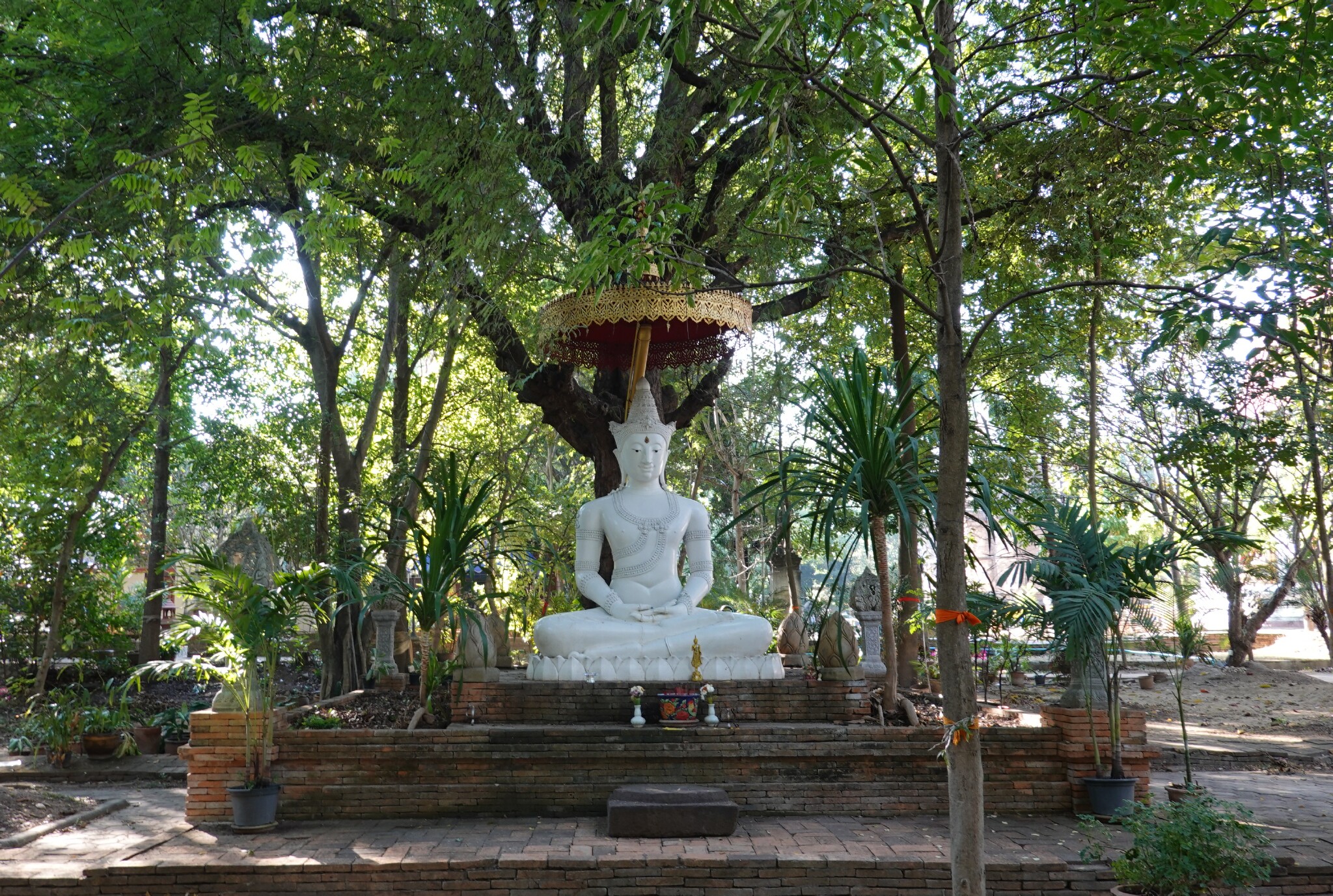
The grounds of Wat Jed Yod are almost like a park with many trees and a quiet, serene quality. In the trees between the modern viharn and the old entrance is this Buddha statue in a small worship area.
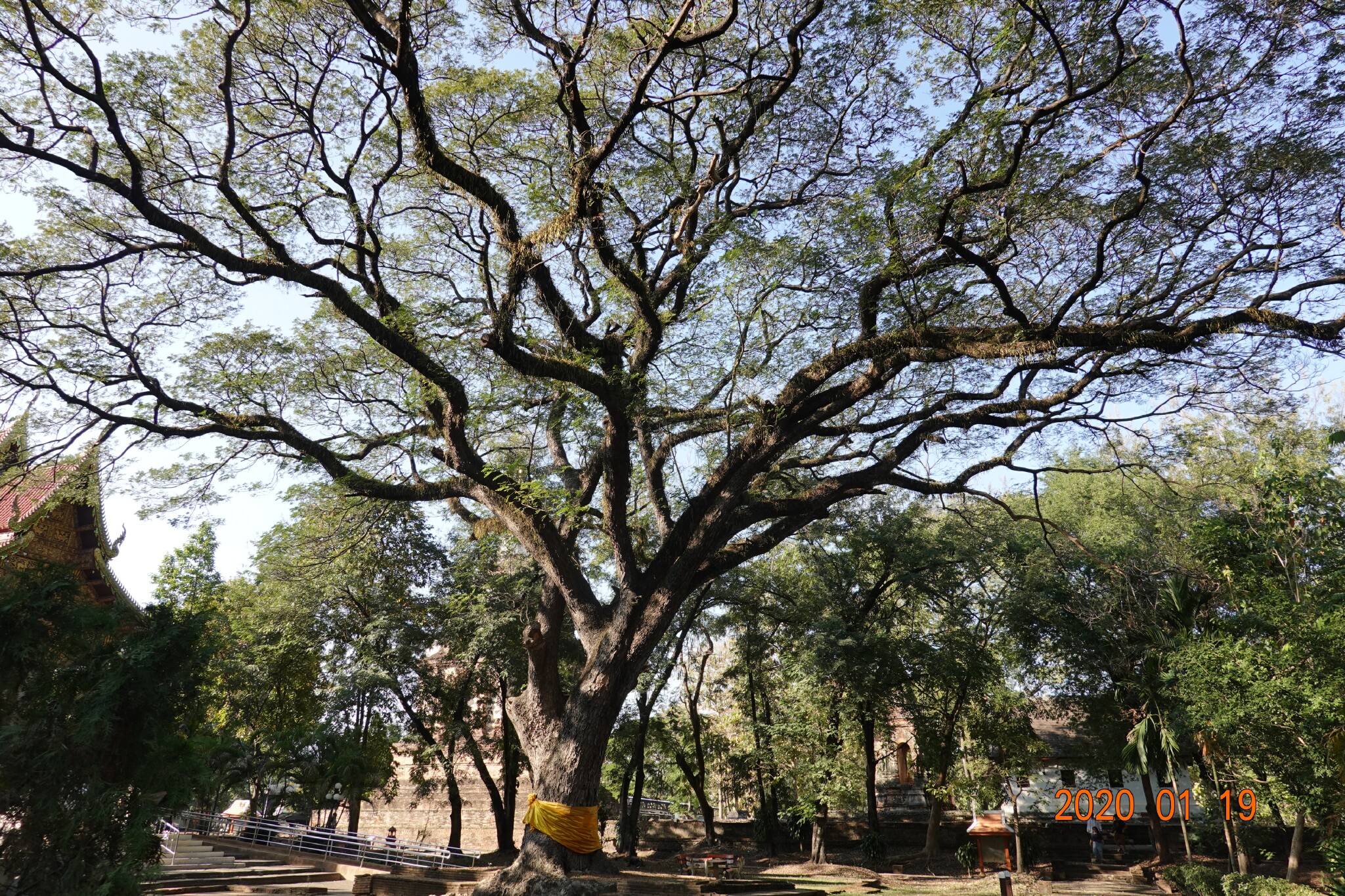
And I noticed this very beautiful and very large old tree:
A peaceful afternoon wandering around Wat Jed Yod. I always enjoy my time here, deep in the history of the Chiang Mai area.
Next: Wat Lok Molee

 James the Intrepid Pilgrim