Saturday 18 January, 2020
Hiking up to Wat Phra That Doi Suthep
I have made the hike to Wat Phalad (also spelled Wat Palad or Wat Pha Lat) and on up to Wat Phra That Doi Suthep more than a dozen times in the past. And some of those hikes have been reported in previous entries in this blog. After yoga practice, realizing I had free time with no appointments, and no other commitments on my time, I decided to make the long hike to Wat Phalad, continuing up the steeper section to Wat Phra That Doi Suthep.
Today is a bit warm, and humid, and I headed out carrying a small backpack with some snacks, water, and a electrolyte-replacement drink. The first couple of drivers I spoke to could not figure out where I wanted to go, and my typical landmark, Wat Fai Hin, was showing up between Suan Dok Gate and Wat Suan Dok on Google Maps on the driver’s mobile phones. This is not the temple I know. I gave up, and started walking – it is about 3 kilometers or more to the trail head. Found another driver who knew the temple to which I wanted to go…maybe it is not called Wat Fai Hin anymore, but he knew it. (There are no signs in English at the temple I have always called Wat Fai Hin.) I typically use this as a landmark because the start of the trail is not on maps, and few drivers know of it. The trail head is only about 500 meters from the temple I always called Wat Fai Hin.
The Monk’s Trail to Wat Palad
The trail to Wat Phalad and on up the mountain to Wat Phra That Doi Suthep is often called the Monk’s Trail. Before motorized vehicles were allowed to go up the mountain, monks and other people made the pilgrimage to Wat Phra That Doi Suthep on foot. It is said that Wat Phalad was a resting point, being a little short of half-way from what is now Chiang Mai University to Wat Phra That Doi Suthep.
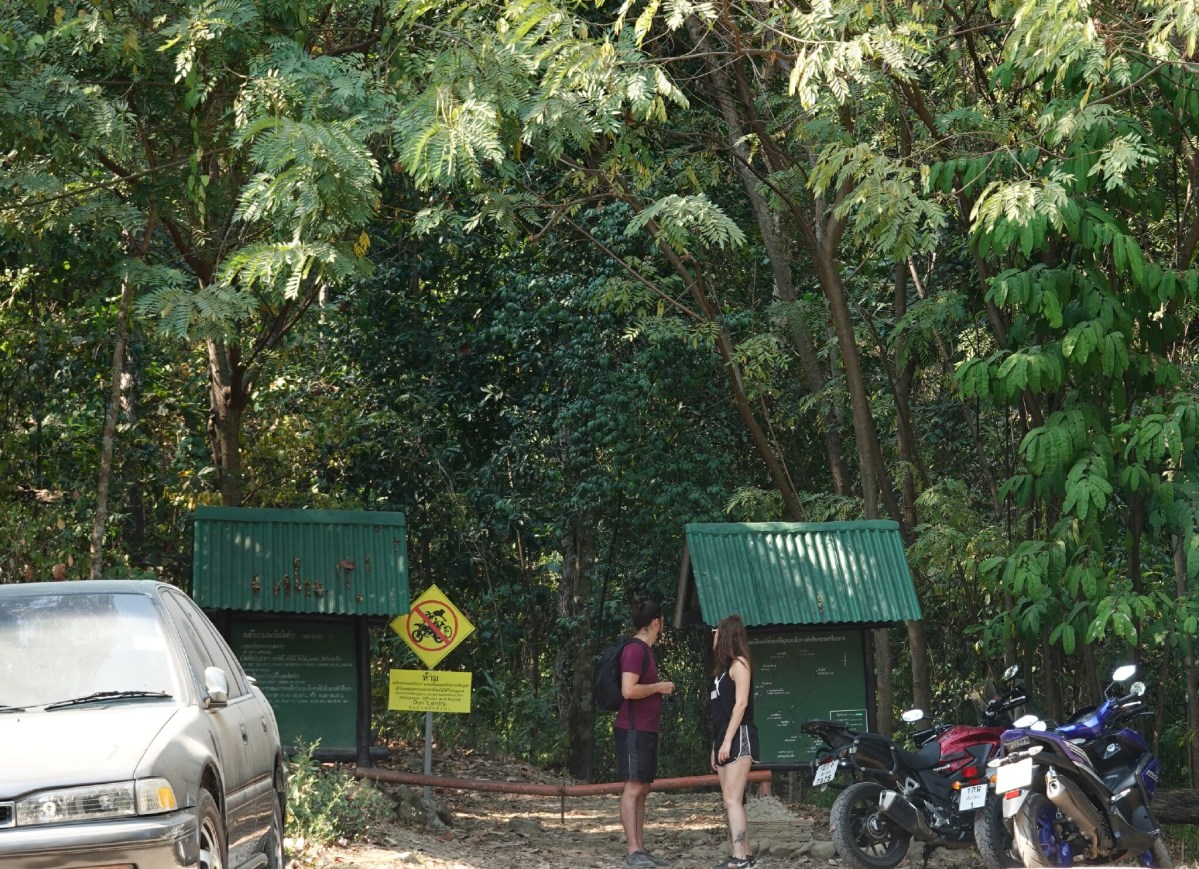
The trail head of the Monk’s Trail
The driver dropped me at the temple entrance. I have visited Wat Fai Hin in the past, and typically avoid it because there are dogs there who are very protective and seem threatening. One time when I was there, a caretaker (or so he seemed) yelled something at the dogs and they all ran away. So on that visit I got to see a little of the temple. Today, I just started walking up to the trail head.
And soon I was in the forest/jungle (it is sort-of in between a jungle and a forest), making my way up the first part of the trail to Wat Phalad.
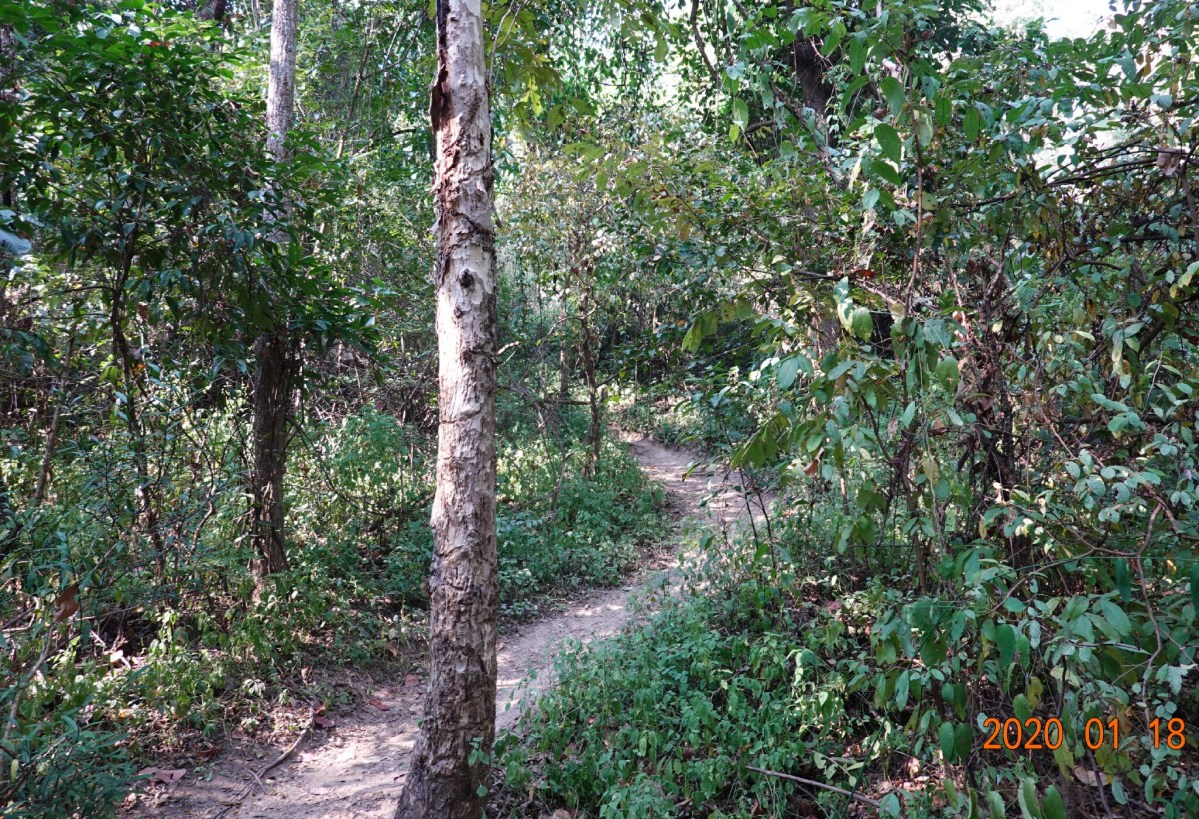
First part of the Monk’s Trail to Wat Palad
The climb to Wat Phalad is definitely uphill, and one has to work a bit, but the trail here is not terribly steep. The photographs make it appear much less steep than it really is.
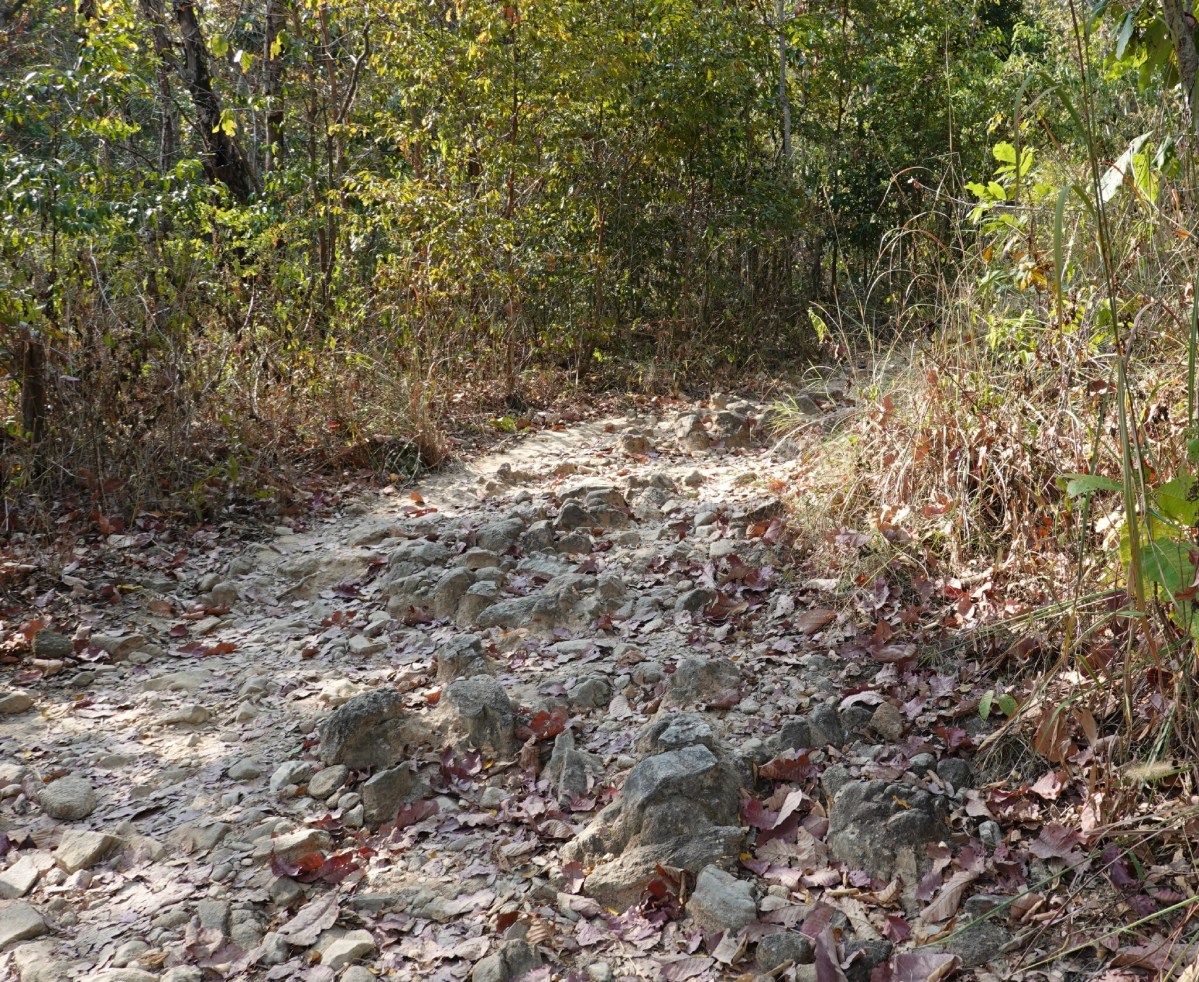
A rocky and unstable section of the Monk’s Trail.
Parts of the trail are a little difficult to negotiate being very rocks and unstable. But soon, after about 30-35 minutes of hot, sweaty hiking, I made it to Wat Phalad.
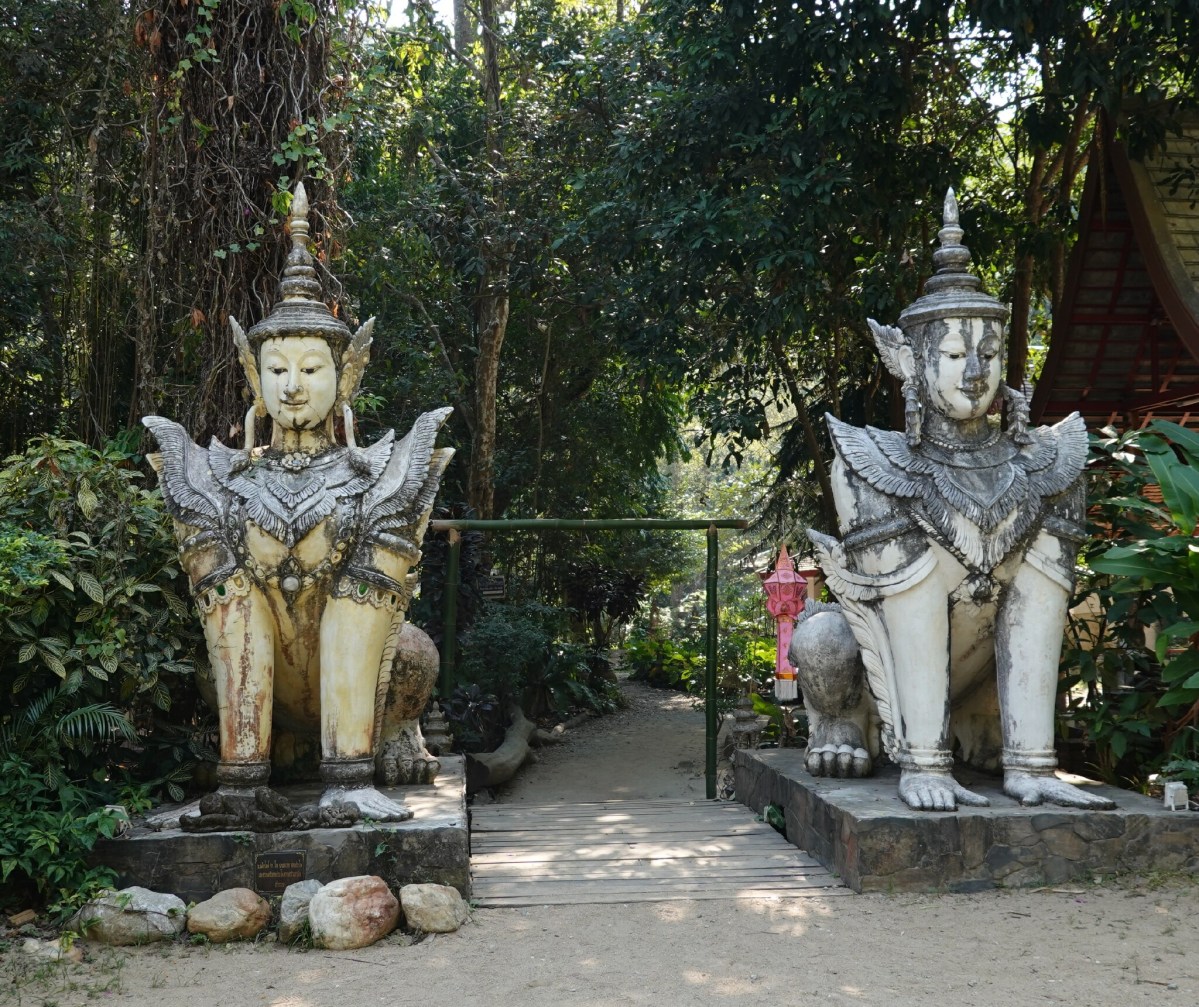
Entrance to the Wat Phalad temple grounds from the road.
I spent a little time at Wat Phalad looking around, resting, drinking the electrolyte drink and getting ready for the ascent to Wat Phra That Doi Suthep.
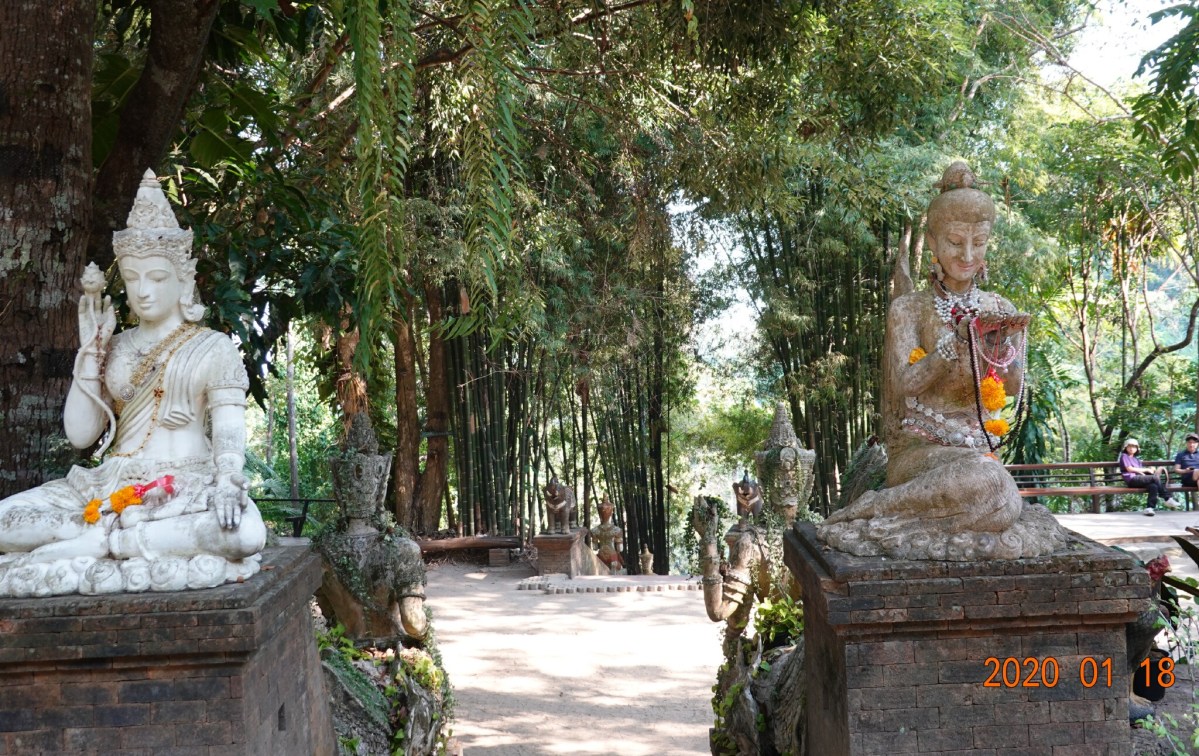
Exiting one of the viharn at Wat Phalad.
There are a few small viharn (assembly or worship halls) at Wat Phalad. The structure below has colorfully painted doors, but I have never seen the open in all of my many visits here.
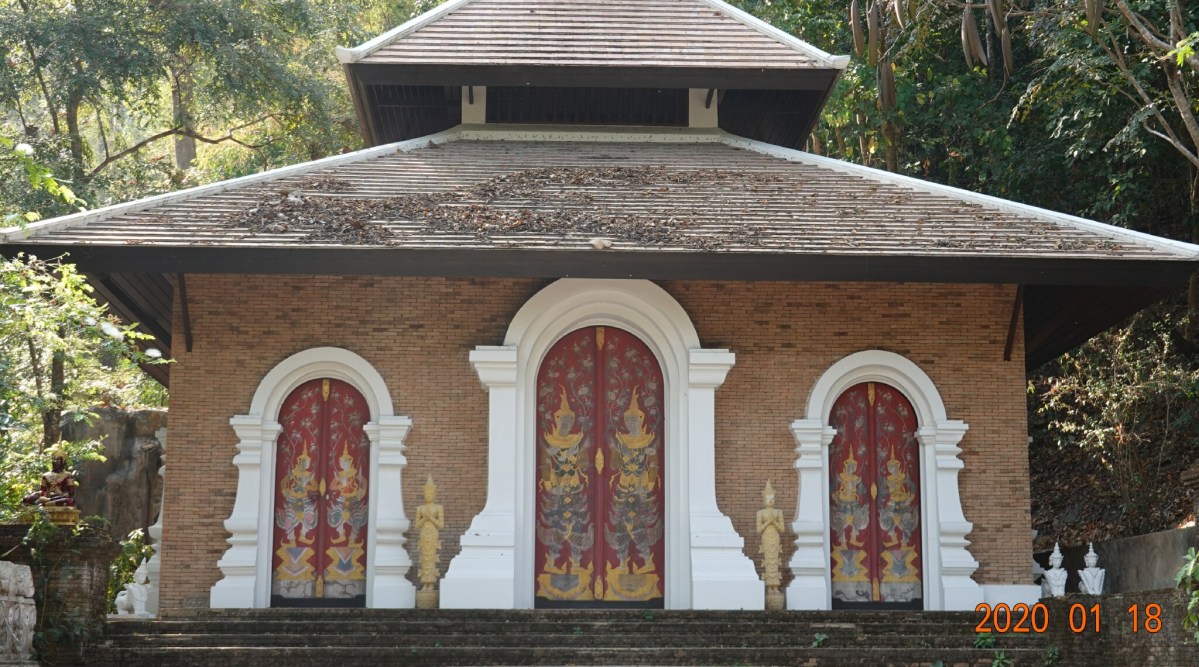
The Always closed viharn at Wat Phalad.
There is also this peaceful meditation area overlooking the forest.
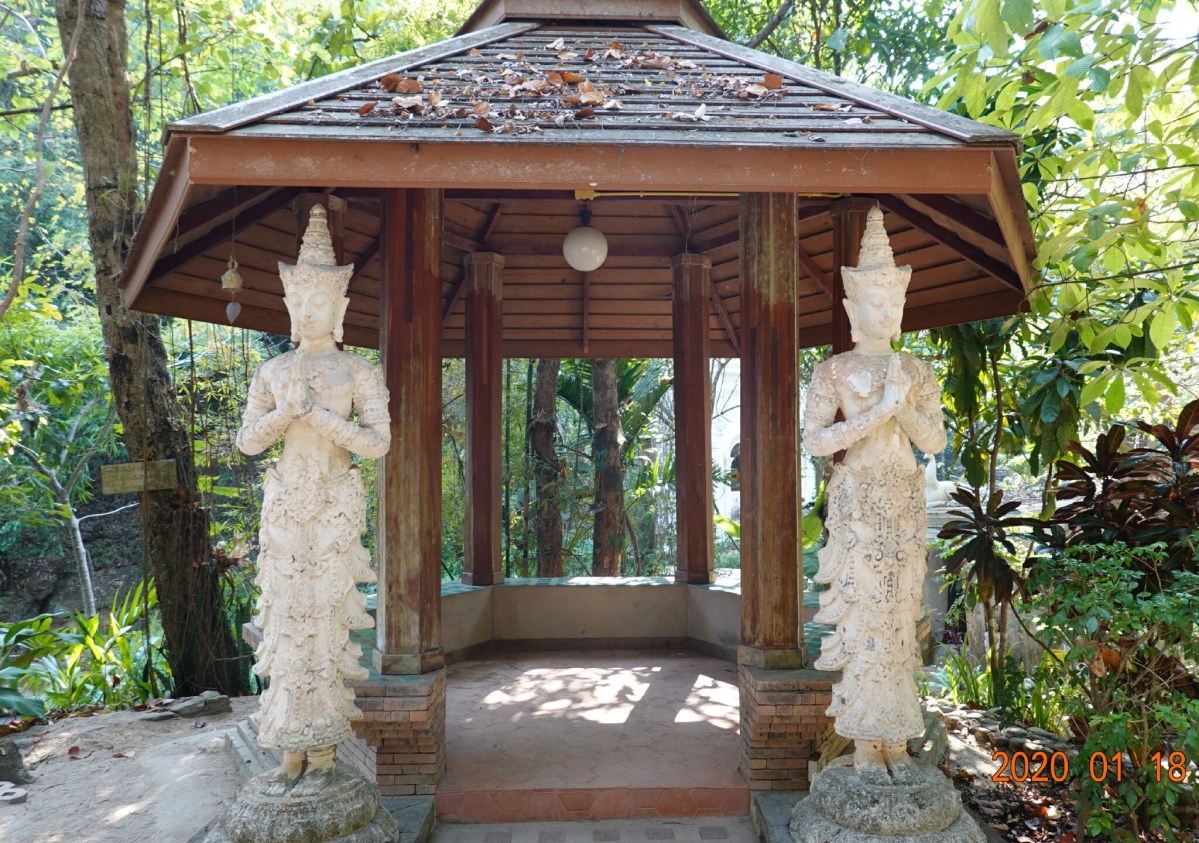
One of several areas good for a meditation at Wat Phalad.
Thich Nhat Hanh Connection to Wat Phalad and Me
Thich Nhat Hanh is a Vietnamese Buddhist monk and peace activist who was exiled from Vietnam in 1968 after his outspoken opposition to the war saying that both sides were oppressing the people. Thich Nhat Hanh lived in Plum Village in southern France, but is currently in what is known as Plum Village Bangkok in Thailand as part of his recovery from a severe stroke five years ago. The Vietnamese government has allowed him to return to Hue in central Vietnam to live at the temple where he started his Buddhist life. To try to summarize his life would be almost impossible. He has written more than 100 books, was nominated for a Nobel Peace Prize in 1967 by Martin Luther King (no award was made that year), and continues to be an inspiration to many (for good reason).
Seven years ago when I was in Chiang Mai, I attended the Green Papaya Sangha, a meditation group that meets every Thursday. The leader, Steve Epstein said, “we meditate in the style of Thich Nhat Hanh” to which I said to myself, “I have never heard of Thich Nhat Hanh, but I’m game…”
After returning to the U.S. and asking a people I know through yoga, it seemed that everyone knew who Thich Nhat Hanh was and what he had done…except for me. So I did some research, and I learned that Thich Nhat Hanh was making a visit to the U.S., including being on the Oprah television show (the interview is on YouTube). More importantly, Thich Nhat Hanh was going to be at Deer Park, a Vietnamese Buddhist Monastery outside Escondido near San Diego, that September for two weeks. All of the programs at Deer Park would be in Vietnamese except one day, “A Day of Mindfulness” in English. A friend and I were the second car in line at the parking lot at 6:30 that morning. There is something very moving and powerful about doing a silent walking meditation with 800 people up a small hill to where Thich Nhat Hanh is standing. We then went down to the meditation hall, where Thich Nhat Hanh addressed the group and led us in a few short meditations. Indeed a very memorable day!
When I returned to Chiang Mai, I was talking with Steve Epstein, leader of the Green Papaya Sangha about temples I liked, and I mentioned that I liked to go up to Wat Phalad to meditate because of its beauty and peacefulness. He asked me, “did you know that Thich Nhat Hanh used to live there?” It turns out that after his exile from Vietnam, Thich Nhat Hanh lived at Wat Phalad for 2, 3, or maybe 4 years.
So, in just a year, I went from not knowing who Thich Nhat Hanh was to sitting in meditation with him at Deer Park near San Diego, to meditating at Wat Phalad in Chiang Mai where he once lived. An amazing journey!
I took a deep breath and continued hiking upwards. The hike from Wat Phalad to the road is a very short, and very steep section of about 50 meters.
Continuing Up to Wat Phra That Doi Suthep
After carefully crossing the road, one disappears into the forest and the sounds of the road quickly disappear with only the jungle noises, the birds and the insects, being heard. I was walking with a young couple from Spain I met at Wat Phalad who asked me if knew the way, so we walked together. After crossing the road, and up into the forest, I soon lost sight of them – they are much younger and not stopping to rest or take pictures.
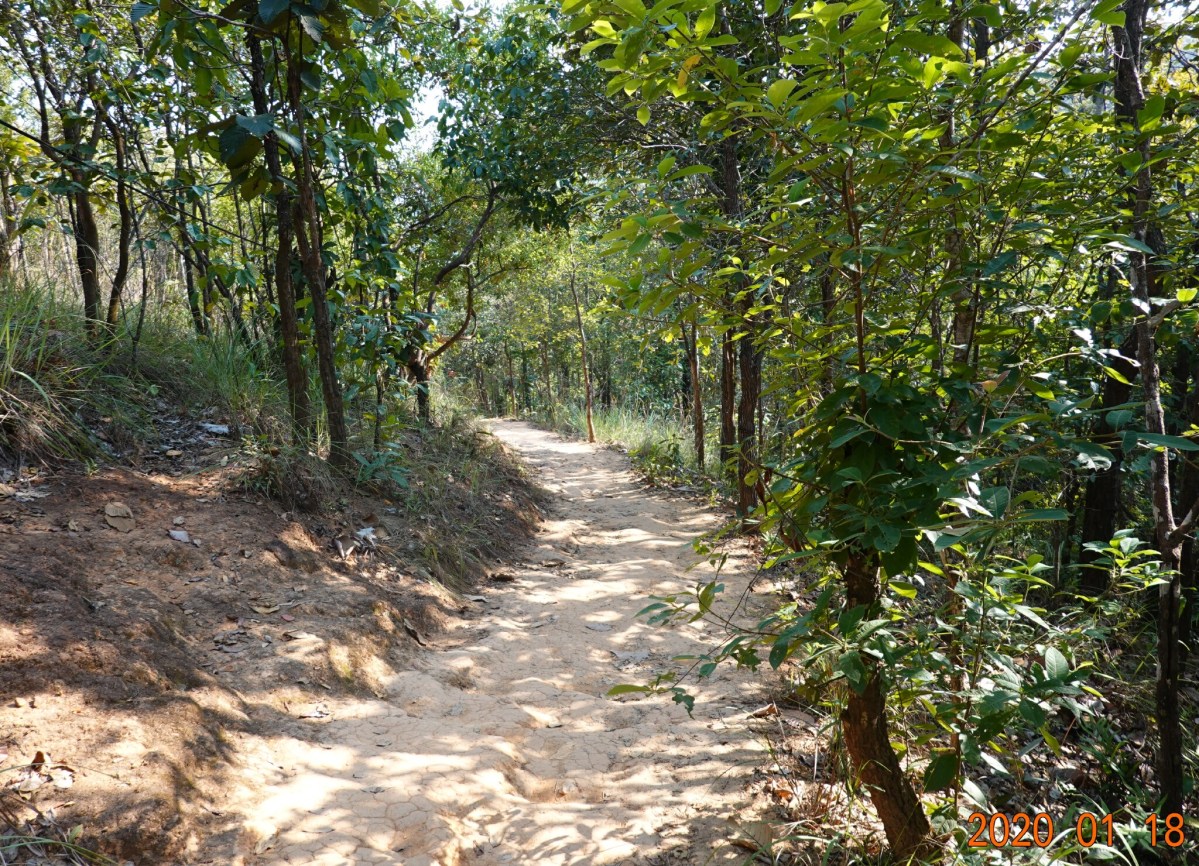
The forest hike up to Wat Phra That Doi Suthep.
There are sort-of three sections to the hike from the road behind Wat Phalad to Wat Phra That Doi Suthep. The first section is very steep, almost like climbing stairs, and even steeper in sections. Then there is a section that is not as steep, but still uphill. And the last 300 meters are again very steep with the last 40 meters extremely steep. In this picture (below) I can still see my two Spanish friends. Notice that fallen trees must be negotiated occasionally.
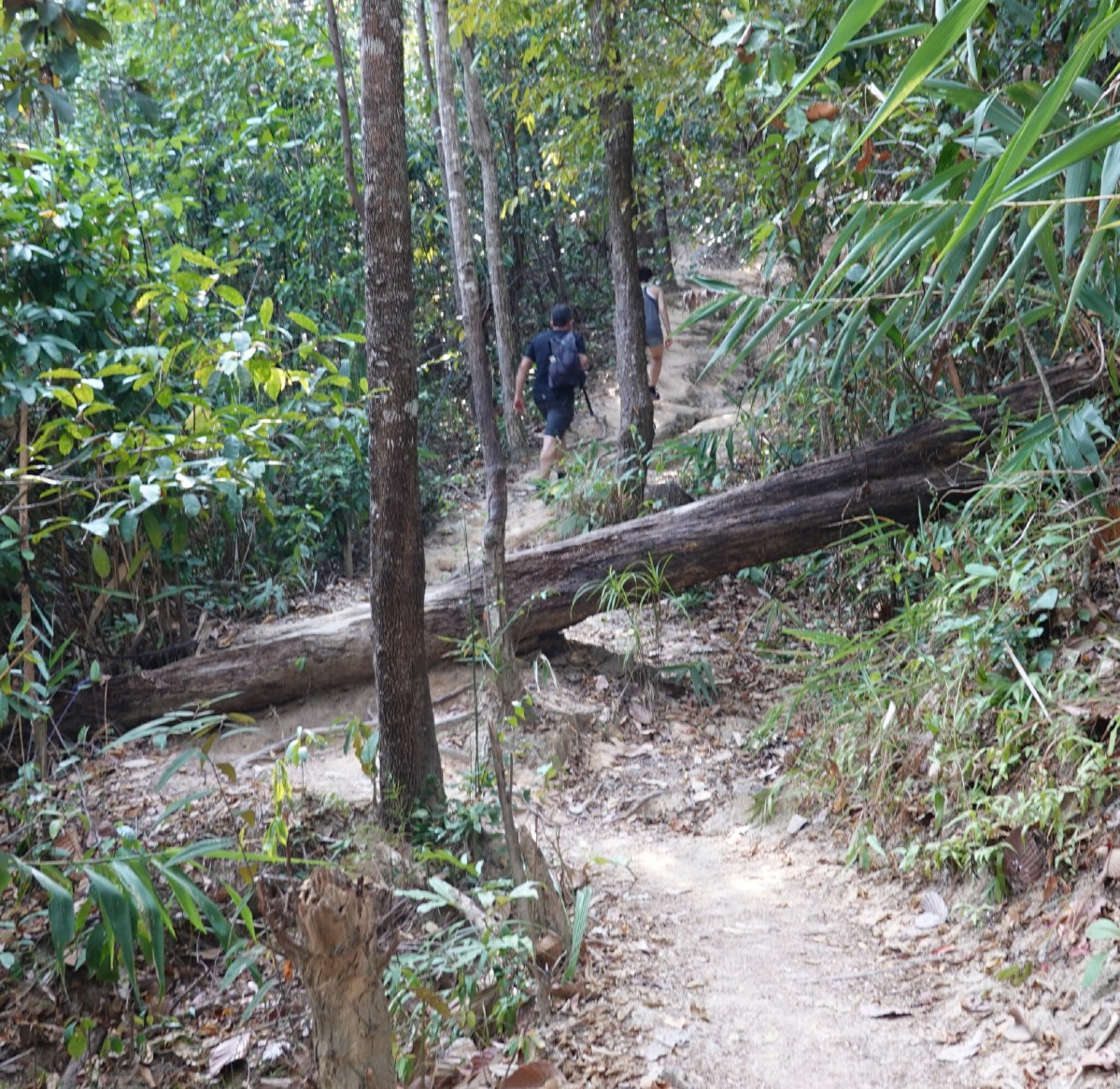
Hiking from Wat Phalad to Wat Phra That Doi Suthep.
And at times there is much erosion evident and tree roots to climb.
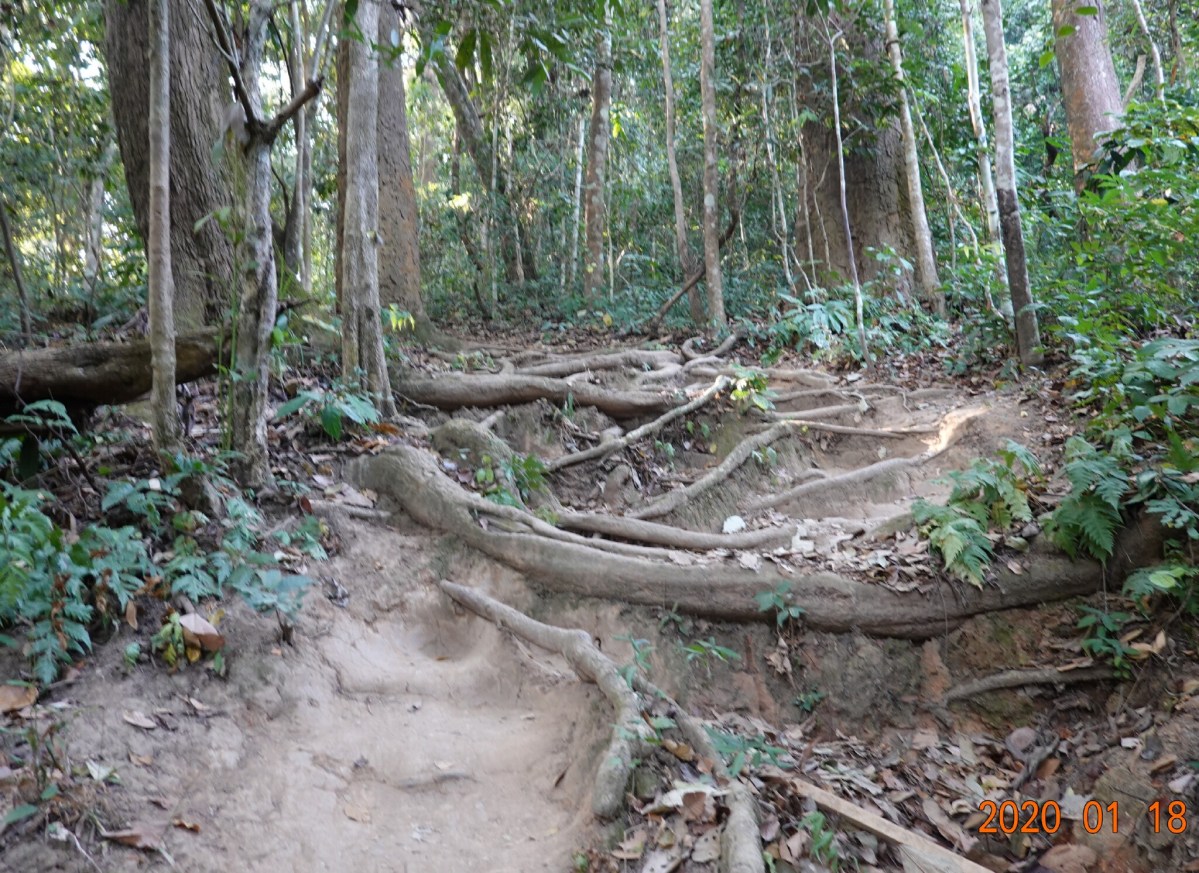
More hiking from Wat Phalad to Wat Phra That Doi Suthep.
It is a meditative hike, albeit a tiring and sweaty one. After emerging from the forest after the last very steep section, one must walk by the road (still uphill) for about 400 meters to the entrance at Wat Phra That Doi Suthep.
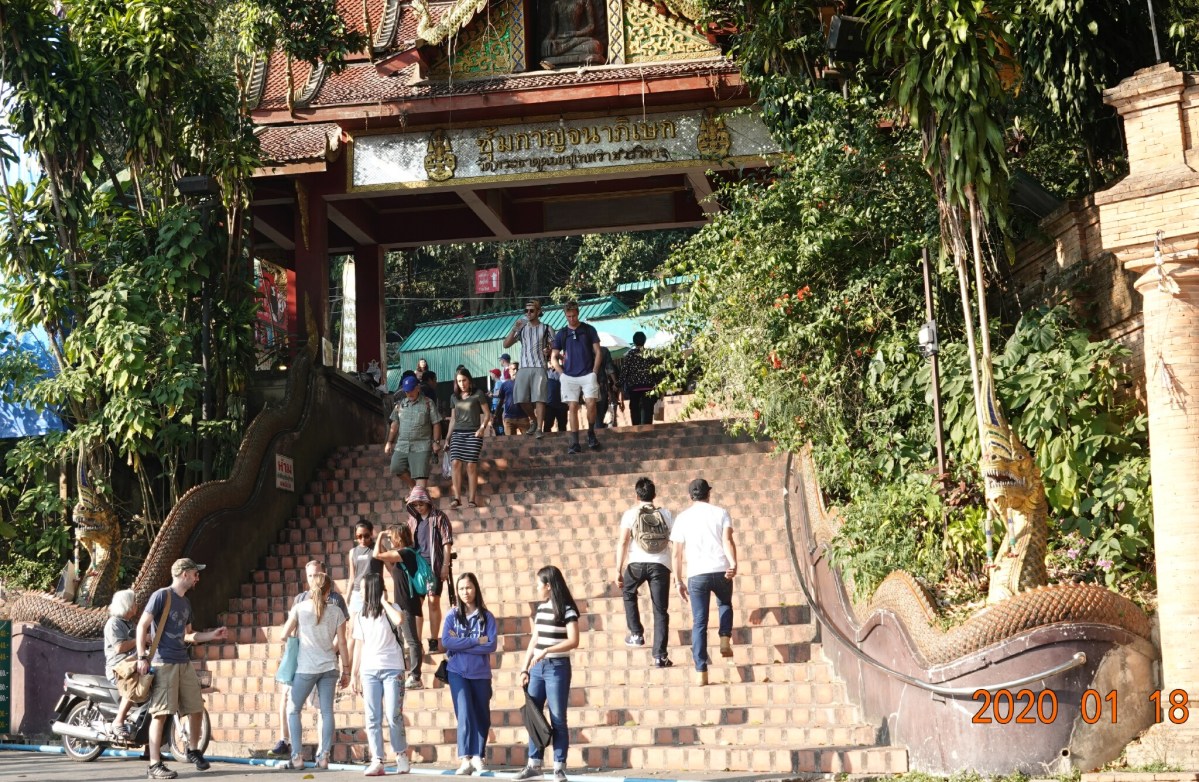
The entrance to Wat Phra That Doi Suthep.
It is from here that you can start counting the 307 or 309 steps. I have counted many times, and have gotten the same number, 307 steps. However, some people start with 1 instead of 0, and at the top, there is one step down to the landing which I do not count. I climbed to the base of the Naga Stairway, but did not have the energy today to continue up to the temple – I have been there many times.
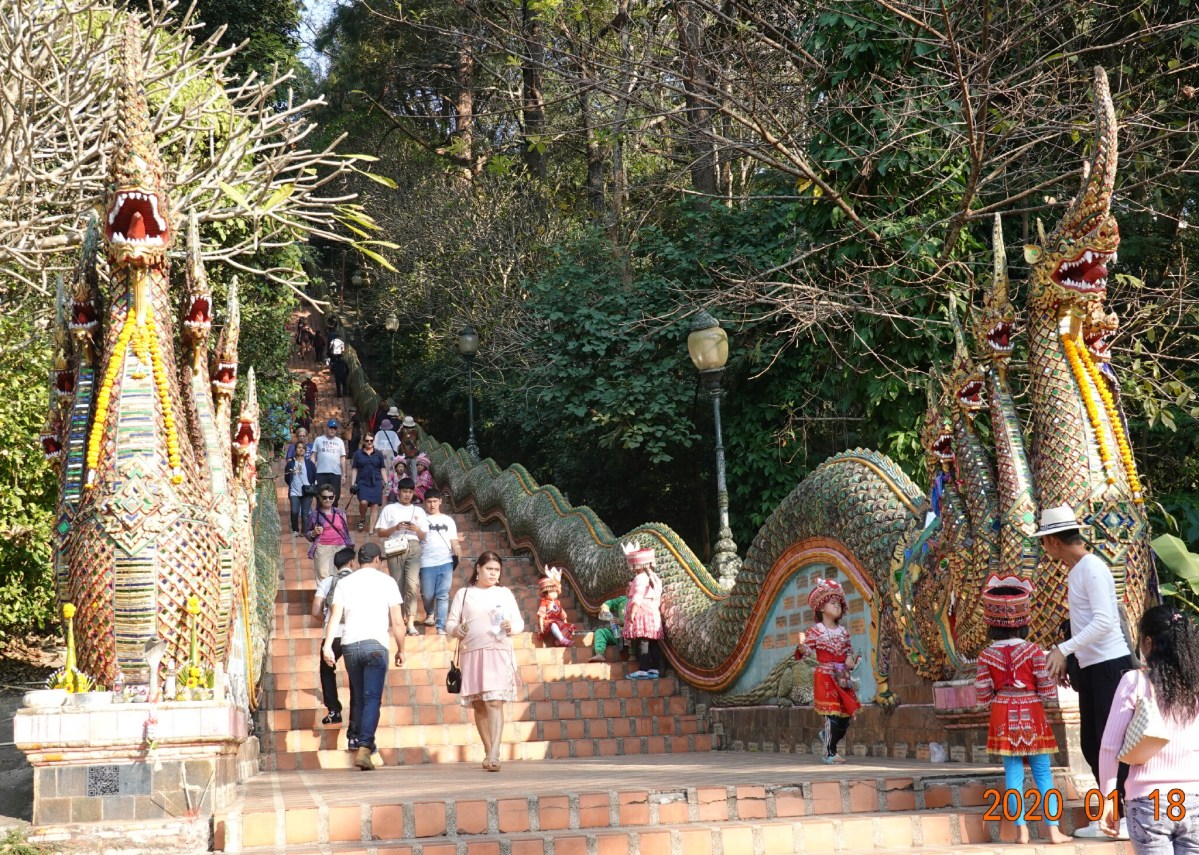
Bottom part of the Naga Stairway at Wat Phra That Doi Suthep
The part of the stairway flanked by the Naga on the banisters is over 250 steps itself. Here is some detail of the 7-headed Naga:
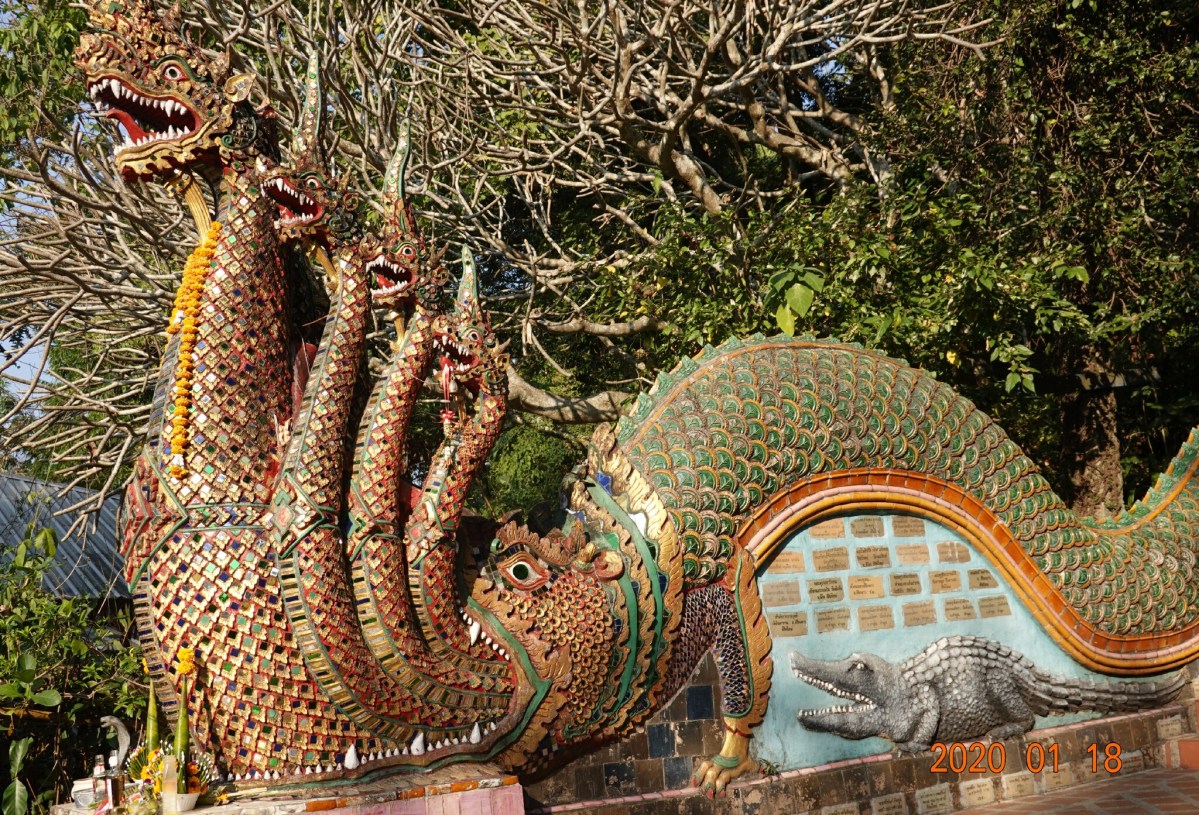
Detail of the head of the 7-headed Naga at Wat Phra That Doi Suthep
I started the hike back down into the forest and on to Wat Phalad.
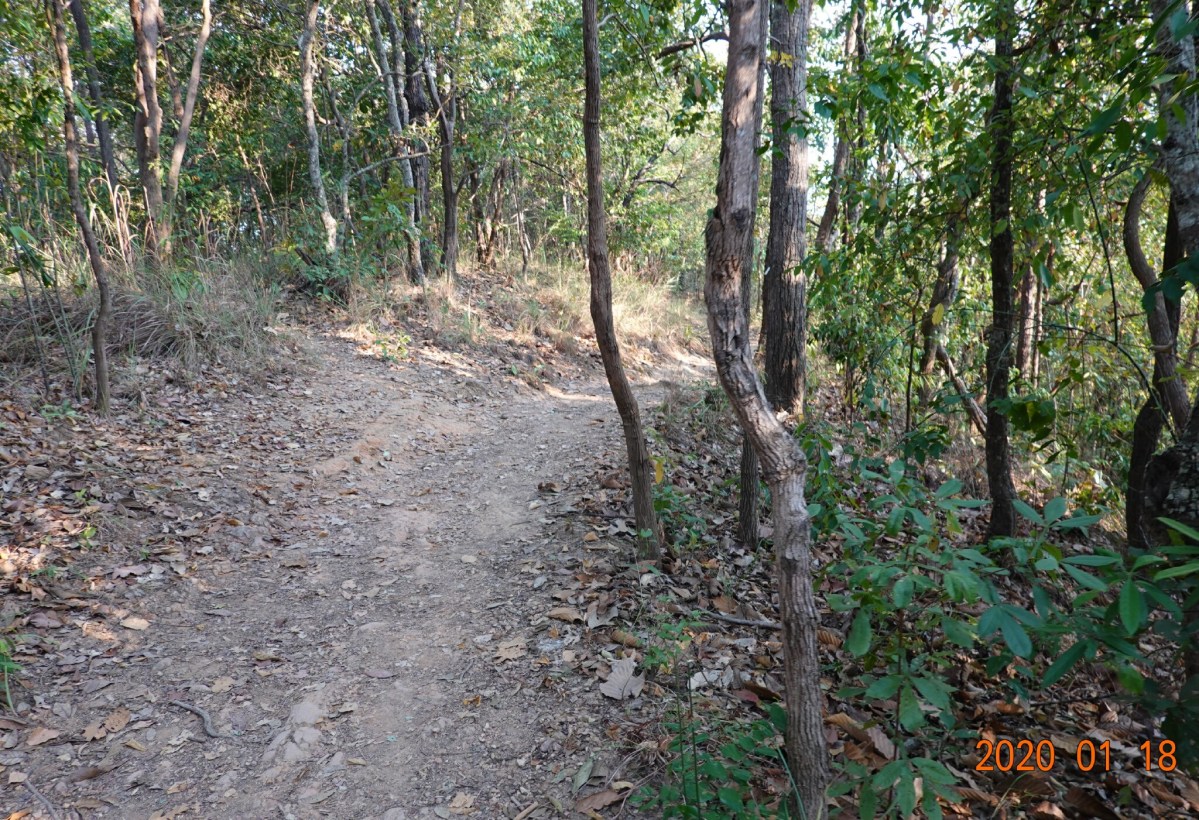
Hike downhill from Wat Phra That Doi Suthep.
Hiking downhill is difficult in many sections, as it is easy to lose footing, slip, and fall. While gravity does assist in the hike downhill, it is slow-going. I met many people this day on the trail, most going the opposite direction. I made it to the road, crossed it, and took a photo of the waterfall.
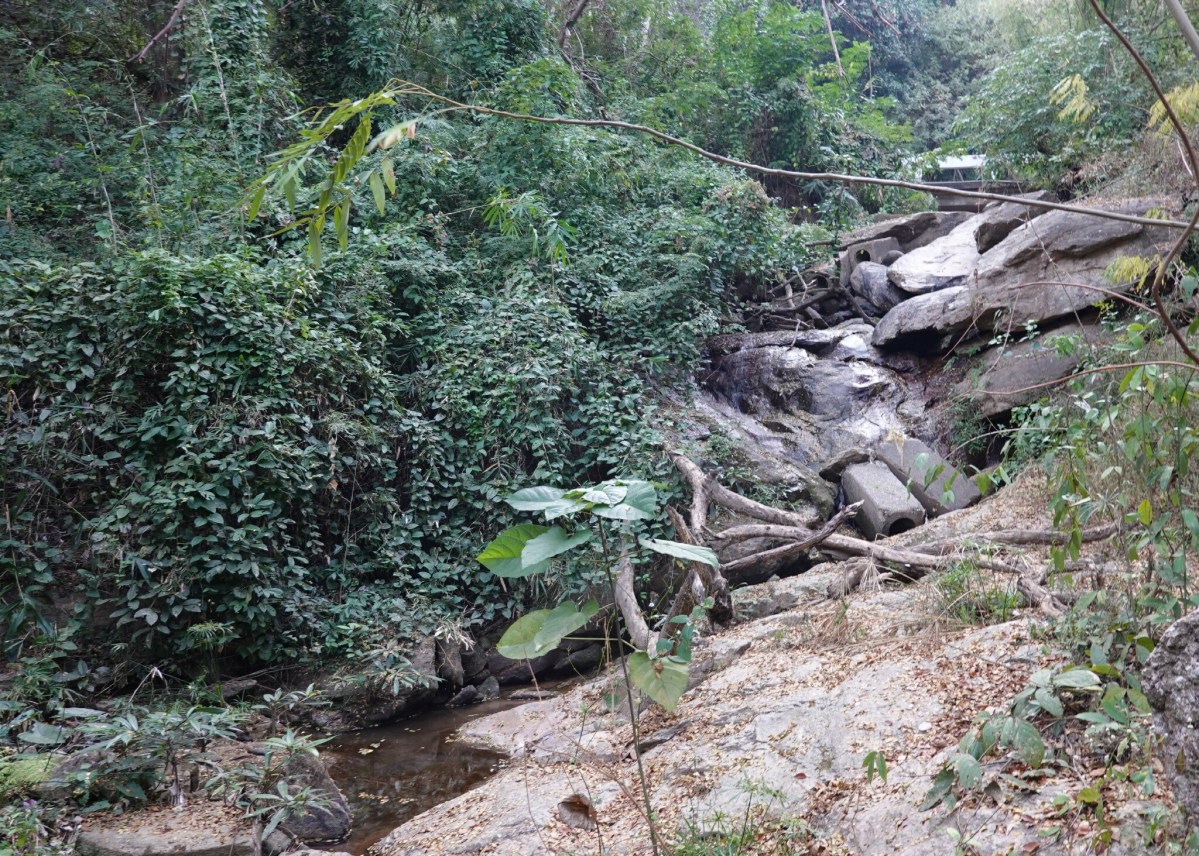
The sometimes waterfall behind Wat Phalad on the Monk’s Trail.
Almost no water running today – it has not rained here since the day I arrived. Sometimes this is an impressive and loud waterfall. And a few meters further and I was at Wat Phalad.
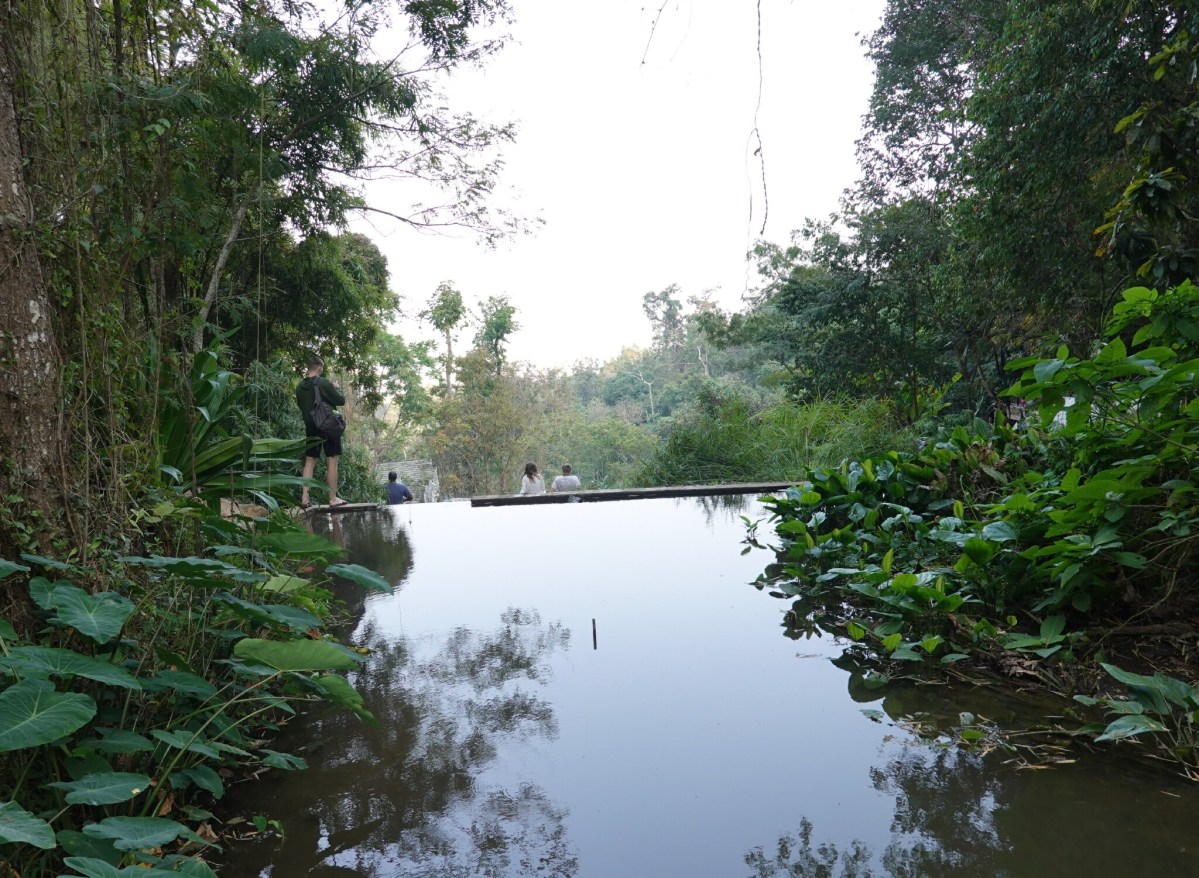
Crossing the creek at the pool overlooking the view of Chiang Mai at Wat Phalad.
I did not stop, wanting to continue back to Chiang Mai. I was hot, tired, and getting very interested in a shower, clean clothes, and maybe a nap. As I passed through Wat Phalad, I met a couple from Italy. They were learning about the Monk’s Trail the same way I learned of it: I got a ride to Wat Phalad, then found the trail and hiked down where I found the trail head. I continued into Chiang Mai at Chiang Mai University, on down the Suthep Road about a kilometer to Wat Suan Dok, and then another kilometer to Suan Dok Gate, the gate on the western side of the wall/moat. The Italian couple asked me if I knew the trail and the way back into Chiang Mai, and I told them I was going there. So we all walked together, all the way down the Monk’s trail, past Chiang Mai University, past Wat Suan Dok, and into the old City at Suan Dok Gate. They were staying near Wat Phra Singh, which was on my route back to See You Soon, so I showed them the way.
When I arrived back at my room, the shower was so, so nice. A tiring, but glorious day in Chiang Mai hiking in the forest.
Next: Wat Jed Yod, a return visit.

 James the Intrepid Pilgrim