Saturday, January 11, 2020
The Flower Market
I skipped yoga practice with Earthy at Wild Rose Yoga today because I thought I had an appointment with Om to finish the gua sha treatment. When I arrived at her studio, she was surprised to see me; there had been a miscommunication and she had scheduled a doctor’s visit at this time. We re-scheduled gua sha for Monday.
With some extra time, I decided to walk to Warorot Market, see the flower market, and walk across the Ping River to Wat Kate Karam.
At Tha Phae Gate, I met a young couple from Toronto who were also planning on walking to Wororot Market, so I showed them the more direct route that I typically take (and a little less busy with traffic). The flower market is right by Warorot Market, Kad Luang in Thai.”Kad” means market or shopping center, and “Luang” means really big, and Warorot Market is really big, and really confusing. I seldom spend any time at Warorot because there is almost no English spoken there as it is a large local market, and it is very, very confusing. If you know how to ask in Thai, I suspect you can find almost anything at Warorot Market.
As I passed by Wororot Market, I saw this display of dragon fruit, one of my favorites, now at the end of their season, so getting more expensive at 70 baht each ($2.25).

Dragon Fruit at Wororot Market
The flower market is on the east side of Warorot Market, and while not as large as the flower market in Bangkok, and not inside, it is very busy. It is along a main road and cars or vans are constantly stopping and getting flowers. Here is a sample of some of the flowers.


Walking Bridge
Directly across from the flower market is this walking bridge over the Ping River to Wat Kate Karam. This was opened just over two years ago, replacing the old wooden walking bridge was damaged in a flood in 2005. People continued to use the damaged wooden bridge, and being very unstable and unsafe, the government took down the damaged bridge, and promised to build a replacement. That replacement took almost 11 years before it was completed. It is much, much stronger than the previous bridge.
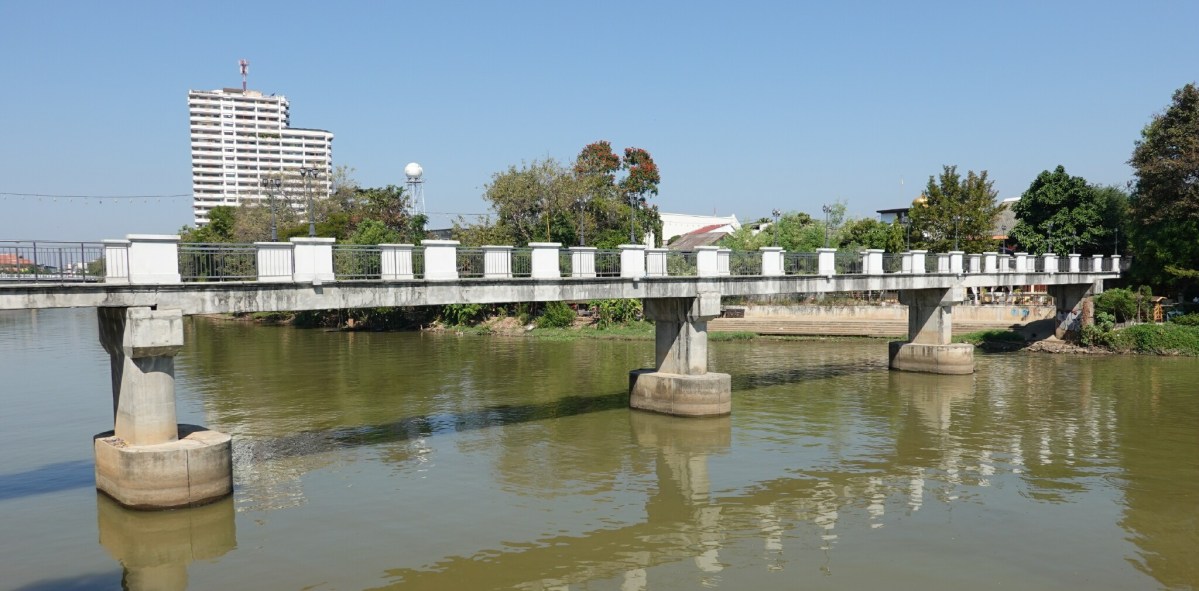
Replacement walking bridge over the Ping River from Flower Market to Wat Kate Karam.
And the new bridge leads almost directly to Wat Kate Karam, one of my favorite temples (I have many favorites). In this photograph, you can see the bridge and the chedi at Wat Kate Karam in the distance.
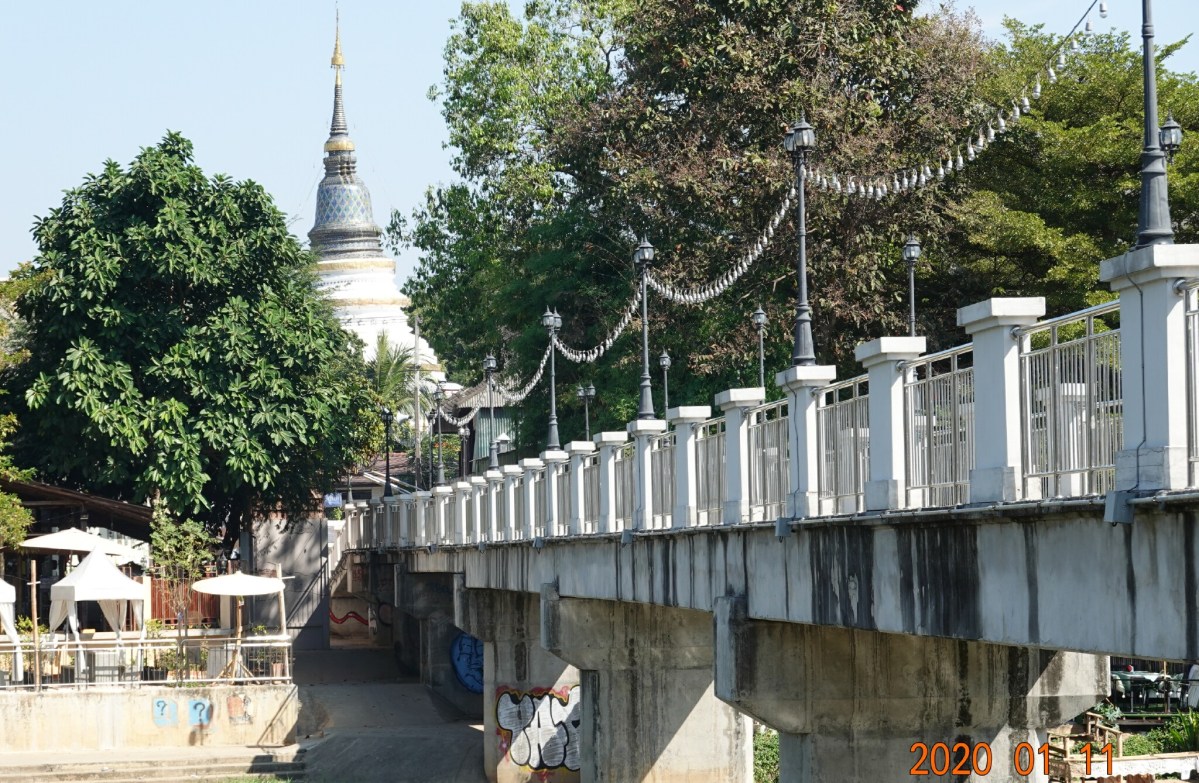
Walking bridge leads almost directly to Wat Kate Karam.
Wat Kate Karam
When the bridge was gone, it was more difficult to get to Wat Kate Karam, having to walk across the highway bridge and then down a busy street with inconsistent sidewalks. Walking across the new walking bridge, the chedi from Wat Kate Karam is directly in front of me and in a few minutes I am there:
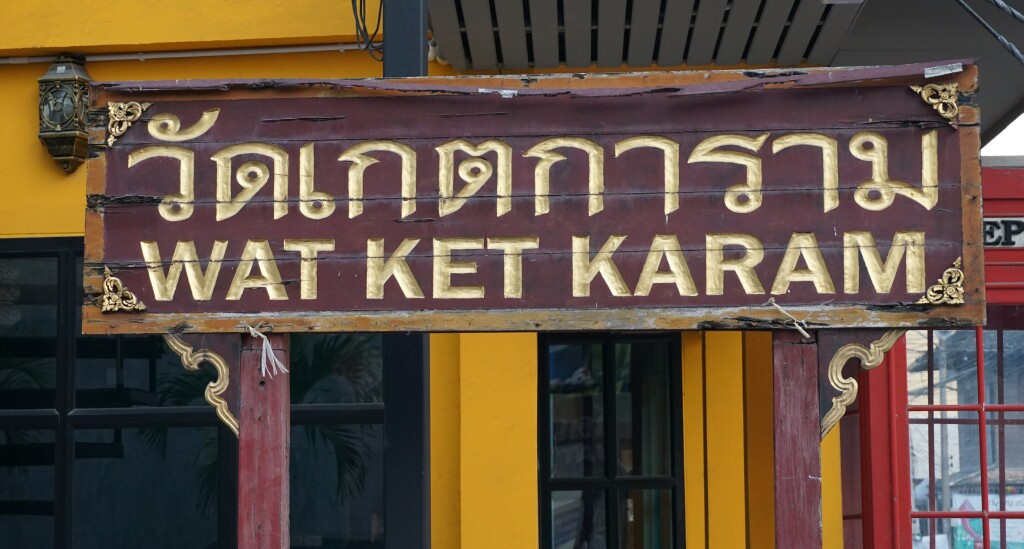
Wat Kate Karam is a challenge for the translators. On the temple grounds, there are a few signs with the temple name in Thai and English. One (above) has Wat Ket Karam, another has Wat Kate Karam, and another Wat Gate. The reason for the difference in the English spelling is that the sound in Thai does not translate to English well. In the Thai alphabet (Thai has an alphabet, rather than pictograms like Japanese and Chinese), there are 44 consonants, 12 vowels, and 8 diacritical marks that can change the vowels (like the mark at the top of the first letter in the picture above). The sound is not exactly the “kuh” in Kate or the “guh” in Gate, it is a sound that is in between those two sounds, and is problematic to translate accurately.
[There are many examples of this challenge, for example, the word for the number 8 is often written in English as “bhat” or “phat”, but it is not really “buh” or “puh”, it is in between, and difficult to make that sound properly.]
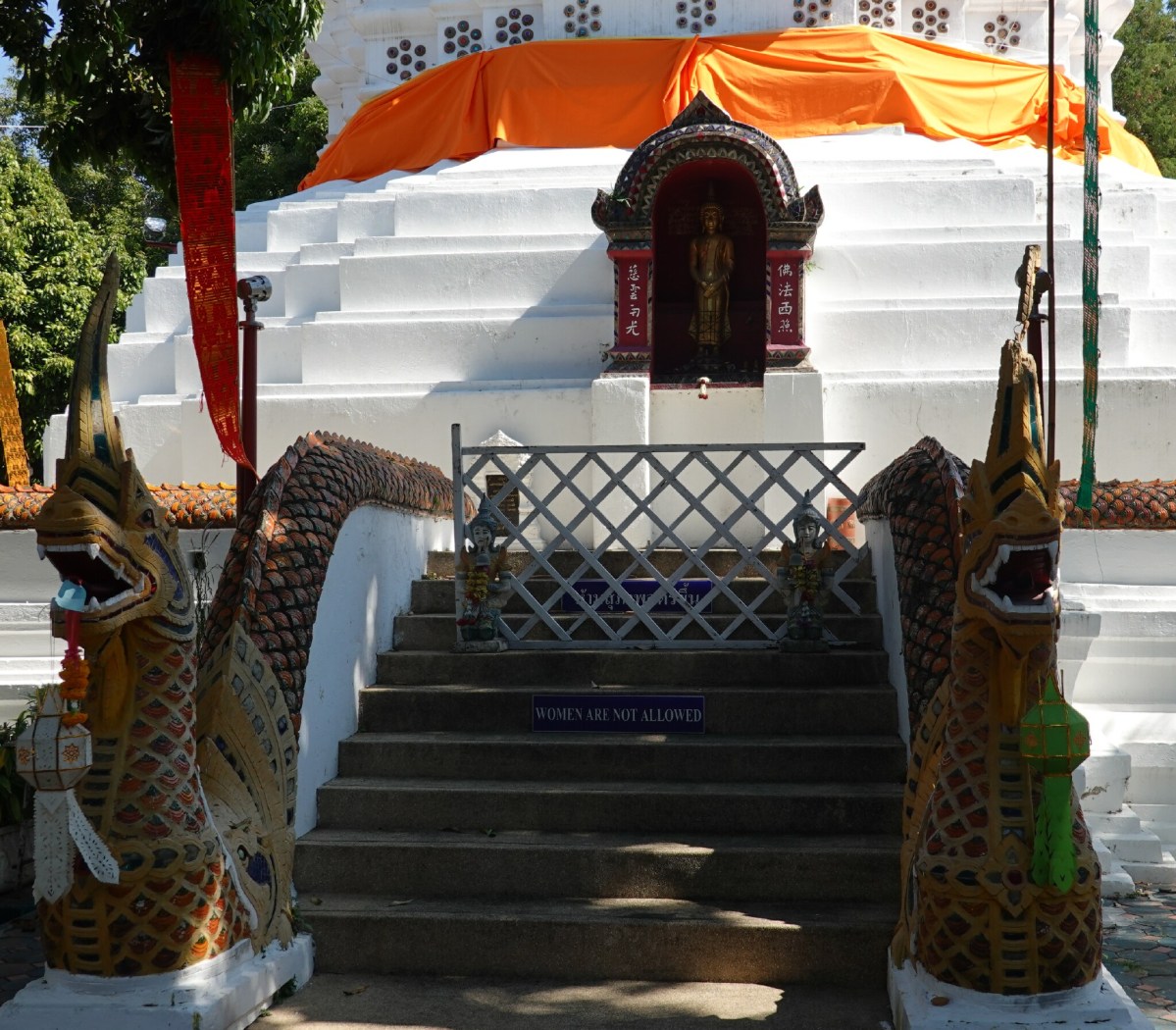
Chedi at Wat Kate Karam guarded by Naga (serpents).
Walking around the grounds, I see this familiar ho trai (library) with the naga and mom (pronounced “moam”) guarding the entrance and the elaborate thewada figures on the door. I have never seen this open, but the front and entrance is very artistic.
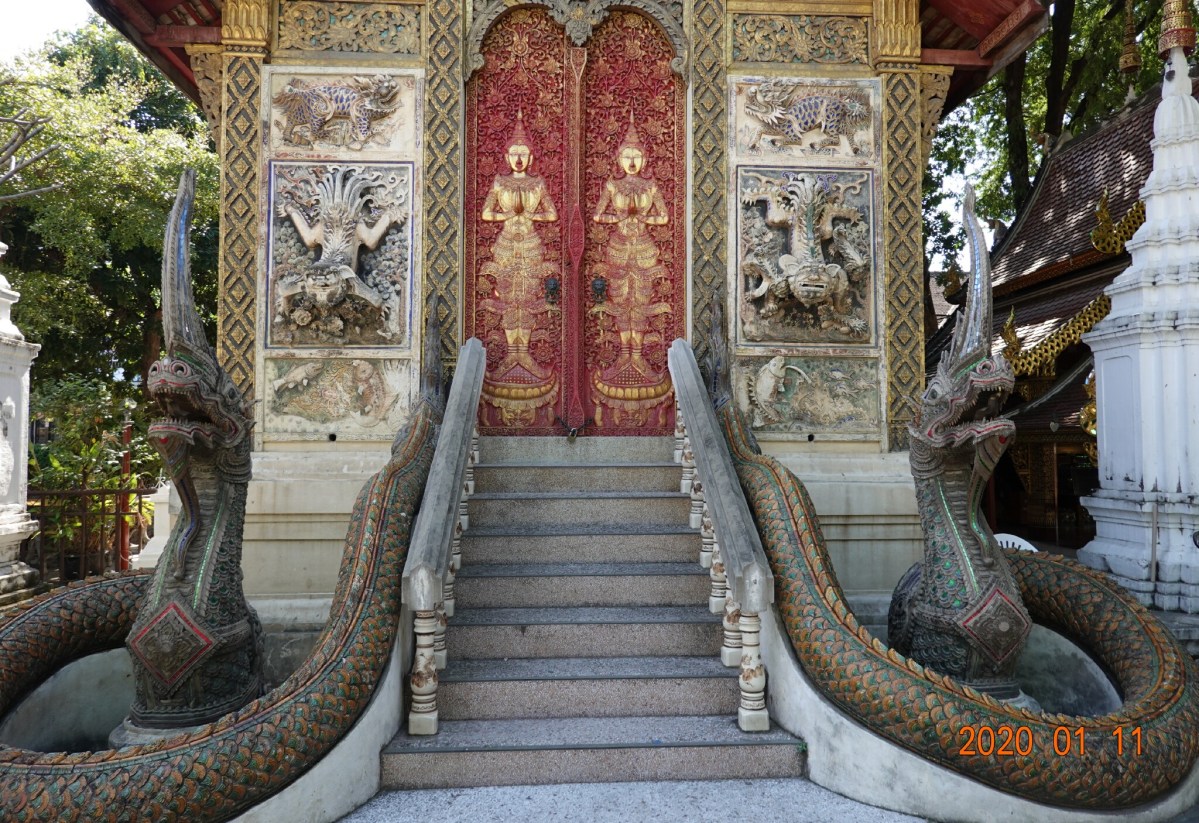
Front and entrance to the Ho Trai (library) at Wat Kate Karam
Then the entrance to the main viharn (worship hall) at Wat Kate Karam. It is not a particularly large viharn, nothing close to that at Wat Suan Dok, but the artistry in the decoration is very nice.
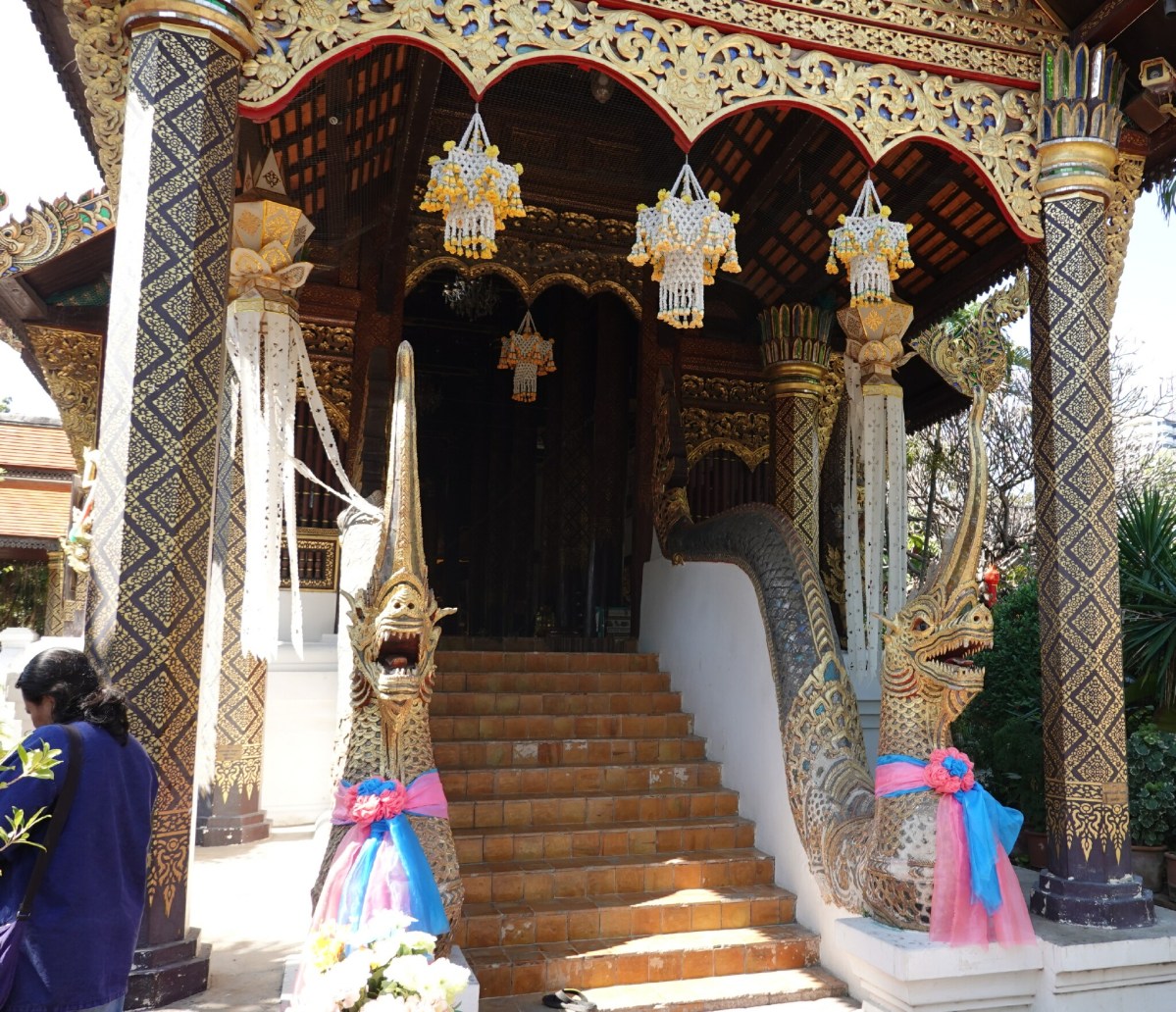
Entrance to main viharn (worship hall) at Wat Kate Karam.
Here is detail of one of the two thewada figures (angelic beings that live in the heavenly realm) at the entrance to the main viharn at Wat Kate Karam (they are not seen in the picture above because they are behind the pillars).
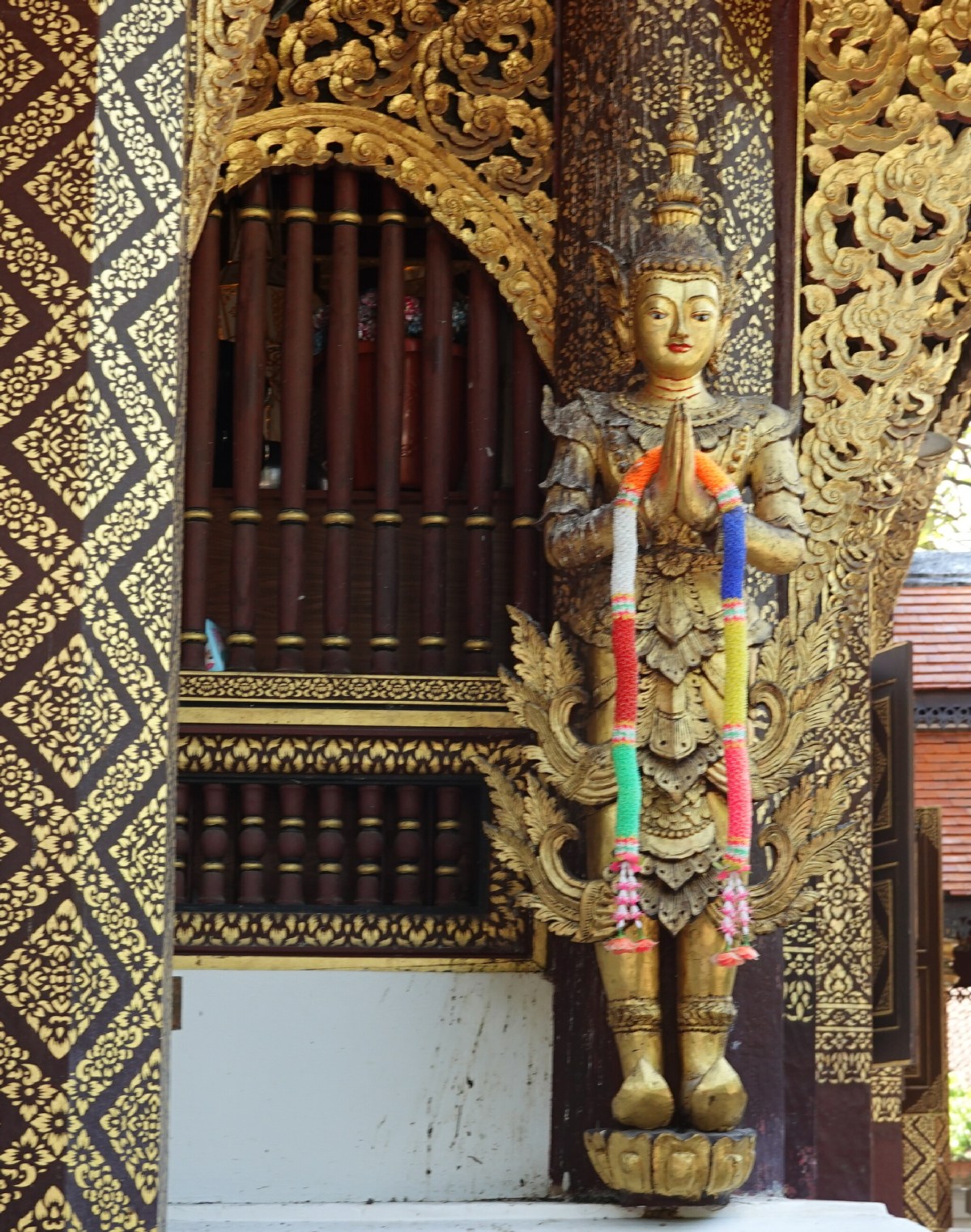
One of the thewada guarding the entrance to the viharn at Wat Kate Karam.
And inside the main viharn, the look is fairly typical, but pleasing in its relative simplicity.

Inside the main viharn at Wat Kate Karam.
After quite some time walking and traversing the Flower Market and Wat Kate Karam, I was getting hungry. I decided to walk down the road parallel to and on the east side of the river to see what I might find.
Woo’s Cafe, Chiang Mai
I found Woo’s Cafe and Art Gallery. It is a little bit trendy and slightly upscale, and I have heard that the food is very good in a pleasing atmosphere. So I stopped in to try it.

Woo’s Cafe and Art Gallery, Chiang Mai.
The atmosphere is very nice. The whole restaurant is essentially an art gallery, and very nicely decorated. Here is part of a view from my table:
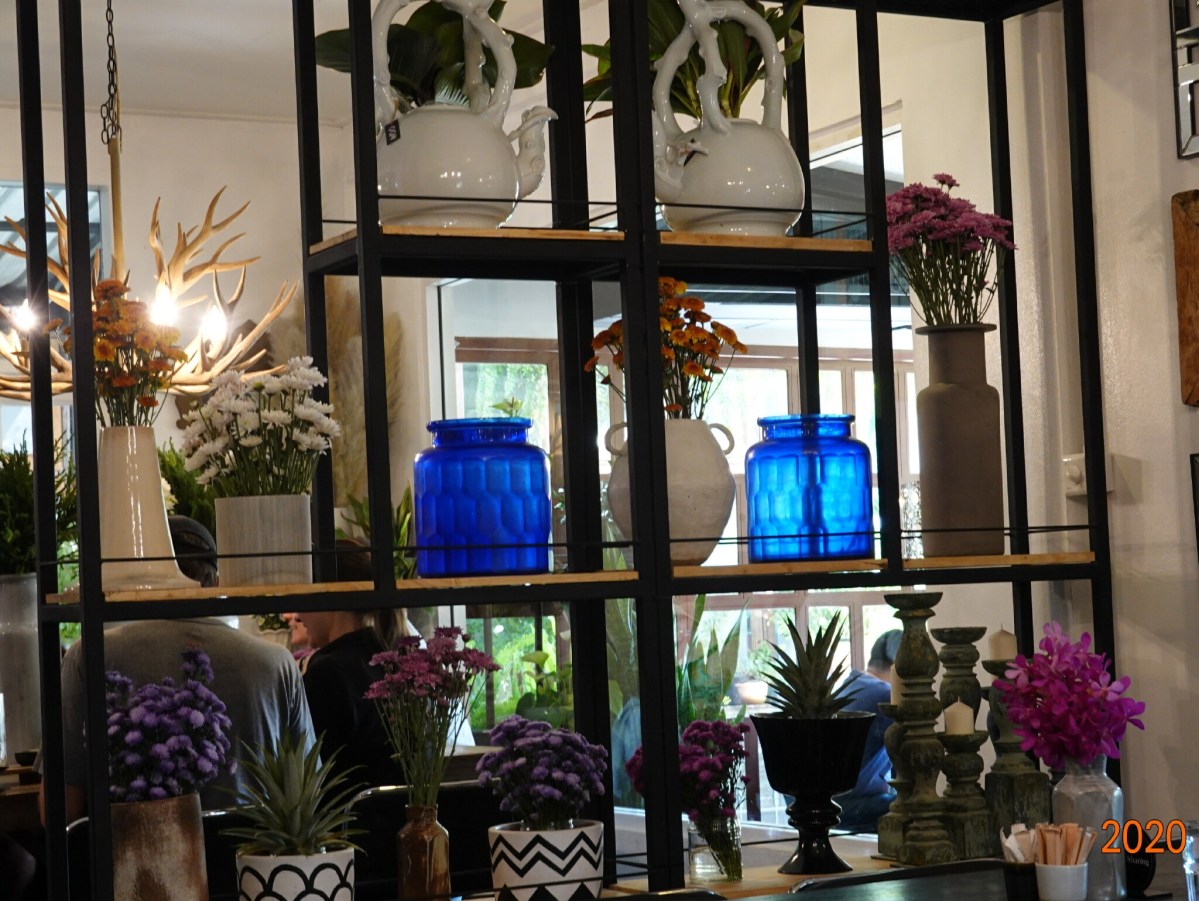
View from my table at Woo’s Cafe and Art Gallery.
I ordered a “small” lunch, mini-chicken tacos, a cafe latte, and a piece of coconut cake for a desert.
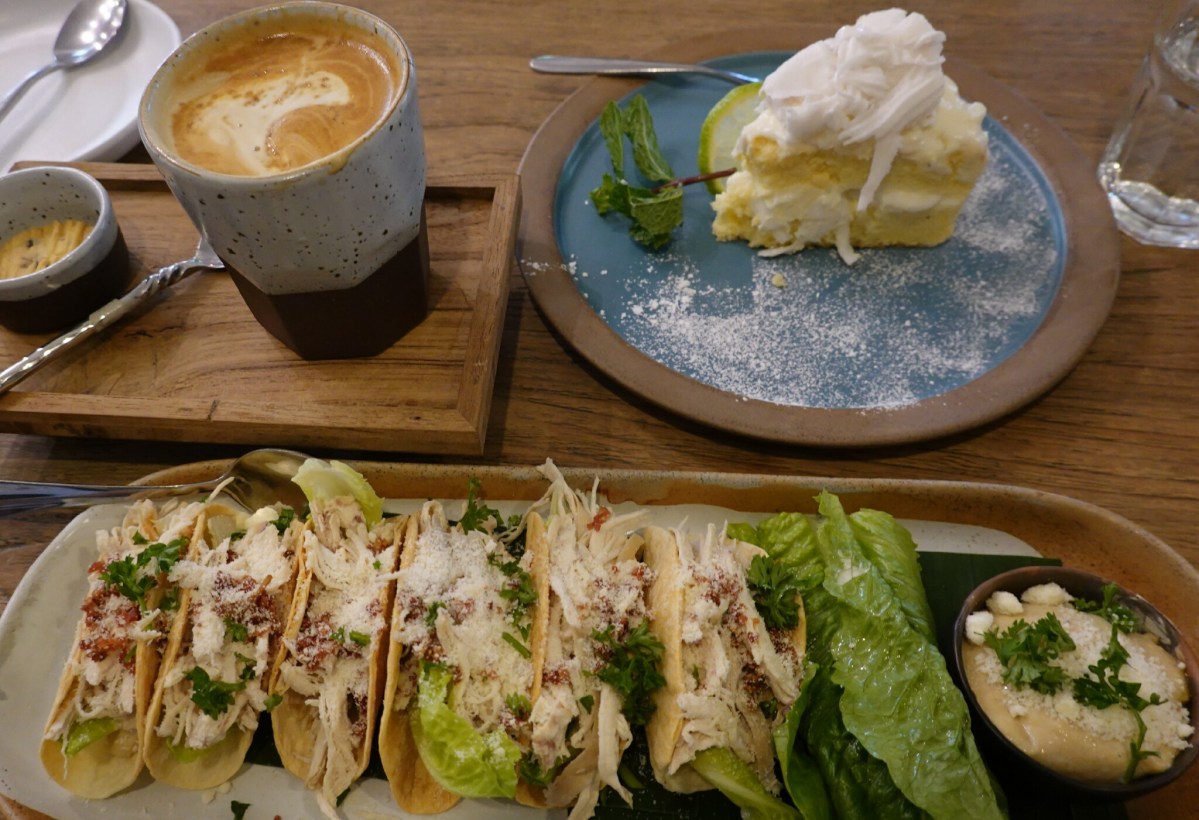
Lunch at Woo’s Cafe and Art Gallery.
Mmmm, a very good lunch. And all for 450 baht (about $15.00).
Nawarat Bridge
After lunch I continued my walk south along the river, and passed by the Nawarat Bridge. This bridge is one of the main entrances to Chiang Mai, crossing over the Mae Ping River and connecting with Tha Phae Road that leads directly to Tha Phae Gate, the eastern gate on the wall/moat. The bridge was originally built in 1906 and I have read that it has been rebuild twice. It is always decorated with flowers, as you can see in the picture below, and at night is lit with colorful lights.
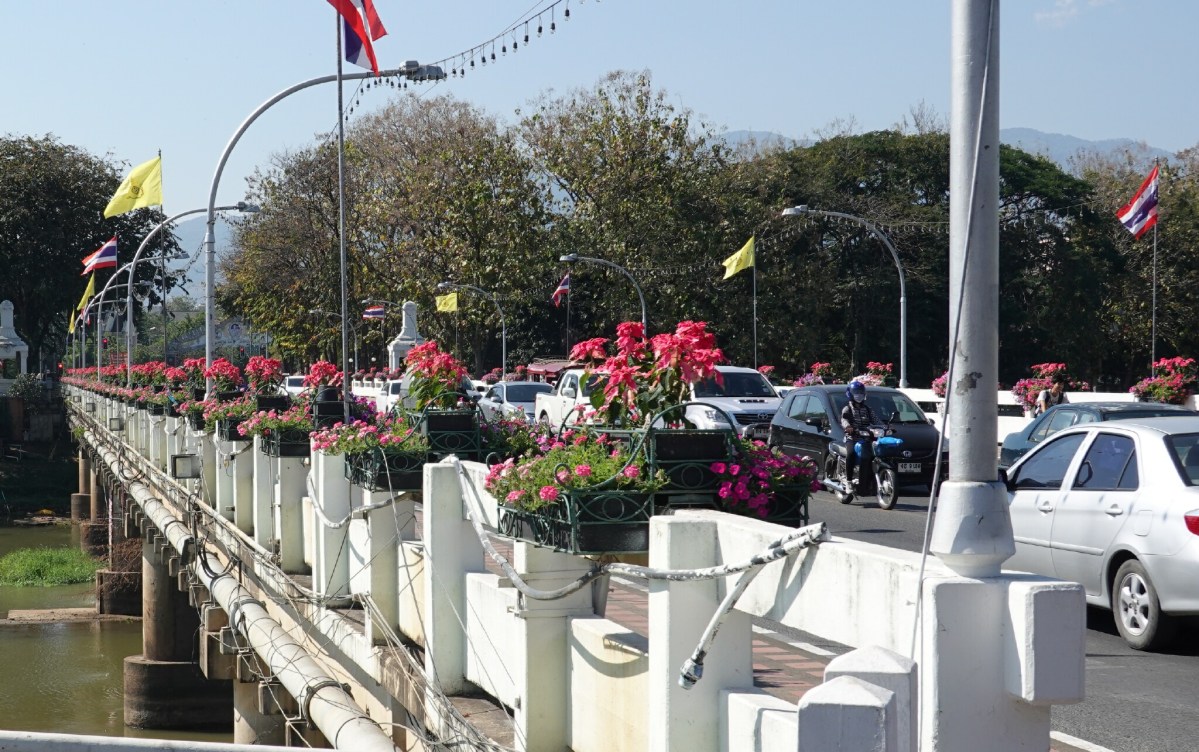
Nawarat Bridge into Chiang Mai.
My guess is that the original Nawarat Bridge replace the raft landing that led to the the original Tha Phae Gate on the second, earthen wall that was close to the river, known as Kampangdin.
As I have written before, what we now call Tha Phae Gate was not originally named as such. Tha Phae translates to “raft landing” and there is no raft landing at the current Tha Phae Gate, being almost a kilometer from the Mae Ping River. Tha Phae Road runs essentially straight from Tha Phae Gate to the Mae Ping River and the Nawarat Bridge (today, it is a one-way road, leading from the river to Tha Phae Gate). Originally there was a second, earth and clay wall, called Kampangdin in a semi-circle outside the east and south main walls (to protect the main city from flooding by the Mae Ping River). The gate in the Kampangdin on the road now known as Tha Phae Road was Tha Phae Gate, as it was close to a raft landing on the Mae Ping River. What is now called Tha Phae Gate was originally Chiang Ruak Gate. Over time, people called Tha Phae Gate “Outer Tha Phae Gate” and Chiang Ruak gate was called “Inner Tha Phae Gate.” When the gate on the Kampangdin was taken down, Inner Tha Phae Gate became simply Tha Phae Gate. This historical story is not known to most people, including most Thais that live here.
I took this picture, but continued south to the Iron Bridge, which gives me a more direct path back to Good Morning Chiang Mai, where I am staying (but still an almost 2 kilometer walk to go).
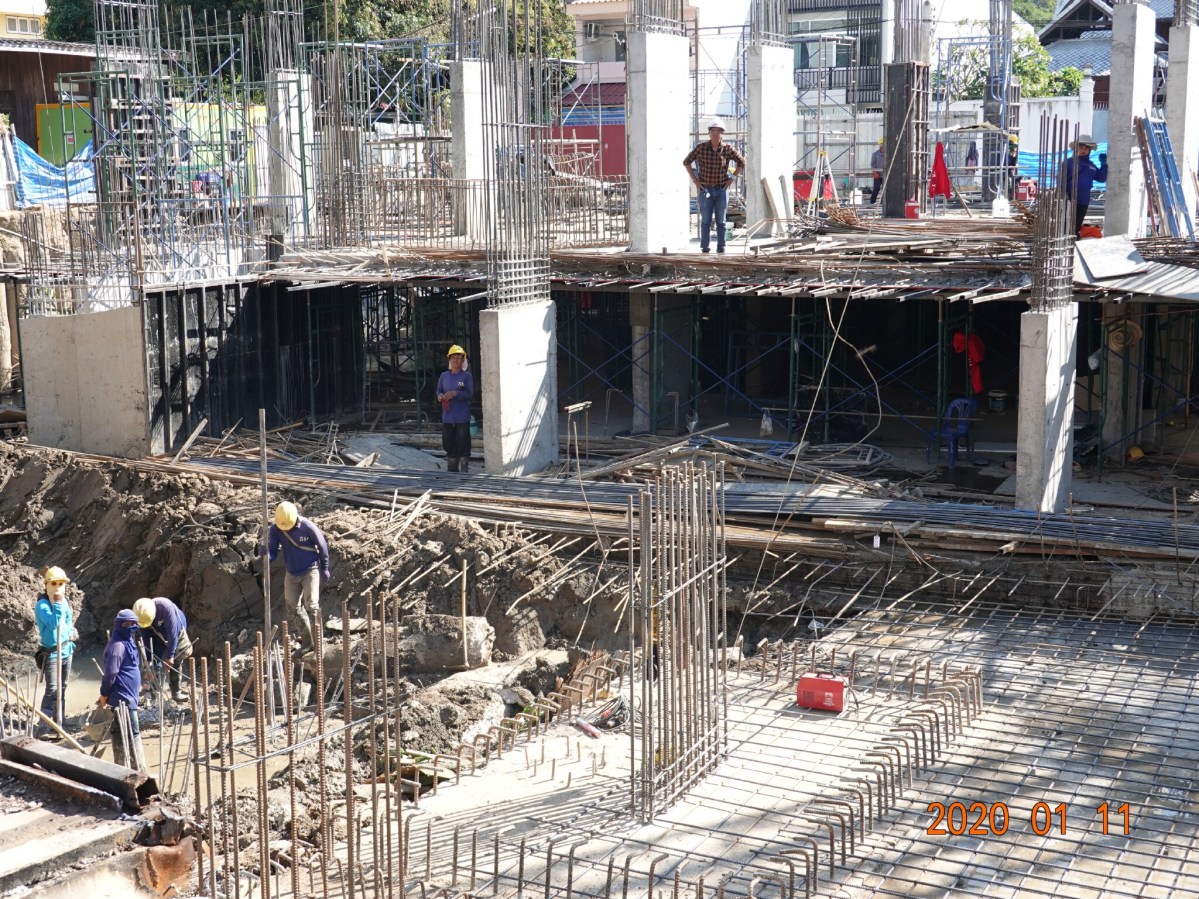
Construction site near the river on the west side.
I passed by this busy building construction site where concrete foundations and walls are in progress. From the look of the foundation, this will be a large building.
I continued my walk back to Good Morning Chiang Mai. A long, but interesting day of walking around the city.
Next: Return to Wat Srisuphan, the “Silver” Temple

 James the Intrepid Pilgrim