Thursday, January 9, 2020
Wild Rose Yoga
I have often described Wild Rose Yoga as a small yoga studio in an old traditional teak Thai house. It is small. The room in which yoga is practiced can hold only 20 yoga mats, all very close together. And almost every class has 20 students, so it is an intimate space in which to practice. Here are a few pictures, including me at the entrance sign:
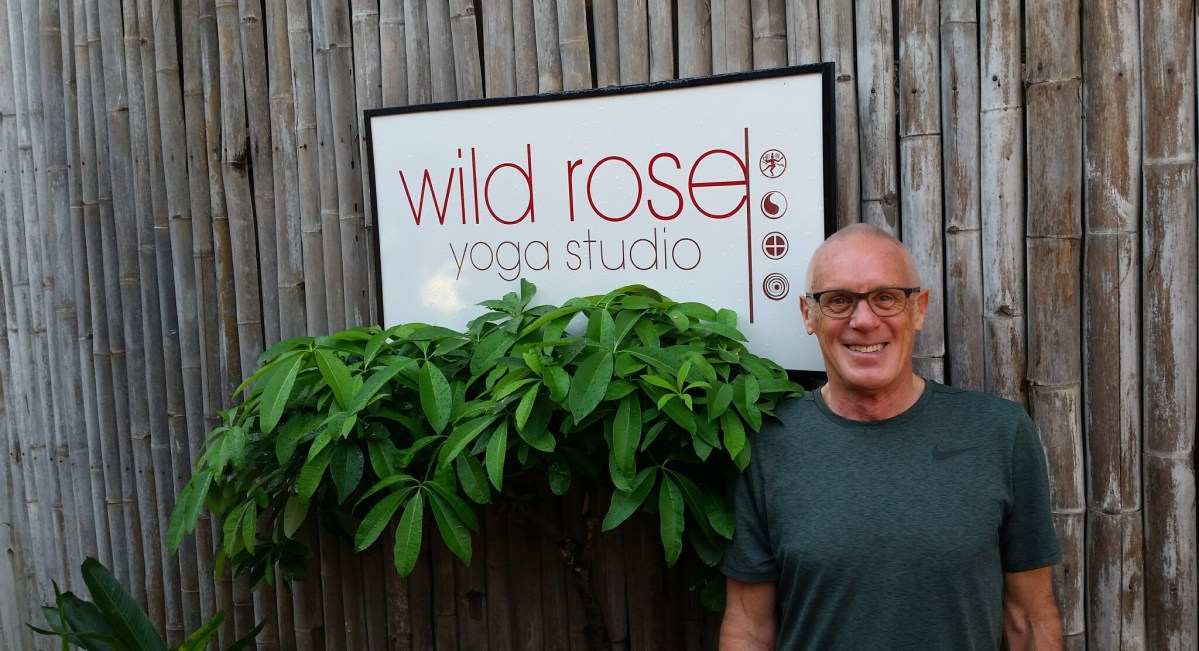
The author at the entrance sign to Wild Rose Yoga
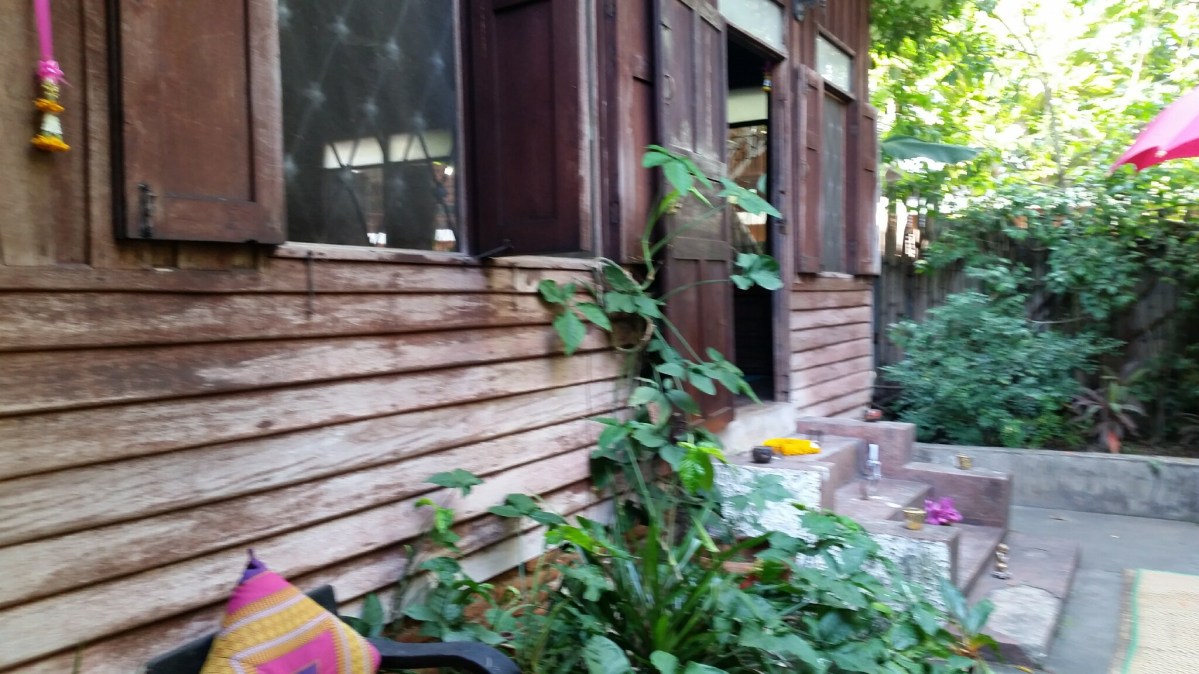
Back door to the garden at Wild Rose Yoga.
And here are two photos of the room in which practice takes place. Notice the mats are just inches apart.


It is small, but the students are skilled practitioners, and yoga practice at Wild Rose Yoga is a joy. After yoga practice, a shower, and a change of clothes, I went out to visit Wat Phra Singh again.
Return to the famous Wat Phra Singh
I have been to Wat Phra Singh many times. Wat Phra Singh is one of the “Big Three” temples in the old city of Chiang Mai along with Wat Chedi Luang and Wat Chiang Man. It was built in 1345 by King Phayu, who ruled the Lanna kingdom from 1336 to 1355, to enshrine the remains of his father King Kamfu, the previous ruler. The temple is said to be the first temple to house the famous “Emerald Buddha” when it was moved from Lampang in 1468. The name of the temple Phra Singh is an abbreviated form of the name of one of the principal Buddha images in the temple; Phra-Put-Tha-Shi-Hing or the Phra Shining Buddha. The temple contains some classical Lanna architecture including the old viharn and the beautiful scripture depository (library).
Every zodiac symbol has an official temple in Northern Thailand. Many people all over the Thai kingdom aspire to make a pilgrimage once in their life to the temple that represents their birth year. That’s a long journey for Thai people from Central or Southern Thailand, but that doesn’t stop most. Blessings of long life and prosperity are at stake. It is said that you will find a deep connection to a temple with the same zodiac sign as your birth year. Wat Phra Singh is a temple associated with the Year of the Great Snake, as it is called in Thailand; what we typically refer to as the Year of the Dragon. I was born in the Year of the Dragon, and after many, many visits to Wat Phra Singh, I see it for its beauty and significance to the Buddhist religion, but fail to feel a connection beyond that to this temple. I feel a much stronger connection to Wat Chedi Luang and the large chedi there.
The main viharn (worship hall) at Wat Phra Singh is undergoing a major renovation. It dates back to 1925 having replaced the original viharn that dated back to the 15th century. It contains an important Buddha image that was cast in 1477, the Phra Chaon Thong Thip Buddha. Unfortunately, I cannot get a picture today as no entry to the viharn is allowed.
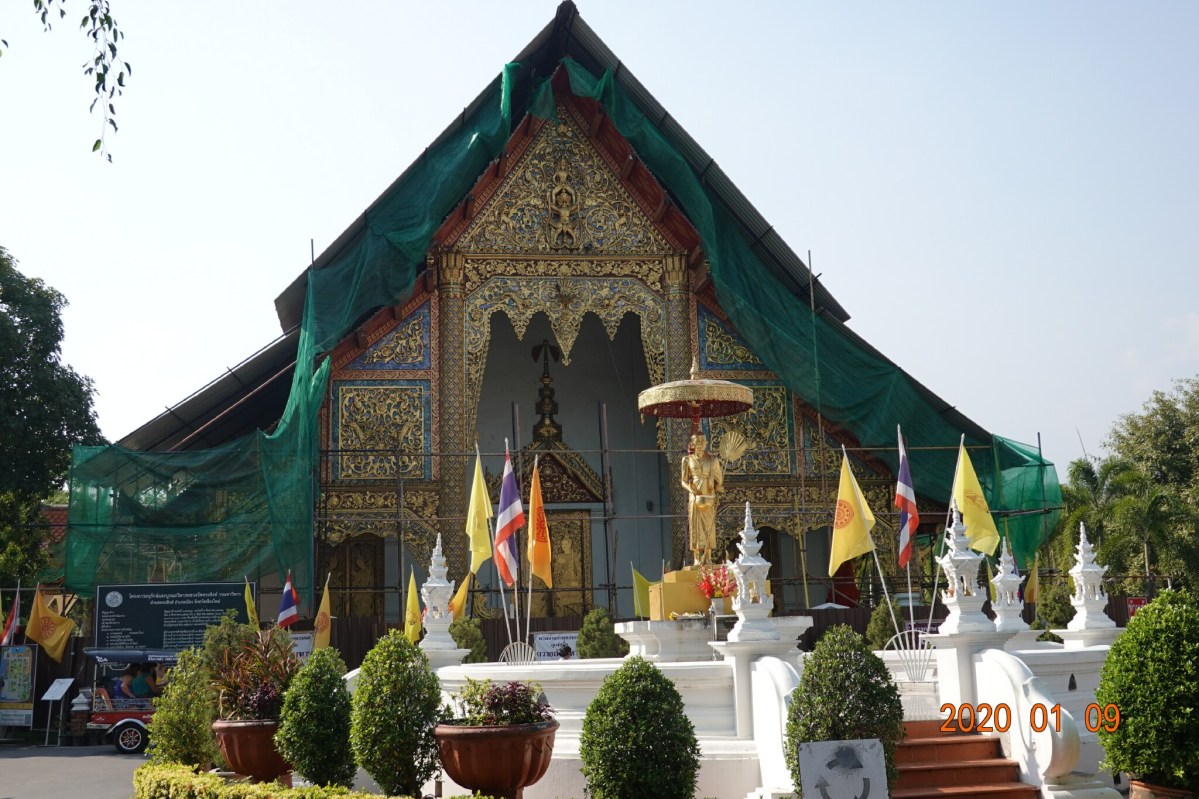
Main viharn at Wat Phra Singh undergoing a major renovation.
Before the renovation, there was a charge of 40 baht (about $1.25) for foreigners to enter the main viharn. There was no charge to wander around and peruse the grounds. With the viharn under construction, they now have a table set up and charge the fee to enter the grounds. (I do not mind the charge – they keep the grounds maintained, and have clean restrooms available.)
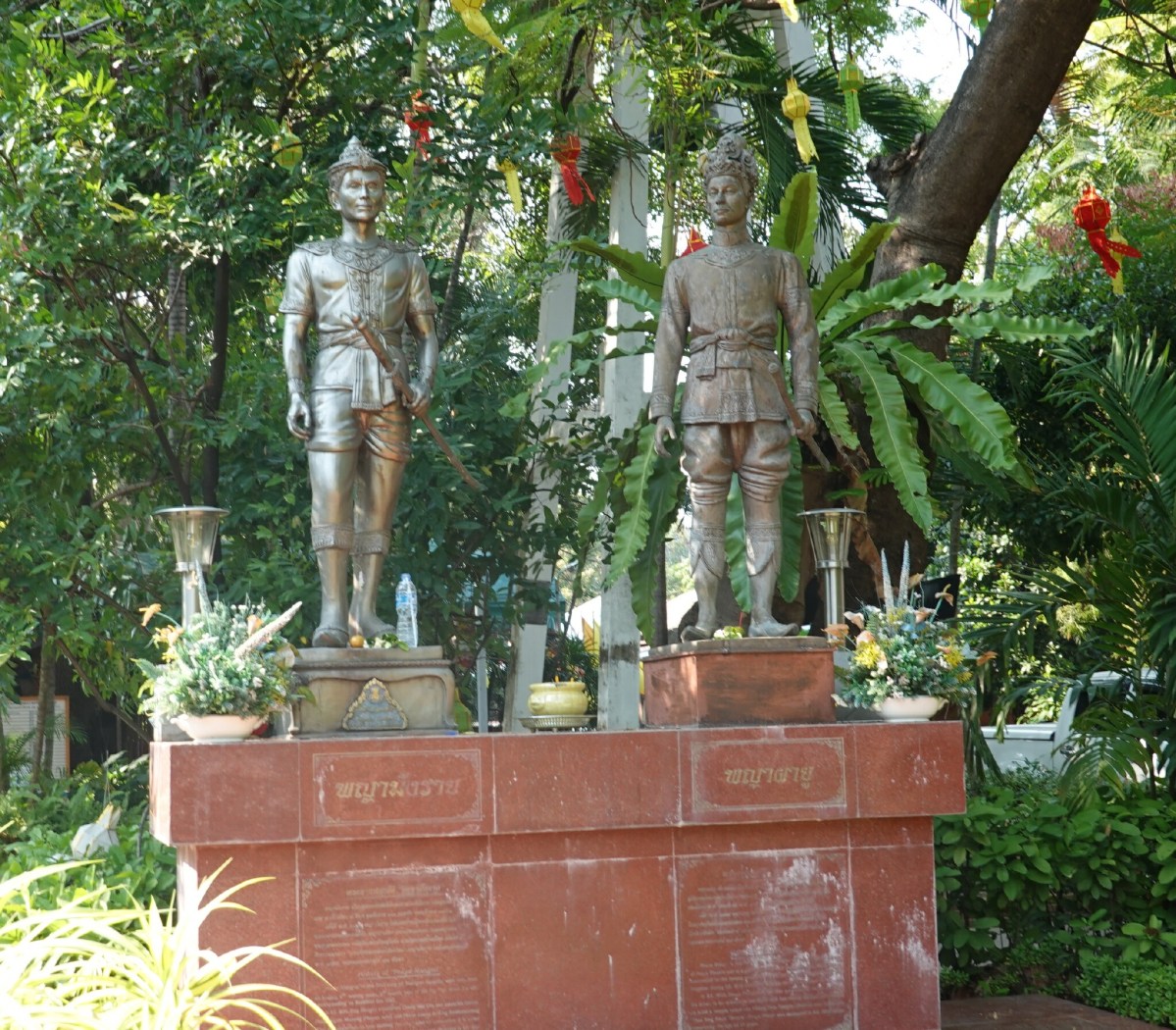
Statue of King Phayu and his father, King Kamfu at Wat Phra Singh
This statue is of King Phayu who built the temple, and possibly his father, King Kamfu. Just to the east of the statue is the ho trai (library, or manuscript repository) with the carved thewada on the sides and at the corners.
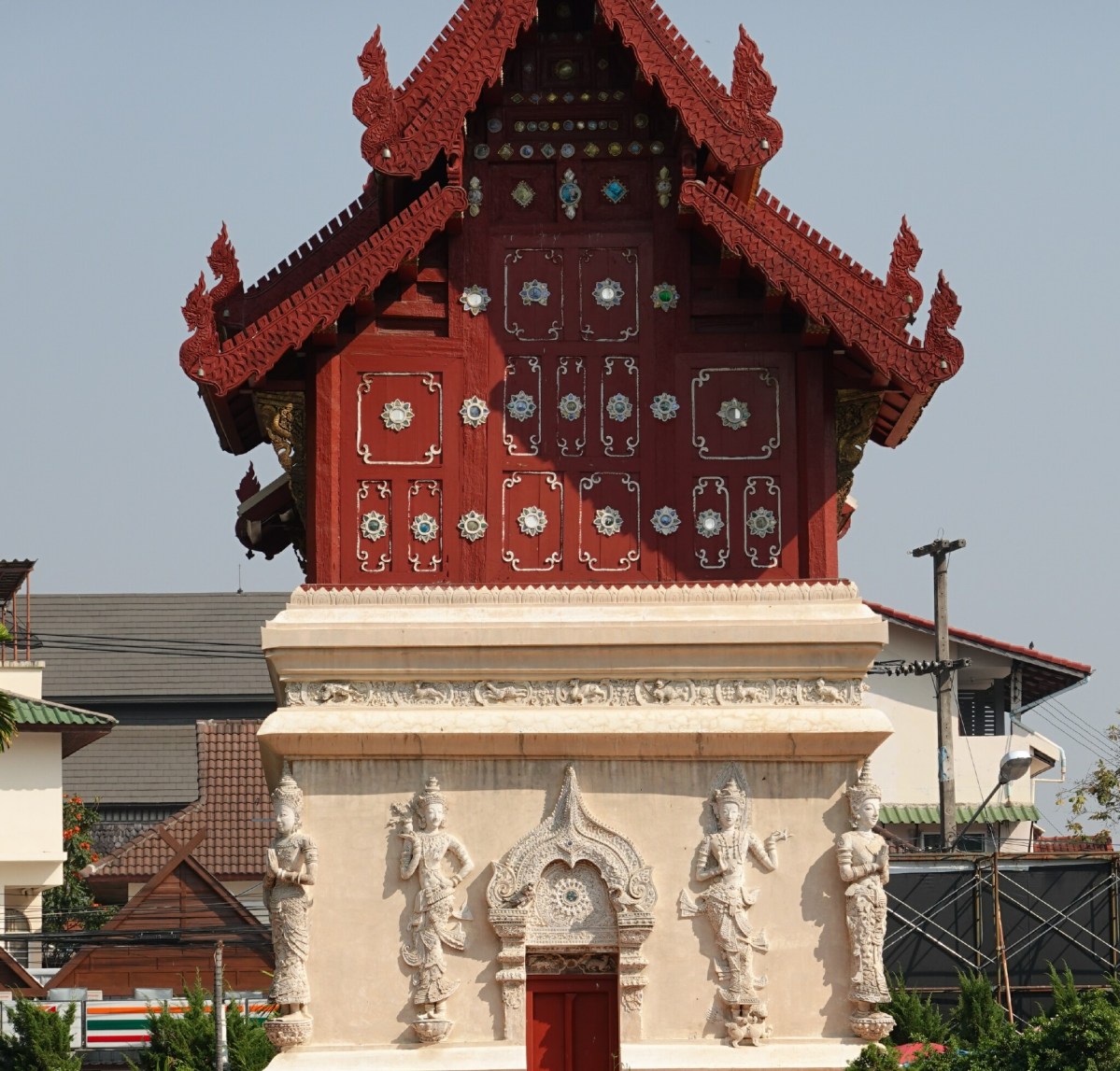
Ho Trai (library) at Wat Phra Singh
The ho trai is considered a masterpiece of the Lanna style of architecture and regarded as one of the most beautiful in Thailand. The building originally dates from 1477 and has undergone several restorations, most recently in 1867 and 1920 (not really that recent).
Just to the west of the statues of the kings is a large bell tower, almost hidden in the gardens. Few tourists wander over to this corner, but it is very peaceful and a very short distance from the crowds of tourists.
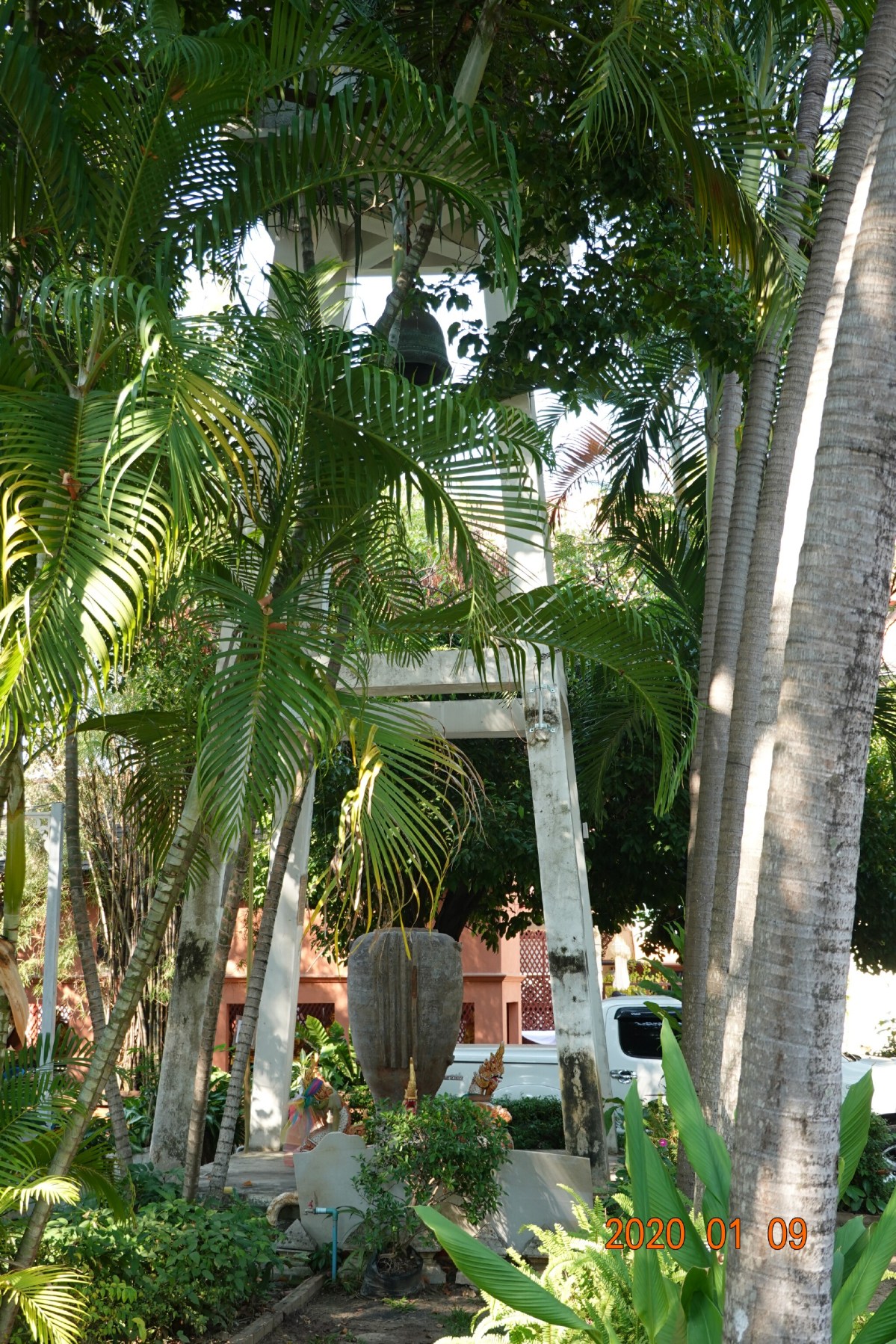
Bell tower hidden in the gardens at Wat Phra Singh.
And then on to the ubosot, an ordination hall. This is a large teak structure, beautifully adorned with carved figures and the traditional red and ochre decoration. Typically, only men are allowed to enter an ubosot. I could find no explanation as to why women are allowed to enter this ubosot.
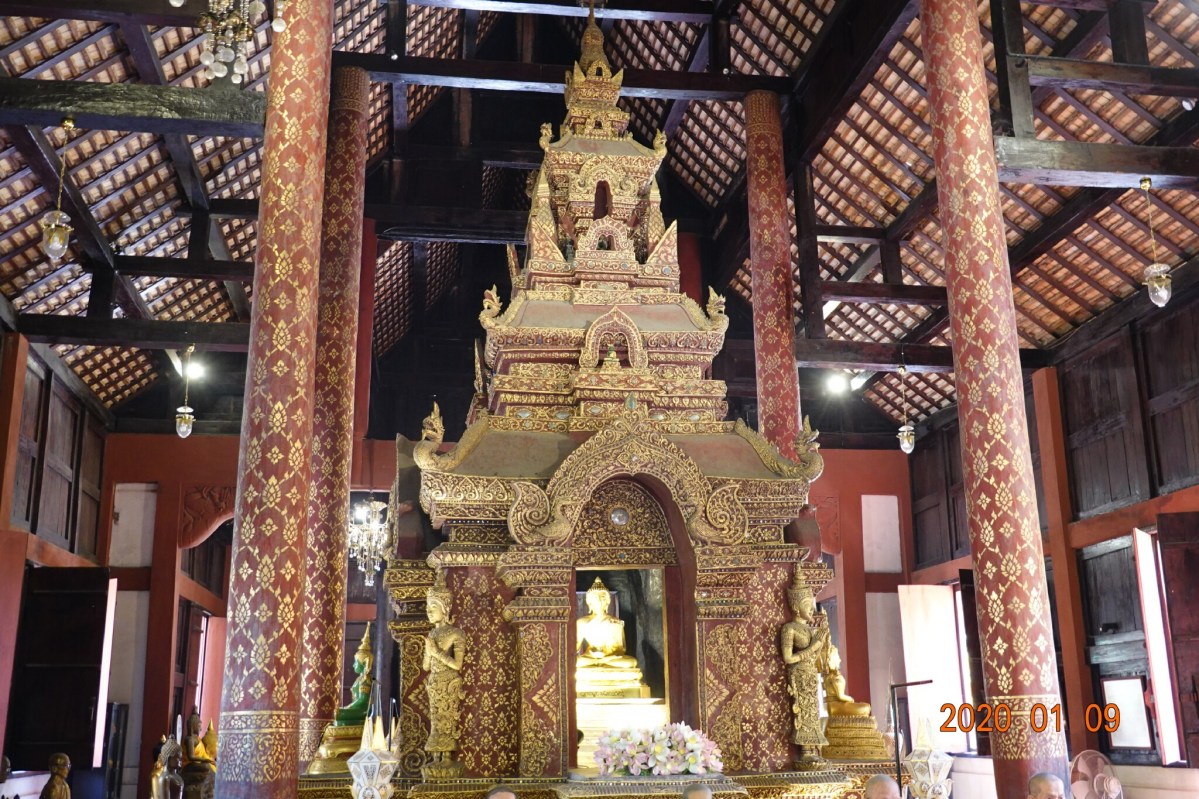
Inside the ubosot from the north entrance at Wat Phra Singh.
The south entrance is my personal favorite, with the carved decorations and figures beside and above the entrance.
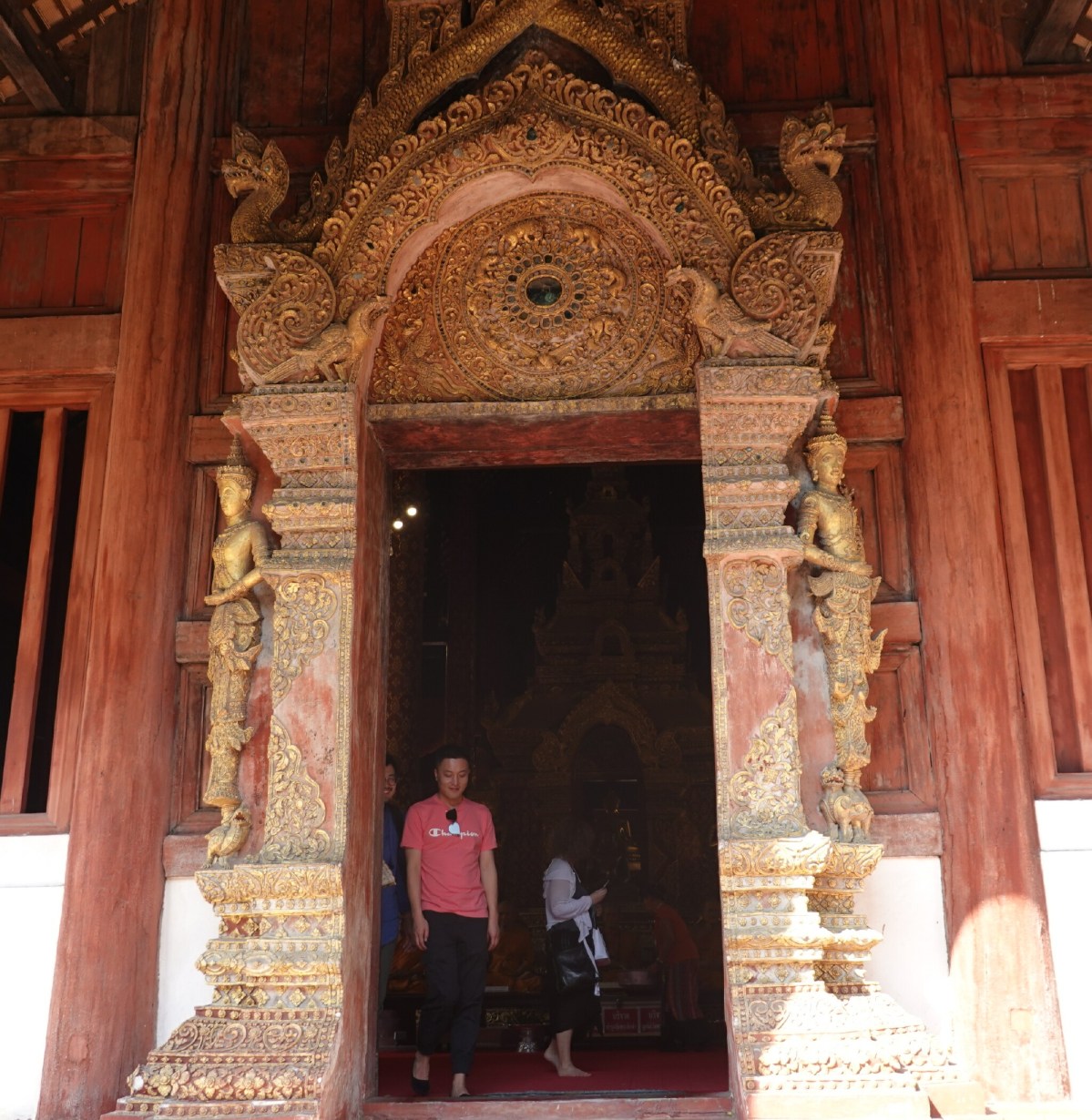
South entrance to the Ubosot at Wat Phra Singh.
Inside the Ubosot are many decorations, including this odd a stone stele (stone or wooden slab, erected as a monument) made from red sandstone with inscriptions carved on the front, flanked by two deva figures.
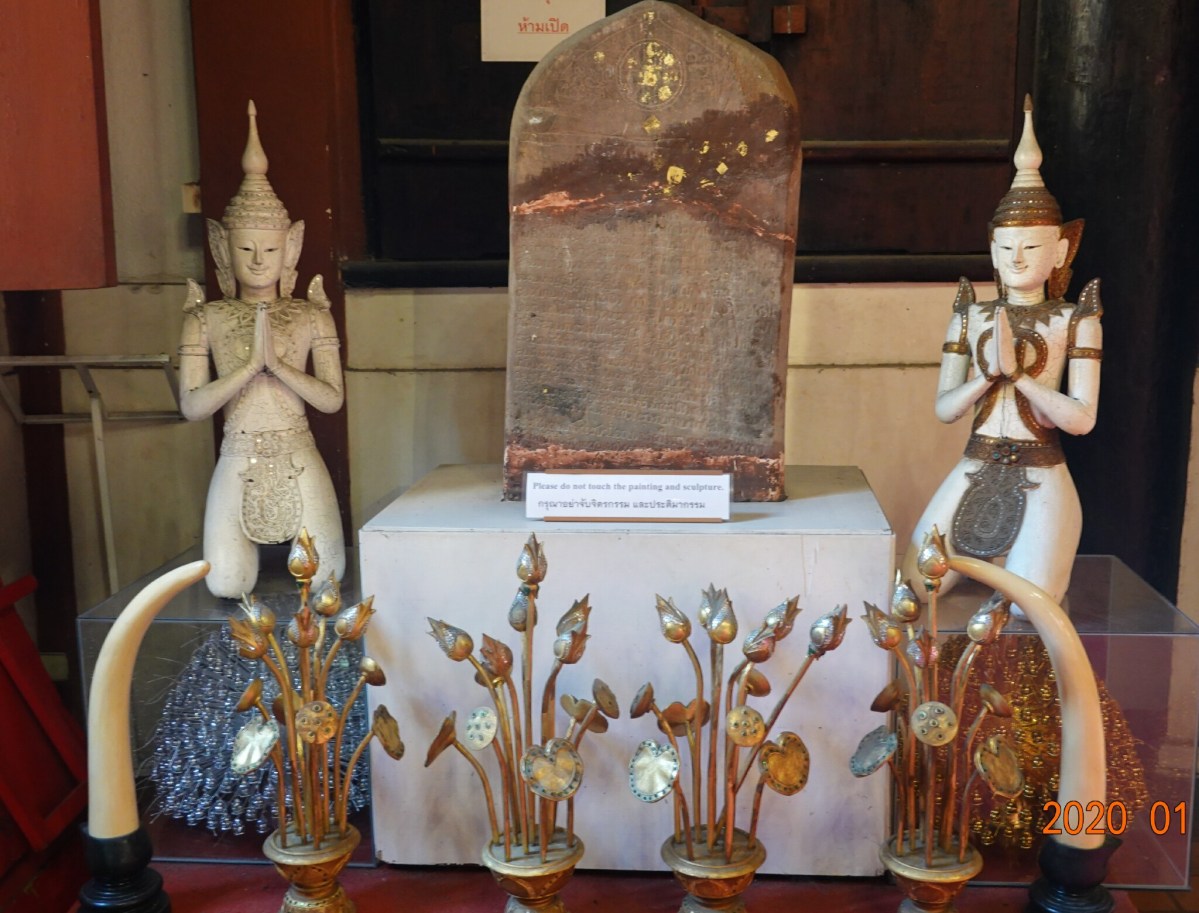
Red sandstone stele in the Ubosot at Wat Phra Singh.
A relatively recent addition to the ubosot are these two Buddha footprints. I recall seeing them for the first time last year.


Finally, the large golden chedi at Wat Phra Singh. Over the past 3 years, the chedi has changed from a more natural look to this gilded look. I much preferred the older look; this appears almost gaudy to me. It is loved by most, however.
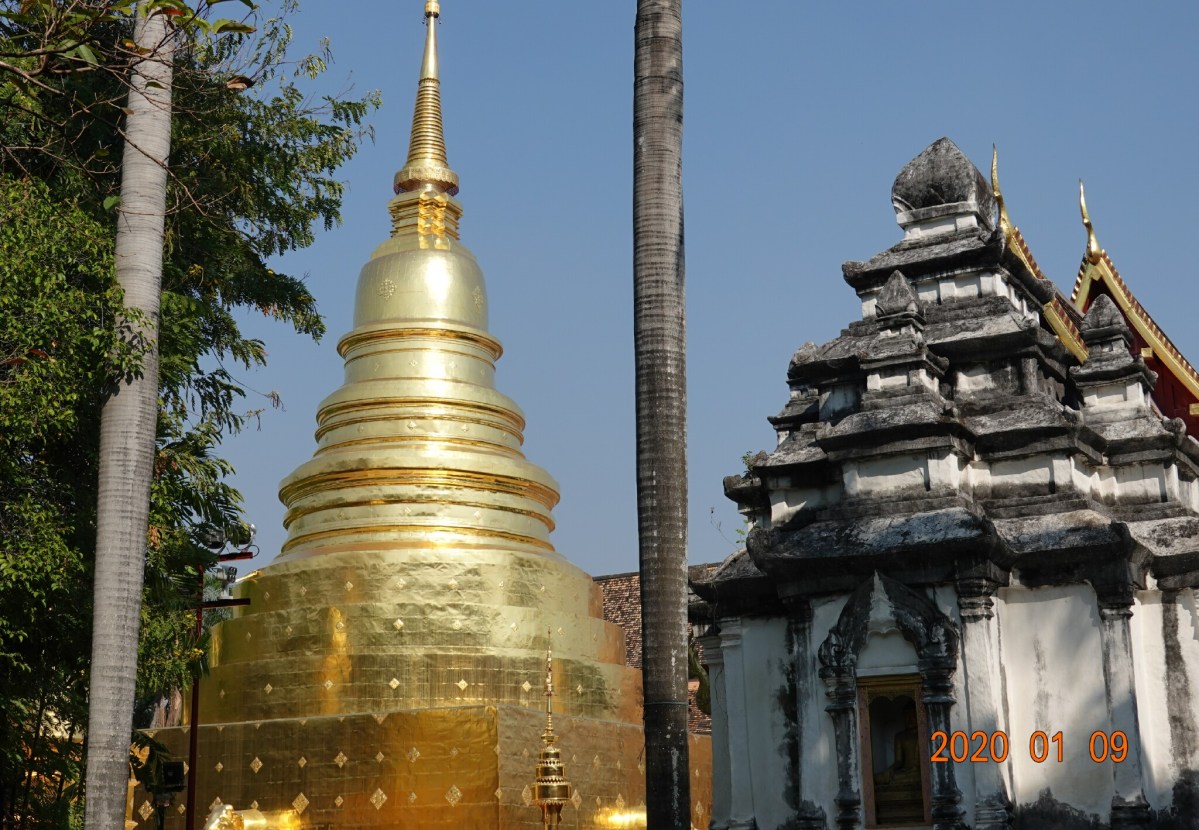
Gilded chedi at Wat Phra Singh.
Near the golden chedi is another, older viharn, named Viharn Lai Kham with a very elaborately carved entrance. It was originally built in 1345 and was restored in 1772, after the Burmese left, by King Kawila.
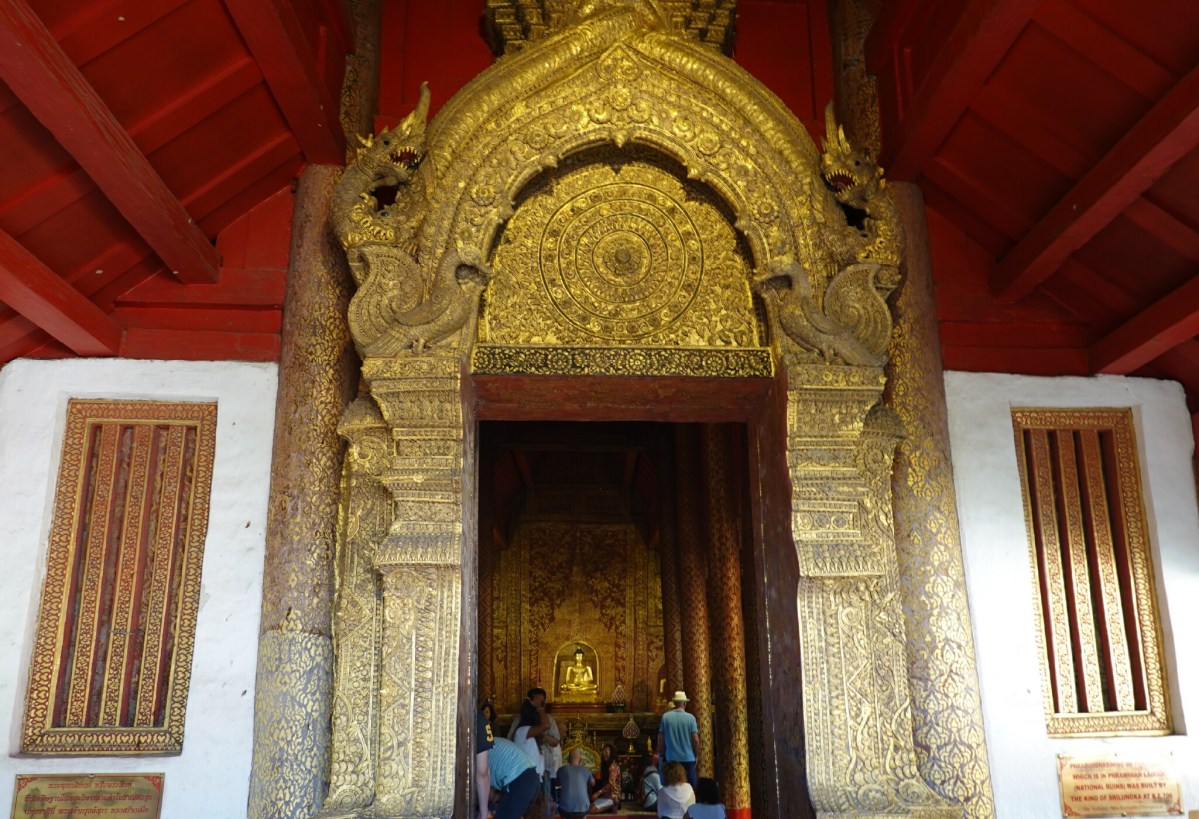
Secondary, viharn Lai Kham at Wat Phra Singh.
Inside the older viharn Lai Kham the look is rustic, simple, and nicely decorated.
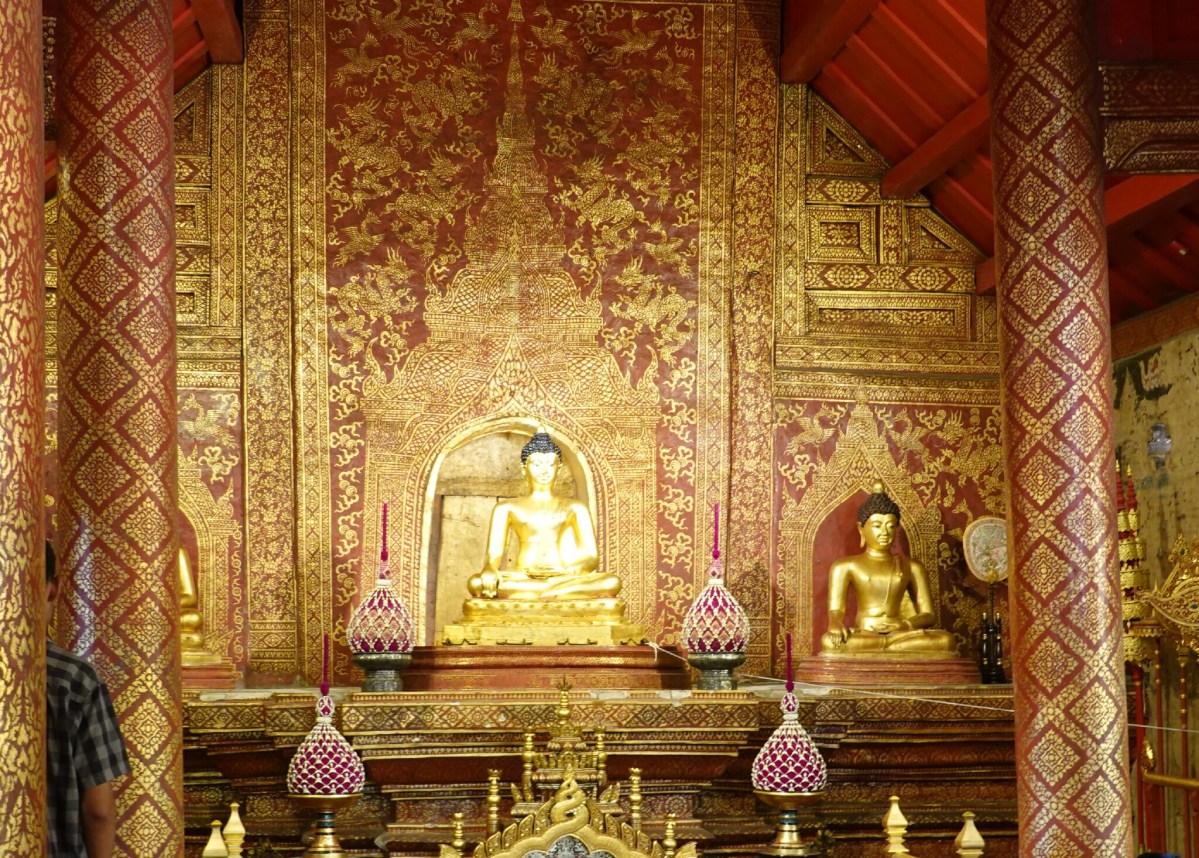
Inside Viharn Lai Kham.
Leaving Wat Phra Singh, I walked past the hilltribe coffee shop, Akha Ama and entered a smaller, non-tourist temple grounds.
Wat Si Koet
Wat Si Koet is an old temple, with a very old Bhodi tree on the grounds. It is said that the temple was built around 1638 and was restored during the reign of King Kawila in the 19th century after the Burmese left Chiang Mai.
The viharn is typical of northern Thai temples, with naga guarding the entrance. The use of blue in the pillar decoration and naga scales is unusual.
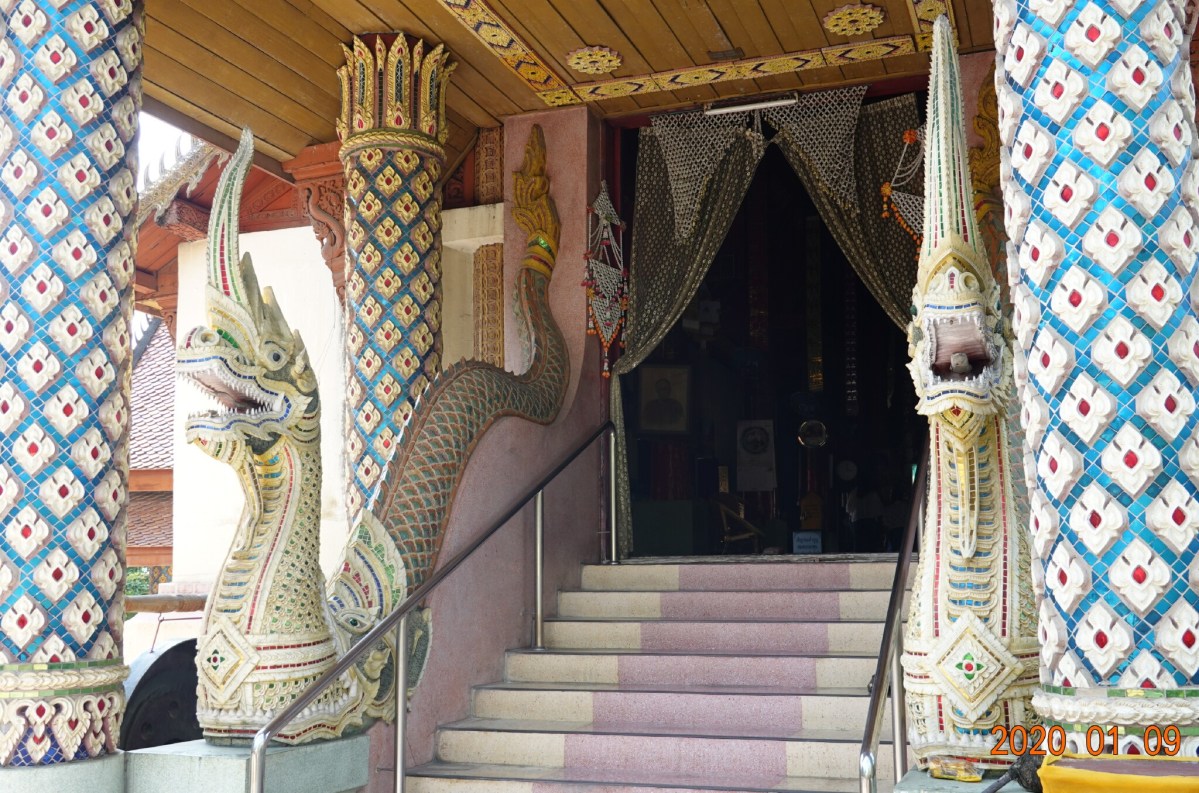
Main viharn at Wat Si Koet.
Inside the viharn, the look is fairly common for Thai Buddhist temples.
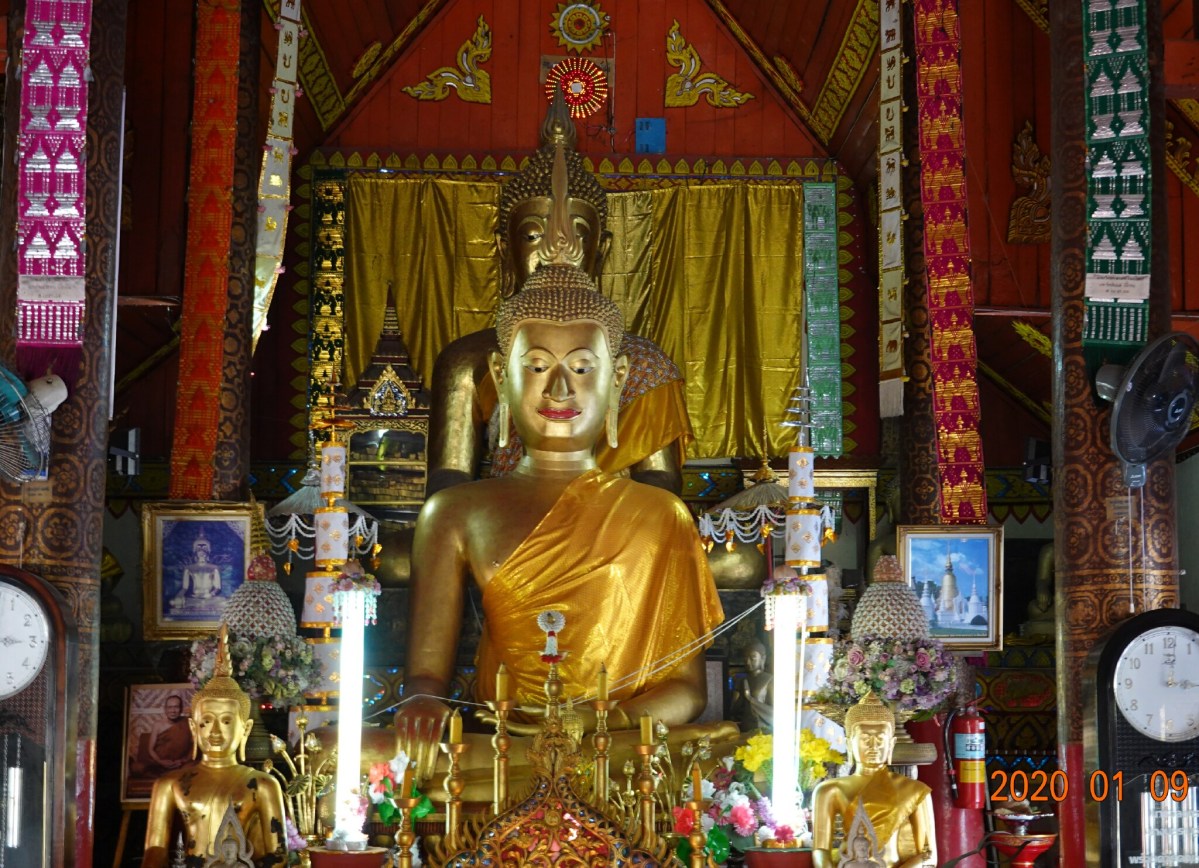
Inside the main viharn at Wat Si Koet.
Near the main viharn was this very artistically decorated ubosot.

Secondary viharn or ubosot at Wat Si Koet.
Interestingly, as at Wat Phra Singh, this ubosot had no signs warning women not to enter. But the doors were locked, so nobody could enter today.
After walking back to my room at the Tropical Inn/Good Morning Chiang Mai, I went to my favorite Thai restaurant, Kanjana, for dinner. I shared a table with a young man from the U.K. who is a true digital nomad – he has no real home, works online, and moves around Europe and SE Asia for a few months at a time. A good meal, good conversation, and the end of another good day in Chiang Mai.
Next: The flower market and Wat Kate Karam

 James the Intrepid Pilgrim
The blue tile is striking
LikeLike
Thank you for your article! Interesting read
LikeLike