Wednesday, January 8, 2020
A walk around the Southeast quadrant of the old Chiang Mai city
The day today started with an invigorating, energetic yoga practice with Annie as instructor. Although Annie’s practice is challenging, she is always smiling, she is a very good teacher, and her adjustments are always an improvement in the pose. After practice I walked over to the Amazing Alleyway for a fresh juice smoothie with a young man from Israel. Shortly after we sat down, Annie joined us. We had a good time talking.
Wat Phra Chao Meng Rai
After the smoothie, I returned to my room, cleaned up, got my camera and headed out for a walk around the southeast quadrant of the old Chiang Mai city. This is a quadrant in which there are not as many temples, and while I have seen a few, I decided to return to this area today. First on my list was a return to Wat Phra Chao Meng Rai, where I passed by a few days ago, took a couple of photos of the front, but was in a bit of hurry to get to my gua sha appointment with Om, so I could not linger. Today I have time to linger.
Wat Phra Chao Meng Rai is a temple built by King Mengrai when the cart or wagon carrying a Buddha statue broke a wheel at this location on its way to another temple, likely Wat Chiang Man. For unknown reasons, rather than fixing the cart or wagon he decided to build a temple at this location to house the Buddha statue. And here it is, a standing Buddha in a small building almost behind the main viharn (worship hall).
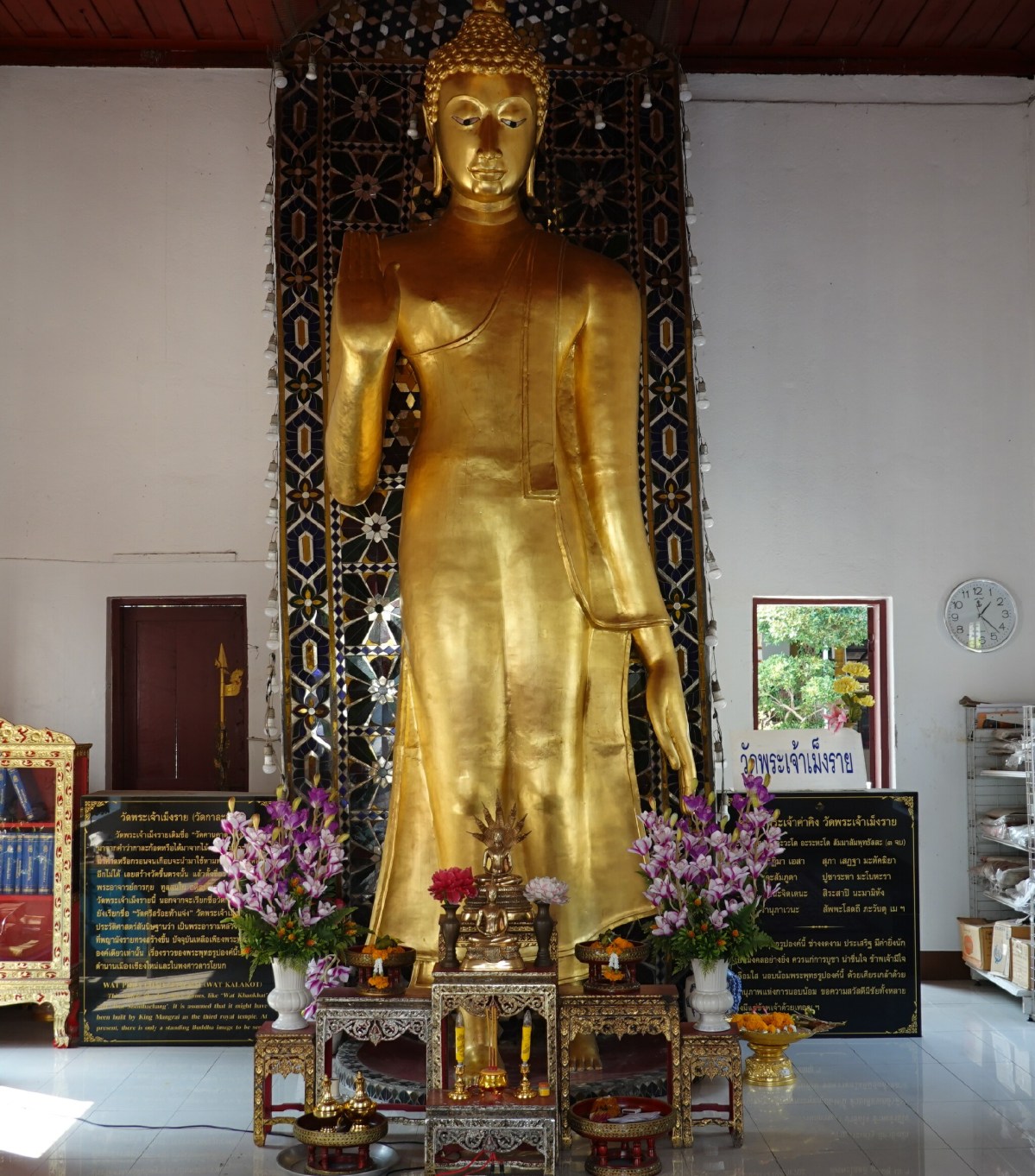
Standing Buddha at Wat Phra Chao Meng Rai.
Then over to the slight north (right as you enter the temple grounds) is this statue of King Mengrai.
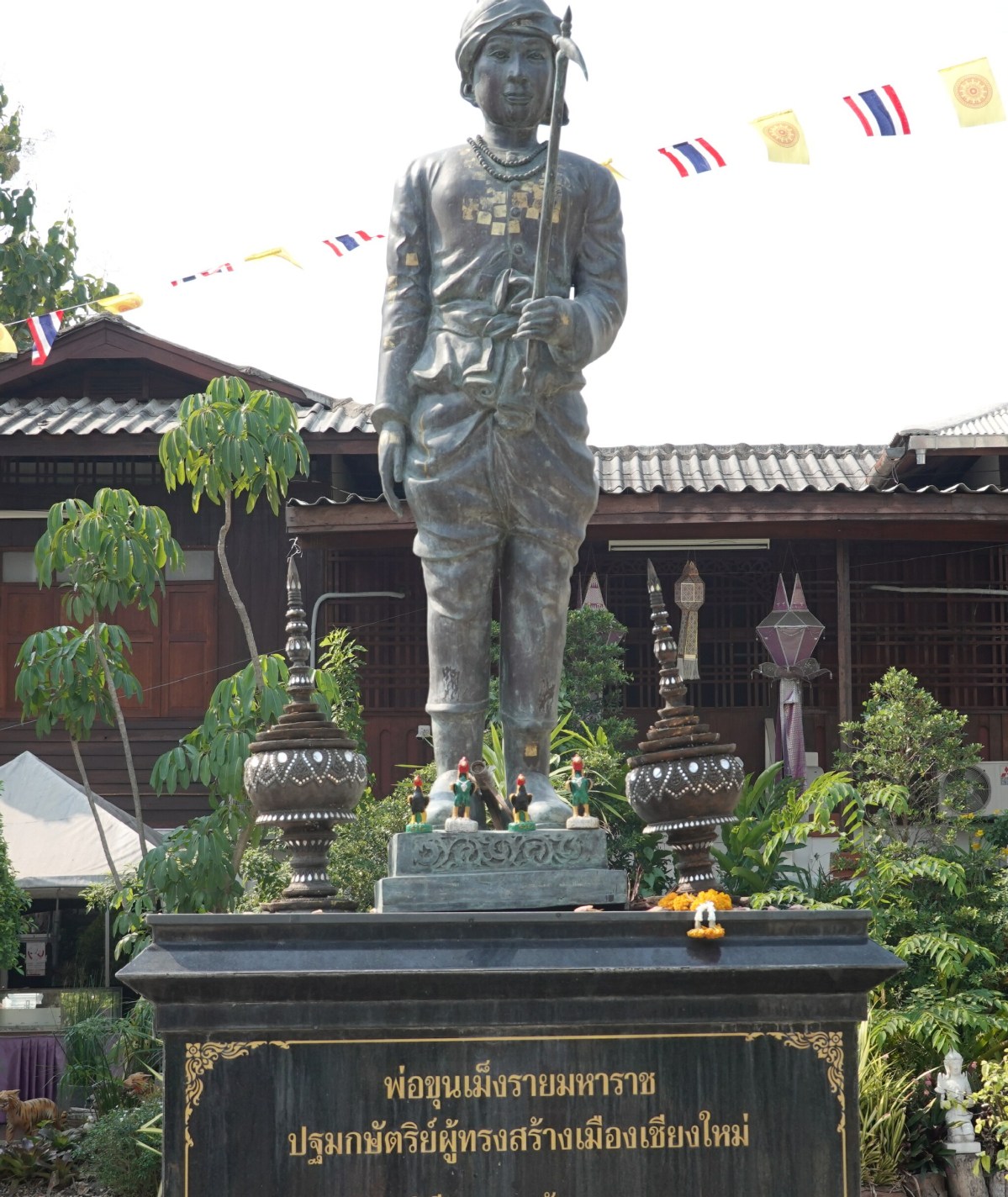
Statue of King Mengrai at Wat Phra Chao Meng Rai.
This rather stark white small building is something of secondary worship hall, off the main viharn.
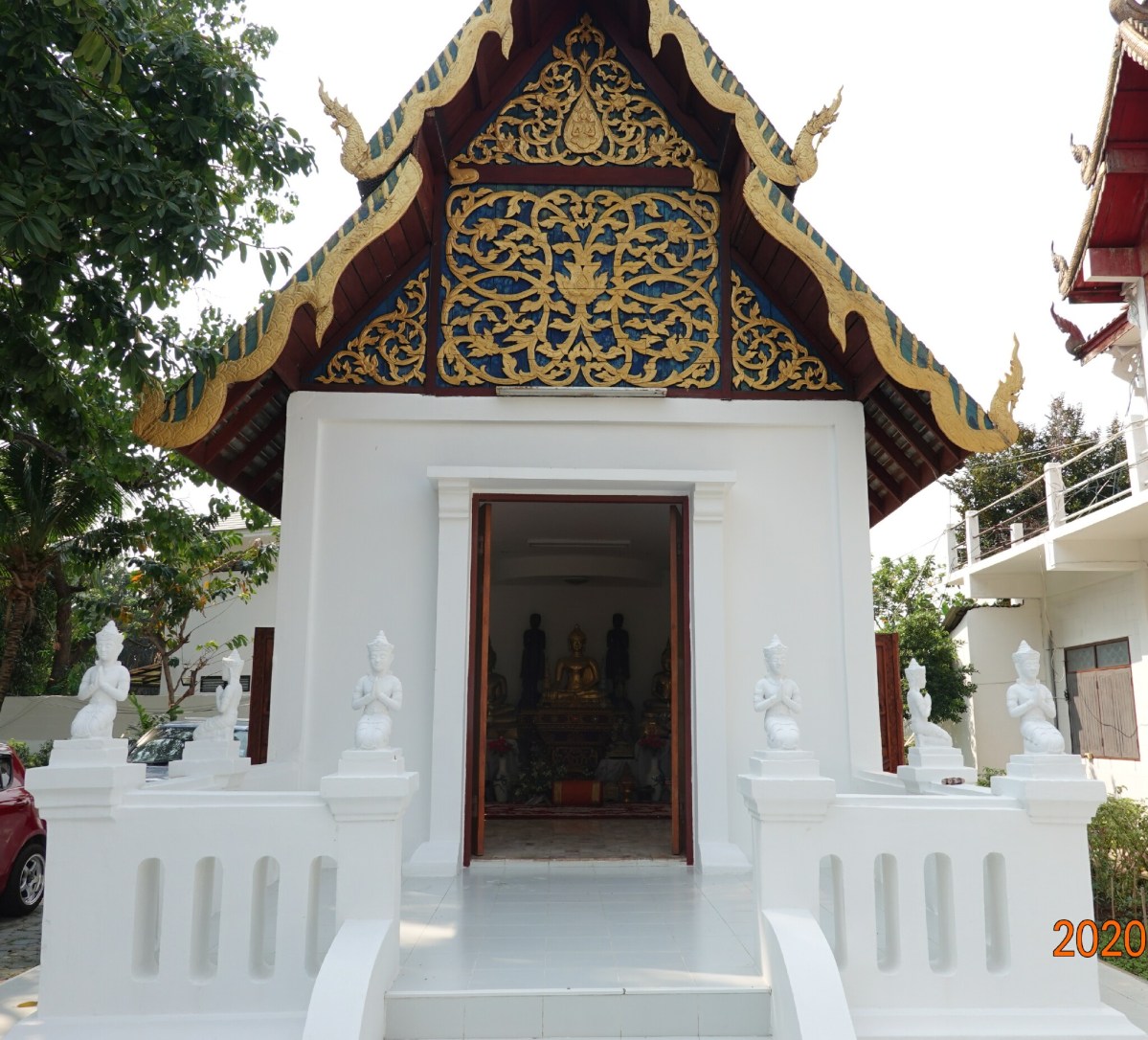
Secondary worship hall at Wat Phra Chao Meng Rai.
And here is the inside of this rather spartan worship hall:
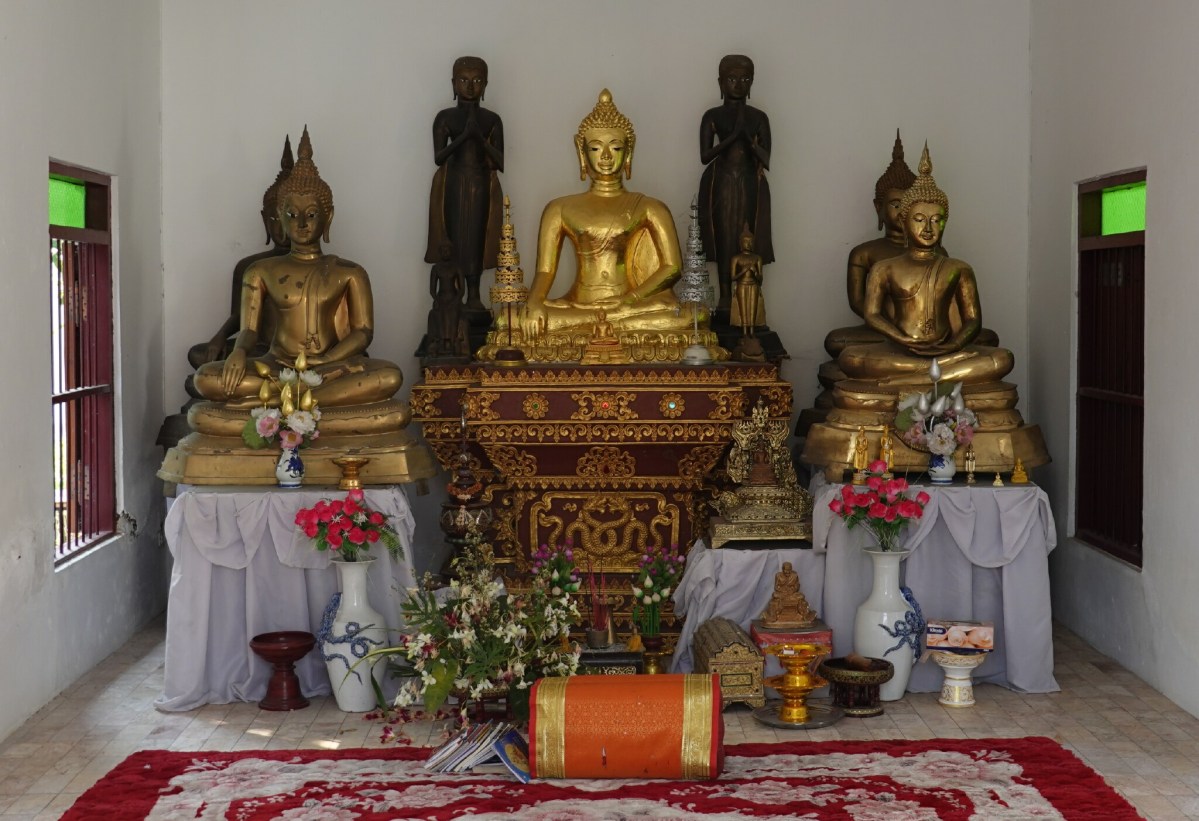
Inside the secondary worship hall at Wat Phra Chao Meng Rai.
It is a small building, and its purpose, if any, other than worship is unclear.
Then to the back (setting sun side) of the main viharn is this chedi in which the ashes of someone important are interred.
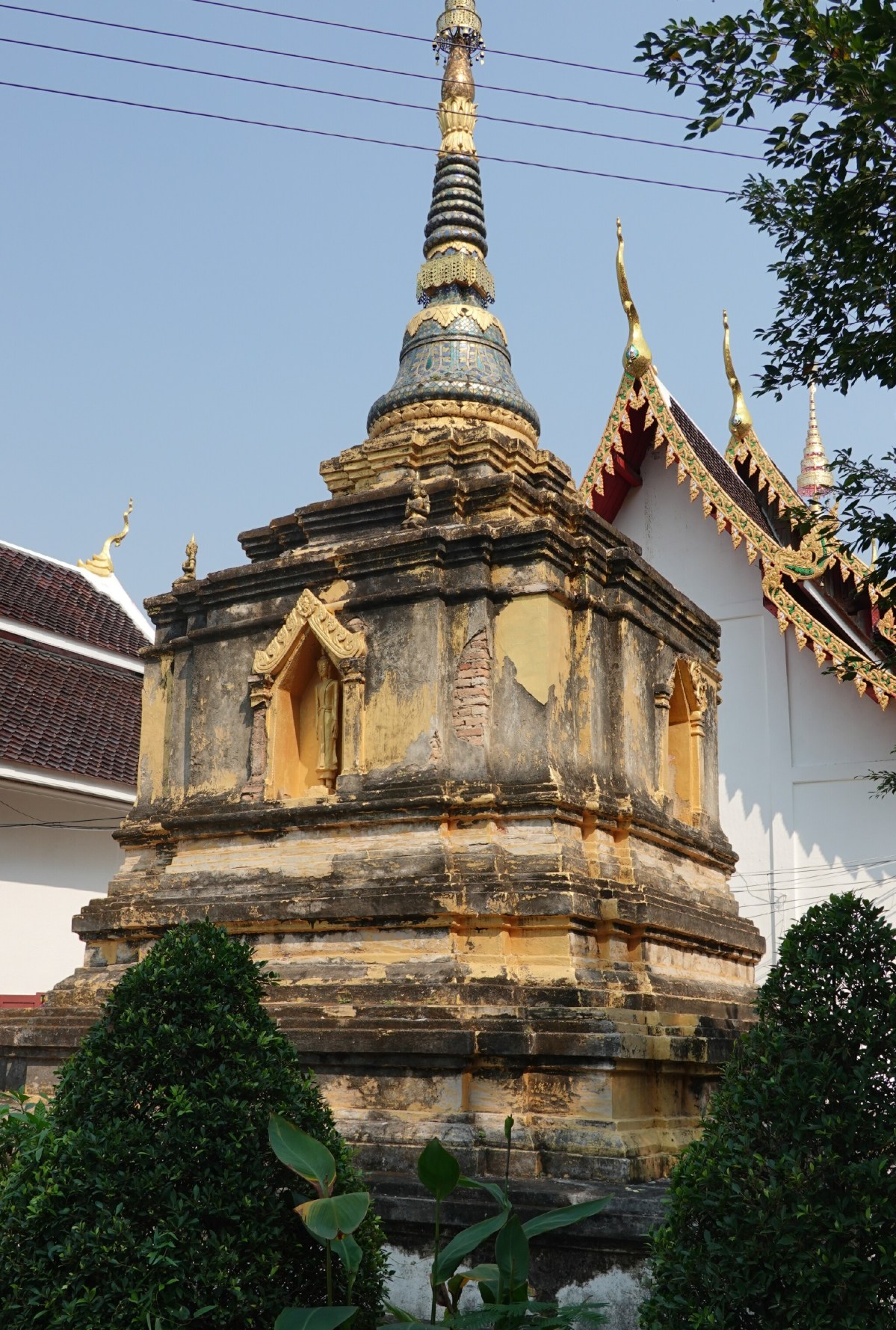
Main chedi at Wat Phra Chao Meng Rai.
Another view of the chedi amidst the trees.
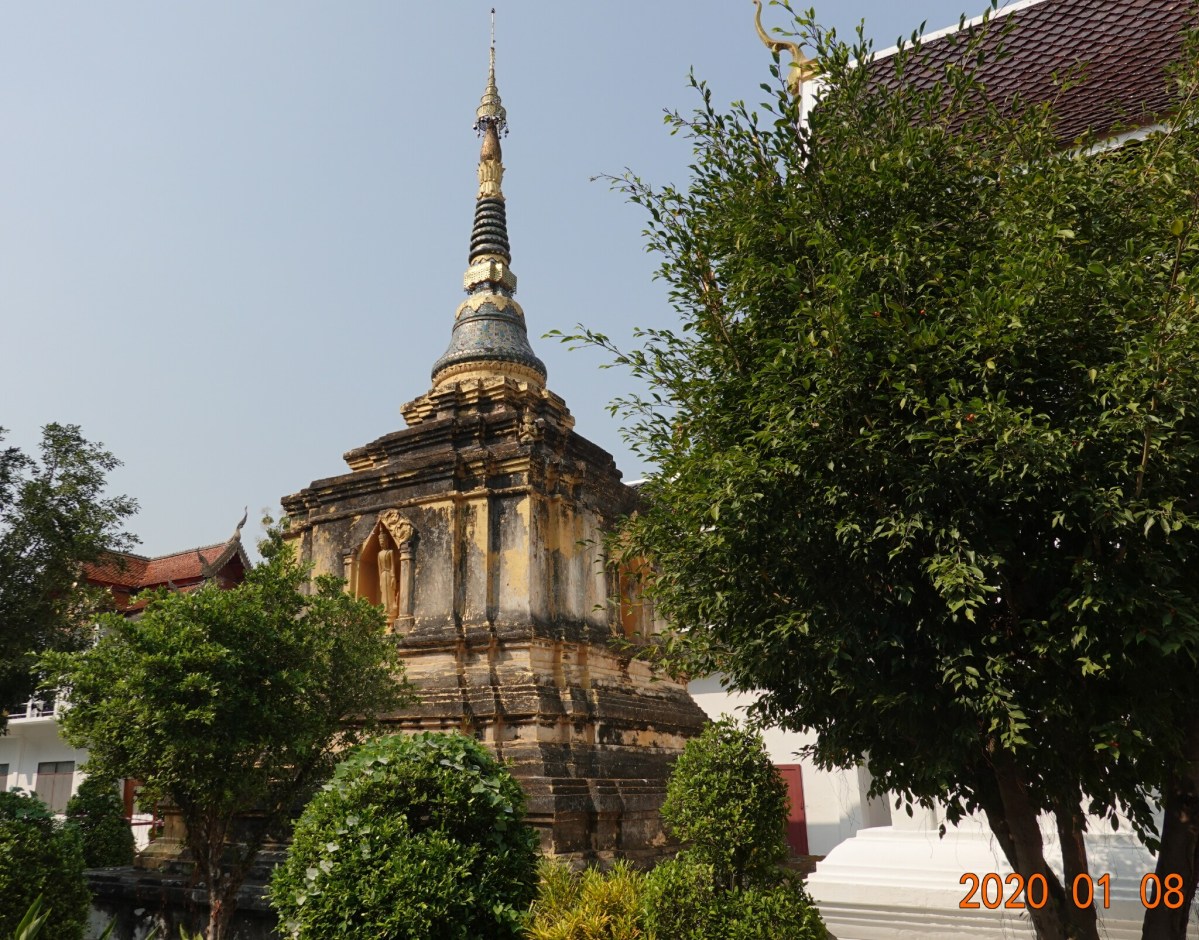
Second view of the chedi at Wat Phra Chao Meng Rai.
Another view of the artistic, colorful dancing thewada (angelic brings that live in the heavenly realms) on the front of the main viharn at Wat Phra Chao Meng Rai.
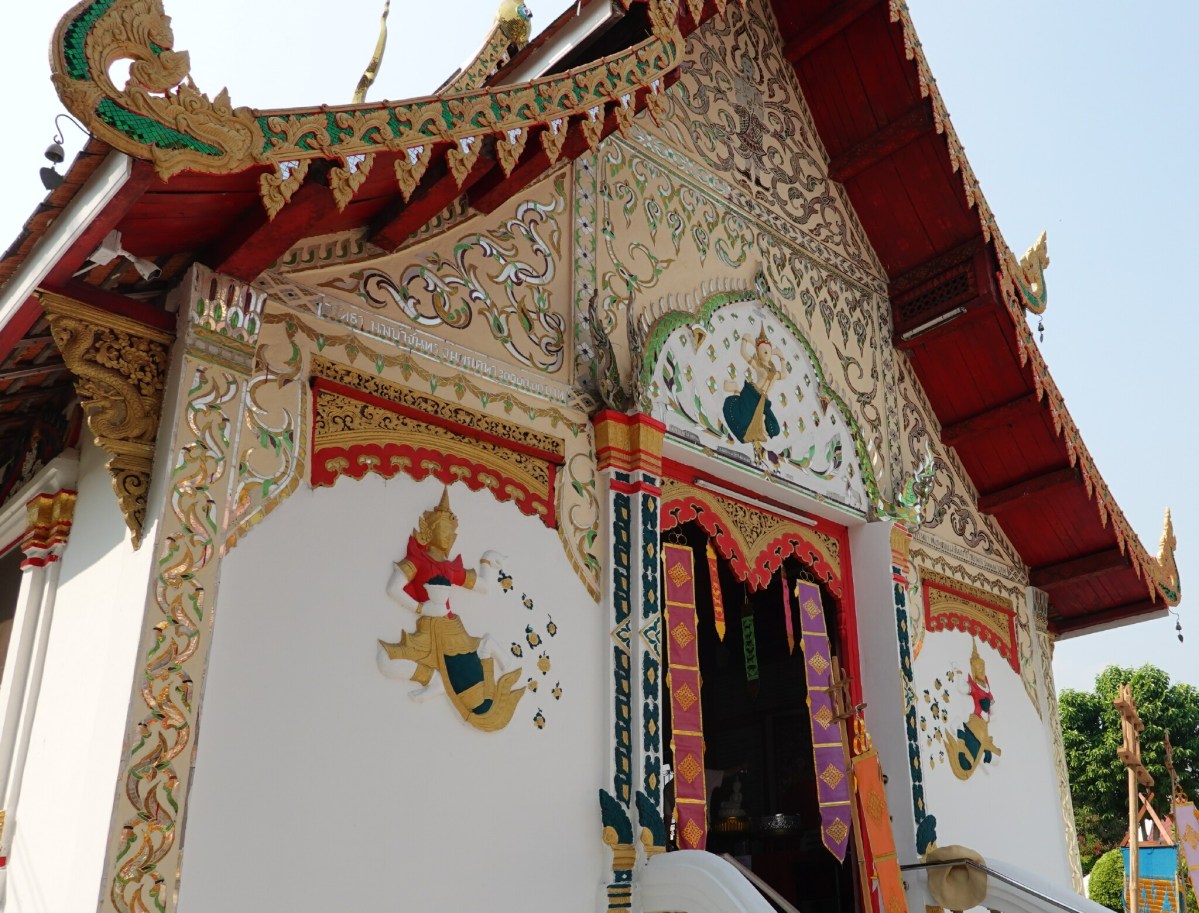
Front of the main viharn with the colorful, artistic, dancing thewada at Wat Phra Chao Meng Rai.
And the inside of the viharn is very typical of Buddhist temples in northern Thailand. Not a particularly large viharn, but not too small, either. A good size for what I call a “local temple” frequented by the people living the immediate area, and not frequented by many tourists.
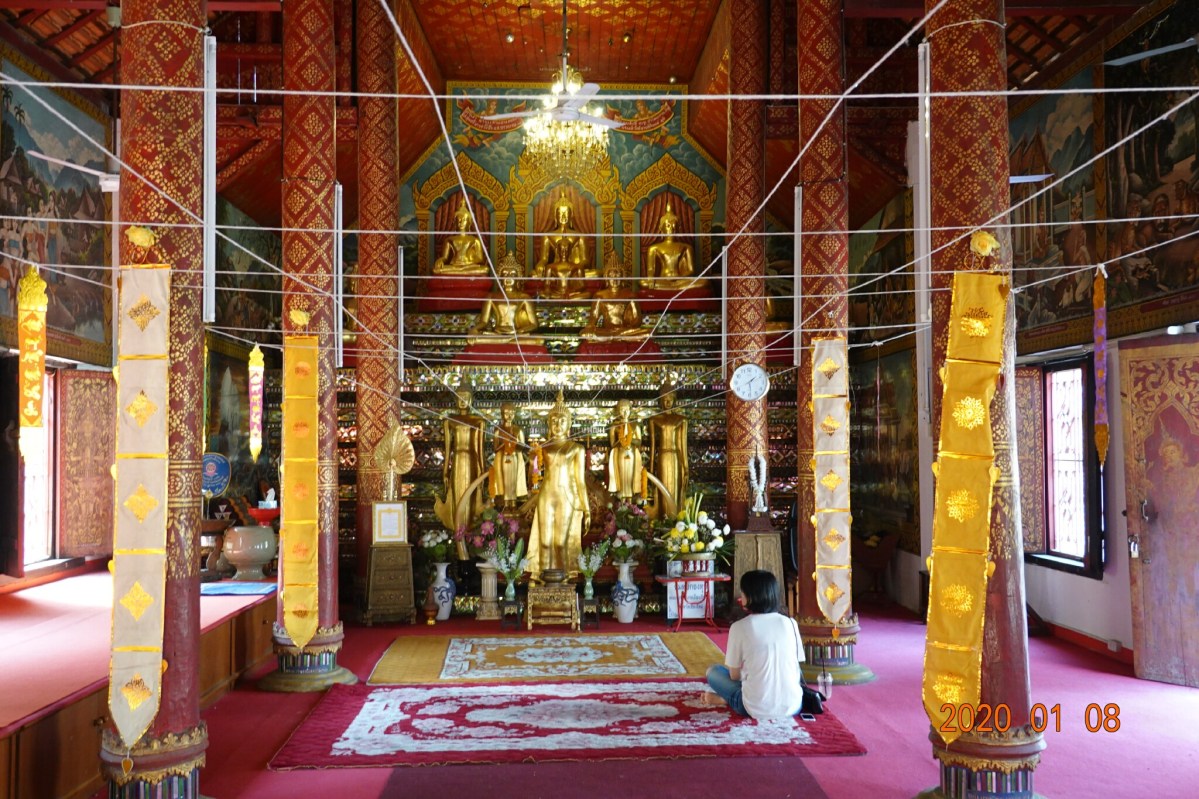
Inside the main viharn at Wat Phra Chao Meng Rai.
Wat Sai Moon Muang
I left this temple and headed east on Ratchamanka Road towards the eastern side of the moat/wall. At the inside moat road, I turned south, and soon found myself in front of Wat Sai Moon Muang. This temple was undergoing a major renovation when I was last here, and the work seems to have completed. This is a 15th century temple, with records showing its inception in 1487 under King Tilokarat who became king in 1443. He was the twelfth monarch of the Mengrai Dynasty which ruled the Lanna Kingdom from 1292 to 1558. King Tilokarat also built Wat Chet Yod and enlarged Wat Chedi Luang to house the Emerald Buddha.
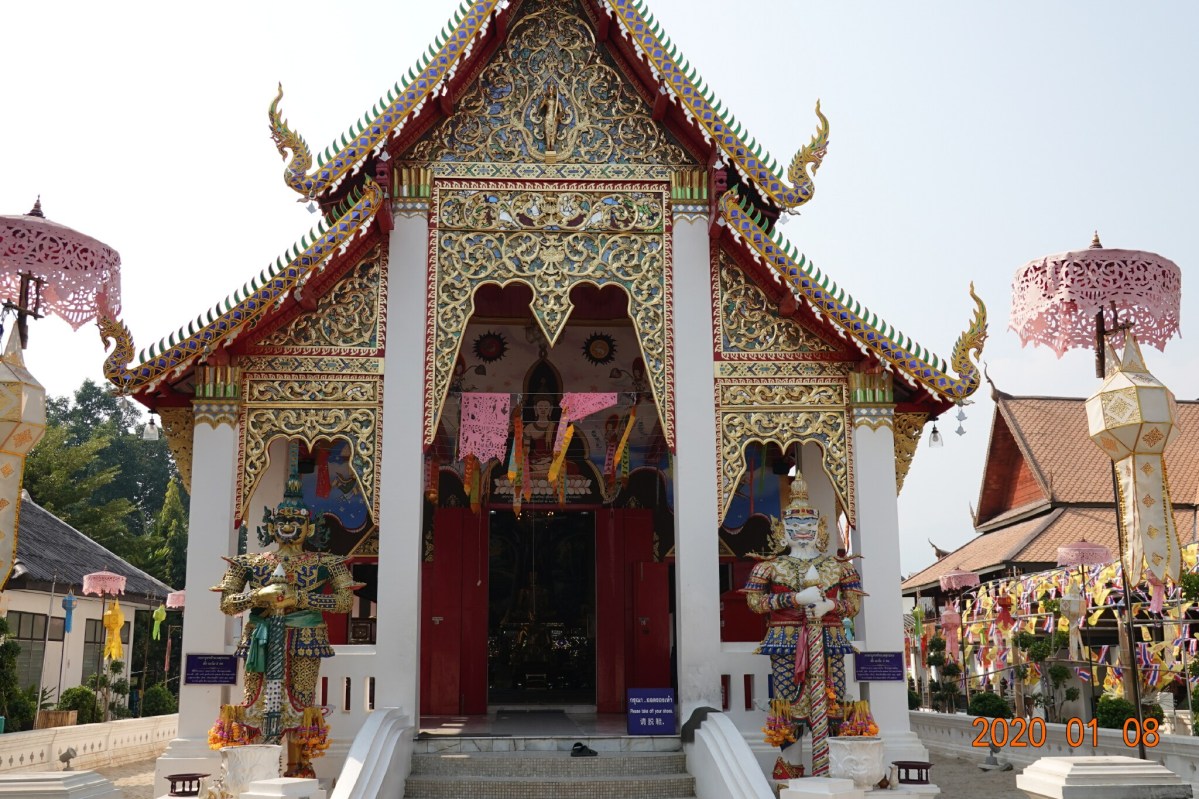
Main viharn at Wat Sai Moon Muang.
The main viharn is guarded by two Yaks or Yaksha. This is more commonly seen in central Thai Buddhist temples, but there are a few temple entrances in the Chiang Mai area also guarded by Yaks (Wat Lok Molee, one of my favorites comes to mind). Here is a closer look at each of the two Yaks.


Inside the main viharn at Wat Sai Moon Muang one can see the large Buddha statue. It is said to have come from an area north of Chiang Mai in the old city of Chiang Saen and was rescued from the invading Burmese army and transported to Chiang Mai by elephants and horses.
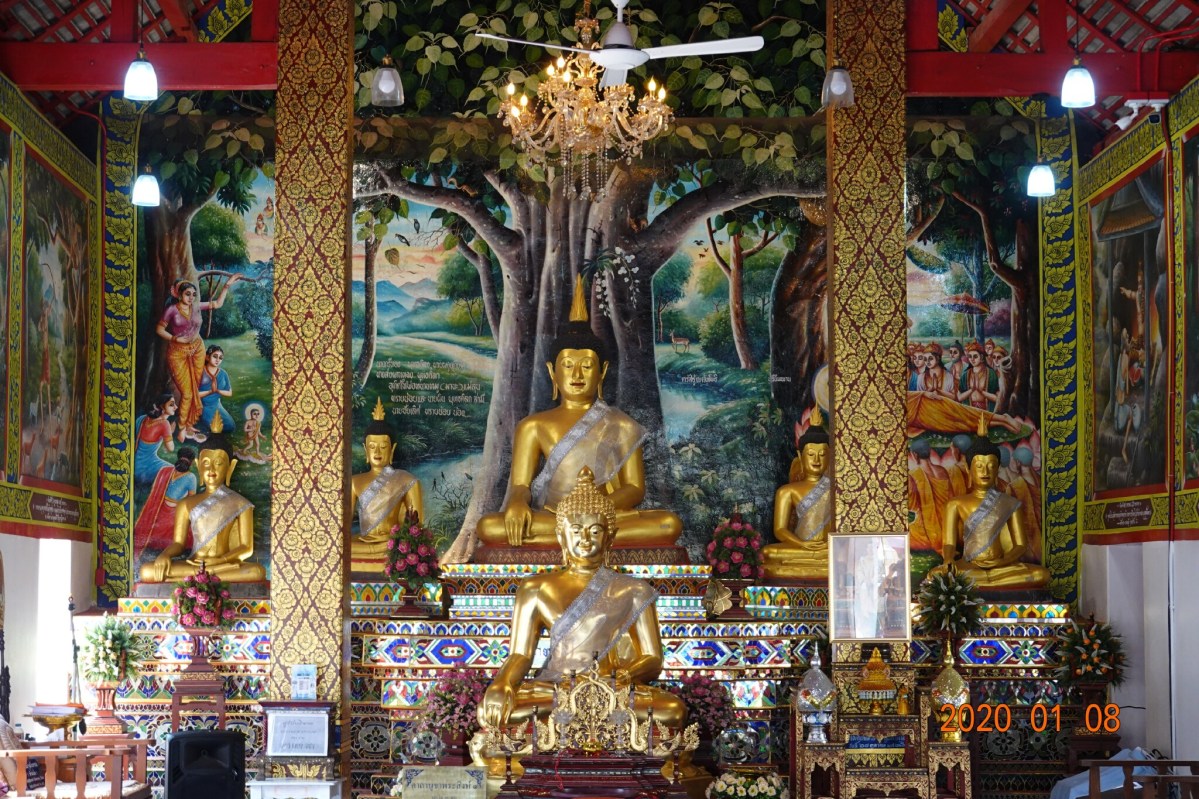
Inside the main viharn at Wat Sai Moon Muang.
To the right (north) of the main viharn is this ordination hall, called an ubosot. This is build similarly to the main viharn, but guarded by two Cinthes (mythical guardian lions).
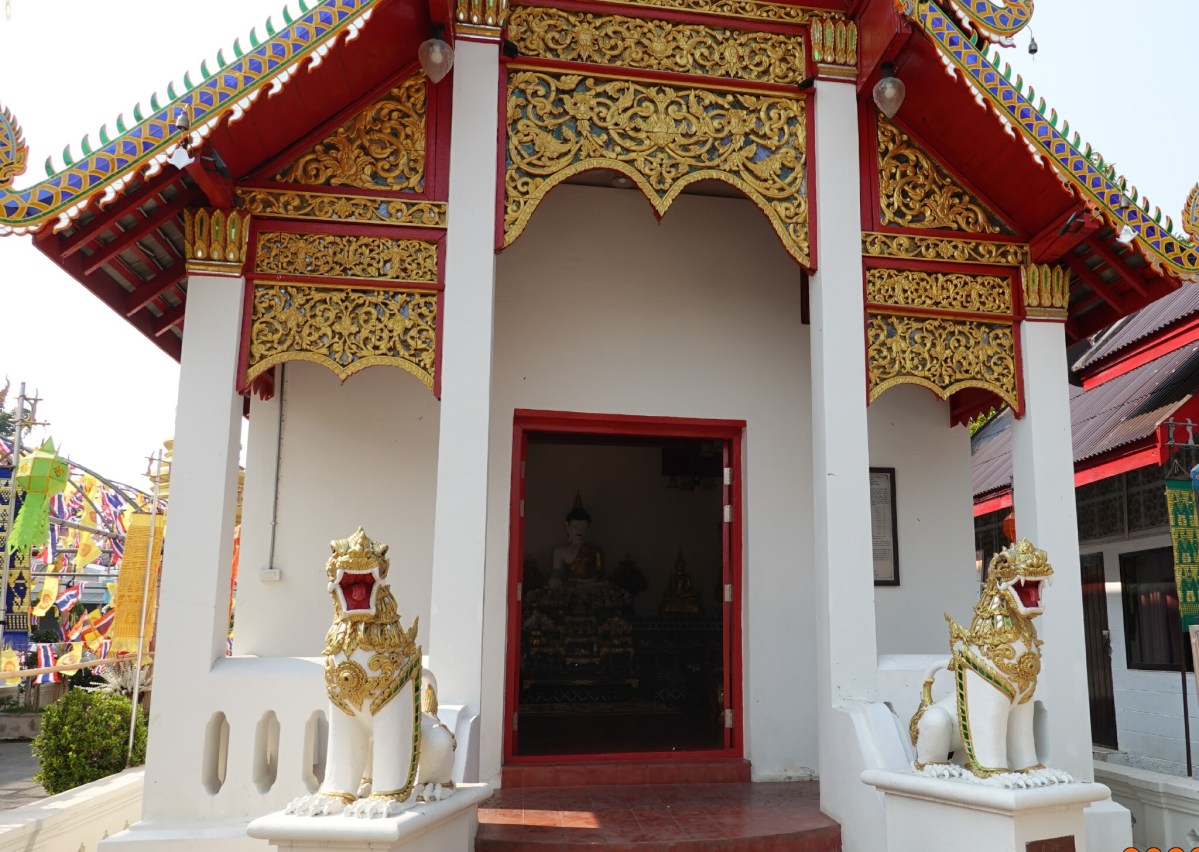
Entrance to the ubosot (ordination hall) at Wat Sai Moon Muang.
And almost every temple has a chedi in which the ashes of someone important are interred. Here is the chedi at Wat Sai Moon Muang with me standing in front (or is that the back?).
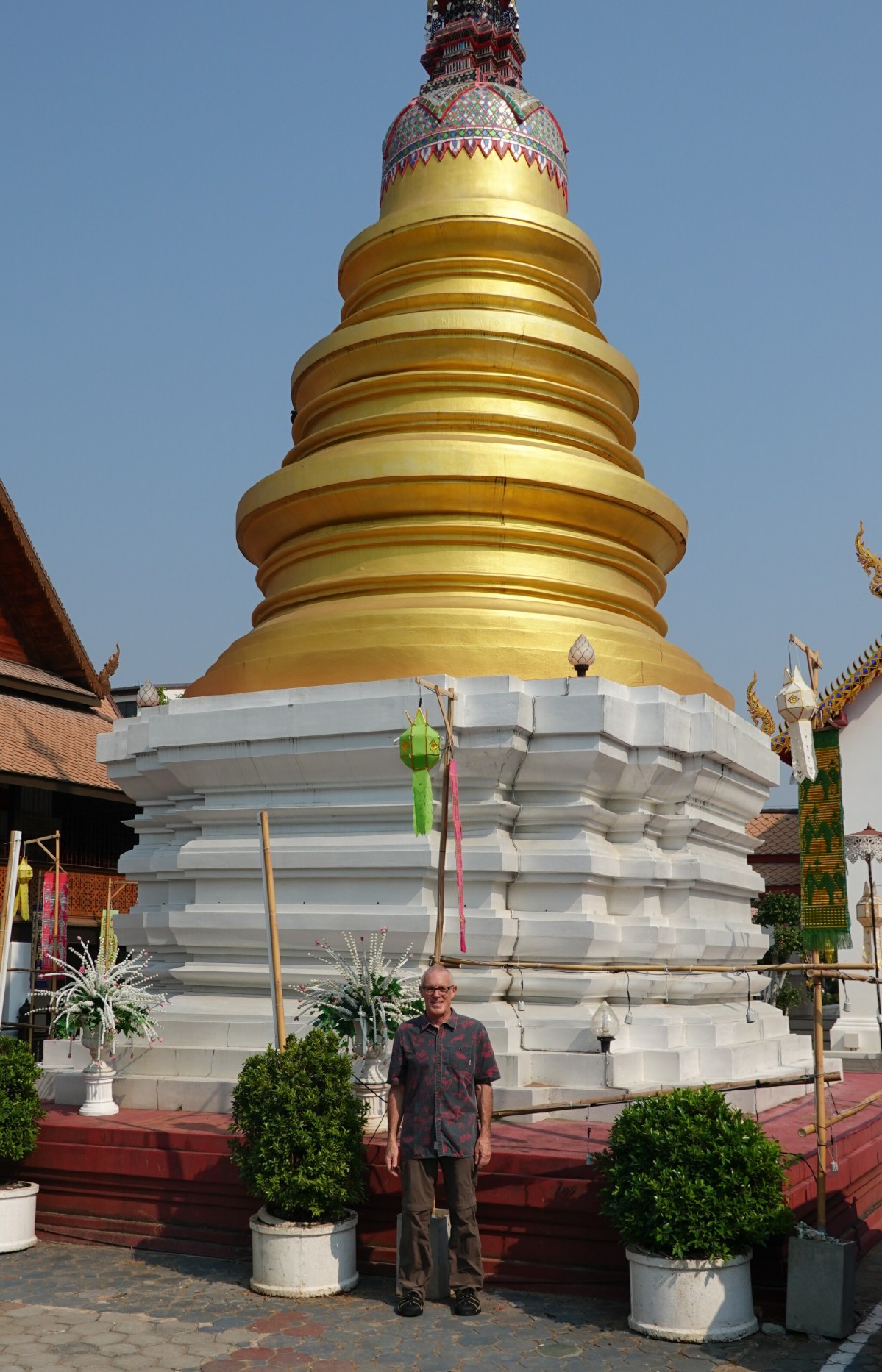
The chedi at Wat Sai Moon Muang with yours truly.
The chedi is of Burmese style with a layered square base with indented corners. This supports a circular mid-section in gilt which narrows towards the top where there is a bell which is brightly decorated. This chedi is without any guardian figures and little decoration.
Katam Corner
I walked further south and found myself at the back of Katam Corner, the southeast corner and bastion of the old Chiang Mai city wall.
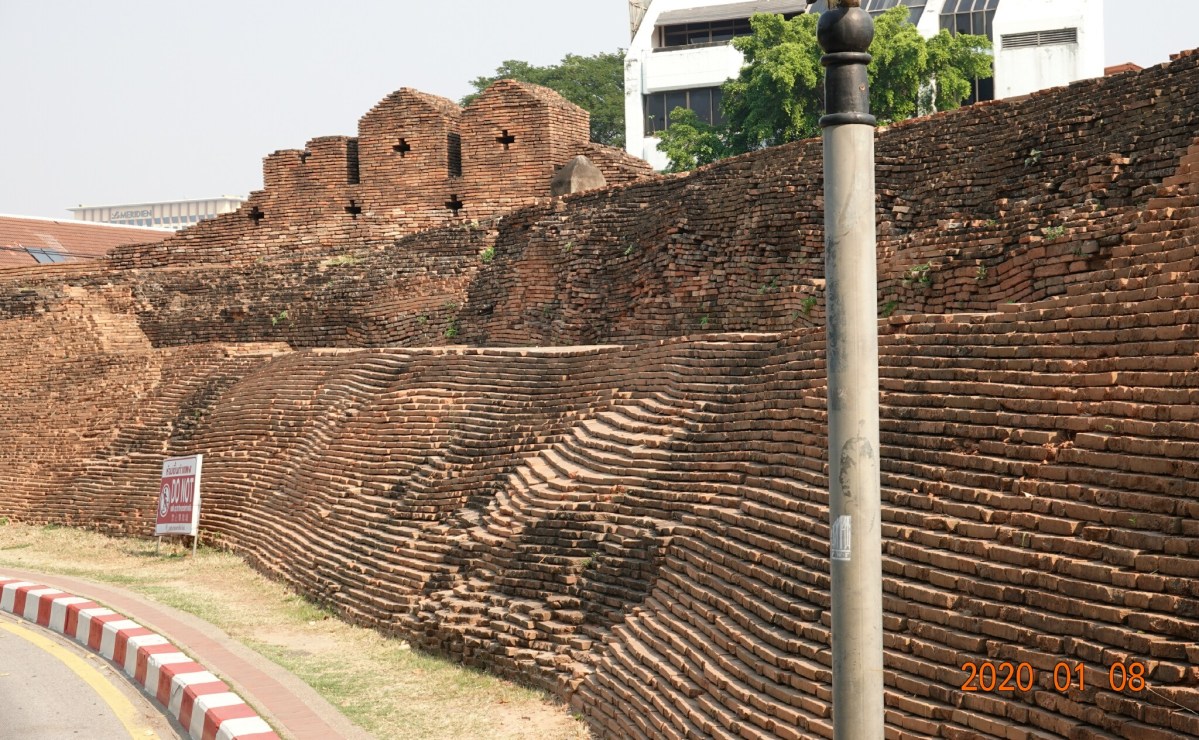
Back side of Katam Corner, the southeast corner and bastion of the old Chiang Mai city wall.
Wat Sai Moon Myanmar
Walking further to the west, I found myself at a Burmese temple called Wat Sai Moon Myanmar. This is one of the most plain temples I have seen, and I was not compelled to take out my camera. There was one shot of a secondary hall I did photograph, a secondary viharn of sorts, and what compelled me to photograph was the colorful depictions of thewada flanking the entrance doors (and behind the columns):
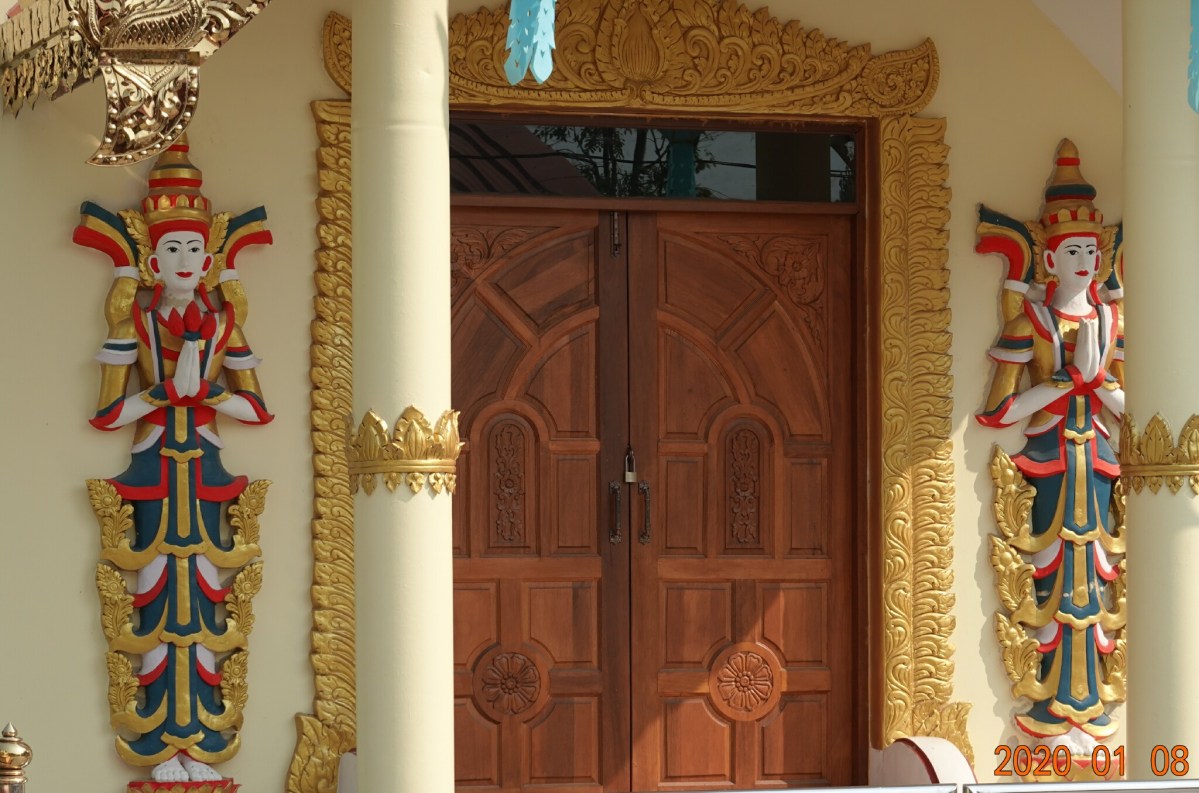
Entrance to secondary worship hall at Wat Sai Moon Myanmar.
This was one of the few temples that left me uninspired. Very plain and almost stark. So I walked back to Good Morning Chiang Mai/Tropical Inn, rested, and considered dinner at La Fontana.
Dinner at La Fontana
I eventually made my way to La Fontana, hoping they had gazpacho today, and they did, Yay! Here is my gazpacho with a few croutons, so fresh and tasty!
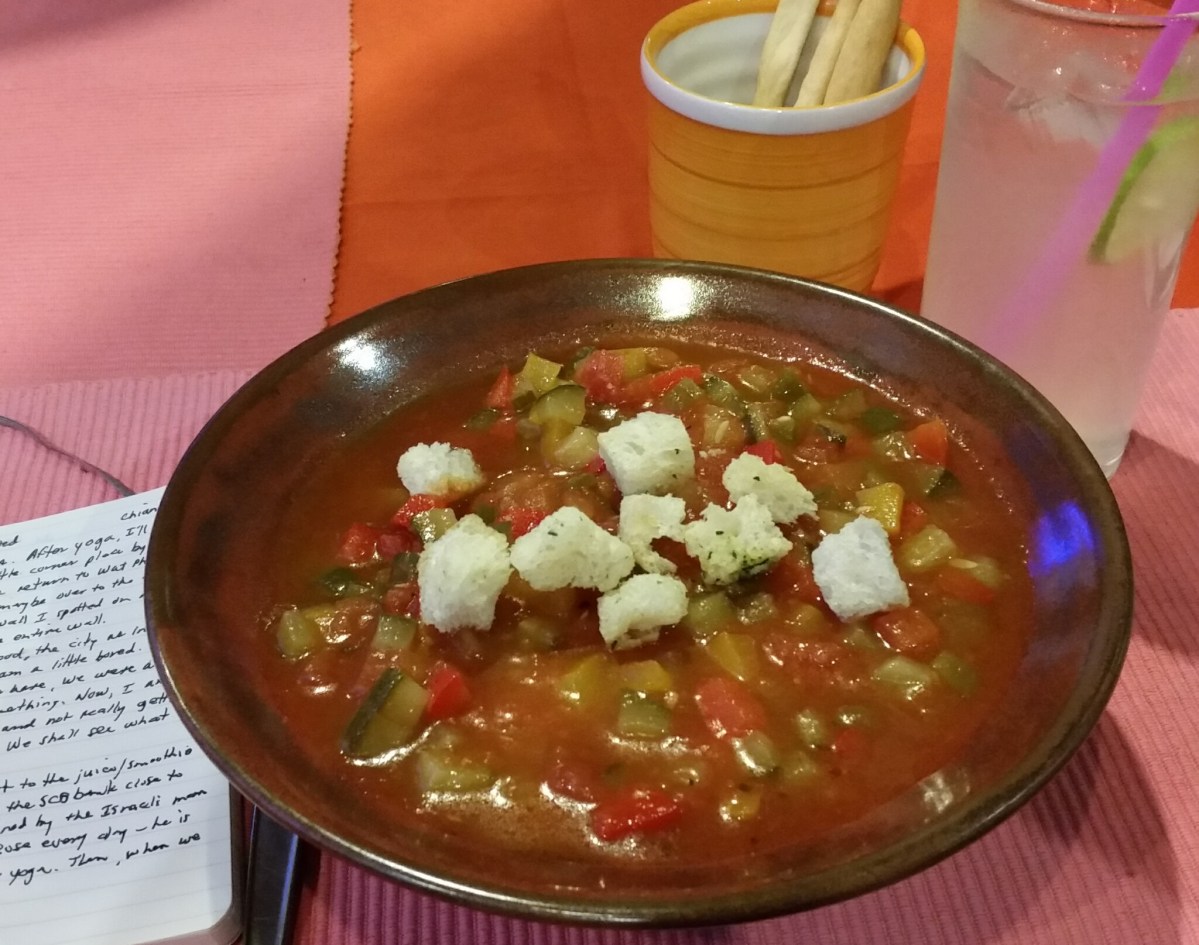
Gazpacho at La Fontana
And after the gazpacho, a small pizza – it looks large, but it is fairly small, just right for a meal for me. And La Fontana, like Street Pizza, makes their own pizza sauce from fresh ingredients; so tasty.
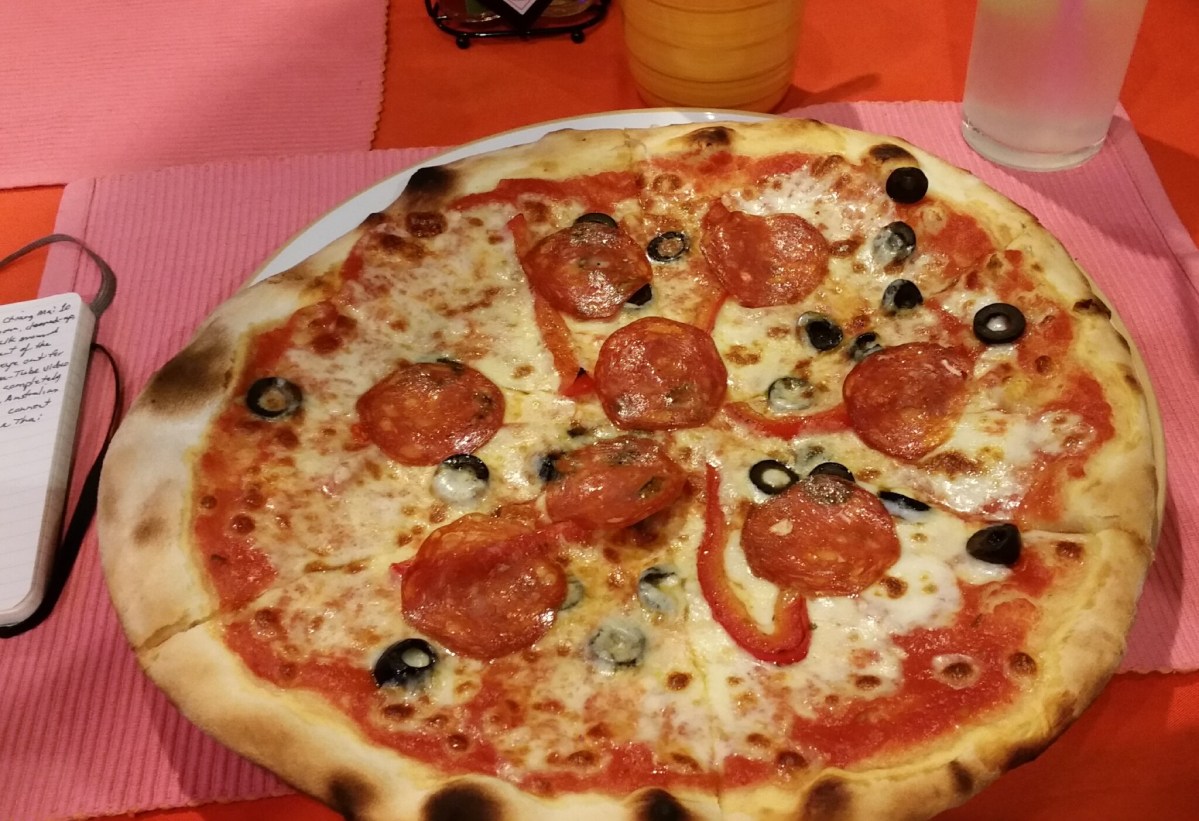
Pizza at La Fontana
Next: Return to Wat Phra singh

 James the Intrepid Pilgrim