Sunday, January 5, 2020
A routine day in Chiang Mai
Insofar as any day in Chiang Mai can be considered “routine,” this Sunday was a relatively routine day, except that I did not practice yoga today as I had another appointment at the same time. The day started with breakfast at the Good Morning Chiang Mai. After breakfast I grabbed my camera and left early to walk to Om’s for a gua sha session.
Wat Phra Chao Meng Rai
This is a temple very few tourists visit, and it is a shame, because it was built by King Mengrai as he was overseeing the construction of Chiang Mai. It is just north of Good Morning Chaing Mai on the same lane (Ratchamanka Soi 6). The story is that King Mengrai had cast a new Buddha image called King Ka King and was travelling to install it at Wat Chiang Man when the cart carrying it broke a wheel. Instead of repairing the cart and proceeding on, King Mengrai took the breakdown as an omen and decided to leave the Buddha image here where he established a new temple which he called “Wat King Mangrai Temple”. [There’s a mural of this incident in Wat Chiang Man.]

Main entrance to Wat Phra Chao Meng Rai behind the wires.
And the no-longer-used pedestrian entrance, also behind the wires.
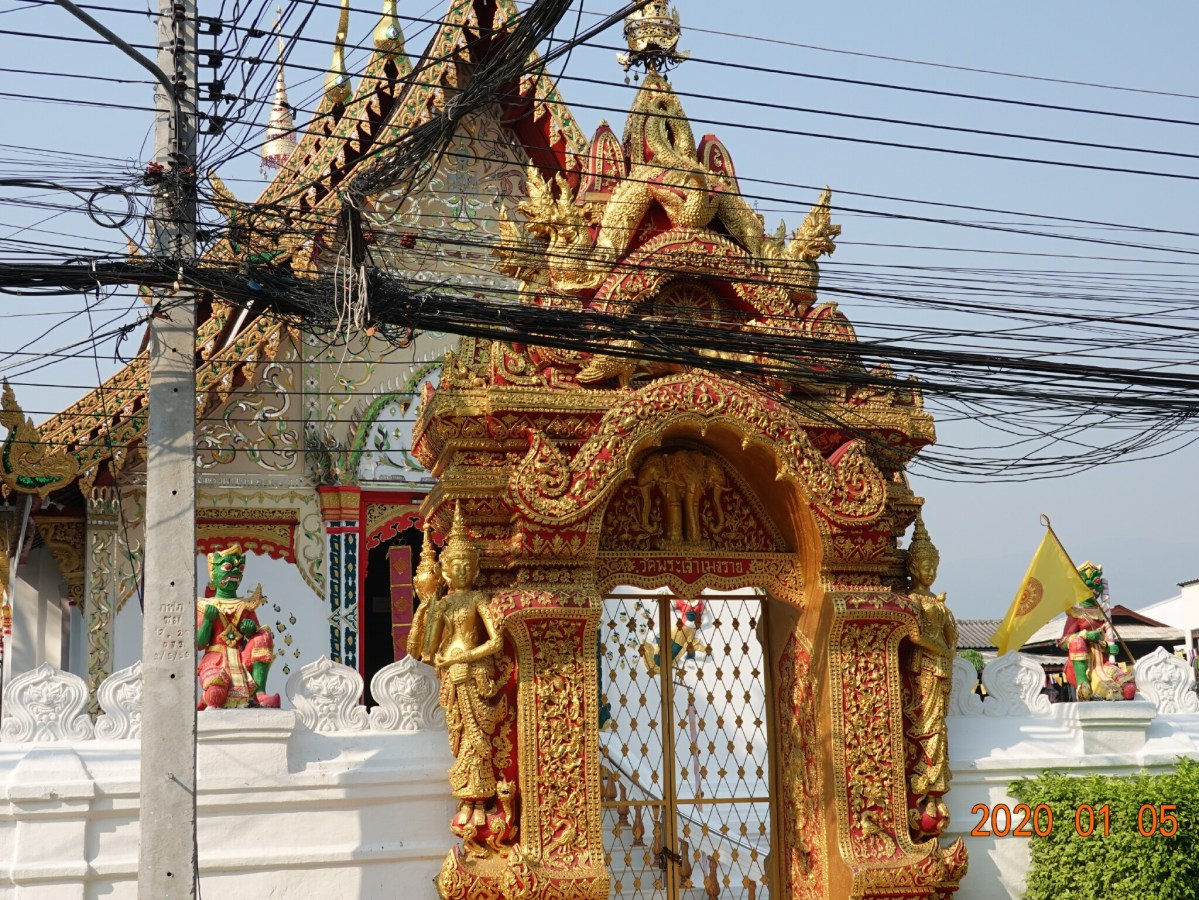
Pedestrian entrance at Wat Phra Chao Meng Rai.
Front entrance to the main viharn at Wat Phra Chao Meng Rai with the carved, colorful dancing thewada:

Colorful dancing thewada on the viharn at Wat Phra Chao Meng Rai.
I have visited Wat Phra Chao Meng Rai in the past and found it to be somewhat in need of restoration. That restoration has taken place, and I shall return to explore a bit more. But now I must be on my way, to keep my gua sha appointment.
On the way, I passed Wat Chedi Luang and the relatively new entrance for foreigners (so they can charge 30 THB entrance, about $1). This is an important temple and always busy.
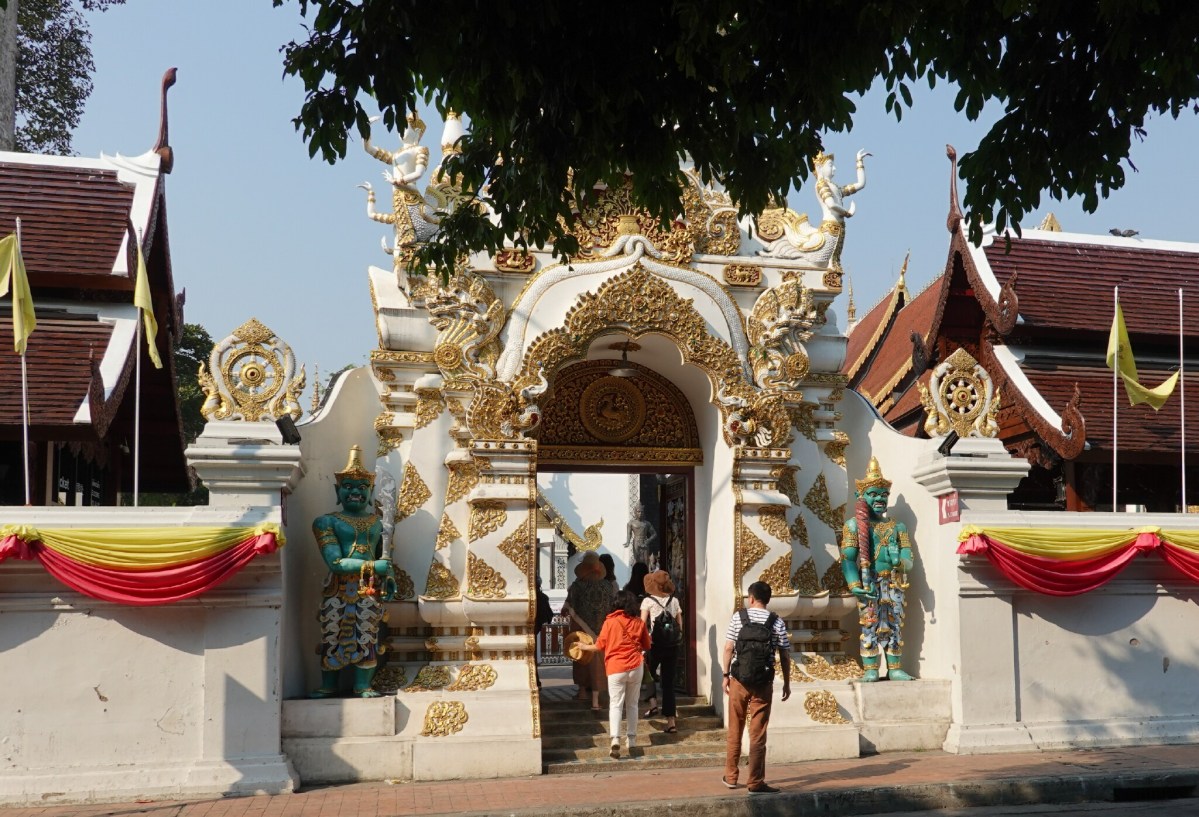
Wat Chedi Luang Foreigner Entrance.
Gua Sha at Omsala
Gua sha, also known as “hak” in Thai, is an ancient Vietnamese and Chinese treatment in which the skin is scraped using pressured strokes over lubricated skin using a White Buffalo Horn from north of Thailand. Hak promotes the flow of energy and blood throughout the body, releasing toxins. Pictures can be found on the internet that show dramatic and even shocking views of what appears to be tortured skin after a gua sha treatment. I have had gua sha sessions with Om before, and there has only been mild redness in areas where she detected noticeable toxins. Once, when my knee was hurting a little after much yoga and walking, I did not mention it to her, but she gravitated to the knee and told me there seemed to be a lot of toxins in the area of my knee. After, my knee felt better.
Om is primarily a teacher of gua sha and chi nei tsang (abominable massage), both very old Chinese practices. Here is a picture of her “sala” (Omsala) and a list of courses. During the high season (winter, the “high” tourist season), her classes are very full, and her time for individual treatments limited. This is why she was seeing me on a Sunday.


[You can see the reflection of me taking the picture.] The little sign to the lower left says “Bare feet inside, ego outside.” The gua sha session was 90 minutes today, and the intent was to cover my whole body. Om found so much toxin in my upper back and shoulders (which were sore and tired after so much yoga practice) that she spent the entire time on my back and shoulders. We booked another session for the rest of the body.
Wat Chiang Man
Near Omsala is Wat Chiang Man. This is the temple King Mengrai built in which to live and worship while he supervised the construction of Chiang Mai starting in 1296. Another of many very old temples in the old city of Chiang Mai. There are two viharn, larger and smaller. Both are old and have been renovated many times in their history.
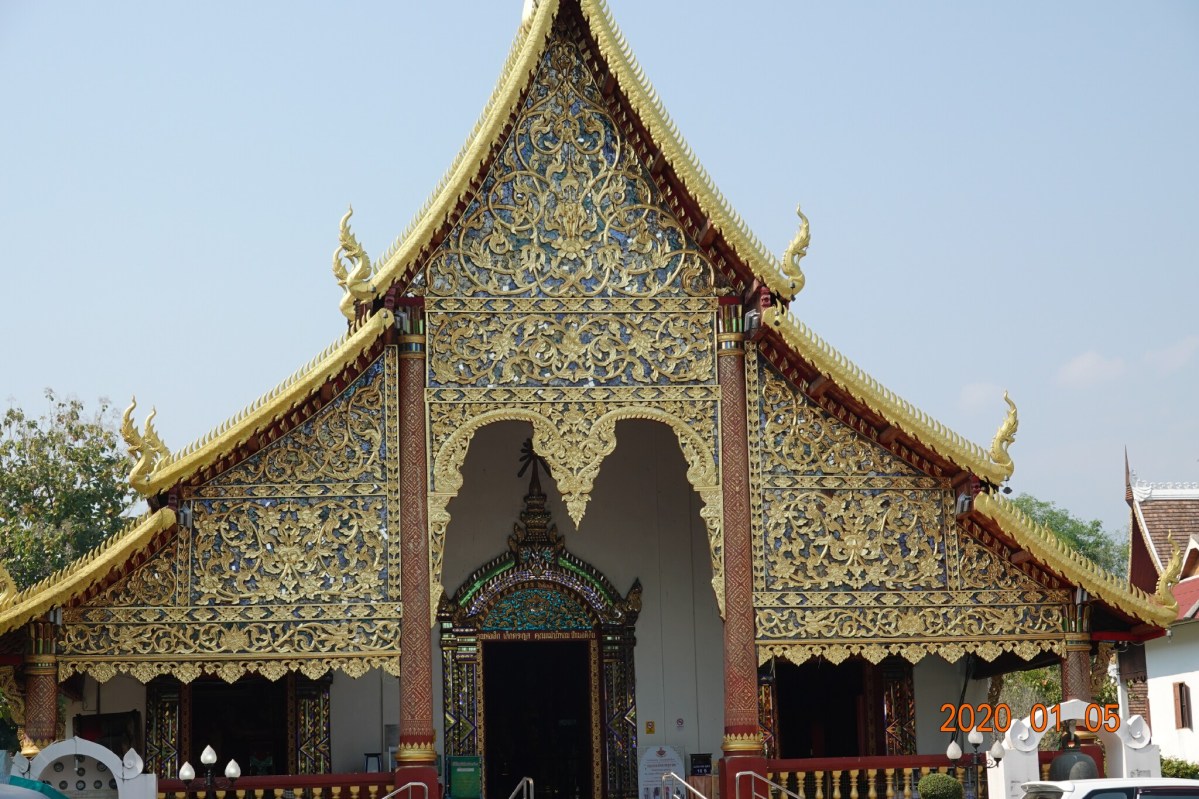
Wat Chiang Man larger viharn.
Even the side entrance of the viharn is elaborate with its artistic naga staircase:
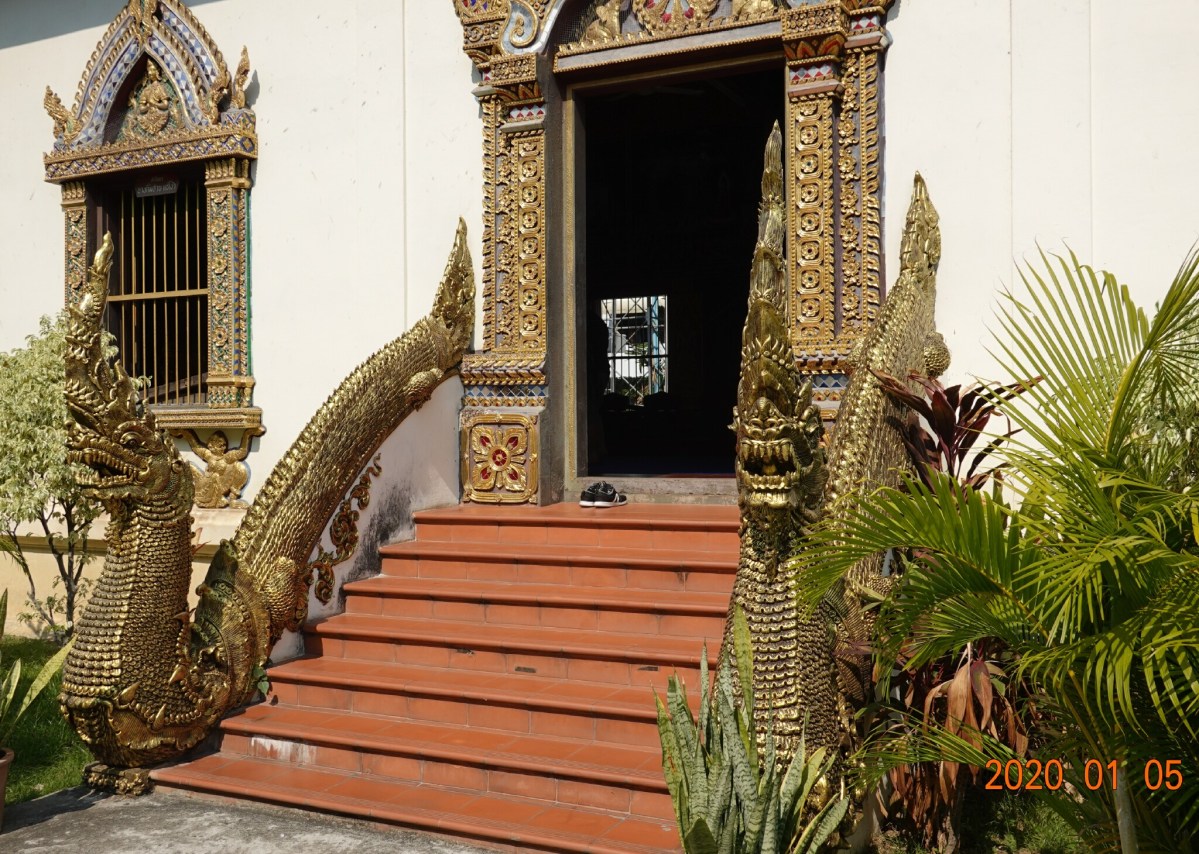
Wat Chiang Man larger viharn side entrance.
And to the west of and in between the two viharn is a statue of King Mengrai himself, looking very stern.
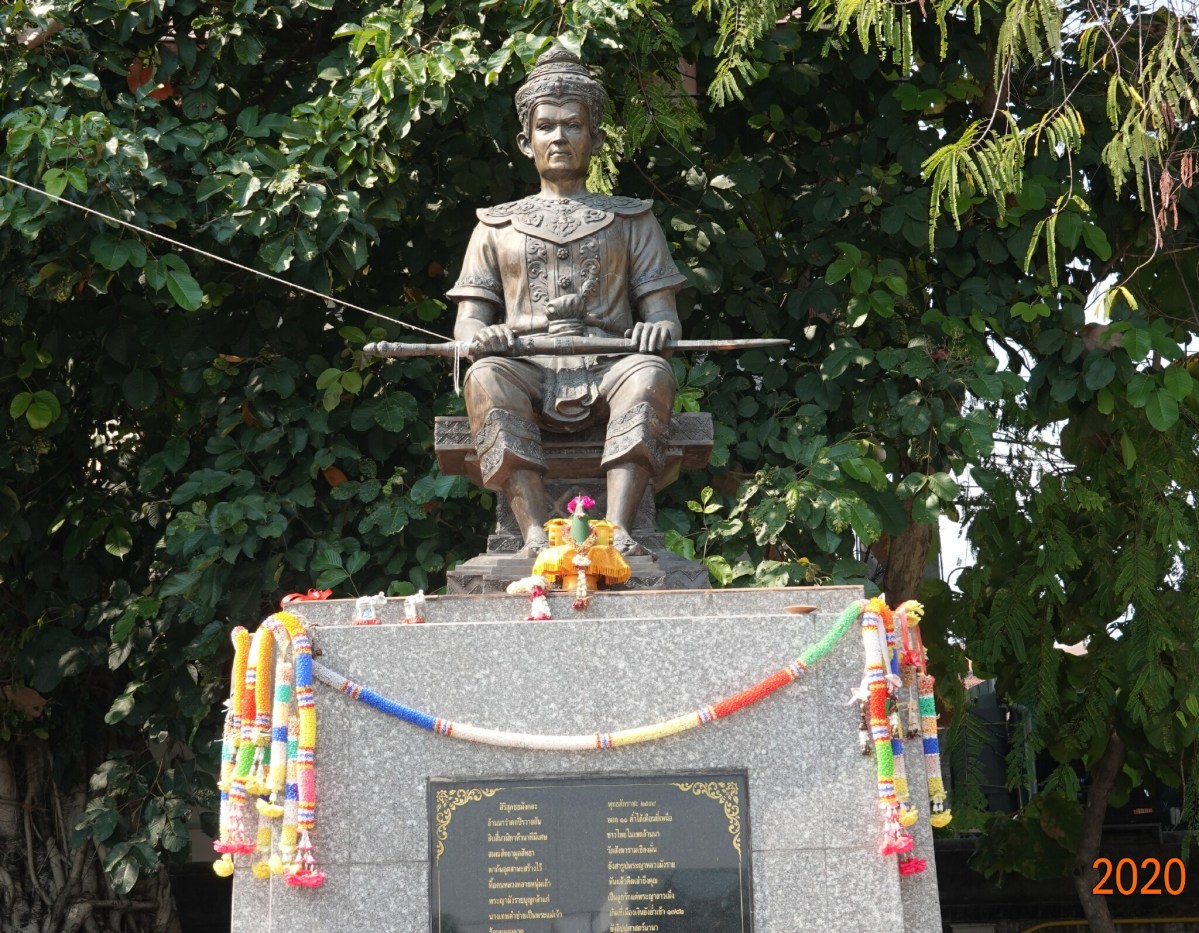
Wat Chiang Man statue of King Mengrai.
Then to the west of the main viharn is the relatively famous “Elephant Chedi.”
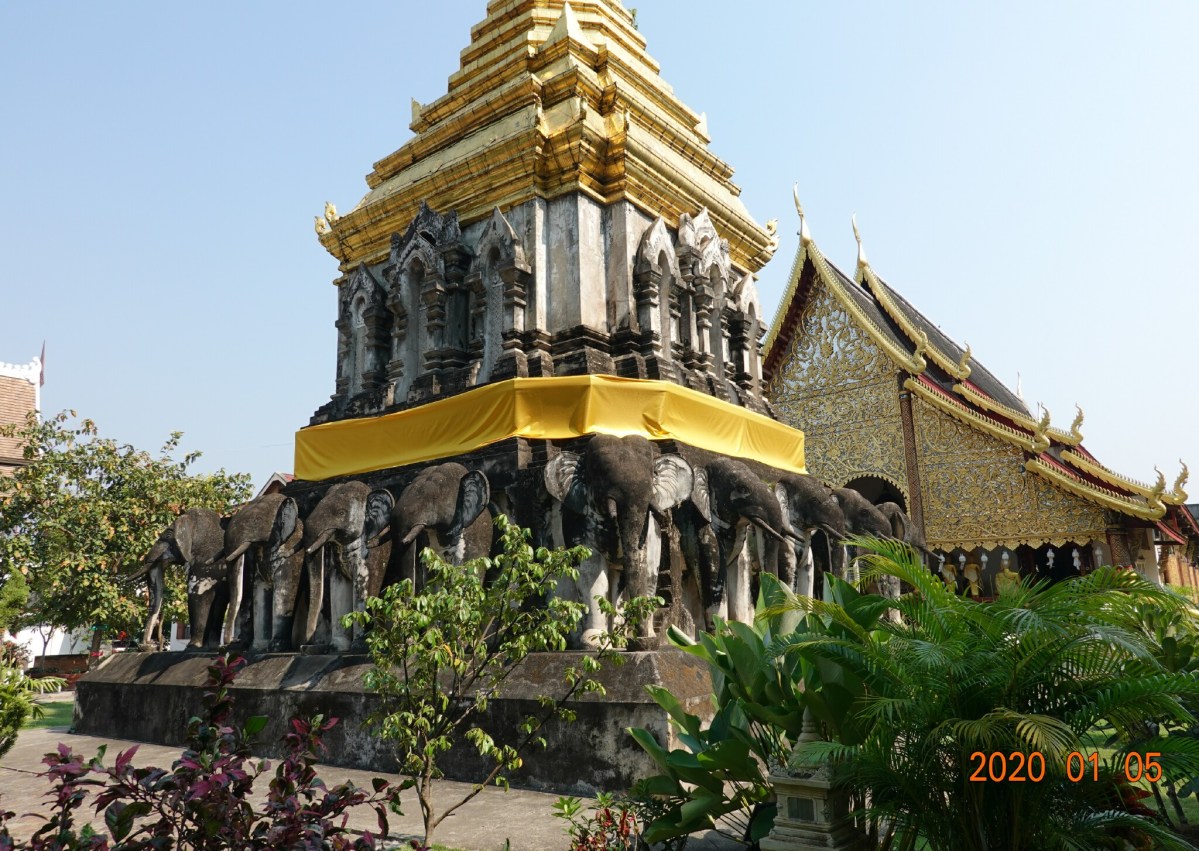
The elephant chedi at Wat Chiang Man.
I asked a young man to take a photo of me by the elephant chedi. I’m small in comparison to the chedi itself; the elephants are life-size.
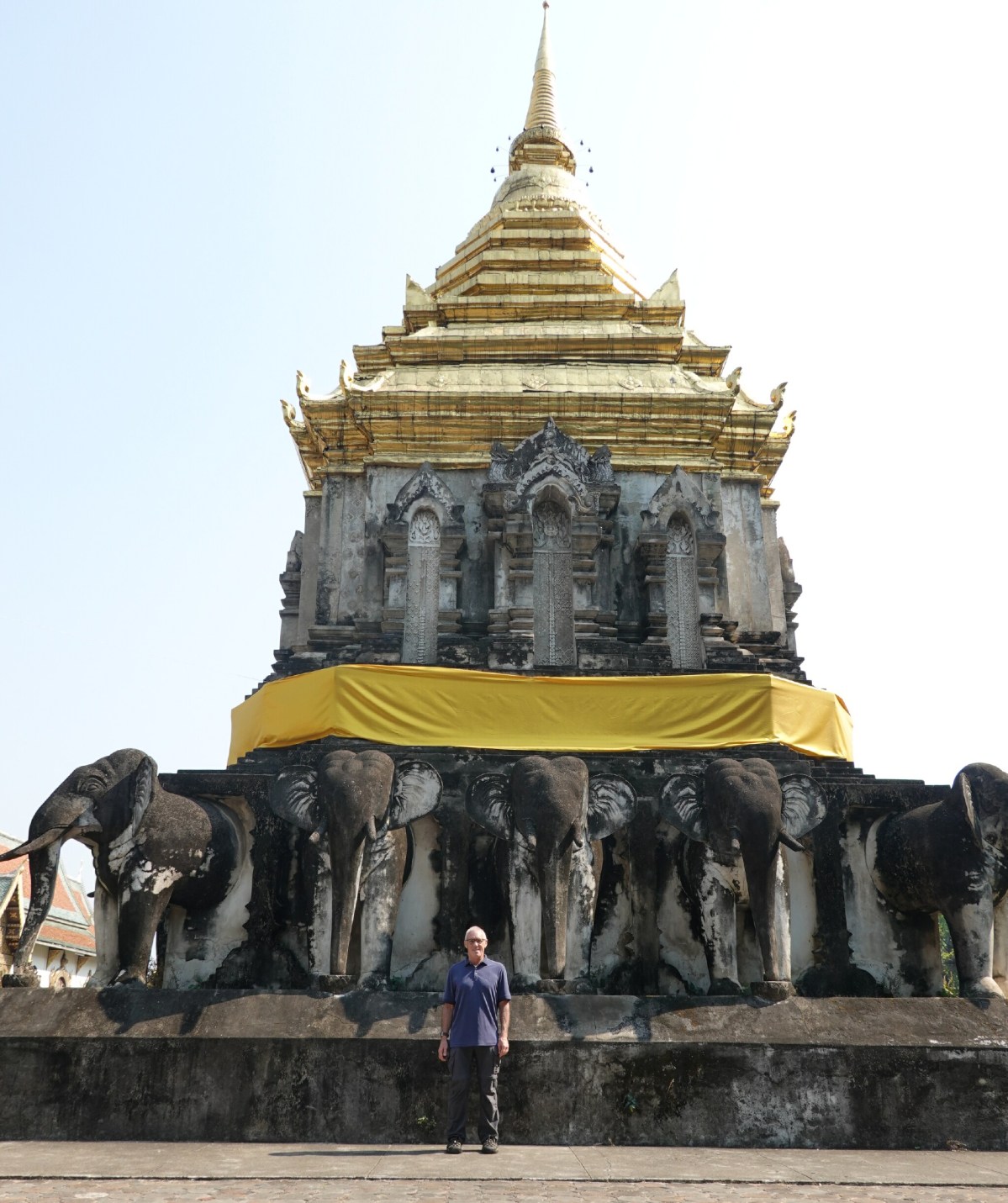
Me in front of the elephant chedi at Wat Chiang Man.
And finally for this visit to Wat Chiang Man, a view inside the larger viharn.
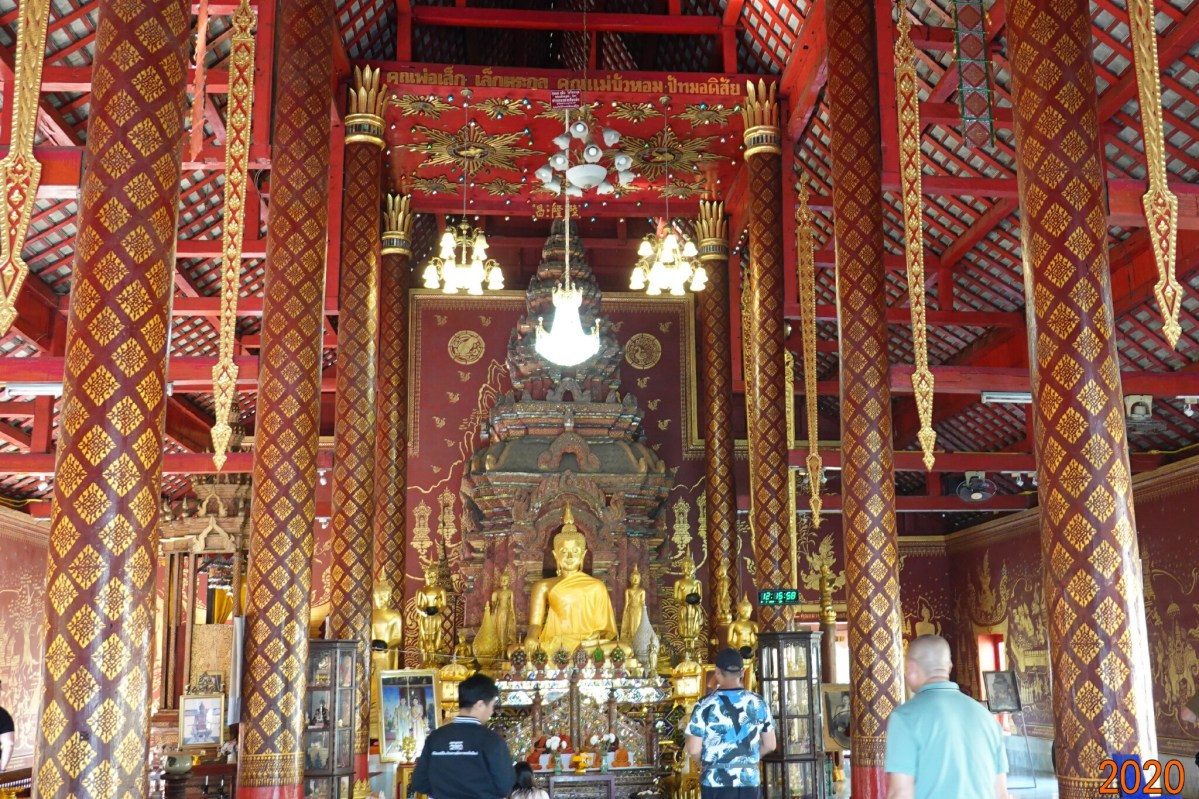
Inside the larger viharn at Wat Chiang Man.
I was getting hungry and decided to eat a late lunch at See You Soon, a cafe & guest house just down the street from Wat Chedi Luang. Along the way, I stopped at two “local” temples, a little hidden away, but right in the old city.
Wat Umong Mahathera Chan
This is a relatively quiet temple right in the center of the old city of Chiang Mai, less than a block from the Sunday Night Market, but seldom frequented by tourists. Off to the left of the entrance are small buildings where meditations take place, and signs ask that you keep quiet. The main viharn is relatively modern-looking, guarded by guardian-lions or cinthes.
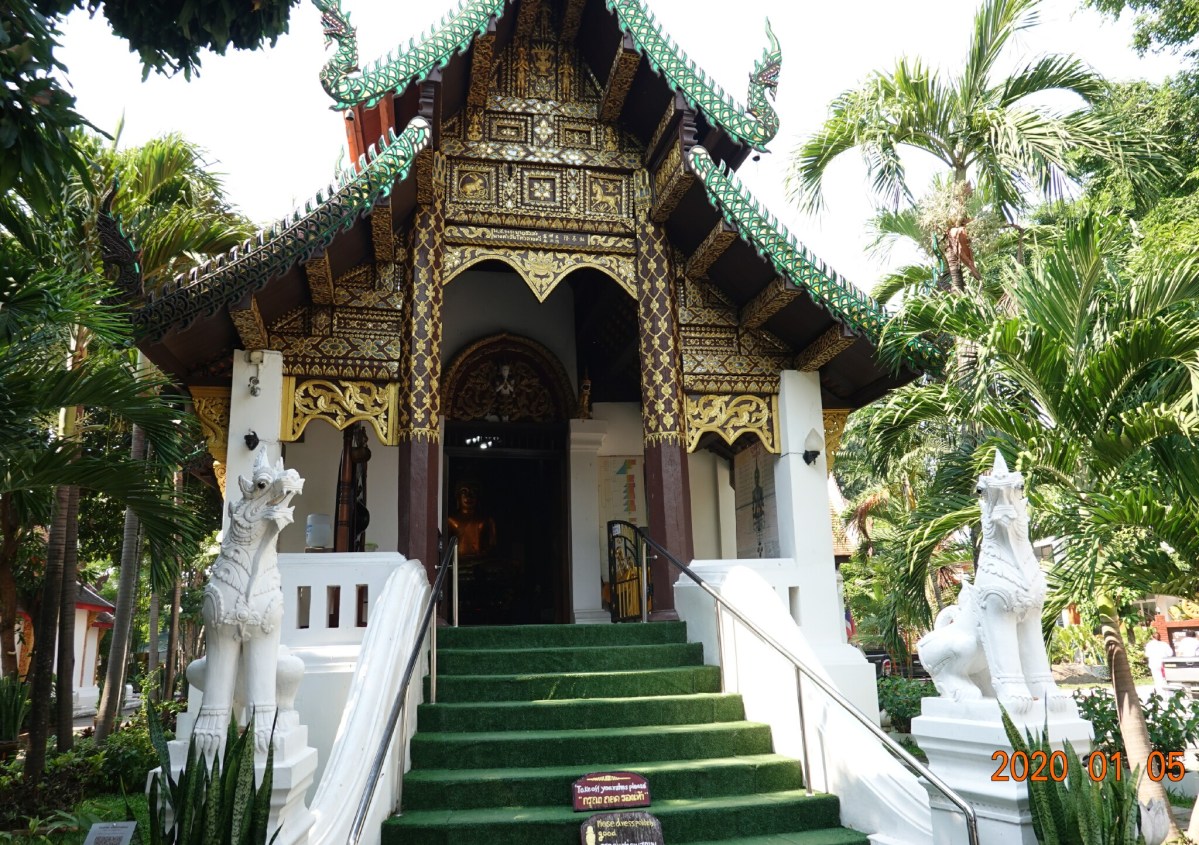
Entrance to the main viharn at Wat Umong Mahathera Chan.
And inside the relatively small viharn one sees this rich dark teak woodwork, almost like the viharn at Wat Lok Molee.
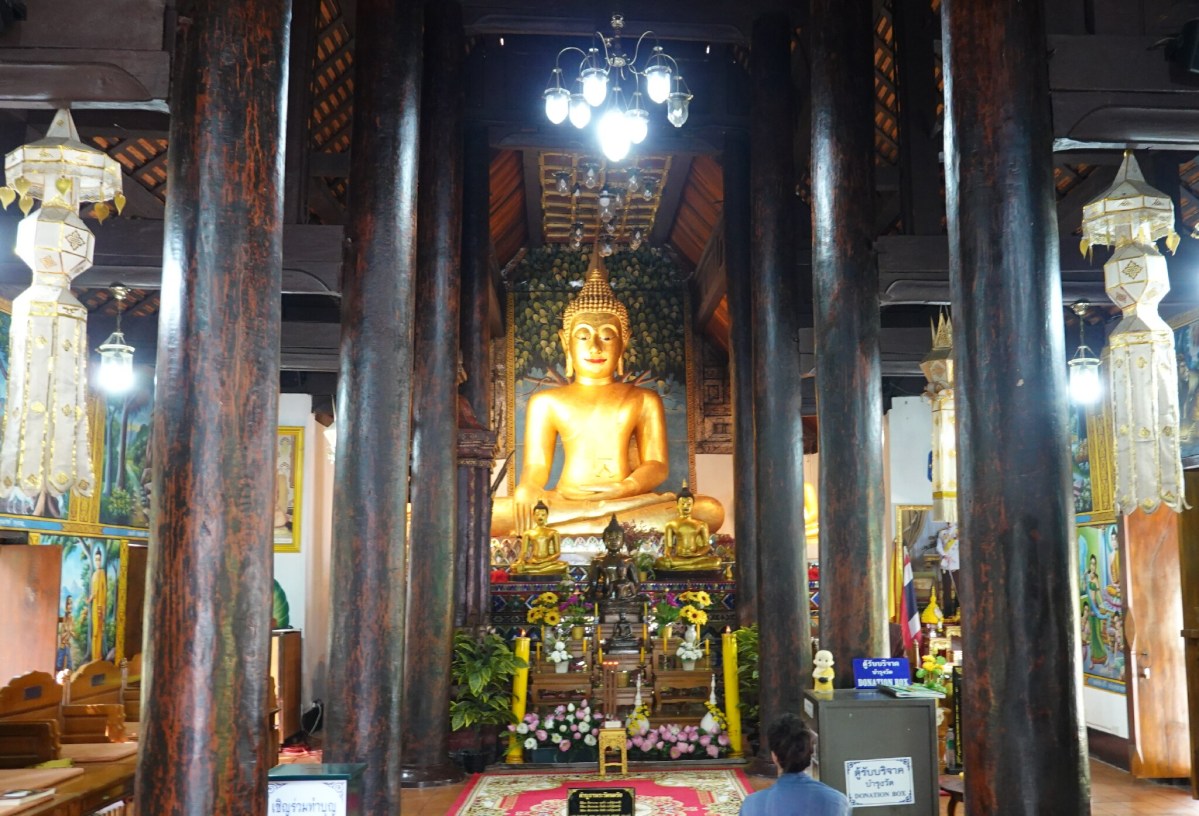
Inside the main viharn at Wat Umong Mahathera Chan
The chedi at Wat Umong Mahthera Chan has a cave where monks used to meditate, called the “Monk’s Cave.”

Wat Umong Mahathera Chan chedi with the Monk’s Cave.
Nearby is an ubosot or possibly a secondary viharn guarded by very fierce looking moms.
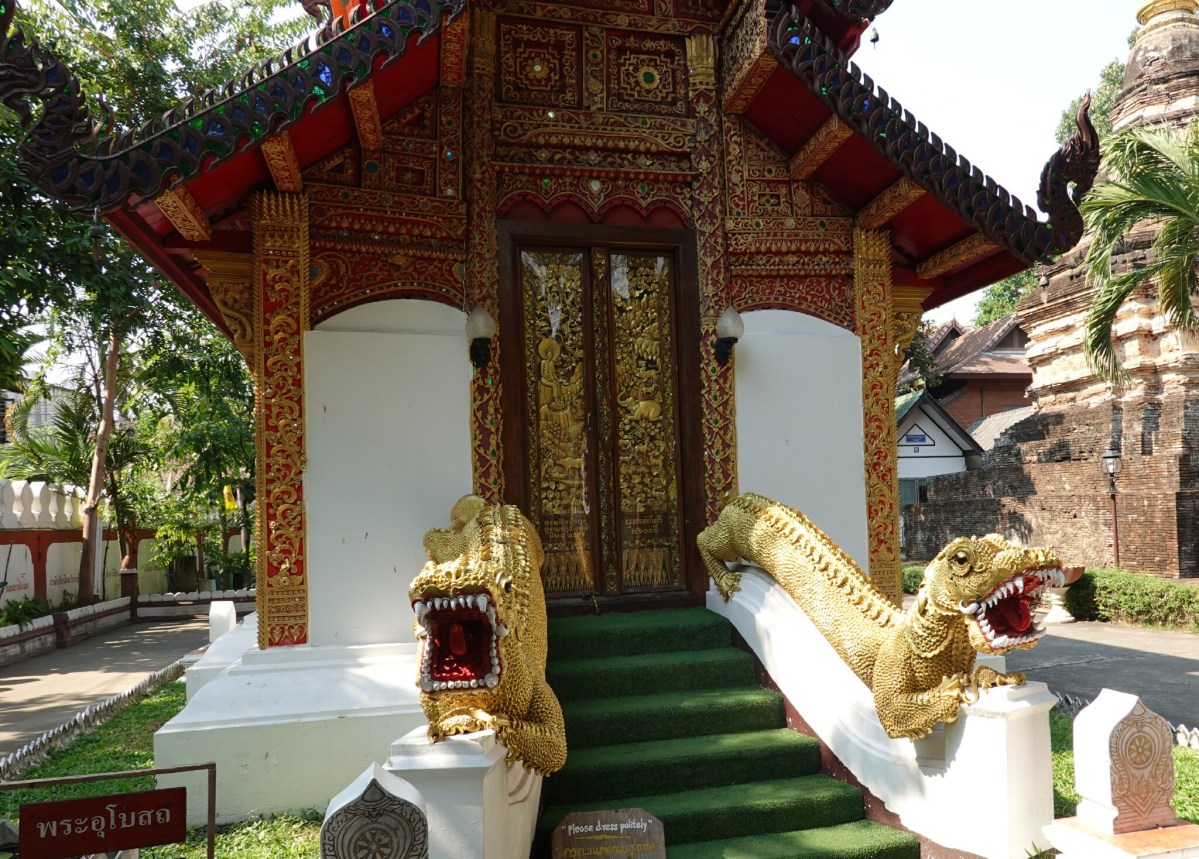
Secondary viharn at Wat Umong Mahathera Chan guarded by two very fierce-looking moms.

The main chedi at Wat Umong Mahathera Chan
Wat Duang Dee
Also known as Wat Duang Dii, the name translates to “Good Luck Temple.” An inscription on one of the Buddha images suggests that the temple was founded at the start of the 16th century during the reign of Lanna King Muang Kaew. This is a small temple with only a viharn, an ubosot (ordination hall), an Hoi Trai (library), and a white chedi.
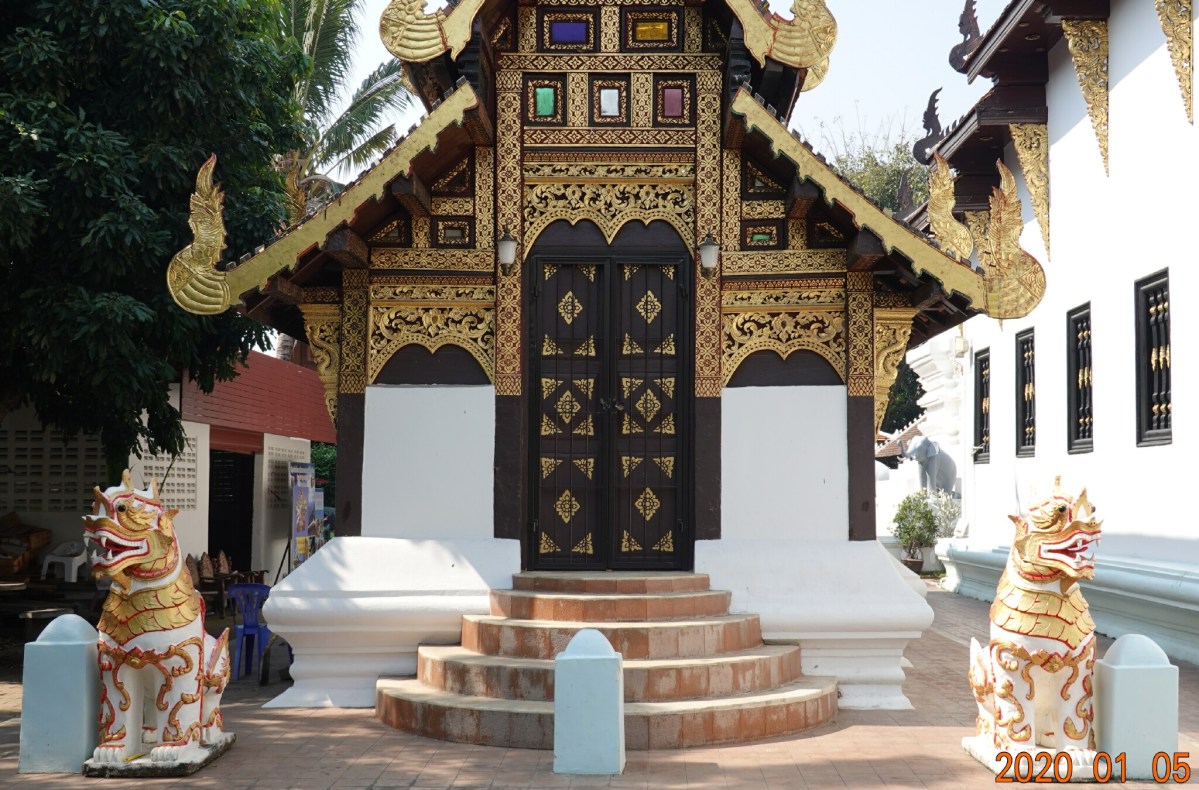
Ubosot at Wat Duand Dee.
And the white chedi with a seated elephant at each corner.
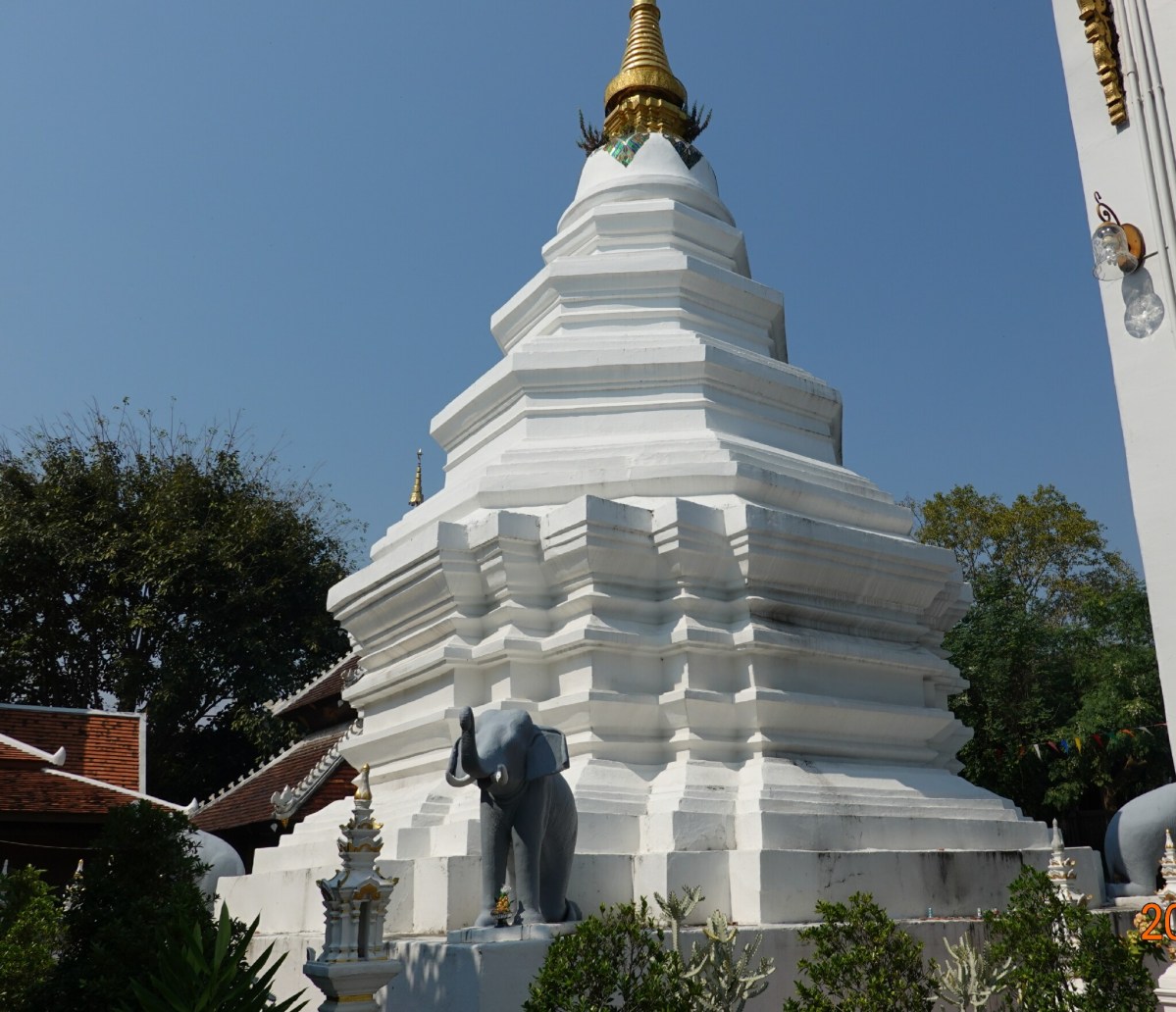
White chedi at Wat Duang Dee.
Lunch at See You Soon
See You Soon is a cafe/shop/guest house owned by Ice and her husband Bowl. Ice is one of the three sisters who own The 3-Sis Guest House where I have stayed for the past seven winters in Chiang Mai. I’ll be staying in one of their six rooms for my last two weeks in Chiang Mai, so there will be more photos soon. Here is the outside as I was about to enter for a late lunch:

Outside of See You Soon cafe/shop/guest house.
After lunch and some catching up on work and e-mail, I went to the Sunday Night Market for a foot massage by Nam, the same lady who has massaged my feet every Sunday that I have been here for the past 7 years. A foot massage after walking around all day really ends the day nicely.
I walked back to the Tropical Inn (Good Morning Chiang Mai) for the end of a fairly typical day in Chiang Mai.
Next: More of the Chiang Mai city

 James the Intrepid Pilgrim